商汤科技

Search documents
GPU创企曦望一年融资30亿:出身商汤,押注推理
Guan Cha Zhe Wang· 2026-01-22 13:13
Group 1 - The company Sunrise has completed nearly 3 billion yuan in financing within a year, with investors including SANY Group's Huaxu Fund, Paradigm Intelligence, and IDG Capital [1] - The funds raised will be used for the development of the next generation of inference GPUs, large-scale production, and ecosystem building [1] - Sunrise was established in 2020 as a spin-off from SenseTime's chip division, focusing on high-performance GPUs and multimodal scene inference chips [1] Group 2 - The core team consists of over 200 employees, with more than 80% being technical and R&D personnel, many of whom come from leading companies like AMD and Huawei [1] - Co-CEO Wang Yong has over 20 years of experience in the chip industry, having previously worked at AMD and Baidu [2] - Co-CEO Wang Zhan, a founding member of Baidu, has significant experience in the field [2] Group 3 - Unlike traditional GPU manufacturers like NVIDIA that pursue "training and inference integration," Sunrise focuses solely on "pure inference" [4] - The company aims to reduce inference costs by 90% and provide stable services, positioning itself as a transformative player in the AI industry [4] - Sunrise has invested a total of 2 billion yuan in R&D over the past few years, developing a product matrix of three generations of chips [4] Group 4 - The S1 chip, launched in 2020, is China's first visual inference chip and has been licensed to major clients like Sony and Xiaomi [4] - The upcoming S2 chip, set for mass production in 2024, will compete with mainstream A/H series GPUs and be compatible with the CUDA ecosystem [4] - The S3 chip, expected in 2026, aims to achieve significant reductions in cost and energy consumption, targeting a new industry benchmark of "one cent per million tokens" [5]


国产AI大模型企业密集上市:资本狂欢下的技术博弈与产业未来
Sou Hu Cai Jing· 2026-01-22 09:54
Group 1 - The year 2024 is recognized as the "Year of Commercialization for China's AI Large Models," with a significant wave of domestic AI companies expected to go public in 2025 [2] - Over ten Chinese tech companies focused on large language models (LLMs) have submitted IPO applications since Q1 2024, raising over 30 billion RMB in the first half of 2025 [2] - Major cities like Beijing, Shanghai, and Shenzhen are becoming hubs for AI large model companies, supported by local government policies [5] Group 2 - DeepSeek, known for its open-source large model, has a valuation exceeding 12 billion USD and plans to invest 4.2 billion RMB in R&D for 2024 [3] - Zhipu AI, backed by Tsinghua University, is pursuing a listing on the Sci-Tech Innovation Board, with its GLM-4 Turbo model outperforming international counterparts in various tasks [3] - Moonshot AI has gained attention for its "Long Context Window" technology, securing 800 million USD in funding and achieving a post-investment valuation of 6.5 billion USD [4] Group 3 - In 2024, total investment in China's AI sector reached 215 billion RMB, with over 60% allocated to large models and related applications, marking a 75% increase from 2023 [6] - The average investment amount in Pre-IPO rounds rose from 520 million RMB in 2023 to 870 million RMB in 2024, indicating a shift towards more mature AI companies [6] - The adoption rate of AI technology among enterprises surged from 22% in 2022 to 47% in 2024, with significant growth expected in sectors like finance, manufacturing, education, and healthcare [7] Group 4 - Domestic large model companies have made significant advancements, with eight out of the top ten positions in the CLUE benchmark held by Chinese models [7] - The Chinese government has introduced supportive policies for AI companies, including measures to facilitate domestic and international financing [7] - The geopolitical landscape, particularly U.S. restrictions on high-end GPU exports, has accelerated the demand for domestic AI solutions [8] Group 5 - Companies are exploring various monetization strategies, including API service fees, enterprise solutions, and open-source models with commercial licenses [14] - The training and inference costs for large models remain a significant challenge, with estimates indicating that training a trillion-parameter model could exceed 120 million RMB [16] - Only 15% of AI large model companies that have submitted IPO applications reported profitability in the last fiscal year, with average losses reaching 1.8 times their revenue [17] Group 6 - Traditional valuation methods are being challenged, leading to the development of new frameworks that emphasize technical barriers and ecosystem value [18] - The stock performance of AI-related companies has shown a polarized trend, with major players like Baidu and Alibaba seeing significant stock price increases [19] - The AI large model sector is expected to undergo a commercial validation phase from 2025 to 2026, with a focus on actual revenue growth and sustainable business models [26]

SenseTime:拒被巨头收购,拒绝快钱!守 AI 初心!
是说芯语· 2026-01-22 08:26
Core Insights - The article emphasizes the strategic decision of SenseTime to build its own computing infrastructure instead of selling to tech giants, which has become a crucial asset during the AI industry's value verification phase [4][6] - SenseTime's approach contrasts with the trend of many companies opting for quick profits through acquisitions, highlighting the importance of establishing AI as a foundational infrastructure [4][6] Group 1: Market Transition - The AI industry is undergoing a significant market logic shift, moving from a phase where capital was willing to pay premiums for technology concepts to a phase focused on value verification and stable cash flows [6][8] - SenseTime's resilience amidst this transition serves as a testament to its strategic foresight and comprehensive stack layout [6][8] Group 2: Financial Performance - By mid-2025, SenseTime's revenue from generative AI has surged to 77%, indicating a successful transition from traditional business models [11] - The company reported a cash reserve of 13.16 billion yuan by mid-2025, which is crucial for risk mitigation and valuation reconstruction during a capital downturn [12] Group 3: Infrastructure Investment - SenseTime began investing in computing infrastructure as early as 2018, recognizing the need for AI-specific cloud services, which were scarce at the time [14][16] - The company has developed a significant operational computing power of approximately 25,000 PetaFLOPS by August 2025, enhancing its capacity to support AI applications [16] Group 4: Competitive Positioning - SenseTime's strategy of building a comprehensive technology base allows it to avoid being trapped in low-end markets and instead pursue high-value growth avenues [18][22] - The company's dual-driven business model (B2B and B2C) is structurally more rational, with a current trading multiple of 13 times compared to competitors with much higher multiples [22] Group 5: Long-term Value Creation - The article suggests that mastering underlying computing power and full-stack implementation capabilities is becoming essential for companies to anchor long-term value amid market uncertainties [23]

+5.4%!上海经济何以“跑赢”全国水平?
Sou Hu Cai Jing· 2026-01-22 04:49
Economic Growth - Shanghai's GDP grew by 5.4% year-on-year, outperforming the national average and ranking fifth globally among cities [2] - The city's economic scale reached 5 trillion yuan in 2024, indicating significant growth potential despite a large base [3] Industrial Development - Shanghai aims to enhance its economic growth by integrating technology and industry, focusing on high-quality development [4] - The density of robots in Shanghai's manufacturing sector is projected to increase from 260 to over 500 per 10,000 people by 2025, reflecting advancements in smart manufacturing [4] Market Expansion - The domestic market is thriving, with companies like Zhiyuan Robotics achieving a 39% global market share and expanding into Southeast Asia, Japan, South Korea, and Europe [5] - AI company MiniMax became the fastest to IPO in Hong Kong, highlighting the rapid growth of AI firms in Shanghai [5] Export and Trade - Shanghai's foreign trade is expected to reach 4.51 trillion yuan in 2025, with a year-on-year growth of 5.6%, marking a historical high [9] - The city is enhancing its international trade hub functions, optimizing the structure of foreign trade and goods [9] Consumer Market - Shanghai's retail sales reached 16,600.93 billion yuan, with a growth rate of 4.6%, surpassing the national average [7] - New consumer experiences, such as the "Louis" cruise ship, have attracted significant tourist traffic, contributing to retail growth [8] Employment and Living Standards - Shanghai's average urban unemployment rate is 4.2%, with a 4.1% increase in per capita disposable income, indicating stable economic conditions [11] - The city has implemented various measures to improve the business environment, benefiting over 6,800 enterprises [10]

GDP城市排名!中国第二个5万亿城市诞生,5.2万亿北京坐拥484家上市公司,24万亿市值远超上海,温州、徐州、大连晋级“万亿俱乐部”
Jin Rong Jie· 2026-01-21 09:41
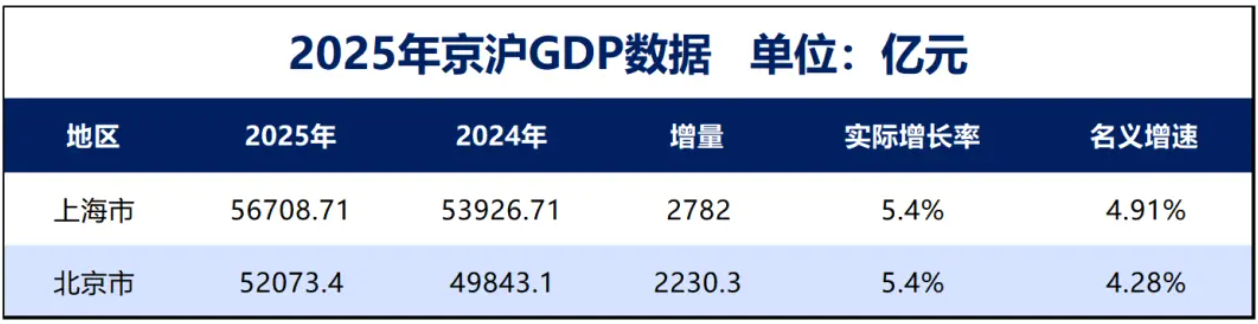
一线城市中的深圳和广州尚未公布数据,市场普遍预测,深圳2025年GDP预计将接近3.9万亿,广州预计将站上3.1万亿台阶。直辖市重庆的GDP预计将接近 3.9万亿。 万亿俱乐部中,温州、徐州、大连将晋级。目前温州政府工作报告已经剧透,2025年该市地区生产总值突破万亿元,成为继杭州、宁波之后的浙江第3座 GDP万亿城市。根据大连政府工作报告增速计算,也将迈入万亿,成为东北首个GDP万亿城市。徐州市同样根据政府工作报告增速计算,GDP将正式达到万 亿,成为苏北首座江苏第六座万亿城市。至此,"十三太保"中,苏A(南京)B(无锡)C(徐州)D(常州)E(苏州)F(南通)均已迈入"万亿俱乐部"。 中国第二个5万亿城市来了,北京市统计局1月21日发布数据,2025年北京实现地区生产总值52073.4亿元,比上年增长5.4%。这意味着,继上海之后,北京 成为我国第二个经济规模突破5万亿元的城市。 | | | | 2025年京沪GDP数据 单位: 亿元 | | | --- | --- | --- | --- | --- | | 地区 | 2025年 | 2024年 | 增量 | 实际增长率 | | 上海市 | 56708. ...
AI明星“光环”褪色,900亿商汤,该如何破局?
3 6 Ke· 2026-01-21 06:46
Core Viewpoint - SenseTime, once a leading AI company, has seen its stock price decline significantly despite the ongoing AI boom, primarily due to its unsustainable business model and continuous losses [3][6][11] Group 1: Company Background - SenseTime was founded in 2014 by a team from top academic institutions and tech giants, focusing on computer vision technology [4] - The company initially built a business model centered around customized AI solutions for various sectors, including finance, security, and healthcare [5] - SenseTime achieved rapid revenue growth from 2018 to 2020, with a compound annual growth rate of 36.4% [5] Group 2: Financial Performance - From 2018 to mid-2025, SenseTime accumulated losses of 56.3 billion yuan, with a net profit of -1.478 billion yuan in the first half of 2025, despite a year-on-year growth of 39.84% [3][6] - The company's stock price has dropped over 70% from its peak of 9.7 HKD per share in 2022 to 2.38 HKD per share, resulting in a market capitalization of 96.2 billion HKD [3][6] Group 3: Business Model Challenges - SenseTime's reliance on a project-based business model has led to high marginal costs and limited scalability, resulting in a lack of recurring revenue [5][6] - The company has faced challenges in maintaining profitability due to the high costs associated with customized project delivery and long payment cycles [5][6] Group 4: Recent Developments - In response to industry changes, SenseTime launched the "Riri Xin" multimodal model in 2023, achieving notable performance in evaluations [7] - The company restructured its business into three main segments: generative AI, traditional AI, and smart vehicles, with generative AI showing significant revenue growth [8][9] - Despite the growth in generative AI, SenseTime's market share in the domestic large model market has declined from 16% to 13.8% [9][10] Group 5: Future Outlook - SenseTime is facing intense competition and financial challenges, leading to a series of stock placements to raise capital, totaling approximately 3.15 billion HKD [10] - The company acknowledges the need for substantial investment in computing power but lacks the financial strength to compete with larger players like Alibaba and Tencent [10][11]
明略科技(2718.HK)再次荣登「2025胡润中国人工智能企业50强」
Xin Lang Cai Jing· 2026-01-21 04:57
1月19日,《2025胡润中国人工智能企业50强》(2025Hurun China Artificial Intelligence Enterprises Top50)重磅发布。 该榜单由全球最大的创业企业榜单编制机构——胡润研究院推出,旨在发掘中国人工智能领域的领军力量,遴选以人工智能为主营业务的最具价值中国企 业。在全球AI市场飞速发展的当下,其已成为观察中国AI产业发展动向及未来趋势的重要窗口。 明略科技(2718.HK)凭借在Agentic AI领域的全球领先实力再度上榜,并在数据分析决策细分领域的"企业数据决策"类产品中跃居榜首,再次彰显技术实力 与市场认可。 | 排名 | 企业 | 价值(亿元人民币) | 细分领域 | 优势产品 | 总部城市 | | --- | --- | --- | --- | --- | --- | | 1 | 寒武纪 | 6,300 | 算力硬件 | Alt 片 | 北京 | | 2 | 壓尔线程 | 3,100 | 算力硬件 | GPU | 北京 | | 3 | 沐曦股份 | 2,500 | 算力硬件 | ar GPU = | 上海 | | 15/V | 科大讯飞 | 1 ...

重估商汤
是说芯语· 2026-01-21 03:49
Core Insights - The article emphasizes the strategic decision of SenseTime to build its own computing infrastructure instead of selling to tech giants, which has proven to be a strong asset during the AI industry's value verification phase [4][6]. - SenseTime's refusal to be acquired and its focus on creating AI as a foundational infrastructure rather than a mere plugin for larger companies is highlighted as a key factor in its resilience [4][6]. Group 1: Market Transition - The AI industry is undergoing a significant market logic shift, moving from a phase where capital was willing to pay premiums for technology concepts to a phase focused on value verification and stable cash flows [6][8]. - SenseTime's strong performance amidst this transition serves as a testament to its strategic foresight and comprehensive layout in the AI sector [6][8]. Group 2: Financial Performance - By mid-2025, SenseTime's revenue from generative AI has significantly increased to 77%, indicating a successful transition from traditional business models [11]. - As of mid-2025, SenseTime's cash reserves reached 13.16 billion yuan, showcasing a robust financial position that supports its growth and risk mitigation strategies [12]. Group 3: Infrastructure Development - SenseTime began investing in its computing infrastructure as early as 2018, recognizing the need for AI-specific cloud services, which were scarce at the time [14][16]. - By August 2025, SenseTime's operational computing power reached approximately 25,000 PetaFLOPS, with ongoing expansion of its Shanghai Lingang AI Data Center [16]. Group 4: Competitive Positioning - SenseTime's strategy of building a comprehensive technology base allows it to avoid being trapped in low-end markets and instead pursue high-value growth opportunities [17]. - The company's dual approach of serving both B2B and B2C markets positions it favorably against competitors, with a more reasonable valuation compared to other tech firms [22]. Group 5: Long-term Strategy - SenseTime's commitment to building a solid technological foundation has enabled it to extend its growth curves and avoid the pitfalls of price wars in the AI sector [17][21]. - The company's focus on creating a "big device + big model + application" strategic triangle is crucial for its long-term success and market differentiation [17].

AI明星“光环”褪色!900亿商汤,该如何破局?
Sou Hu Cai Jing· 2026-01-21 02:02
Core Viewpoint - SenseTime, once a leading AI company, has seen its stock price decline significantly despite the ongoing AI boom, primarily due to its unsustainable business model and mounting losses [3][4][7]. Group 1: Company Background - SenseTime was founded in 2014 by a team from top academic institutions and tech giants, focusing on computer vision technology and offering customized AI solutions [5][6]. - The company experienced rapid growth in its early years, with revenues increasing from 1.85 billion yuan in 2018 to 3.45 billion yuan in 2020, achieving a compound annual growth rate of 36.4% [5][6]. Group 2: Financial Performance - From 2018 to mid-2025, SenseTime accumulated losses of 56.3 billion yuan, with a net profit of -1.478 billion yuan in the first half of 2025, despite a year-on-year growth of 39.84% [3][6]. - As of the latest closing, SenseTime's stock price was 2.38 HKD per share, with a total market capitalization of 96.2 billion HKD, representing a decline of over 70% from its peak of 9.7 HKD per share in 2022 [3][6]. Group 3: Business Model Challenges - SenseTime's reliance on a project-based business model has led to high marginal costs and limited scalability, resulting in a continuous state of loss [6][8]. - The company has faced challenges in generating recurring revenue, as most project revenues are one-time and have long payment cycles [6][8]. Group 4: Recent Developments - In response to industry changes, SenseTime launched the "Riri Xin" multimodal model in 2023, achieving significant performance metrics and expanding its generative AI business [8][9]. - The company restructured its business into three main segments: generative AI, smart vehicles, and visual AI, with generative AI revenue exceeding 1.1 billion yuan in 2023, accounting for over 34% of total revenue [9][10]. Group 5: Market Position and Competition - Despite its technological advantages, SenseTime's market share in the domestic generative AI sector has declined from 16% to 13.8%, indicating increased competition [10][11]. - The company faces significant challenges in maintaining competitiveness due to its limited financial resources compared to larger cloud service providers like Tencent and Alibaba [11].
华为哈勃押注,成立仅半年融资三连跳,这家公司凭什么成为“世界模型黑马”?
机器人大讲堂· 2026-01-20 09:11
Core Viewpoint - Manifold AI, founded by a former key member of SenseTime, aims to redefine embodied intelligence through its World Model technology, enabling robots to not only perceive but also predict physical interactions in their environment [1][4][12]. Group 1: Financing and Growth - Manifold AI has completed over 300 million yuan in financing within just seven months of its establishment, showcasing a rapid fundraising pace that reflects strong market interest in "Physical AI" [2][7]. - The company has successfully raised funds in three rounds: a seed round led by Inno Angel Fund, followed by two angel rounds, each exceeding 100 million yuan [4][7]. - The latest funding round included notable investors such as Meihua Venture Capital, Junlian Capital, and Huawei Hubble, indicating a strong backing from the industry [1][9]. Group 2: Technology Development - Manifold AI's technology focuses on World Model Action (WMA), which allows robots to predict physical state changes based on first-person perspective videos, moving beyond traditional visual-language models (VLM) [12][14]. - The company's WorldScape model enables robots to simulate and interact with their environment autonomously, marking a shift from mere execution of pre-set codes to possessing "brain-like" capabilities [14][15]. - Manifold AI is developing multiple specialized models, including DriveScape for autonomous driving, RoboScape for physical interaction, and AirScape for drones, all built on the foundational WorldScape model [15]. Group 3: Future Aspirations - The company aims to equip over 10% of robots in the market with its "Manifold Brain," pushing the boundaries of Physical AI agents [19][20]. - The long-term vision includes transitioning World Models from experimental stages to practical applications in warehouses, factories, and homes within the next three years [20][21]. - The strategy emphasizes creating a universal embodied world model while simultaneously commercializing sub-domain models to generate revenue and support further development [20].