商汤大装置

Search documents
SenseTime:拒被巨头收购,拒绝快钱!守 AI 初心!
是说芯语· 2026-01-22 08:26
Core Insights - The article emphasizes the strategic decision of SenseTime to build its own computing infrastructure instead of selling to tech giants, which has become a crucial asset during the AI industry's value verification phase [4][6] - SenseTime's approach contrasts with the trend of many companies opting for quick profits through acquisitions, highlighting the importance of establishing AI as a foundational infrastructure [4][6] Group 1: Market Transition - The AI industry is undergoing a significant market logic shift, moving from a phase where capital was willing to pay premiums for technology concepts to a phase focused on value verification and stable cash flows [6][8] - SenseTime's resilience amidst this transition serves as a testament to its strategic foresight and comprehensive stack layout [6][8] Group 2: Financial Performance - By mid-2025, SenseTime's revenue from generative AI has surged to 77%, indicating a successful transition from traditional business models [11] - The company reported a cash reserve of 13.16 billion yuan by mid-2025, which is crucial for risk mitigation and valuation reconstruction during a capital downturn [12] Group 3: Infrastructure Investment - SenseTime began investing in computing infrastructure as early as 2018, recognizing the need for AI-specific cloud services, which were scarce at the time [14][16] - The company has developed a significant operational computing power of approximately 25,000 PetaFLOPS by August 2025, enhancing its capacity to support AI applications [16] Group 4: Competitive Positioning - SenseTime's strategy of building a comprehensive technology base allows it to avoid being trapped in low-end markets and instead pursue high-value growth avenues [18][22] - The company's dual-driven business model (B2B and B2C) is structurally more rational, with a current trading multiple of 13 times compared to competitors with much higher multiples [22] Group 5: Long-term Value Creation - The article suggests that mastering underlying computing power and full-stack implementation capabilities is becoming essential for companies to anchor long-term value amid market uncertainties [23]


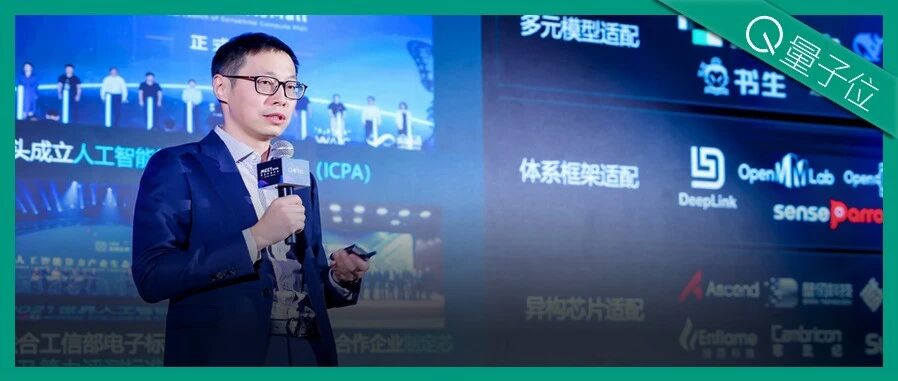
真正面向大模型的AI Infra,必须同时懂模型、系统、产业|商汤大装置宣善明@MEET2026
量子位· 2025-12-22 01:40
Core Viewpoints - The core strategy of the company is "1+X," where "1" represents core businesses including large devices, large models, and AI applications, while "X" encompasses innovative businesses such as smart driving, healthcare, and retail [6][10]. AI Infrastructure Development - The company emphasizes that AI infrastructure must not only address the availability of computing power but also ensure efficient, stable, and scalable support for models and industries [3][4]. - The total computing power of the company has reached 32,000 PetaFLOPS, showcasing its commitment to building a robust AI infrastructure [6][13]. Energy Efficiency and Carbon Reduction - The AI computing center has implemented a power consumption prediction system that can accurately forecast power needs within 15 minutes, achieving a 7% annual reduction in electricity costs and over 3,000 tons of annual carbon reduction [6][21]. - The center's Power Usage Effectiveness (PUE) has reached 1.267, with a 15% improvement in overall computing efficiency [21]. Collaboration and Resource Sharing - The company has launched the "SenseTime Computing Power Mall" in collaboration with over ten domestic manufacturers, allowing clients to freely combine and allocate diverse domestic computing resources and industry model services [6][22]. - The platform supports seamless implementation of algorithms across various chips, enhancing the overall capabilities of the PaaS platform [22]. Industry Applications and Partnerships - The company has established partnerships with top-tier research institutions and various industries, including internet technology, AIGC, and traditional sectors, providing comprehensive end-to-end solutions [25][26]. - Notable collaborations include working with major clients in traditional industries to develop industry-specific AI models, demonstrating the feasibility of AI applications even in complex traditional sectors [29][30].
年内港股配售融资规模超3100亿港元,科技与生物医药行业占据主导
Zheng Quan Shi Bao· 2025-12-18 11:37
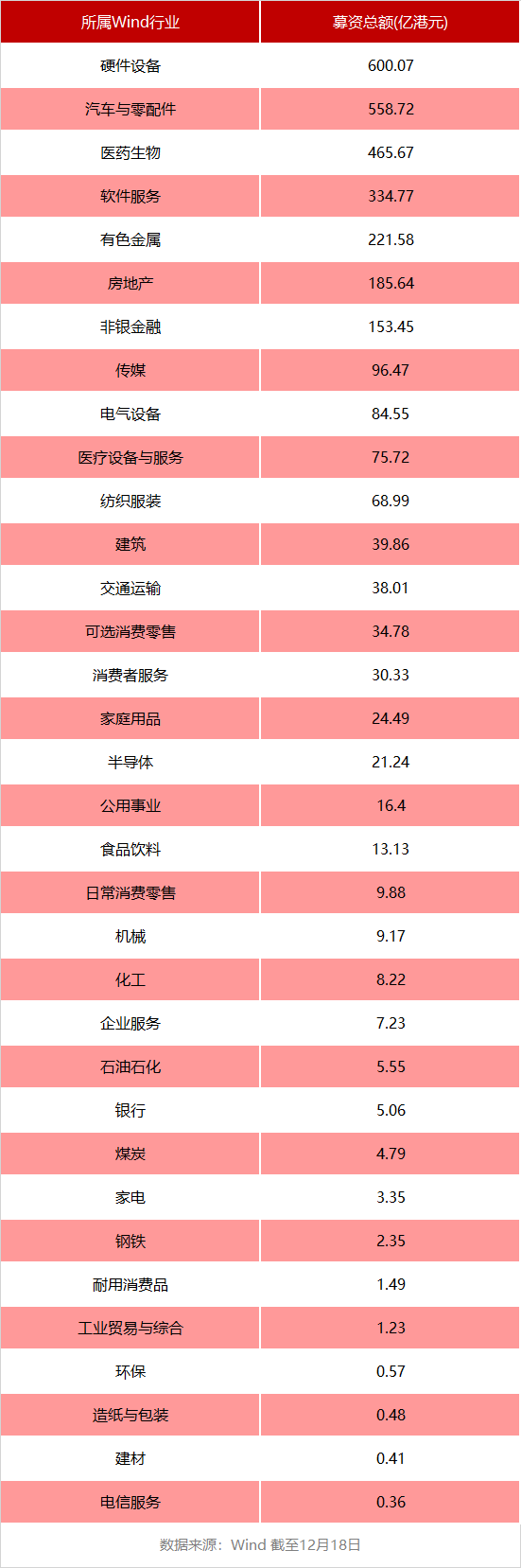
Core Viewpoint - The Hong Kong stock market has seen a surge in refinancing activities this year, with placements becoming the preferred method for companies due to their efficiency, flexibility, and cost advantages [1][3]. Group 1: Market Activity - Hong Kong listed companies have raised nearly 350 billion HKD through placements, rights issues, and consideration issues this year, with placements accounting for almost 90% of the total [1][3]. - The total amount raised through placements alone reached approximately 312.4 billion HKD, representing 89.61% of the total refinancing [3][7]. Group 2: Industry Insights - Key industries leading the placements include hardware equipment, automotive and parts, biomedicine, and software services, with hardware equipment raising 600.07 billion HKD [4][5]. - Notable contributions from specific companies include Xiaomi Group raising 426 billion HKD in the hardware sector and BYD raising 435.09 billion HKD in the automotive sector [4][7]. Group 3: Fund Utilization - The funds raised through placements are primarily allocated for research and development, business expansion, international market development, and optimizing capital structure [9]. - Companies like SenseTime and BYD have specified that their raised funds will support core business development, AI infrastructure, and overseas market expansion [9]. Group 4: Market Conditions - The active refinancing in the Hong Kong market is attributed to increased market activity, rising trading volumes, and valuation recovery, providing an excellent window for companies to refinance [10]. - Analysts predict that the liquidity in the Hong Kong market will continue to improve, driven by the "wealth effect" and increasing participation from mainland investors [10].



年内港股配售融资规模超3100亿港元 科技与生物医药行业占据主导
Zheng Quan Shi Bao· 2025-12-18 11:31
Group 1 - The Hong Kong stock market has seen active refinancing this year, with placements becoming a key method due to their efficiency, flexibility, and cost advantages [1][2] - As of this year, Hong Kong listed companies have raised nearly 350 billion HKD through placements, rights issues, and consideration issues, with placements accounting for nearly 90% of the total [1][2] - Discounted placements have become the mainstream method, with most companies adopting this strategy to attract investors [1][2] Group 2 - The technology and biopharmaceutical sectors dominate the placement market, with hardware, automotive, and software services also being significant contributors [3] - Notable placements include Xiaomi Group raising 426 billion HKD in the hardware sector and BYD raising 435 billion HKD in the automotive sector [3] - Approximately 40% of the total refinancing this year has come from technology companies, reflecting strong investor confidence in the tech sector [3] Group 3 - The funds raised through placements are primarily allocated for research and development, business expansion, international market development, and operational capital [4][5] - Companies like SenseTime plan to use 30% of their placement proceeds for core business development and AI infrastructure, while BYD aims to enhance its technological capabilities and expand overseas [4][5] - The active refinancing environment is supported by increased market activity, rising transaction volumes, and valuation recovery, providing an excellent window for listed companies [5]
年内港股配售融资规模超3100亿港元 科技与生物医药行业占据主导
证券时报· 2025-12-18 11:25
Group 1 - The core viewpoint of the article highlights the active refinancing in the Hong Kong stock market this year, with placements becoming a crucial method for companies to raise funds due to their efficiency, flexibility, and cost advantages [1] - According to Wind data, Hong Kong listed companies have raised nearly 350 billion HKD through placements, rights issues, and consideration issues this year, with placements accounting for nearly 90% of the total, making it the preferred method for refinancing [1][3] - Discounted placements have become the mainstream approach, as most companies adopt this strategy to attract investors [1][3] Group 2 - In terms of industry, hardware equipment, automotive and parts, biomedicine, and software services have emerged as the main sectors for placements, with hardware equipment raising 600.07 billion HKD through 28 placements this year [4][6] - The automotive sector has seen 9 placements totaling 558.72 billion HKD, with BYD accounting for 435.09 billion HKD, representing nearly 80% of the sector's total [6] - The biomedicine sector has also been active, with 46 placements raising a total of 465.67 billion HKD, led by WuXi AppTec with 76.95 billion HKD [6] Group 3 - The funds raised through placements are primarily directed towards research and development, business expansion, international market development, and optimizing capital structure [8][9] - Companies like SenseTime have indicated that 30% of their placement proceeds will support core business development, including AI infrastructure and generative AI research [8] - The active refinancing in the Hong Kong market is attributed to increased market activity, rising transaction volumes, and valuation recovery, providing an excellent window for listed companies to raise funds [9]

商汤科技预计配售31.5亿港元 继续扩大大装置规模和提升国产化比例
Zhi Tong Cai Jing· 2025-12-18 01:00
Group 1 - Company SenseTime (00020) announced a placement of 1.75 billion new Class B shares, expected to raise approximately HKD 3.15 billion [1] - The placement received strong interest from six institutions, reflecting confidence in SenseTime's long-term value and development prospects [1] - Proceeds from the placement will be used to enhance SenseTime's leading position in the full-stack AI field, including the development of AI cloud infrastructure and support for generative AI research [1] Group 2 - SenseTime has made significant breakthroughs in product ecosystem co-construction, launching multiple applications based on its multi-modal model since December 15 [2] - New products include the first integrated creative multi-episode generation AI agent Seko 2.0, which is compatible with domestic AI chips [2] - The company continues to lead in the integration of AI technology with practical scenarios, as demonstrated by its various innovative AI products for office and e-commerce applications [2]
商汤-W拟配售17.5亿股新B类股份 净筹约31.46亿港元
Zhi Tong Cai Jing· 2025-12-17 23:26
Core Viewpoint - SenseTime-W (00020) announced a placement agreement to issue 1.75 billion shares at a price of HKD 1.80 per share, representing an approximate 8.63% discount to the closing price of HKD 1.97 on December 17, 2025 [1] Group 1: Placement Details - The placement will involve at least six subscribers and will account for approximately 4.60% of the issued B shares and about 4.52% of the total issued shares as of the announcement date [1] - The expected total proceeds from the placement are approximately HKD 3.15 billion, with a net amount of about HKD 3.14 billion [1] Group 2: Use of Proceeds - 30% of the net proceeds will be used to support the company's core business development, including building an industry-leading AI cloud and expanding the scale of its AI infrastructure [1] - 30% will be allocated to research and development of generative AI and the development of derivative products based on the company's multimodal large models [1] - 20% will be used to explore the integration and application of AI in innovative verticals, including but not limited to finance and education [1] - 20% will be reserved for general working capital [1]
商汤-W(00020)拟配售17.5亿股新B类股份 净筹约31.46亿港元
智通财经网· 2025-12-17 23:19
Core Viewpoint - SenseTime-W (00020) announced a placement agreement to issue 1.75 billion shares at a price of HKD 1.80 per share, representing an approximate 8.63% discount to the closing price of HKD 1.97 on December 17, 2025 [1] Group 1: Placement Details - The placement will involve at least six subscribers and will account for approximately 4.60% of the issued B shares and about 4.52% of the total issued shares as of the announcement date [1] - The expected total proceeds from the placement are approximately HKD 3.15 billion, with net proceeds estimated at HKD 3.14 billion [1] Group 2: Use of Proceeds - 30% of the net proceeds will be used to support the company's core business development, including building an industry-leading AI cloud and expanding the scale of its AI infrastructure [1] - 30% will be allocated for research and development of generative AI and the development of products derived from the company's multimodal large models [1] - 20% will be used to explore the integration and application of AI in innovative verticals, including but not limited to finance and education [1] - 20% will be reserved for general working capital [1]
商汤-W(00020.HK)拟配售17.5亿股新B类股份 总筹31.5亿港元
Ge Long Hui· 2025-12-17 23:07
Core Viewpoint - The company, SenseTime-W (00020.HK), has announced a placement agreement to issue 1.75 billion shares at a price of HKD 1.80 per share, aiming to raise approximately HKD 31.50 billion in total proceeds [1] Group 1: Placement Details - The placement shares represent about 4.60% of the issued B shares and approximately 4.52% of the total issued shares as of the announcement date [1] - The net proceeds from the placement are expected to be around HKD 31.46 billion [1] Group 2: Use of Proceeds - 30% of the net proceeds will be used to support the company's core business development, including building an industry-leading AI cloud and expanding the scale of its AI infrastructure [1] - 30% will be allocated for research and development of generative AI and the development of derivative products based on the company's multimodal large models [1] - 20% will be used to explore the integration and application of AI technologies in innovative verticals, including but not limited to finance and education [1] - 20% will be allocated for general working capital of the company [1]
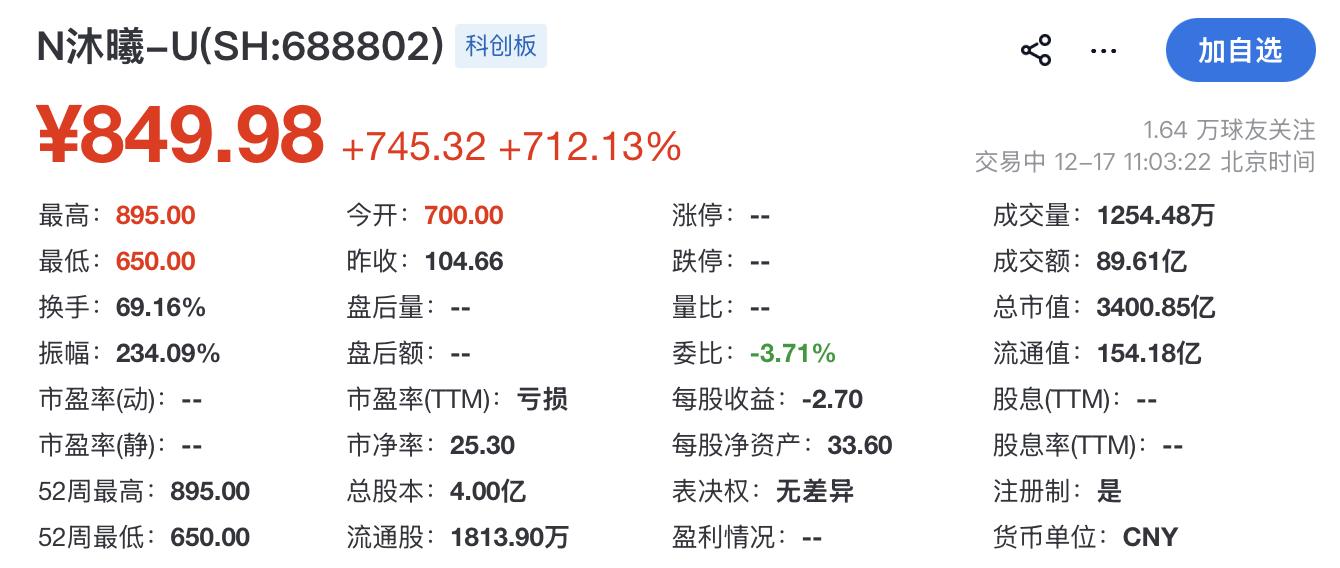
沐曦股份科创板上市,全栈“中国芯”联动AI企业实现“算力集群+行业拓展”全方位合作
Jin Rong Jie· 2025-12-17 05:01
Core Viewpoint - The collaboration between SenseTime and Muxi signifies a pivotal shift in China's GPU industry from "catching up" to "running alongside," showcasing confidence in domestic alternatives and the potential for growth in AI computing power [1]. Group 1: Financial Performance - SenseTime's revenue from generative AI grew by 103.1% in 2024, reaching 2.4 billion yuan, maintaining a doubling growth trend for two consecutive fiscal years [3]. - The company's strategic focus on high-performance computing is driven by a rigid demand for computing power [3]. Group 2: Strategic Collaboration - SenseTime and Muxi have established a comprehensive partnership that extends beyond product procurement to long-term strategic agreements [5]. - The collaboration aims to create a "computing cluster + industry expansion" model, integrating supply and demand in the GPU market [4]. Group 3: Technological Development - Both companies are engaged in a model of open co-construction and sharing of underlying technologies, focusing on deep adaptation and joint development of product solutions [6]. - They have developed multiple product solutions, including model adaptations and compatibility certifications for domestic chips, enhancing the training and inference capabilities of AI models [6]. Group 4: Ecosystem Development - The partnership has led to the establishment of the "SenseTime Big Device Computing Mall," facilitating effective resource integration and sharing [7]. - This collaboration enhances the diversity and autonomy of computing power supply while reducing construction costs, supporting the ongoing iteration of AI technology and its industrial applications [7]. Group 5: Market Impact - The partnership has significantly improved Muxi's brand influence and market share by gaining recognition in mainstream demand markets through deep collaboration with industry clients [9]. - The ongoing collaboration is expected to explore new paths and models for AI computing infrastructure, potentially leading to a more open and collaborative domestic AI computing ecosystem [9].