Scale AI

Search documents
不恋爱、无社交,20岁AI创始人正给硅谷进行一场换血
3 6 Ke· 2026-01-19 10:37
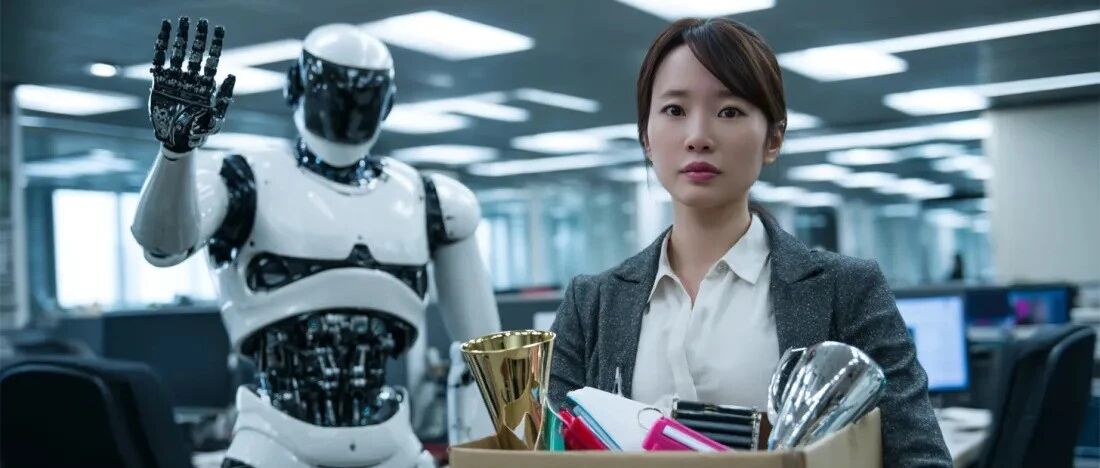
Core Insights - The article highlights a significant shift in the age of founders in the AI sector, with the average age of AI unicorn founders dropping from 40 in 2021 to 29 in 2024, while founders in traditional sectors are getting older [8][9] - The trend indicates that younger entrepreneurs are favored by investors, as they are perceived to embody the innovative spirit of the AI era, while older experiences may be seen as burdensome [4][12] Group 1: Age Dynamics in AI Startups - The average age of AI unicorn founders has decreased dramatically, indicating a trend towards younger leadership in the AI industry [8] - In contrast, founders in non-AI sectors have seen an increase in average age, from 30 in 2014 to 34 between 2022 and 2024 [8] - Young founders are becoming the norm in the AI industry, with examples like Alexandr Wang, who became a leader at Meta at just 29 years old [9][10] Group 2: Entrepreneurial Lifestyle Changes - A new entrepreneurial paradigm is emerging, characterized by extreme focus and the abandonment of personal relationships, as seen in the lives of young founders like Mahir Laul [15][16] - The pressure to succeed in the fast-paced AI sector leads many founders to prioritize work over social interactions, creating a "celibate entrepreneurship" culture [16][17] - Data shows that the business spending in the Bay Area is increasing, reflecting the commitment of young entrepreneurs to their startups [17] Group 3: Corporate Restructuring in Tech Giants - Major tech companies are undergoing a "silent replacement" phase, where older employees are being laid off in favor of younger, more specialized talent in AI [20][21] - Companies like Meta are shifting their hiring focus to require highly skilled individuals in AI-related fields, indicating a significant transformation in workforce needs [21][22] - The demand for junior, general programmers remains low, while competition for those with 3-5 years of experience in AI tools is intensifying [21]


掏空收购目标躲避反垄断审查 美FTC开查科技巨头“人才收购”
Feng Huang Wang· 2026-01-17 00:07
Core Viewpoint - The FTC is scrutinizing a new practice among large tech companies of acquiring talent from startups without direct acquisitions, which is seen as a way to circumvent antitrust reviews [1] Group 1: Regulatory Actions - The FTC, led by Chairman Andrew Ferguson, will begin reviewing these talent acquisitions to ensure they are not attempts to bypass merger review processes [1] - The Biden administration's strong antitrust enforcement has prompted companies to adopt more talent acquisition strategies [1] Group 2: Examples of Talent Acquisitions - NVIDIA agreed to license chip technology from startup Groq and poached its CEO Jonathan Ross, a former senior employee at Google [1] - Microsoft engaged in a $650 million deal, referred to as a "licensing fee," to attract a top AI executive [1] - Meta spent $15 billion to hire Alexandr Wang, CEO of Scale AI, without acquiring the company [1]

CFOs On the Move: Week ending Jan. 16




Yahoo Finance· 2026-01-16 09:06
Executive Appointments - Paramount appointed Dennis Cinelli as its new CFO, effective January 15, succeeding Andrew Warren, who will become a strategic adviser [2] - Wynn Resorts named Craig Fullalove as the new CFO, who previously served as CFO of the company's Macau operations [3] - Duolingo appointed Gillian Munson as its new CFO, effective February 23, succeeding Matt Skaruppa, who will transition to an advisory role [5] Background of New CFOs - Dennis Cinelli has experience as finance chief at Scale AI and held senior roles at Uber and GE Ventures [2] - Craig Fullalove has been with Wynn Resorts since 2020 and previously worked at Asian Coast Development Limited and Deloitte & Touche [3] - Gillian Munson has been on Duolingo's board since 2019 and has held CFO roles at Vimeo, Iora Health, and XO Group [5] Transition Plans - Andrew Warren will assist in the transition as a strategic adviser after stepping down as CFO at Paramount [2] - Julie Cameron-Doe will retire in mid-2026 but will serve as a consultant and non-executive director at Wynn Macau [3] - Matt Skaruppa will step down after nearly six years and will help with the transition in an advisory capacity at Duolingo [5] Future Retirements - Yale University CFO Stephen Murphy is set to retire in June 2026 after a long tenure, having served as CFO since 2015 [4]
隐秘的“知识买断”生意:AI公司用千元时薪,撬动价值百万的行业经验
创业邦· 2026-01-16 03:43
Core Viewpoint - The article discusses the evolving role of AI trainers and the challenges faced by individuals in the data annotation industry, highlighting the precarious nature of these jobs and the increasing demands for qualifications and experience [6][11][31]. Group 1: Job Nature and Responsibilities - AI trainers are tasked with teaching AI systems by providing real-world data and experiences, which often involves a significant sacrifice of their own professional knowledge [8][10]. - The work of AI trainers is described as highly industrialized, often reducing them to mere data providers rather than creative contributors [26][29]. - The role has evolved from basic data annotation to more complex tasks involving logical reasoning and value judgment, requiring higher educational qualifications and specialized knowledge [20][15]. Group 2: Industry Trends and Challenges - The demand for AI trainers is expected to grow, with a projected talent gap of up to one million in China over the next five years [11]. - The recruitment process for data annotation roles has become increasingly competitive, with a hiring rate of approximately 50% [16]. - Many individuals face a challenging entry process, often involving unpaid trials and rigorous testing, which can lead to feelings of exploitation [30][31]. Group 3: Economic Aspects - Compensation for AI trainers varies widely, with some positions offering high hourly rates, while others pay significantly less, reflecting the lack of technical barriers in the industry [23][30]. - The article notes that the financial rewards may not be as substantial as they seem, with many workers experiencing issues such as unpaid work and low job security [30][31]. - The industry is characterized by a lack of true competitive advantages, leading to high turnover rates and a constant influx of new entrants [34]. Group 4: Future Outlook - There is a growing concern among AI trainers about their long-term job security, as AI systems become more capable of performing tasks traditionally done by humans [31][36]. - The article emphasizes the potential for AI to replace human trainers, raising questions about the future role of humans in the AI development process [31][37]. - The business model of AI data companies is shifting, focusing on high-end annotation services, which may further marginalize entry-level positions [33].
智谱与MiniMax港股上市、巨头加速收购新势力...2026 AI 世界的开年大戏正在上演
3 6 Ke· 2026-01-15 07:19
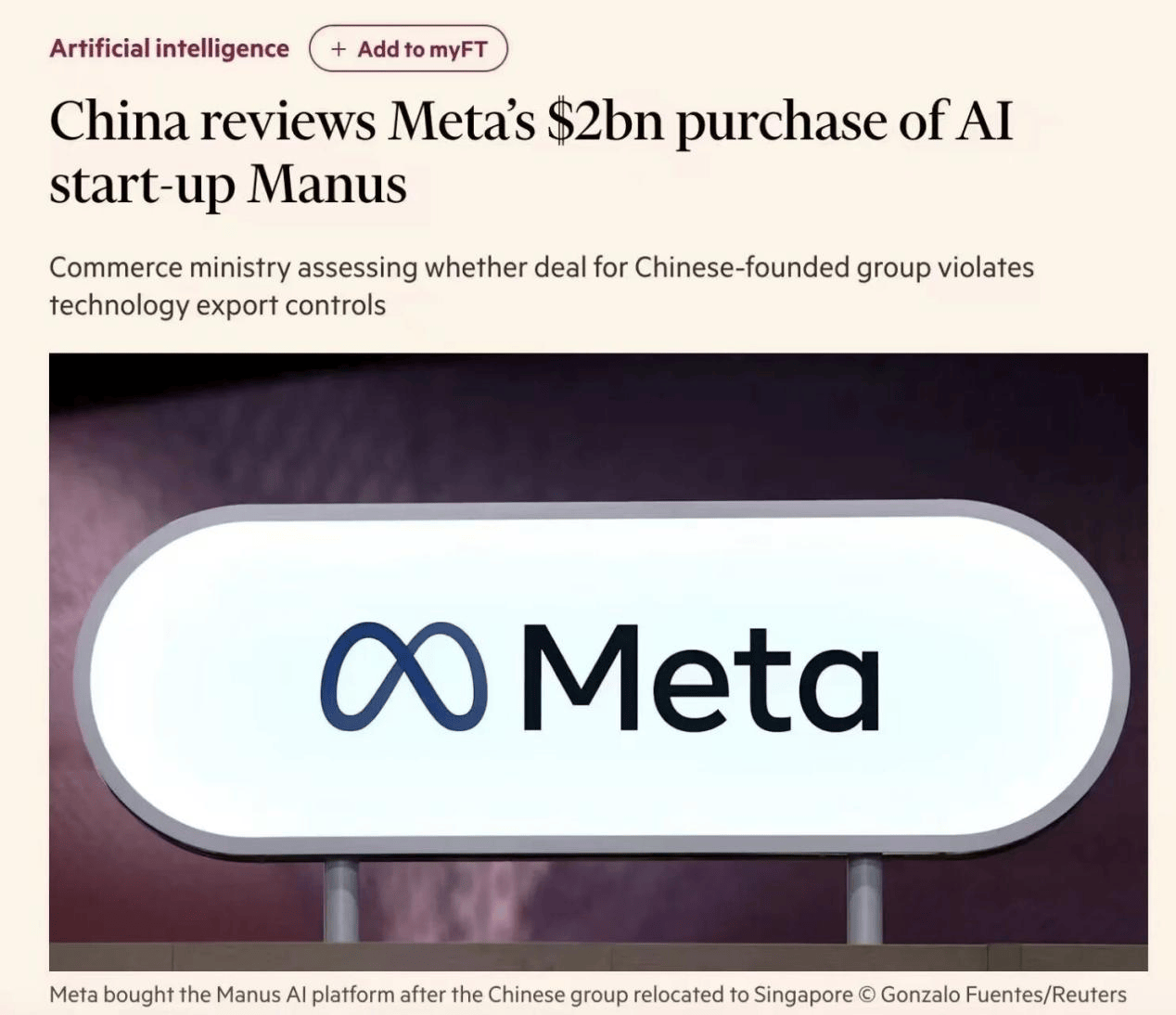
Core Insights - The AI sector witnessed significant developments in 2025, highlighted by the launch of the DeepSeek-R1 model, which achieved over 22.15 million daily active users within 21 days, sparking widespread AI adoption during the Chinese New Year [1] - Major transactions included Meta's acquisition of Manus for between $2 billion and $3 billion, and the IPOs of Chinese AI unicorns Zhiyuan and MiniMax on the Hong Kong Stock Exchange, marking them as the first and second publicly listed companies in the global large model space [1] Group 1: Manus and Meta - Manus, founded by Xiao Hong, initially gained attention with a successful test video and $75 million in funding, but faced challenges including layoffs and a potential crisis before being acquired by Meta [4][6] - Xiao Hong will take on a significant role at Meta, focusing on AI strategy and product development, following Meta's history of acquiring key talent in the AI field [6][10] - Meta's strategy appears to be shifting towards commercialization, as evidenced by the acquisition of Manus and the integration of its team into Meta's AI initiatives [11][12] Group 2: Zhiyuan and MiniMax IPOs - Zhiyuan, a project stemming from Tsinghua University, successfully transitioned from academic research to commercial success, becoming the first independent company to develop a large model with over 1 trillion parameters [15][16] - MiniMax, founded by former SenseTime executive Yan Junjie, focuses on multi-modal AI models and has attracted significant investment from major gaming companies, positioning itself as a key player in the AI landscape [17][18] - Both companies' IPOs reflect a broader trend of AI firms seeking to capitalize on their technological advancements and market potential, despite facing challenges such as legal disputes over intellectual property [19][20]


派拉蒙聘请前Scale AI高管担任首席财务官
Jin Rong Jie· 2026-01-15 02:47
Group 1 - Paramount Global announced the appointment of Dennis Cinelli as Chief Financial Officer, effective January 15, succeeding interim CFO Andrew Warren [1] - Cinelli previously worked at AI startup Scale AI, where he contributed to the company's growth and facilitated an investment from Meta, bringing the company's valuation close to $30 billion [1] - This appointment comes amid intense competition between Paramount and Netflix for the acquisition of Warner Bros. Discovery's film and television studios and its extensive content library [1]
Paramount Taps Dennis Cinelli As CFO; Adds Andrew Campion, Formerly Of Nike & Disney, To Board
Deadline· 2026-01-14 21:38
Group 1 - Paramount has appointed Dennis K. Cinelli as the new Chief Financial Officer, effective January 15, succeeding Andrew C. Warren, who will remain as a strategic advisor [1][4] - Cinelli has a strong background in finance and has previously held significant roles at companies like Uber and Scale AI, contributing to their growth and public offerings [3][5] - Andrew Campion has been added as an independent director, bringing extensive experience from his leadership roles at Nike and Disney [2] Group 2 - Cinelli will oversee Paramount's global financial functions, including accounting, tax, and investor relations [4] - The CEO of Paramount Skydance, David Ellison, expressed confidence in Cinelli's ability to drive growth and innovation within the company [5]

PARAMOUNT APPOINTS DENNIS K. CINELLI AS CHIEF FINANCIAL OFFICER AND ADDS ANDREW CAMPION TO ITS BOARD OF DIRECTORS
Prnewswire· 2026-01-14 21:05
Core Insights - Paramount has appointed Dennis K. Cinelli as the new Chief Financial Officer, effective January 15, 2026, succeeding Andrew C. Warren, who will continue as a strategic advisor [1][2][3] - Cinelli has a strong background in finance, having previously held key roles at Uber and Scale AI, where he contributed to significant growth and strategic fundraising [1][5] - The company also announced the addition of Andrew Campion as an independent director on the Board of Directors, effective January 13, 2026, bringing extensive experience from Nike and The Walt Disney Company [3][4][6] Company Overview - Paramount, a Skydance Corporation, operates as a global media and entertainment company with three main segments: Studios, Direct-to-Consumer, and TV Media [7] - The company's portfolio includes well-known brands such as Paramount Pictures, CBS, Nickelodeon, and Showtime, among others [7]

放弃元宇宙?Meta大幅削减VR业务岗位,全力转向AI
Zheng Quan Shi Bao Wang· 2026-01-14 13:14
Core Viewpoint - Meta's ambitious shift from Facebook to Meta, focusing on the Metaverse, has resulted in significant financial losses and layoffs, prompting a strategic pivot towards artificial intelligence (AI) and wearable technology, particularly smart glasses [1][4][6]. Group 1: VR Business and Layoffs - Meta has initiated layoffs affecting over 1,000 employees in its Reality Labs department, marking a significant reduction in its Metaverse ambitions and a shift towards AI [2][4]. - The layoffs include the closure of several VR content development studios, such as Armature Studio and Twisted Pixel, as part of a resource reallocation strategy [2][3]. - Horizon Worlds, Meta's virtual social network, has struggled with low user engagement, prompting the company to focus on mobile experiences and attract developers from successful platforms like Roblox [3][4]. Group 2: Financial Performance and Strategic Shift - Since late 2020, Reality Labs has incurred over $70 billion in losses, with a recent quarterly revenue of $470 million against a loss of $4.4 billion [4][6]. - Meta's strategic pivot towards AI is driven by the underperformance of its VR business and the rapid growth of mobile gaming, leading to a reassessment of its business direction [4][6]. Group 3: Investment in AI - Meta plans to invest significantly in AI, with a capital expenditure increase to $70-72 billion for 2025 and expectations for further expansion in 2026 [7]. - The company has made substantial acquisitions, including a $14.3 billion purchase of Scale AI, to bolster its AI capabilities [6][7]. - Despite heavy investments, Meta's AI models have not yet achieved competitive performance compared to industry leaders like Google and OpenAI, leading to internal disputes regarding the AI strategy [7][8]. Group 4: Smart Glasses as a Highlight - Meta's smart glasses, developed in partnership with Essilor Luxottica, have gained significant market traction, with a projected production capacity increase to 20 million units by the end of 2026 [8][9]. - The smart glasses feature advanced functionalities such as navigation, real-time translation, and video calls, positioning them as a key product in Meta's portfolio [8][9]. - Meta holds a dominant market share of approximately 73% in the smart glasses segment, with expectations for substantial growth in the coming years [8].
AI小登的尽头,是卖身老登?
Sou Hu Cai Jing· 2026-01-13 03:23
Core Insights - Major AI companies are aggressively acquiring startups to fill capability gaps and enhance their competitive edge in the rapidly evolving AI landscape [1][4][5] Group 1: Acquisitions and Strategic Moves - Nvidia acquired AI chip startup Groq for $20 billion, Google spent $4.75 billion on clean energy firm Intersect Power, and Meta invested $4.5 billion in AI agent Manus to secure energy sovereignty and enhance application capabilities [1][4] - The trend of high-valuation acquisitions reflects the urgency of established companies ("old players") to differentiate their technology and the need for startups ("young players") to monetize their first-mover advantages quickly [4][5] - Meta's acquisition of Manus is driven by the belief that AI agents are the future, allowing Meta to quickly expand user scenarios and explore monetization opportunities [6][10] Group 2: Market Dynamics and Challenges - OpenAI, despite its significant resources, faces challenges in monetization, with only 5% of its active users being paid subscribers [4] - The dominance of Nvidia in the GPU market, with a projected 94% market share by Q2 2025, creates significant barriers for smaller AI startups, which struggle with high procurement costs and potential supply shortages [7][12] - The pressure on startups to survive has shifted their focus from independent growth to strategic exits, as seen in the case of companies like Zhiyun, which opted for an IPO to avoid falling behind [8][15] Group 3: Future Outlook and Innovation - The ongoing acquisition spree by major players aims to build a comprehensive ecosystem that integrates models, data, applications, and hardware, thereby enhancing their competitive positioning against rivals like Google [12][18] - The ability to integrate external technologies into existing platforms with vast user bases is a critical advantage that startups cannot easily replicate [17][18] - Despite the challenges, opportunities remain for innovative startups, as experienced talent from major companies is entering the market, potentially leading to new AI developments and business models [19][20]