重庆银行

Search documents
前瞻2026年银行股: 从关键主线中挖掘机会
Zhong Guo Zheng Quan Bao· 2025-12-16 20:21
Core Viewpoint - The banking sector is expected to transition from a bottoming phase in 2025 to stable growth in 2026, driven by policy support and improved net interest margins, leading to a structural bull market in bank stocks. Group 1: 2025 Banking Sector Performance - In 2025, the banking sector demonstrated a structural bull market, with the Shenwan primary banking index rising by 16.2% as of December 16, 2025, and Agricultural Bank increasing by nearly 50% [1] - Regional leaders like Xiamen Bank, Chongqing Bank, and Qingdao Bank saw increases of over 20%, while some joint-stock banks had gains of less than 5% [1] - The funding landscape showed significant differentiation, with strategic funds like insurance and AMC increasing their holdings, while public funds and northbound capital reduced their positions significantly in Q3 [1] Group 2: Valuation and Financial Metrics - The Shenwan primary banking index's price-to-book (PB) ratio rose from a low of 0.42 in 2023 to 0.54 by December 16, 2025, indicating an upward shift in valuations for major state-owned banks and quality regional banks [2] - By Q3 2025, the net interest margin for commercial banks was stable at 1.42%, with net profits for the first three quarters at 1.87 trillion yuan, unchanged from the previous year [2] - Non-performing loans increased to 3.52 trillion yuan, with a non-performing loan ratio of 1.52%, but a provision coverage ratio of 207.15% provided a buffer against risks [2] Group 3: Outlook for 2026 - In 2026, the banking sector is expected to benefit from policy dividends, with net interest margins stabilizing, which will support revenue growth [3] - Analysts predict that the decline in net interest margins will further narrow, leading to positive growth in net interest income [3] - The asset quality is expected to show a mixed trend, with retail and small business exposures being the main sources of non-performing loans, while corporate exposures remain stable [3] Group 4: Investment Opportunities - The differentiated performance of bank stocks in 2025 is likely to continue into 2026, with a focus on policy dividends, operational resilience, and valuation recovery [4] - High dividend stocks are seen as a stable investment choice, particularly regional banks with strong performance certainty [5] - Analysts suggest that banks with strong loan organization capabilities and stabilizing net interest margins will perform better, while those in a non-performing loan improvement cycle will have stronger profit release potential [5]
前瞻2026年银行股:从关键主线中挖掘机会
Zhong Guo Zheng Quan Bao· 2025-12-16 20:19
Core Viewpoint - The banking sector is expected to transition from a bottoming phase in 2025 to stable growth in 2026, driven by policy support and improved net interest margins, leading to a structural bull market in bank stocks [1][2]. Group 1: 2025 Banking Sector Performance - The banking sector experienced a structural bull market in 2025, with the Shenwan Primary Bank Index rising by 16.2% as of December 16, 2025, and Agricultural Bank increasing by nearly 50% [1]. - Regional leaders like Xiamen Bank, Chongqing Bank, and Qingdao Bank saw over 20% growth, while some joint-stock banks had less than 5% increase [1]. - There was a notable differentiation in funding sources, with strategic funds like insurance and AMC increasing their holdings, while trading funds like public funds and northbound capital reduced their positions significantly in Q3 [1]. Group 2: Valuation and Financial Metrics - The Shenwan Primary Bank Index's price-to-book (PB) ratio rose from a low of 0.42 in 2023 to 0.54 by December 16, 2025, indicating an upward shift in valuations for major state-owned banks and quality city commercial banks [2]. - The net interest margin for commercial banks remained stable at 1.42% in Q3 2025, with net profits for the first three quarters at 1.87 trillion yuan, unchanged from the previous year [2]. - The non-performing loan balance increased to 3.52 trillion yuan, with a non-performing loan ratio of 1.52%, but a high provision coverage ratio of 207.15% provided a buffer against risks [2]. Group 3: Outlook for 2026 - In 2026, the banking sector is expected to benefit from policy dividends, with net interest margins stabilizing, which will support revenue and profit growth [2][3]. - Analysts predict that the revenue and profit of listed banks will grow steadily, with fee income expected to stabilize after several years of cost reductions [3]. - The asset quality is anticipated to show a mixed trend, with retail and small business exposures remaining the main sources of non-performing loans, while corporate exposures stabilize [3]. Group 4: Investment Opportunities - The differentiated performance of bank stocks in 2025 is likely to continue into 2026, with a focus on policy dividends, operational resilience, and valuation recovery [3][4]. - High-dividend stocks are seen as a stable investment amid asset scarcity, with recommendations for city commercial banks with regional advantages and strong earnings certainty [4]. - Analysts suggest that stocks of quality city commercial banks with improving performance are likely to lead the banking sector, with profit growth linked to net interest income performance [4].
三年减少1亿张,年轻人正在抛弃信用卡
Tai Mei Ti A P P· 2025-12-16 11:57
Core Insights - The credit card market in 2025 is undergoing a significant contraction, with a total issuance of 707 million cards, down from a peak of 807 million in 2022, indicating a loss of nearly 100 million cards in three years [1][2] - The industry is experiencing a "structural collapse," particularly among state-owned banks, with notable declines in card issuance and increased non-performing loan rates [2][3] - The shift in consumer behavior is evident, with younger generations showing a high rate of card cancellations and a significant portion of the population opting not to hold credit cards at all [1][12] Market Dynamics - The total number of credit cards has decreased significantly, with a drop of 1 million cards in just six months, reflecting a broader trend of declining loan volumes and transaction amounts [1][2] - Major banks are closing credit card centers, with 63 centers shutting down in the year, indicating a shift from centralized operations to localized management [3][4] - The average customer acquisition cost for credit cards has risen to nearly 300 yuan, while the profit generated from low-efficiency customers is less than 50 yuan per year, leading to unsustainable business models [4][5] Risk Exposure - Non-performing loan rates have surged, with major banks reporting rates above 3%, and smaller banks facing even higher rates, indicating a significant risk exposure in the credit card sector [4][5] - The trend of selling off bad debts is increasing, with banks like Minsheng and Huaxia listing substantial amounts of non-performing credit card loans, reflecting the industry's struggle with asset quality [5][6] Strategic Shifts - Leading banks like China Merchants Bank are redefining their credit card strategies, focusing on integrating credit cards into broader retail banking ecosystems rather than merely as credit tools [6][7] - Banks are moving towards a model that emphasizes customer engagement and value creation, with a focus on enhancing customer experience through integrated services [12][14] - The industry is witnessing a transformation from traditional credit card offerings to more tailored products that meet specific consumer needs, such as lifestyle and essential services [15][16] Consumer Behavior - Younger consumers are increasingly rejecting traditional credit card offerings, with 37% of those born in the 1990s actively canceling cards and 42% of those born in the 2000s never having held a card [1][12] - The shift in consumer preferences is leading to a decline in card usage, with many opting for alternative payment methods that offer greater convenience [12][13] - The traditional incentives for credit card acquisition, such as promotional gifts, are losing effectiveness, prompting banks to rethink their marketing strategies [12][15]

重庆银行(01963.HK)披露二零二五年季度股息安排,12月16日股价下跌1.36%
Sou Hu Cai Jing· 2025-12-16 10:05
《二零二五年季度股息-股息货币选择表格》 以上内容为证券之星据公开信息整理,由AI算法生成(网信算备310104345710301240019号),不构成 投资建议。 截至2025年12月16日收盘,重庆银行(01963)报收于7.95元,较前一交易日下跌1.36%,该股当日开盘 8.05元,最高8.09元,最低7.93元,成交额达925.29万元。近52周最高8.72元,最低5.32元。 近日,重庆银行发布关于二零二五年季度股息的公告,就截至2025年9月30日止九个月的股息分配发出 股息货币选择表格。本次现金股息为每10股人民币1.684元(含税),合计派发现金股利人民币 585,120,249.06元(含税)。股息分配以2025年9月30日的普通股总股本3,474,585,802股为基数,若A股 可转债转股导致总股本变动,则总分配金额不变,每股分红金额将相应调整。H股股东可选择以人民币 或港币收取股息,其中人民币兑港币的折算汇率采用2025年11月28日中国人民银行公布的中间价,即 1.00港元兑0.90990人民币。登记股东如未提交选择,默认以港币收取股息。选择以人民币收取股息的H 股股东须于2026 ...

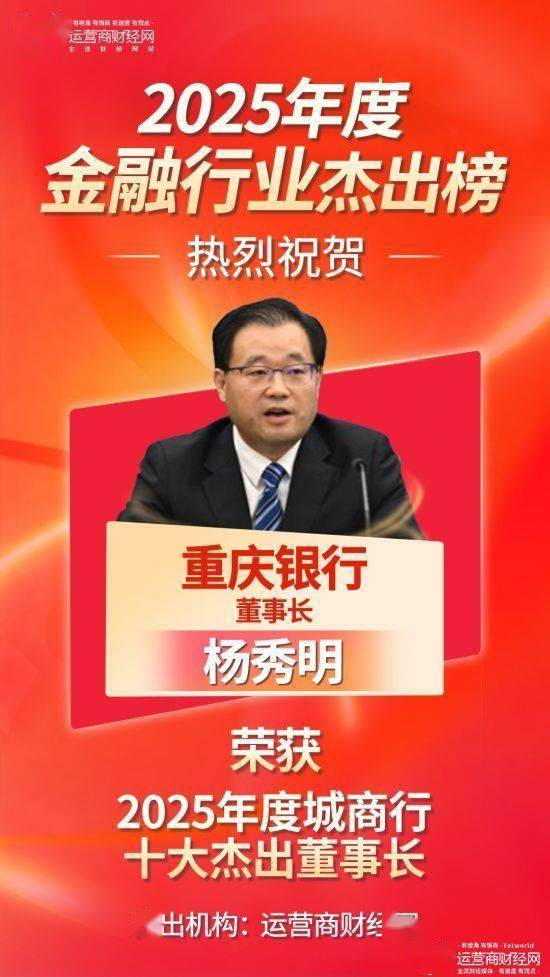
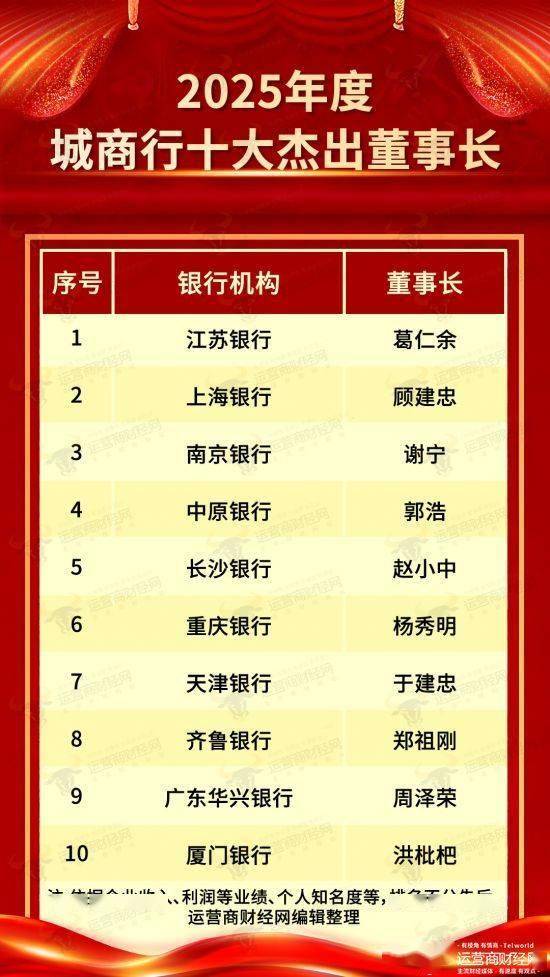
“2025年度城商行十大杰出董事长”榜单公布!重庆银行董事长杨秀明榜上有名
Sou Hu Cai Jing· 2025-12-16 09:59
运营商财经网总编康钊认为,上任以来,杨秀明以其卓越的领导才能、丰富的实践经验和敏锐的市场洞 察力,带领重庆银行在激烈的市场竞争中不断发展壮大。因此,此次上榜实至名归。 运营商财经(官方微信公众号yyscjrd)—— 主流财经网站,一家全面覆盖科技、金融、证券、汽车、 房产、食品、医药、日化、酒业及其他各种消费品网站。 运营商财经网讯 公开信息显示,杨秀明出生于1970年9月,是经济学学士。2024年3月,他正式担任重庆银行董事长、执 行董事,并担任该行的战略与创新委员会主任委员。 基于对金融行业的整体洞察,知名财经媒体运营商财经网独家打造了"2025年度金融行业杰出榜"。该榜 单基于各家金融机构的综合实力,涵盖了银行、保险、证券、基金四大细分领域的杰出高管。 日前,运营商财经网已经公布了"2025年度城商行十大杰出董事长",重庆银行董事长杨秀明榜上有名。 ...

上市银行发中期“红包”了!工行、农行共发近千亿现金红利,多家银行“红包”正在路上
Mei Ri Jing Ji Xin Wen· 2025-12-16 09:39
Core Viewpoint - Major Chinese banks are actively distributing mid-term cash dividends, reflecting strong profitability and capital adequacy, which is expected to enhance shareholder value and market confidence [6][8]. Group 1: Dividend Distribution by Major Banks - On December 15, Industrial and Agricultural Banks announced a total cash dividend of approximately 92.2 billion yuan for the first half of 2025, with A-share dividends amounting to about 76.2 billion yuan [1]. - Industrial Bank distributed a cash dividend of 0.1414 yuan per share, totaling approximately 503.96 billion yuan, with A-share dividends around 381.23 billion yuan [3]. - Agricultural Bank issued a cash dividend of 0.1195 yuan per share, totaling about 418.23 billion yuan, with A-share dividends approximately 381.5 billion yuan [3]. - Other major banks, including China Bank and Construction Bank, have also announced significant cash dividends, contributing to a total of over 200 billion yuan in cash dividends from the six major banks [4]. Group 2: Participation of Other Banks - Several joint-stock banks, such as CITIC Bank and Ping An Bank, have also joined the mid-term dividend distribution, with CITIC Bank distributing 104.61 billion yuan and Ping An Bank distributing 45.80 billion yuan [7]. - New entrants to the mid-term dividend distribution include Industrial Bank, which plans to distribute 119.57 billion yuan, and Ningbo Bank, which will distribute 19.81 billion yuan [7]. - Chongqing Bank plans to distribute 5.85 billion yuan, representing 11.99% of its net profit attributable to ordinary shareholders [7]. Group 3: Market Implications and Analyst Insights - Analysts indicate that the increase in mid-term dividends is a response to regulatory guidance and market demand for high-yield assets, particularly in a low-interest-rate environment [8]. - The trend of early and substantial mid-term dividends reflects the stable profitability of quality banks and their enhanced capacity for dividend distribution [8]. - Mid-term dividends are seen as a strategy to optimize capital structure and improve return on equity (ROE), while also attracting long-term investors [8].






2025年金融机构不良处置提速:多渠道协同筑牢资产质量防线
Jin Rong Jie· 2025-12-16 09:27
Core Insights - The transfer of non-performing loans (NPLs) is gaining momentum, becoming a crucial strategy for financial institutions to mitigate asset risks by 2025 [1][2] - The pace of asset disposal has accelerated significantly in 2025, with both the scale and frequency of disposals showing marked increases [2][4] - Consumer finance institutions are actively participating in the NPL market, contributing to the overall asset disposal efforts [3][4] Group 1: NPL Transfer Activities - The Silver Transfer Center reported nearly 60 NPL transfer announcements within three days, with major banks like China Construction Bank and Postal Savings Bank participating [1] - In the first quarter of 2025, the batch transfer of personal NPLs reached 37.04 billion yuan, a staggering increase of 761.4% year-on-year, with personal consumption loans making up over 70% of this figure [2] - Several banks, including Ping An Bank and Zhongyuan Bank, have initiated significant NPL transfer projects, with outstanding principal and interest amounts reaching 762 million yuan and 522 million yuan respectively [2] Group 2: Market Dynamics and Challenges - The pressure on asset quality is evident, with rising non-performing loan ratios among various banks, such as Chongqing Bank's ratio climbing to 6.23% [4] - The financial environment, characterized by macroeconomic fluctuations, is impacting the repayment capabilities of individuals and businesses, leading to increased NPLs [4] - The Silver Transfer Center's report indicates that the pressure for NPL disposal will persist throughout 2025 [4] Group 3: Regulatory and Technological Support - Regulatory policies are providing robust support for NPL disposal efforts, with calls for increased asset disposal and capital replenishment [5] - Financial institutions are leveraging technology to enhance risk management and improve the efficiency of NPL disposals, with initiatives like "smart disposal" platforms being developed [5][6] - Institutions like Agricultural Bank of China and China Bank are emphasizing digital transformation to strengthen risk control and reduce new NPLs [5]


运营商财经网正式推出“2025年度城商行十大杰出董事长”榜单 为业界独家
Sou Hu Cai Jing· 2025-12-16 09:24
Core Viewpoint - The article announces the launch of the "Top Ten Outstanding Chairmen of City Commercial Banks for 2025" list by a well-known financial media platform, focusing on the comprehensive performance of major city commercial banks in China and highlighting key figures from these institutions [1]. Group 1: List of Outstanding Chairmen - The list includes the following chairmen: - Ge Renyu from Jiangsu Bank - Gu Jianzhong from Shanghai Bank - Xie Ning from Nanjing Bank - Guo Hao from Zhongyuan Bank - Zhao Xiaozhong from Changsha Bank - Yang Xiuming from Chongqing Bank - Yu Jianzhong from Tianjin Bank - Zheng Zugang from Qilu Bank - Zhou Zerong from Guangdong Huaxing Bank - Hong Pipa from Xiamen Bank [2][3]. Group 2: Evaluation Criteria - The evaluation for the list considered multiple factors, including the annual revenue, net profit, and performance scale of the banks for 2025, as well as the significant contributions and achievements of the executives [3]. - The rankings are not absolute and do not serve any commercial purpose; they aim to recognize outstanding companies and their leaders for their performance in 2025 [3].



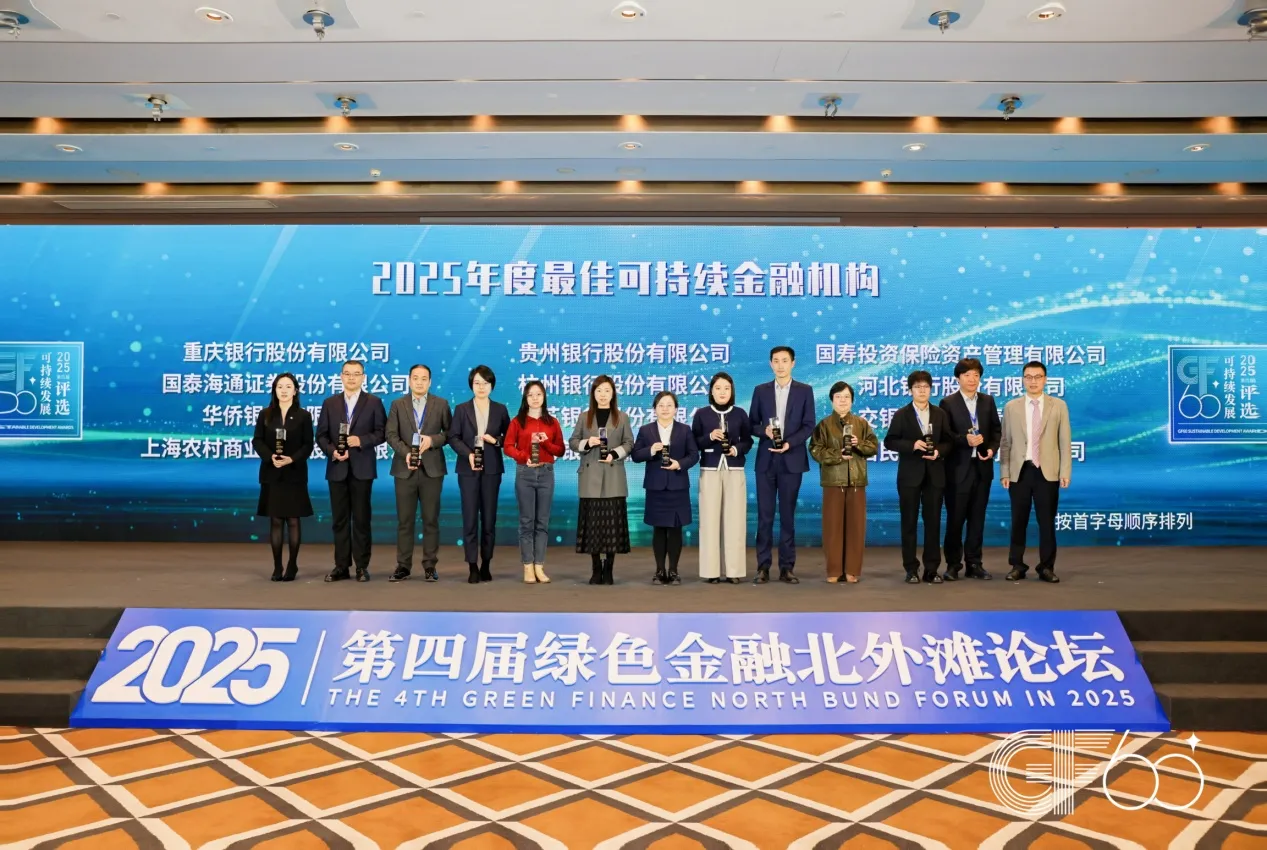
深耕绿色金融结硕果,重庆银行获评GF60最佳可持续金融机构
Jin Rong Jie· 2025-12-16 02:21
在经营层面,重庆银行将ESG治理深度融入发展战略,率先研发中西部法人银行首个ESG数字化评级系统,实现信贷资产质量全流程优化。通过气候风险压 力测试等工具,持续强化环境风险管理,同步推进绿色运营与数字化转型,不断提升资源使用效率与经营韧性。 责任编辑:栎树 在社会贡献方面,重庆银行积极服务长江经济带绿色发展,助力西部地区筑牢国家生态安全屏障,扎实书写"绿色金融"等五篇大文章,推动经济效益与社会 价值的协同共赢。截至当前,该行绿色金融业务规模已接近千亿元,并连续五年保持年均30%以上的高速增长,展现出强劲的发展动能。 (图说)GF60年度最佳可持续金融机构颁奖现场 12月11日,第四届绿色金融北外滩论坛于上海召开。重庆银行凭借在绿色金融与可持续发展领域的突出表现,获评"最佳可持续金融机构"。值得关注的是, 这已是该行连续第二年荣获GF60奖项——继2024年入选"绿色金融最佳实践案例"后再次获得认可,彰显其在该领域的持续影响力。 重庆银行相关负责人表示,此次获奖是对重庆银行坚定不移推进可持续发展银行战略、深耕绿色金融实践的再次肯定。面向未来,重庆银行将继续以"双 碳"目标为引领,全面融入重庆市绿色金融改革创新试 ...
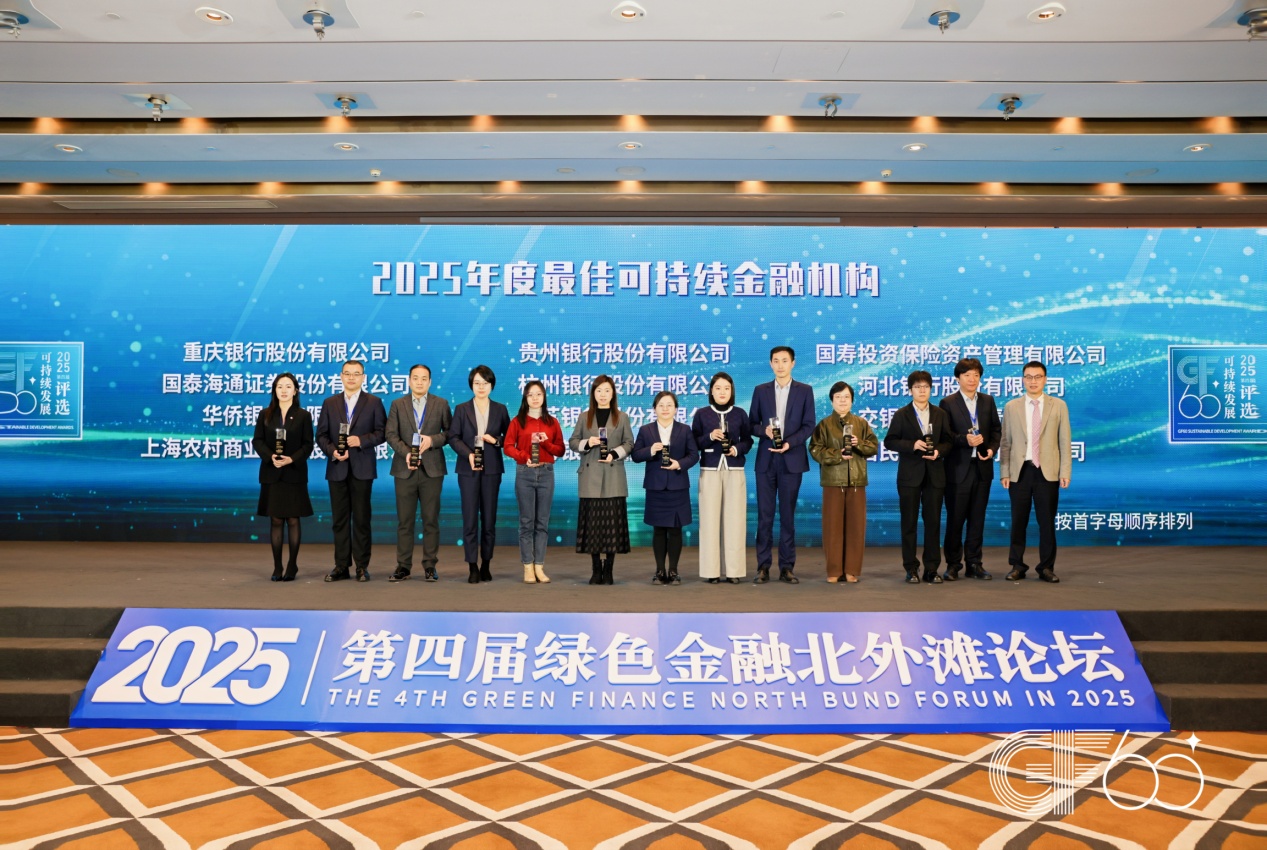
重庆银行荣膺GF60 “最佳可持续金融机构”
Cai Jing Wang· 2025-12-16 01:53
Group 1 - The core viewpoint of the news is that Chongqing Bank has been recognized as the "Best Sustainable Financial Institution" for the second consecutive year at the GF60 awards, highlighting its ongoing influence in the field of green finance and sustainable development [1][4]. Group 2 - The GF60 platform, initiated by financial regulatory bodies, institutions, industry leaders, and academia, aims to promote international exchange and cooperation in green finance, focusing on the actual actions and contributions of financial institutions towards environmental issues [3]. - Chongqing Bank has established a foundational product system around the "green" theme, including "green credit, green bonds, green consumption, and green leasing," and has developed over 20 specialized products covering energy saving, pollution reduction, carbon reduction, and greening [3]. - The bank has pioneered several innovative financial products, such as "Industrial Green Efficiency Loan" and "Collective Forest Land Management Rights + Ecological Product Value Mortgage Loan," contributing to urban low-carbon development and ecological construction [3]. Group 3 - Chongqing Bank integrates ESG governance into its development strategy and has developed the first ESG digital rating system for a legal bank in the central and western regions, optimizing the entire process of credit asset quality [4]. - The bank's green finance business scale has approached 100 billion yuan, maintaining an annual growth rate of over 30% for five consecutive years, demonstrating strong development momentum [4]. - Looking ahead, Chongqing Bank aims to continue contributing to the green low-carbon transition of the economy and society, guided by the "dual carbon" goals and actively participating in the construction of the Chongqing Green Finance Reform and Innovation Pilot Zone [4].