
Rokid

Search documents
沙利文2025中国AI智能眼镜行业白皮书
2025-07-19 14:57
Summary of the AI Smart Glasses Industry White Paper Industry Overview - The document presents the "China AI Smart Glasses Industry White Paper," analyzing the current state, development trends, competitive landscape, and commercialization prospects of the AI smart glasses industry [4][5]. Key Insights 1. **Market Potential**: The AI smart glasses market is expected to see significant growth, with global sales projected to exceed 10 million units by 2026 and market size surpassing 100 billion yuan by 2029, indicating exponential growth [5][11]. 2. **Pre-Explosion Phase**: The industry is on the verge of a large-scale explosion, driven by technological innovations in hardware and software, which are gradually addressing existing challenges such as interaction experience, privacy concerns, and performance limitations [6][12]. 3. **Shift in Commercialization Path**: Chinese manufacturers are transitioning from a "hardware-centric" approach to an "ecosystem-driven" model, focusing on integrating hardware, software, and services for sustainable business development [7][30]. Development Trends 1. **Evolution Towards AI+AR**: AI smart glasses are evolving towards AI+AR forms, integrating augmented reality capabilities to enhance user interaction and experience [9][18]. 2. **Increasing Intelligence Levels**: The industry is currently at the L2 stage (intelligent assistance) and is expected to progress to L3 (intelligent assistant) and L4 (intelligent collaboration) stages by 2027, with significant improvements in technology integration and user experience [10][26]. 3. **Diverse Consumer Base**: The target consumer base for AI smart glasses is broad, including both vision-corrected and non-corrected users, with significant potential for market growth driven by new user demand and the replacement of traditional eyewear [51][53]. Market Drivers 1. **Technological Advancements**: The adoption of advanced optical solutions like BirdBath and waveguide technologies, along with high-performance display options such as Micro OLED and Micro LED, is driving product functionality and user experience [12][46]. 2. **Domestic Production Growth**: The rapid advancement in domestic production capabilities for key components is expected to lower costs and expand market demand for AI smart glasses [55][60]. 3. **Government Support**: Policies promoting consumer electronics and subsidies for smart glasses purchases are expected to stimulate market growth [34][30]. Competitive Landscape 1. **Diverse Competitive Advantages**: Different categories of manufacturers have varying competitive advantages, with startups focusing on product development, while larger tech companies emphasize ecosystem integration [7][30]. 2. **Emerging Market Leaders**: Companies like Ray-Ban Meta and domestic brands such as 雷鸟 (Thunderbird) are emerging as key players, with competitive pricing and superior features [64][65]. Industry Challenges 1. **Technological Barriers**: Despite advancements, challenges remain in achieving optimal performance in terms of weight, battery life, and user privacy, which need to be addressed for broader market acceptance [6][12]. 2. **Consumer Awareness**: Increasing consumer awareness and understanding of AI smart glasses are crucial for market penetration and growth [5][11]. Conclusion The AI smart glasses industry is poised for significant growth, driven by technological advancements, a diverse consumer base, and supportive government policies. The transition towards an ecosystem-driven approach and the emergence of competitive domestic brands are expected to shape the future landscape of this innovative market.
AI功能是噱头吗?测评小米、Rokid等10款AI眼镜
Nan Fang Du Shi Bao· 2025-07-19 03:03
Core Insights - The smart glasses market is experiencing renewed interest, with major players like Alibaba and Xiaomi launching new products, indicating a competitive landscape [1][6] - Xiaomi's AI glasses have gained significant consumer attention, selling out quickly after their launch, highlighting strong market demand [1][4] - The introduction of AI features in smart glasses, such as translation and image recognition, is becoming a key selling point for manufacturers [9][12] Company Developments - Alibaba is reportedly developing AR glasses based on waveguide technology, expected to launch within the year [1] - Xiaomi's AI glasses were launched at a starting price of 1999 yuan, featuring capabilities like photo and video recording, translation, and payment functions [4][12] - Other companies like Rokid, Huawei, and Lenovo are also entering the AI glasses market, with various models offering different functionalities and price points [6][12] Market Trends - The price range for AI glasses varies significantly, from 799 yuan to 8999 yuan, with higher prices typically associated with models that include display capabilities [7][8] - The market is seeing a trend towards the integration of AI capabilities, with many glasses featuring functions like real-time translation and AI-assisted navigation [10][11] - The overall smart glasses market in China is projected to grow, with a significant increase in shipments expected in the coming years [15][16] Consumer Insights - Initial consumer feedback indicates a strong interest in AI functionalities, although there are concerns regarding battery life and comfort [6][15] - The ability to perform tasks such as real-time translation and payment through smart glasses is appealing to consumers, suggesting a shift towards practical applications of the technology [10][12] - The competitive landscape is evolving, with established brands like Xiaomi potentially lowering entry barriers for new users and expanding the overall market [16]


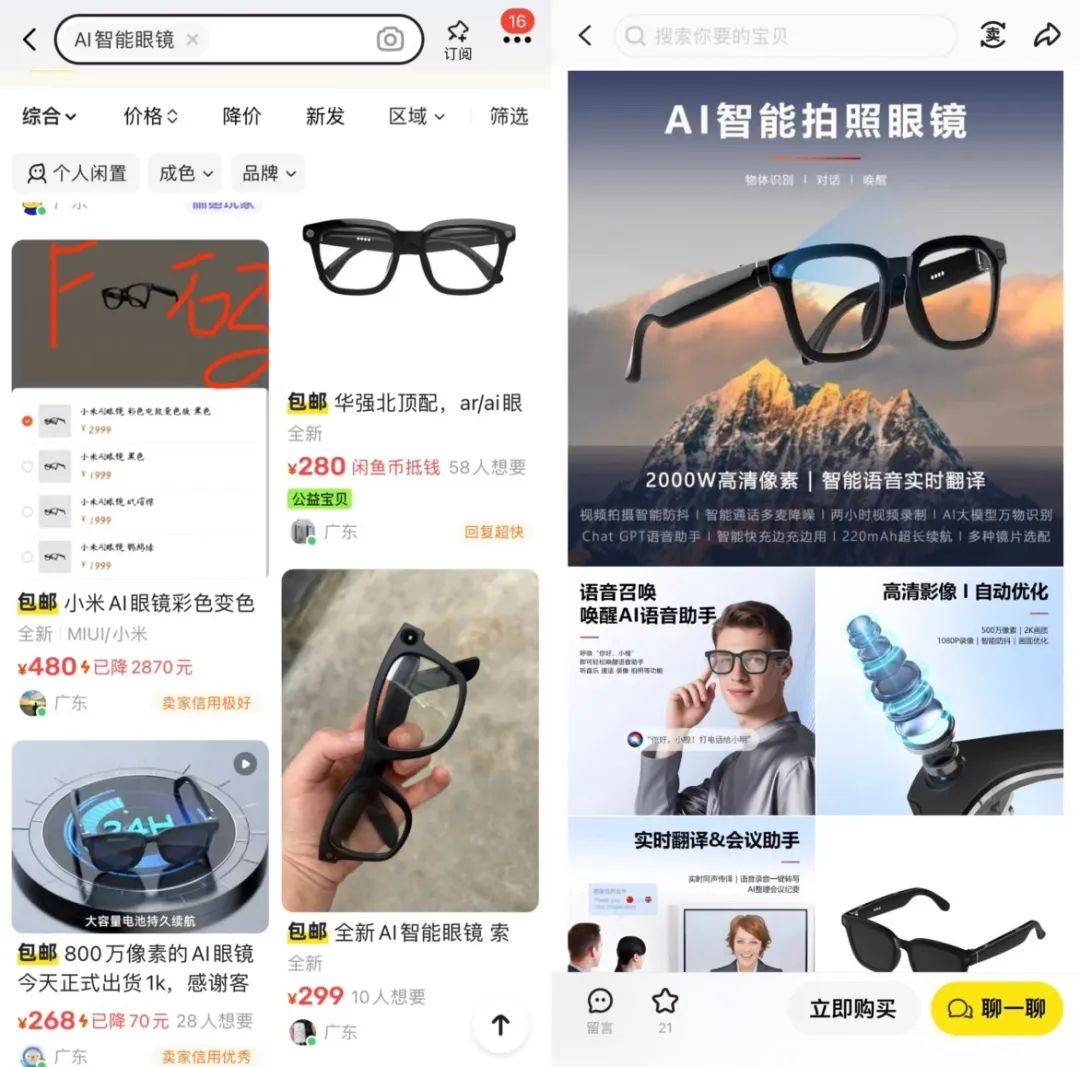
最低78元、顶配450元,华强北向AI眼镜出手了
Hu Xiu· 2025-07-18 09:51
2025年上半年,巨头和新锐纷纷密集上新AI眼镜,拉开了"百镜大战2.0"的帷幕。 5月21日,谷歌宣布将与中国AR眼镜企业XREAL合作,发布新一代AR眼镜——Project Aura; 5月25日,Lawaken上线City、City Air、View 3款AI眼镜,其中City AI智能眼镜最低只要699元; 5月27日,雷鸟发布V3、Air 3s、Air 3s Pro、X3 Pro 4款AI眼镜,价格在1499—8999元不等; 6月26日,小米发布AI眼镜,基础款售价1999元; 6月30日,Rokid Glasses向F码(首批抢购用户)用户优先发货,售价2499元。 除了硬件厂商和科技独角兽,Meta、字节、百度等互联网大厂也跟上了。如果说几年前第一次"百镜大战"是小众极客圈的狂欢,那么"百镜大战2.0"则有 可能是AI眼镜真正打开消费端的机会。 截至目前,小米新上市的AI眼镜只剩下1999元的鹦鹉绿有现货,Rokid售价2499元的AI眼镜只向少量用户优先发货。主流零售渠道的AI眼镜尚未大规模普 及,然而另一边,在奇幻的中国消费电子产业链末端——深圳华强北则呈现出完全不同的景象:当地源头厂商推 ...

影目CEO杨龙昇:小米入局AI眼镜是好事,大家销量翻了两三倍
3 6 Ke· 2025-07-17 00:03
Core Insights - The AI glasses market is experiencing significant growth, with major players entering the field and increasing investment interest, particularly following the success of Meta's collaboration with Ray-Ban in 2024 [3][5][13] - The entry of Xiaomi into the AI glasses market has sparked optimism, leading to a tenfold increase in market traffic and a projected two to three times increase in sales for various manufacturers [5][11][12] - The competition landscape consists of three main types of players: internet giants like Xiaomi and Baidu, established AR glasses manufacturers (referred to as the "AR Four Dragons"), and new entrants without prior experience in glasses manufacturing [7][8] Investment and Market Dynamics - The recent financing round for Yingmu Technology, a key player in the AI glasses sector, raised 150 million yuan (approximately 21.5 million USD) in just two months, indicating strong investor interest [1][13] - The overall market for smart glasses in China is expected to reach 600,000 to 700,000 units this year, representing a growth of 2.5 to 3 times compared to the previous year [22] Competitive Landscape - The competition in the AI glasses sector is characterized by a "hundred glasses battle," with many companies vying for market share, although only a few have achieved product maturity and clear business paths [6][11] - Key competitive factors for AI glasses include hardware miniaturization, optical display quality, and effective integration of AI capabilities to enhance user experience [8][26] Product Development and Technology - The cost structure of AI glasses is heavily influenced by components such as chips and sensors, with the BOM (Bill of Materials) for basic models estimated at around 1,200 yuan (approximately 170 USD) [12] - The industry is witnessing a trend towards domestic production, with Yingmu Technology achieving an 80% localization rate in its supply chain, which helps reduce costs [20] Future Outlook - The long-term competitive barriers in the AI glasses market will focus on miniaturization, optical display advancements, and the development of an integrated OS that leverages AI for enhanced functionality [26][30] - The market is expected to evolve towards more complex applications in entertainment and social interaction, moving beyond basic utility functions [31][32]

2025年中国AI眼镜行业研究报告
艾瑞咨询· 2025-07-15 09:19
Core Viewpoint - The AI glasses industry is on the verge of a significant breakthrough, potentially marking the next "iPhone moment" in technology, where AI glasses could transform daily life and communication [2][3]. AI Glasses Definition and Classification - AI glasses are innovative wearable devices that integrate artificial intelligence with traditional eyewear, enhancing functionality and practicality [3]. - They can be categorized into five types based on integrated technologies or hardware, all aimed at improving user efficiency and experience [3]. Market Growth and Projections - The global shipment of AI glasses is expected to reach 20 million units by 2028, driven by rapid advancements in AI and AR technologies [9]. - In September 2023, Meta and Ray-Ban launched the Ray-Ban Meta AI smart glasses, achieving over 2 million units shipped, indicating a surge in the smart glasses market [9]. Industry Landscape and Key Players - Numerous manufacturers are entering the AI glasses market, focusing on the deep integration of AI models and AR technology, leading to a diverse range of lightweight products [14]. - Notable brands include Bose, Huawei, Xiaomi, and Rokid, each offering various AI glasses tailored to different functionalities [15]. Consumer Insights and Market Potential - The AI glasses market shows significant potential, with nearly 61% of surveyed consumers having purchased or planning to purchase smart glasses, indicating a strong market foundation [25]. - Consumers exhibit a high interest in AI glasses, particularly in the mid-price range of 2000-3000 RMB, aligning with their income levels [27]. User Preferences and Purchase Behavior - Functionality is the primary consideration for consumers when purchasing AI glasses, with audio playback, photography, and AI interaction being key features [32]. - Users show a willingness to invest in AI glasses, with over 50% of existing users owning at least one pair, and many expressing interest in upgrading their devices [28]. Challenges and Concerns - Potential buyers express concerns regarding pricing, functionality, and privacy, which could hinder market growth [34]. - Interest consumers are particularly focused on the integration of multiple functions and the overall user experience [34]. Supply Chain and Technological Advancements - The AI glasses market is driven by hardware performance breakthroughs, domestic production increases, and the expansion of manufacturer ecosystems [42]. - Key technological advancements include improved battery life, lightweight materials, and enhanced display technologies, which are crucial for product adoption [42]. Retail and Marketing Strategies - Offline experiences play a crucial role in consumer conversion, while online ecosystems and customized services enhance sales [45]. - The integration of experiential marketing and retail channel consolidation is essential for driving sales in the AI glasses market [45]. Future Trends - The AI glasses industry is expected to evolve towards technological innovation, functional integration, and collaborative ecosystem development to meet consumer demands [47].

【新华解读】我国外贸保持较强韧性 新赛道活力迸发
Xin Hua Cai Jing· 2025-07-14 14:53
Core Viewpoint - In the first half of the year, China's goods trade imports and exports achieved a growth rate of 2.9%, demonstrating strong resilience despite complex international circumstances [1][2]. Trade Performance - China's total goods trade reached 21.79 trillion yuan, with exports of 13 trillion yuan (up 7.2%) and imports of 8.79 trillion yuan (down 2.7%) [2]. - In June, the trade volume was 3.85 trillion yuan, with exports at 2.34 trillion yuan (up 7.2%) and imports at 1.51 trillion yuan (up 2.3%) [2]. External Environment and Policy Support - The resilience of China's foreign trade is attributed to a series of supportive policies, which have helped restore business confidence and invigorate new industries [1][2]. - The latest customs trade survey indicates a continuous recovery in confidence among both export and import enterprises [2]. Market Expansion - China's trade relationships expanded, with growth in imports and exports to over 190 countries and regions, and the number of trading partners with a scale exceeding 50 billion yuan increased to 61 [2]. Export Dynamics - The decline in exports to the U.S. has narrowed significantly, contributing positively to overall export performance [3]. - The U.S. has begun to stockpile goods in response to new tariff adjustments, highlighting the irreplaceable nature of China's supply chain [4][5]. Emerging Sectors and Product Growth - There is a notable increase in the export of high-quality green products, with lithium batteries and wind turbine generators seeing growth rates exceeding 20% [6]. - Exports of industrial robots surged by 61.5%, and high-value products like pet supplies and smart manufacturing items have also seen significant growth [6][7]. E-commerce and Consumer Trends - E-commerce platforms reported a dramatic increase in overseas orders, with Alibaba's international site seeing a 42% year-on-year increase in order volume [4]. - During the "618" shopping festival, there was a three-digit growth in overseas orders for certain products, particularly in the pet product category [6].
康耐特光学(02276.HK):产品结构升级带动25H1业绩靓丽 持续关注XR业务进展
Ge Long Hui· 2025-07-09 10:59
Core Viewpoint - 康耐特光学预计2025年上半年净利润同比增长不少于30% [1] Business Analysis - The growth in 1H25 is primarily driven by increased sales of high refractive index and functional products, with standardized lens gross margin at 30% and customized lens gross margin at 60% [1] - The domestic channel expansion has allowed high refractive products to penetrate the market quickly due to their differentiated positioning and high cost-performance ratio [1] - The smart glasses industry is accelerating, with global shipments reaching 1.487 million units in Q1 2025, a year-on-year increase of 82.3% [1] - The company is actively enhancing its XR (extended reality) layout, having established an optical R&D center and secured strategic investment from GoerTek, with production capacity in Thailand [1] Customization Capability & Technology Advantage - The company is expected to achieve simultaneous volume and price increases due to its comprehensive coverage of customization capabilities and technological advantages [2] - The new resin lens production line in Japan is expected to be operational by the end of July 2025, which will enhance high-end customization capacity and optimize the global supply chain [2] Profit Forecast, Valuation, and Rating - The company forecasts net profits of 540 million, 660 million, and 820 million yuan for 2025-2027, representing year-on-year growth of 25.5%, 22.64%, and 23.76% respectively [2] - The current stock price corresponds to PE valuations of 32, 26, and 21 times for the years 2025, 2026, and 2027, maintaining a "buy" rating [2]
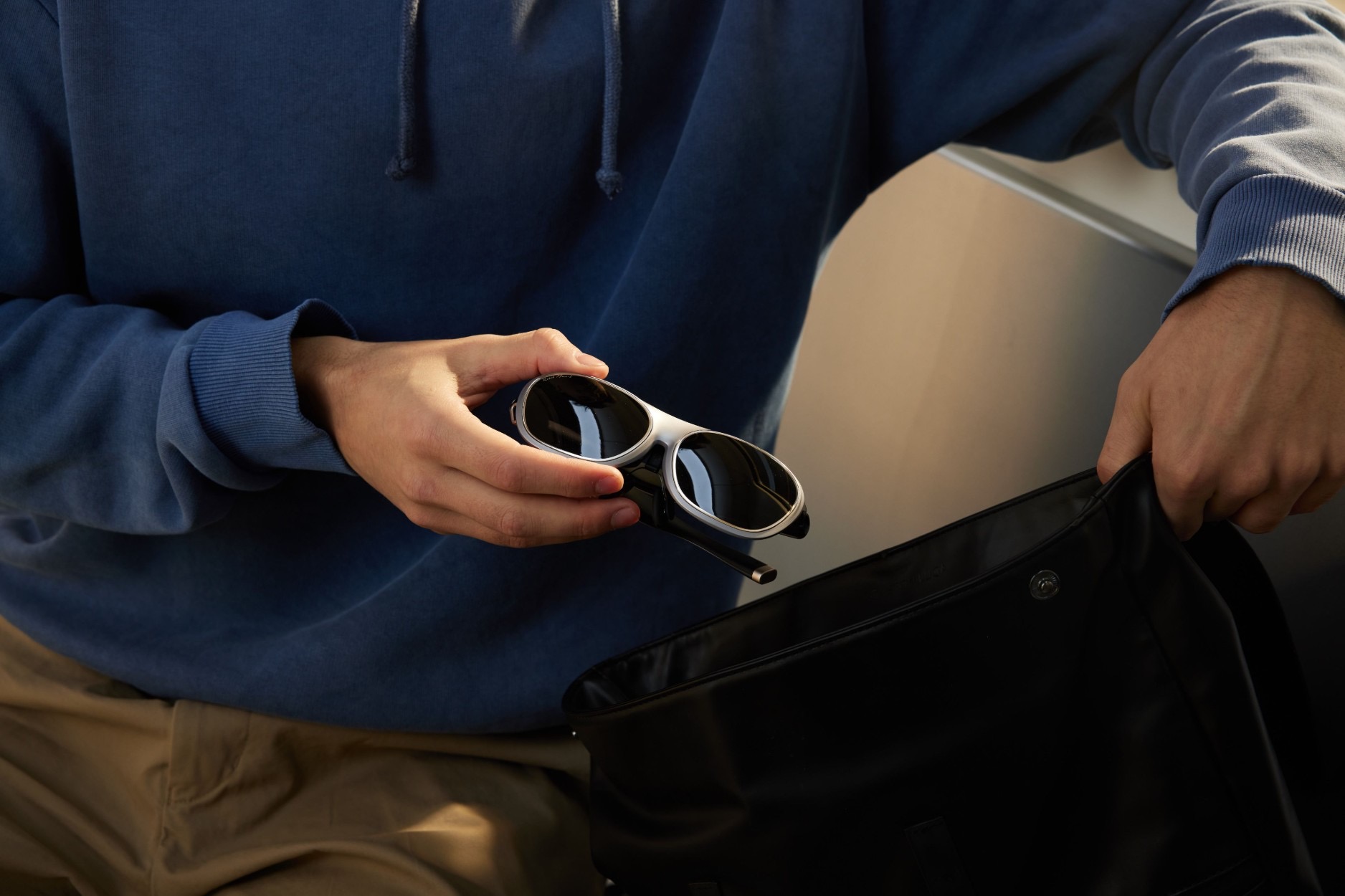
轻巧巨幕的未来入口:Rokid AR Lite 深度评测
Qi Lu Wan Bao· 2025-07-04 10:00
Core Insights - Rokid AR Lite glasses are designed to provide a lightweight and immersive "giant screen" experience, attracting significant attention in the domestic AR market [1] - The product aims to complement existing devices rather than replace them, creating a new immersive "third screen" space for users [10] Product Features - Weighing only 75 grams, Rokid AR Lite breaks the stereotype of heavy AR glasses, featuring a titanium alloy hinge and a new generation air nose pad for enhanced comfort during prolonged use [3] - The glasses simulate a cinema-like experience with a 300-inch screen viewed from 6 meters away, utilizing a Sony Micro OLED display with a resolution of 1920×1080, peak brightness of 600 nits, and a refresh rate of 120Hz [4] - The device supports three-window parallel display, theoretically enhancing multitasking efficiency, although the motion mode is currently limited to video playback [6] User Experience - The AR Lite offers a high level of privacy and immersion, with directional speaker technology reducing sound leakage by approximately 90%, making it suitable for use in public spaces [9] - The built-in 5000mAh battery provides over 4 hours of usage, sufficient for a movie or short journey, but the compact design leads to increased heat and noise during heavy use, indicating a need for improved thermal management [9] Limitations - The adaptability of the device is limited, particularly in dynamic environments, and the glasses may slide down during frequent head movements, requiring user adjustments [5] - The current application ecosystem is underdeveloped, and the device's interaction logic can be confusing, requiring users to adjust to different operating styles [5][6] Target Audience - For audio/video enthusiasts, the immersive experience and multi-screen potential of Rokid AR Lite are unmatched, making it a benchmark in consumer-grade AR glasses [11] - Business professionals may find it a portable high-efficiency solution when paired with a keyboard and mouse, though improvements in ecosystem and heat management are necessary [11] - General consumers are advised to wait for more lightweight applications and enhancements in comfort and cost-effectiveness, as the current value is more about experimentation than practicality [11]
2025年中国AI眼镜行业研究报告
艾瑞咨询· 2025-07-02 09:51
Core Viewpoint - The AI glasses industry is on the verge of a significant breakthrough, potentially marking the next "iPhone moment" in technology, where AI glasses could transform daily life and communication [2][3]. Industry Overview - AI glasses are innovative wearable devices that integrate artificial intelligence with traditional eyewear, enhancing functionality and practicality [3]. - The global shipment of AI glasses is projected to reach 20 million units by 2028, driven by rapid advancements in AI and AR technologies [9]. Market Dynamics - The AI glasses market is experiencing explosive growth, with major brands entering the space and pushing for deeper integration of AI models and AR technology [14]. - As of September 2023, Meta and Ray-Ban's collaboration has resulted in over 2 million units sold, indicating a strong market interest [9]. Consumer Insights - A significant portion of consumers (61%) have either purchased or plan to purchase smart glasses, with a notable preference for AI-enabled products [25][28]. - The price range of 2000-3000 RMB is widely accepted by consumers, aligning with their monthly income levels [25][28]. User Preferences - Functionality is the primary consideration for consumers when purchasing AI glasses, with a focus on audio playback, photography, AI interaction, and navigation features [32]. - Users show a strong interest in mid-range priced products, often willing to exceed their budget for enhanced features [27][28]. Competitive Landscape - Major players in the AI glasses market include companies like Bose, Huawei, and Rokid, each offering unique products that cater to different consumer needs [15][16][19]. - The industry is characterized by a diverse range of products, including AI audio glasses, AI display glasses (AI+AR), and AI photography glasses [15][16]. Technological Advancements - The industry is witnessing significant technological breakthroughs, including improved hardware performance, local AI functionality, and enhanced user experience through lightweight designs and extended battery life [42]. - The integration of AI capabilities is expected to transition AI glasses from niche products to mainstream necessities [42][43]. Retail and Marketing Strategies - The retail landscape for AI glasses is evolving, with a focus on experiential marketing and the integration of online and offline sales channels [45]. - Consumer engagement through social media and experiential marketing is crucial for driving awareness and sales in the AI glasses market [23][45].

出货量暴涨的AI眼镜:企业抢占AI入口?
Zhong Guo Xin Wen Wang· 2025-07-02 08:51
企业抢占AI眼镜应用 小米董事长、创始人雷军认为,AI眼镜是面向下一代的个人智能设备。 中新网北京7月2日电(记者吴涛)一副轻巧的眼镜,有可能成为科技巨头争夺未来AI话语权的一大战场。 近日,有数据显示,2025年第一季度全球智能眼镜出货量大涨,而中国市场今年出货量预计突破290万 台。有观点认为,AI眼镜或成为下一代的AI入口和"个人生活助理"。 AI眼镜出货量暴涨 "2025年第一季度全球智能眼镜市场出货量148.7万台,同比增长82.3%。"国际数据公司(IDC)最新发布 的报告显示,AI眼镜出货量迎来暴涨。 其中全球音频和音频拍摄眼镜市场出货量83.1万台,同比增长219.5%。AR/VR市场出货65.6万台,同比 增长18.1%。IDC还预测,2025年中国智能眼镜出货量预计达到290.7万台,同比增长121.1%。 IDC中国市场分析师叶青清接受中新网记者采访时表示,2025年一季度音频拍摄眼镜产品进入市场,同 时国补带动销售,拉动整个眼镜市场出货量增长,另一方面厂商拓展线下渠道也起到了积极推动作用。 在中国市场,Rokid眼镜曾因创始人在"眼镜里塞下演讲稿"走红,小米近日也推出了自己的首款AI眼 ...