江苏银行

Search documents
银行行业今日净流出资金4.47亿元,农业银行等5股净流出资金超5000万元
Zheng Quan Shi Bao Wang· 2026-01-21 09:21
Market Overview - The Shanghai Composite Index rose by 0.08% on January 21, with 18 out of the 28 sectors experiencing gains. The top-performing sectors were non-ferrous metals and electronics, with increases of 2.79% and 2.62% respectively [1] - The banking and coal sectors were the worst performers, declining by 1.58% and 1.57% respectively, with the banking sector leading the decline [1] Capital Flow - The net inflow of capital in the two markets was 11.983 billion yuan, with 14 sectors seeing net inflows. The electronics sector had the highest net inflow of 16.369 billion yuan, while the non-ferrous metals sector followed with a net inflow of 7.289 billion yuan [1] - Conversely, 17 sectors experienced net outflows, with the power equipment sector seeing the largest outflow of 6.688 billion yuan, followed by the defense and military industry with a net outflow of 2.906 billion yuan [1] Banking Sector Performance - The banking sector saw a decline of 1.58% with a net outflow of 447 million yuan. Out of 42 stocks in this sector, only one stock rose while 41 stocks fell [2] - Among the stocks with net inflows, Hangzhou Bank led with an inflow of 153 million yuan, followed by China Transportation Bank and Jiangsu Bank with inflows of 106 million yuan and 96.849 million yuan respectively [2] - The stocks with the highest net outflows included Agricultural Bank of China, Industrial and Commercial Bank of China, and Bank of China, with outflows of 555.7 million yuan, 227.4 million yuan, and 167.4 million yuan respectively [2] Detailed Banking Sector Data - A detailed table of banking stocks shows various performance metrics, including daily price changes and turnover rates. For instance, Agricultural Bank of China decreased by 2.93% with a turnover rate of 0.17% and a net outflow of 55.707 million yuan [3] - Other notable declines included Industrial and Commercial Bank of China at -2.52% and Bank of China at -2.02%, with respective net outflows of 22.740 million yuan and 16.737 million yuan [3]




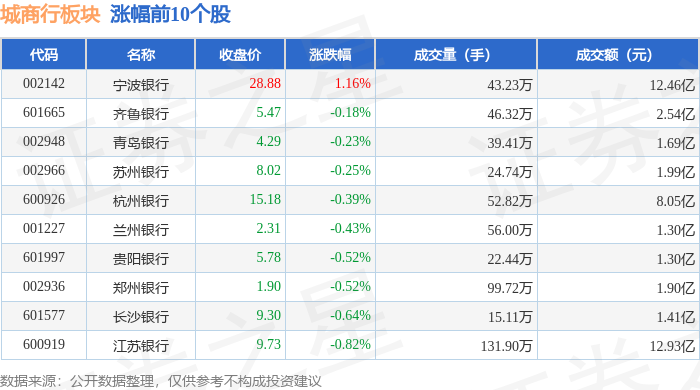
城商行板块1月21日跌0.55%,重庆银行领跌,主力资金净流入5.08亿元
Zheng Xing Xing Ye Ri Bao· 2026-01-21 08:54
Market Overview - The city commercial bank sector experienced a decline of 0.55% on January 21, with Chongqing Bank leading the drop [1] - The Shanghai Composite Index closed at 4116.94, up 0.08%, while the Shenzhen Component Index closed at 14255.12, up 0.7% [1] Individual Stock Performance - Ningbo Bank closed at 28.88, with an increase of 1.16% and a trading volume of 432,300 shares, amounting to a transaction value of 1.246 billion [1] - Chongqing Bank closed at 10.25, down 1.82%, with a trading volume of 106,800 shares and a transaction value of 110 million [2] - Other notable performers include Xiamen Bank, which closed at 7.13, down 1.66%, and Chengdu Bank, which closed at 15.72, down 1.38% [2] Capital Flow Analysis - The city commercial bank sector saw a net inflow of 508 million from institutional investors, while retail investors experienced a net outflow of 566 million [2] - The capital flow for individual stocks indicates that Hangzhou Bank had a net inflow of 158 million from institutional investors, while it faced a net outflow of 86.5 million from retail investors [3] - Shanghai Bank also saw a net inflow of 107 million from institutional investors, with a net outflow of 121 million from retail investors [3]



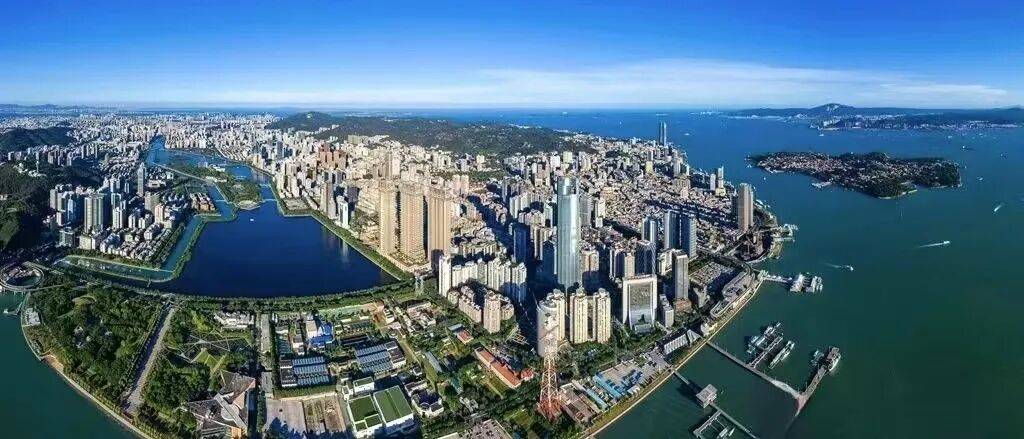
江苏银行盐城分行:向海、向绿、向新 助推盐城高质量发展
Yang Zi Wan Bao Wang· 2026-01-21 06:33
Core Viewpoint - Jiangsu Bank (600919) emphasizes its commitment to financial functionality and regional economic development through strategic partnerships, particularly with the Yancheng municipal government, aiming for high-quality growth and compliance with policies and regulations [1] Group 1: Financial Support and Development Initiatives - Jiangsu Bank has signed a strategic cooperation agreement with the Yancheng municipal government to enhance regional economic development and has been recognized for its performance, being rated first in comprehensive assessments for six consecutive years [1] - By the end of 2025, the bank's total loan balance is projected to reach 141.12 billion yuan, with an increase of 29.58 billion yuan from the beginning of the year, focusing on manufacturing and green loans [1] - The bank supports 12 enterprises in the marine industry with a loan balance of 1.11 billion yuan, demonstrating its commitment to the blue economy [3] Group 2: Innovative Financial Products - Jiangsu Bank has developed a comprehensive product system tailored for marine enterprises, offering various financial products for different stages of business development, including "Su Incubation Loan" for startups and "Specialized and New Loan" for mature enterprises [4] - The bank has introduced differentiated pricing policies, providing a 70 basis points discount for blue credit and an 80 basis points discount for clean energy loans, to support the transformation of blue industries [5] Group 3: Green Finance Initiatives - Jiangsu Bank has signed a strategic cooperation agreement to support the construction of a green low-carbon development demonstration zone in Yancheng, with green loan balances expected to reach 38.09 billion yuan by the end of 2025, an increase of 12.80 billion yuan from the start of the year [7] - The bank has created the first green specialized branch in Yancheng and received the first "Carbon Neutral Certificate" from Jiangsu Province, highlighting its leadership in green finance [7] Group 4: Support for Modern Agriculture and Manufacturing - The bank has provided 17.76 billion yuan in loans to the manufacturing sector, with an increase of 2.75 billion yuan from the beginning of the year, positioning itself as a leader in the local market [9] - Jiangsu Bank has implemented various initiatives to enhance service quality for manufacturing, including the launch of innovative financial products and participation in provincial policies to support manufacturing upgrades [11] Group 5: Collaborative Financial Services - The bank has established partnerships with local enterprises and financial institutions to enhance direct financing support, including debt and equity financing, and has organized various events to promote financial services for listed and prospective companies [12] - Jiangsu Bank aims to empower local economic development through innovative financial solutions and strategic collaborations, ensuring a robust support system for enterprises in Yancheng [12]

抢滩“开门红”揽储 中小行限时上调利率,大行调整存款起存门槛
2 1 Shi Ji Jing Ji Bao Dao· 2026-01-21 06:00
Core Viewpoint - The current deposit-taking competition among banks, particularly small and medium-sized banks, is intensifying as they adjust deposit rates to attract funds, despite a general decline in the enthusiasm for such actions compared to previous years [2][5]. Group 1: Deposit Rate Adjustments - Several small and medium-sized banks have recently raised their fixed deposit rates, albeit by limited margins compared to previous years, reflecting a balance between managing funding costs and maintaining market competitiveness [2][3]. - Specific examples include the increase of the one-year and three-year fixed deposit rates by the DeShang Village Bank in Henan and the adjustment of rates by other banks such as the Jiangsu Bank and Shenyang Bank [3][4]. - The overall trend shows that most banks adjusting rates are smaller institutions, with some offering promotional incentives like shopping cards for depositors [4]. Group 2: Market Dynamics and Strategies - The current market for deposits is generally ample, but small regional banks face significant pressure to attract deposits, leading to temporary rate increases as a marketing strategy rather than a long-term trend [5][8]. - Large state-owned banks are not following suit with rate increases but are instead adjusting the minimum deposit thresholds for their products, indicating a strategic shift towards customer relationship management [6][8]. - The dual pressures of maintaining profitability while complying with regulatory standards are influencing banks' strategies, with many seeking sustainable ways to optimize their funding structures [7][8]. Group 3: Future Outlook - Analysts predict that banks will continue to lower funding costs, with potential downward adjustments in deposit rates as net interest margins remain under pressure [8][9]. - The average cost of deposits may decrease by approximately 35 basis points due to the maturity of high-interest deposits, which could improve net interest margins by 10 to 15 basis points [9].
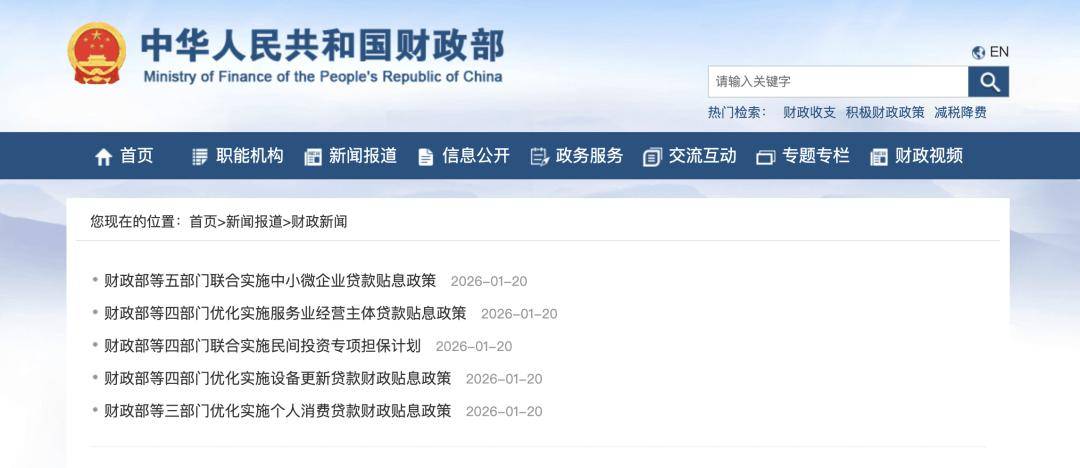
中小微企业贷款贴息、民间投资专项担保……财政部连发五项重要政策
Sou Hu Cai Jing· 2026-01-21 03:12
Group 1 - The Ministry of Finance and other departments have released five policy documents aimed at optimizing financial support for personal consumption loans, equipment updates, private investment guarantees, service industry loans, and small and micro enterprise loans [1][9][29] - The personal consumption loan subsidy policy has been extended until December 31, 2026, with adjustments to the subsidy standards and an expanded range of supported financial institutions [4][5][6] - The equipment update loan subsidy policy includes a 1.5% subsidy on fixed asset loans for equipment updates, applicable for up to two years, and has been expanded to include various sectors such as construction, aviation, and digital technology [10][11][12] Group 2 - The private investment guarantee plan has a total quota of 500 billion yuan, to be implemented over two years, focusing on supporting small and micro enterprises in various sectors including technology upgrades and service industry enhancements [17][18] - The plan includes a risk-sharing mechanism where banks will bear at least 20% of the loan risk, while the government guarantee fund will cover up to 80% [19] - The government will also reduce guarantee fees and increase the compensation limit for the guarantee fund to enhance support for private investments [20] Group 3 - The service industry loan subsidy policy has been extended to December 31, 2026, with an increased subsidy cap of 10 million yuan per loan and a 1% annual subsidy rate [23][24] - The policy now includes additional sectors such as digital, green, and retail industries, expanding the scope of financial support [24][25] - The implementation of these policies will involve streamlined processes for fund allocation and enhanced collaboration among financial institutions and regulatory bodies [26][28]




信用卡分期纳入贴息支持范围,年贴息比例1%
2 1 Shi Ji Jing Ji Bao Dao· 2026-01-20 12:00
Core Viewpoint - The recent upgrades to multiple loan interest subsidy policies signal a shift in government strategy from relying solely on large-scale infrastructure investment to a more balanced approach that encourages consumer spending and reduces financing costs for micro and small enterprises [1][4]. Group 1: Policy Upgrades - The Ministry of Finance has optimized existing interest subsidy policies for personal consumption loans, service industry loans, and equipment upgrade loans, extending their terms to the end of 2026 [1]. - The personal consumption loan subsidy now includes credit card installment payments, with an annual subsidy rate of 1% [3]. - The subsidy cap for new service industry loans has increased from 1 million to 10 million yuan per borrower [6]. Group 2: Support for Micro and Small Enterprises - A new interest subsidy policy for micro and small enterprises has been introduced, targeting key industry chains and their upstream and downstream sectors [11]. - The subsidy for eligible fixed asset loans for micro and small enterprises will be 1.5% annually, with a maximum loan amount of 50 million yuan per borrower [12]. Group 3: Expanded Coverage and Financial Institutions - The range of financial institutions eligible to provide these subsidies has been expanded to include city commercial banks, rural cooperative financial institutions, foreign banks, and consumer finance companies [4][7]. - The policy aims to enhance the accessibility of financial services in rural and grassroots markets, thereby stimulating consumption [4]. Group 4: Specific Sector Support - The updated policies now include support for digital, green, and retail sectors, alongside the previously established eight categories [6][7]. - The equipment upgrade loan subsidy has been raised to 1.5%, covering a wider range of sectors including high-end, intelligent, and green technologies [8].



金价创新高,有银行这种存款售罄,最高年化8%能冲吗?
3 6 Ke· 2026-01-20 11:01
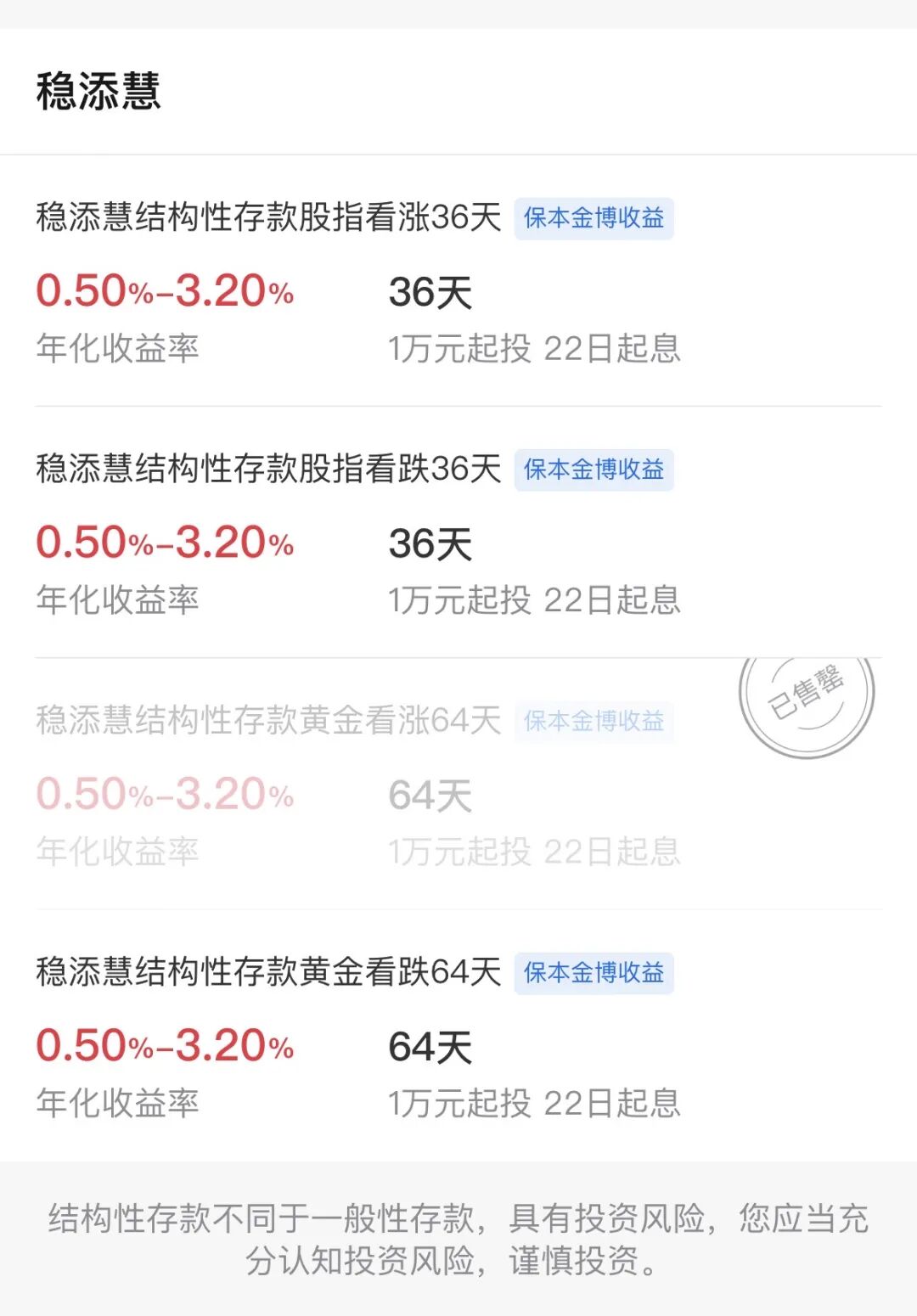
"目前定存利率普遍在1%左右,比较了几家银行黄金相关的结构性存款,最低利率可以做到1%,还可以搏一搏超额收益,封闭期限比较短,对理财小白 来说是一个很好的尝试新产品。"在社交平台上有网友发帖称。 2025年以来金价持续攀升,2026年1月20日午后,现货黄金(伦敦金现)盘中突破4700美元/盎司,再刷历史新高。中新经纬注意到,近期部分银行推出的 挂钩黄金的结构性存款产品受到市场关注,有产品预期年化收益率最高可达8%。这类产品能冲吗? 有银行黄金看涨结构性存款售罄 近日,中新经纬查询多家银行手机App发现,不少银行在发行结构性存款产品。 中国银行有多款挂钩黄金的结构性存款产品,其中"跃盈—马上送福260068"预期年化收益率为0.2%至5.2%,起存金额为1万元,产品期限为87天。 交通银行手机App显示,该行稳添慧结构性存款产品共有四款,分别为黄金看涨64天、黄金看跌64天、股指看涨36天和股指看跌36天,年化收益率区间均 为0.5%—3.20%。四款产品募集期均为1月14日至20日,1月16日下午2时左右中新经纬查看时,黄金看涨64天结构性存款产品"已售罄",其余产品均有额 度。 产品说明书介绍,该产品规模 ...
设备更新贷款贴息范围扩容
Di Yi Cai Jing· 2026-01-20 09:25
不久前,中国人民银行决定增加科技创新和技术改造再贷款额度4000亿元。增加后,科技创新和技术改 造再贷款总额度为1.2万亿元。另外央行适当拓展政策支持领域,自2026年起,将研发投入水平较高的 民营中小企业纳入科技创新和技术改造再贷款政策支持领域。 另外,此次设备更新贷款财政贴息领域扩围。 贴息政策实施至2026年12月31日,后续可视情况延长 为了支持经营主体开展设备更新和技术改造,降低经营主体融资成本,推动形成有效投资,中国加大财 政贴息政策支持力度。 1月20日,财政部等四部门公布《关于优化实施设备更新贷款财政贴息政策的通知》(下称《通 知》),明确经营主体实施设备更新行动且银行向其发放贷款的,中央财政对经营主体的设备更新项目 相关固定资产贷款本金贴息1.5个百分点,按照相关固定资产贷款发放之日起予以贴息,贴息期限不超 过2年。 这一政策与此前不同的是,扩大了设备更新贷款财政贴息支持范围,将科技创新和技术改造再贷款政策 支持的、银行2026年起新发放的科技创新类贷款纳入上述中央财政贴息支持范围。 《通知》称,上述设备更新财政贴息政策实施至2026年12月31日,后续可视情延长实施期限。 此外,设备更新财 ...
财政部连发多份重要文件,事关贷款贴息、民间投资贷款担保等 一揽子政策全文公布
Sou Hu Cai Jing· 2026-01-20 09:03
Group 1 - The core viewpoint of the news is the implementation of a financial subsidy policy for equipment renewal loans to support businesses in reducing financing costs and promoting effective investment [3][4][5] - The policy includes a 1.5% interest subsidy on fixed asset loans for equipment renewal projects, applicable for a maximum of two years, and is effective until December 31, 2026 [3][4] - The scope of support has been expanded to include various sectors such as construction, aviation, digital technology, and green energy, emphasizing high-end, intelligent, and digital equipment updates [4][6] Group 2 - A total of 26 banks are designated as eligible for processing the interest subsidy loans, including major national banks and several regional banks [4][5] - The subsidy process has been optimized to include a "pre-allocation + settlement" method, streamlining the application and approval process for banks and provincial financial departments [5][6] - The policy aims to enhance the experience of businesses by ensuring timely communication regarding subsidy payments through modern technology [6][7] Group 3 - The policy for small and micro enterprises includes a 1.5% interest subsidy on fixed asset loans, with a maximum loan amount of 50 million yuan, effective from January 1, 2026 [8][9] - The targeted sectors for this subsidy include new energy vehicles, medical equipment, and various service industries, aiming to stimulate investment and production [9][10] - The operational mechanism involves a "total-to-total" model for coordination between financial institutions and fiscal departments to ensure efficient processing of subsidy funds [11][12] Group 4 - The service industry loan subsidy policy has been extended until December 31, 2026, with an increased maximum loan amount of 10 million yuan and a 1% interest subsidy for one year [16][17] - New sectors such as digital, green, and retail have been added to the support scope, enhancing the policy's relevance to current economic trends [17][18] - The funding allocation process has been refined to improve efficiency and reduce redundancy in the approval process [18][19] Group 5 - A special guarantee plan for private investment has been introduced with a total quota of 500 billion yuan over two years, aimed at supporting small and micro enterprises [22][24] - The plan includes risk-sharing mechanisms where banks bear at least 20% of the loan risk, while the government guarantee fund covers up to 80% [24][25] - The initiative encourages innovative financing models and aims to enhance the capital strength of the government guarantee fund to support private investments effectively [26][27]
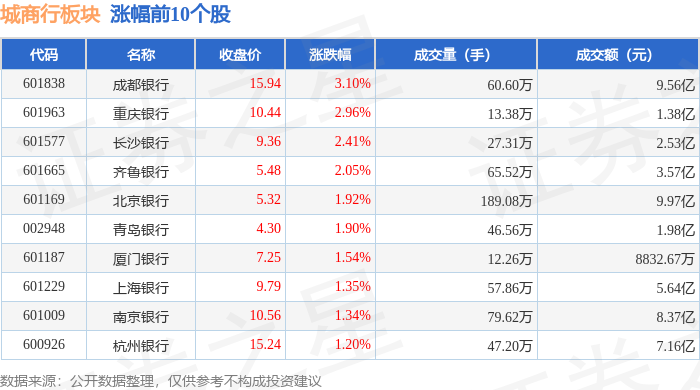
城商行板块1月20日涨1.35%,成都银行领涨,主力资金净流入2.66亿元
Zheng Xing Xing Ye Ri Bao· 2026-01-20 08:56
Core Insights - The city commercial bank sector experienced a rise of 1.35% on January 20, with Chengdu Bank leading the gains [1] - The Shanghai Composite Index closed at 4113.65, down 0.01%, while the Shenzhen Component Index closed at 14155.63, down 0.97% [1] Stock Performance - Chengdu Bank (601838) closed at 15.94, up 3.10% with a trading volume of 606,000 shares and a transaction value of 9.56 billion [1] - Chongqing Bank (601963) closed at 10.44, up 2.96% with a trading volume of 133,800 shares and a transaction value of 138 million [1] - Other notable performers include: - Changsha Bank (601577): closed at 9.36, up 2.41% [1] - Qilu Bank (601665): closed at 5.48, up 2.05% [1] - Beijing Bank (601169): closed at 5.32, up 1.92% [1] - Qingdao Bank (002948): closed at 4.30, up 1.90% [1] - Xiamen Bank (601187): closed at 7.25, up 1.54% [1] - Shanghai Bank (601229): closed at 9.79, up 1.35% [1] - Nanjing Bank (601009): closed at 10.56, up 1.34% [1] - Hangzhou Bank (600926): closed at 15.24, up 1.20% [1] Capital Flow - The city commercial bank sector saw a net inflow of 266 million from institutional investors, while retail investors experienced a net outflow of 42.84 million [1] - Detailed capital flow for selected banks includes: - Shanghai Bank (601229): net inflow of 1.051 billion from institutional investors, with net outflows from retail and speculative investors [2] - Hangzhou Bank (600926): net inflow of 90.48 million from institutional investors, with significant outflows from retail and speculative investors [2] - Nanjing Bank (601009): net inflow of 26.57 million from institutional investors, with outflows from retail investors [2] - Other banks also showed varying levels of net inflows and outflows [2]