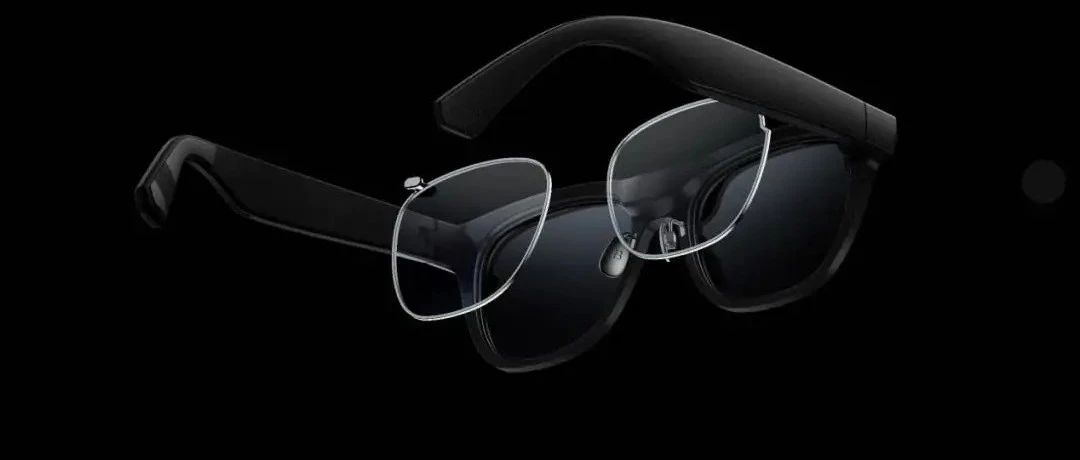
XREAL

Search documents
特斯拉发布“擎天柱”机器人炒菜视频;国内首例闭环脊髓神经接口植入手术成功|数智早参
Mei Ri Jing Ji Xin Wen· 2025-05-21 23:31
Group 1 - Tesla's "Optimus" robot has demonstrated significant advancements in AI and robotics, showcasing its ability to perform household tasks autonomously, such as taking out the trash and cooking [1] - The robot's training utilizes a high-precision virtual environment, allowing it to accumulate years of physical world experience in just hours, indicating a breakthrough in multi-modal perception and complex task planning [1] Group 2 - A successful closed-loop spinal nerve interface implantation surgery has been completed in China, enabling a patient with paraplegia to stand and walk autonomously just 15 days post-surgery [2] - This achievement marks a significant breakthrough in spinal nerve interface and neural function restoration, potentially benefiting the 3.7 million spinal injury patients in China [2] Group 3 - Google has announced a strategic partnership with Chinese AR company XREAL to launch the new generation AR glasses, Project Aura, at the Google I/O developer conference [3] - Project Aura is the first flagship AR glasses designed specifically for the Android XR platform, utilizing Optical See-through technology, marking a pivotal moment for the AR industry [3]


《笑有新生》共寻春晚喜剧新人;亚玛芬体育一季度营收同比增长23%丨消费早参
Mei Ri Jing Ji Xin Wen· 2025-05-21 23:24
Group 1: Company Performance - Amer Sports reported Q1 2025 revenue of $1.473 billion, a 23% year-over-year increase [1] - Revenue from Greater China reached $446 million, up 43%, while the Asia-Pacific region saw a 49% increase to $157 million [1] - Operating profit surged 97% to $214 million, with adjusted operating profit growing 79% to $232 million [1] Group 2: Industry Trends - The launch of "Laughing New Life" program aims to provide a platform for emerging comedians, enhancing cultural confidence and local content [2] - Airbnb's summer product launch reflects a shift towards personalized travel experiences, integrating accommodation with dining and cultural activities [3] - The introduction of Project Aura AR glasses signifies a pivotal moment for the AR industry, marking the entry into the "Android era" [4][5]




谷歌“卷土重来”,AR眼镜迎来“安卓时刻”!XREAL创始人兼CEO徐驰:当平台不再碎片化,生态才能加速发展
Mei Ri Jing Ji Xin Wen· 2025-05-21 13:05
Core Insights - Google has announced a deep strategic partnership with Chinese AR technology company XREAL to jointly launch the next-generation AR glasses, Project Aura, marking a significant return to the consumer AR glasses market [1][4] Group 1: Company Developments - Project Aura is based on Google's specially developed XR operating system, Android XR, which enhances cross-device compatibility and accelerates the development of the AR ecosystem [3][5] - The collaboration involves technological strengths from Google, XREAL, and Qualcomm, covering platform, hardware, and chip development [5] - Google emphasizes an "ecosystem" approach in its strategy for AR glasses, contrasting with its previous attempts with Google Glass, which faced challenges due to high pricing and privacy concerns [4][5] Group 2: Market Context - The global market for AI glasses is expected to see significant growth, with projected sales reaching 1.52 million units in 2024 and 550,000 units in the first quarter of 2025, reflecting a 216% year-on-year increase [4] - The competitive landscape for smart glasses is intensifying, with major tech companies entering the market, leading to what is referred to as a "hundred glasses battle" [6] - Industry experts believe that 2025 will be a pivotal year for AI glasses, although there are concerns about the actual market demand and the suitability of AI glasses for the domestic market [6][7]

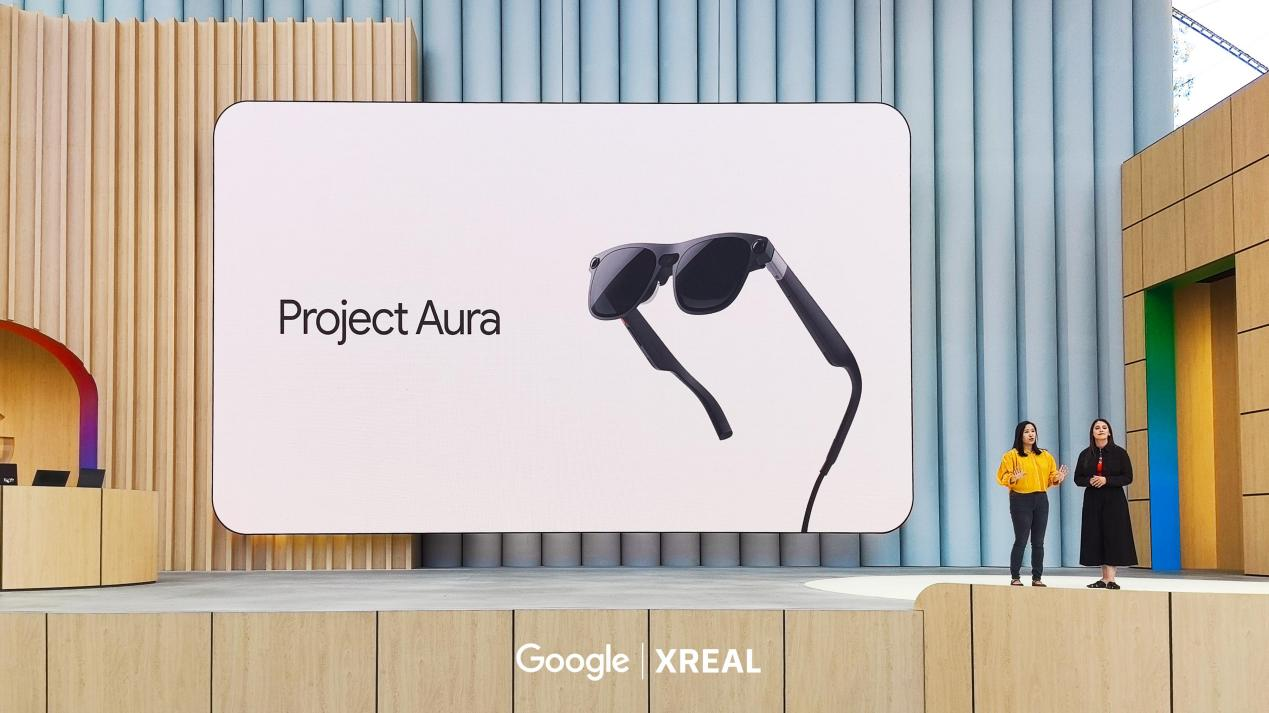
上海科技企业与Google联合打造的AR眼镜亮相美国
news flash· 2025-05-21 11:41
Core Viewpoint - The launch of Project Aura, an AR glasses product developed by Google in collaboration with Chinese tech company XREAL, signifies a significant step in the evolution of spatial computing and the global XR ecosystem [1] Group 1: Product Launch - Project Aura was unveiled at the 2025 Google I/O global developer conference held in California [1] - The product represents a technological vision for the next decade in spatial computing [1] Group 2: Industry Collaboration - This launch marks the first time a Shanghai-based Chinese company has participated as a foundational ecosystem partner in defining and evolving the global XR operating system and terminal ecosystem [1]
XREAL持续引领中国AR走上全球主舞台:日前再获上海国资2亿元加持
IPO早知道· 2025-05-21 10:30
Core Viewpoint - The article highlights the strategic partnership between Google and Chinese AR company XREAL, focusing on the launch of the new AR glasses, Project Aura, which signifies a significant step for XREAL in the global XR industry and showcases the growing importance of AR glasses as a carrier for AI technology [2][4]. Group 1: Partnership and Market Position - XREAL is the only global partner of Google in developing the first Android XR platform flagship glasses, validating its technological capabilities recognized by a leading tech giant [4]. - XREAL has become the world's leading AR glasses brand, holding the top market share for three consecutive years from 2022 to 2024, according to IDC data [7]. - The company has received significant investments from various renowned institutions, including a recent exclusive investment of 200 million yuan from Pudong Venture Capital [7]. Group 2: Technological Advancements - Project Aura integrates lightweight design, a wide field of view, cinema-level immersive experience, and Gemini AI, setting a new technical benchmark for the Android XR ecosystem [10]. - The collaboration between Google, XREAL, and Qualcomm forms a "golden triangle" of technology covering platform, hardware, and chips, which is crucial for the development of the Android XR ecosystem [12]. - XREAL has developed the world's first self-researched spatial computing chip, X1, which enables native 3DoF spatial positioning capabilities, addressing the complex demands of AR glasses [15][17]. Group 3: Future Outlook - XREAL's CEO emphasizes the importance of globalization for the company's next decade of development, aiming to lead the AR industry rather than merely follow it [6]. - The company is focused on innovation and aims to build a strong technological moat while scaling its operations to ensure sustainable growth [18].

XREAL联合谷歌“上新”,AR眼镜国产化进一步加速
Di Yi Cai Jing· 2025-05-21 09:38
Core Insights - XREAL and Google have launched Project Aura, the first official AR glasses on the Android XR platform, marking a significant milestone in the AR industry [1][2] - XREAL aims to accelerate the localization of AR glasses production in China, with plans to achieve domestic manufacturing of most core components within one to two years [1][6] - The collaboration between XREAL and Google positions XREAL as a key player in the global XR ecosystem, enhancing its influence in the technology landscape [5][8] Company Overview - XREAL is a leading consumer-grade AR glasses developer, headquartered in Shanghai's Pudong district, and has established strategic partnerships with several domestic manufacturers [6][7] - The company has achieved significant market success, being the top player in the global AR market for three consecutive years, with cumulative sales exceeding 500,000 units [7] - XREAL's upcoming product, the XREAL One, features the world's first self-developed spatial computing chip, X1, and aims to redefine the AR experience with innovative technology [7] Industry Trends - The launch of Project Aura signifies the beginning of a unified and stable ecosystem for XR devices, addressing fragmentation and promoting innovation [2][4] - The collaboration is expected to enhance the recognition of China's XR industry maturity among international partners and provide practical cooperation opportunities for domestic companies [6][9] - Shanghai is emerging as a major hub for the smart glasses industry, supported by comprehensive policies and funding initiatives to promote XR enterprises on the global stage [10]
Google与XREAL达成深度战略合作
news flash· 2025-05-21 00:25
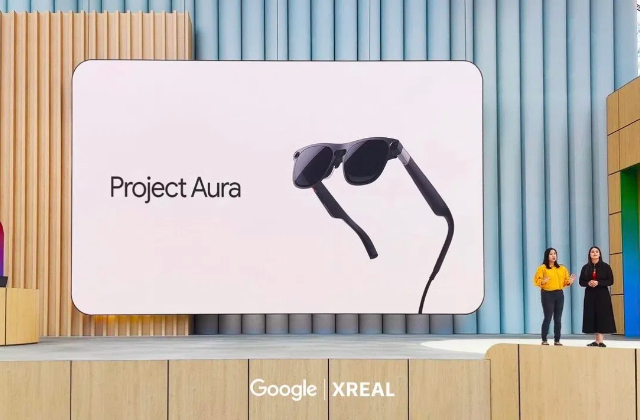
Core Insights - Google announced a deep strategic partnership with Chinese AR technology company XREAL to jointly launch the next-generation AR glasses, Project Aura [1] - Project Aura is the world's first flagship AR glasses specifically designed for the Android XR platform, utilizing Optical See Through (OST) technology [1] - This development signifies the official entry of the AR industry into the "Android era" [1]
Google联合XREAL推出全球首款基于Android XR的旗舰眼镜
Xin Lang Ke Ji· 2025-05-20 23:57
Group 1 - Google announced a strategic partnership with Chinese AR company XREAL to launch the new generation AR glasses, Project Aura, designed specifically for the Android XR platform [1][3] - Project Aura represents a significant step in Google's XR platform ecosystem strategy and elevates XREAL's position in the global AR market, featuring lightweight design, wide field of view, cinema-level immersive experience, and integration with Gemini AI [3][4] - The collaboration combines the technological strengths of Google, XREAL, and Qualcomm, forming a "golden triangle" that covers platform, hardware, and chip, establishing a solid foundation for the Android XR ecosystem [3] Group 2 - Google’s VP of Android XR, Shahram Izadi, expressed excitement about XREAL joining the Android XR family and emphasized the importance of Project Aura in advancing spatial experiences into a more intuitive and accessible OST era [4] - XREAL's founder and CEO, Xu Chi, highlighted the company's commitment to pushing the boundaries of AR hardware, merging performance, comfort, and design aesthetics, and believes that the collaboration with Google will elevate their vision to new heights [4]
谷歌将与XREAL合作推Android XR平台首款眼镜 立讯精密、龙旗科技等参与
news flash· 2025-05-20 23:45
Core Points - Google announced a partnership with Chinese AR glasses company XREAL to launch a new generation of AR glasses called Project Aura during the Google I/O global developer conference [1] - Domestic supply chain companies such as Luxshare Precision and Longqi Technology will provide support for the new AR glasses [1]


聚焦SiC光波导降本!6家衬底企业指出破局路径
行家说三代半· 2025-05-20 09:15
Core Viewpoint - The article highlights the rapid development and challenges in the silicon carbide (SiC) substrate industry, particularly in relation to the cost and application of SiC optical waveguide lenses in AR glasses, driven by innovations in materials and technology [1][2][3]. Group 1: Industry Trends - Meta's announcement regarding the use of SiC optical waveguide lenses in AR glasses has sparked significant interest and activity among various manufacturers in the AR hardware sector [1]. - Companies such as XREAL, 雷鸟创新, and 慕德微纳 are accelerating their investments in SiC optical waveguide technology, indicating a vibrant market environment [1]. - The industry is characterized by high technical enthusiasm and market vitality, with multiple SiC substrate companies actively participating in research and development [1]. Group 2: Cost Challenges - The high cost of SiC optical waveguide lenses, which can reach up to 2000 RMB per piece, is a major barrier to the widespread adoption of AR glasses [3][5]. - The production cost of Meta's AR glasses is significantly influenced by the SiC lenses, which account for a substantial portion of the overall cost [3][5]. - The article identifies four key challenges in reducing the cost of SiC substrates, including performance requirements, crystal growth, substrate processing, and production costs [7][12]. Group 3: Performance and Processing Differences - SiC substrates for optical applications have distinct performance requirements compared to traditional substrates, focusing on optical properties such as low light absorption and high transmittance [8][9]. - The processing techniques for optical-grade SiC substrates differ from those for conductive and semi-insulating substrates, necessitating higher precision and control [11][12]. - The article emphasizes the need for improved processing techniques to enhance yield and reduce costs in the production of optical-grade SiC substrates [11][12]. Group 4: Future Outlook and Innovations - Companies are optimistic about the potential for cost reduction through process optimization, scale effects, and technological advancements in SiC substrate production [15][16]. - The article suggests that if the AR glasses industry follows a growth trajectory similar to that of smartphones, the prices of optical-grade SiC substrates could significantly decrease by 2030 [16]. - The development of larger SiC substrates (8-inch and 12-inch) is expected to enhance production efficiency and lower costs, although challenges remain in achieving the necessary purity and defect control [19][20][21]. Group 5: Market Potential - The market for SiC-based optical waveguide lenses is projected to grow significantly, with estimates suggesting a demand for 60-180 million pieces by 2030 [21][24]. - The continuous efforts of leading SiC substrate companies to innovate and collaborate within the industry are seen as crucial for overcoming current cost barriers and driving market growth [21][24]. - The article concludes that advancements in SiC technology and cost reductions will likely lead to a new era of consumer-grade AR products, expanding the market for smart wearable devices [24].