
南山智尚

Search documents
从WAIC到WRC,灵巧手行业有哪些新趋势?
机器人大讲堂· 2025-08-13 10:47
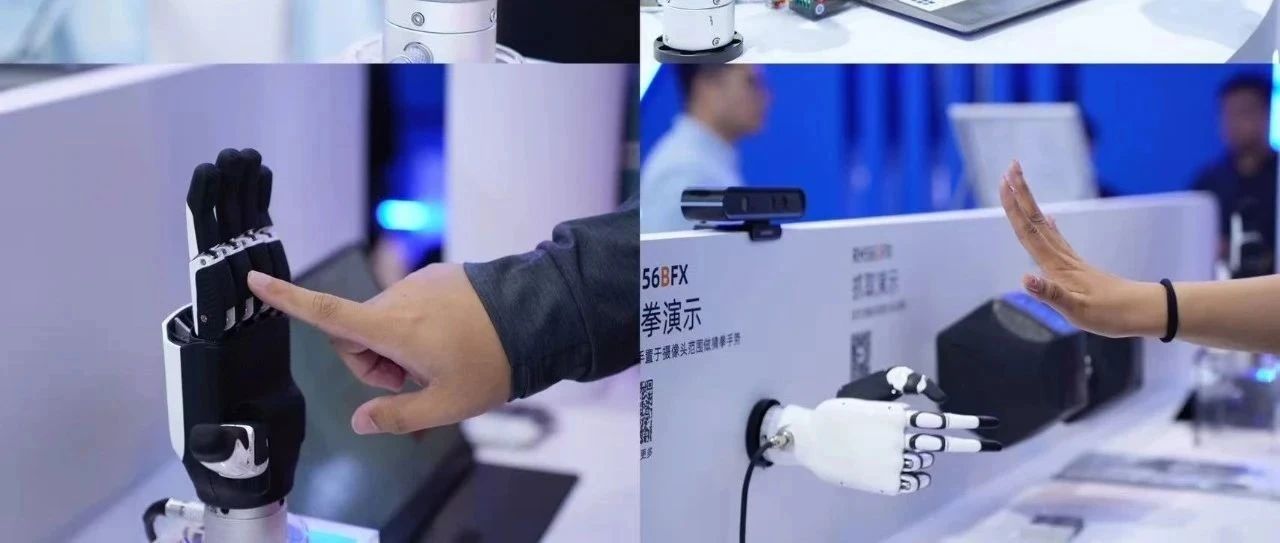
Core Viewpoint - The current landscape of dexterous hand technology is characterized by diverse approaches from different manufacturers, with no unified solution yet established, reflecting a balance between performance, cost, and reliability [1] Summary by Sections Trends in Dexterous Hand Technology - The core area of differentiation in technology routes is the transmission system, with Tesla's Optimus evolving from a "worm gear + tendon" solution to a rumored "screw + tendon" hybrid transmission for its fourth generation, enhancing freedom while optimizing force transmission efficiency [2] - Domestic companies primarily use linkage transmission, such as the RH56BFX series from Yinshi Robotics, which achieves 11 degrees of freedom through linkage and spring transmission [2] - Some companies have broken through the limitations of previous solutions, like Zhiyuan Robotics' five-finger dexterous hand using a mixed scheme of screw + linkage + turbine rod + tendon, indicating a potential return to the mainstream for the screw + tendon composite scheme [4] Technical Innovations and Challenges - Innovations have addressed previous bottlenecks of tendon solutions, with domestic manufacturers finding better solutions to issues like precision control and wear [6] - The use of ultra-high molecular weight polyethylene fiber (UHMWPE) in tendon materials has shown promise, with Chinese production accounting for nearly 50% of global supply [8] - Tactile sensors have become standard in dexterous hands, with various implementations enhancing environmental interaction capabilities [8][10] - The main technical challenges lie in hardware and software, particularly in achieving high degrees of freedom within compact structures while controlling costs [10][12] Market Dynamics and Player Strategies - The dexterous hand market participants can be categorized into three main groups: self-research entities, new dexterous hand forces, and component extension players, each leveraging unique advantages to occupy niche markets [15] - Self-research entities focus on optimizing overall machine performance through in-house dexterous hand development, while new forces prioritize core technology breakthroughs and rapid market entry [17] - Component extension players leverage supply chain advantages, with companies like Zhaowei Electromechanical and Leisai Intelligent developing dexterous hands that integrate self-researched micro-reducers and sensors [19] Future Outlook - The industry is expected to experience significant growth, driven by continuous investment, policy support, and the expansion of application scenarios [22] - Deep bionic design is seen as a long-term direction for dexterous hand development, aiming to fully simulate human hand functions and reduce interaction costs [22] - The integration of AI models with dexterous hands is anticipated to enhance operational skill learning and adaptability, supporting the scale application of dexterous hands in various fields [24][25]

南山智尚:截至2025年8月8日,公司股东人数为28368户
Zheng Quan Ri Bao Wang· 2025-08-12 09:48
证券日报网讯南山智尚(300918)8月12日在互动平台回答投资者提问时表示,截至2025年8月8日,公 司股东人数为28368户。 ...
纺织制造板块8月12日跌0.16%,迎丰股份领跌,主力资金净流出1.53亿元
Zheng Xing Xing Ye Ri Bao· 2025-08-12 08:22
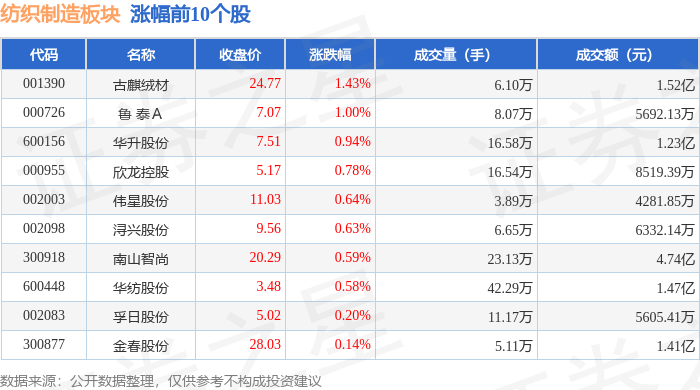
Group 1 - The textile manufacturing sector experienced a decline of 0.16% on August 12, with Yingfeng Co. leading the drop [1] - The Shanghai Composite Index closed at 3665.92, up 0.5%, while the Shenzhen Component Index closed at 11351.63, up 0.53% [1] - Key stocks in the textile manufacturing sector showed varied performance, with Guqi New Material rising by 1.43% to a closing price of 24.77 [1] Group 2 - Yingfeng Co. saw a significant decline of 4.80%, closing at 7.74, with a trading volume of 284,000 shares [2] - The textile manufacturing sector experienced a net outflow of 153 million yuan from main funds, while retail investors contributed a net inflow of 133 million yuan [2] - The trading volume for major stocks in the textile sector varied, with notable transactions including 610,000 shares for Guqi New Material, generating a turnover of 152 million yuan [1][2]




新材料与投资逻辑:任重道远、星辰大海、精耕细作
材料汇· 2025-08-11 15:38
Core Viewpoint - The article provides an in-depth analysis of the new materials industry, highlighting key materials, their applications, and investment opportunities within the context of China's "14th Five-Year Plan" [5][13]. Group 1: Definition and Classification of New Materials - New materials are defined as materials with superior properties or special functions that have recently emerged or have significantly improved from traditional materials [8]. - The new materials industry is categorized into six major subcategories, including advanced steel materials, advanced non-ferrous metal materials, advanced petrochemical new materials, advanced inorganic non-metallic materials, high-performance fibers and products, and frontier new materials [10]. - New materials can also be classified based on application fields, performance, and composition, indicating a multidimensional classification system [10]. Group 2: Key Materials and Their Applications - The article discusses critical materials such as ultra-high molecular weight polyethylene (UHMWPE), polyimide (PI), and silicon carbide (SiC) fibers, detailing their properties and applications in various industries [19][22][29]. - UHMWPE is noted for its high strength, low density, and resistance to chemicals, making it suitable for military, marine, and safety applications [19]. - PI materials are recognized for their thermal stability and electrical insulation properties, widely used in aerospace, electronics, and nanotechnology [23][25]. - SiC fibers are highlighted for their high-temperature resistance and strength, with applications in aerospace and military sectors [30][34]. Group 3: Investment Landscape and Trends - The new materials industry is characterized by high investment, high difficulty, and high barriers, with long research and application cycles [65]. - The market for new materials is projected to grow at a compound annual growth rate (CAGR) of 18%, significantly outpacing GDP growth, with specific segments like semiconductor materials and biomedical materials showing even higher growth rates [61]. - The article emphasizes the importance of domestic substitution and technological breakthroughs as key drivers for the new materials market in China [62][55]. Group 4: Challenges and Opportunities - Despite advancements, China still faces challenges in achieving high-performance and specialized new materials, with many high-end materials remaining reliant on imports [54][34]. - The article points out that the global new materials market is dominated by developed countries, with China needing to enhance its competitive edge through innovation and strategic planning [47][51]. - The ongoing geopolitical tensions and trade protectionism are driving the need for self-sufficiency in new materials technology [55][56].

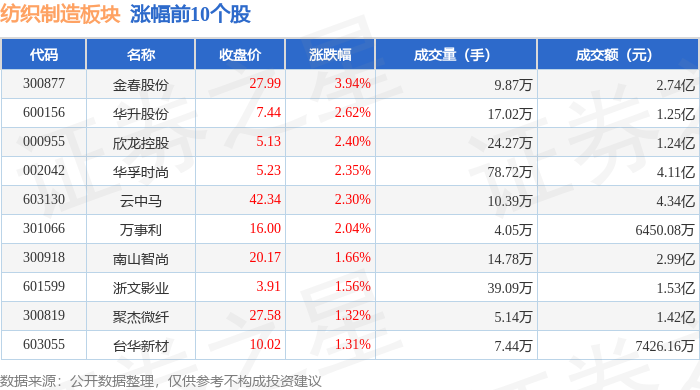
纺织制造板块8月11日涨0.22%,金春股份领涨,主力资金净流入9831.94万元
Zheng Xing Xing Ye Ri Bao· 2025-08-11 08:40
证券之星消息,8月11日纺织制造板块较上一交易日上涨0.22%,金春股份领涨。当日上证指数报收于 3647.55,上涨0.34%。深证成指报收于11291.43,上涨1.46%。纺织制造板块个股涨跌见下表: | 代码 | 名称 | 收盘价 | 涨跌幅 | 成交量(手) | | 成交额(元) | | --- | --- | --- | --- | --- | --- | --- | | 300877 | 金春股份 | 27.99 | 3.94% | | 9.87万 | 2.74亿 | | 600156 | रून में दिस् | 7.44 | 2.62% | | 17.02万 | · 1.25亿 | | 000955 | 欣龙控股 | 5.13 | 2.40% | | 24.27万 | 1.24亿 | | 002042 | 保安时尚 | 5.23 | 2.35% | 78.72万 | | 4.11亿 | | 603130 | 云中马 | 42.34 | 2.30% | | 10.39万 | 4.34亿 | | 301066 | 万事利 | 16.00 | 2.04% | | 4.05万 | 6450.08 ...
先进制造行业周报:世界机器人大会盛况空前,中国厂商加速抢滩工业与消费市场-20250811
AVIC Securities· 2025-08-11 01:52
Investment Rating - The industry investment rating is "Overweight" [3][24]. Core Viewpoints - The 2025 World Robot Conference (WRC) showcased over 1,500 exhibits from more than 200 companies, highlighting the rapid commercialization of humanoid robots, with over 27 new models launched in July and August [6][7][12]. - The humanoid robot industry is entering a critical phase of technological breakthroughs and commercialization, with a projected global demand of approximately 2 million units by 2030 [6][12]. - The report emphasizes the importance of core technology innovation and cost control for companies to succeed in a competitive environment similar to the smartphone industry [12][20]. Summary by Sections Humanoid Robots - The WRC 2025 focused on making robots smarter and more capable, with significant participation from humanoid robot manufacturers [7]. - The report identifies key players in the humanoid robot supply chain, including companies like Sanhui Electric and Zhejiang Rongtai, and highlights the importance of various technology chains [6][20]. - The price of humanoid robots is becoming more accessible, with models like the Unitree R1 starting at 39,900 yuan, supported by government subsidies [19]. Photovoltaic Equipment - The penetration rate of N-type photovoltaic technology is accelerating, enhancing the competitiveness of leading companies [21]. - The report suggests focusing on companies like Maiwei and Jiejia Weichuang, which have strong technological innovation and customer bases [21]. Energy Storage - The energy storage sector is experiencing favorable policies that are expected to boost industry growth [21]. - Companies like Xingyun and Kexin New Energy are highlighted for their strategic partnerships and potential for growth in the energy storage market [21]. Semiconductor Equipment - The semiconductor equipment market is projected to reach $140 billion by 2030, with a focus on domestic alternatives [22]. - The report recommends companies like Zhongwei and Beifang Huachuang for their potential in the growing semiconductor equipment market [22]. Automation - The market for industrial consumables, particularly cutting tools, is expected to grow from 40 billion yuan to 55.7 billion yuan by 2026, with opportunities for leading companies [22]. - The report emphasizes the importance of increasing market concentration and import substitution for industry leaders [22]. Hydrogen Energy - The development of green hydrogen aligns with carbon neutrality goals, with a focus on companies that integrate hydrogen production with renewable energy sources [21]. - Key players in the hydrogen energy sector include Longi Green Energy and Yihua Tong [21].
绳驱机器人亮相世界机器人大会 上市公司积极迭代关键腱绳材料
Zheng Quan Ri Bao· 2025-08-10 16:55
Core Insights - The development of tendon ropes, a key component of cable-driven robots, is accelerating among listed companies and startups to meet future demands in robotics [1][2] Group 1: Industry Overview - Cable-driven robots are characterized by their lightweight, flexibility, high safety performance, energy efficiency, and strong biomimetic capabilities [1] - Current prototypes of cable-driven robots have been developed by various companies, including a university's octopus-like robotic arm capable of handling fragile and irregular objects [1] Group 2: Company Developments - Jiangsu Henghui Security Co., Ltd. is actively developing ultra-high molecular weight polyethylene fibers for use in robotic tendons, having completed multiple rounds of sample testing with leading robotics firms [2] - Shandong Daye Co., Ltd. is focusing on the development of metal tendons for cable-driven robots, having received small batch orders based on their research in high-performance steel wire [2] - Shandong Nanshan Zhishang Technology Co., Ltd. is producing ultra-high molecular weight polyethylene fibers with properties suitable for robotics, and is in the process of sending samples to various downstream robotics companies [2] Group 3: Material Innovations - Some companies are exploring carbon fiber materials for tendon development due to their superior tensile strength, corrosion resistance, and fatigue performance compared to metals and polymers [3]


南山智尚(300918)8月8日主力资金净流出4606.51万元
Sou Hu Cai Jing· 2025-08-08 13:21
Group 1 - The core viewpoint of the news is that Nanshan Zhishang (300918) experienced a decline in stock price and significant net outflow of funds on August 8, 2025, with a closing price of 19.84 yuan, down 2.94% [1] - The company reported total revenue of 362 million yuan for Q1 2025, representing a year-on-year growth of 0.72%, and a net profit attributable to shareholders of 37.3 million yuan, up 0.86% year-on-year [1] - The company's financial ratios include a current ratio of 1.174, a quick ratio of 0.684, and a debt-to-asset ratio of 40.63% [1] Group 2 - Nanshan Zhishang has made investments in 13 companies and participated in 2,854 bidding projects, indicating active engagement in business expansion [2] - The company holds 271 trademark registrations and 215 patents, showcasing its focus on intellectual property [2] - Nanshan Zhishang has obtained 50 administrative licenses, reflecting its compliance and operational capabilities [2]
南山智尚股价下跌2.20% 纺织服饰板块资金净流入4.65亿元
Jin Rong Jie· 2025-08-07 19:43
Company Overview - Nanshan Zhishang's stock price as of August 7, 2025, is 20.44 yuan, down 0.46 yuan or 2.20% from the previous trading day [1] - The company specializes in the research, production, and sales of textile and apparel products, including various fabrics and finished garments [1] - Nanshan Zhishang is registered in Shandong Province and is involved in humanoid robots, antibacterial fabrics, and cross-border e-commerce [1] Market Performance - On August 7, the opening price was 20.75 yuan, with a high of 20.80 yuan and a low of 20.27 yuan, resulting in a trading volume of 184,600 hands and a transaction amount of 377 million yuan [1] - The net outflow of main funds on August 7 was 50.13 million yuan, with a cumulative net outflow of 83.64 million yuan over the past five trading days [1] - Within the textile and apparel industry, the overall sector saw a net inflow of 465 million yuan, but Nanshan Zhishang ranked third in net outflow within the sector, with a net outflow amounting to 39.82 million yuan [1]
4.65亿元资金今日流入纺织服饰股
Zheng Quan Shi Bao Wang· 2025-08-07 08:56
Market Overview - The Shanghai Composite Index rose by 0.16% on August 7, with 18 out of the 28 sectors experiencing gains. The top-performing sectors were non-ferrous metals and beauty care, with increases of 1.20% and 0.99% respectively. The textile and apparel sector also saw a rise of 0.81%. Conversely, the pharmaceutical and biological sector and the electric equipment sector faced declines of 0.92% and 0.74% respectively [1]. Capital Flow Analysis - The main capital flow showed a net outflow of 37.824 billion yuan across the two markets. Eight sectors recorded net inflows, with the electronics sector leading at a net inflow of 3.124 billion yuan and a daily increase of 0.45%. The non-ferrous metals sector followed with a net inflow of 650 million yuan and a daily increase of 1.20% [1]. - A total of 23 sectors experienced net outflows, with the machinery equipment sector seeing the largest outflow of 6.321 billion yuan, followed by the national defense and military industry with an outflow of 6.071 billion yuan. Other sectors with significant outflows included pharmaceuticals, electric equipment, and computers [1]. Textile and Apparel Sector Performance - The textile and apparel sector increased by 0.81% with a net inflow of 465 million yuan. Out of 105 stocks in this sector, 47 stocks rose, including 5 that hit the daily limit. However, 54 stocks declined. Notably, 37 stocks had net inflows, with 5 stocks receiving over 50 million yuan in net inflows. The top stock for net inflow was Jihua Group, with an inflow of 388 million yuan, followed by Feiyada and Laishen Tongling with inflows of 135 million yuan and 110 million yuan respectively [2]. - The sector also had stocks with significant net outflows, with 6 stocks experiencing outflows exceeding 30 million yuan. The stocks with the largest outflows were Huafu Fashion, Wanlima, and Nanshan Zhishang, with outflows of 112 million yuan, 86.16 million yuan, and 39.82 million yuan respectively [2][4]. Top Gainers in Textile and Apparel Sector - The top gainers in the textile and apparel sector included: - Jihua Group: +10.09% with a turnover rate of 9.66% and a main capital flow of 388.31 million yuan - Feiyada: +10.03% with a turnover rate of 11.49% and a main capital flow of 135.38 million yuan - Laishen Tongling: +10.02% with a turnover rate of 10.05% and a main capital flow of 110.23 million yuan - Other notable gainers included Jin Hong Group and Mankalon with increases of 10.05% and 5.71% respectively [3]. Top Losers in Textile and Apparel Sector - The top losers in the textile and apparel sector included: - Huafu Fashion: -1.15% with a turnover rate of 9.28% and a main capital flow of -112.27 million yuan - Wanlima: +3.57% with a turnover rate of 47.18% and a main capital flow of -86.16 million yuan - Nanshan Zhishang: -2.20% with a turnover rate of 4.25% and a main capital flow of -39.82 million yuan - Other notable losers included Tanshizhe and Qipiwolf with declines of -0.44% and -1.47% respectively [4].


