罗氏

Search documents
U.S. And Switzerland Reach Trade Agreement—Lowering Tariffs To 15%
Forbes· 2025-11-14 15:40
Core Points - The U.S. and Switzerland have reached a trade agreement to lower tariffs on Swiss goods from 39% to 15% [1] - Switzerland is committed to investing $200 billion in the U.S. during Trump's second presidency, including $70 billion next year [2] - The total goods trade between the U.S. and Switzerland was estimated at $88.4 billion in 2024, with Swiss watch exports to the U.S. growing significantly [4] Trade Agreement Details - The agreement aims to reduce tariffs on luxury exports from Switzerland, which include jewelry, coffee, and chocolate [1] - U.S. trade representative Jamieson Greer indicated that the agreement is "essentially" finalized [1][3] Investment Commitments - Switzerland plans to invest heavily in U.S. sectors such as pharmaceuticals and gold smelting, with Roche pledging $50 billion [2] - The commitment includes purchasing more Boeing commercial planes [2] Impact on Goods Trade - Swiss exports to the U.S. have been growing at a rate of 14% annually since 2019, significantly outpacing the global average [4] - Swiss watch exports surged 18.2% overall, with shipments to the U.S. increasing by 149% following the announcement of tariffs [4]


Trump Plans to Attend Davos Next Year in Boost to Switzerland
MINT· 2025-11-13 19:34
US President Donald Trump is expected to attend the World Economic Forum’s annual meeting in Davos next year, according to people familiar with his planning, signaling warming US-Swiss relations as the nations close in on a trade deal.Trump is planning to travel to Switzerland with a large entourage, according to people familiar with the plans who didn’t want to be named discussing them in public. Trump didn’t attend January’s edition of the meeting, held shortly after his inauguration, and instead spoke to ...


Nurix Therapeutics (NasdaqGM:NRIX) 2025 Conference Transcript
2025-11-13 15:20
Summary of Nurix Therapeutics Conference Call Company Overview - **Company**: Nurix Therapeutics (NasdaqGM:NRIX) - **Focus**: Targeted protein degradation, primarily in oncology and inflammation Key Points Industry and Product Development - Nurix is pioneering targeted protein degradation as a new therapeutic modality, starting with Chronic Lymphocytic Leukemia (CLL) [2][3] - The lead product, Bexobrutideg (Bexdeg), targets BTK, a validated drug target, and has shown an 80% response rate in CLL patients who have undergone four prior lines of therapy [2][3] Clinical Trials and Efficacy - Initiated pivotal trials for Bexdeg in CLL, with a focus on a triple-exposed patient population (patients treated with covalent BTK inhibitors, BCL-2 inhibitors, and non-covalent BTK inhibitors) [9][10] - The 600 mg dose of Bexdeg is expected to provide better coverage against resistance mutations and improve overall efficacy and progression-free survival [6][39] - The confirmatory phase III trial is designed to assess superiority over standard care, with a focus on global enrollment strategies [30][29] Regulatory Considerations - Discussions with the FDA regarding the appropriateness of the triple-exposed patient population for accelerated approval are ongoing, with a target follow-up duration of about one year [12][17] - The accelerated approval paradigm is under scrutiny, with Nurix confident in the unmet medical need for the triple-exposed population [13][14] Upcoming Data and Events - The upcoming ASH conference is expected to provide critical data on dose expansion and efficacy, particularly regarding duration of response and justification for the 600 mg dose [31][32] - The company aims to present data that will inform the design of the phase III trial and its relevance to the future CLL marketplace [29][32] Competitive Landscape - Bexdeg is positioned as a highly selective drug compared to competitors, with proteomics data indicating minimal off-target effects [36][38] - The company is also exploring applications in inflammation and immunology, with ongoing studies for IRAK4 and STAT6 degraders [41][52] Financial Position - Nurix has over $650 million in cash, providing a runway through the end of 2027 into 2028, which supports the launch of pivotal programs and advancement of the pipeline [55][56] Conclusion - Nurix Therapeutics is at the forefront of targeted protein degradation, with promising clinical data and a strong financial position to support its innovative therapies in oncology and inflammation. The upcoming ASH conference will be pivotal for investor insights and future developments.

眼科CGT起风了
3 6 Ke· 2025-11-12 23:34
Core Insights - The ophthalmic CGT (cell and gene therapy) sector is emerging as a new focus for pharmaceutical companies, with significant investments from major players like Eli Lilly, who recently made two strategic acquisitions in this field [1][2][3] Group 1: Eli Lilly's Strategic Moves - Eli Lilly has made two notable transactions: acquiring Adverum for up to $262 million for the wet age-related macular degeneration (wAMD) gene therapy Ixo-vec, and partnering with MeiraGTx for a $75 million upfront payment and up to $475 million in milestone payments for a gene therapy targeting Leber congenital amaurosis type 4 (LCA4) [1][2] - The collaboration with MeiraGTx focuses on the AAV-AIPL1 gene therapy, which has shown significant vision improvement in all 11 treated LCA4 children, highlighting its potential in treating severe inherited retinal diseases [2][3] - The acquisition of Adverum reflects Eli Lilly's ambition in the common eye disease market, as wAMD is a leading cause of blindness among the elderly, with 190 million patients globally in 2020 [3] Group 2: The Unique Advantages of Ophthalmic CGT - The eye is considered an "immune-privileged organ," making it a suitable target for gene therapy, as many blinding eye diseases are caused by single-gene mutations, providing clear therapeutic targets [4][5] - The success of Spark Therapeutics' Luxturna, the first FDA-approved ophthalmic gene therapy, has validated the effectiveness of AAV vectors in this field, leading to increased interest from various pharmaceutical companies [5][6] - Over 10 ophthalmic AAV gene therapies are currently in phase III clinical trials, with a balanced focus on both rare and common diseases [6] Group 3: Market Dynamics and Future Outlook - The commercial viability of high-priced CGT therapies is supported by the robust payment systems for rare diseases in the U.S., making it feasible for companies like Eli Lilly to invest heavily in this market [8][9] - The potential for gene therapies to address unmet clinical needs in retinal diseases, despite existing treatments, positions them favorably for commercialization [8][9] - The upcoming years are expected to be a critical window for the ophthalmic CGT industry, with multiple therapies poised to enter the market, potentially reshaping the landscape [11]

C4 Therapeutics (NasdaqGS:CCCC) FY Conference Transcript
2025-11-12 14:30
Summary of C4 Therapeutics FY Conference Call Company Overview - C4 Therapeutics is a targeted protein degradation company focused on developing medicines that utilize the body's natural system to destroy disease-causing proteins rather than inhibiting them [4][5] - The company is celebrating its 10th anniversary and currently has two active clinical programs: - **Sensitamide**: An IKZF1/3 degrader for multiple myeloma, with plans for further studies in early 2026 [4][5] - **EGFR L858R degrader**: In phase one with Beta Pharmaceuticals in China, targeting a specific mutation [4][5] - C4 has collaborations with Roche, Merck KGAA, and a completed collaboration with Biogen [5] - Recent financing provides operational runway through the end of 2028 [6] Core Product Insights Sensitamide - Designed as a highly targeted and potent degrader of IKZF1 and IKZF3, which are implicated in myeloma and lymphoma proliferation [7] - Key features include: - Low protein binding, allowing for effective drug concentration in the bone marrow [7] - No renal clearance, enabling treatment for patients with renal insufficiency [8] - A half-life of 48 hours, facilitating dosing [8] - Clinical data indicates: - A 33% overall response rate across all patients, with a 53% response rate in late-line refractory patients at the highest dose [12] - Mild toxicity profile with no significant gastrointestinal or neurological side effects [10] - T cell activation observed, enhancing immune response [13] Market Dynamics and Competitive Landscape - The myeloma treatment landscape is evolving, with a shift towards introducing effective treatments earlier in the therapy regimen [18] - Sensitamide is positioned to compete against CAR-T and BITE therapies, with potential for combination therapies to enhance efficacy [20][42] - The company anticipates a growing market for late-line treatments as newer agents lead to longer patient survival but not cures [42] - Estimated market opportunity for Sensitamide is projected at $1 billion to $1.5 billion in late-line settings and $2.5 billion to $4 billion when considering second-line treatments [43] Clinical Development Strategy - Plans to initiate a phase one B study in early 2026, combining Sensitamide with Pfizer's ELREXFIO [21][22] - The study will evaluate multiple dose levels to determine optimal safety and efficacy [22] - A non-randomized phase two study will also be initiated to confirm efficacy in late-line patients [24] - The strategy includes potential for accelerated approval based on early efficacy signals [23][24] Collaboration and Future Directions - Collaboration with Pfizer is focused on leveraging expertise in BITEs for the development of combination therapies [38][39] - The company is open to exploring additional combinations as resources allow, including with CD38 and carfilzomib [25] - Continuous updates on trial progress and safety data will be provided to investors [40] Conclusion - C4 Therapeutics is well-positioned in the evolving myeloma treatment landscape with its innovative approach to targeted protein degradation, particularly through Sensitamide, which shows promising clinical data and a strong market opportunity [4][43]


Olema Pharmaceuticals (NasdaqGS:OLMA) 2025 Conference Transcript
2025-11-12 14:02
Olema Pharmaceuticals Conference Call Summary Company Overview - **Company**: Olema Pharmaceuticals (NasdaqGS:OLMA) - **Mission**: To improve treatment options for individuals living with breast cancer [1] Clinical Programs Palazestrant - **Type**: Complete estrogen receptor antagonist - **Current Trials**: - **OPERA-02**: Phase three trial in combination with ribociclib versus ribociclib and an aromatase inhibitor (AI) for first-line treatment of ER-positive, HER2-negative breast cancer - **OPERA-01**: Phase three trial as monotherapy for patients post-progression on first-line therapy [2][3] - **Market Size**: Approximately $20 billion for ER-positive, HER2-negative breast cancer treatments, with a $5 billion market for second and third-line therapies [3][4] - **Median Progression-Free Survival (PFS)**: - OPERA-02 trial shows a median PFS of 15.5 months, significantly higher than the standard of care [8] - OPERA-01 trial shows a PFS of 12 months, compared to 5 months in the standard of care [8][12] OP-3136 - **Type**: KAT6 inhibitor - **Current Status**: In phase one/two trials, with ongoing monotherapy dose escalation [3][21] - **Combination Therapy**: Expected to combine with palazestrant and fulvestrant to enhance efficacy [23] Market Dynamics - **Unmet Medical Need**: Approximately 320,000 breast cancer diagnoses in the U.S. annually, with 70% being ER-positive, HER2-negative [3] - **Treatment Duration**: First-line therapies have longer treatment durations, contributing to market size [4] - **Resistance Mechanisms**: Palazestrant shows potential to address resistance mechanisms in both ESR1 mutant and wild-type populations [10][11] Competitive Landscape - **Comparison with Competitors**: - Giredestrant (Roche) and camizestrant (AstraZeneca) are in similar trials but have shown less efficacy compared to palazestrant [26][29] - Palazestrant is positioned to outperform competitors in both mutant and wild-type settings [15][28] Future Outlook - **Commercialization Plans**: - Expected product approval and launch filing for palazestrant in 2027 [24] - Ongoing commercial planning and manufacturing setup [20] - **Upcoming Data Releases**: - First pivotal trial readout for OP-3136 expected in the second half of next year [24] - Continued enrollment in OPERA-01 and OPERA-02 trials [19] Key Takeaways - Olema Pharmaceuticals is focused on addressing significant unmet needs in breast cancer treatment through innovative therapies - The company is well-positioned in a large market with promising clinical data supporting its lead product, palazestrant - Future trials and data releases will be critical in establishing the efficacy and market potential of both palazestrant and OP-3136 [24][33]

调整结束,大反攻开始?
Sou Hu Cai Jing· 2025-11-12 08:33
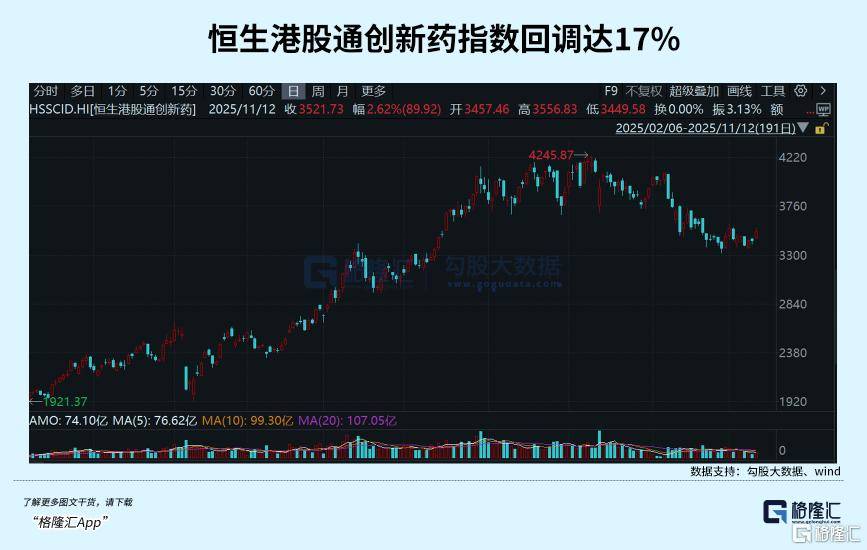
Core Viewpoint - The innovative drug sector has regained market attention after a two-month adjustment period, driven by macroeconomic liquidity easing and strong Q3 earnings reports from key companies [1][3]. Group 1: Performance and Financials - The Hang Seng Innovative Drug ETF (159316) rose by 2.52%, while the low-fee Innovative Drug ETF from E Fund (516080) increased by 31% year-to-date [2]. - BeiGene reported Q3 revenue of 27.595 billion yuan, a 44.21% year-on-year increase, with a net profit of 1.562 billion yuan, reversing previous losses [3]. - Innovent Biologics announced over 3.3 billion yuan in product revenue for Q3 2025, maintaining approximately 40% growth [3]. - Other leading companies like WuXi AppTec, Hengrui Medicine, Shanghai Pharmaceuticals, and Fosun Pharma reported revenues of 32.857 billion yuan, 23.188 billion yuan, 21.507 billion yuan, and 2.939 billion yuan respectively, with net profits of 12.076 billion yuan, 5.751 billion yuan, 5.147 billion yuan, and 2.523 billion yuan [3]. Group 2: Industry Trends - A total of 81 innovative drug companies reported a 13.84% year-on-year increase in net profit, with 9 companies turning losses into profits, indicating a shift towards commercialization in the sector [4]. - The total value of outbound licensing transactions for Chinese innovative drugs exceeded 101.24 billion USD, significantly surpassing the projected 51.9 billion USD for 2024 [5]. - Notable licensing deals include Hengrui's collaboration with GSK valued at up to 12 billion USD and a deal between 3SBio and Pfizer worth over 1 billion USD [6]. Group 3: Market Dynamics - The innovative drug sector has experienced a 17% correction since early September, suggesting it may be nearing a bottom [8]. - Historical data indicates that corrections of 15%-20% often signify deep pullbacks, but current macroeconomic conditions are not as extreme as in previous downturns [11]. - The likelihood of a significant market drop exceeding 20-30% is low, given the improving macroeconomic environment and corporate earnings recovery [12]. Group 4: Future Growth Drivers - The domestic policy environment has shifted to a more stable and supportive framework for innovative drug development, with recent healthcare negotiations enhancing commercial prospects [18]. - China's biotech sector ranks second globally in clinical pipelines, with over 20% of global clinical projects, indicating strong future product launches [20]. - Chinese companies are transitioning from "me-too" drugs to "First-in-Class" and "Best-in-Class" innovations, leveraging lower costs and faster clinical trial processes [23]. Group 5: Conclusion - The innovative drug sector is entering a favorable phase characterized by policy improvements, international expansion, and strong earnings, suggesting a potential market rebound [25]. - The increasing interest in innovative drug ETFs reflects the challenges of direct stock investment in this complex sector, with products like the Hang Seng Innovative Drug ETF providing a focused investment vehicle [25].


黄仁勋的朋友圈,多了医药界巨头
Sou Hu Cai Jing· 2025-11-12 08:05
Core Insights - Eli Lilly, the world's highest-valued pharmaceutical company, is making significant strides in AI-driven drug development, partnering with Nvidia and other tech firms to enhance its capabilities in this area [3][5][12] - The global pharmaceutical industry is facing a patent cliff, with approximately $236 billion worth of drugs set to lose patent protection in the next five years, prompting a need for accelerated drug discovery [3][5] Group 1: AI and Computational Power in Pharmaceuticals - Eli Lilly has announced a partnership with Insilico Medicine for AI-driven drug development, with a total investment exceeding $100 million [3] - Nvidia's latest supercomputer, built with over 1,000 B300 GPUs, significantly enhances computational power, reducing drug model training time from weeks to hours [3][6] - The integration of AI and high-performance computing is seen as a potential solution to improve the efficiency of drug development, which traditionally takes 9 to 15 years and costs around $2.6 billion [7][11] Group 2: Industry Dynamics and Challenges - Traditional Chinese pharmaceutical companies primarily focus on generic drugs, limiting their ability to invest in AI and custom chip collaborations [4] - Nvidia's founder, Jensen Huang, emphasizes that digital biology will be a transformative force in life sciences, indicating a shift in the industry landscape [5][11] - Despite the potential for AI to enhance efficiency, the true transformative impact on the pharmaceutical industry remains to be seen, as it may lead to significant market structure changes [11] Group 3: Nvidia's Strategic Positioning - Nvidia has established partnerships with major pharmaceutical companies like Bayer, Roche, and Novartis, reinforcing its position in the industry [12] - The company aims to be a foundational player in the AI era, controlling power scheduling, pricing, and even rule-making within the industry [13] - Nvidia's CUDA programming model serves as a crucial bridge, simplifying the use of GPU technology for developers and enhancing user retention [15][17] Group 4: Market Growth and Future Prospects - The global market for AI solutions in healthcare is projected to grow from $13.7 billion in 2022 to $155.3 billion by 2030 [20] - Nvidia's acquisition of VinBrain, a Vietnamese healthcare startup, highlights its commitment to expanding its influence in the medical AI space [20] - Over 4,000 healthcare companies have joined Nvidia's startup acceleration program, indicating a growing ecosystem around its technology [20]


观察| 5万亿AI烧钱狂欢,谁是“接盘侠”?
未可知人工智能研究院· 2025-11-12 03:02
Core Viewpoint - The article critiques the current AI infrastructure investment frenzy, highlighting the unsustainable nature of the spending and the potential for significant financial losses for investors. It draws parallels with historical investment bubbles, suggesting that the current situation may lead to similar outcomes if the market does not adjust to realistic revenue expectations. Group 1: AI Infrastructure Spending - Major US tech companies are projected to spend nearly $400 billion on AI infrastructure this year, with McKinsey forecasting a total of $5.2 trillion over the next five years, equivalent to India's annual GDP [5][11]. - The stock prices of major tech companies have surged, with the "Seven Giants" (including Apple and Microsoft) contributing to 75% of the S&P 500's gains since the launch of ChatGPT [11][12]. - Despite the hype, the current AI revenue is only $20 billion globally, indicating a need for a 100-fold increase to meet projected earnings by 2030 [7][9]. Group 2: Market Concentration and Risks - The "Seven Giants" now account for over 30% of the S&P 500, making the market highly dependent on their performance [11][12]. - AI spending has become a facade for the US economy, with half of the GDP growth this year attributed to these investments, raising concerns about sustainability [12][14]. - Historical patterns suggest that concentrated market speculation often leads to downturns, as seen in the internet and real estate bubbles [14][16]. Group 3: Capital Expenditure Trends - Companies that aggressively expand their asset bases tend to underperform, with data showing they earn 8.4% less annually than more conservative firms [17][20]. - The rapid depreciation of AI equipment exacerbates financial pressures, as companies must continually invest in new technology [21][24]. - The capital expenditure of the "Seven Giants" has increased from 4% to 15% of revenue since 2012, with some companies exceeding 21% [25][27]. Group 4: The Shift from Asset-Light to Asset-Heavy Models - The shift towards heavy asset investment has transformed these tech giants from "asset-light" to "asset-heavy" companies, leading to increased financial strain [25][30]. - Companies are now facing a "prisoner's dilemma," where they feel compelled to continue investing heavily in AI despite the risks of financial loss [30][31]. Group 5: Opportunities for Non-Investors - Historical trends indicate that the true beneficiaries of technological revolutions are often those who do not invest heavily in infrastructure but instead leverage existing technologies [31][32]. - Companies that utilize AI effectively without significant capital expenditure are positioned to benefit from the oversupply of AI infrastructure, leading to lower costs and increased efficiency [35][39]. - The article identifies two categories of AI beneficiaries: AI infrastructure builders and early AI adopters, with the latter showing significantly lower valuation premiums [33][39]. Group 6: Investment Strategies - Investors are advised to avoid high-capital expenditure AI stocks and focus on traditional companies that effectively utilize AI to enhance efficiency [40][44]. - The article emphasizes the importance of seeking undervalued AI stocks, particularly in sectors like finance, industry, and healthcare, which are less capital-intensive [44][45]. - The key takeaway is that successful investment in AI should focus on companies that can profit from AI without excessive spending on infrastructure [45][51].

上海低空经济独角兽,获3亿元融资 | 融资周报(2025年第41期)
Sou Hu Cai Jing· 2025-11-11 07:09
Financing Overview - A total of 19 financing events occurred in Shanghai this week, with 9 disclosing amounts totaling approximately 825.5 million yuan [3][6] - The number of financing events increased by 2 compared to the previous week, which had 17 events [3] - The majority of financing events took place in the Pudong New Area, with 8 events totaling 435 million yuan, followed by Minhang District with 6 events [3] Company Dynamics - Times Technology completed a 300 million yuan B++ round of financing on November 7, with investments from Huaying Capital, Junshan Capital, and PwC Capital [12][13] - Weitao Bio secured over 100 million yuan in angel round financing on November 5, led by Qiming Venture Partners, with participation from B Capital, Shunxi Fund, and Xingze Capital [14][15] - Juyue Testing completed nearly 100 million yuan in A+ round financing on November 6, led by Dongfang Jiafu, with participation from Guoxin Hongsheng and Tianbao Investment [16][17] - Yuesai Biotechnology completed nearly 100 million yuan in strategic financing on November 6, with investments from Shanghai Guotou Xiandao and Pudong Investment Holdings [18][19] Industry Focus - The healthcare sector saw the most financing events this week, with 5 occurrences, followed by integrated circuits with 4 [9][20] - The biopharmaceutical industry is a key focus in Shanghai, highlighted by the recent China International Import Expo where major companies showcased innovative products [20][21] - The Shanghai government has implemented policies to support the development of high-end medical devices, emphasizing the need for advancements in AI medical devices and diagnostic equipment [21]