国投电力

Search documents
绿色资产证券化 2025 年度运营报告与 2026 年度展望要点:绿色 ABS 产品发行规模下降,基础资产类型进一步扩充;清洁能源国央企与新能源汽车金融机构为核心发行主体;政策持续赋能绿色金融高质量发展
Zhong Cheng Xin Guo Ji· 2026-02-13 06:33
1. Report Industry Investment Rating - No information provided about the industry investment rating 2. Core Viewpoints of the Report - In 2025, the issuance scale of green ABS products declined, with the structure of underlying asset types adjusted. Green financial leasing ABS rose to the top in issuance scale. Green REITs, renewable energy price subsidy ABS, and new - energy vehicle loan ABS still dominated the issuance, while new underlying assets like held real estate and consumer finance loans were added [5][35]. - Multiple departments coordinated to deepen the financial supply - side reform, continuously improving the green finance standard system and basic institutions, and promoting the high - quality development of green finance. The green ABS market is moving towards higher - quality and diversified development [5][30][35]. 3. Summary by Relevant Catalogs 3.1 Issuance - In 2025, 136 green ABS products were issued in China, a 7.48% year - on - year decrease, with a total issuance scale of 185.326 billion yuan, a 16.59% year - on - year decline. Green enterprise ABS, green ABN, and green credit ABS accounted for 50.72%, 38.01%, and 11.27% respectively [5][6]. - By underlying asset types, green financial leasing ABS ranked first with an issuance scale of 58.484 billion yuan (31.56% of the total). Green REITs, renewable energy price subsidy ABS, and new - energy vehicle loan ABS decreased but remained major issuers. Held real estate and consumer finance loans expanded the types of green underlying assets [5][14]. - In 2025, 53 carbon - neutral ABS products were issued, with a scale of 70.393 billion yuan, a 32.02% year - on - year decline, accounting for 37.98% of green ABS [5]. 3.2 Issuance Interest Rate - The issuance spread of green ABS products showed a narrowing trend. In 2025, the average spreads of AAAsf - rated green credit ABS, ABN, and enterprise ABS products to the benchmark rate were 16BP, 46BP, and 64BP respectively. The spread of green credit ABS was significantly lower than other credit ABS, while the difference between green ABN/enterprise ABS and non - green ABS was small [5][26]. 3.3 Policy - In 2025, multiple departments issued policies to deepen the financial supply - side reform, improve the green finance standard system, and promote the development of green asset securitization. Key policies included those from the China Securities Regulatory Commission, the National Administration of Financial Regulation and the People's Bank of China, etc [30][31]. 3.4 Conclusion - In 2025, the green ABS market saw a decline in issuance scale and an adjustment of underlying asset types. With policy support, the market is moving towards high - quality and diversified development. Emerging fields such as green consumer credit, carbon sink revenue rights, and held real estate may become new growth drivers [35]. 3.5 Schedule - The schedule lists the detailed issuance information of green asset - backed securitization products in 2025, including green credit ABS, green ABN, and green enterprise ABS [37][38][39].


十倍股之路系列(1990年代复盘):制度性红利,时势造英雄
ZHESHANG SECURITIES· 2026-02-12 15:26
Core Insights - The tenfold stocks of the 1990s are a historical slice resonating with institutional reforms, economic takeoff, and the nascent market, primarily linked to urbanization, industrialization, and technological advancement, and are difficult to exist independently of a bull market environment [1] - Short-term bull stocks rely on the bull market environment and restructuring speculation, while long-term bull stocks benefit from economic upturns and the Kondratiev wave's era beta [1] - The successful journey of bull stocks can be attributed to five key elements: institutional dividends, bull market environment, Kondratiev upturn, mergers and acquisitions, and high performance growth [1] Group 1: Characteristics of Tenfold Stocks in the 1990s - The occurrence rate of tenfold stocks in the 1990s was approximately 9.6%, with the shortest journey taking only 0.27 years and the longest 8.68 years, averaging 4.52 years [2][18] - The maximum increase was 123 times, the minimum was 10 times, and the average cumulative return was 21.3 times, with a median annualized return of 82.8% [2][18] - The industries with the most tenfold stocks were primarily related to urbanization and technological advancement, with real estate, pharmaceuticals, and computer industries leading [2][21] Group 2: Short Tenfold Journey Analysis - Stocks achieving tenfold growth in 1-2 years were primarily driven by the bull market environment, event-driven factors, and funding sentiment, with high performance growth also playing a significant role [3][42] - Typical cases include Chuangyuan Technology and Guotou Electric, both achieving significant growth due to high performance growth, market conditions, and industry reform expectations [27][31] Group 3: Long Tenfold Journey Analysis - Stocks achieving tenfold growth in 5-8 years were more influenced by economic upturns and systemic opportunities provided by the bull market environment [4][43] - Representative cases include Fangzheng Technology and Zhongankai, which benefited from institutional dividends, overall market upturns, and business improvements following new shareholder involvement [43][50] Group 4: Five Key Genes of Tenfold Stocks - Institutional dividends played a dual role, with market reforms opening supply constraints and demand doors, leading to active market trading and significant stock price increases [5] - The bull market environment acted as a necessary accelerator, with all 72 tenfold stocks experiencing at least one bull market [5] - The Kondratiev wave period created heroes, particularly benefiting hardware manufacturing and electronic processing companies [5] - Major events opened up imagination space and upward elasticity, with significant events quickly reversing investor expectations and leading to substantial valuation expansions [5] - High performance growth was a crucial core, with limited stock supply in the early stages leading to high demand for quality companies [5]


全面建成全国统一电力市场体系目标印发,绿色电力ETF嘉实(159625)获资金持续关注
Xin Lang Cai Jing· 2026-02-12 03:09
Group 1 - The core viewpoint of the news highlights the positive performance of the green power sector, with the National Green Power Index rising by 0.62% and several key stocks experiencing significant gains, such as Jinkai New Energy reaching a 10% limit up [1] - The State Council has issued an implementation opinion to establish a unified national electricity market system by 2035, with a steady increase in the proportion of market-based electricity transactions [1] - The development of virtual power plants is accelerating towards a scale and market-oriented phase, with a target of achieving over 20 million kilowatts of adjustment capacity by 2027 and 50 million kilowatts by 2030 [1] Group 2 - As of January 30, 2026, the top ten weighted stocks in the National Green Power Index account for 52.75% of the index, including major companies like China Nuclear Power and Yangtze Power [2] - The green power ETF managed by Harvest (159625) closely tracks the National Green Power Index, providing a convenient tool for investors to gain exposure to the overall performance of green power-related listed companies [2] - Investors can also access investment opportunities through the corresponding green power ETF linked fund (017057) [3]
2026年我国电源结构历史性拐点即将到来,绿色电力ETF嘉实(159625)备受资金关注
Xin Lang Cai Jing· 2026-02-11 02:52
数据显示,截至2026年1月30日,国证绿色电力指数前十大权重股分别为中国核电、长江电力、三峡能 源、国投电力、中国广核、川投能源、上海电力、华能水电、华能国际、电投绿能,前十大权重股合计 占比52.75%。 绿色电力ETF嘉实(159625)紧密跟踪国证绿色电力指数,是布局绿色电力相关上市公司整体表现的便利 工具。 场外投资者可通过对应的绿色电力ETF联接基金(017057)把握投资机会。 2026年2月11日盘中,绿色电力概念震荡走强,截至10:23,国证绿色电力指数上涨0.21%,成分股天顺 风能上涨3.93%,乐山电力上涨2.51%,金开新能上涨2.42%,西昌电力上涨2.26%,银星能源上涨 1.60%。 中国电力企业联合会预测,2026年太阳能发电装机规模将首次超过煤电装机规模,年底风电和太阳能发 电合计装机规模将达到总发电装机的一半,标志着我国电源结构历史性拐点到来。与此同时,2025年光 伏发电利用率达94.8%、风电利用率达94.3%,新能源并网消纳能力持续增强,为绿色电力长期稳定出 力提供坚实基础。 国信证券研报观点指出,136号文推动新能源全面参与电力市场,并同步建立可持续发展价格结算机 ...
央地联手组建百亿能源新平台
Xin Lang Cai Jing· 2026-02-10 23:14
Core Viewpoint - The establishment of the State Power Investment Corporation Qingyue (Qinghai) Energy Development Co., Ltd. marks a significant step in China's clean energy development and cross-regional collaboration, supporting the national "dual carbon" goals and regional coordinated development [3][4]. Group 1: Company Formation and Structure - The new energy company has a registered capital of 15.1 billion yuan and is formed by several state-owned enterprises, including the State Power Investment Corporation and Guangdong Energy Group, showcasing a collaborative model between central and local enterprises [3][4]. - The shareholding structure includes 51% from the State Power Investment Corporation, 30% from Guangdong Energy Group, 10% from Qinghai Clean Energy Industry Development Group, and 9% from Guangdong Electric Power Co., Ltd., creating a diverse ownership model [3]. Group 2: Strategic Importance and Operations - The company aims to enhance China's clean energy development, focusing on power generation, transmission, energy storage technology services, and carbon reduction technology services, thereby covering the entire clean energy value chain [4][8]. - Qinghai province, with over 79 million kilowatts of clean energy installed capacity and a 93% share of clean energy in its total power generation, is positioned as a key strategic base for renewable energy in China [5][6]. Group 3: Regional Collaboration and Energy Security - The establishment of the company facilitates a new model of cooperation between the eastern and western regions of China, addressing the inverse distribution of energy resources and electricity demand [6][7]. - The Qinghai Hainan Clean Energy Delivery Base, with a total investment of nearly 73 billion yuan and a planned capacity of 19.44 million kilowatts, will significantly contribute to energy supply stability in the Guangdong region [5][7]. Group 4: Technological and Industrial Development - The new company will leverage technological resources from its stakeholders to enhance the integration of solar, wind, and energy storage technologies, aiming to improve project efficiency and reduce costs [8]. - The collaboration is expected to create a complete industrial chain from resource development to market consumption, promoting the upgrade of the renewable energy industry [8].

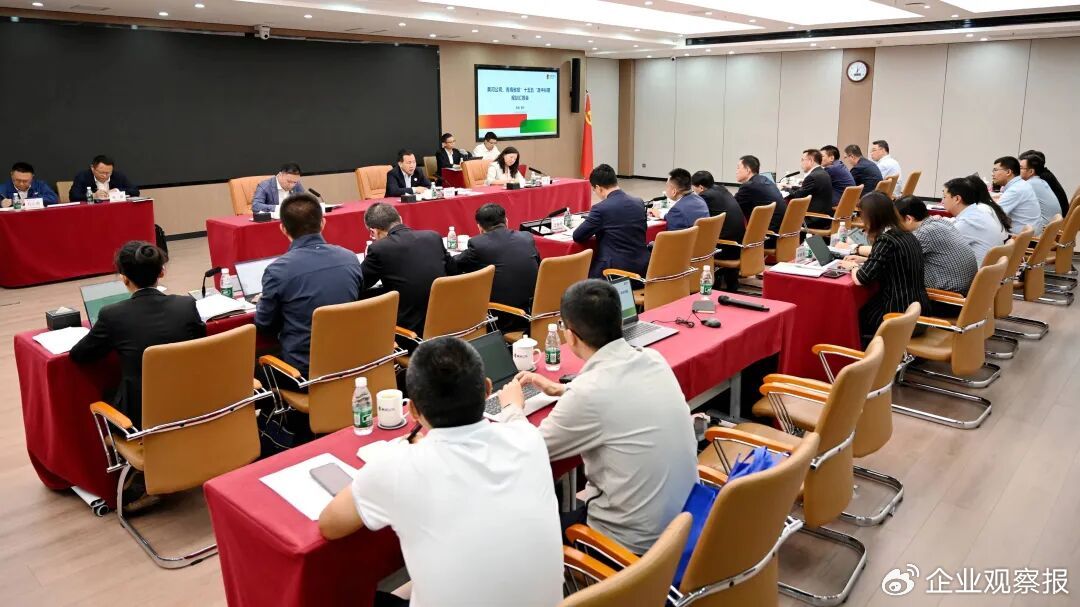
再增80GWh产能!楚能新能源连签大订单!
鑫椤锂电· 2026-02-10 07:07
Core Insights - The article provides a comprehensive overview of the developments and market trends in the energy storage sector, particularly focusing on the strategic partnerships and orders secured by Chuangneng New Energy in 2026. Group 1: Market Overview - The article highlights the significant growth in the energy storage market, with various segments such as lithium carbonate, electrolytes, copper foil, and lithium-ion batteries being analyzed for their market potential in 2025 [1]. - It emphasizes the increasing demand for energy storage solutions driven by the global transition to renewable energy sources and the electrification of transportation [1]. Group 2: Chuangneng New Energy's Strategic Partnerships - In the Middle East, Chuangneng New Energy signed a strategic cooperation agreement with Al Rajhi Electrical and Shanghai Yidiantong to supply a total of 5.5 GWh of energy storage products over three years, supporting local production and project development in Saudi Arabia [1]. - In Egypt, a strategic cooperation agreement was established with Weacan and Kemet to supply a total of 6 GWh of high-quality energy storage products, along with a $200 million investment to build a 5 GWh annual capacity energy storage battery factory [2]. Group 3: Domestic Market Developments - Chuangneng New Energy was shortlisted as a candidate for the National Power Investment Group's 2026 annual procurement of 7 GWh of energy storage cell equipment, reinforcing its position in the domestic market [3]. - The company signed an investment agreement for an 80 GWh new energy battery production project in Wuhan, aimed at producing power batteries, energy storage batteries, and PACK modules, which is a strategic move to enhance local operations [3]. - Collaborations with Hefei Hefeng Smart Energy and Banan Group were also established to supply over 5 GWh of energy storage products and promote project implementation and technical cooperation [3]. Group 4: Future Outlook - The article concludes that Chuangneng New Energy is poised to strengthen its position in the global energy storage market through international orders, deepening domestic collaborations, and optimizing production capacity, showcasing robust growth momentum across various markets [2][3].

0.325元/Wh起!国家电投7GWh储能电芯集采候选人出炉
中关村储能产业技术联盟· 2026-02-10 04:03
Core Viewpoint - The recent public announcement of the third batch of centralized bidding for energy storage cell equipment by the State Power Investment Corporation for 2026 has attracted significant attention in the energy storage industry, highlighting competitive pricing and the involvement of leading battery manufacturers [2][3]. Group 1: Bidding Results - The bidding attracted multiple top battery manufacturers, with four companies successfully shortlisted: Guoning New Storage, Envision Power, Xiamen Haichen Energy Storage, and Chuangneng New Energy [2]. - The total procurement scale for this bidding is 7GWh, with energy storage cell prices ranging from 0.325 to 0.355 yuan/Wh [3]. - The specific rankings and bid amounts of the shortlisted companies are as follows: 1. Guoning New Storage (Fujian) Technology Co., Ltd.: 2.485 billion yuan, 0.355 yuan/Wh [3]. 2. Envision Power Technology (Jiangsu) Co., Ltd.: 2.275 billion yuan, 0.325 yuan/Wh [3]. 3. Xiamen Haichen Energy Storage Technology Co., Ltd.: 2.45 billion yuan, 0.35 yuan/Wh [3]. 4. Chuangneng New Energy Co., Ltd.: 2.415 billion yuan, 0.345 yuan/Wh [3]. Group 2: Requirements and Standards - Bidders were required to meet specific performance and product standards, including a cumulative global supply of no less than 10GWh from January 1, 2023, to the present [3]. - The specifications for the energy storage cells mandated a minimum single cell capacity of 314Ah [3].

申万宏源证券晨会报告-20260210
Shenwan Hongyuan Securities· 2026-02-10 01:41
Group 1: Key Insights on the Machine Dog Industry - The quadruped robot industry is experiencing rapid application expansion, with strong environmental adaptability and commercial viability [4][12] - Key application scenarios include defense, industrial inspection, emergency rescue, and consumer household use, indicating a promising long-term market potential [4][12] - Domestic brands dominate the market, with over 50 companies actively participating, including notable players like Yushutech and Boston Dynamics [4][12] Group 2: Insights on the Power Generation Sector - In the thermal power sector, both coal and electricity prices are declining, leading to improved profit margins for coal-fired power plants [4][12] - Hydropower utilization hours are expected to increase due to favorable water conditions, with a projected utilization of 3367 hours in 2025, up 12 hours year-on-year [4][12] - Nuclear power is maintaining a high approval rate, with 10 new units expected to be approved in 2025, although profitability may be impacted by declining market electricity prices [4][12] Group 3: Recommendations for Investment - For thermal power, recommended companies include Guodian Power and Inner Mongolia Huadian, which benefit from stable profit margins [5][12] - In hydropower, companies like Yangtze Power and State Power Investment are highlighted for their potential growth due to improved financial conditions [5][12] - In the natural gas sector, companies such as Kunlun Energy and New Hope Energy are recommended due to expected profitability improvements from cost reductions [5][12]
江松科技IPO终止 国投证券创业板撤回率达64.29%
Quan Jing Wang· 2026-02-09 12:49
Core Viewpoint - Jiangsong Technology, a leading company in the photovoltaic battery automation equipment sector, has withdrawn its IPO application, highlighting challenges in the industry and raising concerns about the high withdrawal rate of its sponsor, Guotou Securities [1][2]. Group 1: Company Overview - Jiangsong Technology is ranked among the top three in the photovoltaic battery automation equipment market [1][4]. - The company’s IPO application was accepted in June 2025 but was withdrawn in February 2026 after facing extensive inquiries [4]. Group 2: Financial Performance - The company's new order amount plummeted from 4.986 billion yuan in 2023 to 472 million yuan in 2024, and only 338 million yuan in the first half of 2025, indicating a decline of over 90% in just one and a half years [4]. - As of June 2025, the company's backlog of orders decreased from 3.613 billion yuan at the end of 2024 to 2.491 billion yuan, a drop of over 30% within six months [4]. - In 2024, Jiangsong Technology reported a net cash flow from operating activities of -118 million yuan, a significant decline from 393 million yuan in 2023 [6]. Group 3: Industry Challenges - The rapid technological transition from traditional PERC to TOPCon technology has led to a significant slowdown in equipment demand, with TOPCon-related sales accounting for 93.81% of revenue in 2024 [5]. - The market share of TOPCon batteries surged from 23% in 2023 to 71.1% in 2024, indicating a saturation of industry capacity [5]. Group 4: Financial Health - The company's asset-liability ratio reached 82.33% by the end of 2024, significantly higher than the industry average [7]. - Accounts receivable stood at 360 million yuan at the end of 2023, representing 29.07% of that year's revenue, indicating cash collection issues [7]. - The company’s inventory value was 2.146 billion yuan at the end of 2024, making up over 56% of total assets, raising concerns about potential depreciation risks [7].

申万公用环保周报(26/2/02~26/2/06):碳交易市场规模持续扩大全球气价回落-20260209
Shenwan Hongyuan Securities· 2026-02-09 11:52
Investment Rating - The report maintains a "Buy" rating for several companies in the power and gas sectors, indicating a positive outlook for their performance in the upcoming periods [40][41]. Core Insights - The carbon market in China is expanding, with a cumulative trading volume of 865 million tons and a total transaction value of 57.663 billion yuan in 2025, reflecting a year-on-year growth of approximately 24% [4][5]. - The report highlights the shift in national policy towards carbon emission control, emphasizing the importance of carbon reduction initiatives, which are expected to create investment opportunities in the environmental sector [7]. - Natural gas prices have seen a significant decline due to seasonal factors and increased supply, with the Henry Hub spot price dropping by 39.20% week-on-week to $4.37/mmBtu as of February 6 [12][29]. Summary by Sections 1. Power Sector - The carbon market's trading volume reached 865 million tons in 2025, with a transaction value of 57.663 billion yuan, despite a decrease in average transaction price to 62.36 yuan/ton, down 19.23% year-on-year [4][5]. - Key emission units in the carbon market include 3,378 entities, with the power sector comprising 2,087 units, indicating a strong awareness of carbon reduction among major emitters [4][5]. - Recommendations for investment include companies with diversified revenue sources such as Guodian Power, Inner Mongolia Huadian, and Huaneng International Power, which are expected to benefit from stable capacity income [7][8]. 2. Gas Sector - Natural gas prices have decreased significantly, with the U.S. Henry Hub spot price at $4.37/mmBtu, reflecting a 39.20% drop week-on-week, while European prices also fell due to improved supply conditions [12][29]. - The report suggests that the recovery in macroeconomic conditions may lead to a rebound in gas companies' performance, recommending firms like Kunlun Energy and New Hope Energy [31][32]. - LNG prices in Northeast Asia have also declined, with spot prices at $10.70/mmBtu, down 7.76% week-on-week, influenced by seasonal demand and inventory levels [24][29]. 3. Company and Industry Dynamics - The report notes significant developments in the energy sector, including the implementation of a capacity price mechanism for coal and gas power generation, which aims to enhance revenue stability for power plants [36][37]. - Key announcements from companies include performance forecasts indicating substantial profit growth, such as Datang Power's expected net profit increase of 51% to 73% year-on-year [38]. - The report emphasizes the importance of ongoing infrastructure improvements and energy transition initiatives as part of the national economic development plan [37].