
鸿合科技

Search documents
鸿合科技(002955) - 关于完成工商变更登记并换发营业执照的公告
2026-01-12 08:45
证券代码:002955 证券简称:鸿合科技 公告编号:2026-001 鸿合科技股份有限公司 关于完成工商变更登记并换发营业执照的公告 统一社会信用代码:91110108556883208U 类型:已上市的中外合资股份有限公司 法定代表人:姚瑞波 成立日期:2010年05月28日 本公司及董事会全体成员保证信息披露的内容真实、准确、完整,没有虚 假记载、误导性陈述或重大遗漏。 一、基本情况 鉴于鸿合科技股份有限公司(以下简称"公司")控股股东、实际控制人已 发生变更,经公司 2025 年第三次临时股东大会审议通过,公司已顺利完成董事 会席位调整、董事改选、《公司章程》及配套制度修订。公司于 2025 年 12 月 22 日召开第三届董事会第十八次会议,审议通过了改选董事长、选举副董事长、 改选董事会专门委员会委员、聘任总经理和副总经理等相关议案。根据《公司章 程》的相关规定,公司法定代表人由孙晓蔷女士变更为姚瑞波先生。 具 体 内 容 详 见 公 司 于 2025 年 12 月 23 日 刊 登 在 巨 潮 资 讯 网 (www.cninfo.com.cn)、《证券时报》、《中国证券报》、《上海证券报》和《证 ...

创新驱动 产业赋能 鸿合科技开启融入奇瑞体系新篇章
Cai Jing Wang· 2026-01-12 06:34
Group 1 - Chery Holding Group's subsidiary, Hefei Ruicheng Private Equity Fund Co., Ltd., has completed a strategic acquisition of Honghe Technology Co., Ltd. [1] - The acquisition is recognized as the first case of a listed company acquisition led by an industrial fund after the release of the "Six Merger Rules" by the CSRC in September 2024 [2] - Honghe Technology is a leading enterprise in the smart interactive display industry, ranking second globally in the education market and first in the U.S. market [2] Group 2 - Chery Group aims for Honghe Technology to stabilize its existing business while expanding into a second main business, focusing on cost control and "opening up" as a core driver for future development [2] - A regular communication mechanism has been established between Chery Group's various departments and Honghe Technology's management team to enhance collaboration and resource sharing [3] - Ruicheng Fund will promote the maturation and upgrading of the group's industrial capital operation model, aiming to become an important platform for asset securitization and the cultivation of forward-looking and strategic businesses [3]
六大关键词回顾2025年一级市场:美元基金复苏、港股IPO火热 人工智能与半导体双线并进
Xin Lang Cai Jing· 2026-01-09 05:57
Group 1 - In 2025, the primary market is evolving amidst significant changes, driven by disruptive technologies led by artificial intelligence and reshaped capital flows due to geopolitical factors [1][50] - Global venture capital activity remained stable with 22,500 investment events and a total disclosed investment of approximately $348.1 billion, marking a 44.8% increase compared to 2024 [50] - The IPO and M&A markets rebounded strongly, with 1,372 companies successfully listing and raising approximately $170.6 billion, the best performance since 2022 [2][50] Group 2 - In China, the narrative differs, with government policies aimed at improving the efficiency of fiscal funds and supporting strategic sectors like AI and aerospace [51] - The establishment of a national venture capital fund with a registered scale exceeding 120 billion yuan aims to support seed and early-stage projects [51] - The banking sector's financial asset investment companies (AIC) have made significant progress, with 99 new funds established and a total scale of 198 billion yuan [3][51] Group 3 - The fundraising environment has shifted from quantity expansion to quality improvement, with a slight decrease in the number of private equity and venture capital managers [5][53] - The total scale of private equity funds reached 11.18 trillion yuan, showing a modest increase of 2.3% year-on-year [53] - Notably, the fundraising situation for dollar funds has improved, with several funds successfully closing significant amounts [7][55] Group 4 - Artificial intelligence remains the dominant investment theme in 2025, with 788 AI companies receiving 1,015 investments totaling 65.6 billion yuan, a significant increase from 2024 [18][60] - The robotics sector, particularly embodied intelligence, saw substantial growth, with 530 investments totaling 34.5 billion yuan, reflecting a 116.3% increase in investment events [19][60] - The competition in the foundational model space has stabilized, with a noticeable decline in investment activity as resources concentrate among leading firms [20][60] Group 5 - The trend of early-stage investments continues, with A-round investments being the most frequent, comprising 34.5% of total investment events [25][26] - Seed and angel round investments have seen significant increases, with seed round investments growing by 59.5% in number and 179.4% in amount compared to 2024 [27][25] - Noteworthy large investment events include significant funding rounds for various companies across sectors, indicating a robust interest in early-stage ventures [26][27] Group 6 - The Yangtze River Delta region remains the most active investment area, accounting for nearly 50% of total investment events in China [31][30] - Jiangsu province alone had 1,256 investment events, representing 19.8% of the national total, with significant investments in advanced manufacturing and AI [33][30] - Beijing reported the highest disclosed investment amount at 95.9 billion yuan, highlighting its prominence in the investment landscape [36][30] Group 7 - The M&A market in China is characterized by a trend of private equity firms acquiring foreign brands, with notable transactions involving major global companies [38][39] - Investment institutions are increasingly engaging in mergers and acquisitions of listed companies, marking a shift towards deeper involvement in operational aspects [39][40] - The trend indicates a growing preference for controlling stakes in companies to enhance operational synergies and market positioning [40][39] Group 8 - The Hong Kong stock market has regained its position as a leading venue for IPOs, with 247 Chinese companies listed in 2025, a 26.7% increase year-on-year [44][43] - The total fundraising amount for Chinese companies in Hong Kong reached approximately 326.6 billion yuan, reflecting a significant recovery in the IPO market [44][43] - The A-share market also saw a notable increase in listings and fundraising, with 116 companies raising around 128.7 billion yuan [45][43]

A股首起GP先投后募收购落槌
2 1 Shi Ji Jing Ji Bao Dao· 2026-01-08 12:08
Core Viewpoint - The completion of the first case of a private equity firm acquiring a listed company after the announcement of the "Six Merger Rules" marks a significant milestone in the A-share market, with the transaction involving Tianmai Technology and Suzhou Qichen [2][3]. Group 1: Transaction Details - Tianmai Technology announced that its controlling shareholder Guo Jianguo and others transferred 17.75 million shares (26.10% of total shares) to Suzhou Qichen, completing the transfer on January 6, 2026 [2]. - The transaction was initially valued at 452 million yuan, with share prices set at 28.26 yuan and 24.25 yuan, reflecting a discount of approximately 10-20% compared to the pre-suspension closing price of 30.85 yuan [4]. - After multiple adjustments, the final transaction price increased to 542 million yuan, with a new share price of 30.52 yuan, which is 80% of the market closing price of 38.15 yuan on the day before the agreement [6][7]. Group 2: Regulatory and Market Context - The transaction was seen as the first case of a private equity firm acquiring a listed company under the "first invest, then raise" model, which faced scrutiny and adjustments due to regulatory concerns [3][5]. - The China Securities Regulatory Commission's "Six Merger Rules" encourage private equity funds to acquire listed companies for industrial integration, but the market remains cautious about "shell transactions" [8][9]. - Tianmai Technology has faced continuous losses over four years, with revenues declining from 233 million yuan in 2021 to 164 million yuan in 2024, raising concerns about its fundamental value and potential as a "shell resource" [8][9].

核心产品毛利率三连降,业绩增长靠劳动力密集投入?科金明回应首轮问询
Shen Zhen Shang Bao· 2026-01-07 04:40
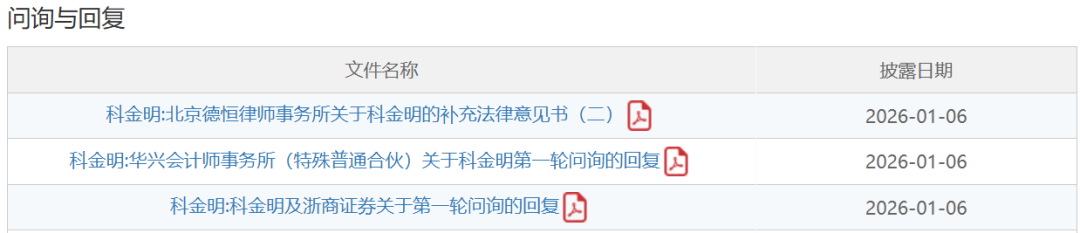
Core Viewpoint - Shenzhen Kejinming Electronics Co., Ltd. (Kejinming) has responded to the first round of inquiry letters from the Beijing Stock Exchange, addressing issues related to its innovative characteristics, market space, operational compliance, and the necessity and rationality of fundraising projects [1][2]. Group 1: Innovation and Market Space - Kejinming focuses on the research and sales of smart visual terminal products, including smart micro-projectors, smart cloud photo frames, and smart portable players, aiming to provide immersive visual experience solutions across various scenarios [4]. - The company claims that its performance growth is primarily driven by technological innovation, accumulation of global brand clients, and a dual-driven business model of ODM (Original Design Manufacturer) and OBM (Original Brand Manufacturer) [8]. Group 2: Operational Compliance and Risks - Kejinming operates its OBM business through cross-border e-commerce platforms like Amazon and Walmart, which has raised regulatory concerns regarding the operation of multiple storefronts [11]. - The company asserts that the closure of certain storefronts was based on operational needs and does not involve asset or personnel disposals, and that its multi-store operation aligns with industry norms [11]. Group 3: Financial Performance and Profitability - The gross profit margin of Kejinming's smart micro-projectors has shown a declining trend, while the gross profit margin for smart cloud photo frames has increased significantly [12]. - The company has shifted its sales focus from OBM to ODM products, leading to a decrease in revenue and gross margin for OBM smart micro-projectors, which are now in a marginal profit state [13][14]. Group 4: Sales and Market Dynamics - Kejinming's overseas sales accounted for a significant portion of its revenue, with percentages of 87.40%, 81.58%, 80.05%, and 75.69% over the reporting periods, indicating a slight decline due to increased domestic market penetration [18]. - The company has established a strong presence in overseas markets, particularly in North America, Europe, and Japan, and plans to continue expanding its foreign sales [17]. Group 5: Accounts Receivable and Liquidity - The company has experienced an increase in accounts receivable and notes receivable, with asset-liability ratios of 58.21%, 51.71%, and 59.62%, which are higher than the industry average [19]. - Kejinming has provided sufficient impairment provisions for accounts receivable exceeding one year, and its payment terms and accounts payable are aligned with industry standards, indicating no significant liquidity risks [19].
鸿合科技:截至2025年12月31日股东总户数为17101户
Zheng Quan Ri Bao Wang· 2026-01-05 11:52
Core Viewpoint - Honghe Technology (002955) reported that as of December 31, 2025, the total number of shareholders is expected to be 17,101 [1] Summary by Category - Company Information - Honghe Technology has communicated to investors that the total number of shareholders will reach 17,101 by the end of 2025 [1]
2025年中国教育大数据行业发展历程、产业链、市场规模、竞争格局及趋势研判:教育大数据应用场景不断深化,带动行业市场规模实现显著扩张[图]
Chan Ye Xin Xi Wang· 2026-01-05 01:04
Core Insights - The education big data industry in China is experiencing rapid growth, with the market size projected to increase from 1.8 billion yuan in 2015 to 53.516 billion yuan in 2024, representing a compound annual growth rate (CAGR) of 45.78% [1][10] - The industry is supported by the development of online education, particularly in the K12 sector, and the advancement of educational information technology and smart education [1][10] - The market is expected to continue expanding, with an estimated size of 66.896 billion yuan by 2025 [1][10] Industry Overview - Education big data refers to the collection of data generated during educational activities or collected based on educational needs, which has the potential to drive educational development and create significant value [3][9] - Current applications of education big data are primarily focused on adaptive learning and precise classroom teaching, with notable examples including smart learning companions and data-driven teaching tools [3][9] - The industry is characterized by a diverse range of participants, including leading data service providers, new entrepreneurial firms, large internet companies, and traditional educational information companies [10] Market Dynamics - The education big data industry is part of the broader big data sector, which has seen its market size grow from 3.6 trillion yuan in 2017 to an expected 30 trillion yuan by 2025, with a CAGR of 31.13% [7][9] - The industry is evolving from a focus on scale expansion to deep exploration and precise empowerment of existing educational processes and resources [5][10] Key Players - Notable companies in the education big data sector include iFLYTEK, Tsinghua Tongfang, Honghe Technology, and DouShen Education, among others [1][10] - The industry also includes emerging firms like Sanmeng Technology and Guangda Information Technology, which focus on deep data mining and application innovation in the education vertical [2][10] Development Trends - The future of education big data will see increased openness, moving towards systematic sharing across regions and industries while ensuring data security and privacy [14] - Innovative applications will expand beyond individual tools to become integral to the entire educational process, enhancing personalized teaching and data-driven decision-making [15][16] - The industry ecosystem is expected to mature, transitioning from a technology supplier-dominated market to a collaborative network of diverse stakeholders [17]




“数”描2025年私募基金:执合规之舵 扬价值之帆
Zheng Quan Ri Bao· 2025-12-29 17:09
Core Insights - The private equity fund industry is experiencing a structural transformation, marked by a focus on compliance and value, leading to high-quality development by 2025 [1] - Key data points illustrate the industry's growth trajectory, emphasizing both scale and quality, as well as the importance of innovation and regulation [1] Industry Scale - As of November 2025, the total size of private equity funds in China reached a record high of 22.09 trillion yuan, up from 19.91 trillion yuan at the beginning of the year, reflecting a robust growth trend [2] - The growth is driven by policies favoring strong performers and restoring market confidence, with both private securities and private equity funds expanding in tandem [2] Institutional Landscape - The number of private equity institutions has stabilized at 19,314, down from historical peaks, indicating a market cleansing process under the "扶优限劣" policy [3] - The reduction in institutions reflects improved compliance awareness and the exit of non-viable firms, contributing to a healthier industry ecosystem [3] Product Registration - By December 23, 2025, the number of registered private equity products reached 12,200, nearly doubling from the previous year, signaling strong market confidence and liquidity [4] - Over 90% of private securities products reported profits, with an average return of 22.61%, enhancing investor confidence and creating a positive feedback loop for market activity [5] High-Performing Institutions - The number of private equity institutions managing over 10 billion yuan increased to 113, with quantitative funds leading the charge, achieving an average return of nearly 30% [6] - Quantitative strategies outperformed subjective strategies, with average returns of over 33% compared to 24% for subjective strategies [7] Private Equity Investment - The private equity sector saw a 3.15% increase in total assets, reaching 14.75 trillion yuan by November 2025, reflecting a healthy growth in both scale and operational efficiency [8] - Policies are facilitating the entry of long-term capital into the private equity market, enhancing funding sources and supporting industry growth [9][10] Mergers and Acquisitions - Private equity funds are increasingly acquiring stakes in publicly listed companies, with notable transactions including a 25% stake acquisition in Honghe Technology [11][12] - The regulatory environment is evolving to support these acquisitions, allowing private equity to play a significant role in industry consolidation [12] Regulatory Environment - The industry is under stringent regulatory scrutiny, with a focus on compliance and the elimination of non-compliant firms, evidenced by significant penalties imposed on violators [14][15] - The introduction of a "double penalty" system enhances accountability for individual violators, thereby strengthening the overall regulatory framework [15] Dividend Distribution - In the first eleven months of 2025, private equity funds executed 1,658 dividend distributions totaling 17.34 billion yuan, a 236.59% increase from the previous year [16][17] - The strong dividend performance reflects the industry's maturation and the ability of funds to deliver tangible returns to investors [17] Research Activity - Over 4,400 private equity institutions conducted more than 70,000 company research sessions in 2025, focusing primarily on technology firms [19][20] - This high level of engagement indicates a strategic focus on sectors with strong growth potential and aligns with the industry's investment strategies [20]
“并购六条”后首单,CVC买了一家上市公司
FOFWEEKLY· 2025-12-24 10:08
Core Viewpoint - The article highlights the emergence of a new wave of mergers and acquisitions (M&A) driven by technology and industrial integration, with a focus on the recent acquisition of Honghe Technology by Ruicheng Fund, marking a significant milestone in the domestic market for private equity-led acquisitions of listed companies [2][3]. Group 1: M&A Activity and Trends - Honghe Technology, a key player in China's education information technology sector, reported a revenue of 3.525 billion yuan and a net profit of 222 million yuan in 2024 [5]. - The acquisition by Ruicheng Fund, a private equity firm under Chery Group, is the first instance of a private equity management institution initiating a public company acquisition since the introduction of the "M&A Six Guidelines" [3][6]. - The M&A market has seen a significant increase in activity, with 1,750 listed companies disclosing 2,168 M&A events in the first 11 months of the year, representing a notable growth compared to the previous year [9]. Group 2: Policy and Market Dynamics - The article emphasizes that the current M&A wave is supported by favorable policies and a growing demand for industrial integration, with local governments establishing funds and incentives to stimulate M&A activities [9][10]. - Key cities are actively launching initiatives to enhance M&A services, such as the establishment of the "Anhui Gaotou Guotai Haitong Health M&A Fund" and the "Beijing Jingguochuang Zhican M&A Fund" with substantial capital commitments [10][11]. - The dual drivers of policy incentives and industrial demand are pushing the M&A market into a new development phase, characterized by increased transaction frequency and the establishment of specialized M&A funds [9][12]. Group 3: Strategic Implications - Industry insiders note that while the business domains of Chery and Honghe Technology appear disparate, there are significant synergistic values that can be realized through this acquisition [7]. - Corporate venture capital (CVC) is highlighted as a strategic player in the M&A landscape, focusing on long-term industrial value rather than short-term financial returns [7]. - The article concludes that the M&A market is becoming a critical accelerator for listed companies to enhance quality and transition towards new productive forces, with ongoing support from local policies [12][14].

鸿合科技完成董事会换届 新老结合构建治理新格局
Quan Jing Wang· 2025-12-24 03:10
Core Viewpoint - The recent shareholder meeting of Honghe Technology (002955.SZ) marked a significant transition in control from the original shareholders to the Chery Group's CVC, establishing a balanced governance structure that is expected to benefit the company's future development [1][2]. Group 1: Board Restructuring - The new board of directors reflects a substantial change in the company's shareholder structure, with the controlling shareholder, Ruicheng Hongtu, adopting a "GP+LP" joint appointment model for board positions [1]. - The new chairman, Yao Ruibo, has a strong background in finance and industry investment, having held key positions in various financial institutions and previously served as the executive vice president of Anhui Xin'an Financial Group [1]. - Other board members include Wang Chenchen, representing Anhui Jiaokong Capital Fund, and Peng Ji, representing Wuhu Guozhi, both of whom are linked to significant local government investments [1]. Group 2: Governance and Management Stability - The arrangement of having both new board members and the original management team is seen as a strategic move to ensure stability while implementing reforms [2]. - The original chairman, Sun Xiaoqiang, remains as vice chairman and CEO, along with other long-serving executives, ensuring continuity in core operations [2]. - The combination of new strategic direction from the board and the operational stability from the existing management team is viewed as a robust strategy for the company's future growth and development [2].