投早投小

Search documents
谷爱凌加入Benchmark,做VC了?
投中网· 2026-02-14 04:02
Core Viewpoint - The article discusses the recent speculation about Eileen Gu joining Benchmark as a Senior Associate, which was later confirmed to be a joke by Bill Gurley, highlighting the unusual nature of this rumor and the implications for Benchmark's current state and future direction [4][10]. Group 1: Benchmark's Investment Philosophy - Benchmark is regarded as an idealistic venture capital firm, known for its ability to identify and support early-stage entrepreneurs who can define entire industries [3]. - The firm maintains a small fund size of around $500 million per fund and avoids considering market cycles, focusing instead on a "boutique" investment approach [3]. - Benchmark's organizational structure promotes equality among partners, which minimizes internal conflicts and fosters a strong sense of shared purpose and risk [3][6]. Group 2: Eileen Gu's Potential Role - Eileen Gu's potential role at Benchmark as a Senior Associate raised eyebrows due to her lack of extensive experience in venture capital, contrasting with the typical profiles of Benchmark partners who usually have significant industry experience [9][10]. - The article suggests that Gu's background, including her mother's experience in Wall Street and venture capital, may have influenced her interest in this career path [5][10]. Group 3: Criticism of Benchmark's Strategy - Benchmark faces criticism for its adherence to a "boutique VC" model, which may be outdated in the current investment landscape where larger funds dominate [12]. - The firm has been slow to adapt, with reports indicating internal dissatisfaction regarding the inability to follow up on investments due to limited fund sizes [12][13]. - There are concerns about the firm's idealistic team structure, which may hinder its ability to attract diverse perspectives and adapt to changing market conditions [14][16]. Group 4: Future Implications - The article hints that the joke about Gu's hiring may reflect Benchmark's need for change and a potential shift in its investment strategy to remain competitive [16]. - The firm may be considering a "creative destruction" approach to rejuvenate its operations and adapt to the evolving venture capital landscape [16].


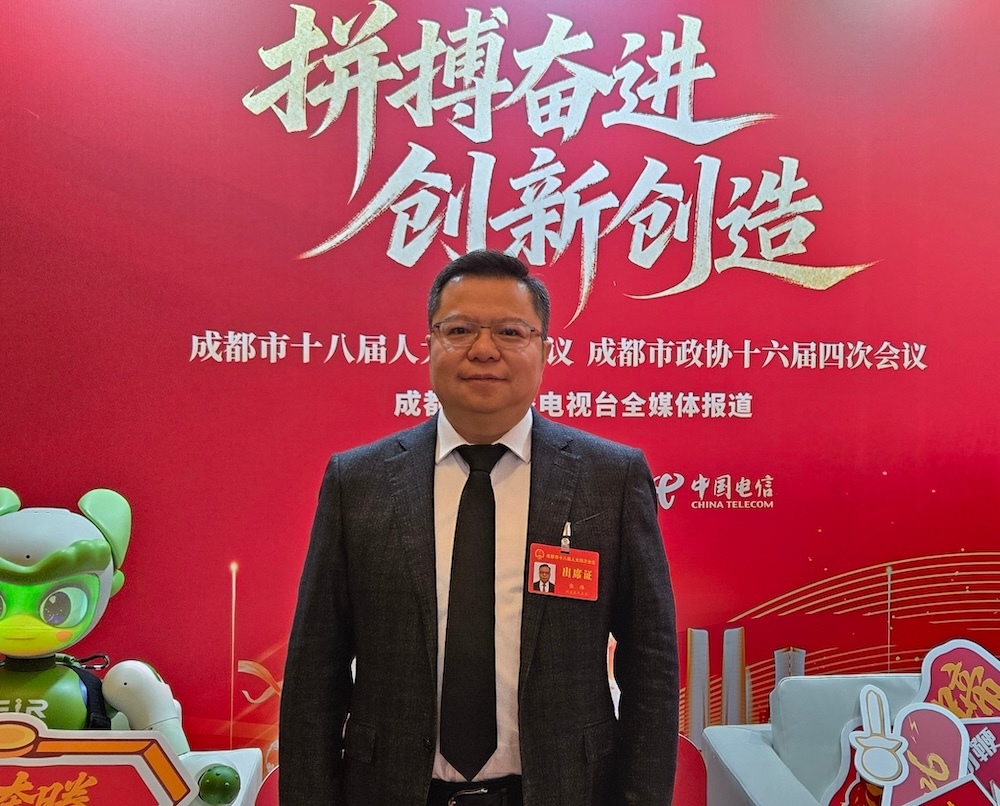
成都市人大代表张伟:“投早投小”+“全球引才” 激活成都科产融合新动能
Mei Ri Jing Ji Xin Wen· 2026-02-01 04:43
Core Insights - The integration of technology and industry is becoming a central theme in urban development, with a focus on optimizing the innovation environment in cities [1] - High-revenue and high-profit startups in the tech sector are injecting new momentum into urban development, particularly in Chengdu's AI vision sector [1][2] - There is a consensus on the need for targeted policies to support the growth of early-stage tech companies, emphasizing the importance of providing scenarios and platforms rather than just funding [2][4] Group 1: Policy Recommendations - Chengdu should enhance its policy support for early-stage and small tech companies, making "invest early and invest small" a key strategy for nurturing new growth [4] - The city should optimize targeted investment attraction, focusing on key industrial chains to bring in complementary enterprises and enhance industrial clustering [5] - Establishing a unified monitoring and early warning platform for industrial chains is essential to improve supply chain resilience [5] Group 2: Talent Acquisition and Globalization - Chengdu's geographical advantages, particularly its connection to Europe through the "Rong-Ou" train, position it well for international talent exchange [6] - The city aims to become a significant center for international exchanges and high-level openness, gathering resources and enhancing development capabilities [6] - There is an opportunity to leverage the current geopolitical climate to attract international talent, with a focus on establishing a global talent network [7][8] Group 3: Industry Development and Collaboration - The presence of industry leaders like Hikvision in Chengdu underscores the city's attractiveness for tech enterprises, particularly in the AI vision field [2] - Collaboration between local enterprises and international firms, such as integrating European robotics with local innovation centers, is seen as a promising avenue for development [6] - Customized talent policies and dedicated funds for key tech industries are recommended to provide precise support for talent acquisition [8]
调研 | 银行对硬科技要投早,要早到多早?
券商中国· 2026-01-13 06:25
Core Viewpoint - The financing accessibility for technology-based enterprises has significantly improved, with a loan approval rate of 50.3% for small and medium-sized tech enterprises as of September 2025, and interest rates continuing to decline [2]. Group 1: Industry Changes - The banking sector has optimized its technology financial services by enhancing approval efficiency and offering preferential policies on access and pricing [2]. - There is a high concentration of credit and value-added services in established tech companies, while early-stage and smaller enterprises still face challenges in accessing these services [2]. - The concept of "early investment" is emphasized, with Hangzhou Bank being a pioneer in this approach, exemplified by its role as the first lender to the private aerospace company Diwei II [2][3]. Group 2: Diwei II's Business Model - Diwei II focuses on providing satellite services and ground systems to countries lacking satellite infrastructure, with a business model that includes full-chain services such as satellite construction and technical training [4]. - The AI satellites developed by Diwei II can perform 400 trillion calculations per second, enabling rapid data processing that traditional satellites cannot achieve [4]. - Diwei II has secured contracts with Oman for satellite services aimed at land surveying and urban planning, indicating a strong international market potential [5]. Group 3: Collaboration with Hangzhou Bank - Hangzhou Bank has provided Diwei II with a low-interest loan of 20 million for payroll and R&D, showcasing its commitment to supporting early-stage tech companies [8]. - The bank employs a dynamic evaluation model for assessing the growth potential of startups, focusing on policy, capital, technology, team, and industry [8]. - Hangzhou Bank's technology loan balance reached 115.2 billion as of June 2025, with increasing support for emerging sectors like AI and commercial aerospace [10]. Group 4: Strategic Focus and Future Plans - Hangzhou Bank plans to target key areas in the AI industry, such as computing hardware and industrial applications, over the next 3-5 years [11]. - The bank's strategy includes a specialized organizational structure to support early investments and a risk management framework that allows for higher risk tolerance in tech financing [10]. - The bank aims to enhance its "early investment" approach by collaborating with research institutions and focusing on companies with stable teams and promising technology [9].


六大关键词回顾2025年一级市场:美元基金复苏、港股IPO火热 人工智能与半导体双线并进
Xin Lang Cai Jing· 2026-01-09 05:57
Group 1 - In 2025, the primary market is evolving amidst significant changes, driven by disruptive technologies led by artificial intelligence and reshaped capital flows due to geopolitical factors [1][50] - Global venture capital activity remained stable with 22,500 investment events and a total disclosed investment of approximately $348.1 billion, marking a 44.8% increase compared to 2024 [50] - The IPO and M&A markets rebounded strongly, with 1,372 companies successfully listing and raising approximately $170.6 billion, the best performance since 2022 [2][50] Group 2 - In China, the narrative differs, with government policies aimed at improving the efficiency of fiscal funds and supporting strategic sectors like AI and aerospace [51] - The establishment of a national venture capital fund with a registered scale exceeding 120 billion yuan aims to support seed and early-stage projects [51] - The banking sector's financial asset investment companies (AIC) have made significant progress, with 99 new funds established and a total scale of 198 billion yuan [3][51] Group 3 - The fundraising environment has shifted from quantity expansion to quality improvement, with a slight decrease in the number of private equity and venture capital managers [5][53] - The total scale of private equity funds reached 11.18 trillion yuan, showing a modest increase of 2.3% year-on-year [53] - Notably, the fundraising situation for dollar funds has improved, with several funds successfully closing significant amounts [7][55] Group 4 - Artificial intelligence remains the dominant investment theme in 2025, with 788 AI companies receiving 1,015 investments totaling 65.6 billion yuan, a significant increase from 2024 [18][60] - The robotics sector, particularly embodied intelligence, saw substantial growth, with 530 investments totaling 34.5 billion yuan, reflecting a 116.3% increase in investment events [19][60] - The competition in the foundational model space has stabilized, with a noticeable decline in investment activity as resources concentrate among leading firms [20][60] Group 5 - The trend of early-stage investments continues, with A-round investments being the most frequent, comprising 34.5% of total investment events [25][26] - Seed and angel round investments have seen significant increases, with seed round investments growing by 59.5% in number and 179.4% in amount compared to 2024 [27][25] - Noteworthy large investment events include significant funding rounds for various companies across sectors, indicating a robust interest in early-stage ventures [26][27] Group 6 - The Yangtze River Delta region remains the most active investment area, accounting for nearly 50% of total investment events in China [31][30] - Jiangsu province alone had 1,256 investment events, representing 19.8% of the national total, with significant investments in advanced manufacturing and AI [33][30] - Beijing reported the highest disclosed investment amount at 95.9 billion yuan, highlighting its prominence in the investment landscape [36][30] Group 7 - The M&A market in China is characterized by a trend of private equity firms acquiring foreign brands, with notable transactions involving major global companies [38][39] - Investment institutions are increasingly engaging in mergers and acquisitions of listed companies, marking a shift towards deeper involvement in operational aspects [39][40] - The trend indicates a growing preference for controlling stakes in companies to enhance operational synergies and market positioning [40][39] Group 8 - The Hong Kong stock market has regained its position as a leading venue for IPOs, with 247 Chinese companies listed in 2025, a 26.7% increase year-on-year [44][43] - The total fundraising amount for Chinese companies in Hong Kong reached approximately 326.6 billion yuan, reflecting a significant recovery in the IPO market [44][43] - The A-share market also saw a notable increase in listings and fundraising, with 116 companies raising around 128.7 billion yuan [45][43]
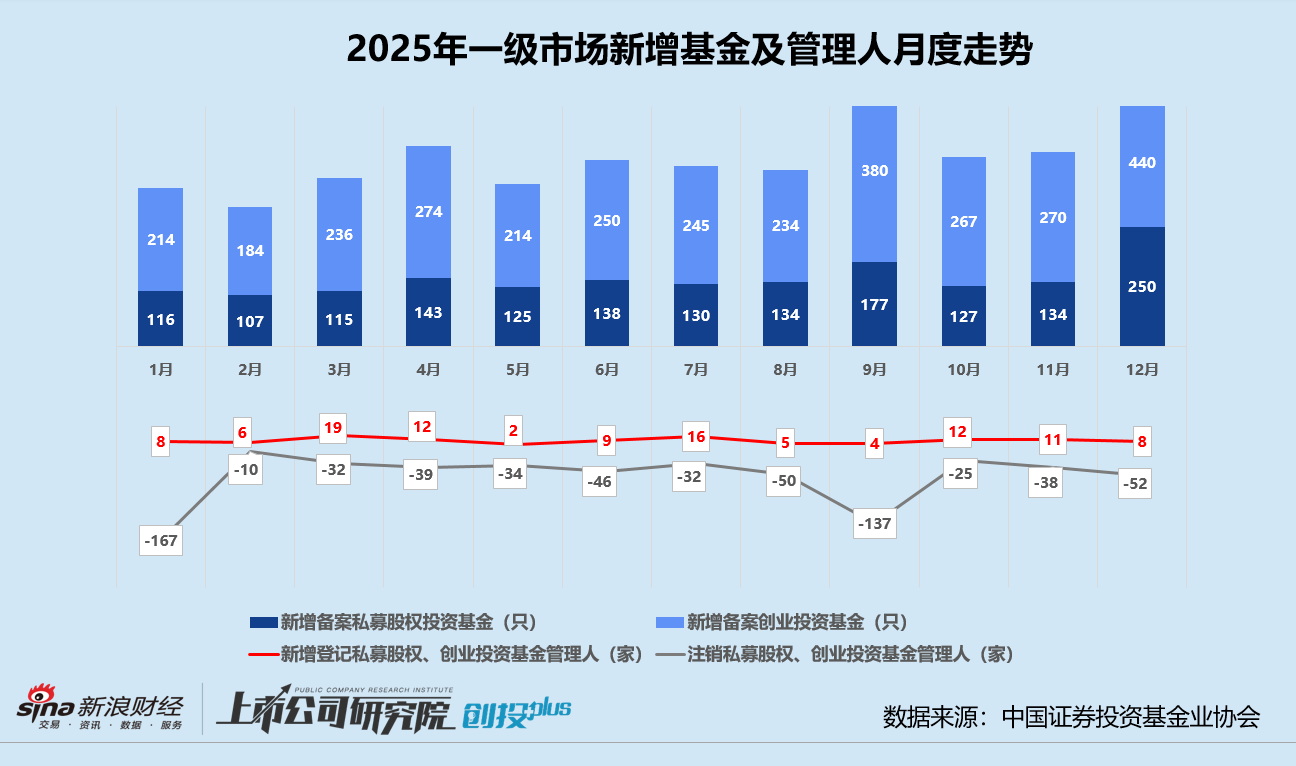
早期融资占比 67%,“投早投小”做到了吗?
Sou Hu Cai Jing· 2026-01-07 11:54
Core Insights - The Chinese primary market in 2025 exhibits a distinct "dumbbell" structure, characterized by active early-stage investments and substantial strategic investments, while growth-stage financing faces significant pressure [2][3]. Early-Stage Investments - Early-stage investments (seed, angel, A rounds) are the main source of market vitality, with 6,054 transactions in 2025, accounting for 66.8% of total market activity, marking a five-year high [7][8]. - Despite the high transaction volume, early-stage companies received only about one-quarter of the total market funding, reflecting the high-risk, small-scale nature of these investments [7][8]. Strategic Investments - Strategic investments dominate in terms of funding volume, capturing nearly half of the market share, with their monetary share rising from 29% in 2021 to 52.1% in 2024, and stabilizing at 43.7% in 2025 [6][10]. - In 2025, strategic investments accounted for only 11.76% of transaction numbers (1,065 deals) but attracted 359.12 billion yuan, driven by state-owned and industrial capital focusing on industry integration and national strategies [10][11]. Growth and Late-Stage Financing Challenges - The "middle ground" of growth and late-stage financing is experiencing significant contraction, with growth-stage investment share dropping from 32.6% in 2021 to 19.6% in 2025, and late-stage investment share halving from 16.3% to 7.9% [11][12]. - The decline in the middle ground is also linked to changing enterprise needs, as companies at a certain scale prefer strategic investors who can provide orders and application scenarios rather than purely financial returns [12][13]. Implications for Market Participants - Entrepreneurs face the challenge of bridging the "financing gap" from early to late stages, necessitating early planning for commercialization and alignment with industrial capital and national strategies to secure essential support during growth [17]. - The Chinese primary market is transitioning from chaotic growth to a more structured and strategically oriented phase, with addressing the financing gap being a key issue for future market participants [18].

国家创业投资引导基金正式启动,财政出资1000亿元,有望撬动万亿级社会资本
Zheng Quan Shi Bao Wang· 2025-12-27 00:25
Core Insights - The National Venture Capital Guidance Fund has officially launched with a government investment of 100 billion yuan, expected to leverage over a trillion yuan in social capital [1][5][6] Group 1: Fund Structure and Objectives - The fund employs a three-tier structure: fund company, regional funds, and sub-funds, aiming to create synergy with other government guidance funds [1][6] - The fund focuses on early-stage investments, targeting high-growth seed, startup, and early to mid-stage innovative small and micro enterprises, acting as an "angel investor" to address market funding shortages [2][7] - The fund emphasizes "investing small," with investments in companies valued below 500 million yuan and individual investments capped at 50 million yuan, ensuring funds reach the "front end" and "tail end" of various industries [2][3] Group 2: Investment Focus and Duration - The fund prioritizes hard technology sectors, including integrated circuits, quantum technology, biomedicine, brain-computer interfaces, and aerospace [3][4] - The fund has a long duration of 20 years, with a 10-year investment period and a 10-year exit period, allowing for patient capital support for the growth of innovative enterprises [4][6] - A diversified exit system is established to ensure effective returns, addressing the limited exit channels in the venture capital market [4][6] Group 3: Market Impact and Future Outlook - Since the announcement of the fund's establishment, the venture capital market has shown signs of recovery, with fundraising amounts increasing by 8% and investment amounts by 9% year-on-year [5][6] - The fund's innovative structure is expected to attract social capital effectively, creating a significant market impact and enhancing the overall investment ecosystem [6][7] - The fund aims to complement existing government guidance funds by focusing on the early stages of the innovation chain, thus avoiding redundancy and fostering a comprehensive support system for technological innovation [7]

财政部:国家创业投资引导基金在国家层面由财政出资1000亿元
Sou Hu Cai Jing· 2025-12-26 04:20
Core Viewpoint - The National Venture Capital Guidance Fund will utilize 100 billion yuan of special long-term bonds funded by the Ministry of Finance to encourage social capital participation in venture investments, focusing on strategic emerging industries and early-stage innovative enterprises [1][2]. Group 1: Fund Structure and Objectives - The National Venture Capital Guidance Fund is fully funded by the Ministry of Finance at the national level, serving as an important vehicle for leveraging fiscal policy effectiveness [1]. - The fund aims to support "hard technology" by directing investments towards strategic emerging industries as outlined in the 14th Five-Year Plan, promoting projects that enhance total factor productivity and have high social benefits [1]. - The fund will adopt an "early investment" strategy, primarily targeting high-growth seed-stage, startup, and early to mid-stage innovative small and micro enterprises, acting as an "angel investor" to alleviate market funding shortages [1]. Group 2: Post-Investment Management - The Ministry of Finance will fulfill its responsibilities as the national investor by conducting performance evaluations and ensuring compliance with legal and regulatory standards [2]. - A comprehensive evaluation system will be developed to assess the effectiveness of policy goals and fund operations, rather than relying solely on individual project profitability [2]. - The fund will enhance its risk management framework to cover the entire lifecycle of fundraising, investment, management, and exit, thereby improving the efficiency of fund utilization [2].
广州再办科创大赛 已有十余家参赛企业成功上市
Zhong Guo Jing Ying Bao· 2025-12-23 08:35
Core Insights - The Guangzhou Innovation and Entrepreneurship Competition has been held for ten years since its inception in 2015, introducing several innovative reforms, including a "market + government" collaborative competition model and partnerships with Hong Kong, Macau, and Taiwan, enhancing resource integration and outreach [1] - Over the past decade, the competition has produced 13 unicorn companies, approximately 205 national specialized and innovative "little giant" enterprises, and around 3,647 high-tech enterprises, with the number of high-tech companies in Guangzhou exceeding 13,500, more than seven times the figure in 2015 [1] - The competition has facilitated 55 companies to enter the capital market, with 14 successfully listed, establishing a complete innovation chain from cultivation to growth to listing [1] Financial Support and Resources - The competition has established a Guangzhou Science and Technology Innovation Fund with a scale of 10 billion yuan, which includes specialized sub-funds for key industries such as intelligent connected vehicles, low-altitude economy, and biomedicine, focusing on early-stage investments in hard technology and future innovations [2] - Regular industry chain resource matching meetings are organized to connect leading enterprises and research institutions, providing technical support, market channels, and supply chain resources for participating projects [2] - A diversified financial system of "awards, investments, and loans" has been set up to assist companies in equity financing and bank credit, with over 1,000 companies receiving nearly 50 billion yuan in equity financing and about 1,800 companies obtaining approximately 16 billion yuan in bank credit [2]
破解科创投融资瓶颈的上海实践
Di Yi Cai Jing· 2025-12-22 12:01
Core Insights - Shanghai's government venture capital (GVC) plays a crucial role in supporting innovation and addressing financing bottlenecks in the tech sector, particularly in hard technology fields like semiconductors and AI [1][2][8] Group 1: Scale and Impact - By the end of 2024, Shanghai's government-guided fund reached a total scale of 201.5 billion yuan, ranking third nationally, with an average fund size of 3.2 billion yuan, placing it second in the country [2] - The substantial size of government capital instills confidence in social capital, activating the market ecosystem and encouraging more private investment [2] Group 2: Operational Structure - Shanghai's GVC has historically focused on indirect investments through mother funds, effectively leveraging social capital participation and risk-sharing mechanisms [3] - Recently, there has been a strategic shift towards direct investments, with the number and scale of directly managed funds closely matching those of participating funds, indicating a balanced approach to market guidance and direct project involvement [3] Group 3: Spatial Layout - The GVC resources in Shanghai exhibit a "leading dragon, multiple blooms" pattern, with the Pudong New Area leading in both the number and scale of guiding funds [4][5] - Other districts like Jiading and Songjiang also show significant government venture capital activity, contributing to a collaborative regional innovation ecosystem [5] Group 4: Guidance and Demonstration - Government venture capital emphasizes early-stage investments, with 23.6% of direct investments in seed, angel, and A-round funding in 2024, and 38% in indirect investments, showcasing a commitment to nurturing the initial stages of innovation [6] - The extension of fund durations, such as the Pudong Innovation Investment Fund's extension to 12 years, reflects a long-term investment strategy aimed at supporting foundational technology innovation [7] Group 5: Challenges - Internal mechanisms and external ecological constraints pose challenges to the effectiveness of Shanghai's GVC, including balancing public asset preservation with high-risk investment requirements [8][9] - The tightening of IPO approvals has increased exit difficulties for venture capital, impacting the overall investment cycle [9] Group 6: Innovation and Future Directions - To enhance its effectiveness, Shanghai's GVC must focus on improving governance mechanisms, promoting successful investment cases, and establishing efficient platforms for government-market collaboration [10][11] - Addressing exit bottlenecks through the development of acquisition funds and exploring new exit channels will be crucial for sustaining the venture capital ecosystem [11]
无锡新尚资本茹华杰:构建国资创投新生态 赋能产业和国有资产双成长
Shang Hai Zheng Quan Bao· 2025-12-12 19:25
Core Insights - Wuxi Xingshang Capital aims to build a local state-owned capital investment platform driven by an "ecological" approach to industry investment, focusing on nurturing competitive enterprises in technology innovation and industrial transformation [2][3] Group 1: Company Overview - Wuxi Xingshang Capital was established to support the development of Wuxi's economic zone, with a mission to convert quality urban construction resources into talent attraction, thereby fostering technological innovation and industrial upgrades [3] - The company has invested in 91 direct projects, with 41 classified as specialized and innovative enterprises, including 18 national-level "little giant" companies [3] - The firm emphasizes a "early and small" investment strategy, with 44 of its portfolio companies recognized as high-tech enterprises, contributing to a clear growth trajectory in alignment with the economic zone's development logic [3] Group 2: Financial Instruments and Market Position - Wuxi Xingshang Capital issued its first phase of technology innovation bonds on July 23, with a scale of 500 million yuan and a record low interest rate of 2.24% for AA+ rated bonds in Jiangsu province [4] - Despite a downturn in the Chinese private equity market from 2024 to mid-2025, Wuxi Xingshang Capital reported growth, with 37 portfolio companies securing new financing and 16 entering the IPO process [5] Group 3: Investment Strategy and Ecosystem - The company employs a unique "one axis, three pillars" business structure, focusing on direct equity investment while also engaging in fund of funds (FOF) business, investment banking services, and industrial services [7] - Wuxi Xingshang Capital adopts a "陪跑" (accompanying) strategy throughout the entire lifecycle of enterprises, investing at various stages from angel rounds to pre-IPO, fostering a self-sustaining cash flow [7][8] - The firm has developed a dynamic "GP circle," categorizing partners into seed investment groups, industry empowerment groups, and top brand groups, creating a collaborative ecosystem that supports enterprise growth and innovation [8] Group 4: Long-term Vision - The ultimate goal for Wuxi Xingshang Capital is to cultivate resilient industrial forces that can thrive across economic cycles and compete globally, emphasizing the importance of building a sustainable and innovative ecosystem [8]