
中国人民银行

Search documents
央行:12月份银行间人民币市场同业拆借月加权平均利率为1.36%,质押式债券回购月加权平均利率为1.4%
Sou Hu Cai Jing· 2026-01-15 07:21
Core Viewpoint - The central bank's data indicates a significant volume of transactions in the interbank RMB market for the year 2025, with a total of 21.8031 trillion yuan, reflecting a daily average increase in transaction volume compared to the previous year [1] Group 1: Transaction Volumes - The total transaction volume in the interbank RMB market reached 21.8031 trillion yuan for the year 2025, with a daily average transaction of 879 billion yuan [1] - The daily average transaction volume increased by 2.1% year-on-year [1] Group 2: Transaction Types - The daily average transaction volume for interbank lending decreased by 12.1% year-on-year [1] - The daily average transaction volume for cash bonds increased by 2.1% year-on-year [1] - The daily average transaction volume for pledged repos increased by 2.9% year-on-year [1] Group 3: Interest Rates - The weighted average interest rate for interbank lending in December was 1.36%, which is 0.06 percentage points lower than the previous month and 0.21 percentage points lower than the same period last year [1] - The weighted average interest rate for pledged repos in December was 1.4%, which is 0.04 percentage points lower than the previous month and 0.25 percentage points lower than the same period last year [1]
2025年社融规模增量超35万亿元
Sou Hu Cai Jing· 2026-01-15 07:21
钛媒体App 1月15日消息,央行发布金融统计数据显示,2025年全年社会融资规模增量累计为35.6万亿 元,比上年多3.34万亿元。其中,对实体经济发放的人民币贷款增加15.91万亿元,同比少增1.13万亿 元;对实体经济发放的外币贷款折合人民币减少2043亿元,同比少减1873亿元;委托贷款增加1203亿 元,同比多增1780亿元;信托贷款增加3682亿元,同比少增294亿元;未贴现的银行承兑汇票增加112亿 元,同比多增3405亿元;企业债券净融资2.39万亿元,同比多4825亿元;政府债券净融资13.84万亿元, 同比多2.54万亿元;非金融企业境内股票融资4763亿元,同比多1863亿元。(央行) ...
2025年我国人民币贷款增加16.27万亿元
Xin Hua She· 2026-01-15 07:17
Core Insights - The People's Bank of China reported that in 2025, the total increase in RMB loans was 16.27 trillion yuan, with corporate loans accounting for 15.47 trillion yuan [1] Loan Statistics - In 2025, household loans increased by 441.7 billion yuan, while corporate loans rose by 15.47 trillion yuan, including a significant increase of 8.82 trillion yuan in medium to long-term loans [1] - By the end of December 2025, the total RMB loan balance reached 271.91 trillion yuan, reflecting a year-on-year growth of 6.4% [1] Deposit Statistics - In 2025, total RMB deposits increased by 26.41 trillion yuan, with household deposits contributing 14.64 trillion yuan [1] Money Supply - As of December 2025, the broad money supply (M2) stood at 340.29 trillion yuan, marking an 8.5% year-on-year increase, while the narrow money supply (M1) was 115.51 trillion yuan, up by 3.8% [1] Social Financing - The total increment in social financing for 2025 was 35.6 trillion yuan, which is 3.34 trillion yuan more than the previous year [1] - By the end of 2025, the total social financing stock reached 442.12 trillion yuan, showing a year-on-year growth of 8.3% [1]
央行开展9000亿元买断式逆回购操作,为政府债券发行营造适宜的流动性环境
Feng Huang Wang· 2026-01-15 00:57
Core Viewpoint - The People's Bank of China announced a 900 billion yuan reverse repurchase operation to inject medium-term liquidity into the market, aiming to support government bond issuance and credit growth at the beginning of the year [1] Group 1 - The operation will be conducted on January 15, with a fixed amount and interest rate, using a multi-price bidding method [1] - The reverse repurchase operation has a term of 6 months (181 days) [1] - This operation results in a net injection of 300 billion yuan for the month, continuing to provide liquidity support [1] Group 2 - Industry experts believe this operation will create a favorable liquidity environment for early government bond issuance and a "good start" for credit [1] - The central bank's actions are aimed at maintaining a stable funding environment [1]
人民币现金收付新规下月起施行
Xin Lang Cai Jing· 2026-01-15 00:53
Core Viewpoint - The People's Bank of China, in collaboration with the National Development and Reform Commission and the Financial Regulatory Bureau, has established regulations to uphold the legal status of the Renminbi and prevent the refusal of cash payments, effective from February 1, 2026 [1] Group 1: Cash Payment Regulations - The regulations require that entities providing face-to-face services must support cash payments and maintain reasonable change availability [2] - Self-service models and locations like parks and schools must clearly indicate payment methods and provide contact information for cash-related inquiries [3] - Entities that delegate payment collection must ensure that the appointed parties accept cash through formal agreements [4] Group 2: Banking Sector Requirements - Banks must comply with cash management laws and enhance cash service quality to meet public and business needs [4] - Banks with physical branches must facilitate cash deposit and withdrawal services for individual clients [6] - Banks should ensure that the number and layout of cash service points and self-service machines meet the diverse needs of different customer groups [12][15] Group 3: Handling Cash Payment Issues - In cases of cash payment difficulties, entities should negotiate amicably to resolve disputes and protect rights [20] - Evidence of cash refusal or discriminatory practices should be documented for complaints through various consumer protection channels [21]


人民币升级,我们做好最坏的打算
Sou Hu Cai Jing· 2026-01-14 23:20
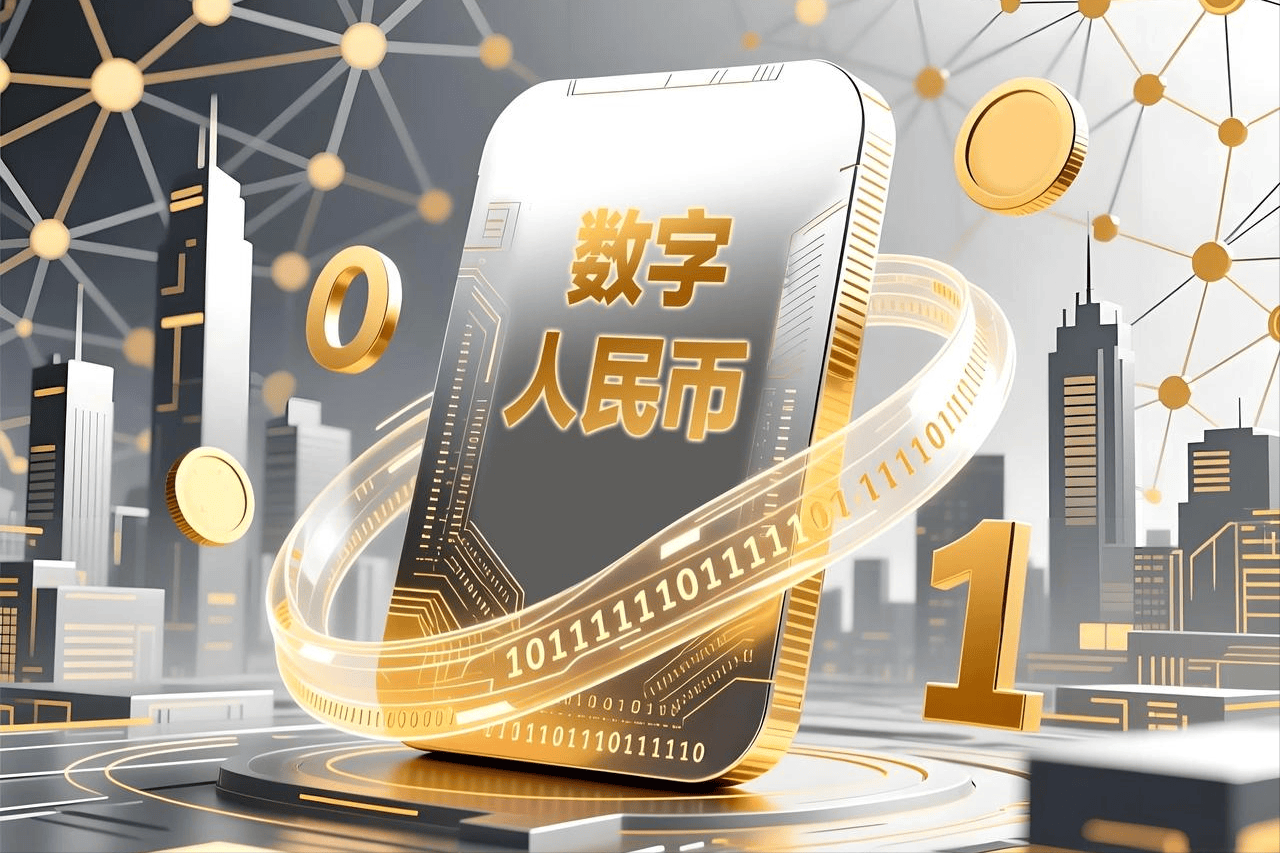
Core Viewpoint - The launch of the new generation of digital RMB by the People's Bank of China on January 1, 2026, represents a significant upgrade in the monetary system, aiming to reshape the future wealth landscape over the next decade [3]. Group 1: Digital RMB Upgrade - The new digital RMB will allow banks to pay interest on funds held in digital wallets, transforming cash into an asset that generates returns [3]. - This upgrade is a response to the changing global monetary landscape, characterized by a "tripolar" division among China, the U.S., and Europe, each pursuing distinct financial strategies [3]. Group 2: Strategic Preparations - The first layer of preparation involves creating an "escape route" from the potential weaponization of the U.S. dollar, establishing a parallel payment system independent of traditional dollar clearing mechanisms [5]. - The second layer focuses on providing a new value anchor amid global trust diversification, enhancing the attractiveness of the RMB as a reserve asset by allowing it to generate interest [5][6]. - The third layer aims to address domestic financial risks by integrating the digital RMB into the legal framework of commercial bank liabilities, enabling more precise monetary policy control [6]. Group 3: Implications and Future Outlook - The upgrade is not merely a technical enhancement but a strategic move to safeguard financial sovereignty and pricing power in a multipolar world [8]. - The success of this digital RMB initiative will have profound implications for employment, price levels, asset values, and overall national prosperity [8]. - The proactive approach taken by China aims to ensure that it retains options and resilience in the face of external shocks and evolving global dynamics [8].
信用修复,消费升温
Xin Lang Cai Jing· 2026-01-14 22:46
信用修复政策自2026年1月1日起正式实施,对2020年1月1日至2025年12月31日期间,单笔金额不超过 10000元人民币的逾期,央行推出一次性信用修复政策。而且,此次政策不区分个人经营贷、房贷、车 贷、信用卡等业务类型,只要符合相关条件,都能获得信用修复;政策也不区分贷款机构,银行、小 贷、消费金融公司等接入央行征信系统的机构均纳入。也就是说,不但在银行的信用卡、贷款逾期可以 修复,在支付宝花呗、京东白条等平台存在的逾期,如果该笔贷款的背后放贷机构接入了央行征信系 统,也同样适用此次政策。 此次政策以万元为界、以还清为前提,精准聚焦于受影响较大、修复意愿较强的普通群体,体现了制度 的温度与精度。信用不再是冰冷的"终生判决",而成为可更新、可改善的"活记录"。政策明确传递出一 个信号:社会信用体系正在从"惩戒为主"转向"惩戒与修复并重"。这不仅是个人信用的"解冻",更体现 了金融监管的柔性,也释放出重建信任、激发消费的积极信号。 也有人担心信用修复会导致"征信洗白"而失去约束力。据悉,此次一次性信用修复政策的核心是解决群 众"信用困境",绝非债务豁免——只有全额还清逾期债务,才能享受信用记录调整的政策红 ...
遇拒收现金可维权 人民币现金收付新规下月起施行
Yang Shi Xin Wen· 2026-01-14 22:22
Core Viewpoint - The People's Bank of China, along with the National Development and Reform Commission and the Financial Regulatory Bureau, has established regulations to uphold the status of the Renminbi as legal tender, prevent the refusal of cash payments, and meet the diverse payment service needs of the public. These regulations will take effect on February 1, 2026 [1]. Group 1: Regulations on Cash Payment Behavior - The regulations emphasize basic requirements for cash payments based on classification management and universal applicability. Key aspects include: - Cash payments must be supported in face-to-face services and transactions that can be completed offline, with reasonable change availability [2]. - Self-service models and locations with unified management must clearly indicate payment methods and cash acceptance [2]. - For fully online transactions, payment methods must be publicly disclosed in advance to respect the public's right to know and choose [2]. - When entrusting other units for cash collection, the principal must require the agent to accept cash through written agreements [2]. - Digital governance promotion and business model innovation must consider public cash usage needs and avoid discrimination against cash payments [2]. Group 2: Requirements for Commercial Banks - Financial institutions are required to enhance cash service quality and meet the needs of the public and businesses by: - Accepting personal customer deposits and providing cash services at physical bank branches [3]. - Ensuring the number and layout of cash service points and self-service machines meet the diverse needs of different customer groups [3]. - Properly managing the return of Renminbi to prevent the circulation of unfit currency and mitigate various business risks [3]. Group 3: Handling Cash Payment Issues - In cases of cash payment difficulties, parties should negotiate amicably with the service provider. If cash is refused or discriminatory measures are taken, evidence should be preserved for complaints through various channels, with the People's Bank of China and relevant departments addressing the issues promptly [5].
中纪委曝光案例:已突破虚拟货币隐匿贪腐手段,详解技术逻辑
Nan Fang Du Shi Bao· 2026-01-14 16:53
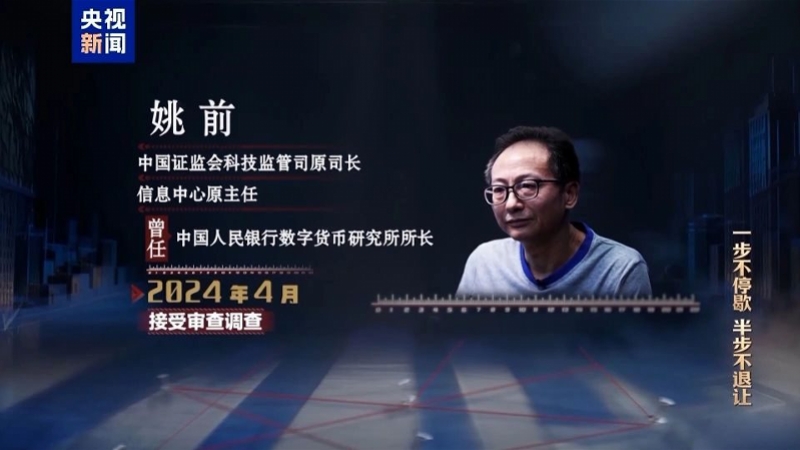
Core Viewpoint - The news highlights the emergence of new forms of corruption facilitated by virtual currencies, emphasizing the need for vigilance in combating these practices as demonstrated in the case of Yao Qian, a former official at the China Securities Regulatory Commission [1][10]. Group 1: Case Overview - Yao Qian, former director of the Technology Supervision Department of the China Securities Regulatory Commission, was investigated for corruption involving virtual currencies, with the total value of illicit virtual assets amounting to several tens of millions of RMB [1][10]. - The investigation revealed that Yao utilized hardware wallets to store virtual currencies, which were used as a medium for bribery, showcasing the challenges posed by the anonymity and cross-border nature of virtual currencies [1][3][10]. Group 2: Investigation Techniques - The investigative team employed big data and information technology to trace Yao's financial activities, uncovering "shell accounts" that he controlled, which were used to facilitate large transactions [5][10]. - The investigation successfully traced a significant sum of 1 billion RMB that was funneled through various accounts, ultimately linked to the purchase of a villa registered under a relative's name, indicating a complex web of financial concealment [5][10]. Group 3: Corruption Mechanisms - The case illustrates the use of virtual currencies in modern corruption, where transactions can be obscured due to the separation of identity and the banking system, making detection difficult [3][9]. - Yao's associate, Jiang Guoqing, played a crucial role in facilitating these corrupt transactions, further complicating the investigation and highlighting the network of complicity in such schemes [8][10]. Group 4: Lessons Learned - The successful prosecution of Yao Qian serves as a precedent for future investigations into corruption involving virtual currencies, emphasizing the importance of understanding the operational mechanisms of these digital assets [10][11]. - The case underscores that while virtual currencies may appear intangible, they ultimately manifest in the real world, necessitating robust investigative techniques to uncover hidden corruption [10][11].
别让纪念币钞沦为炒作筹码
Bei Jing Shang Bao· 2026-01-14 15:09
Core Insights - The recent release of the 2026 Year of the Horse commemorative coins and notes saw a rapid sell-out, highlighting a significant market demand and speculative trading behavior [1][2] - The issuance of 100 million pieces of these commemorative items suggests a lack of true scarcity, which may limit their long-term appreciation potential [3] Group 1: Market Dynamics - The commemorative coins and notes experienced a price surge in secondary markets, with prices increasing from the original 400 yuan to 2000 yuan, indicating a speculative frenzy [1] - Some sellers on platforms like Xiaohongshu are marking up prices significantly, with a 158% increase on 10 yuan coins and a 240% increase on 20 yuan notes [2] - The phenomenon of speculative trading is fueled by social media hype and the perception of limited availability, leading to a cycle of increased demand and price inflation [2] Group 2: Risks and Regulatory Environment - The speculative nature of the market has led to various risks, including personal information leaks from "reservation tools" and fraudulent activities by unqualified sellers [3] - Regulatory bodies have begun to take action to curb illegal trading practices, emphasizing the need for honest and fair transactions in the market [3] - Official secondary trading platforms have been established to provide legitimate channels for the circulation of commemorative coins, aiming to reduce speculative activities [3] Group 3: Consumer Behavior - Consumers are encouraged to approach the purchase of commemorative coins and notes with caution, focusing on official channels and being wary of inflated prices [4] - The cultural significance of these items should be prioritized over speculative gains, as the current trading environment may lead to losses for uninformed investors [4]