
益丰药房

Search documents
中国医疗 - 2025 年第 11 轮仿制药集中采购-China Healthcare _Weekly recap_ 11th Round of generics VBP; biosimilar VBP_ Chen
2025-08-11 02:58
Summary of Key Points from the Conference Call Industry Overview - **Industry**: China Healthcare - **Key Indices Performance**: HSHCI/HSHKBIO indices rose by 0.2% and 0.1% respectively from August 4 to August 8, 2025. SW Healthcare A/H indices moved -0.8% and +2.5%, ranking 31st and 20th among A/H-share sectors [1][1][1]. Company Insights - **Saint Bella**: Initiated coverage with a Buy rating due to its strong position in postpartum care and long-term family care potential, which may be overlooked [1][1][1]. - **Wuxi Bio**: Upgraded to Buy as it is well-positioned as a biologics CDMO amid therapy upgrades from chemotherapy to antibody-drug conjugates (ADC) and from monoclonal to bi/multi-specific candidates [1][1][1]. Subsector Performance - **Medtech**: Outperformed in A shares with a +2.7% increase, likely due to sectoral rotation within healthcare [1][1][1]. - **Biologics**: Outperformed in H shares with a +6.3% increase, primarily driven by small-cap biotechs [1][1][1]. Notable Company Performances - **Innovent**: Reported H125 product sales exceeding RMB 5.2 billion, up more than 35% year-over-year, surpassing estimates of RMB 5.1 billion [3][3][3]. - **3SBio**: Issued new shares to Pfizer worth HK$7.85 million, equating to 1.28% of its total post-IPO equity [3][3][3]. - **Huadong**: Released phase II trial results for HDM1002, showing weight reduction of -4.63%, -6.08%, and -2.88% in different dosage groups after 12 weeks [3][3][3]. Regulatory Developments - **Generics GPO**: The National Joint Procurement Office started demand reporting for the 11th round of national centralized drug procurement, allowing reporting by product name or brand for the first time [2][2][2]. - **Biosimilar VBP**: Initiated by the Anhui Provincial Pharmaceutical Procurement Center for eight monoclonal antibodies [2][2][2]. Investment Recommendations - **Top Picks**: Include Innovent, 3SBio, Wuxi Apptec, and United Imaging among others [1][1][1]. - **Medtech Focus**: Added United Imaging to top picks while retaining Weigao [1][1][1]. Risks and Challenges - **Healthcare Industry Risks**: Include potential price cuts from GPO programs, intensified competition, lower-than-expected innovative drug prices for NRDLs, slower consumption recovery, stricter regulations, and geopolitical tensions impacting operations [35][35][35]. Additional Insights - **Funding Trends**: Biopharma funding in July 2025 showed a year-over-year increase of 133% and a month-over-month increase of 34% [8][8][8]. - **Clinical Trials**: The number of registered clinical trials in China has been on an upward trend, indicating a robust pipeline for future drug development [22][22][22]. This summary encapsulates the key points from the conference call, highlighting the performance of companies within the China healthcare sector, regulatory changes, investment recommendations, and potential risks.


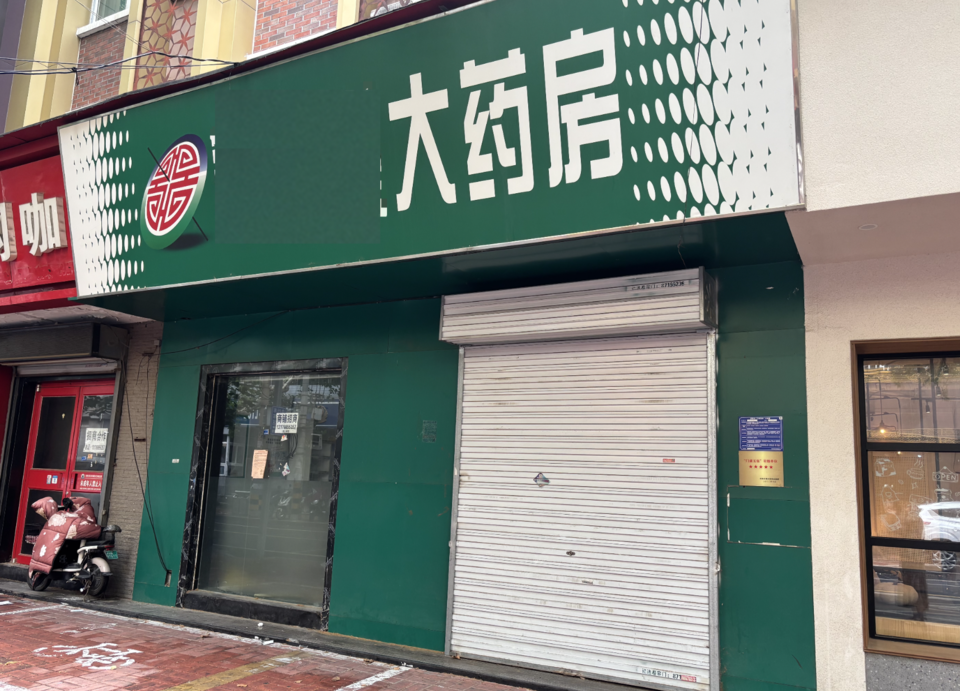
零售药店倒闭潮来了?去年关了3.9万家
Qi Lu Wan Bao Wang· 2025-08-11 00:28
Core Insights - The retail pharmacy industry in China is experiencing a significant downturn, with an estimated 39,000 pharmacies expected to close in 2024, averaging 107 closures per day, and projections suggesting that closures could exceed 100,000 by 2025 [1][2] - Major players in the industry, such as Guoda Pharmacy and Jianzhijia, have reported substantial losses, with Guoda closing over 1,270 stores and incurring a net loss of over 1.1 billion yuan in 2024 [2] - The rapid expansion of pharmacies from 524,000 in 2019 to 667,000 in 2023 has led to market saturation, with the average number of customers served per store dropping from 4,112 in 2016 to 2,113 in 2023 [2][3] Industry Challenges - The high density of pharmacies has resulted in aggressive price competition, with many stores resorting to loss-leader pricing strategies to attract customers, ultimately harming their profitability [3] - Changing consumer habits, particularly among younger generations who prefer online channels for purchasing medications, have further exacerbated the decline in foot traffic to physical stores [3] - Tightening healthcare policies, including stricter regulations on insurance reimbursements and the shift of chronic disease medication distribution from pharmacies to community hospitals, have significantly impacted pharmacy revenues [3][4] Regulatory Environment - Starting in 2025, all participating pharmacies must implement drug traceability codes, complicating the procurement and settlement processes, which could increase operational costs for smaller pharmacies [4][5] - The requirement for licensed pharmacists to be present in all pharmacies by December 31, 2025, adds further compliance pressure, particularly for smaller operations [5] - The transition from a rapid expansion phase to a necessary industry adjustment reflects the need for pharmacies to focus on their role in public health rather than profit maximization [5]


果然财经|零售药店倒闭潮来了?去年关了3.9万家
Qi Lu Wan Bao· 2025-08-10 14:19
Industry Overview - The retail pharmacy industry in China is experiencing a significant downturn, with an estimated 39,000 pharmacies expected to close in 2024, averaging 107 closures per day, and projections suggesting that closures may exceed 100,000 by 2025 [1][3] - The number of pharmacies surged from 400,000 in 2010 to nearly 700,000 by 2024, but this rapid expansion is now reversing [1][3] Company Performance - Major players in the industry, such as Guoda Pharmacy, have closed over 1,270 stores in 2024, reporting a net loss exceeding 1.1 billion yuan [3] - Other companies like Jianzhijia and Yibao Pharmacy have also reported significant losses, with Jianzhijia's profit dropping from 160 million yuan in 2023 to a loss of over 90 million yuan in 2024 [3] - In the first quarter of 2025, several pharmacies, including Yibao Pharmacy and Yifeng Pharmacy, have also announced store closures [3] Market Dynamics - The market is facing structural oversupply, with the average number of customers served per store dropping from 4,112 in 2016 to 2,113 in 2023, indicating a saturation of the market [3][5] - High competition has led to aggressive price wars among pharmacies, with many resorting to loss-leading promotions to attract customers, further straining their financial viability [5] Consumer Behavior - Changing consumer habits, particularly among younger generations, are shifting towards online platforms for purchasing medications, exacerbating the decline in foot traffic to physical stores [7] - The tightening of healthcare insurance policies, including stricter regulations on the use of insurance cards, has further reduced the profitability of pharmacies, particularly those relying on chronic disease medications [8] Regulatory Environment - New regulations requiring pharmacies to implement complex billing processes and maintain compliance with drug traceability have increased operational challenges, particularly for smaller pharmacies [8] - By the end of 2025, all pharmacies must employ licensed pharmacists, adding to the operational costs and compliance pressures faced by the industry [8]

关注关税是否如期延期
Hua Lian Qi Huo· 2025-08-10 13:15
Report Industry Investment Rating No relevant content provided. Core Viewpoints of the Report - Last week, the broader market opened slightly lower and trended upward, reaching a new high for the year. All four major indices rose, with small-cap stock indices performing strongly. The style indices also all increased, with the cyclical index having the largest gain of nearly 3.5%. Most industries in the Shenwan classification rose, with military, non-ferrous metals, machinery, and comprehensive sectors leading the gains, all with over 5% increases, while only a few sectors like pharmaceutical biology, computer, commercial trade, and tourism posted small losses [4][11][13]. - In July 2025, the manufacturing PMI was 49.3%, down 0.4 percentage points from the previous month, and the non-manufacturing PMI was 50%, down 0.1 percentage points. Supply and demand both declined, with production down 0.6%, new orders down 0.8%, and new export orders down 0.6%. The inventory of finished products decreased again after a one - month increase. Prices of factory - made goods and major raw material purchases increased for two consecutive months after three months of decline [4][23]. - The Politburo set the tone for the real estate market to stop falling and stabilize, and to boost the capital market. The central bank created two new monetary policy tools, cut the reserve requirement ratio, and lowered interest rates, including reducing the interest rates of existing mortgages. The CSRC proposed measures for mergers, acquisitions, and market value management to increase market activity. An implementation plan for promoting the entry of long - term funds into the market was officially released, which is expected to bring an additional 800 billion yuan of long - term funds to the A - share market annually [4]. - In terms of revenue, the revenue growth rates of the ChiNext, ChiNext, and CSI 500 indices increased, while those of the CSI 1000, Shanghai Composite, SSE 50, and CSI 300 indices declined. In terms of net profit attributable to the parent company, except for the Shanghai Composite Index, the net profit growth rates of other indices all increased significantly. Although the performance of the entire A - share market shows signs of stabilization, the 30% increase in tariffs imposed by the US since the second quarter of 2025 may affect the fundamentals of the A - share market, and the A - share performance may bottom out again [4]. - The broader market was oscillating at a high level last Friday, reaching a new high for the year and approaching last year's high. As the August 12 tariff deadline approaches, attention should be paid to whether the tariffs can be extended as scheduled. Overall, the market may need to oscillate and consolidate near the previous high. However, with the stabilization of the net profit attributable to the parent company of the entire A - share market and the four major indices in the first quarter, as well as long - term policy and capital support, the stock index is still optimistic in the long - term. Technically, the broader market has been rising continuously, reaching a new high for the year and is expected to break through the previous high. In the short - term, attention should be paid to whether the Sino - US tariffs will be extended. Operationally, it is advisable to go long on pullbacks in the medium - term, and for options, a bull spread strategy can be considered [7][8] Summary by Related Catalogs Index Industry Trends Review - Last week, the broader market opened slightly lower and trended upward, hitting a new high for the year. All four major indices rose, with small - cap stock indices outperforming [11] - All style indices rose last week, with the cyclical index having the largest gain of nearly 3.5%, followed by growth, financial, stable, and consumer style indices. Most industries in the Shenwan classification rose, with military, non - ferrous metals, machinery, and comprehensive sectors leading the gains, all with over 5% increases. Only a few sectors like pharmaceutical biology, computer, commercial trade, and tourism posted small losses [13] Main Contract and Basis Trends - The four major indices attacked again, with the CSI 1000 breaking through last year's high first. In terms of the basis, the discount of the 08 contract continued to narrow within a reasonable range [16] - In terms of the arbitrage of main contracts, IC/IF and IC/IH oscillated upwards, IH/IF fluctuated, and IM/IF and IM/IH oscillated upwards [20] Policy and Economy - In July 2025, the manufacturing PMI was 49.3%, down 0.4 percentage points from the previous month, and the non - manufacturing PMI was 50%, down 0.1 percentage points. Supply and demand both declined, with production down 0.6%, new orders down 0.8%, and new export orders down 0.6%. The inventory of finished products decreased again after a one - month increase. Prices of factory - made goods and major raw material purchases increased for two consecutive months after three months of decline [23] - Generally, PPI leads the inventory cycle (by 1 month to 1 year, with an average of about half a year). PPI bottomed out and rebounded in June 2023, weakened after two months, and has seen a continuous narrowing of the decline since March 2024. The decline of PPI widened again in July, narrowed again since November until it widened for four consecutive months from March 2025, and remained the same as the previous month in July. In May, the revenue of industrial enterprises continued to decline to 2.7%, and the inventory decreased by 3.5%, indicating a possible entry into the active inventory replenishment stage, corresponding to an economic slowdown [25] - In June 2025, the year - on - year increase in social financing was 419.93 billion yuan, compared with 22.46 billion yuan in the previous period. Government bonds increased by 135.48 billion yuan, and RMB loans increased by 236.37 billion yuan, with an year - on - year increase of 17.1 billion yuan, mainly due to an increase of 17 billion yuan in enterprise loans, including an increase of 49 billion yuan in short - term loans and a rebound in medium - and long - term loans [27] - The growth rate of medium - and long - term credit has been declining for 25 consecutive months to 6.77% as of June 2025, down from the high of 12.94% in May 2023. The growth rate last month was 6.78%, and the decline rate has slowed down significantly [30] - The implementation plan for promoting the entry of long - term funds into the market aims to increase the actual investment ratio, extend the assessment period, and strengthen the synergy of policies. It is expected to bring additional long - term funds to the A - share market annually, and the second - batch pilot of long - term stock investment by insurance funds will be implemented in the first half of 2025, with a scale of no less than 10 billion yuan [32] - The Politburo meeting emphasized boosting the capital market, promoting the entry of long - term funds, supporting mergers and acquisitions and reorganizations of listed companies, and promoting the reform of public funds. It also called for increasing the counter - cyclical adjustment of fiscal and monetary policies, stabilizing the real estate market, and implementing a series of measures such as reducing the reserve requirement ratio and interest rates [35] - The central bank created new monetary policy tools, including a swap facility for securities, funds, and insurance companies, and a re - loan for stock repurchase and increase. It also carried out MLF operations, reverse repurchase operations, and adjusted interest rates. In addition, a series of measures such as reducing the reserve requirement ratio, lowering policy interest rates, and increasing re - loan quotas were implemented [36][38][40] - The total debt - resolution scale is divided into three parts, with the first two parts directly adding 1 trillion yuan of local debt - resolution funds. After the replacement of implicit debts, the local debt - resolution pressure will be greatly reduced [37] Revenue and Net Profit of Each Index - Except for the CSI 500, the year - on - year revenue growth rates of each index in the 2024 annual report declined. In terms of net profit attributable to the parent company, the SSE 50 index continued to grow year - on - year, the CSI 300 index had a small increase, and the CSI 500, ChiNext, and Shenzhen Component Indexes declined to varying degrees [47] - In terms of revenue, the revenue growth rates of the Shenzhen Component, ChiNext, and CSI 500 indices increased, while those of the CSI 1000, Shanghai Composite, SSE 50, and CSI 300 indices declined. In terms of net profit attributable to the parent company, the net profit growth rates of all indices except the Shanghai Composite Index increased significantly [53] - The performance of the entire A - share market shows signs of stabilization, but the 30% increase in tariffs imposed by the US since April may affect the A - share market. In the first quarter of 2025, the performance of IC/IM bottomed out and stabilized, while IH/IF declined year - on - year [57][60] Valuation - The valuation of the Shanghai Composite Index is 15.6876, with an upper - bound value of 15.51, and it is at the 78.41 percentile since 2010. The valuation of the ChiNext is still relatively low [66] Capital Flow - From April 7 to August 8, 2025, the ETF scale increased by 34.4 billion yuan, and last week it decreased by 7.3 billion yuan. From January 1 to June 27, 2025, the scale of newly established equity funds increased by 171.3 billion yuan [5][71] - In terms of margin trading, there was a net inflow of 274.8 billion yuan in 2024. As of August 7, 2025, the net inflow in the first five trading days was 27.9 billion yuan, and the net inflow in 2025 was 200.1 billion yuan [79] - In the first quarter of 2025, the market value of A - shares held by insurance funds increased significantly by 389.3 billion yuan, while the CSI 300 index fell by 1.21%. At the end of 2024, the assets of the national team and insurance funds increased, while the assets of the Hong Kong - Shanghai Stock Connect decreased. Specifically, it was mainly the assets of Central Huijin and insurance funds that increased [75] - As of last weekend, the IPO financing in 2023 was 356.5 billion yuan, 67.3 billion yuan in 2024, and 63.7 billion yuan in 2025 [84] - In the week from August 1 to August 8, 2025, the ETF share increased by 36.368 billion shares (+1.33%), reaching 2780.699 billion shares, and the total scale increased by 65.598 billion yuan (+1.43%), reaching 4658.878 billion yuan [88] - Last week, major shareholders in the secondary market continued to have a net reduction of 5.9 billion yuan [92] - There will be a large amount of restricted - share unlockings in mid - August [93]
医疗科技行业研究:大单品潜力创新药BD合作,关注泛癌种潜力的双、多抗药物
SINOLINK SECURITIES· 2025-08-09 13:51
Investment Rating - The report maintains a positive investment outlook on innovative drugs and medical devices, highlighting them as key investment themes in the current market environment [2][4][43]. Core Insights - The report emphasizes the ongoing support from the government for innovative medical drugs and devices, particularly in the brain-computer interface (BCI) sector, which is expected to see significant advancements by 2027 and 2030 [1][51]. - The innovative drug sector remains a primary investment focus, with a recommendation to pay attention to leading pharmaceutical companies' transformation results and their opportunities for international expansion [2][43]. - The report identifies a growing interest in innovative medical devices, driven by favorable policies and a recovery in medical equipment procurement trends, suggesting a potential performance turnaround in the second half of the year [4][12]. Summary by Sections Innovative Drugs - The innovative drug sector is highlighted as a key investment line, with a focus on potential blockbuster drugs and collaborations for innovative drug development [2][43]. - The report notes that after multiple rounds of generic drug procurement, risks for leading pharmaceutical companies are gradually being alleviated, revealing competitive innovative drug pipelines [2][43]. Biological Products - Anke Biotech's subsidiary has received approval for a shingles mRNA vaccine, indicating progress in the mRNA drug development space [2][45]. - The report suggests continued monitoring of Anke Biotech's collaboration with its subsidiary and the advancements in mRNA drug development [2][50]. Medical Devices - The report discusses the government's support for the BCI industry, which is expected to accelerate commercialization and product development [1][3]. - It highlights the recovery trend in medical device procurement and the increasing market share of leading companies, indicating a strong performance outlook for the sector [4][12]. Traditional Chinese Medicine - Some traditional Chinese medicine companies are in a good cash flow position and are expected to see growth through innovative product pipelines and strategic investments [3][19]. Medical Services and Consumer Healthcare - The report notes a series of positive earnings announcements from high-growth stocks in the medical services sector, indicating a robust growth outlook [3][4].
益丰药房股价下跌2.2% 控股股东减持套现5.5亿元
Jin Rong Jie· 2025-08-07 18:41
Core Viewpoint - Yifeng Pharmacy's stock price has decreased by 2.20% to 23.96 yuan, with a trading volume of 2.17 billion yuan, indicating market volatility and investor sentiment [1] Company Overview - Yifeng Pharmacy primarily engages in drug retail and health services, covering pharmaceutical commerce and domestic circulation [1] - The company has expanded its store scale through acquisitions, with operations spanning multiple provinces and cities across the country [1] Recent Developments - The controlling shareholder and concerted parties have recently reduced their holdings by 24.248 million shares, accounting for 2% of the total share capital, realizing approximately 555 million yuan [1] - The reduction includes a core employee shareholding platform, resulting in a decrease of their holding ratio to 32.85% [1] - Company executives have also previously engaged in share reductions [1] Financial Performance - In Q1 2025, the company's net profit increased by 10.51% year-on-year, while revenue growth slowed to 0.64%, reflecting a decline compared to previous years [1] Market Activity - On the day of reporting, Yifeng Pharmacy experienced a net inflow of 1.02 million yuan in main funds, but over the past five days, there was a net outflow of 11.8944 million yuan [1]
益丰大药房连锁股份有限公司关于持股5%以上股东权益变动触及1%刻度的提示性公告
Shang Hai Zheng Quan Bao· 2025-08-06 18:19
Core Viewpoint - The announcement details a significant equity change involving the major shareholder of Yifeng Pharmacy, indicating a reduction in shareholding through a block trade, which does not affect the company's control structure or governance [3][4][5]. Group 1: Shareholder Information - The major shareholder, Ningbo Meishan Bonded Port Area Houxin Venture Capital Partnership (Limited Partnership), along with its concerted actions, has reduced its shareholding from 34.85% to 32.85% [3][4]. - The reduction involved the sale of 24,248,200 shares, representing 2.00% of the company's total equity [3][9]. Group 2: Reduction Plan Details - Prior to the reduction, the controlling shareholder held 262,492,776 shares, accounting for 21.65% of the total equity, while its concerted action partners held additional shares [8][9]. - The reduction was part of a previously disclosed plan and was executed between August 5 and August 6, 2025, through block trading [3][9]. Group 3: Compliance and Impact - The equity change complies with relevant laws and regulations, including the Securities Law of the People's Republic of China and the Shanghai Stock Exchange listing rules [5]. - The reduction will not lead to any changes in the company's controlling shareholder or actual controller, nor will it significantly impact the company's governance or ongoing operations [4][5].
电连技术拟收购控股子公司爱默斯39%股权;*ST亚振股票8月7日起停牌核查|晚间公告精选
Mei Ri Jing Ji Xin Wen· 2025-08-06 15:37
Mergers and Acquisitions - Ningbo Energy announced the acquisition of 60% equity in Ningbo Ningneng Investment Management Co., Ltd. for 13.2759 million yuan, resulting in 100% ownership post-transaction [1] - Huaxi Co., Ltd. plans to acquire 100% equity of Jiangyin Xiefeng Cotton and Hemp Co., Ltd. for 90 million yuan to enhance regional warehousing resources [2] - Dalian Technology intends to purchase 39% equity of its subsidiary Aimers Technology for 180 million yuan, increasing its ownership from 51% to 90% [3] Performance Disclosure - Tapa Group reported a 4.05% increase in revenue to approximately 2.056 billion yuan for the first half of 2025, with a net profit growth of 92.47% to about 435 million yuan [4] - Tiantan Biological released a report showing a 9.47% revenue increase to 3.11 billion yuan, but a 12.88% decline in net profit to 633 million yuan [5] - Jerry Shares reported a 39.21% increase in revenue to 6.901 billion yuan, with a net profit growth of 14.04% to 1.241 billion yuan [6] Shareholding Changes - Tianyang New Materials announced that Zhuhai Hengqin Caidong Fund plans to reduce its stake by up to 3%, equating to a maximum of 12.9802 million shares [7] - Yifeng Pharmacy's controlling shareholder completed a 2% stake reduction, totaling 24.2482 million shares [8] - Jiahe Meikang reported that shareholder Hongyun Jiukang has completed a 1% stake reduction, amounting to 1.3759 million shares [9] Risk Matters - Filinger reported a stock price fluctuation with a cumulative increase of 20% over three trading days, during which the president sold 8,600 shares [10] - *ST Yazhen announced a stock suspension for investigation after a 33.92% price increase, with a suspension expected to last no more than 10 trading days [11]



电连技术拟收购控股子公司爱默斯39%股权;*ST亚振股票8月7日起停牌核查|公告精选
Mei Ri Jing Ji Xin Wen· 2025-08-06 13:44
Mergers and Acquisitions - Ningbo Energy announced the acquisition of 60% equity in Ningbo Neng Investment for 13.2759 million yuan, resulting in 100% ownership post-transaction [1] - Huaxi Co. plans to acquire 100% equity of Jiangyin Xiefeng Cotton and Hemp Co. for 90 million yuan to enhance regional warehousing resources [2] - Dalian Technology intends to purchase 39% equity of its subsidiary Aimos for 180 million yuan, increasing its ownership from 51% to 90% [3] Performance Disclosure - Tapa Group reported a 4.05% increase in revenue to approximately 2.056 billion yuan for the first half of 2025, with a net profit growth of 92.47% to around 435 million yuan [4] - Tiantan Biological released a report showing a 9.47% revenue increase to 3.11 billion yuan, but a 12.88% decline in net profit to 633 million yuan [5] - Jerry Co. achieved a 39.21% revenue increase to 6.901 billion yuan, with a net profit growth of 14.04% to 1.241 billion yuan [6] Shareholding Changes - Tianyang New Materials announced that Zhuhai Hengqin Caidong Fund plans to reduce its stake by up to 3%, equating to a maximum of 12.9802 million shares [7] - Yifeng Pharmacy's major shareholder completed a 2% stake reduction, totaling 24.2482 million shares [8] - Jiahe Meikang reported that shareholder Hongyun Jiukang has completed a 1% stake reduction, amounting to 1.3759 million shares [9]

益丰药房(603939) - 益丰药房关于持股5%以上股东权益变动触及1%刻度的提示性公告
2025-08-06 11:17
| 证券代码:603939 | 证券简称:益丰药房 公告编号:2025-072 | | --- | --- | | 债券代码:113682 | 债券简称:益丰转债 | 重要内容提示: | 权益变动方向 | 比例增加□ | | 比例减少 | | --- | --- | --- | --- | | 权益变动前合计比例 | 34.85% | | | | 权益变动后合计比例 | 32.85% | | | | 本次变动是否违反已作出的 承诺、意向、计划 | 是□ | 否 | | | 是否触发强制要约收购义务 | 是□ | 否 | | 一、 信息披露义务人及其一致行动人的基本信息 1.身份类别 | | 控股股东/实际控制人及其一致行动人 | | --- | --- | | 投资者及其一致行动人的身 | □其他 5%以上大股东及其一致行动人 | | 份 | □合并口径第一大股东及其一致行动人 | | | (仅适用于无控股股东、实际控制人) | | | □其他______________(请注明) | 益丰大药房连锁股份有限公司 关于持股 5%以上股东权益变动触及 1%刻度的 提示性公告 2.信息披露义务人信息 公 ...