中国联通

Search documents
阿里旗下芯片公司被指将上市,曾一年造出据称全球最强AI芯片
21世纪经济报道· 2026-01-22 11:40
Core Viewpoint - Alibaba's semiconductor subsidiary T-Head is reportedly planning to go public, leading to a significant increase in Alibaba's stock price, which rose over 5% in pre-market trading [1]. Group 1: Company Overview - T-Head, established in September 2018, is Alibaba's fully-owned semiconductor business, focusing on a comprehensive product line that includes data center chips and IoT chips, covering the entire chip design chain [3]. - The company has made rapid advancements in chip development, with its first self-developed chip launched in September 2019, and has since introduced several key products, including the AI chip PPU and the Yitian 710 server chip [4][5]. Group 2: Product Development and Performance - T-Head's AI chip, the Hanguang 800, was showcased at the 2019 Cloud Summit, achieving a performance of 78,563 IPS in the ResNet-50 test, which is four times better than the best AI chip at that time [4]. - The Hanguang 800's computing power is equivalent to ten GPUs, and it has been integrated into Alibaba's core business, significantly improving processing times for tasks such as image recognition [5]. Group 3: Market Context - The news of T-Head's potential IPO comes amid other significant developments in the semiconductor industry, such as Baidu's Kunlun chip company also preparing for an IPO with a potential fundraising target of around $1 billion [6].



人工智能训练数据清洗安全指南
全国网络安全标准化技术委员会· 2026-01-22 11:02
Investment Rating - The report does not provide a specific investment rating for the industry. Core Insights - The document outlines the importance of training data cleansing as a critical step in ensuring the quality of AI model training, emphasizing the need to eliminate content that violates core socialist values, discriminatory content, and any illegal or infringing information [8][11]. - It presents safety principles for training data cleansing, including safety control, diversity of data sources, transparency, and continuous iteration [17]. - The report identifies various risks associated with training data, such as data quality risks, risks of violating socialist core values, discriminatory content risks, commercial legal risks, and risks of infringing on others' legal rights [18][20][21][23][24]. Summary by Sections 1. Scope - The document provides guidelines applicable to all entities involved in training data cleansing, including AI model developers and data suppliers [11]. 2. Terminology Definitions - Key terms are defined, including "training data," "training data cleansing activities," and "security of training data cleansing process," which are essential for understanding the context of the guidelines [12][13]. 3. Safety Principles for Training Data Cleansing - The principles include: - Safety and control: Ensuring data legality and content safety [17]. - Diversity: Considering various data sources and scenarios [17]. - Transparency: Documenting rules and decisions for auditability [17]. - Continuous iteration: Adapting strategies based on feedback and changes [17]. 4. Risk Identification Dimensions - The report categorizes risks into several dimensions, including: - Data quality risks: Issues like incompleteness, inaccuracies, and outdated data [18]. - Violations of socialist core values: Content that could negatively impact society [20]. - Discriminatory content risks: Systematic biases against specific groups [21]. - Commercial legal risks: Risks associated with intellectual property violations [23]. - Infringement of legal rights: Risks related to personal information and other rights [24]. 5. Cleansing Methods - Various methods for data cleansing are outlined, including: - Data quality processing: Addressing completeness, accuracy, timeliness, usability, and redundancy [31]. - Source control: Ensuring data comes from reliable and verified sources [33]. - Content safety review: Implementing filtering rules and models for harmful content [35]. - Personal information protection: Techniques for anonymization and de-identification [36]. - Bias mitigation: Strategies to balance representation in training data [38]. 6. Implementation Process - The report details a structured process for implementing data cleansing, including: - Data collection and source review: Defining the scope and purpose of data collection [41][42]. - Initial data quality processing: Checking for completeness, accuracy, and relevance [43][44]. - Risk identification and cleansing strategy formulation: Using statistical and technical methods for risk assessment [48][49]. - Data cleansing execution: Following established methods to cleanse data [51]. - Secondary risk assessment: Evaluating the effectiveness of cleansing methods [52][53][54][55][56]. - Continuous monitoring and iterative optimization: Establishing feedback mechanisms and regular reviews [62][64].
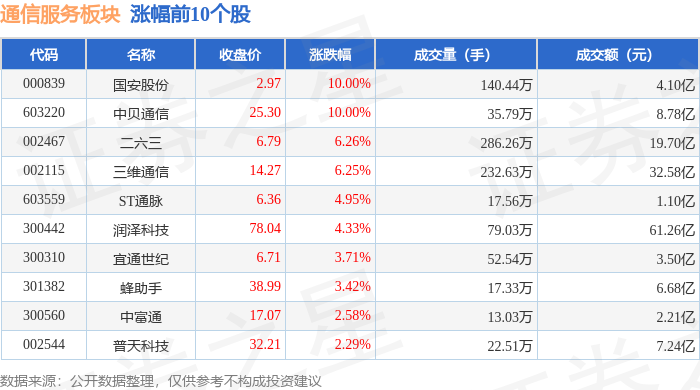
通信服务板块1月22日涨1.34%,国安股份领涨,主力资金净流入18.09亿元
Zheng Xing Xing Ye Ri Bao· 2026-01-22 09:01
Group 1: Market Performance - The communication services sector increased by 1.34% on January 22, with Guoan Co. leading the gains [1] - The Shanghai Composite Index closed at 4122.58, up 0.14%, while the Shenzhen Component Index closed at 14327.05, up 0.5% [1] Group 2: Individual Stock Performance - Guoan Co. (000839) closed at 2.97, rising by 10.00% with a trading volume of 1.4044 million shares and a transaction value of 410 million yuan [1] - Zhongbei Communication (603220) also rose by 10.00%, closing at 25.30 with a trading volume of 357,900 shares and a transaction value of 878 million yuan [1] - Other notable performers include Erli San (002467) with a 6.26% increase, closing at 6.79, and Sanwei Communication (002115) with a 6.25% increase, closing at 14.27 [1] Group 3: Capital Flow Analysis - The communication services sector saw a net inflow of 1.809 billion yuan from institutional investors, while retail investors experienced a net outflow of 1.305 billion yuan [2] - Major stocks like Runze Technology (300442) had a net inflow of 933 million yuan from institutional investors, but a net outflow of 640 million yuan from retail investors [3] - Guoan Co. (000839) had a significant net inflow of 1.81 billion yuan from institutional investors, while retail investors saw a net outflow of 886 million yuan [3]



中国联通、烽火通信等在湖北成立创业投资基金,出资额10亿
Zhong Guo Neng Yuan Wang· 2026-01-22 06:26
Core Viewpoint - The establishment of Hubei Fenghuo Venture Capital Fund Partnership (Limited Partnership) signifies a strategic move in the venture capital landscape, focusing on equity investment and asset management activities [1] Group 1: Company Formation - Hubei Fenghuo Venture Capital Fund Partnership has been recently established with a total investment of 1 billion RMB [1] - The executive partner is Wuhan Guanggu Fenghe Private Fund Management Co., Ltd [1] - The fund's operational scope includes venture capital, private equity investment, investment management, and asset management [1] Group 2: Investment Contributors - The fund is jointly funded by Fenghuo Communication, China Unicom's Union Innovation Private Equity Investment Fund (Wuhan) Partnership, and Hubei Provincial Investment Guidance Fund Co., Ltd [1]

黑猫投诉2025年度通讯服务领域投诉数据报告:投诉量超17万件 套餐资费相关投诉占比超5成
Xin Lang Cai Jing· 2026-01-22 06:06
Core Insights - The telecommunications service industry received a total of 173,629 complaints in 2025, representing a year-on-year decrease of 7.05% compared to 2024 [1][12] - The Ministry of Industry and Information Technology initiated the "Clear and Reassuring Use" campaign in April 2025 to address key issues such as complex packages and unclear charges, leading to a significant reduction in complaints in the second half of the year [1][12] Complaint Categories - The primary complaint category is package fee disputes, accounting for over 50% of all complaints, followed by poor customer service at 16.7%, broadband faults at 5.96%, and account cancellation issues at 2.44% [3][15] - Common issues include unclear billing rules, unauthorized subscription renewals, and poor customer service quality, such as long wait times and unhelpful staff [2][14] Complaint Handling - The overall complaint handling performance in the telecommunications sector is positive, with a complaint response rate exceeding 98% among major operators like China Mobile, China Unicom, China Telecom, and China Broadcasting [4][16] Demographics of Complainants - Male consumers dominate the complaint demographic, making up 70.02% of complaints, while female consumers account for 29.98% [5][17] - The average age of complainants is 30, with the majority being young consumers aged 20-25 (36.45%) and 26-30 (26.24%) [6][18] Geographic Distribution - Guangdong province has the highest number of complaints, accounting for 16.77% of the total, followed by Jiangsu and Zhejiang provinces at 8.65% and 7.71%, respectively [7][19]


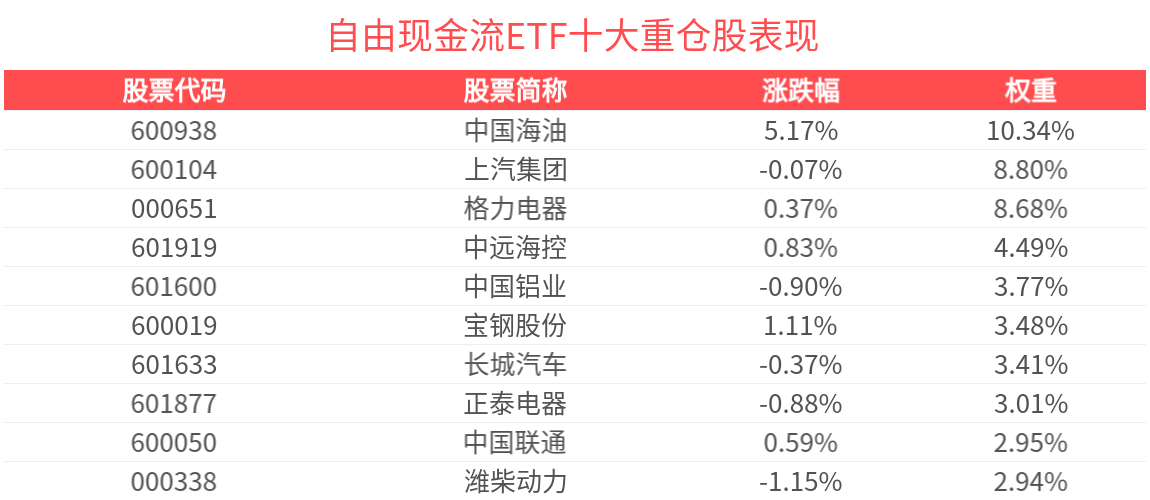
成交额超2亿元,自由现金流ETF(159201)冲击4连涨,最新规模达101.91亿元
Xin Lang Cai Jing· 2026-01-22 02:36
| 股票代码 | 股票简称 | 涨跌幅 | 权重 | | --- | --- | --- | --- | | 600938 | 甲国海海 | 5.17% | 10.34% | | 600104 | 上汽集团 | -0.07% | 8.80% | | 000651 | 格力电器 | 0.37% | 8.68% | | 601919 | 中远海控 | 0.83% | 4.49% | | 601600 | 中国铝业 | -0.90% | 3.77% | | 600019 | 宝钢股份 | 1.11% | 3.48% | | 601633 | 长城汽车 | -0.37% | 3.41% | | 601877 | 正泰电器 | -0.88% | 3.01% | | 600050 | 中国联通 | 0.59% | 2.95% | | 000338 | 潍柴动力 | -1.15% | 2.94% | (以上所列股票仅为指数成份股,无特定推荐之意) 自由现金流ETF(159201),场外联接(华夏国证自由现金流ETF发起式联接A:023917;华夏国证自由现金流ETF发起式联接C:023918)。费率方面,自由现 金流ETF ...
网络安全标准实践指南:人工智能训练数据清洗安全指南(征求意见稿)
全国网络安全标准化技术委员会秘书处· 2026-01-22 01:40
网络安全标准实践指南 ——人工智能训练数据清洗安全指南 (征求意见稿 v1.0-202601) 全国网络安全标准化技术委员会秘书处 2026 年 01 月 本文档可从以下网址获得: www.tc260.org.cn/ TC260-PG-2026NA 前 言 《网络安全标准实践指南》(以下简称《实践指南》) 是全国网络安全标准化技术委员会(以下简称"网安标委") 秘书处组织制定和发布的标准相关技术文件,旨在围绕网络 安全法律法规政策、标准、网络安全热点和事件等主题,宣 传网络安全相关标准及知识,提供标准化实践指引。 本文件起草单位:上海人工智能创新中心、中国电子技 术标准化研究院、北京中关村实验室、国家计算机网络应急 技术处理协调中心、杭州网易智企科技有限公司、上海市信 息安全测评认证中心、北京火山引擎科技有限公司、上海稀 宇科技有限公司、中国移动通信集团有限公司、北京百度网 讯科技有限公司、中国联合网络通信集团有限公司、华为终 端有限公司、中国网络空间研究院、阿里云计算有限公司、 广西电网有限责任公司、北京小米移动软件有限公司、深圳 市腾讯计算机系统有限公司、OPPO 广东移动通信有限公司、 深圳昂楷科技有限 ...
手机遇冷、眼镜预热 eSIM仍在等待“上桌”
Bei Jing Shang Bao· 2026-01-21 23:45
Core Insights - The demand for Apple's iPhone Air, which emphasizes extreme thinness and features eSIM technology, is significantly lower than expected, leading to supply chain cutbacks and potential component discontinuation by the end of 2025 [1] - The eSIM technology's adoption in smartphones is hindered by user habits, manufacturer conservatism, and insufficient cooperation from telecom operators, making it a secondary feature rather than a core component [2][3] Group 1: iPhone Air and eSIM Challenges - The iPhone Air's attempt to innovate with a pure eSIM design has not resonated with mainstream consumers, as many are unwilling to pay a flagship price for a device with compromised core specifications [2] - The cumbersome processes associated with eSIM activation and switching further reduce user acceptance of this technology [2] - Current smartphone models from domestic manufacturers, such as OPPO and Huawei, have adopted eSIM but still support physical SIM cards, indicating a cautious approach to eSIM integration [3] Group 2: Shift to AR Glasses - The industry is shifting focus to AR smart glasses as a more suitable application for eSIM technology, with Thunderbird Innovation launching the "Thunderbird X3 Pro Project eSIM" at CES 2026 [4] - The investment from major telecom operators into the AR glasses sector signifies a strategic interest in integrating eSIM technology into new devices [4] - The design of AR glasses, which prioritizes extreme thinness, aligns well with eSIM's no-card feature, potentially enhancing the device's functionality and independence from smartphones [5] Group 3: Future Potential and Challenges - While eSIM technology shows promise for AR glasses, the current focus in the industry remains on improving optical display and spatial computing capabilities rather than communication features [6] - The existing limitations in AR glasses, such as display technology and battery life, need to be addressed before eSIM can become a core necessity [6] - The potential for eSIM to become a necessity in various scenarios, such as cross-border travel and IoT applications, exists but requires further technological and market developments [7]


最新调仓路径显现 基金经理关注确定性与安全边际
Zhong Guo Zheng Quan Bao· 2026-01-21 22:00
Group 1 - The core viewpoint of the article highlights significant portfolio adjustments by well-known fund managers in anticipation of growth in sectors like AI, non-ferrous metals, and lithium battery materials for 2026 [1][4] - Fund manager Fu Pengbo indicates that high-growth sectors such as AI and non-ferrous metals will see substantial growth, while manager Li Xiaoxing emphasizes that AI remains the main theme of global technological innovation [1][7] - Manager Yang Jinjing advocates for avoiding currently popular but overvalued sectors, focusing instead on blue-chip stocks that are expected to show long-term performance turning points [1][5] Group 2 - In the fourth quarter of 2025, the top ten holdings of the Ruiyuan Growth Value Fund managed by Fu Pengbo and Zhu Lin saw minor changes, with Maiwei Co. replacing China Mobile, and significant adjustments in holdings of companies like Tencent and Alibaba [2] - The Silver华心怡 Fund, managed by Li Xiaoxing and Zhang Ping, underwent substantial adjustments, with new entries including Tencent, Alibaba, and Meituan, while exiting positions in China Mobile and HSBC [2] - The Yongying Ruixin Fund, managed by Gao Nan, also made notable adjustments, adding companies like WISCO and Haier, while reducing positions in companies like Zhongji Xuchuang [3] Group 3 - Fu Pengbo and Zhu Lin plan to reduce investments in companies with weak fundamentals and increase holdings in data center-related companies based on industry trends and individual stock research [2][4] - Gao Nan focuses on company growth potential and performance realization, aiming for a diversified portfolio while capturing growth opportunities [4] - Yang Jinjing emphasizes a contrarian investment approach, seeking undervalued stocks and avoiding following irrational market trends [4][5] Group 4 - Li Xiaoxing believes that the domestic equity market presents more opportunities than risks, with AI continuing to drive technological innovation and domestic internet giants expected to maintain stable growth [7][8] - The domestic consumption sector, which underperformed in 2025, is viewed as having high potential, with many quality consumer stocks offering attractive dividend yields [8] - Long-term prospects for the domestic innovative pharmaceutical sector are positive, with a focus on companies with data catalysts and explosive performance potential [8]
手机遇冷眼镜预热 eSIM仍在等待“上桌”
Bei Jing Shang Bao· 2026-01-21 16:11
Core Insights - The demand for Apple's iPhone Air, which emphasizes extreme thinness, is significantly lower than expected, leading to supply chain cutbacks and anticipated component discontinuation by the end of 2025 [1][3] - The iPhone Air's reliance on eSIM technology has not resonated with mainstream consumers due to compromises in battery life, heat management, and other core specifications [1][3] - The slow adoption of eSIM in mobile devices is attributed to user habits, conservative manufacturer strategies, and insufficient cooperation from telecom operators [3][4] eSIM Technology in Mobile Devices - Current mobile devices featuring eSIM, such as OPPO Find X9 Pro and Huawei Mate 80 RS, still support physical SIM cards, indicating a cautious approach from manufacturers [4] - The reluctance to fully embrace eSIM technology is influenced by concerns over user control by telecom operators and uneven global infrastructure support [4] - eSIM is currently viewed as an additional feature rather than a core necessity in mobile devices, as users are accustomed to the convenience of physical SIM cards [4] Shift to AR Smart Glasses - As eSIM faces challenges in mobile applications, the industry is exploring its potential in AR smart glasses, which align better with eSIM's capabilities [5][7] - Thunderbird Innovation's AR glasses, featuring eSIM technology, have received significant investment from Chinese telecom operators, marking a strategic entry into the AR market [6] - The design of AR glasses, which prioritizes extreme thinness, benefits from eSIM's lack of a physical card slot, allowing for more compact designs [7] Market Potential and Challenges - The integration of eSIM in AR glasses is seen as having a clearer potential for adoption compared to mobile devices, given the alignment of form factor and use cases [7][9] - However, the current focus in the AR industry remains on optical display and spatial computing capabilities, with communication technology being a secondary priority [8] - The successful scaling of eSIM in AR devices may depend on advancements in technology and market conditions, such as seamless cross-operator functionalities [9]