
邮储银行

Search documents
邮储银行无锡市分行:智慧金融赋能美好生活
Sou Hu Cai Jing· 2026-01-30 05:56
Core Insights - Postal Savings Bank of China Wuxi Branch is actively promoting the upgrade of digital RMB services to empower local digital economy development [1][2] Group 1: Strategic Initiatives - The bank signed a strategic cooperation agreement with Jiangyin Big Data Association to explore the integration of data elements and financial services [1] - A total of 1,000 customized hardware wallets were launched to provide safer and more convenient payment options for specific groups [1] Group 2: Focus on Public Welfare - Public transportation is a key area for promoting digital RMB, with successful partnerships established with Wuxi Metro and urban bus systems to enable digital RMB payment [1] - Citizens can now use the digital RMB app for instant payments, enhancing the safety, efficiency, and sustainability of their travel experience [1] Group 3: Financial Inclusion and Growth - The extensive scene construction has led to rapid business growth, with an expected addition of 87,400 digital wallets by 2025 and a cumulative transfer amount of 1.961 billion yuan [1] - Monthly active users of digital wallets are projected to reach 353,600, with promotional discounts available at large supermarkets for users of Postal Savings digital RMB wallets [1]

【行业分析】中国绿色信贷行业政策汇总、发展现状及投资前景预测报告——智研咨询发布
Sou Hu Cai Jing· 2026-01-30 05:41
Core Viewpoint - Under the national "dual carbon" strategy, listed banks in China are integrating Environmental, Social, and Governance (ESG) concepts into their development strategies, promoting a green financial system to facilitate the low-carbon transition of the economy and society [2] Group 1: Green Credit Overview - Green credit is a financial service provided by institutions to support environmental protection, energy conservation, emission reduction, and renewable energy industries, optimizing resource allocation and mitigating environmental risks [5] - The green credit policy was jointly proposed by the Ministry of Environmental Protection, the People's Bank of China, and the China Banking Regulatory Commission on July 30, 2007, to curb the blind expansion of high-energy-consuming and high-polluting industries [3][5] Group 2: Development History of Green Credit - The green credit sector in China has evolved from a policy-driven approach to a more standardized and institutionalized financial tool, progressing through the stages of emergence, exploration, and growth [7] - The issuance of the "Guiding Opinions on Building a Green Financial System" in 2016 marked a significant step in the development of green finance, with the sector now entering a mature phase [7] Group 3: Green Credit Policies - Since the 2016 issuance of the "Guiding Opinions on Building a Green Financial System," various local governments have introduced specific green credit policies to refine development directions and promote best practices [9] - In February 2025, the National Financial Supervision Administration and the People's Bank of China issued a plan to enhance the quality of green finance, encouraging banks to explore various green financing methods [11] Group 4: Green Credit Industry Chain - The upstream of the green credit industry chain includes product innovation, project assessment and certification, and project development and operation [12] - The midstream involves financial institutions providing funding and services for green projects, while the downstream encompasses applications in clean energy, environmental protection, green transportation, and more [12] Group 5: Green Building Development - By the end of 2024, the cumulative area of green buildings in urban areas reached 13.54 billion square meters, with new green building area in 2024 accounting for 97.9% of all new construction [14] - The growing emphasis on green buildings is expected to create substantial financing demand, providing a stable asset market for green credit [14] Group 6: Market Data - The balance of green loans in both domestic and foreign currencies increased from 7.1 trillion yuan in 2017 to 36.6 trillion yuan in 2024, with a compound annual growth rate of 26.4% [2] - As of the end of Q3 2025, the balance of green loans reached 43.51 trillion yuan, representing a 17.5% increase from the beginning of the year and accounting for 43.9% of the total loan increment during the same period [2]

中国银河证券:银行板块配置窗口开启 从资金流向看银行定价逻辑
Zhi Tong Cai Jing· 2026-01-30 04:36
截至2026年1月28日,当月申赎带来的股票型ETF净流出规模达7579.9亿元,根据目前各指数中银行板 块权重,测算申赎带来的银行板块资金净流出约831.4亿元。结合规模与权重来看,沪深300ETF规模变 动对银行板块影响较大,1月以来沪深300ETF申赎净流出约5438亿元,测算带来银行板块资金净流出约 654亿元。规模最大的四只沪深300ETF持有结构集中,前十大持有人平均持有比例约90%,其中市场化 金融机构持有人主要为险资和头部券商。目前四大沪深300ETF市场份额已低于2025年上半年前十大持 有人持有份额,平均减少约43%。预计卖盘压力虽然仍存,但申赎流出空间收敛,对银行板块的影响预 计减弱。 长线资金对银行定价的影响力进一步凸显,北向资金影响也值得关注 随着资金扰动加速出清,长线资金对银行板块定价影响力上升,主动型和被动型公募资金影响力减弱。 从中长期来看,险资等中长期资金主导定价有望稳定银行板块估值中枢并推动其进一步提升,带来超跌 反弹机遇,开启配置窗口。对于以险资为代表的长线资金来说,在低利率环境与资产荒延续背景下,银 行分红稳健、股息率高,可计入OCI以应对业绩波动,也可以权益法入账分享 ...

11 家大行去年理财代销增超万亿
Jing Ji Guan Cha Wang· 2026-01-30 02:45
Core Viewpoint - The report highlights a decline in the scale of bank wealth management sales in December 2025, with a total of 13.46 trillion yuan, a decrease of 1.05% from November, but an increase of 10% from the beginning of the year. The growth is attributed to a "deposit migration" logic, indicating a shift in customer preferences towards wealth management products [2][6]. Group 1: Bank Performance - Postal Savings Bank showed a remarkable growth rate of 27.2%, leading among the 11 national banks, while China Merchants Bank followed with a 12.2% increase [2][4]. - In absolute terms, China Merchants Bank led with a wealth management sales scale of 4.41 trillion yuan, followed by CITIC Bank and Industrial Bank, each exceeding 1 trillion yuan [2][4]. - The ranking of the 11 banks remained relatively stable, with Postal Savings Bank rising from 7th to 4th place by the end of the year [2][4]. Group 2: Market Dynamics - The overall wealth management sales scale of the 11 banks increased by 1.22 trillion yuan, reflecting a 10% growth from the beginning of the year, with three banks (Postal Savings, China Merchants, and Huaxia) achieving growth rates above 10% [5][6]. - The average yield of wealth management products fell below 2% for the first time, at 1.98%, yet the number of investors increased by 14.37%, indicating a strong demand for stable-return products [8][9]. - The "deposit migration" narrative remains a key driver for the growth of wealth management, as banks focus on deeper market penetration and optimizing customer service [9][10]. Group 3: Future Outlook - Predictions suggest that by the end of 2026, the wealth management scale could reach approximately 38 trillion yuan, with a growth rate of around 12% [11]. - The average risk index is expected to gradually rise, and the proportion of long-term products is anticipated to increase, while T+0 products will decrease [11].




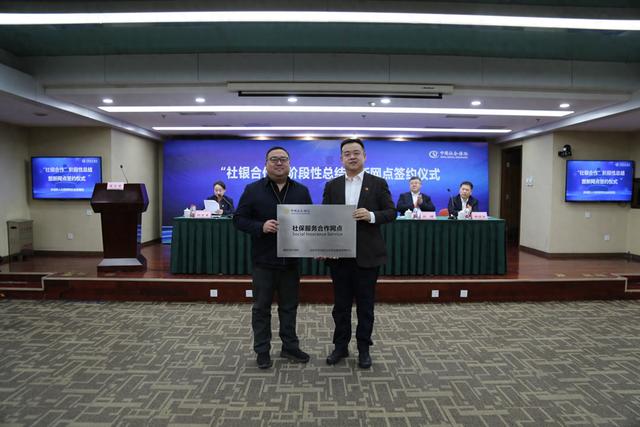
去银行办社保业务,东城区“社银合作”服务网点增至7家
Bei Jing Ri Bao Ke Hu Duan· 2026-01-30 02:42
Core Viewpoint - The "Social Security and Banking Cooperation" initiative in Dongcheng District has shown significant progress, with new partnerships established and high satisfaction rates among the public [1][3]. Group 1: Initiative Overview - The "Social Security and Banking Cooperation" initiative has been operational for over 9 months, resulting in 126,100 service visits and a public satisfaction rate of 98.02% [3]. - The initiative aims to provide convenient social security services to the public while enhancing efficiency for social security and promoting development for banks [3]. Group 2: New Partnerships - Postal Savings Bank and Bank of China have recently joined the "Social Security and Banking Cooperation" network, increasing the total number of service points to 7 [1][6]. - The existing network includes Industrial and Commercial Bank of China, China Construction Bank, Bank of Communications, Beijing Bank, and Beijing Rural Commercial Bank, serving a total of 35,000 insured units and over 1.67 million insured individuals [6]. Group 3: Service Areas - The service network covers key areas along the central axis, including Zhongguancun Dongcheng Park, "Hangkongyuan" Technology Park, Dongzhimen, Wangfujing-Longfusi, Tiantan, and Yongdingmenwai [6]. - This strategic placement aims to provide high-frequency and low-risk social security services to the local population [6].

邮储银行:推进“六化”升级 打好“六场攻坚战”
Jin Rong Shi Bao· 2026-01-30 02:10
Core Viewpoint - The Postal Savings Bank of China (PSBC) is focusing on strategic development during the "15th Five-Year Plan" period, emphasizing the implementation of Xi Jinping's thoughts and the directives from the 20th National Congress of the Communist Party of China [1][2] Group 1: Achievements and Strategic Focus - During the "14th Five-Year Plan" period, PSBC achieved significant results in overall development, value creation, reform transformation, operational management, and market scale, enhancing service quality to the real economy [1] - The bank aims to leverage the strategic opportunities of the "15th Five-Year Plan" by advancing six upgrades: specialization, lightweight, comprehensive, ecological, refined, and digital intelligence [2] Group 2: Development Goals and Initiatives - PSBC plans to shift from scale-driven growth to value-driven growth by creating a "second growth curve" and pursuing dual-line integration and development [2] - The bank will focus on six key battles: optimizing asset-liability structure, enhancing capital quality and efficiency, improving income quality, controlling costs, enhancing customer management, and strengthening risk control capabilities to achieve balanced, stable, and sustainable development [2] Group 3: Importance of 2026 - The year 2026 marks the beginning of the "15th Five-Year Plan," making it crucial for PSBC to effectively execute its reform and development tasks, which are significant for long-term success [2] - The bank is committed to closely aligning with the central leadership and maintaining a high-efficiency pace to foster a new development model and elevate its growth to new heights [2]
你的“年终奖”到账了吗?银行打响理财市场“抢收”大战
Xin Lang Cai Jing· 2026-01-30 00:54
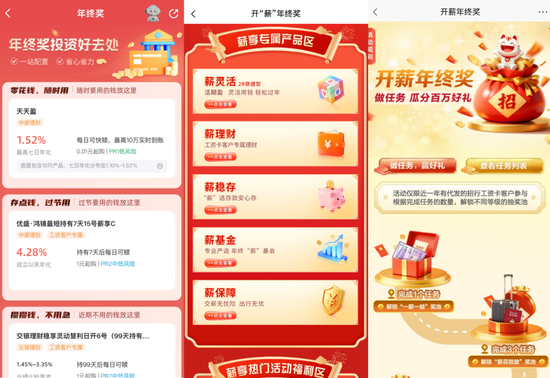
Core Viewpoint - Multiple banks are targeting the year-end bonuses of workers by launching exclusive financial products and promotional activities to attract customers [2][5][10]. Group 1: Year-End Bonus Financial Products - Several banks, including Postal Savings Bank, Bank of Communications, and China Merchants Bank, have introduced dedicated sections in their mobile banking apps for year-end bonus financial products [5][6][7]. - For example, Postal Savings Bank offers products like "Daily Earnings" with a maximum annualized rate of 1.52% and a low-risk product with an annualized rate of 4.28% [6]. - China Merchants Bank has a "Year-End Bonus" section that includes tasks for customers to unlock rewards, specifically targeting customers with salary accounts [7]. Group 2: Asset Allocation Strategies - Some banks are providing asset allocation strategies for year-end bonuses, suggesting a breakdown of funds into categories such as daily expenses, safety nets, stable investments, and growth investments [8]. - For instance, the Guangdong branch of China Construction Bank recommends allocating 10%-20% for daily expenses, 5%-10% for safety, 40%-60% for stable investments, and 10%-20% for growth [8]. Group 3: Market Trends and Data - As of the end of 2025, the total scale of the bank wealth management market reached 33.29 trillion yuan, an increase of 11.15% from the beginning of the year, with the number of investors growing by 14.37% [12][13]. - The report indicates that low-risk and medium-low-risk products dominate the market, with 95.73% of the total wealth management products falling into these categories [14]. - In 2025, wealth management products generated a total return of 730.3 billion yuan for investors, with an average yield of 1.98% [14].
银行板块配置窗口开启:从资金流向看银行定价逻辑
Zhong Guo Yin He Zheng Quan· 2026-01-30 00:24
行业点评报告 · 银行行业 银行板块配置窗口开启 —— 从资金流向看银行定价逻辑 2026 年 01 月 29 日 核心观点 银行行业 | | | 分析师 张一纬 :010-80927617 :zhangyiwei_yj@chinastock.com.cn 分析师登记编码:S0130519010001 研究助理:袁世麟 :yuanshilin_yj@chinastock.com.cn ⚫ 市场风格切换,主动型资金延续欠配状态,偏好度维持低点:2025Q4 主 动型基金对银行持仓总市值为 305.45 亿元,占比为 1.88%,环比+0.07pct, 仍处于近五年低位;低配比例为 8.88%,环比扩大 0.5pct。资金主要流向有 色金属、通信、非银金融行业,持仓占比分别较上季度+2.07pct、+1.89pct、 +1.03pct。2025Q3 以来,市场风格切换,板块轮动明显。2026 年年初至 1 月 28 日,沪深 300 指数上涨 1.9%,有色金属、石油石化、传媒行业涨幅居 前,分别上涨 28.89%、12.49%、12.22%,银行板块下跌 7.68%,表现弱于 其他行业。整体来看,银行板块受主动 ...



以平台为基,启数字新程:商业银行数字化经营平台的协同构建与价值释放
艾瑞咨询· 2026-01-30 00:07
在中央金融工作会议将数字金融明确列为金融"五篇大文章"之一的政策引领下,银行业的数字化转 型已经进入关键深化期,要求银行必须将数字化从技术赋能层面,全面上升至重塑业务模式、经营 生态与价值创造的核心战略高度。基于此背景,建设一体化、智能化的数字化经营平台,成为银行 破解增长瓶颈、重构竞争优势的必然选择。数字化经营平台承担银行整合客户触点、赋能内部流 程、协同外部生态核心枢纽的角色,旨在通过数据驱动实现业务全链路的敏捷响应与智能决策。 在这一进程中, 手机银行 APP 作为银行服务线上化、数字化的核心载体与"主阵地",其重要性日 益凸显。 它承担着三重关键使命:第一,作为服务主入口,直接承载用户对银行数字化能力的全 部感知;第二,作为数据主阵地,实时汇聚用户行为,为精准洞察与智能服务奠定基石;第三,作 为生态连接器,通过融合金融与生活场景,构建开放的服务平台。可以说, APP 运营的成败,直 接决定了银行数字化战略的落地高度与市场成效。 当前,各大银行均将手机银行 APP 置于数字化战略的核心位置,持续投入资源进行版本迭代、生 态拓展与体验升级。根据 UserTracker 多平台网民行为监测数据库统计结果, ...

多家银行调整个人客户上金所延期合约保证金比例
Zheng Quan Ri Bao Zhi Sheng· 2026-01-29 17:05
1月21日,邮储银行发布《关于再次调整我行个人客户上海黄金交易所延期合约保证金比例的通知》 称,自北京时间2026年1月22日收盘清算时起,该行将对代理个人上金所业务(包括黄金延期合约和白 银延期合约)的交易保证金比例进行调整。其中:Ag(T+D)、Au(T+D)、Au(T+N1)、Au (T+N2)、mAu(T+D)合约保证金比例均从80%调整为120%。事实上,这已是邮储银行在一个月内 第三次对该行个人客户上金所延期合约保证金比例进行调整。 本报记者 杨洁 近期,多家银行发布调整个人客户上海黄金交易所(以下简称"上金所")延期合约保证金比例的通知。 1月28日,建设银行发布通知称,自2026年1月29日(星期四)收盘清算时起,Au(T+D)、mAu (T+D)、Au(T+N1)、Au(T+N2)、NYAuTN06、NYAuTN12、Ag(T+D)合约的保证金比例从 44%调整为60%。 建设银行官方客服对记者表示,近期国内外贵金属价格波动加剧,市场风险提升,为顺应市场变化,保 护投资者权益,该行对个人客户上金所延期合约交易保证金比例进行调整,并提示投资者做好仓位控 制,理性投资。 工商银行1月27日发布通 ...