国电电力

Search documents
“国家队”持仓动向揭秘!Q3持仓超100亿A股上市公司名单一览
Xin Lang Cai Jing· 2025-11-02 00:45
Core Insights - The latest holdings of the "national team" in A-share listed companies have been revealed, with 233 companies having the "national team" as one of their top ten shareholders [1][2] - In the third quarter, the "national team" held over 10 billion yuan in market value in 30 stocks, including major banks and insurance companies [1] Group 1: Major Holdings - The top three holdings by market value are: - China Construction Bank: 13,288.15 billion yuan - Agricultural Bank of China: 11,429.52 billion yuan - Bank of China: 11,138.27 billion yuan [1] - Other significant holdings include: - Industrial and Commercial Bank of China: 9,914.42 billion yuan - New China Life Insurance: 751.22 billion yuan - Ping An Insurance: 734.02 billion yuan [1][2] Group 2: New Additions - Farah Electronics is a new addition to the "national team" holdings, with a market value of 1.58 billion yuan [2] - The company reported a revenue of 3.944 billion yuan for the first three quarters, a year-on-year increase of 14.69%, and a net profit of 888 million yuan, also up 14.58% [2] - In the third quarter alone, Farah Electronics achieved a revenue of 1.445 billion yuan, reflecting a year-on-year growth of 9.31% [2]







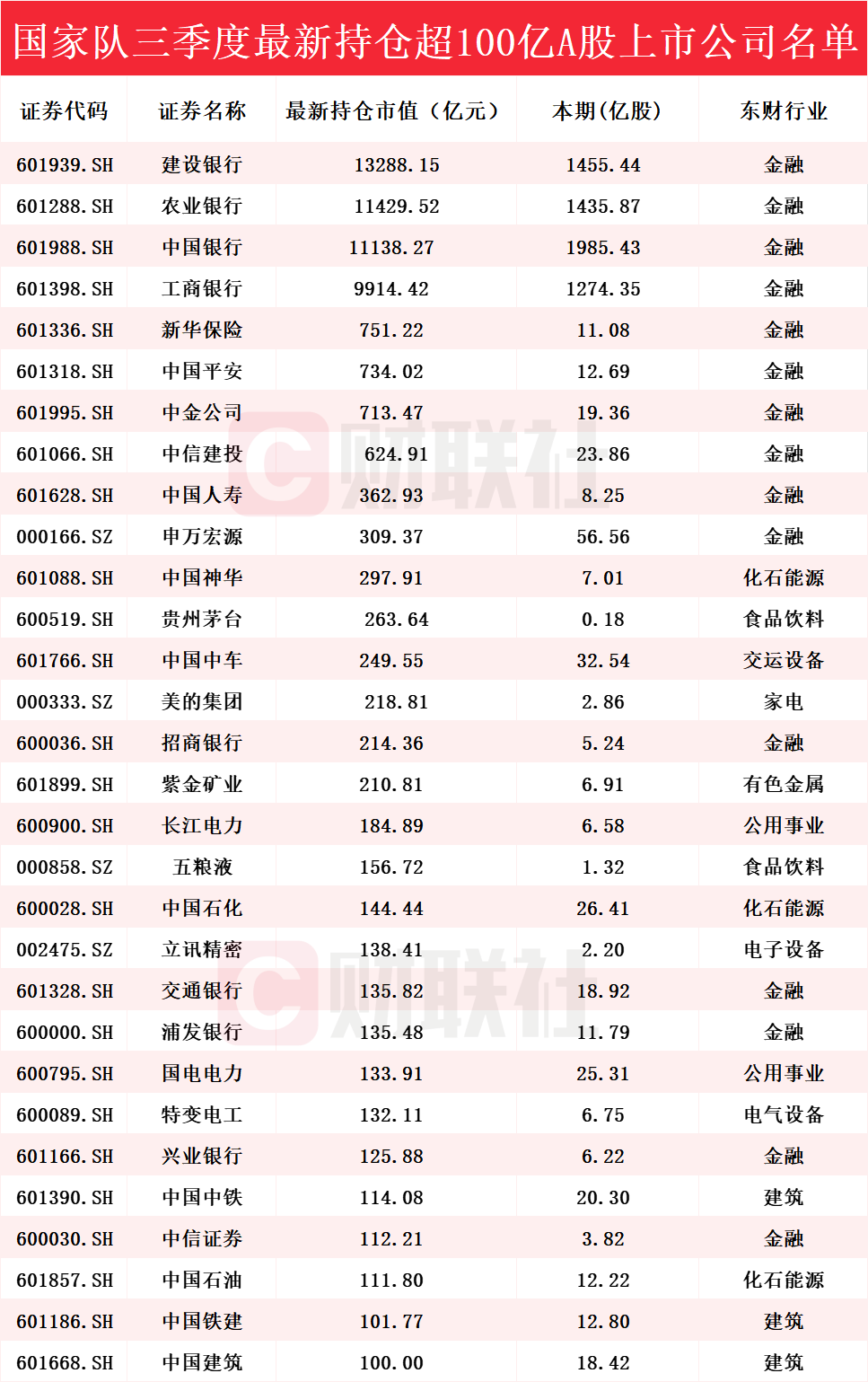
浙能电力的前世今生:2025年三季度营收588.14亿行业排第5,净利润70.34亿行业居第5
Xin Lang Cai Jing· 2025-10-31 16:43
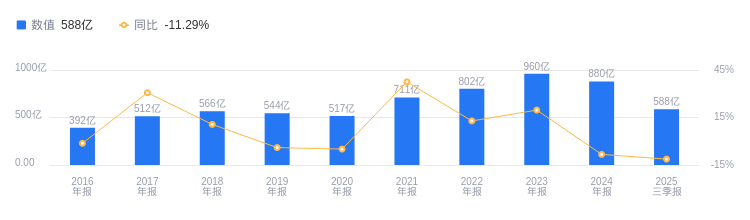
Core Viewpoint - Zhejiang Energy Power is a state-owned large listed company in Zhejiang Province, primarily engaged in thermal power generation, with a complete power industry chain [1] Financial Performance - In Q3 2025, Zhejiang Energy Power achieved a revenue of 58.814 billion yuan, ranking 5th among 28 companies in the industry, while the industry leader, Huaneng International, reported 172.975 billion yuan [2] - The net profit for the same period was 7.034 billion yuan, also ranking 5th, with Huaneng International leading at 19.436 billion yuan [2] Financial Ratios - As of Q3 2025, the company's debt-to-asset ratio was 43.93%, lower than the industry average of 61.62%, indicating lower debt pressure [3] - The gross profit margin was 13.03%, which is below the industry average of 18.24%, suggesting room for improvement in profitability [3] Management and Shareholder Information - The chairman, Liu Weimin, received a salary of 973,000 yuan in 2024, an increase of 111,700 yuan from the previous year [4] - As of September 30, 2025, the number of A-share shareholders increased by 10.58% to 155,000, while the average number of shares held per shareholder decreased by 9.56% [5] Business Highlights - The company reported a total revenue of 58.814 billion yuan and a net profit of 6.230 billion yuan for the first three quarters of 2025, meeting expectations [5] - Key business highlights include increased electricity consumption in Zhejiang, new unit production, and a focus on shareholder returns with a high dividend yield [5] - In Q3 2025, the company achieved a revenue of 23.342 billion yuan and a net profit of 2.718 billion yuan, with net profit per kilowatt-hour increasing to 0.048 yuan [6]

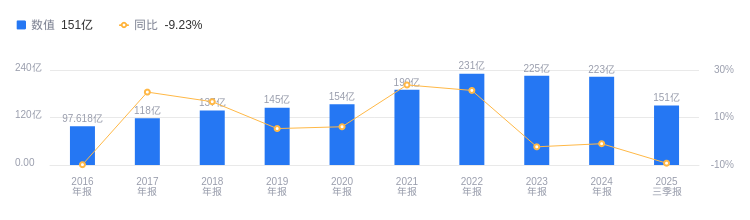
内蒙华电的前世今生:负债率 38.22%低于行业平均,毛利率 23.60%高于同类 5.36 个百分点
Xin Lang Cai Jing· 2025-10-31 16:36
Core Viewpoint - Inner Mongolia Huadian is a leading power generation company in Inner Mongolia, established in 1994, with a focus on coal-fired power generation and a growing presence in renewable energy [1] Group 1: Business Overview - Inner Mongolia Huadian was founded on May 12, 1994, and listed on the Shanghai Stock Exchange on May 20, 1994, making it the first listed power generation company in Inner Mongolia [1] - The company’s main business includes thermal power generation, heating, steam, and hot water production and supply, as well as investments in coal, railways, and renewable energy projects [1] Group 2: Financial Performance - For Q3 2025, Inner Mongolia Huadian reported revenue of 15.052 billion yuan, ranking 16th among 28 companies in the industry, with the industry leader, Huaneng International, at 172.975 billion yuan [2] - The net profit for the same period was 2.864 billion yuan, placing the company 11th in the industry, with the top performer, Huaneng International, at 19.436 billion yuan [2] Group 3: Financial Ratios - As of Q3 2025, the company's debt-to-asset ratio was 38.22%, lower than the industry average of 61.62%, indicating strong solvency [3] - The gross profit margin for the same period was 23.60%, higher than the industry average of 18.24%, reflecting robust profitability [3] Group 4: Leadership - The chairman, Gao Yuan, has extensive experience in the power sector and holds multiple qualifications, including a bachelor's degree in economics and a master's in business administration [4] - The general manager, Zhang Yan, also has a strong educational background and experience in the industry [4] Group 5: Shareholder Information - As of September 30, 2025, the number of A-share shareholders decreased by 7.60% to 140,500, while the average number of shares held per shareholder increased by 8.22% to 46,500 [5] - The top circulating shareholder is Hong Kong Central Clearing Limited, with 5.927 million shares, marking a new entry [5] Group 6: Future Outlook - The company is expected to see its total installed capacity of renewable energy exceed 5.5 million kilowatts, approaching a 50% share of its thermal power capacity after the completion of ongoing projects [5] - Forecasts for net profit from 2025 to 2027 are 2.348 billion, 2.640 billion, and 2.936 billion yuan, respectively, with a "buy" rating maintained by analysts [5][6]

通宝能源的前世今生:2025年三季度营收81.85亿行业排21,净利润4.86亿排20,远低于行业均值
Xin Lang Zheng Quan· 2025-10-31 15:33
Core Viewpoint - Tongbao Energy, established in 1992 and listed in 1996, is a significant player in the Shanxi power grid, primarily engaged in thermal power generation and distribution, benefiting from regional advantages [1] Group 1: Business Performance - For Q3 2025, Tongbao Energy reported revenue of 8.185 billion, ranking 21st among 28 companies in the industry, while the top company, Huaneng International, achieved revenue of 172.975 billion [2] - The net profit for the same period was 486 million, placing the company 20th in the industry, with Huaneng International leading at 19.436 billion [2] Group 2: Financial Ratios - As of Q3 2025, Tongbao Energy's debt-to-asset ratio was 26.43%, lower than the previous year's 27.01% and significantly below the industry average of 61.62% [3] - The gross profit margin for Q3 2025 was 9.14%, an increase from 8.30% year-on-year, but still below the industry average of 18.24% [3] Group 3: Shareholder Information - As of September 30, 2025, the number of A-share shareholders decreased by 2.18% to 32,500, while the average number of shares held per shareholder increased by 2.23% to 35,300 [5] - Among the top ten circulating shareholders, the Southern CSI 1000 ETF held 5.2436 million shares, a decrease of 47,800 shares from the previous period [5]


交大校友,用无人矿卡,改造全球最大露天煤矿
创业邦· 2025-10-31 06:06
Core Viewpoint - The article discusses the advancements and market positioning of Berai Technology in the field of autonomous electric mining trucks, emphasizing its unique battery swapping model and its expansion into international markets [2][4]. Group 1: Company Overview - Berai Technology, founded by Jacky Hu in 2015, initially focused on drone inspection before pivoting to autonomous mining trucks due to higher market demand [6][7]. - The company has developed a battery swapping model for its electric mining trucks, significantly reducing downtime compared to traditional charging methods [9][12]. Group 2: Market Demand and Strategy - The demand for autonomous mining trucks is driven by the need for cost reduction and efficiency improvements in mining operations, with transportation costs accounting for over 60% of overall costs [7][11]. - Berai Technology's trucks are designed to meet the specific needs of different mining regions, balancing between automation and electrification based on local labor conditions [11][12]. Group 3: Technological Innovations - The company has implemented a "vehicle-battery separation" model, allowing for lower upfront costs for customers by selling trucks without batteries, which are maintained by specialized companies [15][16]. - Berai Technology is also developing its own battery swapping stations, which will support various battery models and operate without human supervision [16][17]. Group 4: Production and Expansion - The company plans to double its production capacity following a recent round of financing, with a goal of delivering over 300 trucks annually [24]. - Berai Technology has begun expanding into international markets, securing contracts with major mining companies like Vale and exploring opportunities in Southeast Asia and Australia [25][27]. Group 5: Competitive Landscape - The article highlights the competitive challenges Berai Technology faces from established global players like Komatsu and Caterpillar, which have significant brand recognition [27]. - Despite these challenges, Berai Technology differentiates itself by focusing on self-developed products rather than retrofitting existing vehicles for automation [27][28].
皖能电力的前世今生:2025年三季度营收217.73亿行业排12,净利润28.53亿行业并列12
Xin Lang Zheng Quan· 2025-10-31 03:30
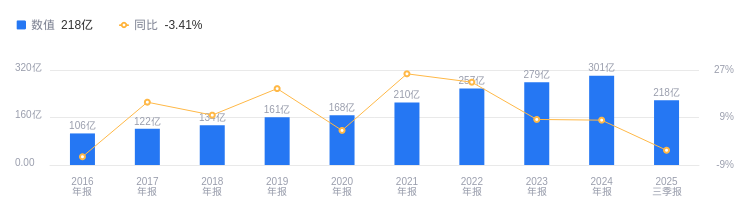
Core Viewpoint - WanNeng Power, established in December 1993, is the largest thermal power operator in Anhui Province, primarily focusing on coal-fired power generation and benefiting from scale and regional advantages [1] Group 1: Business Performance - In Q3 2025, WanNeng Power achieved operating revenue of 21.773 billion yuan, ranking 12th in the industry, significantly lower than the top player Huaneng International at 172.975 billion yuan and the second player Guodian Power at 125.205 billion yuan [2] - The net profit for the same period was 2.853 billion yuan, also ranking 12th, far below Huaneng International's 19.436 billion yuan and Guodian Power's 12.233 billion yuan [2] - The main business composition includes power and related products at 10.453 billion yuan (79.28%), coal at 2.37 billion yuan (17.97%), transportation at 201 million yuan (1.52%), waste treatment at 143 million yuan (1.09%), and others at 18.4185 million yuan (0.14%) [2] Group 2: Financial Ratios - As of Q3 2025, WanNeng Power's debt-to-asset ratio was 63.00%, higher than the industry average of 61.62%, but down from 65.71% in the same period last year [3] - The gross profit margin was 16.67%, below the industry average of 18.24%, although it improved from 12.27% in the previous year [3] Group 3: Management and Shareholder Information - The chairman, Li Ming, has no disclosed salary data, while the general manager, Fang Shiqing, saw a salary decrease of 59,600 yuan year-on-year, with a 2024 salary of 650,200 yuan [4] - As of September 30, 2025, the number of A-share shareholders increased by 2.10% to 55,700, while the average number of circulating A-shares held per household decreased by 2.06% to 40,700 [5] Group 4: Future Outlook - According to Huayuan Securities, WanNeng Power is expected to achieve a net profit of 2.3 billion, 2.4 billion, and 2.6 billion yuan from 2025 to 2027, with corresponding PE ratios of 8, 7, and 7 times, and a projected dividend yield of 4.5% in 2025 [5] - Guosheng Securities forecasts operating revenues of 29.062 billion, 29.625 billion, and 29.575 billion yuan for 2025 to 2027, with net profits of 2.322 billion, 2.346 billion, and 2.409 billion yuan, respectively [6] - Business highlights include increased electricity demand and improved cost management supporting significant profit growth, as well as new projects contributing to growth potential [6]

中国银河证券:我国能源结构持续优化 消纳、电价或迎向好趋势
Zhi Tong Cai Jing· 2025-10-31 01:29
Core Viewpoint - The report from China Galaxy Securities indicates that during the "14th Five-Year Plan" period, the growth of new energy installations is expected to continue, with a focus on enhancing flexibility and cleanliness in coal power development [1][2]. New Energy Installations - The report anticipates that the average annual new energy installations will reach at least 180 million kilowatts during the "14th and 15th Five-Year Plans" [1]. - Factors such as improved flexibility in thermal power, ongoing grid construction, and the emergence of new models for green electricity consumption are expected to enhance the absorption of new energy [1]. - The report also notes a positive trend in electricity prices, driven by the implementation of regulatory measures and increasing demand for green electricity [1]. Coal Power Development - The main direction for coal power development during the "14th Five-Year Plan" is to enhance flexibility and cleanliness, transitioning to a revenue model that combines ignition price difference, adjustment value, and capacity value [2]. - The report highlights the potential for low-carbon transformation technologies in coal power, including biomass co-firing and carbon capture, utilization, and storage (CCUS) [2]. Hydropower Installations - The report suggests that hydropower installations will continue to grow, particularly in specific river basins, and emphasizes the long-term investment value of hydropower due to its stable profitability and strong cash flow [3]. - The report identifies key companies in the hydropower sector for investment consideration [3]. Nuclear Power Growth - The report indicates significant growth potential in nuclear power installations, with a focus on the development of hydrogen energy and nuclear fusion as future economic growth points [4]. - The report notes that the domestic market has seen a consistent approval of new nuclear power units, and the market pricing mechanism is becoming more rational [4]. Renewable Energy in Non-Electric Fields - The report highlights the expected growth in green hydrogen, ammonia, and biofuels during the "14th Five-Year Plan," driven by renewable energy consumption targets and external demand from markets like the EU [6]. - Companies involved in these sectors are recommended for investment consideration [6].

粤电力A的前世今生:2025年三季度营收377.17亿元行业第七,净利润8.71亿元排名第十七
Xin Lang Cai Jing· 2025-10-30 15:30
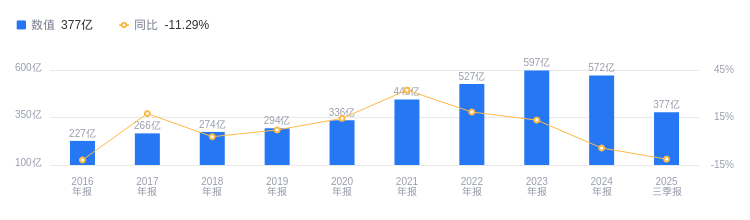
Core Viewpoint - Guangdong Electric Power A is a major player in the domestic power generation industry, with strong capabilities in thermal and renewable energy generation, and possesses advantages in multi-energy complementarity and the entire industry chain [1] Group 1: Business Performance - In Q3 2025, Guangdong Electric Power A reported revenue of 37.717 billion yuan, ranking 7th among 28 companies in the industry, while the industry leader, Huaneng International, achieved revenue of 172.975 billion yuan [2] - The company's net profit for the same period was 871 million yuan, placing it 17th in the industry, with Huaneng International leading at 19.436 billion yuan [2] - The main business revenue composition includes power sales of 22.669 billion yuan (97.96%), heat sales of 28.2 million yuan (1.22%), and other revenues of 12.2 million yuan (0.53%) [2] Group 2: Financial Ratios - As of Q3 2025, the asset-liability ratio for Guangdong Electric Power A was 79.45%, higher than the industry average of 61.62% [3] - The gross profit margin for the same period was 11.49%, which is below the industry average of 18.24% [3] Group 3: Shareholder Information - As of December 31, 2011, the number of A-share shareholders decreased by 4.21% to 88,200, while the average number of circulating A-shares held per household increased by 4.39% to 22,600 [5] - As of September 30, 2025, the Southern CSI 500 ETF was the seventh largest circulating shareholder, holding 13.0304 million shares, a decrease of 298,500 shares from the previous period [5] Group 4: Executive Compensation - The chairman, Zheng Yunpeng, received a salary of 1.3069 million yuan in 2024, an increase of 529,100 yuan from 2023 [4] Group 5: Future Outlook - Analysts expect the company to achieve revenues of 56.895 billion yuan, 63.293 billion yuan, and 68.280 billion yuan from 2025 to 2027, with corresponding net profits of 684 million yuan, 1.183 billion yuan, and 1.463 billion yuan [6] - The company is actively investing in energy transition projects, with multiple solar and wind projects under construction [6]

华电能源的前世今生:2025年三季度营收117.75亿低于行业平均,净利润7.07亿排名靠后
Xin Lang Cai Jing· 2025-10-30 13:57
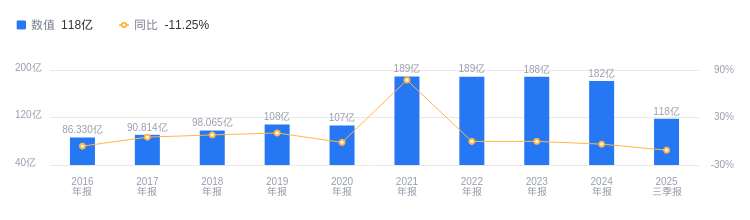
Core Viewpoint - Huadian Energy, a significant player in the Heilongjiang region's power and heat supply, faces challenges in revenue and profit rankings within the industry, indicating potential areas for improvement and investment opportunities [1][2]. Financial Performance - For Q3 2025, Huadian Energy reported revenue of 11.775 billion, ranking 17th out of 28 in the industry, significantly lower than the top competitors, Huaneng International at 172.975 billion and Guodian Power at 125.205 billion [2]. - The company's net profit for the same period was 707 million, placing it 19th in the industry, again trailing behind Huaneng International's 19.436 billion and Guodian Power's 12.233 billion [2]. Business Composition - The main business segments include electricity sales at 3.752 billion (45.29%), coal sales at 2.717 billion (32.79%), and heat sales at 1.730 billion (20.89%), with engineering and other services contributing 85.712 million (1.03%) [2]. Financial Ratios - As of Q3 2025, Huadian Energy's debt-to-asset ratio was 81.15%, an increase from 78.09% year-on-year, and significantly higher than the industry average of 61.62% [3]. - The gross profit margin for the same period was 18.02%, down from 22.05% year-on-year and slightly below the industry average of 18.24% [3]. Executive Compensation - The chairman, Lang Guomin, received a salary of 862,800, a slight decrease from the previous year, while the general manager, Wei Ning, earned 318,400 in 2024 [4]. Shareholder Information - As of September 30, 2025, the number of A-share shareholders decreased by 6.32% to 91,600, with an average holding of 30,000 shares, which increased by 6.74% [5].

公用事业行业央企ESG评价体系:绿色安全+能源转型是核心社会责任担当是基石:公用事业行业央企ESG评价体系
Shenwan Hongyuan Securities· 2025-10-30 11:23
Investment Rating - The report assigns a "Buy" rating for several key companies in the public utility sector, including China Resources Power, Guodian Power, and Inner Mongolia Huadian [28]. Core Insights - The public utility sector is crucial for achieving national "dual carbon" goals, with a strong emphasis on environmental and social issues in the ESG evaluation framework [5][4]. - The ESG evaluation system for public utilities includes four categories of positive indicators and one category of negative indicators, focusing on objective assessment metrics [8][23]. - Recent policies from various government departments emphasize the need for green transformation, pollution prevention, and social welfare in the public utility sector [5][4]. Summary by Sections 1. ESG Policy in Public Utilities - The public utility sector is a major contributor to energy consumption and carbon emissions, making its green transformation essential for national goals [5]. - Key policies include the "14th Five-Year" energy conservation and emission reduction plan, which outlines specific requirements for green transformation and public service stability [5][4]. 2. ESG Evaluation System Construction - The ESG evaluation system consists of four positive categories: General Indicators, Environmental Indicators, Social Indicators, and Governance Indicators, with a total of 18 primary indicators and 35 secondary indicators [8][23]. - The negative category focuses on violations and penalties, with specific metrics for environmental, social, and governance aspects [23]. 3. General Indicators - General indicators assess the authenticity and standardization of ESG reports, including the basis for report preparation, third-party verification, and the publication of ESG-specific reports [10][9]. 4. Environmental Indicators - Environmental indicators are based on energy conservation, low carbon, and circular economy principles, with a total of four primary indicators focusing on emissions management, ecological compliance, resource utilization, and climate strategy [11][12]. 5. Social Indicators - Social indicators highlight the public utility sector's role in community development and social stability, with six primary indicators covering community contributions, employee development, innovation, supply chain responsibility, product safety, and core operational responsibilities [15][16][17]. 6. Governance Indicators - Governance indicators aim to enhance corporate governance and decision-making, with five primary indicators focusing on party leadership, industry reform, compliance risk management, governance structure, and information transparency [19][20][21]. 7. Negative Indicators - The negative indicators focus on compliance issues, with penalties for violations in environmental, social, and governance areas, deducting points for each violation [23][25].