
天士力

Search documents
以实践为师,从场景出发 | 中国企业管理最佳实践榜入围名单公布
Sou Hu Wang· 2025-08-01 09:29
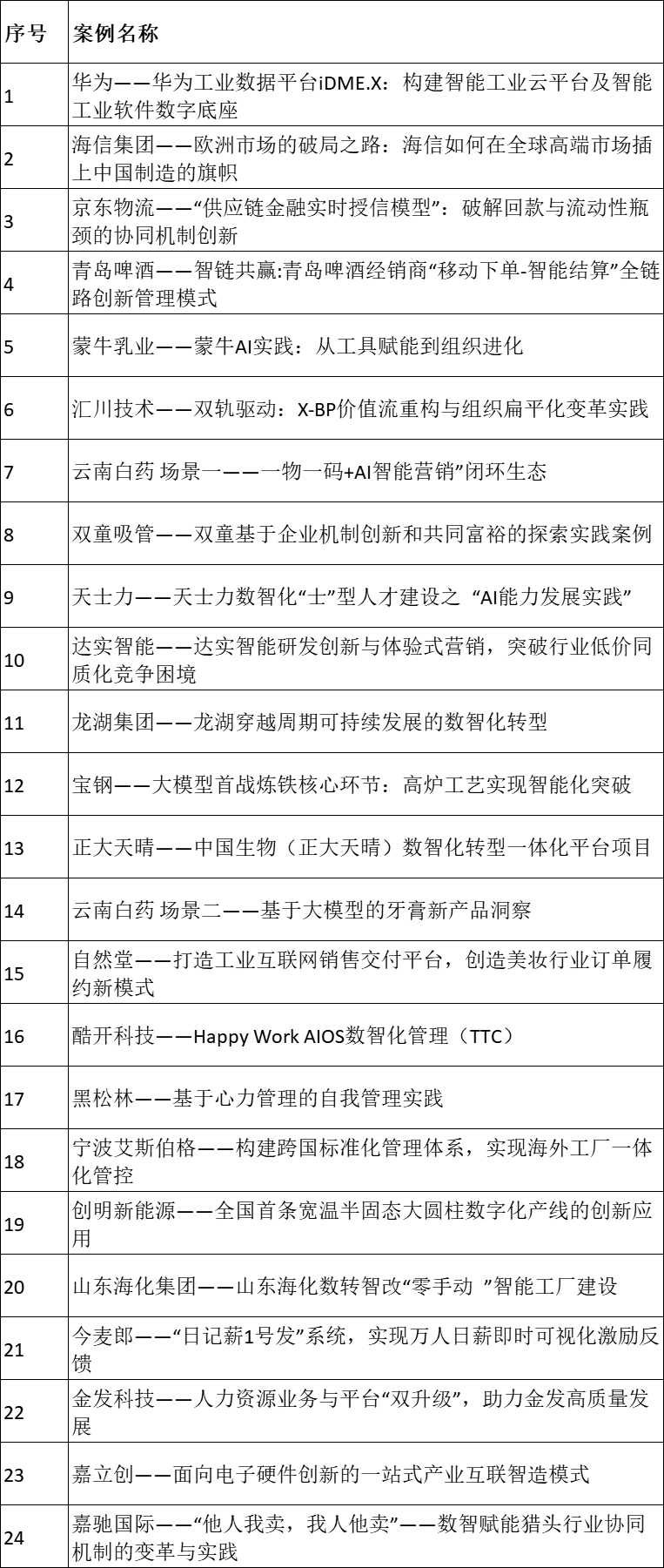
Core Insights - The article emphasizes the transformative era in management, highlighting the disconnect between traditional management theories and current realities, leading to increased uncertainty for managers [1] - It suggests that this challenging period for Chinese enterprises may also be a golden age for paradigm breakthroughs through innovative practices [1] - The focus on scenario-based management is presented as a key approach to effectively address complex organizational challenges [2] Group 1: Scenario-Based Management - Scenario-based management shifts the focus from predefined institutional frameworks to specific, complex, and dynamic management scenarios, ensuring the identification and resolution of real issues [2] - This approach promotes cross-functional collaboration, breaking down traditional functional barriers, and fostering organizational agility and innovation [2][4] - The integration of AI with scenario-based management is becoming a prevalent strategy among leading companies, with over 60% of management scenarios in a recent study applying AI technology [3] Group 2: AI Integration - AI enhances the efficiency of problem-solving within individual scenarios and reshapes the value connections between management scenarios, driving human-machine collaboration [4] - In production, AI has significantly reduced costs and improved efficiency by optimizing real-time scheduling of equipment and materials [4] - The competitive advantage for enterprises is shifting towards the ability to identify high-value scenarios and continuously optimize resource responses, redefining management boundaries and possibilities [4][6] Group 3: Best Practices Recognition - The inaugural "China Enterprise Management Best Practices List" aims to create a platform for sharing innovative practices that effectively manage complexity through scenario thinking [6] - The evaluation process for the list involves a rigorous three-stage review to ensure professionalism and authority, culminating in the announcement of ten leading case studies [6] - The list serves as a reference for enterprises of various sizes and industries, providing insights into effective management solutions and fostering continuous evolution in the integration of technology and management [6] Group 4: Notable Case Studies - The article lists several notable case studies that exemplify innovative management practices, including Huawei's industrial data platform and JD Logistics' supply chain financial model [7][8] - These cases illustrate how companies are responding to contemporary management challenges and leveraging technology for operational improvements [7][8]

中药上市公司董秘PK:奇正藏药冯平年接待投资者超400次 2024年薪酬超130万元
Xin Lang Zheng Quan· 2025-08-01 05:17
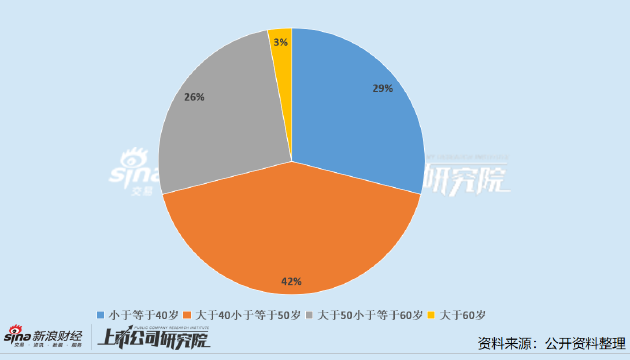
Group 1 - The total salary of A-share listed company secretaries in 2024 reached 4.086 billion yuan, with an average annual salary of 754,300 yuan [1] - Among the A-share listed companies, 1,144 secretaries earned over 1 million yuan annually, accounting for over 21% [1] - The age distribution of secretaries shows that those aged 40-50 constitute 42%, while those over 50 account for 29%, and those under 40 make up 26% [1] Group 2 - The educational background of secretaries indicates that 5% have an associate degree, 42% hold a bachelor's degree, 49% possess a master's degree, and 4% have a doctoral degree, with over half holding a master's degree or higher [3] - Only three secretaries hold a doctoral degree, specifically from Yiling Pharmaceutical, Kunming Pharmaceutical Group, and Jinhua Co., Ltd. [3] Group 3 - The average annual salary of secretaries in A-share listed Chinese medicine companies is 742,400 yuan, with 39% earning below 500,000 yuan, 42% earning between 500,000 and 1 million yuan, and 15% earning between 1 million and 2 million yuan [5] - The top five highest-paid secretaries are from China Resources Sanjiu, Jichuan Pharmaceutical, Tianjin Pharmaceutical, Yiling Pharmaceutical, and Yibai Pharmaceutical, with salaries ranging from 1.3935 million to 2.5587 million yuan [7] Group 4 - There is significant variation in the number of investor receptions among listed companies, with 59% receiving fewer than 10 times a year, while 3% received between 300 and 1,000 times [9] - The five companies with the highest number of investor receptions are Zoli Pharmaceutical, Qizheng Pharmaceutical, Yunnan Baiyao, Jinghua Pharmaceutical, and Pianzihuang, with receptions ranging from 207 to 410 times [9]


中药上市公司董秘PK:佐力药业吴英成行业“劳模” 年接待投资者410次排名第一
Xin Lang Zheng Quan· 2025-08-01 05:17
Core Insights - The report highlights that the total salary for A-share listed company secretaries in 2024 reached 4.086 billion yuan, with an average annual salary of 754,300 yuan [1] - A total of 1,144 company secretaries earn over 1 million yuan annually, accounting for more than 21% of the total [1] Salary Distribution - The average annual salary for company secretaries in the A-share traditional Chinese medicine sector is 742,400 yuan [5] - The distribution of salaries is as follows: below 500,000 yuan (27 individuals, 39%), between 500,000-1,000,000 yuan (29 individuals, 42%), between 1,000,000-2,000,000 yuan (10 individuals, 15%), between 2,000,000-3,000,000 yuan (2 individuals, 3%), and above 3,000,000 yuan (1 individual, 1%) [5] Age and Educational Background - The age distribution of company secretaries shows that those aged 40-50 constitute 42%, while those over 50 account for 29%, and those under 40 make up 26% [1] - In terms of educational qualifications, 5% have an associate degree, 42% hold a bachelor's degree, 49% possess a master's degree, and 4% have a doctoral degree, with over half of the secretaries holding a master's degree or higher [3] Top Earners and Investor Relations - The top five highest-paid company secretaries are: - Xing Jian from China Resources Sanjiu (2.5587 million yuan) - Cao Wei from Jichuan Pharmaceutical (2.4107 million yuan) - Yu Jie from Tian Shi Li (2.525 million yuan) - Wu Rui from Yiling Pharmaceutical (1.89 million yuan) - Jiang Xianhong from Yibai Pharmaceutical (1.3935 million yuan) [7] - The frequency of investor meetings varies significantly among companies, with 41 companies hosting fewer than 10 meetings annually (59%), 17 companies holding 10-100 meetings (25%), 9 companies conducting 100-300 meetings (13%), and 2 companies having 300-1000 meetings (3%) [7] Most Active Companies in Investor Relations - The five companies with the highest number of investor meetings are: - Zoli Pharmaceutical (410 meetings) - Qizheng Tibetan Medicine (404 meetings) - Yunnan Baiyao (298 meetings) - Jinghua Pharmaceutical (221 meetings) - Pian Zai Huang (207 meetings) [9]


中药上市公司董秘PK:华润三九邢健年薪255.87万元行业第一 任职董秘尚不足一年
Xin Lang Zheng Quan· 2025-08-01 05:13
Group 1 - The total salary of A-share listed company secretaries in 2024 reached 4.086 billion yuan, with an average annual salary of 754,300 yuan [1] - Among the A-share listed companies, 1,144 secretaries earned over 1 million yuan annually, accounting for over 21% [1] - The age distribution of secretaries shows that those aged 40-50 constitute 42%, while those over 50 account for 29%, and those under 40 make up 26% [1] Group 2 - The educational background of secretaries indicates that 5% have an associate degree, 42% hold a bachelor's degree, 49% possess a master's degree, and 4% have a doctoral degree, with over half holding a master's or higher [3] - Only three secretaries hold a doctoral degree, specifically from Yiling Pharmaceutical, Kunming Pharmaceutical Group, and Jinhua Co., Ltd. [3] Group 3 - The average annual salary of secretaries in A-share listed Chinese medicine companies is 742,400 yuan, with 39% earning below 500,000 yuan, 42% earning between 500,000-1 million yuan, 15% between 1-2 million yuan, 3% between 2-3 million yuan, and 1% above 3 million yuan [5] - The top five highest-paid secretaries are from China Resources Sanjiu, Jichuan Pharmaceutical, Tianjin Tasly, Yiling Pharmaceutical, and Yibai Pharmaceutical, with salaries of 2.5587 million yuan, 2.4107 million yuan, 2.525 million yuan, 1.89 million yuan, and 1.3935 million yuan respectively [7] Group 4 - There is significant variation in the number of investor receptions among listed companies, with 59% receiving fewer than 10 times a year, 25% between 10-100 times, 13% between 100-300 times, and 3% between 300-1000 times [9] - The five companies with the highest number of investor receptions are Zoli Pharmaceutical, Qizheng Tibetan Medicine, Yunnan Baiyao, Jinghua Pharmaceutical, and Pianzihuang, with receptions of 410, 404, 298, 221, and 207 respectively [9]

中药上市公司董秘PK:益佰制药蒋先洪任董秘一年即收获140万年薪 显著高于行业均值
Xin Lang Zheng Quan· 2025-08-01 05:13
Core Insights - The report highlights that the total salary for A-share listed company secretaries in 2024 reached 4.086 billion yuan, with an average annual salary of 754,300 yuan [1] - A total of 1,144 company secretaries earn over 1 million yuan annually, accounting for more than 21% of the total [1] Salary Distribution - The average annual salary for company secretaries in the A-share traditional Chinese medicine sector is 742,400 yuan [5] - The distribution of salaries is as follows: - Below 500,000 yuan: 27 individuals (39%) - 500,000-1,000,000 yuan: 29 individuals (42%) - 1,000,000-2,000,000 yuan: 10 individuals (15%) - 2,000,000-3,000,000 yuan: 2 individuals (3%) - Above 3,000,000 yuan: 1 individual (1%) [5] Age and Educational Background - The age distribution of company secretaries shows that those aged 40-50 constitute 42%, while those over 50 account for 29%, and those under 40 make up 26% [1] - The educational background indicates that 5% have an associate degree, 42% hold a bachelor's degree, 49% possess a master's degree, and 4% have a doctoral degree, with over half of the secretaries holding a master's degree or higher [3] Top Earning Company Secretaries - The top five highest-paid company secretaries are: - Xing Jian from China Resources Sanjiu: 2.5587 million yuan - Cao Wei from Jichuan Pharmaceutical: 2.4107 million yuan - Yu Jie from Tianjin Tasly: 2.525 million yuan - Wu Rui from Yiling Pharmaceutical: 1.89 million yuan - Jiang Xianhong from Yibai Pharmaceutical: 1.3935 million yuan - Their tenure at the companies ranges from less than 1 year to 15 years [7] Investor Engagement - There is significant variation in the number of investor meetings held by companies: - Less than 10 meetings: 41 companies (59%) - 10-100 meetings: 17 companies (25%) - 100-300 meetings: 9 companies (13%) - 300-1000 meetings: 2 companies (3%) [7] - The five companies with the highest number of investor meetings are: - Zoli Pharmaceutical: 410 meetings - Qizheng Pharmaceutical: 404 meetings - Yunnan Baiyao: 298 meetings - Jinghua Pharmaceutical: 221 meetings - Pianzihuang: 207 meetings [9]


中药上市公司董秘PK:以岭药业吴瑞、昆药集团张梦珣、金花股份张朝阳为唯三博士董秘
Xin Lang Zheng Quan· 2025-08-01 05:09
Core Insights - The report highlights that in 2024, the total salary for A-share listed company secretaries reached 4.086 billion yuan, with an average annual salary of 754,300 yuan [1] - The data indicates that over 21% of company secretaries earn more than 1 million yuan annually [1] Salary Distribution - The average annual salary for company secretaries in the A-share traditional Chinese medicine sector is 742,400 yuan [5] - The distribution of salaries shows that 39% earn below 500,000 yuan, 42% earn between 500,000 and 1 million yuan, 15% earn between 1 million and 2 million yuan, 3% earn between 2 million and 3 million yuan, and 1% earn above 3 million yuan [5] Age and Educational Background - The age distribution of company secretaries shows that 42% are between 40-50 years old, 29% are over 50, and 26% are under 40 [1] - In terms of educational qualifications, 5% have an associate degree, 42% hold a bachelor's degree, 49% have a master's degree, and 4% possess a doctoral degree, with over half holding a master's degree or higher [3] Top Earning Company Secretaries - The top five highest-paid company secretaries are from Huaren Sanjiu, Jichuan Pharmaceutical, Tianshili, Yiling Pharmaceutical, and Yibai Pharmaceutical, with salaries of 2.5587 million yuan, 2.4107 million yuan, 2.525 million yuan, 1.89 million yuan, and 1.3935 million yuan respectively [7] - The tenure of these top earners varies, with some having less than one year of service and others having up to 15 years [7] Investor Engagement - There is significant variation in the number of investor meetings held by companies, with 59% of companies hosting fewer than 10 meetings annually [7] - The top five companies with the most investor meetings are Zoli Pharmaceutical, Qizheng Tibetan Medicine, Yunnan Baiyao, Jinghua Pharmaceutical, and Pianzihuang, with 410, 404, 298, 221, and 207 meetings respectively [9]
中药上市公司董秘PK:特一药业许紫兰为行业最年轻董秘 年薪57.78万元低于行业均值
Xin Lang Zheng Quan· 2025-08-01 05:09
Core Insights - The report highlights that in 2024, the total salary for A-share listed company secretaries reached 4.086 billion yuan, with an average annual salary of 754,300 yuan [1] - The data indicates that over 21% of company secretaries earn more than 1 million yuan annually [1] Group 1: Salary Distribution - The average annual salary for company secretaries in the A-share traditional Chinese medicine sector is 742,400 yuan [7] - The distribution of salaries shows that 39% earn below 500,000 yuan, 42% earn between 500,000 and 1 million yuan, 15% earn between 1 million and 2 million yuan, 3% earn between 2 million and 3 million yuan, and 1% earn above 3 million yuan [7] - The top five highest-paid company secretaries are from Huaren Sanjiu, Jichuan Pharmaceutical, Tianshili, Yiling Pharmaceutical, and Yibai Pharmaceutical, with salaries of 2.5587 million yuan, 2.4107 million yuan, 2.525 million yuan, 1.89 million yuan, and 1.3935 million yuan respectively [7] Group 2: Age Distribution - Company secretaries aged between 40 and 50 constitute 42% of the market, while those over 50 account for 29%, and those under 40 make up 26% [3] - The youngest company secretary is 32 years old, representing Te Yi Pharmaceutical [3] Group 3: Educational Background - The educational background of company secretaries shows that 5% have an associate degree, 42% hold a bachelor's degree, 49% have a master's degree, and 4% possess a doctoral degree [5] - More than half of the company secretaries hold a master's degree or higher, with only three having a doctoral degree [5] Group 4: Investor Engagement - There is significant variation in the number of investor meetings held by listed companies, with 59% of companies hosting fewer than 10 meetings annually [9] - The top five companies with the most investor meetings are Zoli Pharmaceutical, Qizheng Tibetan Medicine, Yunnan Baiyao, Jinghua Pharmaceutical, and Pianzihuang, with 410, 404, 298, 221, and 207 meetings respectively [9]
正在解套的医疗独角兽:长路,大梦,灯火又上楼台
Hu Xiu· 2025-07-31 01:50
Core Insights - The Chinese healthcare investment market has experienced significant fluctuations over the past decade, with a peak in financing reaching over 380 billion yuan in 2021, followed by a period of stagnation [1] - Many healthcare unicorns emerged during the investment boom, but high valuations and slow commercialization have led to persistent losses and survival challenges for many companies [1][2] - The current market environment is shifting, with nearly 40 healthcare companies filing for IPOs in the first half of the year, indicating potential recovery [2][3] Group 1: Market Dynamics - Since 2021, several companies, including Yuanxin Technology and Yingsi Intelligent, have struggled to enter the secondary market despite multiple IPO attempts [2] - The withdrawal of dollar funds and the cautious approach of domestic RMB funds have changed the funding landscape, leading to difficulties in financing and exits for many unicorns [2][4] - The healthcare sector is undergoing a profound reshaping, with a collective recalibration of expectations among industry participants [4][5] Group 2: Business Strategies - Many unicorns are shifting focus from IPO aspirations to mergers and acquisitions as a means of exit, with notable transactions occurring in the sector [2][10] - Companies are adopting survival strategies such as layoffs, product line cuts, and focusing on more profitable business areas to navigate the current challenges [12][11] - The emphasis has shifted from high valuations to sustainable business models and cash flow, with investors now prioritizing immediate returns over long-term visions [18][23] Group 3: Investment Landscape - The investment criteria have evolved, with a greater focus on clear profitability paths and customer retention, while technological innovation has become a secondary consideration [18][14] - The previous era of high valuations driven by ambitious narratives has given way to a more cautious investment approach, emphasizing realistic financial performance [21][22] - The market is no longer celebrating valuations but is instead focused on cash returns, reflecting a significant shift in investor sentiment [23][29] Group 4: Future Outlook - IPOs remain a preferred exit strategy for many companies, but not all are equipped to pursue this path, leading to a reliance on mergers as an alternative [24][26] - The potential for recovery in the secondary market may provide new opportunities for companies to secure funding and navigate the current landscape [28] - Companies that can adapt to the changing environment and demonstrate sustainable business practices are more likely to succeed in the long term [29]



提高投资者回报已成必修课 沪市公司中期分红“钱”景可期
Zhong Guo Jing Ying Bao· 2025-07-30 13:53
Core Viewpoint - The enthusiasm for interim dividends among companies listed on the Shanghai Stock Exchange remains strong, with a total of over 4.3 billion yuan in interim dividends already announced this year, indicating a promising outlook for 2025 interim dividends [1][2]. Group 1: Interim Dividend Announcements - A total of 11 companies have announced interim dividend plans this year, including Eastroc Beverage and WuXi AppTec, with each expected to distribute over 1 billion yuan [1][2]. - WuXi AppTec reported a 20.64% year-on-year increase in revenue to 20.799 billion yuan and a 101.92% increase in net profit to 8.561 billion yuan, alongside a plan to distribute 1 billion yuan in interim dividends [2][3]. - Eastroc Beverage announced a cash dividend of 2.5 yuan per share, continuing its trend of significant interim dividends, having distributed a total of 5.3 billion yuan since its listing [4][5]. Group 2: Trends in Dividend Distribution - The trend of increasing interim dividends is supported by policies encouraging higher returns to investors, with the number of companies distributing interim dividends and the total amount reaching record highs [7][8]. - In 2024, approximately 504 companies are expected to distribute interim dividends totaling 580 billion yuan, significantly higher than previous years [7]. - Major banks and companies, including Industrial and Commercial Bank of China and Agricultural Bank of China, are also participating in interim dividend distributions for the first time or after several years [7]. Group 3: Company Strategies and Shareholder Returns - Companies are increasingly adopting dual return systems of interim and annual dividends to enhance shareholder value, as seen with WuXi AppTec and Eastroc Beverage [2][4]. - The Shanghai Stock Exchange is actively promoting higher dividend payouts and increased frequency of distributions as part of its market value management strategy [8].


中期分红方案密集披露 沪市今年“现金红包”已派发1.38万亿元
Zheng Quan Shi Bao Wang· 2025-07-30 12:21
Core Viewpoint - The trend of interim dividends among companies listed on the Shanghai Stock Exchange is gaining momentum, with a significant number of companies announcing their plans for cash dividends, reflecting a strong commitment to enhancing shareholder returns [1][4]. Group 1: Interim Dividend Announcements - Ding Tong Technology plans to distribute a cash dividend of 2 yuan per 10 shares, totaling 27.84 million yuan, which accounts for 24.13% of its half-year net profit [1]. - Companies such as WuXi AppTec and Weisheng Information are implementing interim dividends for the first time since their listings, with Weisheng Information proposing a cash dividend of 1.22 million yuan, representing nearly 40% of its half-year net profit [2]. - WuXi AppTec intends to distribute 3.5 yuan per 10 shares, with a total of 10 billion yuan allocated for interim dividends, showcasing a strong commitment to shareholder returns [2]. Group 2: Continuous Dividend Practices - Dongpeng Beverage has announced a cash dividend of 2.5 yuan per share, continuing its practice of interim dividends after distributing 1.3 billion yuan in April 2025 [3]. - The company has established a robust shareholder return system through multiple cash dividend distributions, having issued a total of 5.3 billion yuan in cash dividends since its listing in 2021, maintaining a dividend payout ratio of around 50% [3]. Group 3: Industry Trends and Policies - The trend of increasing interim dividends is driven by policies such as the new "National Nine Articles," which emphasize enhancing investor returns, leading to record-high frequencies and amounts of interim dividends in the Shanghai market [4]. - In 2024, approximately 504 companies implemented interim dividends, with a total amount reaching 580 billion yuan, marking a significant increase compared to previous years [4]. - The Shanghai Stock Exchange is actively promoting higher dividend payouts and increased frequencies among listed companies to enhance investment value [4].