极飞科技

Search documents
极飞发布新一代智慧农业机器人
Nan Fang Nong Cun Bao· 2025-11-05 15:12
Core Insights - The article discusses the launch of new generation agricultural robots by XAG Technology at the XAAC 2025 annual conference, emphasizing the theme of "Smart Farms, Continuous Evolution" [2][3][4] Group 1: New Product Launch - XAG Technology unveiled multiple new agricultural robot products, including the P Series 2026 agricultural drones and F Series 2026 smart farm IoT products, showcasing advancements in agricultural intelligence and sustainability [3][14] - The P Series 2026 agricultural drones have significantly increased payload capacity from 8 kg in 2015 to 80 kg in 2025, indicating a major enhancement in performance and usability [20][21] - The new P200 model features a maximum takeoff weight of 149.9 kg, designed for various agricultural tasks such as spraying, sowing, and aerial surveying [25][23] Group 2: Technological Advancements - The new generation of agricultural robots has achieved systematic breakthroughs in structural design, material science, and intelligent manufacturing, enhancing performance, reliability, and ease of use [15][16] - The F Series smart farm IoT products integrate robotics, artificial intelligence, and new energy technologies to facilitate precise irrigation and fertilization, addressing the inefficiencies of traditional farming methods [41][49] - The APC 4 agricultural autopilot system aims to upgrade existing agricultural machinery, enhancing operational precision and land utilization through advanced navigation and environmental sensing technologies [60][66] Group 3: Market Trends and Future Outlook - The demand for crop protection, precision irrigation, and farmland monitoring is expected to grow significantly due to global climate change, necessitating the establishment of climate-resilient agricultural production models [7][10] - The integration of new energy and intelligent technologies is identified as the core of the new agricultural revolution, driving the transformation of agricultural production methods [11][10] - As of October 31, 2025, XAG's water and fertilizer management system has been implemented in over 2,300 farms nationwide, significantly reducing labor and cost burdens for users [43]



四中全会精神在基层丨百米低空如何掀起万亿风口?来黄埔低空经济产业园解锁答案!
Xin Hua Wang· 2025-10-30 12:34
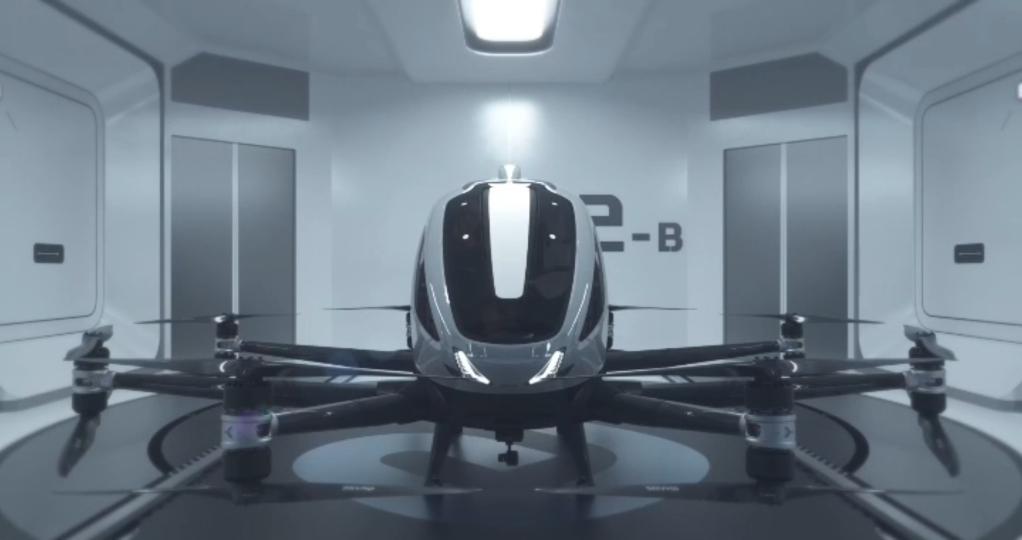
Core Insights - The article highlights the rapid development of the low-altitude economy, showcasing advancements in drone delivery, air taxis, and flying cars, indicating a complete industrial chain taking off [1] Group 1: Industry Overview - In Huangpu District, Guangzhou, leading manufacturers such as EHang, XPeng Heitech, and XAG have gathered, with over 50 low-altitude economy-related companies in the area, projecting a production value of approximately 14.8 billion yuan in 2024 [3] - The low-altitude economy is expected to create a market space worth trillions, with Guangdong housing over 15,000 related enterprises, accounting for 95% of the national consumer drone market, and leading in multiple indicators nationwide [5] Group 2: Policy and Strategic Importance - The inclusion of the low-altitude economy in the 2024 government work report and the "14th Five-Year Plan" emphasizes its growing significance, aiming to develop emerging pillar industries and accelerate the growth of strategic emerging industry clusters such as new energy, new materials, aerospace, and low-altitude economy [7] - Huangpu District is positioned as a "testbed" for institutional innovation and scenario implementation in the Guangdong-Hong Kong-Macao Greater Bay Area, aiming to reshape urban living paradigms with its "Sky City" blueprint [7]
多维出海 规则共建 南沙构建农业服务贸易“国际协作生态圈”
2 1 Shi Ji Jing Ji Bao Dao· 2025-10-30 07:16
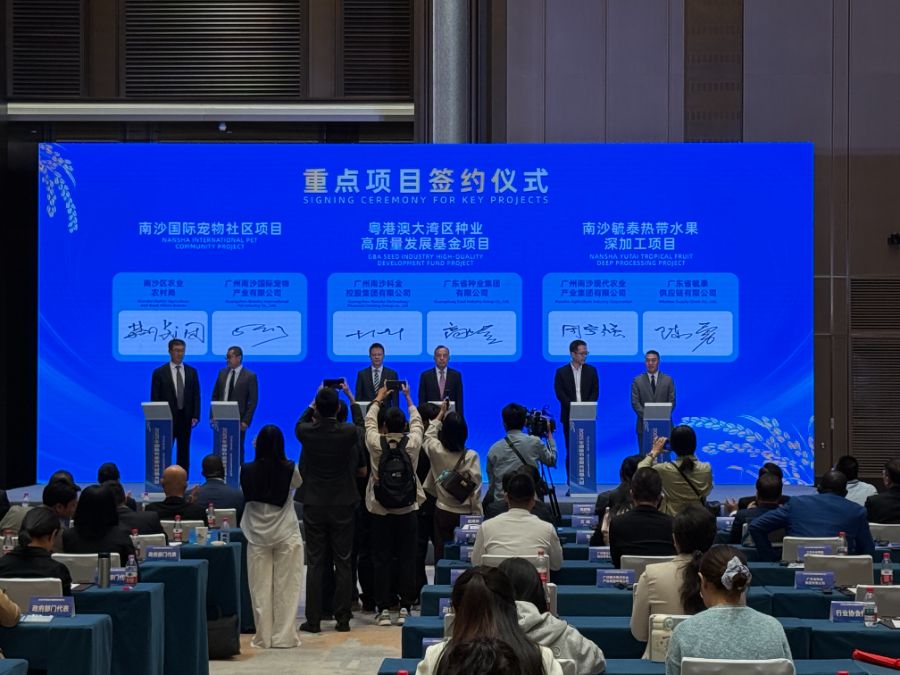
Core Viewpoint - The article highlights the transformation of agricultural service trade in Guangdong, particularly through the export of ornamental fish and related products, showcasing a shift from single product exports to a comprehensive industry chain approach [1][4][5]. Group 1: Agricultural Trade Developments - In 2024, Guangdong's agricultural product import and export total reached 348.36 billion yuan, maintaining the top position in the country for three consecutive years [2]. - From January to September 2024, the province's agricultural product import and export total was 263.24 billion yuan, a year-on-year increase of 2% [2]. - The export value to countries involved in the Belt and Road Initiative reached 138.42 billion yuan, up by 4.9% [2]. Group 2: Industry Chain Transformation - Guangdong's agricultural trade is evolving from "single product export" to a model that includes "products + technology + services," enabling a more integrated approach to international markets [3][4]. - Companies like XAG Technology are customizing overseas agricultural services based on local needs, exporting smart agriculture solutions to over 70 countries [3]. - Green Hen Technology plans to replicate successful domestic agricultural practices abroad, including sending technical teams to Fiji for tomato cultivation trials [3]. Group 3: Policy and Infrastructure Support - The South China Agricultural Open Cooperation Pilot Zone in Nansha is enhancing international cooperation and agricultural service trade, supported by favorable policies and geographical advantages [6][8]. - The Nansha region has established a diverse export matrix, including 120 pre-packaged food products and significant exports of eel and smart farming equipment to multiple countries [6][8]. Group 4: Key Projects and Initiatives - The recent conference facilitated 12 major project collaborations in areas such as seed industry research and agricultural product processing, with investments exceeding 1.2 billion yuan [8]. - The Guangdong-Hong Kong-Macao Greater Bay Area Seed Industry Development Fund, with a scale of 1 billion yuan, aims to establish an international seed technology innovation center [8]. - The Nansha International Pet Community project is set to create a comprehensive facility for animal healthcare and research, expected to open to the public by the end of the year [8].
2025年工业无人机品牌推荐
Tou Bao Yan Jiu Yuan· 2025-10-29 11:56
Investment Rating - The report indicates a strong growth potential for the industrial drone industry, with a compound annual growth rate (CAGR) of 33.33% from 2019 to 2024 globally and 33.79% in China, suggesting a positive investment outlook [8][9]. Core Insights - The industrial drone industry in China is experiencing explosive growth, becoming a core driver of the low-altitude economy, with a complete ecosystem formed across the supply chain [5]. - The global industrial drone market is projected to grow from CNY 27.6 billion in 2019 to CNY 116.3 billion by 2024, and further to CNY 269.6 billion by 2029 [8]. - Key drivers for the Chinese industrial drone market include improved policy support, rapid expansion of application scenarios, deep integration of AI technology, and accelerated integration of the supply chain [9]. Market Background - The industrial drone industry is defined as drone systems aimed at professional production, operations, or data services, characterized by stronger adaptability, payload capacity, endurance, and task extensibility compared to consumer drones [6]. - The development of industrial drones has evolved from military drone modifications to commercial applications, currently entering a phase of deepening intelligence integration with AI capabilities [7]. Market Status - The Chinese industrial drone market is expected to grow from CNY 15.18 billion in 2019 to CNY 65.07 billion by 2024, with a projected growth to CNY 171.01 billion by 2029 [8]. - The supply side of the market features differentiated competition among companies focusing on various industry scenarios, including surveying, inspection, security monitoring, agriculture, and emergency rescue [10]. Market Competition - The report identifies ten leading industrial drone brands, including DJI, Zongheng, and EHang, evaluated based on market share, model variety, and application coverage [12]. - The competition in the multi-rotor industrial drone market is intense, while the fixed-wing market is more concentrated due to higher technical barriers [13]. Development Trends - AI technology is deeply integrated into the surveying field, enabling intelligent and automated data processing, autonomous path planning, and real-time defect identification in inspection scenarios [26]. - The report highlights the fusion of multiple data sources, including satellite remote sensing and 3D laser scanning, to create an integrated regulatory system [27].
刘靖康阴阳垄断,影石对大疆针尖对麦芒,影像赛道一山不容二虎?
3 6 Ke· 2025-10-29 09:59
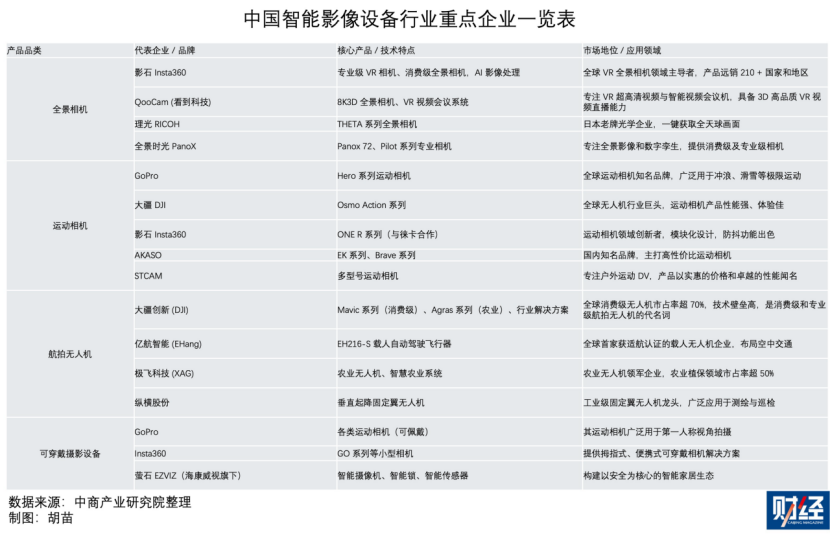
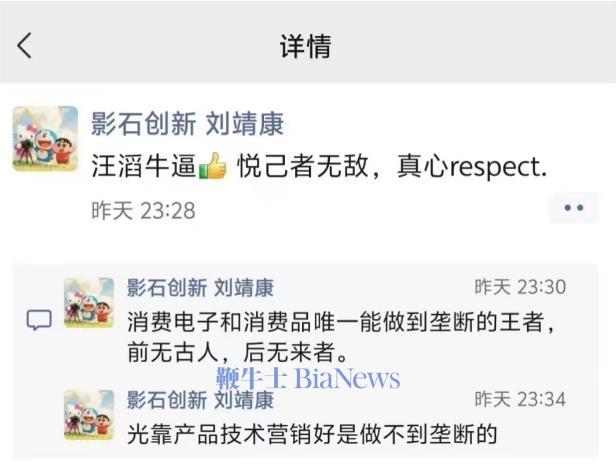
Core Viewpoint - The competition between Insta360 (Yingshi Innovation) and DJI has intensified, with Insta360's chairman Liu Jingkang suggesting DJI's monopoly in a recent social media post, highlighting the rivalry between the two companies in the imaging sector [1][3]. Company Performance - Insta360 holds over 80% of the global market share in panoramic cameras, while DJI has over 70% in consumer drones, indicating a competitive landscape where both companies have significant market power [3]. - After going public in June 2025, Insta360's stock price surged by 536.6%, reaching a market capitalization of 120.7 billion yuan [3][4]. - In Q3 2025, Insta360 reported a revenue of 2.94 billion yuan, a year-on-year increase of 92.64%, with total revenue for the first three quarters reaching 6.61 billion yuan, up 67.18% year-on-year [4]. Competitive Dynamics - DJI has responded to Insta360's market entry by launching its own panoramic camera, the Osmo 360, and has been actively lowering prices to maintain competitiveness [4][5]. - A recent market research report indicated that DJI's market share in the action camera segment reached 66% in Q1-Q3 2025, surpassing GoPro, while its share in the panoramic camera market reached 49% in China and 43% globally [5]. - The rivalry has escalated, with both companies engaging in aggressive marketing and product launches, indicating a shift in the competitive landscape of the imaging industry [6][9]. Market Trends - The drone and imaging markets are becoming increasingly competitive, with new entrants like OPPO and vivo rumored to be entering the drone market, further intensifying the competition against established players like DJI and Insta360 [13]. - DJI has begun to lower prices across multiple product lines in response to the competitive pressure from Insta360, marking a significant shift in its market strategy [14][16]. - The emergence of new competitors and the aggressive strategies of existing players suggest that the imaging and drone markets are entering a phase of heightened competition, which could lead to innovation and growth opportunities [20].
好盈科技科创板IPO,聚焦无人机动力系统领域,上市前多次分红
Ge Long Hui· 2025-10-29 09:45
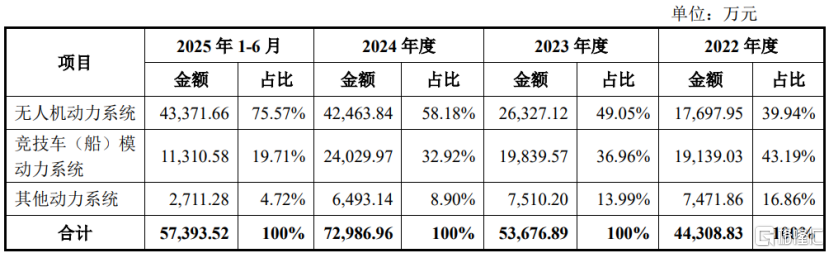
Group 1: Company Overview - Shenzhen is a significant base for China's high-tech industry, known as "China's Silicon Valley," housing major tech companies like Huawei and Tencent, and has over 400 A-share listed companies [1] - Haoying Technology Co., Ltd. has submitted its IPO application to the Shanghai Stock Exchange's Sci-Tech Innovation Board, with Guolian Minsheng Securities as the sponsor [1][19] - The company specializes in the research, production, and sales of drone power systems, which are critical components that determine the safety, reliability, and performance of drones [1][4] Group 2: Business Performance - From 2022 to the first half of 2025, the revenue share from drone power systems increased from 39.94% to 75.57%, while the share from other systems decreased [4][5] - The company's revenue for 2022, 2023, 2024, and the first half of 2025 was approximately 468 million, 546 million, 738 million, and 580 million respectively, with net profits of about 82 million, 94 million, 152 million, and 139 million [15] - The comprehensive gross margin for the same periods was 44.88%, 45.68%, 47.41%, and 44.85%, indicating some fluctuations influenced by sales prices and production costs [15] Group 3: Market Dynamics - The global drone power system market is projected to reach 10.308 billion in 2024, with a compound annual growth rate (CAGR) of 19.05% from 2019 to 2024 [15] - The Chinese drone market is expected to reach 110.849 billion in 2024, accounting for 57.19% of the global market, with industry-level drones growing faster than consumer-level drones [11] - Haoying Technology holds a global market share of 4.12% in drone power products, ranking among the top tier of third-party suppliers [17] Group 4: Competitive Landscape - The consumer drone market is dominated by DJI, while the industry-level drone market is still developing with a diverse competitive landscape [17] - The company faces competition from both self-manufactured drone power systems by drone manufacturers and third-party suppliers [17] - The supply chain includes upstream raw material producers and downstream drone manufacturers, with potential risks from self-manufacturing by clients [6][7][8] Group 5: Future Prospects - The company plans to raise 1.96 billion for projects including a high-end power system smart industrial park and R&D center upgrades [20][22] - The company has a history of cash dividends, distributing approximately 20 million in 2022 and 2024, and 30 million in the first half of 2025 [20] - The company is positioned to benefit from the rapid rise of the low-altitude economy and the expansion of drone applications [20]
从“十五五“规划看新材料领域:从业者/研究者/投资者必抓的10大机遇
材料汇· 2025-10-28 15:32
Core Viewpoint - The article emphasizes the strategic importance of new materials in China's 14th Five-Year Plan, highlighting their role in industrial upgrading, technological breakthroughs, green transformation, national security, agricultural modernization, and new urbanization [2][4][21]. Group 1: Strategic Positioning of New Materials - New materials are identified as the "core support" for modern industrial systems, essential for upgrading key industries like mining, metallurgy, and chemicals [4]. - They are positioned as a key area for technological self-reliance, focusing on breakthroughs in critical technologies such as integrated circuits and advanced materials [4]. - New materials are crucial for green transformation and energy security, supporting the construction of a new energy system and resource conservation [4]. - They serve as a quality assurance for agricultural modernization, with biodegradable materials and soil restoration being key applications [4]. - New materials are seen as an upgrade vehicle for new urbanization, directly linked to the demand for prefabricated buildings and municipal infrastructure [4]. - They act as a protective barrier for national security, ensuring the safety of food, energy resources, and critical supply chains [4]. Group 2: Market and Policy Alignment - New material enterprises should align with the six strategic positions outlined in the plan, focusing on "self-controllable industrial chains, green and intelligent integration, scenario-based applications, and cross-field empowerment" [5][6]. - The article identifies four main lines of development: addressing critical material shortages, adapting to green and intelligent industry needs, expanding scenario-based applications, and leveraging policy tools to mitigate risks [6][8][9][10]. Group 3: Investment Opportunities - The article outlines six key tracks for investment, emphasizing sectors with strong policy support and market demand, such as new energy materials, biomanufacturing materials, aerospace materials, and safety materials [15][16]. - It highlights the importance of focusing on high-certainty tracks driven by both policy and market forces, with specific materials and market data provided for each sector [16]. - The article also discusses forward-looking tracks in quantum technology, brain-computer interfaces, and 6G communication materials, indicating future growth areas [17]. Group 4: Research and Development Focus - The article stresses the need for a comprehensive approach to R&D, targeting foundational research, technological breakthroughs, and the transformation of research outcomes into practical applications [11][12]. - It identifies key research directions, including extreme environment materials, new energy and communication materials, and bio-intelligent materials [12]. - The article emphasizes the importance of collaborative ecosystems involving industry, academia, and research institutions to foster innovation and talent development [14].

农机狂人,要去IPO了
创业家· 2025-10-28 10:11
Core Viewpoint - The article discusses the journey and challenges of Fengjiang Intelligent, a leading player in the global agricultural robotics market, as it prepares for an IPO in Hong Kong. The company, founded by Wu Di, aims to revolutionize agriculture by automating 80% of labor-intensive tasks, despite facing significant financial losses and competition in a rapidly evolving market [5][16]. Group 1: Company Overview - Fengjiang Intelligent holds a market share of 8.5% in the agricultural robot sector, ranking third globally, and 16.9% in the aftermarket kit segment, ranking second [5][25]. - The founder, Wu Di, has a strong academic background and previously served as the chief scientist at DJI, which adds credibility to the company's technological ambitions [5][10]. - The company has accumulated losses of approximately 1.3 billion yuan over three and a half years, highlighting the financial challenges faced in the agricultural technology sector [5][13]. Group 2: Business Strategy and Challenges - Fengjiang Intelligent focuses on automating ground agricultural machinery, believing that the core of agricultural production lies in ground-level operations [14][16]. - The company has adopted a modular design for its products, allowing for flexible and cost-effective solutions that appeal to small and medium-sized farms [15][25]. - Despite a slight increase in revenue from 2022 to mid-2025, the company continues to face significant financial pressures due to high R&D costs and market expansion efforts [19][22]. Group 3: Market Landscape - The global agricultural robotics market is projected to grow from approximately $13.5 billion in 2024 to about $27.6 billion by 2029, indicating substantial growth potential [25][26]. - The Chinese smart agricultural machinery market is expected to rise from 11.8 billion yuan in 2024 to 22.4 billion yuan in 2025, reflecting rapid development in this sector [25][26]. - Fengjiang Intelligent faces competition from established agricultural machinery giants like John Deere and local tech firms such as XAG Technology, which complicates its market positioning [27][28]. Group 4: Financial Outlook and Future Prospects - The company has seen its operating cash flow turn positive for the first time in mid-2025, achieving a net inflow of 77.53 million yuan, which is a significant milestone [22][30]. - The reliance on a single business segment, particularly in agriculture, poses operational risks, prompting the company to diversify into construction and property management [19][21]. - The upcoming IPO in Hong Kong is viewed as a critical step in the company's capital strategy, potentially providing the necessary funds to navigate its financial challenges and support growth initiatives [23][30].

广州低贸会/第八届全球无人系统大会将于12月举行
Zhong Guo Min Hang Wang· 2025-10-23 09:25
Core Insights - The "2025 International Low Altitude Economic Trade Expo (Guangzhou) / 8th Global Unmanned Systems Conference (GUSC2025)" is scheduled to take place from December 12 to 14, 2025, in Guangzhou, focusing on the theme "Innovate Low Altitude, Service Trade Globally" [1][2] Group 1: Event Overview - The expo will utilize a variety of formats including dynamic and static displays, exhibitions and conferences, as well as indoor and outdoor settings, covering six major topics: meetings, exhibitions, performances, introductions, investments, and trade [1] - The event aims to leverage Guangzhou's position as an international transportation hub and trade gateway, focusing on five core areas: domestic and international low altitude economic policies, industry development trends, core technology innovations, standard alignment, and practical applications [1] Group 2: Highlights and Participation - The expo will feature a 60,000 square meter exhibition area, with 80% of the exhibition space already secured, and is expected to attract over 600 industry chain enterprises and more than 50,000 domestic and international attendees from over 50 countries and regions [3] - Key highlights include over 20 professional forums and seminars, the awarding of the "Golden Wing Award" to set industry benchmarks, and the introduction of an innovative trade service model termed "1+5+N" [2][3] - Notable participating companies include EHang, Xpeng, DJI, and many other leading firms in the low altitude economy sector [3]


大疆为何降价?
Cai Jing Wang· 2025-10-23 08:14
Core Insights - The competition in the smart hardware industry is becoming increasingly complex, and price reductions alone are insufficient to satisfy consumers [1][3][19] - DJI's recent price cuts on multiple products did not lead to the expected surge in sales, instead causing dissatisfaction among consumers due to inconsistent price protection policies across different sales channels [1][5] - DJI's core business, particularly in consumer drones and handheld imaging devices, is facing new challenges from various competitors [1][14][19] Group 1: DJI's Market Position and Challenges - DJI has maintained a dominant position in the global drone market with over 70% market share, although this has decreased from a peak of 85% [2][15] - The consumer drone market is approximately $10 billion, with increasing competition from brands like XAG and Xiaomi, which are targeting entry-level segments [2][15] - The handheld imaging device market is smaller, with DJI's market share declining from 19.1% to 13.2% as competitors like Insta360 gain ground [2][16] Group 2: Price Reduction Strategy and Market Reactions - DJI's recent price cuts included significant reductions, such as a drop of 1,478 yuan for the Mini 4 PRO drone and 1,129 yuan for the Osmo Action 4 camera, indicating a more aggressive promotional strategy [4][5] - The price reduction led to a backlash from consumers, particularly regarding inconsistent price protection policies between online and offline channels, prompting some retailers to offer special subsidies to affected customers [5][6] Group 3: Competitive Landscape and Industry Dynamics - The smart hardware industry is witnessing blurred boundaries as companies like Insta360 and GoPro respond to DJI's price cuts with their own promotions, indicating a price war [6][20] - New entrants, including smartphone manufacturers like Vivo and OPPO, are entering the handheld imaging market, intensifying competition [17][20] - The industry is shifting from single-product competition to ecosystem battles, where companies leverage their technological strengths across different product categories [22]