金沙江创投

Search documents
珞博智能完成数千万天使+轮融资
Mei Ri Jing Ji Xin Wen· 2025-09-27 08:59
Core Viewpoint - Robopoet, an AI companionship hardware company, has recently completed a multi-million yuan Series A+ financing round, led by Sequoia China, with participation from existing investors including Jinsha River Ventures and Zero One Ventures [1] Company Summary - Robopoet specializes in AI companionship hardware [1] - The company has successfully secured funding to support its growth and development in the AI sector [1] Investment Details - The financing round raised tens of millions of yuan [1] - Sequoia China is the lead investor in this funding round [1] - Existing investors, Jinsha River Ventures and Zero One Ventures, also participated in the financing [1]
珞博智能完成数千万元天使+轮融资
Mei Ri Jing Ji Xin Wen· 2025-09-26 04:21
Core Insights - Robopoet, an AI companionship hardware company, has completed a multi-million angel round financing led by Sequoia China, with participation from existing investors Jinsha River Ventures and Zero One Ventures [1] Group 1: Financing Details - The financing amount is in the tens of millions, indicating strong investor confidence in the company's potential [1] - The funding will be used to enhance AI core capabilities and expand both online and offline sales channels [1] Group 2: Brand Development - Robopoet aims to build brand recognition for "Fuzozo" and develop an IP worldview [1] - The company plans to collaborate with top global IPs to launch limited edition co-branded products in the future [1]
珞博智能完成红杉中国数千万元天使+轮融资
Xin Lang Cai Jing· 2025-09-26 04:05
Core Insights - Robopoet, an AI companion hardware company, has completed a multi-million angel round financing led by Sequoia China, with participation from existing investors Jinsha River Ventures and Zero One Ventures [1] Company Developments - The financing will enhance the company's core AI capabilities while expanding both online and offline sales channels [1] - Robopoet aims to build brand recognition and an IP universe around its product "Fuzozo" [1] - The company plans to collaborate with top global IPs to launch limited edition co-branded products in the future [1]
中国00后AI创业瞄准出海
21世纪经济报道· 2025-09-25 07:58
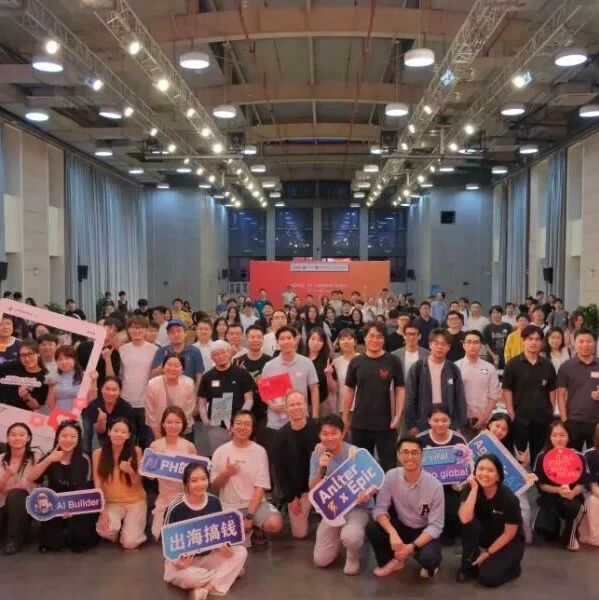
Core Viewpoint - The article highlights the growing trend of Chinese AI entrepreneurs aiming to expand internationally, emphasizing the importance of global market access and the potential for AI technology to transcend national boundaries [5][6][10]. Group 1: AI Entrepreneurship and Investment - The EPIC Connector hosted an "AI DEMO Day" where young entrepreneurs showcased their AI products to secure seed funding, reflecting a vibrant startup culture in the AI sector [3][4]. - Antler, a prominent early-stage investment firm, has invested in over 1,300 companies, ranking first among global early-stage AI investors, indicating a robust investment landscape for AI startups [3][4]. - The article notes that many Chinese AI entrepreneurs are focusing on international markets as a core strategy, with a consensus that "going global" is essential for success [4][10]. Group 2: Globalization and AI Talent - A report from Macro Polo indicates that 47% of top global AI researchers are from China, and about 75% of top AI talent in the U.S. are of Chinese descent, showcasing the significant contribution of Chinese talent to the global AI landscape [6]. - Kris, the founder of EPIC, argues that AI technology can eliminate national barriers, and the current trend of globalization is reversing, which necessitates support for Chinese AI entrepreneurs to access international markets [6][10]. Group 3: Challenges and Opportunities - The article discusses the challenges faced by AI startups, such as the need for compliance with various national regulations and the potential risks of reverse globalization, as seen with companies like Manus.AI [10][11]. - The emergence of new opportunities for "unknown" entrepreneurs in the AI sector is highlighted, with a focus on niche applications rather than general-purpose AI, which requires significant investment and has a lower success probability [12][13]. - The distinction between models and intelligent agents is becoming blurred, leading to more refined and user-specific AI products, which are essential for meeting market demands [13][14].

朱啸虎:为什么港股现在这么火?
创业家· 2025-09-24 10:07
Core Viewpoint - The article discusses the rising interest in Hong Kong stocks among global investors and the potential challenges for Chinese companies looking to list in Hong Kong, emphasizing the undervaluation of Chinese assets compared to the U.S. market [3][8][10]. Group 1: Hong Kong Stock Market Appeal - The Hong Kong stock market is currently experiencing significant interest, with many investors believing that Chinese assets are undervalued compared to U.S. assets [8][10]. - Southbound capital accounts for about half of the trading volume in Hong Kong stocks, which is a crucial driver for the market [9]. - International capital allocation in Hong Kong stocks is currently below historical averages, indicating potential for future growth if large-scale investments occur [10]. Group 2: Listing Challenges for Chinese Companies - Chinese companies aiming to list in Hong Kong should ideally have profits starting from at least 500 million yuan, as higher profits correlate with better valuation multiples and liquidity [19][20]. - Companies with profits between 300 to 400 million yuan may still consider listing if they demonstrate a growth rate of at least 50% and a clear path to achieving 500 to 1 billion yuan in profits [20][21]. - The Hong Kong market favors profitable consumer enterprises, and smaller companies may struggle to gain attention unless they have significant growth potential [18][20]. Group 3: Strategic Insights for Entrepreneurs - Entrepreneurs should focus on clear product positioning and innovation to stand out in the competitive market, as exemplified by successful brands like Longjing Craft Beer [28][29]. - The article highlights the importance of understanding consumer needs and leveraging technology to create products that resonate with the market [35][36]. - The upcoming event aims to provide insights on product innovation and brand expansion strategies, featuring industry leaders and experts [30][31].

当年一场大火把公司烧没了,上市受阻、对赌回购、赔款……
创业家· 2025-09-23 10:12
Core Viewpoint - The article discusses the journey of LKK Design's founder, Jia Wei, highlighting the challenges faced after a devastating fire in 2018 and the subsequent transformation of the company and its leadership perspective on entrepreneurship [4][6][9]. Group 1: Challenges and Transformation - The fire in July 2018 destroyed many client projects and financial documents, hindering the company's plans to go public in 2019 [4][5]. - This event marked a dark moment for the company, prompting a deep reflection on identity, purpose, and future direction [6][9]. - The aftermath of the fire led to a series of challenges, including venture capital buyback agreements and financial issues, which were compounded by other significant events [12][9]. Group 2: Self-Reflection and Learning - Jia Wei emphasizes the importance of accepting pain and impermanence as part of the entrepreneurial journey, leading to a rebirth and renewed understanding of what it means to be an entrepreneur [9][10]. - The period from 2018 to 2023 is described as a time of humility and learning, contrasting the previous arrogance and ignorance about the broader world [10][11]. - The realization that entrepreneurship involves both gains and losses, and that success is not guaranteed, is a key takeaway from this experience [11][12]. Group 3: Evolution of Leadership Perspective - Jia Wei's evolution from a designer to a design manager and eventually to an entrepreneur reflects a significant shift in mindset, recognizing the need for management skills alongside design expertise [14][15][17]. - The article highlights the necessity of continuous learning and adaptation, particularly in understanding market dynamics and consumer needs [17][18]. - The development of a comprehensive skill set, including resilience and the ability to lead teams, is portrayed as essential for successful entrepreneurship [18]. Group 4: Upcoming Event - The article promotes an upcoming immersive course titled "Black Horse Consumption Rise," featuring industry leaders who will share insights on product innovation and brand expansion in the current market landscape [19][21][31].

朱啸虎回应“反AI”传闻:早期项目绝非短期退出,12-20个月退出论系媒体误读
Xin Lang Ke Ji· 2025-09-20 03:43
Core Viewpoint - The discussion at the "AI Creator Carnival" highlighted the importance of long-term investment horizons in startups, emphasizing that early investors typically do not exit within 12-20 months, contrary to media interpretations [1] Investment Perspective - Early investors, such as those in companies like Xiaohongshu and Didi, often maintain their investments for 10-12 years, indicating a preference for long-term growth and returns [1] - The expectation for startups is to see a return on marketing investments within 3-6 months, with a focus on cash flow rather than relying solely on venture capital funding [1] Market Dynamics - The ability of a startup to generate cash flow quickly is crucial; if a company cannot return cash within 3-6 months, it may face unsustainable growth costs [1] - The example of NVIDIA's CEO Jensen Huang in 2014 illustrates the potential for significant investment opportunities when established leaders in the industry seek funding [1]
朱啸虎:中国的财富密码,变了
创业家· 2025-09-19 09:59
Core Viewpoint - The article emphasizes that the success of entrepreneurs and investors in the past 20 years has largely been due to the era's dividends, referred to as "beta" (β), rather than individual intelligence or effort, which is termed "alpha" (α) [5][11][10]. Group 1: Market Insights - The article discusses the division of asset returns into two parts: market returns (β) and excess returns (α) [7][8]. - It highlights the importance of recognizing that success is primarily derived from market trends and not from personal superiority [11][10]. - The article identifies the aging population as a significant market opportunity, with 20 million new retirees each year who are willing to spend [14][13]. Group 2: Investment Strategy - The author stresses the need for controlling scale and increasing safety margins as a crucial strategy for the next 5 to 10 years [16][17]. - The article suggests avoiding the pursuit of α, as it can lead to losses, and instead focusing on identifying the next significant β opportunities [9][10]. Group 3: Event Promotion - The article promotes a three-day immersive course titled "Black Horse Consumption Rise" scheduled for October 17-19 in Shenzhen, featuring industry leaders and experts [18][20][23]. - The course aims to teach participants about product innovation and brand expansion in the context of the current consumption landscape [20][26]. Group 4: Learning from Japanese Experience - The article draws parallels between Japanese companies' success in transforming technology into consumer value and the current need for Chinese companies to innovate [24][25]. - It emphasizes that future consumer champions will be those who can effectively integrate demand with technology, particularly AI [25][30]. Group 5: Course Details - The course will cover various topics, including product innovation, market segmentation, and global branding strategies, with insights from notable figures in the industry [31][32][36]. - Specific sessions will focus on how to leverage AI in consumer markets and the importance of understanding local market needs for successful globalization [30][34].

一个小小的杯子,我卖了近50亿
创业家· 2025-09-13 10:05
Core Insights - The article emphasizes the importance of understanding user needs and perspectives in product design, illustrated through a personal experience of a child suffering from a burn due to hot water [23][28]. - It highlights the successful development of the "55-degree cup," which addresses the unmet need for a product that can safely cool hot water for children, achieving significant sales of nearly 5 billion yuan in its first year [28]. Group 1: Product Development and User Needs - The founder of LKK Design, Jia Wei, reflects on the critical moment that led to the creation of the "55-degree cup," which can cool boiling water to a safe drinking temperature [26][28]. - The article discusses the lack of products designed to prevent burns from hot liquids, indicating a gap in the market that the "55-degree cup" successfully fills [23][24]. - The experience of the child’s injury prompted a deeper understanding of user needs and the importance of empathy in product design [23][25]. Group 2: Product Philosophy and Market Strategy - Jia Wei introduces the concept of "product three views," which includes user perspective, product value, and product worldview, essential for successful product development [29][30]. - The article suggests that to create effective products, companies must establish a correct understanding of these three views, similar to how individuals have their own worldviews [31][32]. - The success of the "55-degree cup" serves as a case study for how aligning product design with user needs can lead to market success [28][29]. Group 3: Industry Insights and Future Trends - The article outlines a course aimed at teaching companies how to innovate products and expand brands in the current market landscape, featuring industry leaders and experts [33][35]. - It discusses the transformation of consumer behavior and the necessity for companies to adapt to these changes through innovative product development and understanding market demands [40][41]. - The course will cover strategies for navigating the challenges of a saturated market and leveraging technology to enhance product offerings [42][43].

外滩大会今年太AI了!王坚暴论:OpenAI确实站在了历史错误的一边
量子位· 2025-09-12 03:24
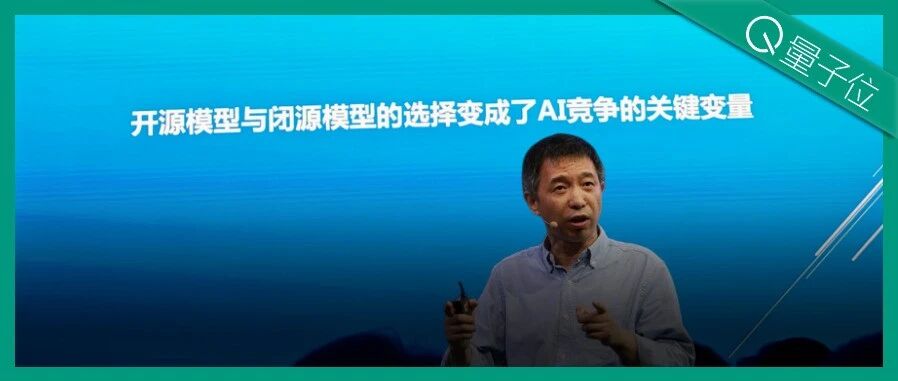
Core Viewpoint - The article discusses the latest advancements and discussions in AI technology, highlighting key insights from industry leaders at the Inclusion Bund Conference, emphasizing the transition to an "experience era" in AI development and the importance of open-source strategies in AI competition [6][10][20]. Group 1: AI Development Insights - Richard Sutton, the Turing Award winner, states that the human data dividend is nearing its limit, and AI is entering an "experience era" focused on continuous learning, which will unlock greater potential [9][10][19]. - Sutton emphasizes the need for new data sources generated through direct interaction between intelligent agents and the world, moving beyond static knowledge transfer [12][14]. - The concept of "experience" in AI involves the exchange of observation, action, and reward signals, which is crucial for developing intelligence [16][17]. Group 2: Open Source and AI Competition - Wang Jian, founder of Alibaba Cloud, highlights that the choice between open-source and closed-source models has become a critical variable in AI competition, especially after the U.S. imposed export controls on closed-source models [20][25]. - He discusses the evolution of open-source from code sharing to resource sharing, which now includes data, computing power, and model weights, significantly lowering the barriers to entry in AI development [26][30]. - Wang Jian's recent project involves deploying a complete AI model into space, showcasing the potential of collaborative resource sharing in advancing AI capabilities [31][35]. Group 3: Future of AI Applications - Yuval Noah Harari, a historian and philosopher, warns that the pace of technological change should not overshadow the need for understanding and governance, emphasizing that true progress is measured by cooperation and empathy rather than speed [60][67][70]. - Zhu Xiaohu from Sinovation Ventures predicts a significant explosion in AI applications next year, particularly in low-code and no-code software, and encourages entrepreneurs to seize opportunities in the AI space [54][57]. - Wang Xingxing from Yushutech believes that the integration of AI and robotics is on the verge of a breakthrough, enabling robots to perform tasks autonomously, although challenges remain in data quality and model alignment [46][50].