DeepSeek

Search documents
Nvidia gets Beijing's nod for H200 chip sales, adapts Groq chip for China, sources say
Yahoo Finance· 2026-03-18 01:32
Core Insights - Nvidia has received approval from Beijing to sell its second-most powerful AI chips, the H200, to China, and is also preparing a version of the Groq AI chip for the Chinese market [1][2][4] Group 1: Regulatory Approval - The approval allows Nvidia to resume sales of the H200 chips, which previously accounted for 13% of the company's total revenue [2] - Nvidia had been waiting for licenses from both the U.S. and China for several months, and has now received approvals from both sides [4][5] - The company has received purchase orders from multiple customers in China, indicating strong demand for the H200 chips [3][5] Group 2: Market Impact - Nvidia's CEO stated that the supply chain is being revitalized as production of the H200 chip resumes [3] - The approval has led to a positive market reaction, with some Chinese AI stocks reaching record highs following comments about AI agent OpenClaw [6]

DeepSeek V4迟迟不发,中国开源王者为何越来越慢?
阿尔法工场研究院· 2026-03-17 09:35
Core Viewpoint - DeepSeek's development has slowed down significantly, raising concerns among developers and the AI community about its future competitiveness compared to other players like OpenAI and Anthropic [5][8][18]. Group 1: DeepSeek's Development Timeline - DeepSeek V4 is expected to launch in April 2026, following multiple delays in its announcement timeline [6][14]. - The previous version, DeepSeek V3.2, was released on December 1, 2025, marking a high point for the company with rapid updates and significant community engagement [8][11]. - Since the release of V3.2, updates have been minimal, focusing on small adjustments rather than major advancements, leading to community frustration [12][13]. Group 2: Comparison with Competitors - OpenAI and Anthropic have maintained a rapid release cycle, with OpenAI launching multiple updates and products almost monthly, while DeepSeek has not released any major updates since V3.2 [15][18]. - The competitive landscape has shifted, with DeepSeek lagging behind in terms of update frequency and innovation, which could impact its market position [42]. Group 3: Challenges Faced by DeepSeek - The transition from releasing basic models to developing a comprehensive system has increased the complexity and duration of DeepSeek's development cycles [21][25]. - DeepSeek is under pressure to meet high expectations from the open-source community, where any perceived failure could damage its reputation significantly [28][31]. - The need for DeepSeek to ensure that each release is impactful is critical, as minor updates may not suffice in a competitive environment [32]. Group 4: Strategic and Technical Considerations - The upcoming V4 is expected to focus on multi-modal capabilities, long-term memory, and enhanced code abilities, alongside deep adaptation to domestic chipsets [38][42]. - The development of V4 is seen as a response to both external technological pressures and internal resource limitations, which may extend the research and development timeline [39][40]. - The ability to adapt to the evolving hardware ecosystem is crucial for DeepSeek's future success in the AI landscape [37].


融资 1200亿后 Kimi 再扔王牌,新架构爆改 Transformer 老配件,比 DeepSeek 同款还省钱
AI前线· 2026-03-17 07:53
Core Insights - Kimi's recent paper focuses on the foundational aspect of Transformer architecture: Residual Connections, which were introduced by Kaiming He in 2015 and have since become standard in deep learning [5][12] - The introduction of "Attention Residuals" aims to address the "dilution problem" in AI, allowing models to selectively focus on important information rather than processing all input indiscriminately [6][15] - The new mechanism has shown significant performance improvements in complex tasks, achieving increases of 3 to 7.5 points in various benchmarks [7][8] Performance Metrics - Kimi's Attention Residuals (AttnRes) outperformed traditional models in several benchmarks, including: - MMLU: 73.5 to 74.6 - GPQA-Diamond: 36.9 to 44.4 - Math: 53.5 to 57.1 - C-Eval: 79.6 to 82.5 - The model also demonstrated a 1.25 times reduction in computational power required while maintaining low additional costs in training and inference [8][24] Mechanism and Design - The Attention Residual mechanism allows each "worker" in the model to hear all previous inputs and assign importance scores, enabling selective listening based on task requirements [15][27] - Kimi's approach includes a "Block Attention Residual" that groups workers, using standard residual connections internally while applying attention mechanisms between groups, optimizing cost and efficiency [19][20] Comparison with Other Innovations - Kimi's design contrasts with DeepSeek's mHC, which focuses on expanding parallel pathways for information flow, while Kimi emphasizes selective listening to original content [32][33] - Kimi's method is more adaptable, allowing for easy integration into existing models without extensive reconfiguration, unlike DeepSeek's approach which requires significant structural changes [37][38] Future Implications - The advancements in residual connections signal a shift in focus from merely increasing computational power to managing information flow effectively in AI models [39]

梁文锋推迟V4,是为了根治龙虾的健忘症?
虎嗅APP· 2026-03-17 00:08
Core Viewpoint - The article discusses the anticipation surrounding the release of DeepSeek's V4, emphasizing the importance of its Long-Term Memory (LTM) feature, which aims to enhance AI's contextual understanding and memory capabilities, setting it apart from competitors like OpenClaw [7][8][17]. Group 1: V4 Development and Features - DeepSeek's V4 is expected to include a significant architectural overhaul with 1 trillion parameters and native multimodal capabilities, set to be released in April [7][8]. - The core innovation of V4 is the Long-Term Memory (LTM) system, which allows the AI to retain user interactions and preferences over time, improving its contextual understanding [8][11]. - The LTM aims to address the limitations of existing models, particularly OpenClaw, which struggles with memory retention and context management [9][10][22]. Group 2: Challenges and Competitor Analysis - The AI industry is rapidly evolving, with competitors releasing new features and models, putting pressure on DeepSeek to catch up [38]. - DeepSeek currently lacks multimodal capabilities, being primarily a text-based model, while competitors have advanced to support audio and video processing [39][43]. - The company faces challenges in agent capabilities, AI programming, and search functionalities, which are critical for maintaining competitiveness in the market [45][48][51]. Group 3: Memory and Learning Capabilities - Current AI models, including OpenClaw, have significant limitations in memory management, leading to issues with context retention and task continuity [18][30]. - Research indicates that many leading models struggle to learn effectively from context, highlighting a gap in their ability to utilize information dynamically [32][34]. - The development of a robust memory system within V4 could potentially transform how AI learns and interacts, making it more adaptable and user-friendly [30][35].

Optimus V2.5集体亮相,V3发布恐要推迟!
Robot猎场备忘录· 2026-03-16 00:02
Core Viewpoint - The article discusses the recent unveiling of multiple Optimus V2.5 robots in Austin, Texas, and anticipates the release of Optimus V3, which is expected to be the most advanced robot in the world, with production starting in summer and large-scale manufacturing anticipated next year [2][3]. Summary by Sections Optimus V2.5 and V3 Release - Multiple units of Optimus V2.5 were showcased in Austin, engaging with the public and demonstrating features like autonomous charging [2] - There is a divergence in market expectations regarding the release date of Optimus V3, with predictions shifting to late March or early April [3] - Elon Musk indicated that Optimus V3 is in the final stages of completion, with production set to begin in summer and large-scale production expected next year [3] Market Reactions and T-Chain Performance - The T-chain market has shown weak performance since March, with a notable downturn except for a brief rally on March 10, attributed to sector rotation rather than official Tesla news [4] - The article highlights that the upcoming Optimus V3 reveal is a key catalyst for the T-chain, with a focus on companies that have signed Power Purchase Agreements (PPAs) [3][4] Notable T-Chain Developments - New core suppliers such as a linear actuator supplier (Z) and a motor supplier (H) have gained attention, indicating a preference for newly confirmed entities in the market [5] - Several T-chain companies are set to embark on new North American tours and are signing PPAs, indicating a tightening focus on core suppliers [6] - Recent developments include a core harmonic reducer supplier (S) and a hand motor supplier (D) making progress with Tesla, with some products already having signed PPAs [8] Future Outlook - The article emphasizes the importance of the V3 production expectations and the ability of T-chain companies to secure their share of the market, with ongoing updates to be provided in the knowledge community [10] - The T-chain is currently viewed as a "pejorative term," with a call to focus on core, reliable suppliers as the market awaits the Optimus V3 reveal [10]


暴力上涨的token背后是裁员
小熊跑的快· 2026-03-15 13:14
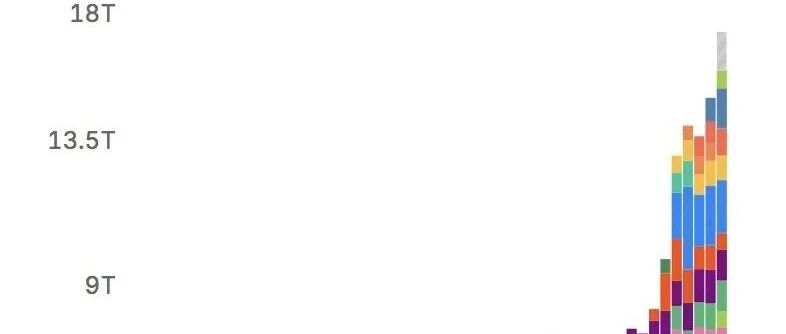
Core Insights - The article highlights the competitive landscape of AI models, showcasing the usage data and trends among various models across different regions, particularly focusing on the dominance of Chinese models in the market. Group 1: Model Usage and Rankings - The total token usage across platforms reached 78.2 trillion tokens, with Chinese models accounting for 41.9 trillion tokens (53.6%), marking a 34.9% increase compared to the previous period [5] - The top five models based on usage are: 1. MiniMax M2.5 (China): 18.7 trillion tokens (+15%) 2. Gemini 3 Flash (USA): approximately 10 trillion tokens 3. DeepSeek V3.2 (China): 8.3 trillion tokens (+4%) 4. Claude Opus 4.6 (USA): data not fully disclosed 5. Step 3.5 Flash (China): 7.5 trillion tokens (+69%, notable rise) [5] Group 2: Regional Performance - Chinese models have consistently led the market, with a growing gap over American models, which accounted for 36.3 trillion tokens (46.4%), reflecting an 8.5% decrease [5] - The article indicates that the trend of Chinese models gaining market share is expected to continue, further solidifying their position in the AI landscape [5] Group 3: Industry Impacts - The rise in token usage is accompanied by significant layoffs in major tech companies, with Meta potentially cutting up to 20% of its workforce, and Microsoft expected to follow suit with even larger reductions [6]
ByteDance suspends launch of video AI model after copyright disputes, The Information reports
Yahoo Finance· 2026-03-14 16:13
Core Viewpoint - ByteDance has paused the global launch of its AI video generator Seedance 2.0 due to copyright disputes with major Hollywood studios and streaming platforms [1] Group 1: Legal Issues - ByteDance is facing legal threats from U.S. studios, including Disney, regarding unauthorized use of intellectual property in Seedance 2.0 [2] - Disney accused ByteDance of using its characters to train Seedance 2.0 without permission, leading to a cease-and-desist letter [2][3] - ByteDance's legal team is actively working to identify and resolve potential legal issues related to the model [5] Group 2: Product Features and Market Position - Seedance 2.0 is designed for professional film, e-commerce, and advertising use, capable of processing text, images, audio, and video simultaneously to lower content production costs [3] - The model has garnered attention for its ability to generate cinematic storylines, drawing comparisons to competitors like DeepSeek [4] - ByteDance had planned to launch Seedance 2.0 globally in mid-March but has since suspended these plans [4]
英伟达豪掷260亿美元下场造AI模型,直接叫板OpenAI
硬AI· 2026-03-12 09:04
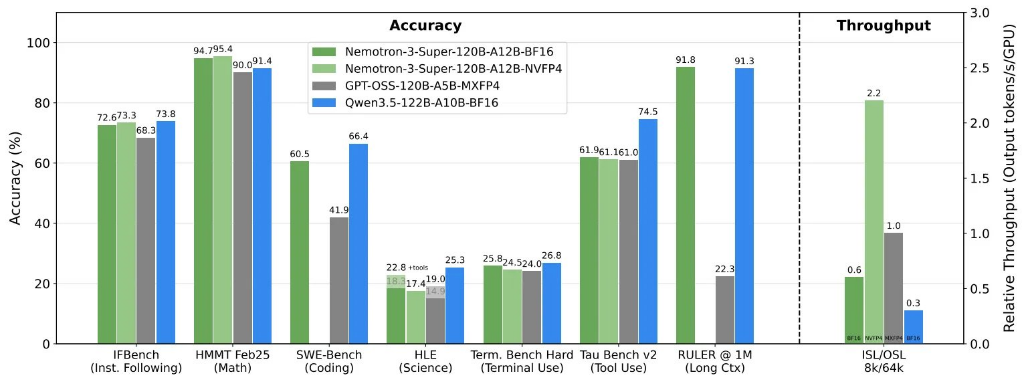
Core Viewpoint - Nvidia is transitioning from a hardware giant to a full-stack AI company by investing $26 billion over the next five years in developing open-source AI models, directly challenging the market positions of OpenAI, Anthropic, and DeepSeek [2][3][4]. Group 1: Investment and Strategic Shift - Nvidia's significant investment of $26 billion has been confirmed by company management, marking a strategic shift towards competing directly with top AI laboratories [3][4]. - The launch of the Nemotron 3 Super model, which boasts 128 billion parameters, signifies Nvidia's commitment to advancing its AI capabilities [6]. Group 2: Model Performance and Benchmarking - The Nemotron 3 Super achieved a score of 37 in the Artificial Intelligence Index, surpassing OpenAI's GPT-OSS score of 33, indicating its competitive performance in the AI model landscape [6]. - Nvidia's model participated in the PinchBench benchmark test, ranking first in evaluating control capabilities, further showcasing its advanced performance [6]. Group 3: Hardware and Software Integration - Nvidia's strategy involves a deep integration of hardware and software, with future AI models designed not only for chip development but also for optimizing supercomputing data center architectures [10]. - The open-source strategy is expected to foster a developer network around Nvidia's hardware ecosystem, enhancing market stickiness for its chips [10]. Group 4: Industry Reception and Significance - The research community has reacted positively to Nvidia's strategic move, with experts highlighting its milestone significance in the open-source AI landscape [12]. - Nvidia's investment is viewed as a historic statement of commitment to openness in AI, positioning the company at the forefront of both open and closed AI projects [12].

英伟达豪掷260亿美元下场造AI模型,直接叫板OpenAI
Hua Er Jie Jian Wen· 2026-03-12 08:02
Core Viewpoint - Nvidia plans to invest $26 billion over the next five years to develop open-source AI models, marking a strategic shift from being a hardware and software supplier to a full-stack AI company that competes directly with leading AI labs like OpenAI and Anthropic [1] Group 1: Investment and Strategic Shift - Nvidia's investment has been confirmed by company management and is aimed at developing open-source AI models [1] - The company has released its strongest open-source model, Nemotron 3 Super, which reportedly surpasses OpenAI's GPT-OSS in several benchmark tests [1] - This investment signifies a profound strategic shift for Nvidia, transitioning from a hardware supplier to a competitor in the AI model space [1] Group 2: Model Performance and Technical Innovations - The Nemotron 3 Super model features 128 billion parameters, comparable to the largest version of OpenAI's GPT-OSS, and scored 37 in the Artificial Intelligence Index, outperforming GPT-OSS's score of 33 [2] - Nvidia's model participated in a new benchmark test, PinchBench, where it ranked first in controlling OpenClaw [2] - The company has disclosed innovative training methods for the model, enhancing its reasoning, long-context processing, and reinforcement learning capabilities [2] Group 3: Hardware and Software Integration - Nvidia's strategy is not just about model competition but also about deeply integrating its hardware roadmap with AI model development [4] - Future AI models will optimize supercomputing data center architectures, stretching the capabilities of Nvidia's systems [4] - The open-source strategy aims to create a developer network around Nvidia's hardware ecosystem, enhancing market stickiness for its chips [4] Group 4: Industry Reception - The research community has reacted positively to Nvidia's strategic move, with notable figures calling it a milestone for open-source AI [6] - Experts emphasize the importance of government support for open-source models, highlighting Nvidia's investment as a significant statement of commitment to openness in AI [6]
养虾人狂吃国产模型!4.19万亿Token调用量激增34.9%超越美国
量子位· 2026-03-11 02:45
Core Insights - The article highlights the significant rise of Chinese large models in the AI sector, particularly during the recent weeks, showcasing their dominance over American counterparts in terms of usage and performance metrics [2][3][9]. Group 1: Performance Metrics - The total weekly usage of Chinese large models surged to 4.19 trillion tokens, marking a 34.9% increase, while American models saw a decline of 8.5% to 3.63 trillion tokens [6]. - In the following week, the usage of Chinese models reached 4.12 trillion tokens, surpassing the U.S. models for the first time, which dropped to 2.94 trillion tokens [9]. - By the week of March 16-22, the usage of Chinese models further increased to 5.16 trillion tokens, reflecting a 127% growth over three weeks, while U.S. models decreased to 2.7 trillion tokens [9]. Group 2: Leading Models - The top three models in usage were Kimi K2.5, Step 3.5 Flash, and MiniMax M2.5, each exceeding 1 trillion tokens [5][34]. - MiniMax M2.5 maintained a strong performance, consistently ranking at the top globally, while Step 3.5 Flash emerged as a significant contender [13][15]. - Chinese models dominated the global top five rankings, with three positions occupied by domestic products [12]. Group 3: Application and Context - The article emphasizes the popularity of the OpenClaw application among users, which has consumed a total of 9.16 trillion tokens since January, establishing itself as a major player in the market [32]. - In terms of context length usage, different models excelled in various token ranges, with MiniMax M2.5 and DeepSeek V3.2 being preferred for tasks requiring 10K-100K tokens [23][25]. Group 4: Competitive Landscape - The article notes that while Chinese models are gaining traction, they still need to improve in terms of speed and cost-effectiveness compared to leading models from Google and OpenAI [44]. - The PinchBench ranking, which evaluates models based on success rate, speed, and cost, indicates that while Chinese models like Kimi K2.5 and MiniMax M2.1 are performing well, they lag in speed compared to some competitors [39][41].