
TEMU

Search documents
脉速跨境丨俄罗斯电商市场双雄争霸;亚马逊斥40亿美元扩大当日达送货
Sou Hu Cai Jing· 2025-07-17 01:52
Group 1: Russian E-commerce Market Competition - Ozon has established a pickup point in Spitsbergen, Norway, indicating its commitment to expanding its global service network [2] - Ozon plans to add eight new distribution centers in Russia to optimize its logistics network, with the latest center expected to add nearly 140,000 square meters of storage and handle 850,000 orders daily [4] Group 2: Amazon's Strategic Moves - Amazon plans to invest over $4 billion to expand its same-day and next-day delivery services to more local and small cities in the U.S. by the end of 2025 [5][7] - Amazon will adjust its "Premium Shipping Options" qualification standards, lowering the on-time delivery rate requirement from 97% to 92% and shortening the evaluation period from 30 days to 7 days [11][13] - Amazon is considering increasing its investment in AI company Anthropic by an additional $1 billion, reinforcing its strategic position in the AI sector [14][18] Group 3: TEMU's Expansion in Australia - TEMU has opened its local seller program in Australia, allowing local businesses with inventory to join its global e-commerce platform, simplifying the process for reaching consumers [8] - TEMU's Australian site has seen a 72% increase in independent visits in 2024, and it is projected to be the fastest-growing website in Australia by 2025 [10]



上半年海南跨境电商出口业务保持高速增长势头
Zhong Guo Xin Wen Wang· 2025-07-16 11:58
2024年11月25日,海关总署公布了进一步促进跨境电商出口发展的公告。今年4月22日,国务院批复同 意海南将跨境电子商务综合试验区的设立由海口扩大至海南全岛,海南跨境电子商务迎来了新的发展机 遇。这些举措的出台,在全球电商蓬勃发展、国外竞争激烈的背景下,为我国跨境电子商务商品出海打 造了新引擎。 "今年以来,美兰机场口岸运力大幅提升,和去年相比,格鲁吉亚航空执飞的海口⇆米兰货机航期稳 定,海航国际宽体客机运力有所增加,为跨境电商出口提供了更充足的运输保障。"翼云关务负责人陈 一波说,由TEMU、SHEIN速卖通和亚马逊等主流电商平台出口的货物类型较去年向轻量化结构转变, 订单数量大幅增加,企业对当前货量快速增长、业务平稳运行的口岸业态充满信心。 海关表示,根据《关于跨境电子商务零售进出口商品有关监管事宜的公告》有关规定,在海口市符合条 件的跨境电子商务零售商品出口,可采取"清单核放、汇总统计"方式办理报关手续,相较非跨境电子商 务综合试验区"清单核放,汇总申报"模式,企业每月不再汇总形成出口报关单,大幅减少了跨境出口商 品通关环节,跨电商品出口更加高效便捷。 中新网海口7月16日电 (孟桓宇 谢东良)今年以 ...
再回硅谷:落幕与重生
Hu Xiu· 2025-07-11 06:41
Group 1 - The narrative of cross-border technology collaboration between China and the U.S. has effectively ended, marked by significant withdrawal of Chinese capital from Silicon Valley and the implementation of the 301 Act [6][9][10] - The once-bustling Silicon Valley innovation centers are now largely deserted, reflecting a stark contrast to their previous vibrancy, with many Chinese-backed enterprises facing decline or operational challenges [7][12][13] - The rise of large models in technology signifies a new era in Silicon Valley, characterized by rapid innovation and a shift in focus towards growth and profitability [14][15][16] Group 2 - The current investment landscape in Silicon Valley is marked by a shift in capital logic, where high valuations and short financing cycles are prevalent, leading to increased competition among startups [26][27][28] - The challenges faced by Chinese entrepreneurs in securing U.S. venture capital are compounded by regulatory scrutiny and the need to distance from Chinese ownership to attract investment [32][33] - The ongoing evolution of the tech industry in Silicon Valley is driven by a blend of traditional innovation and the emergence of new narratives, particularly in AI and large models, which are reshaping the competitive landscape [36][37][46] Group 3 - The dynamics of talent acquisition and retention in the tech sector are changing, with professionals increasingly seeking opportunities that align with their ambitions and financial goals, often leading to a return to established companies [34][35][38] - The narrative of innovation continues to thrive in Silicon Valley, with a vibrant ecosystem of startups and established firms coexisting, despite the backdrop of geopolitical tensions [41][45][47] - The future of the tech industry in 2025 is anticipated to be promising, with ongoing investment and innovation expected to drive significant developments [49][50]
广州外贸“单一窗口”十周年:智通四海 “窗”新启航
Guang Zhou Ri Bao· 2025-07-09 12:46
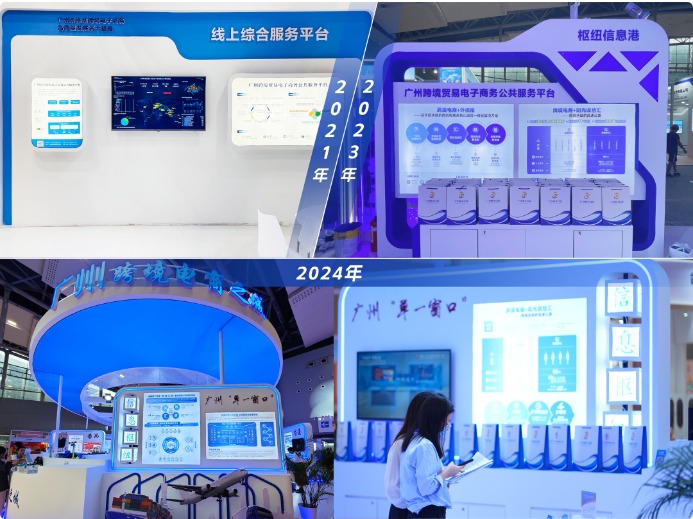
Core Insights - The Guangzhou International Trade Single Window has evolved over ten years, integrating various regulatory systems and enhancing efficiency for over 530,000 enterprises, processing 4.5 billion declarations [1][2][4] Group 1: Digital Transformation and Efficiency - The platform operates on a model of "one platform, one submission, one standard," breaking down data barriers and leading the digital transformation of traditional customs processes [2] - Since its launch in 2015, the platform has upgraded from version 1.0 to 3.0, extending its functions from basic customs clearance to the entire international trade lifecycle, significantly improving efficiency and reducing costs [2][4] - The electronic release platform for import containers has reduced processing time by over 75%, completing 840,000 paperless transactions and saving over 420,000 sheets of paper [5] Group 2: Cross-Border Trade and E-commerce Support - The platform supports cross-border e-commerce and market procurement, establishing a comprehensive service system that integrates customs, taxation, and financial services, benefiting over 120,000 e-commerce enterprises [9][11] - The platform has processed nearly 4.2 billion import and export transactions, maintaining Guangzhou's position as a leader in cross-border e-commerce [9] Group 3: Innovation and Future Development - New products and services were introduced, including smart logistics information services and compliance management guidelines, aimed at addressing enterprise challenges [4][12] - The platform has integrated AI technology to enhance customer service, providing intelligent responses and support for complex inquiries [14] - Future plans include transforming the platform into a "smart trade comprehensive service platform," contributing to the new development pattern of foreign trade [14]
T86取消后,跨境卖家怎么应对?
Sou Hu Cai Jing· 2025-07-01 04:12
Core Insights - In May 2025, China's exports of low-value small packages to the U.S. plummeted by 40% year-on-year, reaching $1.09 billion, marking the lowest level since early 2023 [1] - The cancellation of the T86 policy, which previously allowed Chinese direct mail packages to bypass tariff barriers, has resulted in a maximum tax rate of 54% on exports to the U.S. [1] - Despite the decline in U.S. exports, China's total global exports of direct mail packages increased by 40% year-on-year in May 2025, indicating a shift in market dynamics [1] Group 1: Market Dynamics - The T86 policy allowed over 1.3 billion goods to enter the U.S. in 2024, but its removal has significantly impacted the cost structure for Chinese exporters [1] - Major platforms like SHEIN and TEMU are adjusting their strategies, with SHEIN raising product prices and TEMU halting direct shipments to the U.S. [1] Group 2: Alternative Markets - In May, China's small package exports to Malaysia exceeded $700 million, making it the second-largest market, with Belgium and Hungary also emerging as alternative markets due to their customs efficiency and cost advantages [3] - The rise of the China-Europe Railway Express has provided shorter transport times and lower logistics costs for shipments to Belgium and Hungary [5] Group 3: Strategic Adjustments - Companies are restructuring logistics by pre-stocking goods in U.S. warehouses to avoid tariff costs and reduce delivery times to within three days [5] - There is a shift towards higher-margin products such as smart home devices and self-branded items, while also expanding B2B operations through platforms like Amazon and Alibaba [5] - Direct mail packages to Malaysia can benefit from regional free trade agreements to reduce tariffs, enhancing competitiveness in that market [5]

TEMU自养号拍单采购:从账号搭建到下单支付的完整方案
Sou Hu Cai Jing· 2025-06-30 03:59
Core Viewpoint - TEMU platform's self-cultivated account order procurement technology is crucial for sellers and reviewers, focusing on account security, authenticity, and improving order success rates [1][18]. Group 1: Account Preparation - Careful selection of phone numbers and emails is essential, utilizing advanced receiving code technology to ensure the purity and authenticity of foreign phone numbers [1]. - Reliable shipping addresses are obtained through partnerships with trustworthy logistics providers, assigning different addresses to each account to reduce monitoring risks [2]. - Flexible and secure payment cards are managed through an advanced credit card management system, ensuring safety during transactions [3]. - The registration process simulates real user behavior, including manual input of information to enhance account authenticity [4]. Group 2: Account Cultivation - Strict isolation of hardware parameters is implemented, providing each account with unique identifiers to prevent association risks [6]. - A stable network environment is ensured by using high-purity overseas servers and assigning independent IP addresses to each account [7]. - Advanced fingerprint browser technology creates a unique browsing environment for each account, reducing the risk of being identified as the same user [8]. - Privacy plugins are installed to prevent IP address leaks and protect user information [9]. - A reasonable account cultivation strategy is developed, gradually increasing account activity to avoid raising platform suspicions [10]. Group 3: Order and Payment Process - Careful product selection is emphasized, utilizing platform search functions to mimic real user shopping habits [12]. - Natural browsing habits are simulated by exploring multiple similar products, enhancing the credibility of account behavior [13]. - Normal ordering processes are followed, with flexible payment options to ensure transaction security [14]. - Timely order tracking and authentic reviews are encouraged to further enhance account credibility [15]. Group 4: Post-Management - Efficient account management is achieved through systematic categorization, improving operational efficiency [16]. - Professional evaluation tools are used to assess account performance based on key metrics like ranking and conversion rates [17]. - A keen risk alert system is in place to monitor platform policy changes, allowing for quick adjustments to account strategies [18].

SHEIN、文远知行秘密提交香港上市申请;阿联酋蝉联富豪迁移首选地;TEMU和甲骨文签订巨额合同丨Going Global
创业邦· 2025-06-29 10:03
Core Insights - The article highlights significant developments in the global expansion of Chinese companies, focusing on e-commerce, technology, and logistics sectors. Group 1: Major Events - AliExpress ranked second in the Australian download charts, driven by a successful live-streaming event featuring popular products [5] - TEMU signed a substantial contract with Oracle, migrating its infrastructure to Oracle Cloud, which may address data privacy concerns in the U.S. market [13] - SHEIN has secretly submitted an IPO application in Hong Kong, marking its third attempt to go public [15] - Alibaba Cloud plans to deploy full-stack AI capabilities globally, enhancing its service and compliance for overseas operations [17] - Cainiao has established a cross-border logistics network in the Gulf Cooperation Council (GCC) countries, enabling delivery within three days [22] Group 2: Company Developments - WeRide has secretly submitted an IPO application in Hong Kong, following a significant drop in its stock price since its NASDAQ debut [47] - Abridge, a generative AI clinical dialogue platform, completed a $300 million Series E funding round, raising its valuation to $5.3 billion [54] - OMOWAY, a smart electric motorcycle brand, completed multi-million dollar funding and launched its product in Indonesia [50] - GIVA, an Indian jewelry brand, raised $61.7 million in Series C funding to expand its retail and digital presence [52] Group 3: Market Trends - The UAE is expected to attract nearly 10,000 millionaires in 2025, continuing its trend as a preferred destination for high-net-worth individuals [44][45] - TikTok Shop launched a tailored strategy for European cross-border sellers, focusing on product, content, and marketing [8][9] - The global gaming market continues to thrive, with Tencent's "Honor of Kings" maintaining its position as the top-grossing mobile game worldwide [28][29]





企业、人才看过来 跨境电商人才专场对接会来了
Mei Ri Shang Bao· 2025-06-23 23:26
Core Insights - Hangzhou has become a global hub for cross-border e-commerce ten years after initiating its "buy global, sell global" strategy, with the 2025 Global Cross-Border E-Commerce Trade Expo set to celebrate the 10th anniversary of the cross-border e-commerce comprehensive pilot zone [1] Group 1: Event Overview - The expo will take place from July 10 to 11, 2025, at the Hangzhou International Exhibition Center, featuring a recruitment fair titled "E-gathering Global Talent" to address recruitment challenges in the cross-border e-commerce sector [1] - The recruitment event will include over 5,000 job openings across popular fields such as cross-border operations, live marketing, and supply chain management, with participation from 100 universities and 100 cross-border e-commerce companies [1] Group 2: Participation and Activities - The expo is expected to host over 2,000 exhibitors and attract more than 100,000 visitors, with over 100 comprehensive pilot zone cities showcasing their unique industrial belts [1] - Various activities will be held, including a cross-border talent forum, a talent matchmaking event, and a school-enterprise cooperation negotiation meeting to facilitate deep connections between universities and businesses [1] Group 3: Educational Initiatives - The event will feature a global cross-border e-commerce platform seminar with participation from top platforms like Amazon, SHEIN, and TEMU, allowing universities to gain insights into the latest industry resources [2] - The fifth National Cross-Border E-Commerce Talent Development Summit will be held, where the "China Cross-Border E-Commerce Talent Development White Paper" will be released, discussing challenges and restructuring in talent development due to artificial intelligence and globalization [2]
在墨西哥送快递:学会交“过路费”,更要懂“情绪价值”
Hu Xiu· 2025-06-18 11:46
Core Insights - The article discusses the complexities and opportunities in the Mexican e-commerce and logistics market, highlighting the significant growth potential driven by rising demand despite socio-economic challenges [1][2]. Group 1: E-commerce Growth in Mexico - Mexico's e-commerce sales are projected to grow approximately 20% year-on-year in 2024, reaching a total of 789.7 billion Mexican pesos (around 43.3 billion USD), marking six consecutive years of double-digit growth [1]. - The COVID-19 pandemic acted as a turning point for e-commerce in Mexico, with a noticeable increase in online shopping habits, particularly among younger consumers [7][8]. - The market is characterized by a significant gap between high consumer prices and low average incomes, with about 70-80% of the population earning less than 15,000 RMB per month [5]. Group 2: Logistics Challenges and Opportunities - The logistics sector in Mexico faces challenges due to complex geography and security issues, but companies like iMile are leveraging these challenges as opportunities for growth [1][2]. - Traditional logistics providers in Mexico, such as FedEx and DHL, have been criticized for high prices and slow delivery times, which new entrants like iMile are addressing by optimizing service speed and cost [2][22]. - iMile has achieved nationwide coverage in Mexico within a short period, indicating effective market entry strategies and local compliance [18][20]. Group 3: Local Market Dynamics - The Mexican address system is relatively well-developed, which aids logistics operations despite the country's socio-economic disparities [6]. - The logistics market is heavily influenced by local conditions, including the need for localized delivery strategies in areas with high crime rates or poor infrastructure [10][11][12]. - The presence of local delivery personnel is crucial for navigating the unique challenges of the Mexican market, including cultural and social dynamics [12][39]. Group 4: Competitive Landscape - Chinese logistics companies are reshaping the Mexican delivery landscape by providing cost-effective and efficient services, filling a gap left by traditional providers [23][21]. - The entry of companies like iMile has led to a reduction in delivery times from 8 days to 5-6 days nationwide, significantly improving service levels [22]. - The competitive environment is expected to continue evolving as more Chinese companies enter the market, enhancing service quality and affordability [23][25].
零售商超行业SAAS及数字化前景展望
2025-06-12 15:07
Summary of Retail Industry and SaaS Developments Industry Overview - The retail SaaS service providers initially charged based on software licenses and POS terminal counts, with large enterprises preferring standard software packages like SAP and Yonyou, priced by modules and user licenses [1] - Post-pandemic, internet companies shifted towards comprehensive solutions, with future rates influenced by technological advancements and competition [1] - Internet firms are reshaping the SaaS model through low-code platforms and cloud services, leading to a 50%-70% reduction in front-end costs, although back-end costs have increased due to the need for cloud infrastructure [1][5] Key Players and Competitive Landscape - Major players in the supermarket system supplier market include Shiji Information, SAP, Oracle, and Yonyou, with Shiji holding the largest market share [3] - Traditional supermarkets like Yonghui and Wumart are adapting to the online-offline integration model, with Yonghui collaborating with JD.com to enhance its business model [2] - Regional retailers like Pang Donglai have strong influence in their areas, showcasing the competitive dynamics within the retail sector [2] Challenges and Innovations in New Retail - New retail faces challenges such as online traffic stagnation and competition from platforms like Douyin, necessitating innovative promotional strategies and customer journey designs [1][8] - Retailers are leveraging big data and automation to enhance customer experience, with AI technology being widely applied for personalized marketing and customer profiling [2][12] SaaS Pricing Models and Trends - The pricing model for retail SaaS providers is closely linked to their growth stages, with early models based on software licenses transitioning to subscription-based pricing to meet new retail demands [4] - Future pricing trends will be influenced by technological advancements and competitive dynamics among various suppliers [4] Self-developed vs. Third-party Software - Self-developed systems, like those used by Walmart, allow for management iteration and value addition, avoiding customization cost increases [6] - Third-party software, such as Demo SaaS, aims to leverage supply chain advantages for online-to-offline (O2O) expansion [6] Retail Growth Bottlenecks - Yonghui Supermarket is experiencing growth bottlenecks post-pandemic, with no significant improvement in single-store gross margins [9] - To address these challenges, Yonghui is learning from the efficient management practices of regional leaders like Pang Donglai [9] AI Technology Applications - AI technology is being utilized in various retail scenarios, including personalized recommendations and automated service enhancements [14][15] - The integration of AI allows for real-time adjustments in product placement and promotional strategies, improving customer engagement and satisfaction [17][19] Global Market Challenges for Chinese Retailers - Chinese retailers face challenges in overseas markets, including consumer habit differences, high labor costs, and cognitive gaps regarding local business models [20] - To enhance competitiveness, Chinese retailers must optimize supply chain management and redesign customer journeys based on local consumer habits [21][22] Conclusion - The retail industry is undergoing significant transformation driven by technological advancements and changing consumer behaviors, with both traditional and internet-based retailers adapting to new market realities. The integration of AI and SaaS solutions is crucial for enhancing operational efficiency and customer experience in this evolving landscape.