软通动力

Search documents
软通动力跌2.02%,成交额5.22亿元,主力资金净流出3373.42万元
Xin Lang Zheng Quan· 2025-09-09 04:18
资料显示,软通动力信息技术(集团)股份有限公司位于北京市海淀区西北旺东路10号院东区16号楼5层 502,成立日期2005年11月4日,上市日期2022年3月15日,公司主营业务涉及为通讯设备、互联网服 务、金融科技、高科技与制造等多个行业客户提供数字化创新业务服务、通用技术服务和数字化运营服 务。主营业务收入构成为:软件与数字技术服务56.52%,计算产品与智能电子42.81%,数字能源与智 算服务0.61%,其他(补充)0.06%。 软通动力所属申万行业为:计算机-IT服务Ⅱ-IT服务Ⅲ。所属概念板块包括:财税信息化、AIAgent (智能体)、华为盘古、ERP概念、RPA概念等。 截至6月30日,软通动力股东户数13.49万,较上期减少4.89%;人均流通股5040股,较上期增加5.14%。 2025年1月-6月,软通动力实现营业收入157.81亿元,同比增长25.99%;归母净利润-1.43亿元,同比增 长7.60%。 9月9日,软通动力盘中下跌2.02%,截至11:19,报53.86元/股,成交5.22亿元,换手率1.41%,总市值 513.25亿元。 资金流向方面,主力资金净流出3373.42万元 ...
软通动力在广东横琴成立信息技术公司
Zheng Quan Shi Bao Wang· 2025-09-08 05:37
人民财讯9月8日电,企查查APP显示,近日,软通动力(301236)(广东横琴)信息技术有限公司成立, 注册资本1000万元,经营范围包含:软件开发;信息技术咨询服务;计算机软硬件及辅助设备批发等。 企查查股权穿透显示,该公司由软通动力全资持股。 ...
剑指万亿!攻坚突破!
Nan Jing Ri Bao· 2025-09-08 00:12
Core Viewpoint - Nanjing is actively developing its software industry, aiming to build a trillion-level software industry cluster through innovative mechanisms and collaborative efforts among various sectors and enterprises [1][11]. Group 1: Industry Development Initiatives - Nanjing has launched the "China Software City" initiative, targeting a trillion-level software industry cluster, which reflects the city's ambition for urban development [1]. - The city has implemented a strong organizational collaboration mechanism, establishing the "Nanjing AI (Software) Industry Task Force" to enhance coordination among over 20 municipal departments and various software parks [2][3]. - The "One Unit, One List" mechanism has been introduced to clarify responsibilities and tasks for different units, facilitating the execution of the "2025 Action Plan for Building a Trillion-Level Software and Information Service Industry" [3][9]. Group 2: Key Projects and Collaborations - Major global companies, including Dassault Systems and BMW, have established significant operations in Nanjing, indicating the city's attractiveness for IT talent and technological innovation [2][5]. - The city has seen the successful signing of 137 AI (software) industry projects, with 12 high-energy projects, including the establishment of regional headquarters for major tech firms [3][5]. - Nanjing has launched a 10 billion yuan industrial software special fund to promote collaboration among enterprises, research institutions, and financial entities [5]. Group 3: Focus on Industrial Software and Innovation - Industrial software is identified as a critical engine for Nanjing's software industry, with initiatives to create an "Industrial Software Innovation Center" and promote innovative cooperation models [5][6]. - The city aims to enhance its capabilities in the open-source ecosystem, with companies like Runhe Software contributing significantly to the development of the HarmonyOS platform [6][7]. - Nanjing has established itself as a leader in the "信创" (Xinchuang) industry, focusing on self-innovation and the development of proprietary operating systems and products [6][10]. Group 4: Ecosystem and Market Expansion - The city is fostering an ecosystem for leading enterprises through personalized cultivation plans and has organized numerous market connection events to support software companies [9][10]. - Nanjing has identified 95 application scenarios for Xinchuang and several for industrial software, facilitating the landing of various projects [10]. - The establishment of the Nanjing Intelligent Automotive Industry Park is expected to generate an annual revenue of 1.8 billion yuan, showcasing the city's commitment to emerging sectors [10].


华为链催化频出,赋能行业智能化和国产化
2025-09-07 16:19
Summary of Key Points from the Conference Call Company: Huawei Financial Performance - Huawei achieved a revenue of 427 billion yuan in the first half of 2025, representing a year-on-year growth of 3.95% [3] - Net profit decreased to 37.2 billion yuan, down 32.2% year-on-year, attributed to high R&D investments rather than deterioration in core business [3] R&D Investments and Achievements - R&D expenditure reached nearly 100 billion yuan, accounting for approximately 23% of revenue, marking a historical high [3][4] - Investments focused on building the HarmonyOS ecosystem and AI computing chips [4] - Huawei Cloud launched the Clock Metrics 384 super node, featuring 384 Ascend NPUs and 192 Kunpeng CPUs, achieving a computing power of 300 PFLOPS, capable of training models with 130 billion parameters [4] Core Business Segments - Key performance drivers include consumer business, smart vehicles, and Huawei Cloud [6] - Cumulative sales of the Guangdong Zhixing model exceeded 900,000 units, marking the first profitability for Huawei's automotive business [6] - Huawei Cloud's overall computing power increased by 250% year-on-year, with the number of clients using generative AI computing rising from 321 to 1,714 [6] HarmonyOS Development - HarmonyOS, developed since 2019, plays a crucial role in ensuring the security of the national information technology industry [7] - Over 10,000 people are involved in its development, with total investments in the hundreds of billions of yuan and over 130 million lines of code developed [7] - The HarmonyOS ecosystem conference focused on practical applications and received strong support from industry experts and government leaders [7] Kirin 9020 Chip Highlights - The Kirin 9020 chip, Huawei's new flagship chip, features a self-developed big, medium, and small core design, with a big core frequency of 2.5GHz, medium core frequency of 2.15GHz, and small core frequency of 1.60GHz [8][9] - This chip re-establishes Huawei's position in the global advanced chip market, significantly enhancing performance for Huawei mobile devices [9] Challenges for HarmonyOS - Developing an operating system is complex and requires substantial investment, time, and human resources [11] - Competing with established ecosystems like iOS and Android, which have decades of development, poses significant challenges for HarmonyOS [11] Upcoming Events - The Huawei Connect 2025 conference will be held from September 18 to 20, focusing on "Deeper Industry Intelligence" and showcasing new products and technological breakthroughs [12][13] Industry Insights Policy Support for Electronic Information Manufacturing - The Ministry of Industry and Information Technology and the State Administration for Market Regulation released the "2025-2026 Action Plan for Stable Growth in the Electronic Information Manufacturing Industry," emphasizing support for domestic products and enhancing supply chain security [2][14] Investment Opportunities - Companies involved in computing server integration services, software development, ERP, and digital transformation may see investment opportunities due to Huawei's initiatives and ecosystem partnerships [15]
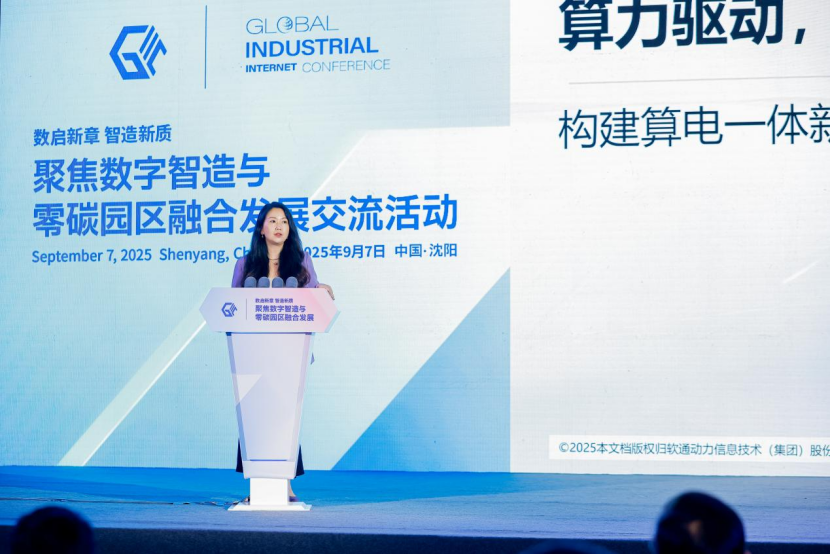
软通动力集团高级副总裁刘怡:算力和电力的深度融合将打开一扇通向绿色数字的未来之门
Zhong Guo Jin Rong Xin Xi Wang· 2025-09-07 15:51
Core Viewpoint - The integration of computing power and electricity, referred to as "computing-electricity synergy," is essential for achieving a green digital future, driven by advancements in digital technology, national policy improvements, and the establishment of technical standards [1][5]. Group 1: Challenges in Computing-Electricity Synergy - High reliability in electricity supply is required for intelligent computing centers, but the instability of renewable energy sources like wind, solar, and hydro necessitates large-scale energy storage solutions, which currently have high initial investment and operational costs, leading to long payback periods [2]. - There are trading barriers for green electricity, with high demand in eastern regions but limited local green resources, while western regions have abundant resources but face restrictions in cross-province transmission and trading [2]. - The adjustment of computing power load requires a unified national scheduling platform that ensures security and controllability, along with effective price incentive mechanisms, which are currently lacking [2]. Group 2: Company Initiatives and Projects - The company is developing the "Tianyuan" computing power scheduling platform, focusing on hub nodes and provincial-level points to create a cross-regional and cross-entity computing resource scheduling system [3]. - The company has implemented several projects in zero-carbon parks, including an integrated management platform for power generation, consumption, storage, and charging resources, significantly enhancing economic and green performance [3]. - The company has assisted a large cement manufacturer in creating a factory with zero external electricity purchases, managing large-scale wind, solar, and storage assets for a green transition [3]. Group 3: Future Outlook - The company believes that as the computing power application market matures, along with continuous improvements in national policies and technical standards, the current challenges can be resolved, paving the way for a deeper integration of computing power and electricity [5].

金盘科技启动“十五五”战略布局,决胜AI智造新时代
Zheng Quan Shi Bao Wang· 2025-09-07 09:50
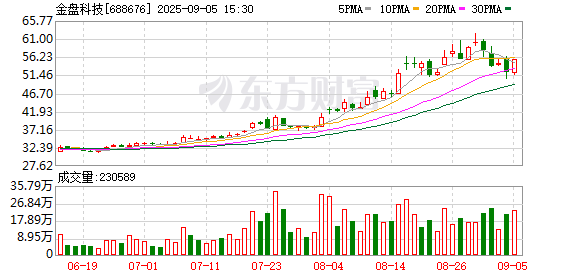
Core Insights - The article emphasizes the strategic shift of Jinpan Technology towards intelligent manufacturing, driven by AI, as part of its "15th Five-Year Plan" [2][3] - Jinpan Technology has demonstrated significant growth during the "14th Five-Year Plan," with a projected cumulative revenue increase of approximately 170% and a similar growth in net profit [2] - The company aims to establish itself as a benchmark in intelligent manufacturing by collaborating with partners to build an AI platform and related intelligent systems [3] Group 1 - Jinpan Technology's strategic focus for the "15th Five-Year Plan" is to fully realize intelligent manufacturing, marking a significant transformation in its operations [3] - The company has seen a 28% increase in total personnel and a 120% increase in revenue per capita during the "14th Five-Year Plan" [2] - The establishment of four new divisions—Artificial Intelligence, AI Industry Chain, Robotics, and New Materials—reflects Jinpan Technology's commitment to enhancing its core competitiveness and embracing the "Artificial Intelligence +" initiative [3] Group 2 - The article highlights the broader context of the "15th Five-Year Plan," noting the shift in China's economic development from high-speed growth to high-quality development [2] - The global political and economic landscape is undergoing significant changes, with increased competition and uncertainty, which necessitates a strategic response from companies like Jinpan Technology [2] - The Chinese government's recent policy to reshape production and lifestyle through AI over the next decade presents substantial opportunities for industrial AI transformation [2]

江苏有线完成对鸿湖万联战略投资
Zheng Quan Shi Bao Wang· 2025-09-07 05:25
Core Insights - Jiangsu Cable's subsidiary, Ruihui Capital, has completed a strategic investment in Honghu Wanlian (Jiangsu) Technology Development Co., Ltd, marking the company's first round of market-oriented financing [1] - Other investors in this round include Jiangsu Gaotou and Yida Capital, indicating strong interest from various investment entities [1] - Honghu Wanlian was established in 2022 by Ruijun Power, Huawei Hubble, and Wuxi New Investment Jinshi, focusing on the research and industrialization of the open-source Harmony operating system [1] - The core product, SwanLinkOS, has achieved multi-instruction set cross-architecture adaptation and is widely applied in key infrastructure sectors such as smart mining, transportation, public security, and education [1]

研判2025!中国保险IT行业发展背景、市场规模、竞争格局及未来趋势分析:行业承压运行,市场竞争激烈[图]
Chan Ye Xin Xi Wang· 2025-09-06 00:56
Core Insights - A new wave of technological revolution and industrial transformation is underway, with rapid development in information and intelligence, leading to significant disruptive technologies emerging and converging [1][9] - The digital transformation investment in China's insurance industry has been increasing, with the insurance technology scale expected to reach 58.67 billion yuan in 2024, a year-on-year growth of 13.4% [1][10] - The overall IT investment in the Chinese insurance industry is projected to be 49.09 billion yuan in 2024, with a compound annual growth rate of 11.4% from 2021 to 2024 [10][12] - The insurance IT solutions market is facing pressure due to macroeconomic factors, with a projected market size of 10.096 billion yuan in 2024, showing a significant decline [12][14] Insurance IT Industry Overview - Insurance IT refers to the application of information technology in the insurance sector to achieve efficient business processing, management optimization, and innovative services [2] - The current insurance IT systems in China are categorized into core business systems, channel systems, management systems, and others [2] Development Background - The digital transformation of the insurance industry is supported by government policies, with initiatives aimed at enhancing digital capabilities and resource investment [7][8] - The insurance market in China has evolved significantly since the establishment of the People's Republic of China, with the number of insurance institutions reaching 247 by the end of 2024 and premium income increasing from 2.43 trillion yuan in 2015 to 5.70 trillion yuan in 2024 [8][9] Competitive Landscape - The insurance IT solutions market is competitive, with leading companies such as Zhongke Ruankexie, Ruantong Power, and Yishang Shuzhi maintaining their positions, while others like Fabben Information and Yibao Network occupy the second tier [15][16] - The market is characterized by two types of players: traditional insurance company tech subsidiaries and third-party insurance IT service providers [16] Future Trends - The insurance industry is expected to allocate more budget towards high-value business innovations, with a focus on sales intelligence, integrated customer management, and personalized service experiences [16] - The application of AI large model technology across various business operations is anticipated to reshape the insurance value chain, leading to full-link intelligence as a key trend in industry development [16]



连投15笔,年化收益8倍,初创公司们真成顶级VC了?丨投中嘉川
投中网· 2025-09-05 02:03
Core Viewpoint - The article discusses the emerging trend of "investing before becoming wealthy" in the AI sector, highlighting how companies are increasingly engaging in early-stage investments to build technological and ecological advantages [5][6][20]. Group 1: Company Overview - Zhiyuan Robotics held its first partner conference in Shanghai, where CEO Deng Taihua outlined the company's investment strategy, planning to establish a professional CVC platform and incubate over 50 early-stage projects within three years [6][10]. - The company has invested in 15 firms over the past year, achieving an annualized return rate of 8 times, positioning itself as a significant player in early-stage tech investments [7][13]. Group 2: Investment Strategy - Zhiyuan Robotics has completed 11 rounds of financing, maintaining a leading position in terms of cumulative financing and valuation in the domestic market [8][9]. - The company is set to enter a phase where it can easily secure funding, with plans for a C round of financing by the end of the year, attracting more international industrial capital [10][12]. Group 3: Investment Activities - The company has made two significant moves: acquiring the publicly listed company Shuangwei New Materials for 2.1 billion and becoming a key angel investor in the upstream and downstream of embodied intelligence [10][11]. - The 15 invested companies span various sectors, including robotics and AI software development, with several already securing new rounds of financing, indicating rapid growth in their valuations [12][13]. Group 4: Industry Trends - The trend of unicorns acting as investors is not isolated to Zhiyuan; other AI companies are also engaging in early-stage investments to strengthen their business ecosystems [16][17]. - The article notes that many AI companies are investing shortly after their establishment, contrasting with the longer timelines seen in previous tech waves like the internet [19][20]. Group 5: Future Outlook - Zhiyuan Robotics plans to invest several billion in the next three years through its "Zhiyuan A Plan," aiming to create a trillion-level industrial ecosystem [15][20]. - The aggressive investment strategy reflects a shift in competition from individual technologies to entire ecosystems, with companies leveraging capital to accelerate their market presence [20].

中国大陆二季度PC出货量同比增长12%:联想稳居市场第一 AI PC迎来爆发式增长
Ge Long Hui· 2025-09-04 11:00
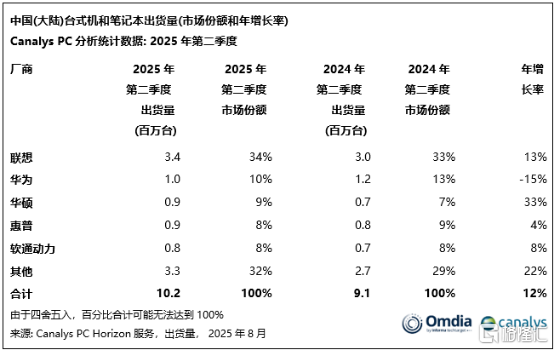
Group 1: PC Market Performance - In Q2 2025, the PC market in mainland China (excluding tablets) showed strong performance with shipments reaching 10.2 million units, a year-on-year increase of 12% [1][2] - Both consumer and commercial demand increased, with growth rates of 13% and 12% respectively [1] - Lenovo maintained its leadership position in the Chinese PC market, with desktop and laptop shipments totaling 3.4 million units, a 13% increase, and market share rising to 34% [1][2] Group 2: Tablet Market Performance - The tablet market also experienced significant growth, with shipments reaching 9.1 million units, reflecting an 18% year-on-year increase [1][4] - Lenovo's diversified product strategy allowed it to remain competitive, achieving a 54% annual growth rate in the tablet segment, increasing its market share to 8% [3][4] Group 3: AI PC Growth - The AI PC segment in mainland China saw explosive growth, with AI PC shipments accounting for 28% of the overall PC market in Q2 2025 [2] - Lenovo reported that AI PCs with "five AI features" made up 27% of its total notebook shipments in the Chinese market [2] - The penetration rate of AI PCs is expected to rise rapidly, reaching 34% in 2025 and further increasing to 52% in 2026 [4] Group 4: Future Outlook - Canalys forecasts a 2% year-on-year growth for the Chinese PC market in 2025 and a 3% growth in 2026, driven mainly by subsidies and replacement demand [4] - By the end of 2029, the Greater China region is expected to accumulate approximately 107 million AI PC shipments, laying a solid foundation for widespread AI application [4] - The government's "Artificial Intelligence +" initiative is anticipated to accelerate local AI infrastructure development and the commercialization of AI devices, benefiting companies like Lenovo [4]