江阴银行

Search documents
首份红利主题基金中报出炉,十大重仓股已无银行股踪影
2 1 Shi Ji Jing Ji Bao Dao· 2025-07-15 07:51
Core Viewpoint - The report of the China Europe Dividend Select Mixed Fund indicates a positive performance in net asset value growth, with A and C class shares showing growth rates of 2.16% and 2.01% over the past three months, and 15.74% and 15.08% since the fund's inception [1][2]. Fund Performance - As of June 30, the total fund shares amounted to 10.9 million, with A class shares at 4.73961 million and C class shares at 6.18585 million [2]. - The fund primarily invests in dividend-themed listed companies, managed by Liu Yong and Zhang Xue Ming, who have 9 and 8 years of experience in the securities industry, respectively [2]. Investment Strategy - The fund managers have shifted focus from bank stocks to market-oriented dividend stocks, citing a decrease in the attractiveness of bank dividends due to significant price increases [4]. - The top ten holdings in the second quarter no longer included bank stocks, with new investments in companies like Zhengmei Machine and Midea Group [3][4]. Market Context - The banking sector has seen substantial growth, with the Shanghai Securities Bank Index rising over 17% year-to-date, and several banks, including Xiamen Bank, showing increases exceeding 40% [4][5]. - Analysts remain optimistic about bank stocks, suggesting that the evolution of long-term bad debt cycles, rather than short-term economic fluctuations, will drive bank stock valuations [5][6]. Dividend Stock Appeal - The high dividends from dividend stocks are increasingly attractive in a low overall investment return environment, providing a valuable return source for funds facing a debt asset shortage [6]. - Banks are highlighted as the best performers among dividend stocks due to their stable future net profits and cash flows, supported by significant retained earnings [6].

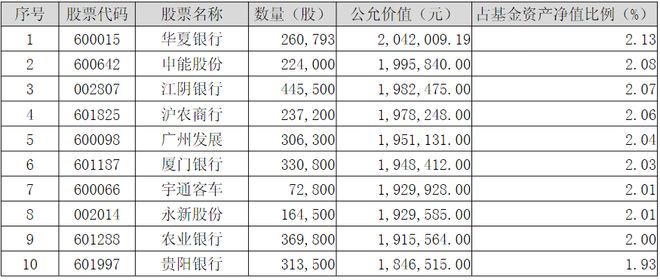
银行股燃爆红利基金!增配逻辑猛抬头,公募低配或渐成历史
券商中国· 2025-07-14 04:36
Core Viewpoint - The banking sector is becoming a popular choice for public funds due to favorable changes in funding, policy, sentiment, and fundamentals, with the China Securities Banking Index rising 16.54% this year, marking a ten-year high [1][7]. Group 1: Fund Dynamics and Market Sentiment - The collective rise of dividend assets, represented by bank stocks, reflects a growing value investment atmosphere in the market, with major banks reaching historical highs [2][3]. - The demand for dividend-themed funds has surged, leading to a rapid increase in the launch of various dividend funds by public funds, indicating strong institutional interest [2][9]. - The shift in public fund allocations towards bank stocks is driven by the need for stable returns amid global uncertainties and the increasing appeal of low-valuation, high-dividend assets [8][9]. Group 2: Performance and Investment Strategies - Bank stocks have outperformed expectations, with Chengdu Bank's stock price increasing by 98% since January 2024, contributing significantly to the performance of many funds [3][4]. - The long-standing 工银金融地产基金 has seen substantial returns over the past three years, highlighting the resurgence of traditional funds focusing on bank stocks [3][4]. - Fund managers are increasingly adjusting their portfolios to include more bank stocks, reflecting a strategic shift towards undervalued assets [5][6]. Group 3: Regulatory and Market Conditions - Recent regulatory changes have prompted public funds to reassess their allocations, with a noted underweight in bank stocks compared to major indices [4][9]. - The ongoing asset shortage and low interest rates are driving insurance companies to invest in dividend assets, further supporting the banking sector's appeal [9][10]. - The introduction of policies encouraging insurance funds to invest a significant portion of new premiums in A-shares is expected to inject substantial long-term capital into the market [9][10].

银行股再度刷屏 基金增配逻辑持续演绎
Zheng Quan Shi Bao· 2025-07-13 17:29
Core Viewpoint - The banking sector is becoming a popular choice for public funds as they shift towards dividend-themed funds amid a backdrop of significant market activity and low allocation in this sector [1][2]. Group 1: Dividend Strategy and Market Performance - The banking stocks, particularly the four major state-owned banks, have seen significant price increases, with some reaching historical highs due to the effectiveness of low valuation and high dividend strategies [2]. - Chengdu Bank, heavily weighted in over 100 funds, has experienced a cumulative increase of 98% from January 2024 to July 11, 2025, outperforming many tech stocks and attracting attention from top fund managers [2]. Group 2: Fund Allocation and Research Activities - Public funds have a current allocation of approximately 3.49% in the banking sector, which is underweight by 9.99 percentage points compared to the CSI 300 index and 6.99 percentage points compared to the CSI 800 index [3]. - Recent fund research activities have focused on banks that were previously underweighted, indicating a potential shift in investment strategy [3][4]. Group 3: Institutional Investment Trends - Insurance companies and large institutional investors are increasingly turning to dividend assets like banking stocks due to rising demand for stable returns amid global uncertainties [5][6]. - The banking sector's current price-to-book ratio is 0.72, below the global average, and its dividend yield is significantly higher than government bond yields, making it attractive for long-term investors [6]. Group 4: Future Outlook - The combination of low interest rates, accounting changes, and policy guidance is expected to further enhance the appeal of dividend strategies, with insurance funds likely to become a significant source of new capital in the stock market [6].

农商行债券投资情况梳理:农村金融机构持有多少债券?-20250713
Hua Yuan Zheng Quan· 2025-07-13 05:51
Group 1: Report Industry Investment Rating - No specific industry investment rating is mentioned in the report. Group 2: Core Viewpoints of the Report - Rural commercial banks (RCCs) have become important participants in the bond market, preferring to invest in inter - bank certificates of deposit, government bonds, local bonds, policy - financial bonds, and participating in urban investment bond investments. In 2024, RCCs significantly increased their allocation of ultra - long - term government bonds, and their bond investment is shifting from "hold - to - maturity" to trading [1]. - In the medium - to - long - term, the proportion of commercial banks' bond investment is likely to increase. As the era of real estate wanes and infrastructure investment space shrinks, credit demand may be weak in the long run, and the asset structure of the banking system will change accordingly [1]. - The bond - holding scale of rural financial institutions is estimated to exceed 13 trillion yuan. If the bond investment ratio is controlled within 20% or 15%, it may lead to significant bond investment reduction and impact the bond market [1]. - Interest - rate bonds are expected to show narrow - range fluctuations in 25Q3. The report continues to be bullish on long - duration urban investment bonds, capital bonds, and suggests paying attention to investment opportunities in Hong Kong - listed banks and China Property Insurance's capital - supplementary bonds [1]. Group 3: Summary by Related Information Rural Commercial Banks' Bond Investment Preferences - RCCs tend to invest in inter - bank certificates of deposit, government bonds, local bonds, policy - financial bonds, and participate in urban investment bond investments. In 2024, they significantly increased their allocation of ultra - long - term government bonds [1]. Trend of Commercial Banks' Bond Investment Proportion - From the overall situation of small and medium - sized banks, the proportion of bond investment increased from 13.7% at the end of January 2015 to 22.7% at the end of May 2025 [1]. Estimation of Rural Financial Institutions' Bond - Holding Scale - As of the end of May 2025, small and medium - sized banks (joint - stock banks, city commercial banks, and RCCs) held a total of 46.4 trillion yuan in bonds, accounting for 22.7% of total assets. As of the end of March 2025, if the bond investment ratio of rural financial institutions is the same as that of small and medium - sized banks, their bond - holding scale reaches 13.6 trillion yuan. If calculated based on the 27.8% bond investment ratio of A - share listed RCCs at the end of 2024, the bond - holding scale of rural financial institutions reaches 16.6 trillion yuan [1]. Potential Impact of Regulatory Policies - If the bond investment ratio of rural financial institutions is controlled within 20%, at least 1.6 trillion yuan of bond investment needs to be reduced; if controlled below 15%, the reduction scale exceeds 4.6 trillion yuan, which may significantly impact the bond market [1]. Bond Market Outlook and Investment Suggestions - In 25Q3, the possibility of an interest - rate cut is low, and interest - rate bonds are expected to show narrow - range fluctuations. The report recommends band - trading interest - rate bonds and paying attention to the money supply. It continues to be bullish on long - duration urban investment bonds, capital bonds, and insurance sub - debt, and suggests paying attention to investment opportunities in Hong Kong - listed banks and China Property Insurance's capital - supplementary bonds [1].
概念板块全面开花机构调研直击热点
Zheng Quan Shi Bao· 2025-07-11 17:25
Market Overview - The market sentiment has improved, with all three major indices rising. The Shanghai Composite Index increased by 1.09%, stabilizing above 3500 points, while the Shenzhen Component Index rose by 1.78% and the ChiNext Index by 2.36% [1] Industry Performance - Among the 31 primary industries, 27 experienced gains, with real estate, steel, and non-bank financials leading the way. Concept sectors such as rare earths, real estate developers, innovative drugs, photovoltaic glass, brokerages, and stablecoins saw significant surges [1] Institutional Research Activities - A total of 160 listed companies disclosed institutional research minutes, with around 100 stocks achieving positive returns. Notably, Lianhuan Pharmaceutical's stock surged by 38.58% during the week, and several other companies also saw gains exceeding 10% [1] Company Highlights - Lianhuan Pharmaceutical has conducted four institutional research activities in July, with a cumulative increase of 49% in stock price. The company is collaborating on the development of an SGLT2 inhibitor for diabetes treatment, expecting key data in Q1 2024 and plans to submit for market approval in 2026 [1][2] - Wantai Biological Pharmacy recently hosted 19 institutional research sessions and announced the pricing of its domestically produced nine-valent HPV vaccine at 499 yuan per dose. The company aims to enhance market penetration through a differentiated sales strategy [2] - Zhongyi Technology, while not currently involved in stablecoin business, confirmed its participation in IT infrastructure for digital currency systems, ensuring stability and security [2] - Zhenghai Magnetic Materials responded to export control measures by actively pursuing export declarations and maintaining normal production operations. The company anticipates growth in demand for neodymium-iron-boron in emerging sectors like energy-saving and new energy vehicles [3] Financial Sector Insights - Several banks, including Ningbo Bank and Suzhou Bank, received institutional attention. Suzhou Bank reported a narrower net interest margin decline compared to the industry average and plans to enhance margin management throughout the year [3]


又一银行高管“扫货” 超前完成增资计划
Zhong Guo Jing Ying Bao· 2025-07-11 06:36
Core Viewpoint - Recent executive share buybacks in banks signal confidence in the sector's future performance and potential for valuation recovery [2][3][4] Group 1: Executive Buybacks - Jiangsu Bank's executives and senior management completed their share buyback plan ahead of schedule, acquiring 2.1648 million shares for a total investment of 24.2782 million yuan, exceeding the planned minimum by 121.39% [2] - Over 10 banks, including Lanzhou Bank and Beijing Bank, have seen similar executive buybacks this year, indicating a trend of increasing market interest in bank stocks [2][3] Group 2: Market Performance - As of July 10, 34 out of 42 A-share bank stocks have risen, with Minsheng Bank showing a notable increase of 5.31% [3] - The buyback actions are interpreted as a strategy to stabilize market expectations and reinforce shareholder return commitments, reflecting confidence in business upgrades and profitability [3][4] Group 3: Economic Analysis - Analysts highlight three main reasons for Jiangsu Bank's management buyback: stable performance with a 8.16% year-on-year profit increase, attractive stock valuations in a low-interest environment, and clear strategic planning focused on digital transformation [4] - The banking sector is experiencing a wave of buybacks, driven by external market volatility and a commitment to enhancing valuation levels, which is expected to support healthy capital market development [4][6] Group 4: Future Outlook - The annual dividend payout for listed banks is projected to reach 632 billion yuan, with over 10 banks announcing plans for 2024 dividends [6] - The banking sector is anticipated to maintain a 7.5% growth rate in assets and liabilities by Q3 2025, supported by investments in technology and green finance [6]

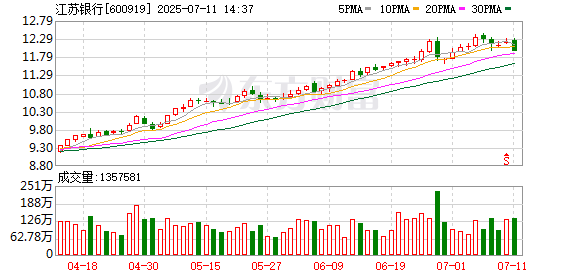
银行股增持潮起
Jing Ji Guan Cha Wang· 2025-07-10 13:27
Core Viewpoint - The banking sector in China is experiencing a notable increase in internal capital increases, reflecting growing confidence in the long-term value of banks as both executives and major shareholders actively participate in stock buybacks [1][2][3]. Group 1: Executive and Shareholder Actions - Several banks, including Huaxia Bank and Jiangsu Bank, have initiated or completed stock buyback plans, indicating a trend where bank executives and major shareholders are taking proactive steps to invest in their own companies [1][2]. - Huaxia Bank announced a voluntary buyback plan of at least 30 million yuan, although its implementation has been delayed due to market conditions [1][2]. - Jiangsu Bank's executives completed their buyback plan ahead of schedule, investing 24.28 million yuan, which is 121.39% of the planned minimum amount [1][2]. Group 2: Broader Industry Trends - Over ten banks, including Suzhou Bank and Chengdu Bank, have disclosed similar buyback plans in 2023, suggesting a widespread trend within the banking industry [1][2]. - The actions of bank executives and shareholders are interpreted as a signal of confidence in the banks' future performance and stock prices, as they are willing to invest their own funds and bear market risks [2][3]. Group 3: Market Reactions and Valuation - The stock buyback announcements have provided short-term support for stock prices, with Jiangsu Bank's stock rising by 0.74% following its announcement [5]. - The average price-to-book (PB) ratio for A-share banks is currently at 0.6, with some city commercial banks below 0.5, indicating that the banking sector is undervalued [5]. - The average dividend yield for the banking sector is 3.86%, making it attractive for long-term investors, especially in light of regulatory measures encouraging long-term capital inflows [4]. Group 4: Long-term Challenges - Despite the positive signals from buybacks, the banking sector faces deeper challenges, including narrowing net interest margins and asset quality issues that have not been fundamentally resolved [5][6]. - The effectiveness of buybacks in stabilizing stock prices may be limited if they do not coincide with improvements in operational efficiency and fundamental performance [5][6].


一银行高管,超额完成增持计划
Zhong Guo Ji Jin Bao· 2025-07-09 13:10
Core Viewpoint - Jiangsu Bank's executives have exceeded their shareholding increase plan, accumulating a total of 2,427.82 million yuan in share purchases, reflecting strong confidence in the bank's future prospects and value [1][2]. Group 1: Shareholding Increase Details - As of July 9, Jiangsu Bank's senior management and other mid-level executives have cumulatively increased their holdings by 2.1648 million shares, amounting to approximately 2,427.82 million yuan, which is 121.39% of the lower limit of the planned increase [2]. - Prior to this increase, the total shares held by these executives were 3.7866 million, representing 0.02% of the total share capital; after the increase, the total shares rose to 5.9514 million, accounting for 0.03% of the total share capital [2]. - The shareholding increase plan was announced on April 9, with a commitment to invest at least 20 million yuan over six months, with no price range set for the purchases [2]. Group 2: Financial Performance - As of the end of the first quarter, Jiangsu Bank reported total assets of 4.46 trillion yuan, a year-on-year increase of 12.94% [3]. - The bank achieved operating income of 22.304 billion yuan, reflecting a year-on-year growth of 6.21%, and a net profit of 9.78 billion yuan, which is an 8.16% increase compared to the previous year [3]. Group 3: Market Context - Bank stocks have been favored in the market this year, with over ten banks, including Jiangsu Bank, experiencing shareholding increases from shareholders or executives [4]. - The trend of executives increasing their holdings is seen as a response to the positive market performance of bank stocks, indicating confidence in the sector's future [5].
一银行高管,超额完成增持计划!
中国基金报· 2025-07-09 12:54
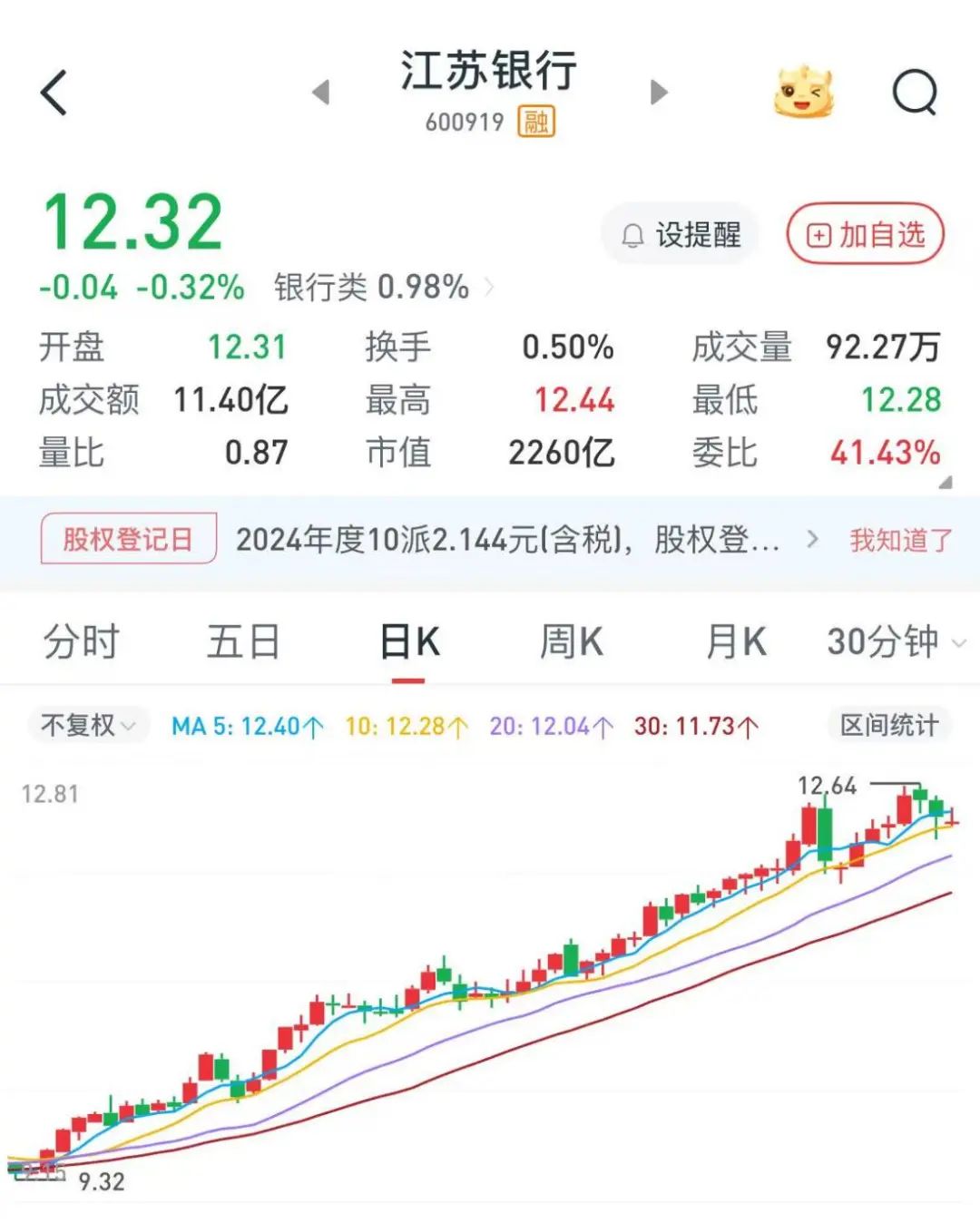
Core Viewpoint - Jiangsu Bank's executives have exceeded their shareholding increase plan, accumulating a total of 2,427.82 million yuan in share purchases, reflecting confidence in the bank's value and future prospects [2][4]. Summary by Sections Executive Shareholding Increase - As of July 9, Jiangsu Bank announced that senior management and other mid-level executives have cumulatively increased their holdings by 2,164,800 shares, amounting to approximately 2,427.82 million yuan, which is 121.39% of the planned minimum increase [4]. - Prior to this increase, these executives held a total of 3,786,600 shares, representing 0.02% of the bank's total equity. Post-increase, their holdings rose to 5,951,400 shares, accounting for 0.03% of total equity [4]. Performance and Market Response - Jiangsu Bank's stock has performed strongly this year, reaching a price of 12.32 yuan per share as of July 9, with a total market capitalization of 226 billion yuan and a year-to-date increase of 29.53% [4]. - The bank's total assets stood at 4.46 trillion yuan as of the end of the first quarter, reflecting a year-on-year growth of 12.94%. The bank reported operating income of 22.304 billion yuan, up 6.21% year-on-year, and a net profit of 9.78 billion yuan, an increase of 8.16% [5]. Broader Industry Trends - The banking sector has seen a trend of increased shareholding by executives and shareholders, with over ten banks, including Jiangsu Bank, experiencing such increases this year [7]. - Analysts suggest that the continuous increase in shareholding by bank executives indicates a positive outlook on the banking sector's future and a demand for asset appreciation in a low-interest-rate environment [7].

又见“85后”升任副行长!上市银行女副行长扩容
券商中国· 2025-07-08 23:25
Core Viewpoint - Jiangyin Bank has appointed Yu Xiaoyun as the new vice president, pending regulatory approval, highlighting the increasing presence of women in leadership roles within the bank [1][6][8]. Group 1: Appointment and Background - Yu Xiaoyun, born in 1985, is currently the general manager of the asset management department at Jiangyin Bank [2]. - She has a career history that includes roles at Agricultural Bank of China and various leadership positions within Jiangyin Bank since 2011 [6]. - The appointment follows the resignation of the previous vice president, Wang Kai, due to a job transfer [5][6]. Group 2: Gender Representation in Leadership - Among A-share listed banks, there are at least 24 female vice presidents, predominantly from the "70s" generation, with "85s" being relatively rare [3][12]. - Jiangyin Bank's leadership team includes a female chairperson and two female vice presidents, indicating a significant representation of women in its executive ranks [7][8]. - The trend of female leadership is noted across various banking institutions, although female "heads" remain scarce [9][10]. Group 3: Broader Context of Female Executives - Female executives are notably present in roles such as vice president, board secretary, and heads of finance, risk, and compliance departments [10][11][13]. - The role of board secretary is particularly concentrated with female executives, primarily from the "70s" generation [13]. - In rural commercial banks, there is a younger demographic of female executives, with many being from the "80s" generation [14][17].