
罗氏

Search documents
创新药赛道再迎催化 两日5笔BD交易达成
Zhong Guo Zheng Quan Bao· 2025-10-19 01:20
Core Insights - The recent surge in Chinese innovative pharmaceuticals going global is marked by a series of significant business development (BD) transactions, indicating a collective effort in the industry rather than isolated breakthroughs [1][5][7] Group 1: Overseas Licensing Agreements - Hansoh Pharmaceutical signed a licensing agreement with Roche for HS-20110, receiving an upfront payment of $80 million, with potential milestone payments and royalties based on future sales [2] - AskGene Pharma, a subsidiary of Aosaikang, entered into a licensing agreement with Visara, securing an upfront payment of $7 million, with total transaction value reaching $96 million [2] - Pruijng announced a collaboration with Kite, receiving a total upfront payment of $120 million, with potential milestone payments up to $1.52 billion [3] - Valiant Biopharma established a global partnership with Dianthus, with an upfront payment of up to $38 million and total potential transaction value reaching $1 billion [3] - Haihe Pharmaceutical reached an exclusive licensing agreement with Japan's Daikyo Pharmaceutical for a PI3Kα inhibitor, which has already received orphan drug designation in Japan [4] Group 2: Market Trends and Drivers - A report from Zhongzheng Pengyuan indicates that the overseas licensing transaction amounts are expected to reach new highs in the first half of 2025, driven by factors such as patent expirations and ongoing R&D investments [5][6] - The Chinese pharmaceutical industry has undergone rapid transformation since the reform of drug approval systems in 2015, supported by government policies encouraging innovative drug development [5] - The trend of Chinese innovative drugs going global is primarily through BD models, with "license out" being the most common approach due to the high costs and uncertainties associated with independent overseas expansion [5][6] Group 3: Global Market Position - Chinese pharmaceutical companies have become one of the most active players in global business development, with approximately 50% of overseas licensing projects involving U.S. companies [7] - The increasing number and value of overseas licensing agreements reflect the global recognition of China's innovative drug development capabilities [7] - The trend of rising licensing revenues is expected to create a positive cycle of "R&D—licensing—reinvestment," providing financial support for ongoing innovation [7][8]



大型制药公司屈服于特朗普压力
Shang Wu Bu Wang Zhan· 2025-10-18 15:58
Core Viewpoint - Major pharmaceutical companies are aligning with the Trump administration to avoid punitive tariffs, with agreements to lower drug prices in exchange for tariff relief [1] Group 1: Company Actions - AstraZeneca agreed to sell some drugs at a discount below the U.S. government's Medicaid program price in exchange for three years of tariff relief [1] - Pfizer reached a similar agreement last month, committing to reduce prescription drug prices in the Medicaid program to levels comparable to other developed countries for tariff exemptions [1] - Other companies like AbbVie, Bristol-Myers Squibb, and Sanofi are also reducing drug prices, while Eli Lilly, Roche, and Novo Nordisk are seeking to bypass intermediaries and sell directly to customers [1] Group 2: Market Context - U.S. prescription drug prices are significantly higher, typically nearly three times those in other developed markets [1] - The agreements reached by Pfizer and AstraZeneca are expected to serve as a template for other large pharmaceutical companies in the coming weeks and months [1] Group 3: Government Influence - The Trump administration's aggressive stance has successfully pressured major pharmaceutical companies to comply with price reductions through a form of coercive negotiation [1]


创新药赛道,再迎催化!两日5笔BD交易达成
Zhong Guo Zheng Quan Bao - Zhong Zheng Wang· 2025-10-18 14:55
Core Insights - The recent surge in Chinese innovative pharmaceuticals going global is marked by a series of significant business development (BD) transactions, particularly in the antibody-drug conjugate (ADC) sector, indicating a collective effort in the industry rather than isolated breakthroughs [1][5] Group 1: Recent Transactions - Hansoh Pharmaceutical signed a licensing agreement with Roche for HS-20110, receiving an upfront payment of $80 million, with potential milestone payments and royalties based on future sales [2] - AskGene Pharma, a subsidiary of Aosaikang, entered a licensing agreement with Visara for the innovative drug ASKG712, with an upfront payment of $7 million and a total transaction value of $96 million [2] - Pruijng reached a global collaboration with Kite, securing an upfront payment of $120 million and potential milestone payments up to $1.52 billion [3] - Valiant Biopharma announced a partnership with Dianthus for the dual-specificity fusion protein LBL-047, with a total potential transaction value of up to $1 billion [3] - Haihe Pharmaceutical established a licensing agreement with Japan's Daikou Pharmaceutical for a PI3Kα inhibitor, which has received orphan drug designation in Japan [4] Group 2: Market Trends and Drivers - A report from Zhongzheng Pengyuan indicates that the overseas licensing transaction amounts are expected to reach new highs in the first half of 2025, driven by factors such as patent expirations and ongoing R&D investments [5][6] - The Chinese pharmaceutical industry has undergone rapid transformation since the reform of drug approval systems in 2015, supported by government policies encouraging innovation [5] - The trend of Chinese innovative drugs going global is primarily through BD models, with "license out" being the most common approach due to the high costs and uncertainties associated with self-initiated overseas clinical trials [5] Group 3: Global Market Position - By 2025-2030, global pharmaceutical companies are projected to face a potential revenue loss of approximately $366 billion due to patent expirations, creating a demand for strategic partnerships and licensing agreements [6] - Chinese pharmaceutical companies have become one of the most active players in global BD, with around 50% of overseas licensing projects involving U.S. companies [7] - The continuous growth in licensing amounts and numbers reflects the global recognition of China's innovative drug development capabilities, transitioning from individual breakthroughs to collective global collaborations [7]
“知识图谱”解读惠民保:“增量扩张”转向“存量优化”
Xin Hua Cai Jing· 2025-10-18 14:23
Core Insights - The article discusses the evolution of urban customized commercial health insurance ("Hui Min Bao") over the past decade, highlighting a shift from "incremental expansion" to "stock optimization" with a focus on innovative special drug coverage [1][2]. Group 1: Market Development - The report indicates that by 2025, nine new products are expected to be launched, with a market growth rate of 2.96%. As of July 31, a total of 313 local Hui Min Bao products have been introduced nationwide [1]. - The current product landscape is characterized by a dominance of traditional products, which account for over 80% of those in normal operation. The proportion of operational products is expected to decline by approximately 7.5 percentage points from 2023 to 2024, and by about 1.2 percentage points from 2024 to 2025, indicating a stabilization of the market [1]. Group 2: Product Innovation - New products exhibit a "dual-driven" characteristic, focusing on expanding coverage to lower-tier markets while also innovating and upgrading existing products to meet diverse health insurance needs [2]. - Special drug coverage has become a key area of innovation, with an average of 41 special drugs covered per product, addressing 28 types of conditions. Over 80% of 169 basic traditional Hui Min Bao products include special drug responsibilities, primarily targeting malignant tumors and expanding to rare diseases and other medical fields [2]. Group 3: Pricing and Regulation - The pricing mechanism for Hui Min Bao products is transitioning from a uniform pricing model to a differentiated pricing model, with 141 products currently using a uniform pricing model averaging 95 yuan, an increase from approximately 60 yuan in 2021. Differentiated pricing considers factors such as age, health status, income, and group insurance [2]. - The National Financial Regulatory Administration has issued guidelines to promote high-quality development in urban commercial health insurance, emphasizing the need for regulated sales practices and encouraging product innovation and differentiated pricing [3].
成都先导(688222):DEL技术全球领先,核心技术平台助力新药研发
Tianfeng Securities· 2025-10-18 07:50
Investment Rating - The report initiates coverage with a "Buy" rating for Chengdu XianDao (688222) [7] Core Insights - Chengdu XianDao focuses on the discovery and optimization of small molecule and nucleic acid new drugs, leveraging four core technology platforms: DEL, FBDD/SBDD, OBT, and TPD, to establish an internationally leading R&D system for new drug discovery and optimization [1][16] - The company is a leader in DEL technology, possessing the largest known library of small molecule compounds globally, and has formed a DEL alliance with major international pharmaceutical companies, enhancing its technical leadership [2][4] - The integration of DEL and AI technologies, along with the completion of high-throughput infrastructure, positions the HAILO platform to significantly expand the chemical space for molecule screening [3][4] Summary by Sections 1. Diversified Platform Development - Chengdu XianDao is an international high-tech innovative drug R&D company with subsidiaries in Cambridge, UK, and Houston, USA, focusing on small molecule and nucleic acid drug discovery [16] - The company achieved a revenue of 227.01 million yuan in the first half of 2025, representing a year-on-year growth of 16.58%, with a net profit of 50.04 million yuan, up 390.72% [20][22] 2. New Drug Development Trends - The report highlights a resurgence in new drug development, with a significant increase in the number of new chemical entities approved by the FDA, indicating a recovery in both global and domestic new drug R&D [30][34] - In the first half of 2025, the company’s DEL segment generated revenue of 102.19 million yuan, a 40.45% increase year-on-year, driven by flexible and diversified custom library and screening services [22] 3. Financial Forecast - The company is projected to achieve revenues of 504 million yuan, 608 million yuan, and 739 million yuan for the years 2025, 2026, and 2027, respectively, with year-on-year growth rates of 17.95%, 20.70%, and 21.57% [5] - The net profit attributable to shareholders is expected to be 81 million yuan, 122 million yuan, and 156 million yuan for the same years [5]

又有BD大单,罗氏超15亿美元押注翰森制药,MNC的一场“焦虑型投资”?
Sou Hu Cai Jing· 2025-10-18 06:45
Core Insights - The recent surge in business development (BD) transactions in the pharmaceutical industry highlights a growing trend, with five deals involving companies like Hansoh Pharmaceutical and Roche, totaling over $4.2 billion [1][2][3] - Hansoh Pharmaceutical's collaboration with Roche involves a licensing agreement for the ADC drug HS-20110, which is currently in clinical trials for colorectal cancer and other solid tumors [1][11] - The partnership reflects Roche's strategic need to enhance its product pipeline in the competitive ADC market, where it faces increasing pressure from other pharmaceutical companies [5][6] Group 1: Business Development Transactions - Five BD transactions were disclosed recently, involving companies such as Hansoh Pharmaceutical, Roche, and others, with a total value exceeding $4.2 billion [1] - The deals primarily focus on high-barrier, unmet clinical needs, indicating a strategic shift towards innovative drug development [1][2] - Hansoh's licensing agreement with Roche includes an upfront payment of $80 million and potential milestone payments of up to $1.45 billion [1][11] Group 2: Market Dynamics and Competitive Landscape - Roche has been a leader in the ADC space but is facing increasing competition from other companies developing next-generation ADCs [5][6] - The ADC market is becoming crowded, with multiple companies targeting the CDH17 pathway, which is seen as a promising area for cancer treatment [12][13] - The demand for innovative treatments, particularly for colorectal cancer, is rising, with over 510,000 new cases reported annually in China alone [11][12] Group 3: Hansoh Pharmaceutical's Innovation Strength - Hansoh Pharmaceutical has successfully transitioned from generic to innovative drug development, with a robust pipeline of products targeting major diseases [7][9] - The company's revenue for the first half of the year reached approximately 7.43 billion RMB, with a year-on-year growth of about 14.3%, driven largely by innovative drug sales [10] - Notable products include the first original third-generation EGFR-TKI in China, which has been included in multiple national treatment guidelines [9][10]

Roche’s phase III evERA data showed giredestrant significantly improved progression-free survival in people with ER-positive advanced breast cancer
Globenewswire· 2025-10-18 05:00
Core Insights - Roche announced positive results from the phase III evERA Breast Cancer study, showing that giredestrant combined with everolimus significantly reduced the risk of disease progression or death by 44% in the intention-to-treat (ITT) population and 62% in the ESR1-mutated population compared to standard-of-care endocrine therapy plus everolimus [1][6]. Study Details - The evERA study evaluates giredestrant in combination with everolimus for patients with ER-positive, HER2-negative, locally advanced or metastatic breast cancer who have previously been treated with CDK 4/6 inhibitors and endocrine therapy [1][8]. - This study is the first positive head-to-head phase III trial investigating a selective estrogen receptor degrader-containing regimen versus a standard-of-care combination [1]. Efficacy Results - In the ITT population, the median progression-free survival (PFS) was 8.77 months for the giredestrant group compared to 5.49 months for the comparator group (HR=0.56, p-value <0.0001) [3]. - In the ESR1-mutated population, the median PFS was 9.99 months for the giredestrant group versus 5.45 months for the comparator group (HR=0.38, p-value <0.0001) [3]. - Overall survival (OS) data were immature, but a positive trend was observed in both populations [3][6]. Safety Profile - The giredestrant-based combination was well tolerated, with manageable adverse events consistent with the known safety profiles of the individual medicines, and no new safety signals were observed [4][6]. Market Implications - If approved, giredestrant plus everolimus could become the first and only oral selective estrogen receptor degrader combination in the post-CDK inhibitor setting, addressing a significant unmet need for patients resistant to current therapies [2][6]. - Approximately 70% of breast cancer cases are ER-positive, and resistance to endocrine therapies is common, highlighting the potential market for giredestrant [5][12]. Clinical Development - Roche has an extensive clinical development program for giredestrant, which includes multiple phase III trials across various treatment settings to maximize its benefit for patients with ER-positive breast cancer [7][11].
加码中国“确定性”
Guo Ji Jin Rong Bao· 2025-10-18 04:49
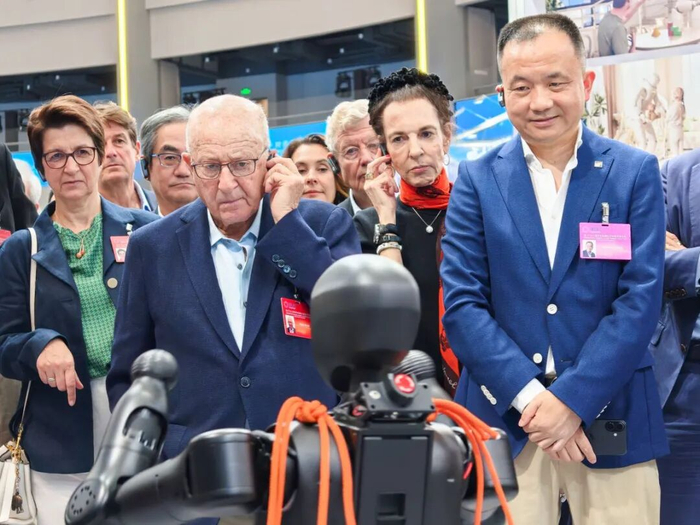
Group 1: Core Themes - The 37th Shanghai Mayor's International Business Leaders Advisory Council focused on "Openness, Innovation, and Inclusiveness" as key strategies for Shanghai's development towards 2030, with over 40 multinational executives participating [1] - The council's membership includes 24 Fortune Global 500 companies with a total market value exceeding $3.5 trillion, indicating strong global representation and confidence in China's market [1] Group 2: Openness - Shanghai is transitioning from factor-driven openness to institutional openness, enhancing global resource allocation through stronger regulatory frameworks [2] - Mizuho Financial Group's approval to establish a wholly foreign-owned securities firm in China marks a significant milestone in the country's financial sector opening [2] - Shanghai is becoming a hub for global business networks, attracting more companies to connect and serve global markets [3] Group 3: Innovation - Siemens has established its largest ecosystem outside Germany in Shanghai, focusing on cross-border data and carbon footprint certification, positioning Shanghai as a key hub for green exports [4] - Novartis proposed a digital health platform leveraging AI to enhance public health services in Shanghai, showcasing the integration of local and international technological innovations [6] - Chinese tech companies are demonstrating significant advancements in AI and robotics, attracting attention from global business leaders [8] Group 4: Inclusiveness - Shanghai is promoting a modern urban development model that addresses new consumer trends, such as health and wellness, and the night economy, reflecting its commitment to inclusive growth [9][10] - L'Oréal and Budweiser highlighted the resilience and potential of the Chinese market, with L'Oréal reporting a 3% growth in sales in the second quarter of this year [9][10] - Adidas emphasized the role of sports in enhancing urban resilience and community well-being, advocating for a supportive infrastructure for sports events [10] Group 5: Future Outlook - The Shanghai Mayor's International Business Leaders Advisory Council continues to serve as a platform for multinational companies to provide insights and recommendations for Shanghai's development [12] - Shanghai has attracted nearly $100 billion in foreign investment over the past five years, with a growing number of foreign enterprises establishing operations in the city [12] - The council's ongoing dialogue reflects the global business community's commitment to Shanghai's future, despite geopolitical uncertainties [13]
翰森制药:授予罗氏新型靶向CDH17抗体药物偶联物HS-20110独占许可,潜在交易总额最高可达14.5亿美元
Cai Jing Wang· 2025-10-17 20:31
Core Viewpoint - Hansoh Pharmaceutical Group Limited has signed a licensing agreement with Roche for HS-20110, a targeted antibody-drug conjugate (ADC) utilizing a clinically validated topoisomerase inhibitor, granting Roche exclusive rights for development and commercialization outside of Greater China [1] Group 1: Licensing Agreement Details - The agreement includes an upfront payment of $80 million and potential milestone payments based on development, regulatory approval, and commercialization progress, with a total deal value of up to $1.45 billion [1] - HS-20110 is a novel potential first-in-class ADC, combining a humanized monoclonal antibody targeting cadherin-17 (CDH17) with a topoisomerase inhibitor payload [1] Group 2: Clinical Development - The therapy shows broad application potential in solid tumors and is currently undergoing global Phase I clinical trials for the treatment of colorectal cancer and other solid tumors in China and the United States [1]
科伦博泰HER2 ADC药物获批用于治疗乳腺癌 该靶点国内已有多款药物上市
Mei Ri Jing Ji Xin Wen· 2025-10-17 15:53
Core Insights - Keren Biotechnology's antibody-drug conjugate (ADC) A166 (also known as "Shutailai") has received approval from the National Medical Products Administration (NMPA) for use in adult patients with HER2-positive breast cancer who have previously received one or more anti-HER2 therapies [1] - The approval is based on a Phase III clinical trial (KL166-III-06) that demonstrated significant improvement in progression-free survival (PFS) compared to T-DM1, with a trend towards improved overall survival (OS) [1] Company Developments - Keren Biotechnology has initiated a Phase II clinical study for A166 targeting HER2-positive breast cancer patients who have previously received topoisomerase inhibitor ADC therapy [2] - A166 is the second ADC approved by Keren Biotechnology, indicating a growing portfolio in the ADC space [1] Industry Context - The HER2-targeted ADC market is currently dominated by international pharmaceutical companies, with Roche's T-DM1 and Daiichi Sankyo/AstraZeneca's DS-8201 leading the market [2] - DS-8201 was first approved in China in February 2023 and has multiple indications, including breast cancer, gastric cancer, and lung cancer, and is included in the national medical insurance directory [2] - Other domestic ADCs, such as Rongchang Biotech's trastuzumab deruxtecan, have also gained approval for various HER2-related indications, contributing to a competitive landscape [3] - The timeline for A166's inclusion in the national medical insurance directory may be challenging, as the preliminary review for the 2025 adjustments has already been completed [3]