
平安银行

Search documents
从“咖啡自由”到“平安生活”:平安银行信用卡的价值跃迁
第一财经· 2026-01-06 08:59
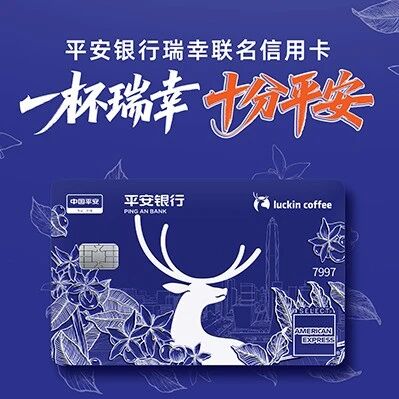
Core Viewpoint - The article highlights a shift in financial services from grand narratives to tangible daily experiences, emphasizing the importance of providing certainty and warmth in everyday life [1][2][10]. Group 1: Financial Trends - Digital RMB is beginning to earn interest like a demand deposit, enhancing the sense of growth for electronic cash [1]. - A credit repair mechanism for small overdue amounts has been initiated, offering a more inclusive space for those occasionally facing financial difficulties [1]. - Various financial support and subsidy policies aimed at boosting consumption are being continuously implemented from central to local levels [1]. Group 2: Consumer Behavior Changes - Consumers are willing to spend but are increasingly concerned about whether their spending is secure [4]. - There is a shift in focus from complex benefits to straightforward, easily redeemable rewards in financial products [4]. - The perception of risk among consumers is evolving, leading to a demand for financial products that can provide real utility in daily life [4][10]. Group 3: Partnership and Product Development - The collaboration between Ping An Bank and Luckin Coffee has resulted in a co-branded credit card that resonates with current consumer sentiments [1][2]. - The theme "A cup of Luckin, ten points of peace" reflects a narrative shift towards providing warmth and certainty in daily life [2][10]. - The design of the co-branded card aims to create a predictable and accessible sense of "small happiness" through its coffee-related benefits [6][10]. Group 4: Product Features and Benefits - New users receive a welcome gift of 12 cups of coffee, distributed over six weeks, to build initial trust [7]. - Weekly rewards for new users encourage habitual card usage by offering two cups of coffee for meeting spending thresholds [7]. - Referral rewards allow existing users to earn additional coffee benefits by bringing in new users, turning social connections into tangible rewards [7]. Group 5: Comprehensive Financial Ecosystem - The co-branded card encapsulates a broader financial ecosystem, transforming the simple pleasure of coffee into a comprehensive safety net [10]. - The "Three Savings" concept (saving worry, time, and money) underpins a one-stop protection system that enhances user trust [10]. - The card offers various protections, including a 72-hour fraud guarantee and significant travel insurance, addressing users' financial security concerns [10][11]. Group 6: Industry Paradigm Shift - The partnership illustrates a paradigm shift in the credit card industry, evolving from a mere payment tool to a more professional "life guardian" [12][13]. - The integration of high-frequency consumer scenarios, like coffee purchases, increases card usage and loyalty [13]. - This model balances short-term usage with long-term companionship, reflecting a new logic of credit card value that emphasizes experience and protection [13][14].



多方联动 战略共生!平安产险携手卡泰驰重塑汽车产业金融生态
Jin Rong Jie· 2026-01-06 08:26
Core Insights - Ping An Property & Casualty and Katai Automotive Internet Platform have signed a comprehensive strategic cooperation agreement to enhance collaboration in the automotive ecosystem [1][2] - The partnership aims to integrate financial services, insurance innovation, and ecosystem co-construction to improve user experience and transform the automotive industry's value chain [1][2] Group 1: Strategic Cooperation - The collaboration will leverage Katai's resources and Ping An's financial strengths to accelerate the restructuring of the automotive industry [2] - Both parties will focus on user-centric approaches and technological innovation throughout the entire lifecycle of automotive services [1][2] Group 2: Financial and Ecosystem Integration - The partnership emphasizes the integration of automotive, financial, and ecological services, breaking down industry boundaries and service barriers [2] - This collaboration aims to shift automotive consumer finance from a single product supply model to a comprehensive service model covering purchase, usage, and maintenance [2]

持股比例升至20%,平安人寿再加仓农行H股
Huan Qiu Lao Hu Cai Jing· 2026-01-06 03:32
从市场表现来看,2025年农业银行A、H股涨幅同步领跑板块。其中,H股年内涨幅超过30%,位列港 股上市银行榜首,股息率为4.86%;A股年内涨幅更是高达43%。 截至2025年12月30日,平安人寿持有约61.8亿股农业银行H股,持仓市值超300亿港元。 值得一提的是,在布局H股的同时,平安人寿也在同步增持农业银行A股。据披露,平安人寿已在2025 年三季度新进农行A股前十大股东名单,截至9月末,持有该行49.13亿股A股股份,持股比例约1.4%。 近日,据港交所最新资料显示,平安人寿于2025年12月30日增持9558.2万股农业银行H股股份,合计耗 资约5.53亿港元。此次增持后,平安人寿持有的农行H股股份由19.79%增至20.1%。 股价的强劲走势背后是稳健的盈利能力,2025年前三季度,农业银行实现营业收入5508.76亿元,同比 增加1.97%;归母净利润2208.59亿元,同比增加3.03%。 回溯中国平安加仓历程,2025年2月,平安人寿增持4772.3万股农业银行,持股比例突破5%并触发首次 举牌。5月,增持1.47亿股农业银行,持股数量达到10%。8月13日,买入2651.5万股农业银行 ...
银华基金管理股份有限公司关于增加部分代销机构为旗下部分基金申购赎回代办券商的公告
Zhong Guo Zheng Quan Bao - Zhong Zheng Wang· 2026-01-05 16:54
Core Viewpoint - The company has signed sales agency agreements with several securities firms to expand the list of brokers for the subscription and redemption of specific exchange-traded funds (ETFs) starting from January 5, 2026 [1][2]. Group 1: Fund Expansion - The company will add Zheshang Securities as a broker for the subscription and redemption of the Yinhua CSI AAA Technology Innovation Corporate Bond ETF (trading name: Kexin Bond ETF Yinhua, fund code: 159112) and the Yinhua GEM Comprehensive ETF (trading name: GEM Comprehensive ETF Yinhua, fund code: 159288) [1]. - The company will also add AVIC Securities as a broker for the subscription and redemption of the Yinhua CSI AAA Technology Innovation Corporate Bond ETF (trading name: Kexin Bond ETF Yinhua, fund code: 159112) [1]. - Additionally, Ping An Securities will be added as a broker for the subscription and redemption of the Yinhua MSCI China A-Share ETF (trading name: MSCI China, fund code: 512380) [1].

银行-保险-券商年度策略
2026-01-05 15:42
Summary of Conference Call Records Industry Overview - **Insurance Industry**: The insurance sector is expected to continue its recovery in 2026, with concerns over interest margin losses easing. Regulatory adjustments have lowered the preset interest rates, and the return on universal insurance products has decreased. Investment returns for insurance stocks are projected to exceed 5%, surpassing the intrinsic value assumptions, indicating a turning point for interest margin losses [1][4]. - **Brokerage Sector**: The brokerage industry is anticipated to benefit from the migration of household deposits, increased market activity, and relaxed regulatory policies. It is expected that the return on equity (ROE) for brokerages will enter an upward cycle from 2025 to 2026, driven by wealth management, investment banking, and international derivatives [1][10]. Key Insights and Arguments - **Investment in A-shares**: Insurance companies are expected to allocate 30% of new premiums to the A-share market annually, resulting in an influx of approximately 300-400 billion yuan, which will support capital market growth and enhance investment returns [1][4]. - **Property Insurance**: The top three property insurance companies maintain a stable market share, with auto insurance being a core growth area. The penetration rate of new energy vehicles is expected to drive an increase in average premiums. China Pacific Insurance anticipates a growth rate of over 4% in auto insurance business, aligning with GDP growth [1][5]. - **Non-auto Insurance Growth**: The non-auto insurance sector is benefiting from increased health insurance coverage, with premium growth expected to approach 10% in 2026 as certain low-base businesses recover. The comprehensive cost ratio for leading insurance companies is projected to stabilize around 97% [1][7]. - **Brokerage Performance Drivers**: Key performance drivers for brokerages include robust growth in wealth management, a recovering investment banking sector, and active proprietary trading. The anticipated improvement in ROE for brokerages could reach 9% under neutral conditions and exceed 10% in optimistic scenarios by 2027 [2][14]. Additional Important Points - **Market Dynamics**: The trend of household deposits moving away from traditional savings products is creating a competitive advantage for participating insurance products, which offer higher returns compared to fixed deposits [1][4]. - **Valuation Recovery**: The insurance sector's valuation is expected to recover significantly, with a potential P/EV (price-to-embedded value) ratio reaching 1.0 in the medium term. The average insurance stock in A-shares has about 40% room for recovery based on 2026 dynamic PEV estimates [8]. - **Recommended Companies**: Key insurance companies to watch include China Ping An, New China Life, China Taiping, China Life, and China Pacific Insurance, with China Ping An being highlighted for its diversified business model and high dividend characteristics [9]. - **Banking Sector Changes**: The banking sector is expected to undergo significant changes driven by policy adjustments, improved fundamentals, and favorable funding conditions, which will support valuation recovery [16]. - **Investment Recommendations**: In the current market environment, it is advisable to focus on stable high-dividend stocks and quality core assets, including major state-owned banks and leading commercial banks [17].

疯狂的银行企微考核:“一天要加十几个,完不成会通报”
Mei Ri Jing Ji Xin Wen· 2026-01-05 13:51
Core Viewpoint - The banking industry is increasingly focusing on the use of corporate WeChat (企微) as a tool for customer relationship management, driven by performance metrics that require employees to add a specific number of clients to their corporate WeChat accounts. This shift reflects the industry's struggle with retail business performance and the need for innovative customer engagement strategies [1][12]. Group 1: Performance Metrics and Employee Pressure - Many banks have implemented strict KPIs for corporate WeChat additions, with requirements such as adding 50 clients per month, leading to financial penalties for underperformance [2][5]. - Employees are sharing their corporate WeChat QR codes on social media to meet these targets, often incentivized by rewards like cash bonuses for high performance [1][2]. - The pressure to meet these metrics has led to a culture of "mutual assistance" among bank employees, where they help each other add clients to fulfill their quotas [1][2]. Group 2: Challenges and Limitations - There are significant challenges in achieving these targets, including restrictions on the types of clients that can be added and the requirement for clients to complete real-name authentication [3][4]. - Some employees have resorted to purchasing client contacts from online platforms, indicating a potential loophole in the system [3][4]. - The effectiveness of corporate WeChat in enhancing customer engagement is questioned, as many employees focus on merely completing tasks rather than fostering genuine client relationships [10][11]. Group 3: Strategic Importance of Corporate WeChat - The push for corporate WeChat is partly to prevent "client privatization," ensuring that customer relationships remain with the bank rather than individual employees [5][6]. - Corporate WeChat is seen as a vital tool for managing customer interactions and data, allowing banks to analyze client behavior and preferences more effectively [5][6]. - The banking sector views corporate WeChat as essential for addressing the challenges of declining retail business performance, with the potential to enhance customer insights and operational efficiency [12][14]. Group 4: Success Stories and Outcomes - Some banks have reported positive outcomes from their corporate WeChat initiatives, such as increased customer engagement and higher transaction volumes [15]. - For instance, a bank in Dongying achieved over 234,900 corporate WeChat friend additions, with a significant portion completing authentication, leading to improved customer activity [15]. - Another bank has successfully provided financial services to nearly a million clients through corporate WeChat, demonstrating its potential as a customer engagement platform [15].




银行今十条:个人信用修复变中介营销噱头;一个月内6家银行敲定首席合规官;周锋获批担任中原银行行长...
Jin Rong Jie· 2026-01-05 11:49
Group 1 - The China Interbank Market Dealers Association is increasing penalties for violations related to bond transaction record-keeping, as many institutions have failed to comply with regulations, hindering effective supervision and enforcement [1] - The Ministry of Commerce and nine other departments are encouraging financial institutions to increase support for green consumption loans, promoting collaboration between financial institutions and trade enterprises to expand the application scenarios for these loans [2] - Several small and medium-sized banks have suspended overseas debit card transactions due to rampant overseas card fraud, indicating a consensus in the industry to enhance risk control measures [3] Group 2 - The newly established financial asset investment companies, such as Xingyin Investment and Zhaoyin Investment, have quickly secured projects, with Xingyin Investment reporting over 6 billion yuan in investments within 45 days of operation, showcasing a divergence in project focus compared to state-owned banks [4] - The implementation of personal credit repair policies starting January 1, 2026, has led to the emergence of illegal intermediaries offering services to "clean" large overdue debts, charging fees ranging from 3,000 to 10,000 yuan [5] - A significant number of banks have appointed chief compliance officers in response to regulatory requirements, with multiple banks announcing such appointments within a month [6] Group 3 - Zhou Feng has been approved to serve as the president of Zhongyuan Bank, with his term starting from December 31, 2025, until the next board election [7] - The banking wealth management sector is expected to shift focus from scale expansion to stability in returns, with a projected 10% growth in market size for 2026, emphasizing a return to genuine stability [8] - The payment industry is undergoing a significant cleanup, with the recent cancellation of the payment license for Zhonggang Yintong, marking the 108th license to be revoked [9] - Wang Feng, the chairman of Bozhou Yaodu Rural Commercial Bank, is under investigation for serious violations of discipline and law, marking a notable case in the banking sector [10]


密集落地!6家银行,敲定首席合规官
证券时报· 2026-01-05 09:48
刚刚过去的2025年底,瑞丰银行公告,聘任现任行长陈钢梁为该行 首席合规官。 证券时报·券商中国记者观察到,2025年是国内银行设置首席合规官岗位密集落地的一年,仅近一个月内,就有江阴银行、平安银行、兴业 银行、南京银行、民生银行5家银行的董事会通过相关聘任首席合规官的议案。 其中,2025年12月以来,就有江阴银行、平安银行、兴业银行、南京银行、民生银行宣布,董事会已通过相关聘任首席合规官的议案。在 此之前,常熟银行、紫金银行、宁波银行和江苏银行也在2025年下半年宣布首席合规官聘任信息。上述部分银行的任职资格尚需监管部门 核准。 "金融机构的特殊性质决定了其合规管理要求高于一般企业。"上海金融与发展实验室副主任董希淼认为,金融机构必须坚持合规经营,培育 合规文化,不断提升合规经营管理水平,只有这样才能更好地保护金融消费者、股东等相关者的合法权益。 但同时,董希淼也认为,设立过多的高管岗位,高管团队内部分工过细,可能会增强内部沟通协调成本。特别对于中小金融机构而言,设立 太多的高管岗位有可能给经营造成负担。上述《办法》也显示,首席合规官可以兼任。董希淼建议多数中小银行由其他高管兼任首席合规 官。 从实际情况 ...

股份制银行板块1月5日跌0.72%,浦发银行领跌,主力资金净流入3.26亿元
Zheng Xing Xing Ye Ri Bao· 2026-01-05 09:09
Group 1 - The banking sector saw a decline of 0.72% on January 5, with Pudong Development Bank leading the drop [1] - The Shanghai Composite Index closed at 4023.42, up 1.38%, while the Shenzhen Component Index closed at 13828.63, up 2.24% [1] - Key stocks in the banking sector showed mixed performance, with Ping An Bank increasing by 0.79% and Pudong Development Bank decreasing by 4.98% [1] Group 2 - The banking sector experienced a net inflow of 326 million yuan from main funds, while retail and speculative funds saw outflows of 134 million yuan and 192 million yuan, respectively [1] - Among individual banks, Industrial Bank had a net inflow of 251 million yuan from main funds, while Ping An Bank and Pudong Development Bank had net outflows from retail investors [2] - The data indicates a significant outflow from Minsheng Bank and China Merchants Bank, with retail investors withdrawing 67.42 million yuan and 1.45 billion yuan, respectively [2]



北京地区绿色金融再添新章 绿色外债试点政策施行首日四笔业务顺利落地
Xin Lang Cai Jing· 2026-01-05 08:51
Core Viewpoint - The green external debt pilot policy is a new initiative by the State Administration of Foreign Exchange to support the development of green finance, with Beijing being one of the first pilot regions [1][2]. Group 1: Policy Implementation - The Beijing branch of the State Administration of Foreign Exchange has issued the "Green External Debt Pilot Business Guidelines (Trial)" to support non-financial enterprises in borrowing external debt for green or low-carbon transformation projects [1][2]. - On the first day of the policy's effectiveness, local banks successfully registered green external debt contracts for four enterprises, with a total signing amount exceeding 60 million RMB, targeting sectors such as photovoltaic industry, green intelligent transportation systems, and information technology construction [1][2]. Group 2: Bank Participation and Support - Several banks have actively participated in the pilot, assisting enterprises in completing financing. For instance, the Bank of China Beijing branch guided a logistics company in registering a green external debt of 5 million USD, while Jiangsu Bank Beijing branch helped a technology logistics company complete a registration of 20 million RMB [2][3]. - The Industrial and Commercial Bank of China Beijing branch facilitated overseas financing for a domestic photovoltaic power station operation project [2][3]. Group 3: Enterprise Engagement - Participating enterprises have reported that the green external debt pilot policy has helped them increase financing amounts and support high-quality development [2][3]. - The "one-stop" service provided by banks has made it easier for enterprises to utilize cross-border funds, reducing operational costs and enhancing the motivation for digital and green transformation [2][3]. Group 4: Future Directions - The Beijing branch will continue to improve the operational mechanism of the green external debt pilot, track the implementation effects of the policy, and enhance policy promotion and guidance to fully release the benefits of the pilot policy [4].