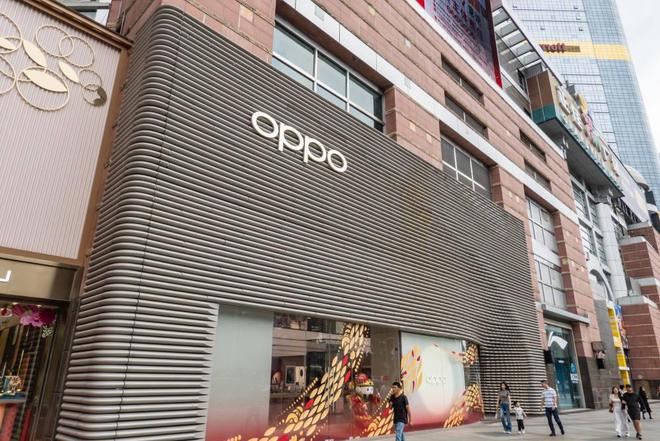
OPPO

Search documents
realme回归OPPO:一场“迟到”的收缩
Di Yi Cai Jing· 2026-01-07 10:38
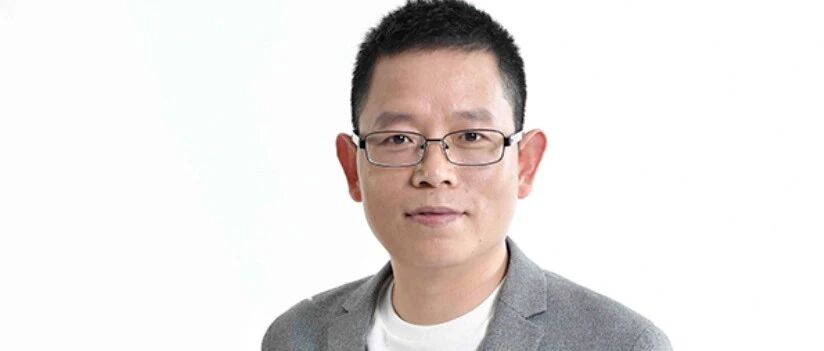
Core Viewpoint - OPPO is undergoing organizational adjustments, with realme returning as a sub-brand to consolidate resources and expand in global markets, amidst a challenging market environment affecting mid-tier smartphone brands [2][4][10]. Group 1: Organizational Changes - OPPO's organizational structure has fluctuated between centralization and decentralization over the past few years [1][9]. - Realme, previously independent, is now set to return to OPPO, with the aim of resource consolidation and global market expansion [4][10]. - Li Bingzhong has been appointed as the Senior Vice President of OPPO, overseeing the operations of OnePlus and realme, reporting directly to OPPO's founder [4][10]. Group 2: Market Environment - The smartphone market is experiencing direct impacts from rising supply chain costs, particularly in storage, accelerating the industry's adjustment cycle [3][10]. - Realme's growth in overseas markets has slowed, facing competition from brands like Transsion in the ultra-low-end market [10][11]. - The competitive landscape is shifting from broad market coverage to tighter organizational efficiency, cost control, and higher product success rates [11]. Group 3: Brand Positioning and Strategy - Realme's return to OPPO is framed as a move to enhance collaboration and resource integration, although specific adjustments have not been publicly detailed [10]. - OnePlus has transitioned from a highly independent brand to a role within OPPO's system, focusing on performance and mid-range products, but risks diluting its brand identity [10][11]. - The overlapping product lines among OPPO, realme, and OnePlus in the 2000 to 3000 yuan price range have led to resource friction, necessitating clearer brand differentiation [9][10].

OPPO Reno14 12GB+256GB 低至 1869.15 元
Xin Lang Cai Jing· 2026-01-07 10:12
OPPO Reno14 5G手机 12GB+256GB版本正在进行优惠活 动。这款手机具备出色的性能与体验,能满足日常多样 使用需求。在天猫精选,此款手机目前活动售价2599 元,下单1件立减200元,叠加88vip 2000 - 200元消费 券,还能在商品页面领取15%国家补贴,实付1869.15元 即可包邮带回家。此外,淘金币可抵194.25元,到手低 至1704.04元。淘金币抵扣方法为在淘金币→我的足迹→ 浏览过或者加购过里面查找。 OPPO Reno14 5G手机 12GB+256GB版本正在进行优惠活动。这款手机具备出色的性能与体验,能满足 日常多样使用需求。在天猫精选,此款手机目前活动售价2599元,下单1件立减200元,叠加88vip 2000 - 200元消费券,还能在商品页面领取15%国家补贴,实付1869.15元即可包邮带回家。此外,淘金币可 抵194.25元,到手低至1704.04元。淘金币抵扣方法为在淘金币→我的足迹→浏览过或者加购过里面查 找。 该手机原价2799元,现在以1869.15元的价格就能拥有,非常划算。 该手机原价2799元,现在以1869.15元的价格就能拥有, 非 ...
realme回归OPPO,将成为旗下子品牌
2 1 Shi Ji Jing Ji Bao Dao· 2026-01-07 09:18
Group 1 - The core point of the article is that realme, previously an independent brand from OPPO, will return to OPPO as a sub-brand to enhance resource integration and collaboration among OPPO, realme, and OnePlus [1][3] - Realme's CEO, Li Bingzhong, will lead the overall sub-brand business, while OnePlus China President Li Jie will maintain his responsibilities, indicating a strategic alignment between the brands [1] - The integration aims to provide more innovative and differentiated products and improved customer service for global users [1] Group 2 - Realme and OnePlus have overlapping product focuses, particularly in gaming performance and imaging, highlighting the intense competition in the domestic smartphone market [3] - Realme has faced challenges in establishing offline service points, which has limited its market penetration despite its focus on cost-performance [3] - The integration is expected to create a more comprehensive synergy across products, markets, channels, and resources among OPPO, realme, and OnePlus [3] Group 3 - OPPO is actively expanding its overseas market presence, leveraging realme's established global sales network, particularly in India, where realme has performed well [4] - The smartphone market is facing unprecedented supply chain challenges, particularly with rising storage costs, which are expected to impact mid-range product sales in 2026 [4] - Resource integration and synergy are becoming key competitive factors among smartphone brands in the current market landscape [4]
realme回归OPPO 将成为旗下子品牌
2 1 Shi Ji Jing Ji Bao Dao· 2026-01-07 09:13
Core Viewpoint - The brand realme, which was previously spun off from OPPO, will return to OPPO as a sub-brand, aiming for better resource integration and collaboration among OPPO, realme, and OnePlus to enhance product innovation and service efficiency [1] Group 1: Company Strategy - Realme will be led by CEO Li Bingzhong and will fully integrate into OPPO's after-sales service system [1] - The collaboration aims to provide more innovative and differentiated products to global users [1] Group 2: Market Positioning - OnePlus and realme are preparing for a new product launch, with both brands continuing to focus on gaming performance and imaging capabilities [2] - The competition in the smartphone market is intense, particularly in the gaming and imaging segments, with similar positioning seen in vivo's iQOO brand [2] Group 3: Operational Challenges - Realme has faced challenges in establishing offline service points, which has limited its market penetration despite its focus on cost-performance [2] - The integration of realme, OnePlus, and OPPO is expected to create a more comprehensive synergy across products, markets, and resources [2] Group 4: Sales Performance - OnePlus has reported a 42.3% sales growth, leading the industry, with the OnePlus 15 surpassing the sales of the OnePlus 13 [3] - Realme, which originated in India, has shown better sales performance in overseas markets compared to domestic sales, which will benefit OPPO's overseas strategy post-integration [3] Group 5: Industry Challenges - The smartphone market is facing unprecedented supply chain challenges, particularly with rising storage costs impacting mid-range product sales forecasts for 2026 [3] - The high storage prices are expected to lead to further brand consolidation within the smartphone industry [3][4]
“一盒内存条可买上海一套房”
Guan Cha Zhe Wang· 2026-01-07 09:12
Core Insights - The price of high-capacity DDR5 server memory modules has surged dramatically, with some units exceeding 40,000 yuan, leading to comparisons with real estate prices in Shanghai [1] - The ongoing AI boom is driving a "super cycle" in the global memory market, with significant price increases observed in DRAM products [8][10] Price Trends - Hynix and Samsung's 256G DDR5 6400MHz server memory modules are priced above 40,000 yuan, with some listings reaching 49,999 yuan per unit [1] - The average price of new homes in Shanghai is approximately 58,524.58 yuan per square meter, indicating that a box of 256G DDR5 server memory could purchase an 80 square meter apartment [1] Market Dynamics - Since February 2025, DRAM prices have been on the rise, with some segments increasing by over 100% [8] - The price of DDR5 memory chips has surged by 307% since September 2025, while DDR4 chips have seen a 158% increase [8] - Major manufacturers like Samsung and SK Hynix are shifting production capacity towards AI server memory, tightening supply in other markets [8][10] Future Projections - DRAM contract prices are expected to increase by 55-60% in Q1 2026, driven by high demand from cloud service giants [9][10] - The price hikes are anticipated to affect other sectors, with smartphone and PC manufacturers facing increased costs, leading to price increases for new devices [10] Industry Impact - Companies like Xiaomi, OPPO, and Dell have already raised prices on new products due to rising memory costs, with increases ranging from 100 to 600 yuan [10] - The global smartphone shipment is projected to decline by 2.1% in 2026, while PC manufacturers are also planning price hikes, with Dell announcing increases of 10% to 30% [10] - Analysts predict that the current "super cycle" in memory pricing may last until 2027 [10]

realme回归OPPO,成为旗下品牌
Guan Cha Zhe Wang· 2026-01-07 08:53
Core Insights - Realme will return to OPPO as a sub-brand, enhancing resource integration and collaboration within the company [1] - OPPO will now manage three brands: OPPO, Realme, and OnePlus [1] - Realme's CEO, Li Bingzhong, will lead the sub-brand business, while OnePlus China President, Li Jie, will maintain his current responsibilities [1] Group 1 - Realme was initially launched as a sub-brand of OPPO in the Indian market and gained popularity with its first product, Realme 1, in May 2018 [1] - After becoming independent, Realme successfully established itself in various overseas markets, including India, Malaysia, and Thailand, before returning to the domestic market in 2019 [1] - Despite its independent operations in branding and market management, Realme has continued to rely on OPPO's resources for supply chain, procurement, and manufacturing [1] Group 2 - Realme's product strategy focuses on high cost-performance, with the Neo series targeting gamers and emphasizing high performance, fast charging, and strong heat dissipation [2] - The digital series of Realme is positioned in the mid-range market, often featuring highlights in imaging and design [2] - As of December 21, 2025, Realme is projected to hold a cumulative market share of 1.27% in the domestic smartphone market, ranking seventh [2] Group 3 - The integration of Realme into OPPO signifies the completion of business consolidation for OPPO's sub-brands, enhancing its product matrix to cover a wide range of consumer needs from budget to high-end [2] - Realme users will benefit from direct access to OPPO's offline service centers for after-sales support [2] - There are concerns regarding potential product overlap between Realme, OnePlus, and OPPO, raising questions about future product line planning [2]
realme回归OPPO 成为旗下子品牌
Mei Ri Jing Ji Xin Wen· 2026-01-07 08:28
每经讯 1月7日,有消息称,realme将回归OPPO。据悉,realme CEO(首席执行官)李炳忠将领导整体 子品牌业务,一加中国区总裁李杰职责不变。 对此,记者联系OPPO方面了解情况,对方回应称:"为进一步协同作战、整合资源,realme将回归 OPPO,成为旗下子品牌。未来,OPPO与realme、一加将共同为全球用户提供差异化产品。" 公开资料显示,realme由李炳忠于2018年在印度创立,初期主打高性价比,2018年9月全球用户突破100 万,2019年realme回归国内市场。 (文章来源:每日经济新闻) ...
realme回归OPPO 李炳忠将领导OPPO子品牌业务
Zheng Quan Shi Bao Wang· 2026-01-07 07:33
人民财讯1月7日电,记者最新获悉,为进一步发挥协同作战优势,更好地整合资源,realme将回归 OPPO,作为旗下子品牌。未来,realme、一加两个子品牌将与OPPO主品牌形成战略协同,形成差异化 打法。realme CEO李炳忠将领导整体子品牌业务,一加中国区总裁李杰职责不变,realme新品将如期发 布,同时将全面接入OPPO售后服务体系。 ...
realme将回归OPPO,成为旗下子品牌
Feng Huang Wang· 2026-01-07 07:13
凤凰网科技讯1月7日,据内部消息,为进一步协同作战、整合资源,realme将回归OPPO,成为旗下子 品牌。未来,OPPO与realme、一加将共同为全球用户提供更具创新力和差异化的产品,以及更便捷周 到的服务。 ...
独家丨realme回归OPPO,李炳忠将负责全部子品牌业务
雷峰网· 2026-01-07 06:53
" 市场收缩背景下,OPPO「握指成拳」。 " 作者丨马广宇 编辑丨李雨晨 雷峰网独家消息,OPPO内部消息表示:为进一步发挥协同作战的优势,更好地整合资源,realme将回归 OPPO,作为旗下子品牌。未来,realme、一加两个子品牌将与OPPO主品牌形成战略协同,形成差异化 打法。 据悉,realme CEO 李炳忠(Sky Li)将领导整体子品牌业务,一加中国区总裁李杰职责不变。realme 新品将如期发布,同时将全面接入OPPO 售后服务体系。 随着一加、realme 的陆续回归,OPPO体系资源会得到更好的整合,主品牌和子品牌将形成更清晰的战略 协同关系。从 2025 年的业绩表现来看,这种整合已经初见成效,欧加系在中国和海外市场的份额都提升 明显,增速位居市场前列。 有行业人士分析指出,此次整合,有助于 OPPO 更好地集中资源,拓展全球市场。 本文作者长期关注智能硬件及终端,对终端渠道、业内动态感兴趣的行业人士,欢迎添加作者微信 (ByArsT)交流。 // 近期热门文章 对话 OPPO 姜昱辰:没有明确拒绝与豆包手机合作,坚持与三方生态共建 独家丨OPPO AI部门再次整合,成立智慧产品研发 ...