
吉利汽车

Search documents
吉利汽车(00175.HK)3月3日耗资6757.37万港元回购436.3万股
Ge Long Hui· 2026-03-03 09:09
Group 1 - The core point of the article is that Geely Automobile announced a share buyback plan, intending to repurchase 4.363 million shares at a cost of HKD 67.5737 million [1] - The buyback will occur on March 3, 2026, with a price range of HKD 15.35 to HKD 15.80 per share [1]
吉利汽车(00175)3月3日斥资6757.37万港元回购436.3万股
智通财经网· 2026-03-03 09:08
Core Viewpoint - Geely Automobile (00175) announced a share buyback plan, indicating confidence in its stock value and future prospects [1] Group 1 - The company will repurchase 4.363 million shares at a total cost of HKD 67.5737 million [1] - The buyback is scheduled to take place on March 3, 2026, suggesting a strategic long-term investment approach [1]
吉利汽车(00175) - 翌日披露报表
2026-03-03 09:04
FF305 翌日披露報表 (股份發行人 ── 已發行股份或庫存股份變動、股份購回及/或在場内出售庫存股份) 表格類別: 股票 狀態: 新提交 公司名稱: 吉利汽車控股有限公司 (註7) (i) 上市發行人已收取其在是次股份發行或庫存股份出售或轉讓應得的全部款項; (viii) 有關債券、借貸股份、票據或公司債券的信託契約/平邊契據經已製備及簽署,有關詳情已送呈公司註冊處處長存檔(如法律如此規定)。 第一章節註釋: 呈交日期: 2026年3月3日 如上市發行人的已發行股份或庫存股份出現變動而須根據《香港聯合交易所有限公司(「香港聯交所」)證券上市規則》(「《主板上市規則》」)第13.25A條 / 《香港聯合交易所有限公司GEM證券 上市規則》(「《GEM上市規則》」)第17.27A條作出披露,必須填妥第一章節 。 | 第一章節 | | | | | | | | | | --- | --- | --- | --- | --- | --- | --- | --- | --- | | 1. 股份分類 | 普通股 | 股份類別 | 不適用 | | 於香港聯交所上市 | 是 | | | | 證券代號 (如上市) | 001 ...
碳酸锂行情日报: 躲得了初一,躲不过十五?
鑫椤锂电· 2026-03-03 08:58
Market Overview - The price of lithium carbonate has significantly dropped, with the domestic battery-grade lithium carbonate (99.5%) settling at 162,500 CNY/ton, a decrease of approximately 10,000 CNY from the previous trading day [1] - The price for battery-grade lithium hydroxide (56.5% coarse particles) is now 152,500 CNY/ton, down by 5,000 CNY [1] - The futures market shows the main contract for lithium carbonate closing at 150,860 CNY/ton, a decline of 22,520 CNY, with a noticeable decrease in open interest [1] Price Trends - The ICC lithium battery settlement prices indicate a downward trend for various lithium products, with battery-grade lithium carbonate dropping from 17.25 to 16.25 CNY/kg, and lithium hydroxide from 15.75 to 15.25 CNY/kg [2] - The average price level for energy storage cells suggests that second-tier companies can withstand lithium carbonate prices around 161,000 CNY [4] Industry Focus - SQM's lithium carbonate sales in Chile reached 66,200 tons in Q4 2025, marking a 14% year-on-year increase and a 5% quarter-on-quarter increase, setting a new historical high [5] - Geely's lithium iron phosphate project in Jiangxi has officially commenced production, with an annual capacity of 30,000 tons for lithium iron phosphate cathode materials [5] Market Influences - The recent decline in lithium prices is attributed to several factors, including poor sales performance from car manufacturers during the extended Spring Festival holiday, with companies like Li Auto and NIO reporting declines of 12.5% and 4.5% respectively [7] - The ongoing conflict in the Middle East raises concerns about the demand for energy storage in that region, which is a significant export market for China, potentially leading to a slowdown in demand [7] - There are reports of major lithium battery manufacturers reducing orders, although material suppliers have not confirmed any order cuts [7] - The expectation is that the lithium carbonate market will undergo a corrective adjustment in the short term, with strong demand support around the 130,000 to 140,000 CNY range, indicating no significant change in the supply-demand dynamics [7]

一周一刻钟,大事快评(W145):详解“里程费”
Shenwan Hongyuan Securities· 2026-03-03 08:45
Investment Rating - The report rates the automotive industry as "Overweight," indicating an expectation for the industry to outperform the overall market [11]. Core Insights - The report discusses the increasing focus on "mileage fees" for new energy vehicles, analyzing the core logic, real motivations, and future implementation prospects within the context of China's fiscal and tax structure [3][4]. - It highlights a significant funding gap for road maintenance, estimated at approximately 300 billion yuan, exacerbated by the rising penetration of new energy vehicles, which is projected to exceed 57% by 2025 [4][5]. - The report anticipates that Hainan will likely be the first region to pilot the mileage fee policy due to its unique free trade port advantages, with initial trials expected to focus on commercial and operational vehicles [5]. - A proposed solution to the funding gap is the implementation of a "free-flow charging mechanism" based on Beidou positioning technology, which aims to replace fuel taxes and ensure fair road usage fees [5]. Summary by Sections Section: Mileage Fee Analysis - The report emphasizes that the current tax system is a core funding source for road construction and maintenance, with fuel taxes integrated into the price of gasoline [4]. - It notes that the rapid increase in new energy vehicle adoption is leading to a growing mismatch between traditional fuel tax revenues and the funding needs for road maintenance [4]. Section: Policy Implementation - The report outlines that while the reform of road maintenance funding is urgent, the comprehensive rollout of mileage fee policies will take time, with Hainan expected to lead pilot programs [5]. - It suggests that the initial implementation will likely target commercial vehicles, with private car adoption contingent on trial outcomes and market acceptance [5]. Section: Technological Solutions - The report identifies the Beidou positioning system as a potential technological solution for implementing a fair and efficient mileage fee system, which could effectively address the funding shortfall for road maintenance [5]. - It mentions that the Beidou free-flow system has already achieved full coverage and large-scale application in Hainan, providing a solid technical foundation for future pilot projects [5]. Section: Investment Recommendations - The report recommends focusing on companies involved in the Beidou free-flow charging project and those that have established operational management platforms, such as Information Development [3]. - It highlights investment opportunities in various segments of the automotive industry, including new energy vehicle manufacturers and key component suppliers, emphasizing the importance of AI and automation trends [3].



港股市场策略周报-20260303
Zhe Shang Guo Ji Jin Rong Kong Gu· 2026-03-03 08:36
Group 1: Market Performance Review - The Hong Kong stock market showed steady performance this week, with structural differentiation; energy sectors led gains while technology stocks faced pressure. The Hang Seng Composite Index, Hang Seng Index, and Hang Seng Technology Index increased by 0.42%, 0.82%, and decreased by 1.41% respectively [3][14] - Among the primary industry sectors, 9 sectors rose while 3 sectors fell. The healthcare, consumer discretionary, and information technology sectors dropped by 4.95%, 1.82%, and 0.98% respectively [3][14] - The overall situation indicated that large-cap stocks, growth stocks, and value stocks performed well, while small-cap stocks also showed resilience, with technology stocks experiencing deeper declines [14] Group 2: Macroeconomic Environment - The macroeconomic environment indicates that the domestic economy is still in a bottoming phase, with some recovery in economic data. The focus of future policies will be on technological innovation and expanding domestic demand [4][42] - The People's Bank of China has emphasized the implementation of more proactive macro policies, with a focus on expanding domestic demand and optimizing supply [4][42] - The market's liquidity remains relatively ample, with significant net inflows from southbound funds amounting to HKD 6.705 billion, although this represents a decrease of HKD 21.095 billion compared to the previous week [4][42] Group 3: Sector Allocation Outlook - The report favors sectors that are relatively prosperous and benefit from policy support, such as new energy, innovative pharmaceuticals, and AI technology. Additionally, low-valuation state-owned enterprises that are stable in performance and stock price are also highlighted [4][42] - Local Hong Kong banks, telecommunications, and public utility dividend stocks are expected to benefit from the interest rate reduction cycle, as their fundamentals are relatively independent [4][42] Group 4: Buyback Statistics - The buyback market saw increased activity this week, with 39 companies participating, an increase of 9 from the previous week. The total buyback amount reached HKD 982 million, up by HKD 708 million from last week [25][26] - Xiaomi Group (1810.HK) led the buybacks with HKD 399.989 million, followed by Geely Automobile (0175.HK) with HKD 210.857 million [25][26]
港股市场回购统计周报-20260303
Zhe Shang Guo Ji Jin Rong Kong Gu· 2026-03-03 08:36
Group 1: Weekly Buyback Statistics - The total buyback amount for the week was HKD 982 million, an increase of HKD 708 million from the previous week[10] - A total of 39 companies conducted buybacks this week, an increase of 9 companies compared to last week[10] - Xiaomi Group (1810.HK) led the buybacks with an amount of HKD 399.99 million[10] Group 2: Industry Distribution of Buybacks - The information technology sector accounted for the highest buyback amount at HKD 517 million[13] - The number of companies conducting buybacks in the information technology sector was the highest, with 14 companies participating[13] - The consumer discretionary sector ranked second with 10 companies engaging in buybacks[13] Group 3: Individual Company Buyback Data - Geely Automobile (0175.HK) ranked second in buybacks with HKD 210.86 million[10] - NetEase Cloud Music (9899.HK) was third with a buyback amount of HKD 74.99 million[10] - The buyback amounts for the top three companies were 40.00%, 21.00%, and 7.50% of the total buyback amount respectively[10] Group 4: Significance of Buybacks - Company buybacks are defined as the repurchase of shares from the secondary market using liquid cash[21] - Large-scale buyback trends often occur during bear markets, indicating that companies believe their stock prices are undervalued[21] - Historical data shows that buyback waves in the Hong Kong market since 2008 have been followed by subsequent price increases[21]
伊朗禁止一滴石油流出,iPhone17e官宣发布,Claude服务突发中断爆雷
新财富· 2026-03-03 08:11
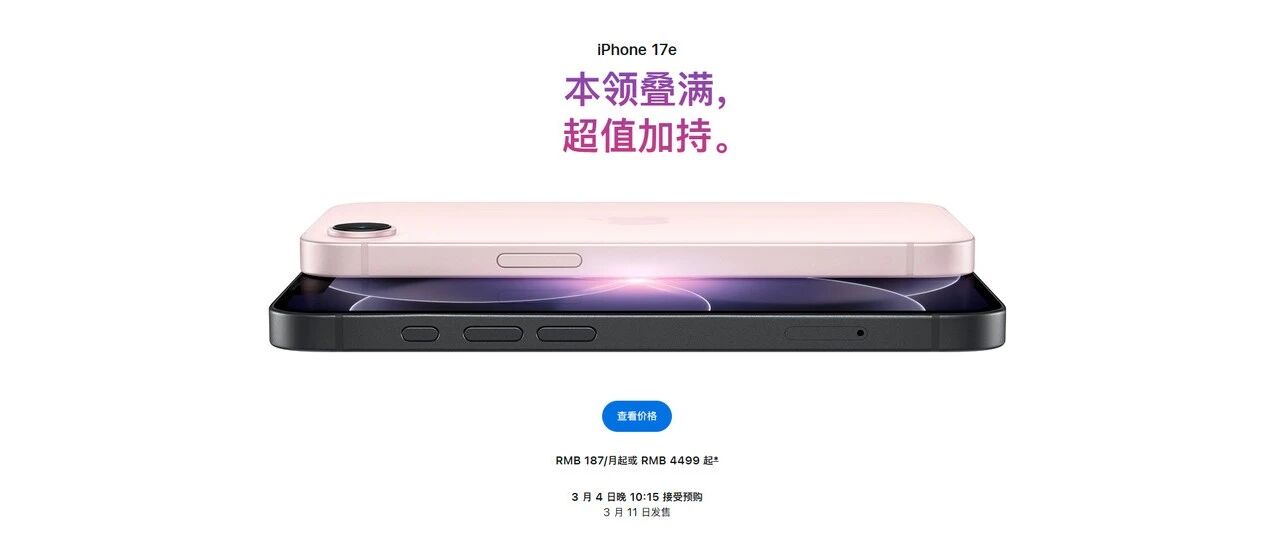
Geopolitical Developments - Iran's military has declared a ban on any oil flow through the Strait of Hormuz, threatening to destroy vessels attempting to pass and targeting oil pipelines, with 26 tankers currently hovering nearby and 27 tankers halted [2] - The situation in the Middle East has significantly impacted the shipping market, with many shipping companies suspending cargo acceptance and some raising prices or imposing surcharges, leading to a surge in shipping rates to $6,000 per FEU [3] - A report from JPMorgan warns that if the Strait of Hormuz is completely blocked, oil production from major Middle Eastern countries could cease within 25 days, as current oil exports have dropped to one-fourth of normal levels, with Brent crude prices reflecting a risk premium of $9 to $10 per barrel [4] Technology and Consumer Electronics - Apple has launched the iPhone 17e on its Chinese website, priced at 4,499 yuan, targeting the mid-range market to attract more consumers amid growth pressures, particularly in China [5] - Xiaomi unveiled its first electric concept supercar, the Xiaomi Vision Gran Turismo, but has no plans for mass production, as the company is currently transitioning its vehicle lineup [7] - Xiaomi's robots have begun practical applications in automotive factories, achieving partial autonomous operation, marking a significant step in the company's robotics development [8] Automotive Industry Insights - The domestic car market faced downward pressure in February due to an extended Spring Festival holiday, with major companies like SAIC and BYD reporting declines in sales, while BYD's overseas sales surpassed domestic sales for the first time, reaching 100,000 units [6] Renewable Energy Sector - Six departments, including the Ministry of Industry and Information Technology, have issued guidelines to support the comprehensive utilization of photovoltaic components, encouraging financial institutions to provide credit support for green technology upgrades and waste photovoltaic component projects [9] Stock Market Performance - In the U.S. stock market, major indices showed mixed results, with the Nasdaq up 0.36% and the S&P 500 up 0.04%, while the Dow Jones fell 0.15%, influenced by geopolitical factors and sector rotation [18] - The A-share market saw all three major indices decline, with the Shanghai Composite Index down 1.43%, while energy sectors like oil and gas saw significant gains, contrasting with declines in technology and internet service sectors [19] - Asian markets, particularly Japan and South Korea, experienced sharp declines due to rising geopolitical tensions, with the Nikkei 225 down 3.06% and the KOSPI index down 7.24%, triggering a trading halt [20]
吉利汽车(00175.HK)2月销量点评:1+2月出口表现强劲
Ge Long Hui· 2026-03-03 07:10
Core Viewpoint - Geely Auto reported a February sales volume of 206,000 units, showing a year-on-year increase of 0.6% but a month-on-month decrease of 23.7% [1] Group 1: Sales Performance - The sales breakdown includes 73,000 units from the Galaxy brand (down 3.9% year-on-year, down 11.9% month-on-month), 27,000 units from Lynk & Co (up 59% year-on-year, down 5.3% month-on-month), and 24,000 units from Zeekr (up 70% year-on-year, up 0.1% month-on-month) [1] - Domestic sales were 145,000 units (down 19% year-on-year, down 31% month-on-month), while exports reached 61,000 units (up 140% year-on-year, up 0.6% month-on-month) [1] Group 2: Future Product and Growth Strategy - Geely is entering a strong new product cycle in 2026, with the launch of competitive new models including the Boyue REV, Zeekr 8X, Galaxy A7 electric version, Galaxy M8, and Galaxy Warship [1] - The company plans to release three flagship six-seat SUVs in 2025: Galaxy M9, Lynk & Co 900, and Zeekr 9X, with expected monthly sales of 5,000-10,000 units, 2,000-8,000 units, and 5,000-9,000 units respectively [1] - In 2026, Geely aims to launch a large five/six-seat SUV, the Zeekr 8X, priced between 300,000-400,000 yuan, further expanding its high-end product lineup [1] Group 3: Export Growth and Financial Projections - The company targets a 50% increase in export sales for 2026, aiming for 640,000 units, with a steady growth forecast of 274,000 units in 2023, 415,000 units in 2024, and 420,000 units in 2025 [2] - Despite domestic sales pressures, the strong export performance demonstrates resilience, with total sales expected to reach 3.6 million and 4.02 million units in 2026 and 2027, respectively, reflecting year-on-year growth of 19% and 12% [2] - The company anticipates net profit margins of 5.2%, 5.9%, and 5.9% for 2025-2027, with net profits projected at 17.4 billion, 25 billion, and 27.8 billion yuan, respectively [2] Group 4: Valuation and Investment Outlook - Geely is expected to achieve a valuation recovery as the automotive sector rebounds, with a projected PE ratio of only 6.2 for 2026, significantly below historical levels [3] - The company forecasts total sales of 720,000 units in Q1 2026, with net profit expected to exceed 4.5 billion yuan [3] - The net profit estimates for 2025-2027 have been adjusted to 17.4 billion, 25 billion, and 27.8 billion yuan, corresponding to PE ratios of 8.9, 6.2, and 5.6 [3]
汽车行业:乘用车海外(出口)系列五:欧盟“价格承诺”机制落地,再论中国品牌欧洲份额提升
GF SECURITIES· 2026-03-03 06:27
Investment Rating - The report recommends a "Buy" rating for several companies in the automotive sector, particularly focusing on those with strong PHEV/HEV technology reserves and active market expansion in Europe [5]. Core Insights - The EU's "price commitment" mechanism is expected to significantly enhance the profitability of Chinese electric vehicle (EV) brands exporting to Europe, with a notable increase in market share and sales volume [13][14]. - Chinese passenger vehicles have achieved a market share of 5.4% in Europe, with a year-on-year increase of 2.7 percentage points, driven by strong sales in the EV, PHEV, and HEV segments [16][21]. - The report highlights the rapid growth of Chinese brands in the PHEV market, with a significant contribution from companies like BYD and SAIC, which are validating their export strategies [16][47]. Summary by Sections 1. EU "Price Commitment" Mechanism - The EU's new guidelines for price commitments are anticipated to positively impact the profits of Chinese EV manufacturers, allowing them to avoid high tariffs and improve their profit margins [13][14]. - In 2025, Chinese brands achieved a total of 246,000 EV sales in Europe, marking an 80.3% increase year-on-year, with a market share of 9.7% [13][14]. 2. Market Share Growth of Chinese Brands - In 2025, Chinese passenger vehicles in Europe recorded a total sales volume of 717,000 units, reflecting a 104.8% year-on-year increase, with significant contributions from EV, PHEV, and HEV models [16][21]. - The PHEV segment saw the most substantial growth, with a market share increase of 11.0% year-on-year, while HEV and EV segments also showed positive trends [21][36]. 3. PHEV and HEV Market Dynamics - The report notes that the PHEV market is where Chinese brands are gaining the most traction, with a market share of 13.9% in 2025, while HEV models also saw a notable increase [36][37]. - The competitive landscape in the HEV market is favorable for Chinese brands, with significant sales growth driven by models from SAIC and other manufacturers [36][56]. 4. Investment Recommendations - The report suggests focusing on companies with robust PHEV/HEV technology and those actively expanding their presence in the European market, such as BYD, Geely, and Great Wall Motors [36][76]. - The anticipated growth in the PHEV segment is expected to replicate the success seen in the domestic market, driving further electrification globally [76][77].

