xAI

Search documents
马斯克合并SpaceX与xAI
Xin Lang Cai Jing· 2026-02-04 15:46
Core Viewpoint - SpaceX is set to acquire xAI at an estimated valuation of approximately $1.25 trillion, aiming to develop a space-based data center and expand the scope of "Musk concepts" ahead of a potential IPO [1]. Group 1 - The acquisition is valued at around $1.25 trillion [1]. - The purpose of the acquisition is to develop a space-based data center [1]. - The move is intended to broaden the "Musk concept" transaction scope before a possible IPO [1].
SpaceX and xAI merge, Waymo's Raise, plus more in this week's #technews
20VC with Harry Stebbings· 2026-02-04 15:36
Here are the five biggest bits of tech news this week. Number one, SpaceX has completed its acquisition of XAI, valuing the combined private company at 1.25% trillion as Elon Musk moves to pair his rocket business with an AI unit that's burning about a billion a month and lays out plans to use SpaceX to build spacebased data centers. Second on the list, Microsoft.Now the second largest market cap loss ever. They lost $360 billion in market cap in a day. So what's the problem there.It looks like OpenAI overe ...


Elon Musk's SpaceX Merges With xAI In Trillion-Dollar Merger: 'Not Just The Next Chapter, But The Next Book'
Yahoo Finance· 2026-02-04 15:31
Core Insights - The merger of SpaceX and xAI is framed as a long-term investment in humanity's future, combining SpaceX's space capabilities with xAI's artificial intelligence technology [2][3] - The transaction values SpaceX at approximately $1 trillion and xAI at around $250 billion, marking a record-setting merger in the M&A landscape [3][4] - The combined entity is expected to price shares at about $527, with SpaceX's last valuation at $800 billion and xAI's at $230 billion [5] Company Developments - SpaceX is preparing for a potential IPO later this year, which could value the company at over $1.5 trillion, enhancing its growth narrative with the inclusion of xAI [6] - The merger further integrates Musk's business empire, which includes Tesla, Neuralink, the Boring Company, and social media platform X [7] Market Context - The merger is noted as a significant event in the context of global M&A, surpassing the previous record held by Vodafone's acquisition of Mannesmann [4] - The deal is expected to attract regulatory scrutiny regarding governance, valuation, and potential conflicts of interest [10]
AMD's $30 Billion Vanishing Act: Why A Massive Earnings Beat Triggered A Brutal Selloff - Apple (NASDAQ:AAPL), Advanced Micro Devices (NASDAQ:AMD)
Benzinga· 2026-02-04 14:11
Core Viewpoint - AMD's recent earnings report showed a revenue beat of $600 million, but the stock price fell 9%, indicating market concerns about future growth and execution risks [1][4]. Financial Performance - AMD reported a revenue beat of $600 million for the fourth quarter, but $390 million of this was attributed to a one-time windfall from unexpected sales in China [5][6]. - For the first quarter of 2026, AMD anticipates only $100 million in revenue from China, a 75% decrease from previous expectations, leading to a potential shortfall of $400 million to $800 million [6]. Cost Management - AMD has consistently failed to control operating expenses, exceeding guidance by approximately $200 million for four consecutive quarters, which has negatively impacted data center operating margins [7][8]. - The company is currently valued at 40 times forward earnings, relying on the assumption that profits will grow faster than revenue, which is contingent on effective cost control [8]. Technology Dependencies - AMD's new MI450 chip relies on UALink switches that will not be available in volume until 2027, which could limit the chip's performance and deployment [9][10]. - The production of necessary HBM4 memory chips is sold out for 2026, with AMD being the third priority supplier, which could lead to increased costs or shipment delays [14]. Customer Financial Health - OpenAI, AMD's largest customer, is facing significant financial challenges, having lost $12 billion in a single quarter and requiring over $100 billion in emergency funding [15][16]. - The deal with OpenAI is contingent on successful funding, and any delays could impact AMD's revenue significantly [16]. Market Sentiment - Wall Street is pricing AMD's stock for perfection, assuming all critical factors align favorably; any failure in two out of six key areas could lead to a valuation drop to 25-30 times earnings, representing a potential downside of 25% to 40% [22]. - Analysts express caution, with some firms downgrading price targets while maintaining buy ratings, indicating a lack of confidence in AMD's near-term execution [23]. Future Outlook - AMD's growth is heavily dependent on external factors, including technology readiness, customer financial stability, and effective cost management, which are currently outside the company's control [24]. - Investors are advised to monitor upcoming earnings calls for indications of revenue trends and management's ability to meet guidance [25].


AMD's $30 Billion Vanishing Act: Why A Massive Earnings Beat Triggered A Brutal Selloff
Benzinga· 2026-02-04 14:11
Core Viewpoint - AMD's recent earnings report showed a revenue beat of $600 million, but the stock price fell 9%, indicating market concerns about future growth and execution risks [1][4][24]. Financial Performance - AMD reported a revenue beat of $600 million for the fourth quarter, but $390 million of this was attributed to a one-time windfall from unexpected sales in China [5][6]. - For the first quarter of 2026, AMD anticipates only $100 million in revenue from China, a 75% decrease from previous expectations, leading to a potential shortfall of $400 million to $800 million [6]. Cost Management - AMD has consistently failed to control operating expenses, exceeding guidance by approximately $200 million for four consecutive quarters, which has negatively impacted data center operating margins [7][8]. - The company is currently facing a drop in data center operating margins from 29% to 25%, with a promise to reach 35% by late 2026, which appears increasingly unlikely [7]. Product Development Risks - AMD's growth strategy heavily relies on the successful launch of its MI450 chip, which requires UALink switches that will not be available in volume until 2027 [9][10]. - The MI450 chip's performance is contingent on the availability of 432 gigabytes of HBM4 memory, which has already been sold out for 2026, leaving AMD with limited options [14]. Customer Dependency - OpenAI, AMD's largest customer, is facing significant financial challenges, having lost $12 billion in a single quarter and requiring over $100 billion in emergency funding [15][16]. - The deal with OpenAI is not secured by cash reserves and is contingent on successful funding, which poses a risk to AMD's revenue [16]. Market Perception - Wall Street is pricing AMD's stock at 40 times forward earnings, assuming perfect execution across multiple factors, including timely product launches and cost control [3][22]. - Analysts express caution, with some firms downgrading price targets while maintaining buy ratings, indicating a lack of confidence in AMD's current valuation [23]. Future Outlook - AMD's growth is hindered by external dependencies, including technology that is not yet available, memory supply issues, and customer financial stability [24]. - Investors are advised to monitor upcoming earnings calls for indications of revenue trends and management's ability to control spending, with critical assessments expected by October 2026 [25].
Control the Stack, Control the Future: The New Era of Supply-Chain Power
Globenewswire· 2026-02-04 13:35
Group 1: SpaceX and xAI Acquisition - SpaceX's acquisition of xAI represents a significant move towards vertical integration, allowing the company to control an end-to-end AI compute supply chain from Earth to orbit [2][3] - By combining launch capabilities, satellite manufacturing, and AI models, SpaceX aims to become a foundational infrastructure layer in the AI sector, potentially deploying up to one million orbital "data center" satellites [3] - The acquisition is framed by Elon Musk as a pivotal moment, indicating a shift in strategy that emphasizes ownership of the entire supply chain [2] Group 2: Benefits from Tesla's Success - SpaceX benefits from Tesla's advancements, which serve as both a financial engine and a testing ground for technologies applicable to aerospace [4] - Tesla's cash flow and market value enable SpaceX to fund long-term projects without relying solely on external financing, while innovations in AI and manufacturing from Tesla can be leveraged to enhance SpaceX's operations [4] Group 3: Vertical Integration in AI and Supply Chain Control - The strategic advantage of vertical integration is highlighted, as it addresses AI's bottlenecks in compute, power, and data movement [5] - SpaceX's ownership of the cheapest launch system and the world's largest satellite constellation positions it to deploy infrastructure at unmatched costs, reshaping the competitive landscape [5][6] Group 4: Kraig Labs and Advanced Materials - Kraig Biocraft Laboratories is adopting a similar vertical integration strategy by securing access to mulberry gardens for spider silk production, enhancing logistics and cost stability [7][8] - Spider silk's unique properties make it a compelling material for various applications, including defense, aerospace, and medical fields, with potential multi-billion-dollar market opportunities [9][10] Group 5: Other Companies Following the Trend - Apple's move to mass-produce its own AI server chips and develop proprietary data centers reflects a strategy to enhance control over costs and scalability in AI [12][13] - Amazon's development of custom AI accelerators and ownership of power infrastructure allows it to optimize performance and reduce dependence on third-party suppliers, reinforcing its competitive edge in cloud and AI services [14][15]
马斯克团队调研中国头部光伏企业!“太空光伏”概念股再爆发
Sou Hu Cai Jing· 2026-02-04 13:17
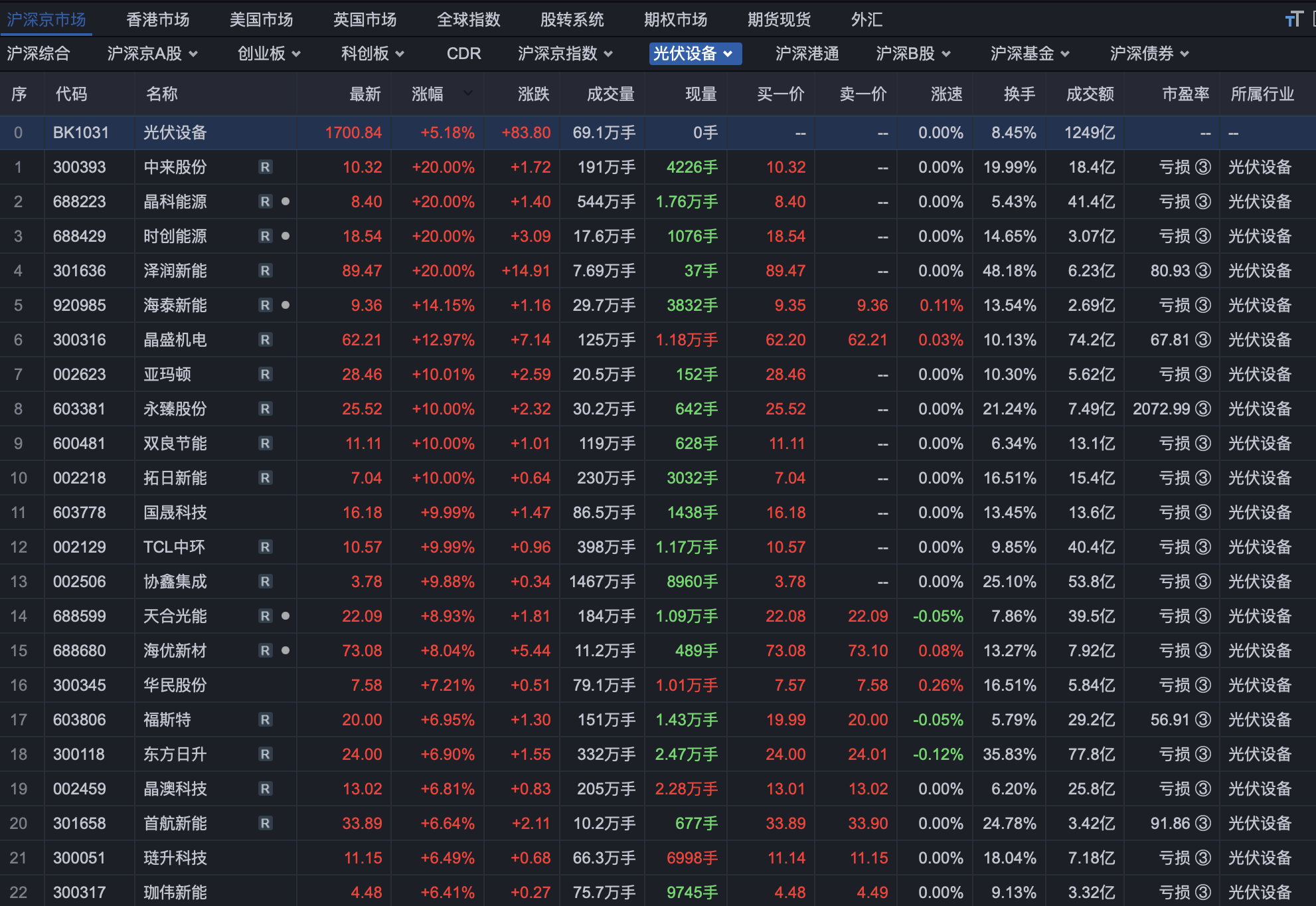
"太空光伏"概念股再次爆发。 截至2月4日收盘,光伏ETF(515790)报收1.157,涨幅3.12%,这已是该ETF连续两个交易日大涨,2月3日光伏ETF涨幅超6%。个股方面,截至4日收盘,晶 科能源(688223.SH)、协鑫集成(002506.SZ)等多只光伏个股涨停。 消息面上,有市场传闻称,马斯克团队近期走访了中国多家光伏企业,考察项目涉及设备、硅片、电池组件等环节,其中重点考察了有异质结、钙钛矿技术 路线的光伏企业。晶科能源相关工作人员回应称,公司近期确实与马斯克团队相关考察团有过接触,考察团对公司的技术储备、生产设备等展开了解,马斯 克团队对国内主流光伏企业也均有考察。对于考察细节、具体合作进展等,南都湾财社记者联系晶科能源并发函,对方仅表示:"不方便回应"。 马斯克为何力挺太空光伏?据南都湾财社记者了解,在太空极端环境下,可选择的持续能源极为有限:化学电池的能量密度有限,无法实现自主补充;核电 系统成本高昂、审批复杂,并且技术仍处于试验阶段。 | 沪深京市场 | | 香港市场 | 美国市场 | 英国市场 | 全球指数 | | 股转系统 | 期权市场 | | --- | --- | --- | ...

SpaceX 不是“提款机”!分析师:整合xAI或为航天巨头埋下财务隐患
Hua Er Jie Jian Wen· 2026-02-04 12:45
Core Viewpoint - Elon Musk's decision to integrate his AI startup xAI into SpaceX poses potential risks for the aerospace giant, which has established a significant lead in the industry through reusable rocket technology and reduced launch costs [1][2]. Group 1: Financial Implications - The potential merger is valued at $1.25 trillion, with SpaceX contributing $1 trillion, but there is skepticism regarding any substantial synergies between the two entities [1]. - SpaceX has agreed to inject $2 billion into xAI, which is facing a cash burn rate of $1 billion per month, with no signs of slowing down due to competition for chips and data center resources [1][4]. - SpaceX achieved approximately $16 billion in revenue last year, with a profit of about $8 billion, resulting in a profit margin of 50% [3]. Group 2: Competitive Landscape - SpaceX operates in a less competitive environment in the aerospace sector, primarily facing competition from Blue Origin and Eutelsat Communications, while xAI is in a crowded and costly field with major players like Alphabet, Microsoft, and Nvidia [2][4]. - The company has completed 165 missions, capturing over 50% of global launch tasks, solidifying its dominance in the space race against China [3]. Group 3: Strategic Fit and Risks - There is a lack of strategic alignment between SpaceX and xAI, as SpaceX does not currently require xAI's capabilities to expand its operations [6]. - The integration of xAI into SpaceX may introduce unnecessary risks to its competitive advantage in the aerospace sector, which is primarily driven by its established business model and government contracts [7]. - The potential for a "space data center" does not necessitate the acquisition of xAI, as other AI companies would likely seek to utilize SpaceX's launch services instead [6].
马斯克成全球首位身家超8000亿美元者,超出第二富豪5780亿美元
Sou Hu Cai Jing· 2026-02-04 12:42
IT之家 2 月 4 日消息,据《福布斯》2 月 3 日报道,随着 SpaceX 收购 xAI,埃隆 · 马斯克以 8520 亿美元(IT之家注:现汇率约合 5.92 万亿元人民币)个人 净资产刷新人类财富纪录。 SpaceX 与 xAI 合并后实体估值达 1.25 万亿美元(现汇率约合 8.68 万亿元人民币)。据《福布斯》测算,此次交易凭空让马斯克财富单日增加了 840 亿美元 (现汇率约合 5834.27 亿元人民币)。 除 SpaceX 外,马斯克还拥有特斯拉约 12% 的股份,价值约 1780 亿美元(现汇率约合 1.24 万亿元人民币),并持有价值约 1240 亿美元(现汇率约合 8612.49 亿元人民币)的特斯拉股票期权。 另外,这一估算未计入特斯拉股东在去年 11 月批准的一项"创纪录薪酬方案"。该方案可能在满足所谓"火星任务(Mars shot)"业绩里程碑后,最多为马斯 克带来额外价值高达 1 万亿美元的股票(税前且不含解锁限制性股份的成本),其中包括在未来 10 年内使特斯拉市值增长超过八倍等目标。 也就是说,马斯克目前身家构成主要包括: 并购前:马斯克持有 SpaceX 42% 股权 ...

马斯克又干逆天事?核电站级AI算力来了!
Xin Lang Cai Jing· 2026-02-04 12:22
Core Viewpoint - The development of the Colossus 2 supercomputer by Elon Musk represents a significant leap in AI capabilities, emphasizing the importance of energy supply and efficiency management in supporting large-scale AI models, which is now recognized as a critical factor in the AI industry [2][38]. Group 1: Colossus 2 Overview - Colossus 2 is the world's first AI training cluster with a capacity of 1 million kilowatts, serving as a cornerstone for Musk's "automobile + AI + energy" ecosystem [4][40]. - The supercomputer utilizes 555,000 NVIDIA GPUs, achieving a theoretical peak performance of 275-348 EFLOPS, which is more computational power than humanity has used in the past several decades [6][42]. - Colossus 2's construction was completed in just 10 months, showcasing Musk's exceptional engineering execution compared to traditional supercomputing centers that typically take years to build [13][49]. Group 2: Strategic Goals and Applications - The primary goal of Colossus 2 is to support the next-generation Grok 5 model, which aims to enhance AI's ability to understand dynamic video content, a crucial requirement for autonomous driving [4][40]. - The supercomputer is designed to create a closed loop of "data - computing power - model - application," allowing Tesla to optimize its computing resources and reduce costs [8][44]. - Musk's strategy includes leveraging existing NVIDIA GPUs while gradually developing proprietary chips to mitigate risks associated with supply chain dependencies [8][44]. Group 3: Energy Management and Environmental Concerns - Colossus 2 employs a dual power supply system of grid electricity and natural gas turbines to ensure stable energy supply, addressing the significant power demands of the supercomputer [19][55]. - The facility is under scrutiny for its environmental impact, with investigations into emissions from its natural gas turbines, highlighting the ongoing challenge of balancing high energy consumption with environmental compliance [19][57]. - The integration of Tesla's Megapack energy storage system allows for efficient energy management, reducing costs and providing backup power during outages [24][60]. Group 4: Industry Impact and Future Outlook - Colossus 2 is set to redefine the automotive AI landscape, shifting the focus from traditional hardware competition to AI computing power and model capabilities [33][69]. - The advancements made possible by Colossus 2 are expected to accelerate the adoption of full-scene autonomous driving and enhance in-car AI systems, leading to a more intelligent user experience [30][68]. - The competitive edge gained by Musk through Colossus 2 may create significant barriers for other companies in the automotive AI sector, potentially reshaping the industry's competitive dynamics [71][72].