
赛力斯

Search documents
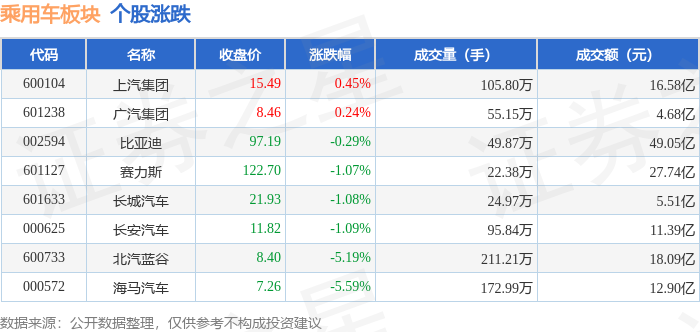
乘用车板块1月13日跌0.71%,海马汽车领跌,主力资金净流出6.24亿元
Zheng Xing Xing Ye Ri Bao· 2026-01-13 08:56
Market Overview - The passenger car sector experienced a decline of 0.71% on January 13, with Haima Automobile leading the drop [1] - The Shanghai Composite Index closed at 4138.76, down 0.64%, while the Shenzhen Component Index closed at 14169.4, down 1.37% [1] Individual Stock Performance - SAIC Motor Corporation (600104) closed at 15.49, up 0.45% with a trading volume of 1.058 million shares and a turnover of 1.658 billion yuan [1] - GAC Group (601238) closed at 8.46, up 0.24% with a trading volume of 551,500 shares and a turnover of 468 million yuan [1] - BYD (002594) closed at 97.19, down 0.29% with a trading volume of 498,700 shares and a turnover of 4.905 billion yuan [1] - Seres (601127) closed at 122.70, down 1.07% with a trading volume of 223,800 shares and a turnover of 2.774 billion yuan [1] - Great Wall Motors (601633) closed at 21.93, down 1.08% with a trading volume of 249,700 shares and a turnover of 551 million yuan [1] - Changan Automobile (000625) closed at 11.82, down 1.09% with a trading volume of 958,400 shares and a turnover of 1.139 billion yuan [1] - BAIC BluePark (600733) closed at 8.40, down 5.19% with a trading volume of 2.112 million shares and a turnover of 1.809 billion yuan [1] - Haima Automobile (000572) closed at 7.26, down 5.59% with a trading volume of 1.729 million shares and a turnover of 1.290 billion yuan [1] Fund Flow Analysis - The passenger car sector saw a net outflow of 624 million yuan from main funds, while retail investors contributed a net inflow of 451 million yuan [1] - The detailed fund flow for individual stocks shows: - SAIC Motor had a net inflow of 1.5 billion yuan from main funds, but a net outflow of 1.01 billion yuan from retail investors [2] - Great Wall Motors had a net inflow of 11.625 million yuan from main funds, with a net outflow of 9.9974 million yuan from retail investors [2] - GAC Group experienced a net outflow of 8.916 million yuan from main funds, with a net inflow of 440,000 yuan from retail investors [2] - BYD had a significant net outflow of 92.804 million yuan from main funds, but a net inflow of 10.8052 million yuan from retail investors [2] - Changan Automobile faced a net outflow of 1.15 billion yuan from main funds, while retail investors contributed a net inflow of 94.9543 million yuan [2] - Haima Automobile had a net outflow of 162 million yuan from main funds, but a net inflow of 143 million yuan from retail investors [2] - Seres had a net outflow of 2.02 billion yuan from main funds, with a net inflow of 178 million yuan from retail investors [2] - BAIC BluePark had a net outflow of 206 million yuan from main funds, while retail investors contributed a net inflow of 135 million yuan [2]







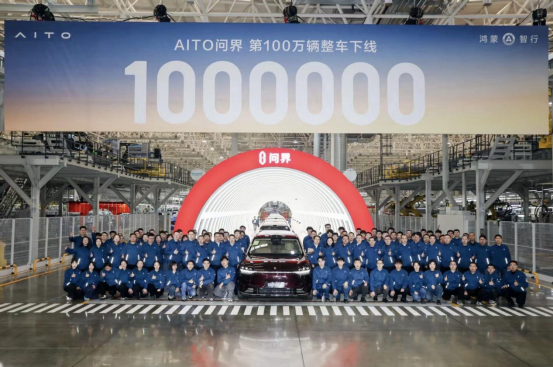
问界第100万辆整车下线 开启跨界融合高质量发展新篇章
Zheng Quan Shi Bao Wang· 2026-01-13 08:40
Core Insights - AITO achieved a significant milestone with the production of its one-millionth vehicle, the AITO M9, marking a successful implementation of a cross-industry integration model in the Chinese automotive sector [1][3] - The collaboration between Seres and Huawei has led to a unique deep cooperation mechanism, enabling rapid growth and high-quality development in the automotive market [3][4] Group 1: Milestones and Achievements - The AITO M9 has reached a delivery milestone of 270,000 units, while the M5, M7, and M8 models have collectively gained significant market traction [1][4] - AITO has maintained a strong market presence, with the M9 being the sales champion in the 500,000-level category for 21 consecutive months [4] Group 2: Strategic Collaborations - The partnership between Seres and Huawei has fostered a new paradigm of "cross-industry integration," enhancing both automotive manufacturing and smart technology [3][5] - AITO is positioned as a key player in the Chongqing "33618" modern manufacturing cluster, driving technological upgrades among core suppliers and enhancing regional economic development [5] Group 3: Future Plans and Commitments - AITO aims to achieve its second million-vehicle target within two years, focusing on user service, safety, and high-end vehicle production [5] - The company plans to expand its model development and overseas market presence while maintaining a commitment to high-quality service for its users [5]
问界未来两年目标:年均销量50万辆
新华网财经· 2026-01-13 07:30
Group 1 - The chairman of Seres Group, Zhang Xinghai, announced that the Wanjie brand achieved its first million vehicle sales in five years, with a goal to reach the second million in the next two years, aiming for an average annual sales of over 500,000 vehicles from 2026 to 2027 [1]
问界第100万辆整车下线:力争两年内实现第二个百万辆目标
Feng Huang Wang· 2026-01-13 07:14
Core Insights - AITO Wenjie brand achieved a significant milestone with the production of its one-millionth vehicle, the Wenjie M9, in just 46 months since the launch of its first vehicle [1] - The brand has seen strong sales performance, with the Wenjie M9 leading the sales chart in the price segment above 500,000 yuan for 21 consecutive months, and the Wenjie M8 being the top seller in the 400,000 yuan segment for six months [1] - The company aims to reach a second million vehicle production target within two years and plans to expand its presence in international markets [1] Production and Sales Performance - The Wenjie brand, a collaboration between Seres and Huawei, has produced a total of 1 million vehicles, with the M9 model being the latest addition [1] - Cumulative deliveries for the Wenjie M8 have exceeded 400,000 units, while the M7 has also shown strong performance [1] - The product range covers price segments from 200,000 to 600,000 yuan, including models M5, M7, M8, and M9 [1] Technological Advancements - The Wenjie vehicles' advanced driver assistance systems have accumulated over 5 billion kilometers of driving distance, successfully avoiding potential collisions more than 2.6 million times [1] - The brand has established nearly 400 service outlets across the country to support its customer service network [1] Future Outlook - Huawei's executive, Yu Chengdong, indicated that the partnership with Seres will continue to yield significant developments in the future [1] - The company is focused on leveraging its initial success to achieve further growth and market expansion [1]

赛力斯入选“2025中国企业ESG百强”榜单
Xin Lang Cai Jing· 2026-01-13 05:48
Group 1 - The core viewpoint of the article emphasizes the growing importance of ESG (Environmental, Social, and Governance) as a key metric for high-quality corporate development and a vital link between corporate value and social value [1][2] - The "2025 China ESG Top 100" list was released by Sina Finance, evaluating over 5,000 A-share listed companies and mainland companies listed in Hong Kong using 18 industry-specific ESG evaluation models and over 150 ESG indicators [1][2] - The list serves as a benchmark for industry development and provides valuable decision-making references for investors [1][2] Group 2 - Sais is recognized for its significant contributions in the ESG field, ranking 61st on the "2025 China ESG Top 100" list, which reflects its commitment to sustainable development practices [2][8] - The publication of the list is seen as an authoritative acknowledgment of the sustainable practices of the listed companies and aims to promote the core values of ESG across the industry [2][8] - Companies are encouraged to integrate ESG principles into their strategic planning, operations, and supply chain collaboration to achieve a symbiotic relationship between commercial and social value [2][8] Group 3 - The list includes notable companies such as China Construction Bank, China Mobile, Agricultural Bank of China, Tencent, and others, all receiving a five-star rating in their respective industries [4][5][6] - The ranking highlights the diverse sectors represented, including finance, telecommunications, information technology, and renewable energy, showcasing the broad commitment to ESG practices across industries [4][5][6] Group 4 - The Sina Finance ESG Rating Center is the first Chinese platform dedicated to ESG information and ratings, promoting sustainable development and responsible investment [11] - The center aims to establish ESG evaluation standards suitable for China's unique characteristics and to enhance corporate ratings in the ESG domain [11]

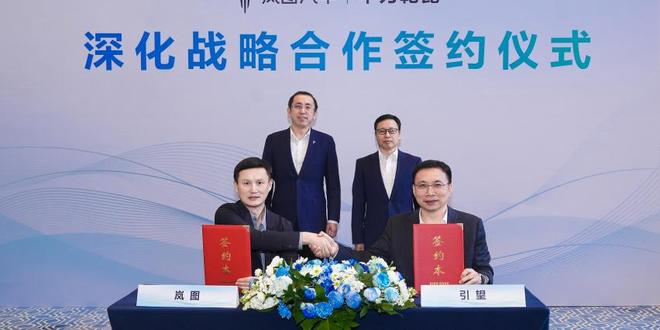
岚图汽车与引望深化合作 双方计划组建联合团队
Jing Ji Guan Cha Bao· 2026-01-13 04:33
Group 1 - Lantu Automotive and Huawei's subsidiary, Shenzhen Yingwang Intelligent Technology, signed a strategic cooperation agreement to deepen collaboration in smart driving and smart cockpit development [2] - The partnership aims to innovate development models, establish joint teams, and enhance efficiency to accelerate vehicle launch timelines and create popular application scenarios [2] - A joint operation team for To C software will be formed to cover the entire value chain from product planning to user operations, enhancing user experience with intelligent software services [2] Group 2 - Lantu Automotive's sales have been growing, with a cumulative delivery of 150,169 vehicles in 2025, representing an 87% year-on-year increase [3] - Huawei is expanding its influence in the automotive sector through partnerships, including the establishment of Yingwang, which was fully registered in January 2024 with a capital of 1 billion yuan [3][4] - By March 2025, the ownership structure of Yingwang changed to 80% held by Huawei and 10% each by Avita Technology and Seres Automotive after strategic investments [3][4] Group 3 - Yingwang has entered an independent operation phase, integrating technology and personnel from Huawei's original automotive solutions unit, focusing on core areas like smart driving and intelligent cockpit [4][5] - As of October 2025, Huawei's Kran ecosystem has partnered with 14 automotive companies, with 33 mass-produced models launched across various price ranges [4][5] - Lantu Automotive is leveraging its relationship with Huawei to secure more strategic advantages for future growth [5]
问界未来两年目标:年均销量50万辆
第一财经· 2026-01-13 03:39
编辑 |瑜见 记者|肖逸思 1月13日,赛力斯集团董事长张兴海在赛力斯第100万辆整车下线仪式上宣布,问界品牌首个百万辆销 量耗时五年达成,未来两年将力争完成第二个百万辆目标,即2026至2027年年均销量需突破50万 辆。 ...
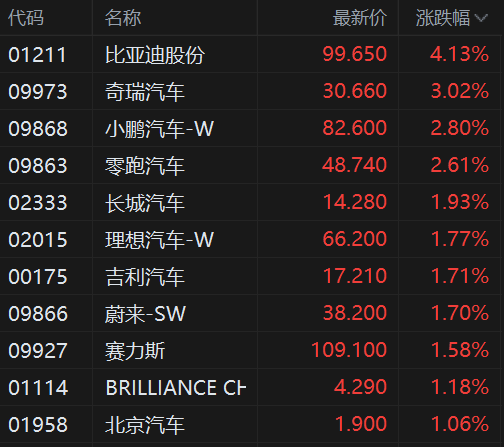
港股汽车股普涨,比亚迪股份涨超4%,中欧电车案获进展,对欧出口预计年增20%
Ge Long Hui· 2026-01-13 03:35
Group 1 - Hong Kong automotive stocks experienced a general increase, with BYD shares rising over 4%, Chery Automobile up 3%, and Xpeng Motors increasing by 2.8% [1] - Other notable gains included Li Auto, Great Wall Motors, Geely, NIO, and Seres, all rising close to 2% [1] - The latest stock prices and percentage changes for key companies are as follows: BYD at 99.650 (+4.13%), Chery at 30.660 (+3.02%), Xpeng at 82.600 (+2.80%), and others showing similar upward trends [2] Group 2 - The Ministry of Commerce announced progress in consultations regarding the EU-China electric vehicle case, agreeing to provide general guidance on price commitments for Chinese exporters of pure electric vehicles to the EU [2] - According to Cui Dongshu from the Passenger Car Association, initial implementation of the price commitment mechanism may lead to short-term fluctuations in sales as some manufacturers adjust pricing and product structure [2] - As manufacturers adapt to new rules, local production capacity is released, and product competitiveness improves, Chinese electric vehicle sales in the EU market are expected to gradually recover [3] - It is projected that from 2026 to 2028, Chinese electric vehicle exports to the EU will maintain an annual growth rate of around 20%, becoming a significant driver of global electric vehicle market growth [3]

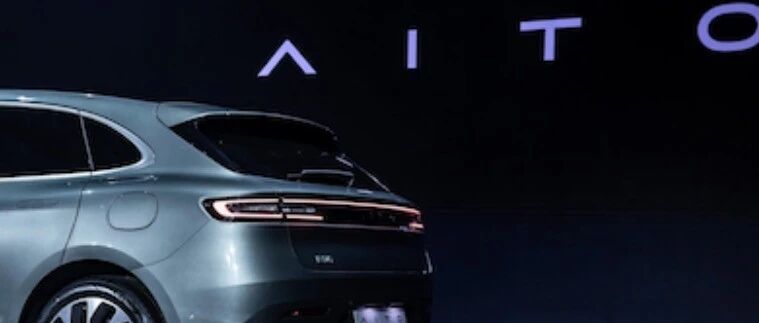
问界下线第100万辆整车
Jin Rong Jie· 2026-01-13 03:35
Group 1 - The core point of the article is that the company Wanjie has achieved the production milestone of its 1 millionth vehicle at the Seres Super Factory in Chongqing, with plans to reach the next million in two years [1] - The chairman of Seres, Zhang Xinghai, stated that it took 5 years to produce the first million vehicles, indicating a significant acceleration in production pace for the next milestone [1]
问界未来两年销量目标年均50万辆
Di Yi Cai Jing· 2026-01-13 03:21
Core Insights - The chairman of Seres Group, Zhang Xinghai, announced the achievement of the first million vehicle sales for the AITO brand, which took five years to accomplish [1] - The company aims to reach a second million vehicle sales target within the next two years, requiring an average annual sales of over 500,000 vehicles from 2026 to 2027 [1] Summary by Categories Company Performance - The AITO brand has successfully reached a milestone of one million vehicle sales [1] - The timeline for achieving this milestone was five years [1] Future Goals - Seres Group is setting an ambitious target to achieve another million vehicle sales in the next two years [1] - To meet this target, the company needs to exceed an average annual sales of 500,000 vehicles during the years 2026 to 2027 [1]