
Stellantis N.V.

Search documents
投资41亿欧元,宁德时代西班牙工厂奠基
Guan Cha Zhe Wang· 2025-11-27 06:57
Core Points - CATL and Stellantis have officially laid the foundation for a battery factory in Spain, marking the largest investment by a Chinese company in the country, amounting to €4.1 billion (approximately ¥33.68 billion) [1][3] - The factory, located in Figueruelas, Aragon, is expected to train up to 4,000 workers and is projected to start production by the end of 2026, supplying batteries for Stellantis' automotive plants [1][3] Investment and Economic Context - Spain is the second-largest automobile producer in Europe, with lower labor costs and industrial energy prices approximately 20% below the EU average, positioning itself as a battery hub [3] - The Spanish government plans to build three additional battery factories, including projects from companies like Farasis Energy, PowerCo, and InoBat [3] Trade Relations and Cooperation - The year marks the 20th anniversary of the comprehensive strategic partnership between China and Spain, with recent visits by Spanish King Felipe VI to China aimed at enhancing cooperation in trade, industry, technology, and green energy [3] - Spain's Minister of Industry, Trade and Tourism expressed the country's willingness to collaborate with various nations, particularly China [3] Local Workforce and Training - CATL plans to collaborate with local universities to train Spanish workers and will send some employees to its manufacturing base in China for additional training [4][5] - The proportion of Chinese workers is expected to decrease to below 10% as the factory expands, providing more job opportunities for local workers [5] Technological Knowledge Gap - The automotive industry in Spain is facing stricter local procurement requirements for components, but there is a noted lack of technical knowledge in battery production within the country [3] - A local industry representative acknowledged that Chinese battery technology is several years ahead of Spain's capabilities, indicating a need for Spain to observe and learn [3]


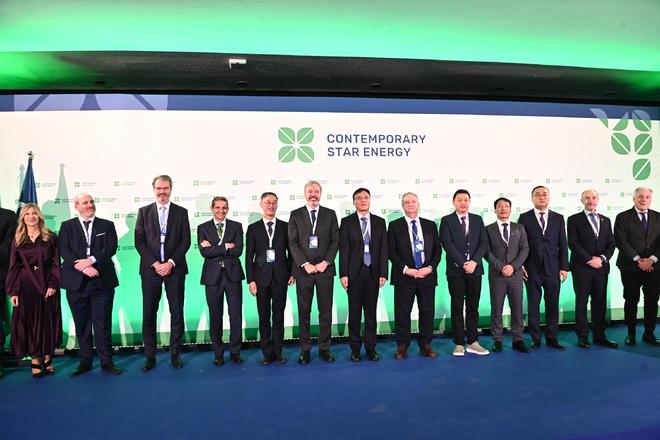
“中企乐意分享技术,为西班牙培训4000名工人”
Guan Cha Zhe Wang· 2025-11-27 06:38
Core Points - Spain is actively responding to the electric vehicle industry's transition, aiming to solidify its position as the second-largest automotive producer in the EU, following Germany [1] - CATL's investment in a lithium iron phosphate battery factory in Spain aligns with the country's development goals and strengthens its partnership with China [1] - The joint venture between CATL and Stellantis has commenced construction with a total investment of €4.1 billion, marking the largest single investment by China in Spain [1] - The factory is expected to start production by the end of 2026, with an annual capacity of 50 GWh [1] - The project has received €300 million in funding from the EU, highlighting Europe's reliance on Chinese technology despite potential trade rule tightening [1] Investment and Employment - The factory will train up to 4,000 local workers, with a commitment from CATL to share technology to support Europe's energy transition [1][4] - CATL plans to send 2,000 Chinese employees to Spain in phases for the factory's construction, which is unprecedented for Chinese industrial projects in Europe [4] - The CEO of the Spanish factory indicated that local hiring is a priority, with plans to collaborate with Spanish universities for targeted training [4] Political and Strategic Context - The project has garnered support from both major political parties in Spain, reflecting a strategic ambition to establish Spain as a European battery production hub [5] - Spain offers competitive advantages such as industrial electricity prices 20% lower than the EU average and low labor costs, attracting global capital [5] - Despite a hardening stance from Europe towards China, Spain maintains close trade relations, as evidenced by recent high-level visits and discussions on bilateral cooperation [6]
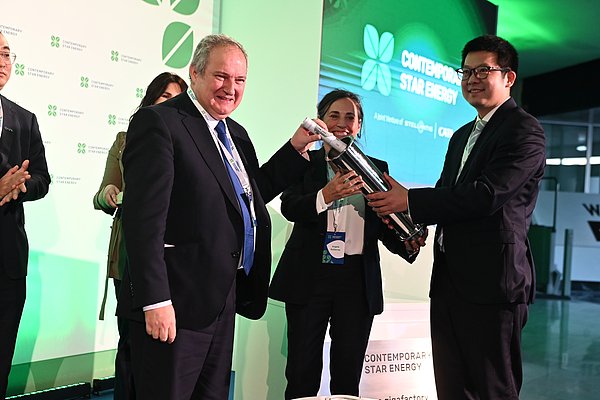
宁德时代西班牙合资电池工厂奠基
Xin Hua She· 2025-11-27 05:05
Core Points - The foundation ceremony for a lithium iron phosphate battery factory jointly invested by CATL and Stellantis took place in Aragon, Spain, marking one of the largest Chinese investments in Spain with a total investment of €4.1 billion [1] - The factory is expected to utilize renewable energy fully and aims to commence production by the end of 2026 [1] - The factory represents a significant milestone in Spain's electric vehicle industry chain and reflects the deepening technological and industrial cooperation between Spain and China [1] Investment and Economic Impact - The factory is projected to have an annual production capacity of 50 GWh, providing lithium iron phosphate batteries for electric vehicles [1] - The establishment of the factory is anticipated to enhance Aragon's position in the European electric vehicle supply chain and inject long-term economic momentum into the region [1] - The project is seen as a commitment to green transformation and industrial upgrading, with both countries aiming to share technology and opportunities for mutual development [1] Environmental Commitment - The joint venture aims to achieve complete carbon neutrality during its operations [1] - The project emphasizes the importance of collaboration in achieving green transformation, highlighting that no single country or enterprise can accomplish this alone [1]

这一领域日益升温!为何被称为“朝阳产业”?
Zhong Guo Qi Che Bao Wang· 2025-11-27 03:27
Core Viewpoint - The automotive parts remanufacturing industry is emerging as a significant sector in developed economies, driven by environmental sustainability and economic efficiency, with a focus on remanufacturing key components like engines and transmissions [3][4][5]. Group 1: Industry Overview - Remanufacturing of automotive parts is becoming standard in developed countries, with a notable increase in the remanufacturing rate of components [2]. - Key components targeted for remanufacturing include engines, transmissions, steering systems, starters, and generators, among others [3]. - Remanufactured products must meet strict quality standards, ensuring they are comparable to new products in terms of performance and safety [3][4]. Group 2: Environmental and Economic Benefits - Remanufacturing can achieve cost savings of up to 50%, energy savings of 60%, and material savings of 70%, while reducing air pollutant emissions by over 80% [4]. - The remanufacturing process contributes to extending product lifecycles and offers significant environmental and economic benefits [4]. Group 3: Market Dynamics - The global remanufacturing industry is valued at over $200 billion, with the U.S. remanufacturing sector alone exceeding $100 billion [5]. - The industry is supported by a robust ecosystem, including over 12,000 vehicle dismantling companies and 20,000 remanufacturing firms in the U.S., achieving a 90% recovery rate of parts from scrapped vehicles [5]. Group 4: Technological Advancements - Advances in technology, such as 3D printing and nanocoating, are enhancing the remanufacturing process, allowing for the restoration of worn components and improving their durability [6]. - Companies are integrating remanufacturing into their supply chains, considering the remanufacturability of parts from the design phase [6]. Group 5: Competitive Landscape - Remanufacturing is reshaping the competitive dynamics of the automotive industry, pushing companies to adopt modular and standardized designs for easier disassembly and remanufacturing [7]. - The development of core repair technologies in remanufacturing is creating barriers to entry in high-end remanufacturing markets [7]. Group 6: Policy and Market Development - Industry experts suggest establishing clear policies and standards to promote remanufacturing, including insurance coverage for remanufactured parts [7][8]. - There is a call for creating remanufacturing industry clusters in regions with strong automotive foundations, alongside integrating remanufacturing into ESG assessments for companies [8].

中企在西合资超级电池工厂举行奠基仪式
人民网-国际频道 原创稿· 2025-11-27 02:17
Core Viewpoint - The foundation ceremony for a large lithium iron phosphate battery factory, a joint venture between China's CATL and multinational automotive group Stellantis, was held in Zaragoza, Spain, marking a significant investment in the electric vehicle sector and green energy transition in Europe [1][3][4]. Group 1: Project Overview - The factory, located in the Aragon region, represents a total investment of €4.1 billion, making it one of the most important industrial projects in Spain [3]. - The factory is expected to produce lithium iron phosphate batteries for electric vehicles, with a planned annual production capacity of 50 GWh, and aims for complete carbon neutrality [5]. Group 2: Strategic Importance - The project is seen as a transformative initiative for the industrial landscape of Aragon and a milestone for Spain and Europe, leveraging the region's mature automotive industry and ecosystem [3]. - The collaboration between CATL and Stellantis highlights the strong partnership and mutual trust between Spain and China, showcasing a commitment to shared technology and green energy development [4]. Group 3: Economic Impact - The factory is anticipated to create job opportunities in Spain and is viewed as a significant investment from China, reflecting the growing economic ties between the two nations [4][5]. - The project symbolizes a broader commitment to green transformation and industrial upgrading, emphasizing the importance of cooperation for sustainable development [5].
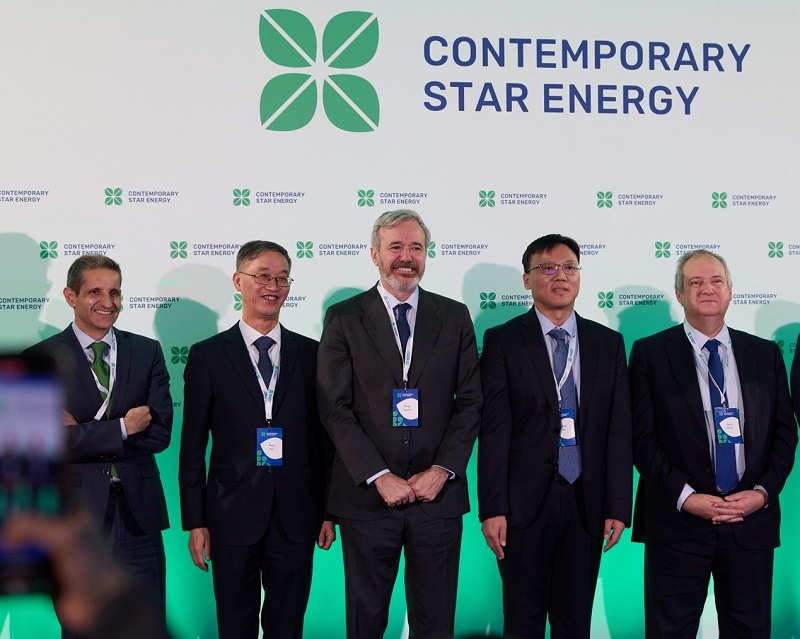
汽车早报|Stellantis与宁德时代西班牙合资工厂开工建设 黄勇任东风本田法定代表人、董事长
Xin Lang Cai Jing· 2025-11-27 00:57
Group 1: Automotive Market Performance - From November 1 to 23, the national retail sales of passenger cars reached 1.384 million units, a year-on-year decrease of 11% [1] - The wholesale volume of passenger cars during the same period was 1.69 million units, down 8% year-on-year, but up 8% compared to the previous month [1] - For the year-to-date, retail sales totaled 20.64 million units, reflecting a 6% increase year-on-year, while wholesale volume reached 25.464 million units, up 11% [1] Group 2: Company Developments - Dongfeng Honda has appointed Huang Yong as the new legal representative and chairman, following the resignation of Zhang Zutong [1] - Chengdu Shanju Battery Co., Ltd. was established with a registered capital of 50 million RMB, fully owned by Zhejiang Geely Automotive Parts Industry Co., Ltd. [2] - Shanghai Jinqida Technology Co., Ltd. was established with a registered capital of 2 million RMB, fully owned by SAIC General Motors [2] Group 3: Technological Advancements - Seres Automotive has received authorization for a patent related to the adjustment of steering wheel feel, aimed at personalized and automated control [2] - Tesla's VP Tao Lin stated that the selection of suppliers is based on quality, total cost, technical capability, and continuity, without regard to the country of origin [3] Group 4: Strategic Partnerships and Expansion - Stellantis and CATL have commenced construction of a battery factory in Spain, expected to start production by the end of 2026 with an annual capacity of 50 GWh [4] - Renault-Geely's joint venture plans to double production in Brazil, increasing from 180,000 to 380,000 units annually [5] - Tesla's Robotaxi fleet in Austin, Texas, is expected to double in size next month, according to Elon Musk [5] - Uber and WeRide have launched the first fully autonomous taxi service in Abu Dhabi, marking a significant step in commercial operations [5]

Stellantis、宁德时代西班牙合资工厂开工建设,2030年全面投产
Sou Hu Cai Jing· 2025-11-27 00:22
Core Insights - Stellantis and CATL have officially launched a €4.1 billion battery factory in northern Spain, indicating Europe's increasing reliance on Chinese battery technology [1] - The factory is expected to achieve partial production by the end of next year, with plans to reach 30% of its designed capacity by 2028 and full production by 2030, employing nearly 4,000 people [1] - The European battery industry is still lagging behind Asian companies like CATL, despite significant investments from the EU to support local competitors [1] Company Developments - The new factory will produce lithium iron phosphate batteries with an annual capacity of approximately 50 GWh [1] - Stellantis has faced challenges with its battery joint ventures, including those with Mercedes and Volkswagen, due to a slowdown in electric vehicle demand [1] - CATL continues to expand its operations, with a new factory in Hungary set to produce various types of batteries beyond just lithium-ion technology [1] Industry Context - Local European companies such as Britishvolt and Northvolt have faced bankruptcy despite EU support, highlighting the difficulties in establishing a competitive battery industry in Europe [1] - The investment by Stellantis and CATL reflects a strategic move to bolster battery production capabilities in Europe amid growing demand for electric vehicles [1]
11月27日隔夜要闻一览
Xin Lang Cai Jing· 2025-11-26 22:42
Group 1 - Two National Guard members were attacked near the White House, leading to a lockdown and President Trump requesting the deployment of hundreds of soldiers to Washington [1] - The Federal Reserve's Beige Book indicates little change in economic activity, with overall consumer spending declining further, increasing the risk of an economic slowdown in the coming months [2] - The UK budget was leaked early, causing confusion, with Chancellor Reeves announcing a tax increase of £26 billion [3] Group 2 - Deutsche Bank and HSBC supported Oracle, resulting in a significant rise in the stock price on Wednesday [4] - Tesla's new Robotaxi App version reveals a data-sharing feature for in-car cameras, suggesting the potential removal of safety drivers, allowing Tesla to access video and audio data for remote customer service [5] - Morgan Stanley predicts the Federal Reserve will lower interest rates in December, changing its previous stance of maintaining rates [7] Group 3 - Stellantis and CATL are collaborating to build a factory in Spain [8]
Global Markets React to Rig Count Dip, Apple’s India Woes, and UK Fiscal Calm
Stock Market News· 2025-11-26 18:08
Regulatory Challenges - Apple is facing a potential antitrust penalty of up to $38 billion in India, highlighting increasing global regulatory scrutiny on technology giants [2][8] Energy Sector Activity - The US Baker Hughes Rig Count decreased by 10 rigs to a total of 544 as of November 28, with a notable drop of 12 rotary oil rigs to 407, indicating a contraction in drilling activity [3][8] UK Fiscal Policy - Vanguard plans to increase its investment in UK gilts, reflecting renewed investor confidence following the recent UK budget announcement [4][8] Housing Market Trends - U.S. mortgage rates eased for the week of November 26, with the average 30-year fixed rate at 6.23% and the 15-year fixed rate at 5.51%, potentially stimulating activity in the housing market [5][8] Automotive Industry Developments - The joint venture between CATL and Stellantis is open to employing local workers for the construction of their Aragon battery plant, although the number of Chinese workers involved remains unconfirmed [6][8]


Stellantis warns this issue could destroy the European auto industry
Yahoo Finance· 2025-11-26 17:33
Core Insights - U.S. automakers are adapting to tariff burdens while benefiting from regulatory changes under the Trump administration, which have eased restrictions on emissions and fuel economy standards [1][2][3] - The elimination of penalties related to Corporate Average Fuel Economy (CAFE) rules has provided significant financial relief to automakers, particularly General Motors and Stellantis, who previously faced substantial fines [3][4][7] Regulatory Changes - The One Big Beautiful Bill Act has dismantled many Biden-era climate policies, benefiting original equipment manufacturers (OEMs) [1] - The Biden administration's emissions standards were deemed to exceed authority, leading to a reevaluation of expected electric vehicle adoption [2] Financial Implications - General Motors faced a $145.8 million penalty and forfeited $300 million in emission credits due to compliance issues, with total costs related to emission compliance reaching approximately $450 million through 2023 [5][7] - Stellantis incurred $191 million in civil penalties for failing to meet fuel economy requirements for 2019 and 2020, in addition to nearly $400 million in fines from 2016 to 2019 [7] Market Performance - U.S. market share for automakers stands at 17%, with electric vehicle sales reaching 67,000 units and an EV market share of 16.5% [8] - Dealer inventory has decreased by 16% year over year, while EV inventory has dropped by 30% since June [8] Industry Advocacy - Stellantis has supported proposals to eliminate CAFE penalties and is actively petitioning for lower emissions standards in the European Union, warning of potential industry decline if changes are not made [9][10]