TotalEnergies SE

Search documents
桑给巴尔发展体育运动
Shang Wu Bu Wang Zhan· 2025-08-13 04:02
近日,据桑给巴尔《每日新闻》报道,桑给巴尔大力发展体育运动,积极参与举办各 类重大国际体育赛事,道达尔能源非洲国家锦标赛(CHAN)由肯尼亚、坦桑尼亚和乌 干达联合主办,中非共和国、马达加斯加、毛里塔尼亚和布基纳法索等国家参加,8月 2日至30日在达累斯萨拉姆、桑给巴尔、坎帕拉和内罗毕举行。激动人心的比赛、热情 洋溢的观众以及开场便闪耀的精彩竞技,注定将成为最令人难忘的赛事。 (原标题:桑给巴尔发展体育运动) ...
爱尔兰石油巨头突然撤出俄罗斯!20年基业一朝清算,俄石油再迎变局?
Sou Hu Cai Jing· 2025-08-12 22:30
Core Viewpoint - The announcement of PetroNeft's liquidation marks the end of an era for the Russian oil industry, highlighting the significant impact of Western energy companies' withdrawal since the onset of the Russia-Ukraine conflict [1][3][8]. Group 1: Withdrawal of Western Energy Companies - Major Western energy companies, including BP, Shell, and ExxonMobil, have collectively exited the Russian market, resulting in losses exceeding €100 billion for European firms [3][4]. - BP's divestment of its 19.75% stake in Rosneft led to a loss of $25.5 billion, while other companies followed suit within days, abandoning projects like the Nord Stream 2 pipeline [3][4]. Group 2: Reasons for Withdrawal - The withdrawal is driven by three main pressures: severe political conditions due to sanctions, significant economic losses from asset nationalization, and a critical shortage of technology that has crippled Russian oil production [4]. - The Russian government has nationalized foreign assets, leading to ExxonMobil's $4 billion Sakhalin project being seized, and TotalEnergies' $14.8 billion investment becoming worthless overnight [4]. Group 3: Consequences for the Russian Oil Industry - The lack of essential components has led to widespread shutdowns in Russian refineries, with projections indicating a historic low in petrochemical production capacity by 2025 [4]. - Oil production has been severely impacted, with a 30% reduction in output from the Sakhalin-1 project due to the withdrawal of deep-water drilling technology [4]. Group 4: Financial Crisis in Russia - The EU's embargo has resulted in 1.5 million barrels of oil per day being unsold, with India purchasing at discounted rates but complicating repatriation of funds due to currency issues [4][6]. - The Russian central bank has raised interest rates to 20% to stabilize the ruble, which has depreciated to 114 rubles per dollar, with inflation exceeding 15% [4]. Group 5: Limited Support from Other Markets - Attempts to sell overseas assets, such as the $20 billion offer for Nayara Energy, have been met with rejection from Indian firms and caution from Saudi Aramco due to potential secondary sanctions [6]. - Domestic companies are struggling with funding shortages, and even state-owned Rosneft, with over 80% debt, is unable to provide financial support [6]. Group 6: China's Role - China has emerged as a partial lifeline, with PetroChina agreeing to purchase 500,000 barrels of oil daily, but under unfavorable terms for Russia, including a 30% discount on international prices [8]. - Russian upstream exploration projects are stalled due to technology restrictions, with Chinese firms unwilling to invest directly in oil fields [8].

X @Bloomberg
Bloomberg· 2025-08-12 07:54
Company Strategy - TotalEnergies 计划在南非近海的一个大型盆地进行新的钻探活动,该盆地包括邻国纳米比亚的重大石油发现 [1]

石油巨头上半年业绩集体大幅缩水,行业转型或仍在加速
Xin Hua Cai Jing· 2025-08-11 10:56
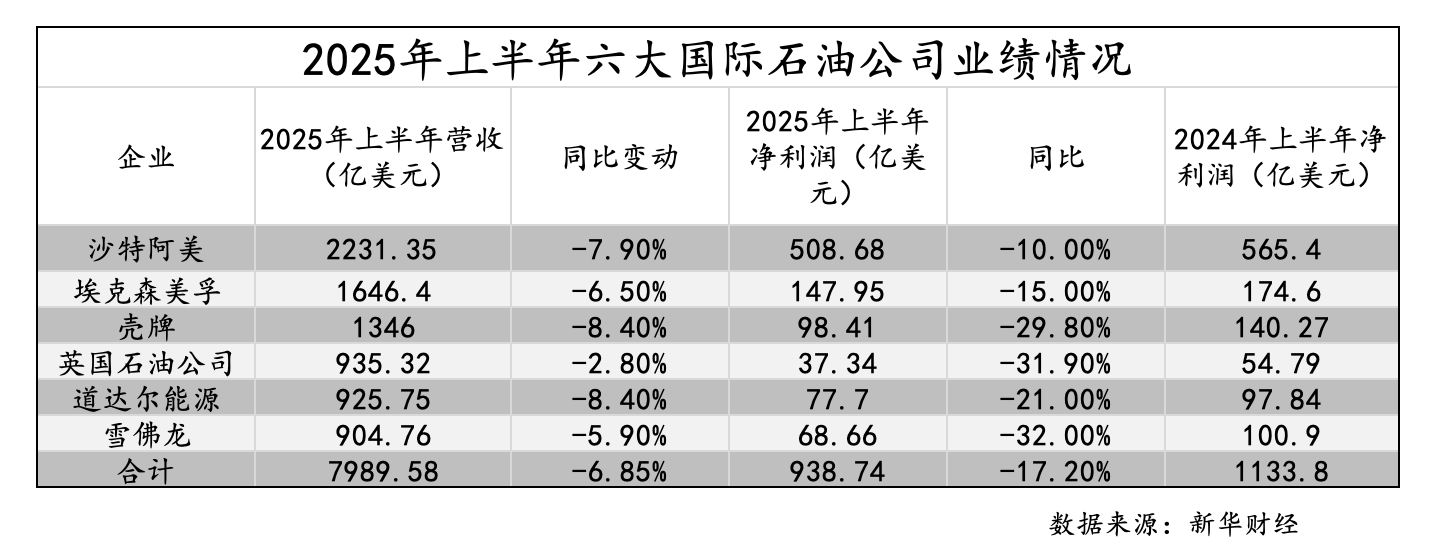
Core Viewpoint - The global oil industry is facing significant profitability challenges due to declining oil prices, with major oil companies reporting substantial decreases in revenue and net profit for the first half of 2025 compared to the previous year [1][3]. Group 1: Oil Price Trends - WTI crude oil futures averaged $67.52 per barrel in the first half of 2025, a year-on-year decline of 14.33%, while Brent averaged $70.81 per barrel, down 15.11% [1]. - Global crude oil inventories are expected to continue increasing, with an average daily growth of approximately 1.2 million barrels in the first half of 2025, maintaining a growth trend of 900,000 barrels per day in the second half [6]. Group 2: Financial Performance of Major Oil Companies - The combined adjusted profit of six major international oil companies, including Saudi Aramco, BP, Shell, Chevron, TotalEnergies, and ExxonMobil, was approximately $93.874 billion in the first half of 2025, a decrease of 17.2% from $113.38 billion in the same period of 2024 [1][2]. - Saudi Aramco reported a revenue of $223.135 billion, down 7.9%, and an adjusted net profit of $50.868 billion, down 10% [2][3]. - Other companies experienced even larger declines, with Chevron's adjusted net profit falling by 32% and BP's net profit dropping from $5.379 billion to $3.734 billion [3]. Group 3: Challenges and Strategic Responses - The oil companies are grappling with a "volume increase, price drop" dilemma, where rising transaction volumes only partially offset the impact of falling oil prices [3]. - Companies are increasingly focusing on energy transition and diversification to mitigate the risks associated with oil price volatility. For instance, Saudi Aramco is expanding its natural gas production and trade [7]. - Despite these efforts, companies face challenges in their transition strategies due to external environmental changes and internal strategic misjudgments, as seen with Shell's reduction in renewable energy investments and TotalEnergies' scaling back of solar energy goals [8]. Group 4: Future Outlook - The outlook for oil prices remains pressured, with major energy agencies predicting a continued oversupply in the global oil market through 2026, leading to sustained downward pressure on prices [5][6]. - Long-term strategies for achieving carbon neutrality are being set by companies, with China Petroleum aiming for a significant reduction in carbon emissions by 2040 and a balanced approach between oil, gas, and new energy by 2050 [8].



Vantage Drilling International Ltd. Announces Completion of the Sale of the Tungsten Explorer
Globenewswire· 2025-08-11 10:43
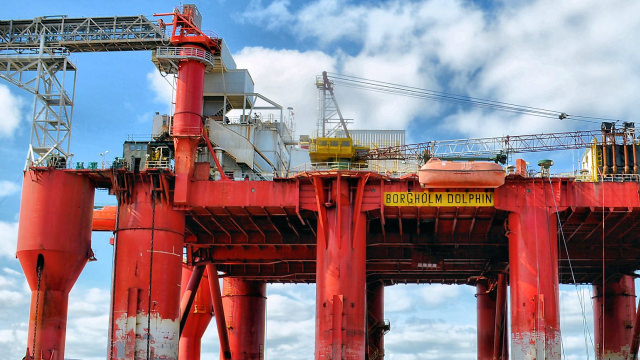
Core Points - Vantage Drilling International Ltd. has completed the sale of the Tungsten Explorer to TEVA Ship Charter LLC, a joint venture where Vantage holds a 25% stake and TotalEnergies holds 75% [1][2] - Vantage will continue to manage the Tungsten Explorer for a ten-year term, with an option to extend for an additional five years [1] - The CEO of Vantage Drilling expressed satisfaction with the sale and looks forward to a productive relationship with TotalEnergies [2] Company Overview - Vantage Drilling International Ltd. is an offshore drilling contractor based in Bermuda, primarily engaged in contracting drilling units and related services on a dayrate basis for oil and gas wells globally [3] - The company also markets, operates, and provides management services for drilling units owned by other entities [3]
The Smartest High-Yield Energy Stocks to Buy With $2,000 Right Now
The Motley Fool· 2025-08-10 10:45
Group 1: Energy Sector Transition - The energy sector is undergoing significant changes, with electricity expected to rise from 21% to 32% of final energy use in the U.S. between 2020 and 2050, reflecting a global trend [1] - Companies like TotalEnergies and Enbridge are preparing for these changes by investing in renewable energy while maintaining their core operations in oil and natural gas [6][7] Group 2: Company Profiles - TotalEnergies operates as an integrated energy company with upstream, midstream, and downstream segments, which helps mitigate the volatility of the commodity-driven business [3] - Enbridge focuses on the midstream sector, generating reliable cash flows through energy transportation assets, making it a suitable option for investors seeking energy exposure without commodity risk [5] Group 3: Investment Strategies - Both TotalEnergies and Enbridge are using profits from traditional energy sources to fund investments in cleaner energy, such as solar and wind [6][7] - Investors can purchase shares of TotalEnergies and Enbridge, with potential yields of 6.5% and 5.9% respectively, compared to the average energy stock yield of 3.4% [9] Group 4: Dividend Reliability - TotalEnergies has a strong history of supporting dividends, maintaining its payout during the pandemic, while Enbridge boasts 30 consecutive annual dividend increases [9] - Both companies are foreign entities, which may involve foreign taxes for U.S. investors, but they offer substantial dividends and exposure to the evolving energy landscape [10]

一场危险的赌博!特朗普对俄制裁将引发双重风险
Jin Shi Shu Ju· 2025-08-08 09:19
Core Viewpoint - The Trump administration is moving towards imposing secondary tariffs on countries purchasing Russian oil, particularly targeting India, which could have significant implications for global oil prices and geopolitical dynamics [2][3][4]. Group 1: Economic Implications - The proposed 25% additional tariff on goods imported from India is a direct response to India's import of Russian oil, marking the first financial penalty against Russia during Trump's second term [2]. - Secondary tariffs could lead to increased oil prices, potentially complicating Trump's political landscape ahead of the midterm elections in the U.S. [3][9]. - Analysts suggest that if India halts its purchase of 1.7 million barrels of Russian oil per day (approximately 2% of global supply), global oil prices could surge from the current $66 per barrel [9]. Group 2: Geopolitical Dynamics - The likelihood of Putin agreeing to a ceasefire is considered "close to zero" due to the threat of tariffs and sanctions, indicating a potential escalation in the conflict [4][5]. - The tariffs may hinder U.S.-India trade relations, complicating efforts to reach a comprehensive trade agreement [7][9]. - There is skepticism regarding whether the tariffs will effectively change Putin's behavior, as he has found ways to circumvent sanctions and economic penalties [5][6]. Group 3: Market Reactions - The imposition of secondary tariffs could lead to a spike in global fuel prices and inflation, creating political challenges for Trump [9][10]. - Analysts from Morgan Stanley indicate that sanctioning Russian oil without causing price surges is "impossible," suggesting that any perceived disruption in Russian oil supply could push Brent crude prices above $80 [9]. - The potential for Russian retaliation, such as closing the CPC pipeline, could exacerbate global supply issues, affecting major Western oil companies [9].
Murphy Oil Q2 Earnings & Sales Beat Estimates on Strong Production
ZACKS· 2025-08-07 17:06
Core Insights - Murphy Oil Corporation (MUR) reported second-quarter 2025 adjusted net earnings of 27 cents per share, exceeding the Zacks Consensus Estimate of 21 cents by 28.6%, but down 66.7% from 81 cents in the same quarter last year [1][8] - Revenues for Murphy Oil reached $695.6 million, surpassing the Zacks Consensus Estimate of $638 million by 8.9% [2] - The company produced 190,000 barrels of oil equivalent per day (BOE/D) in Q2 2025, exceeding the guidance range of 177,000-185,000 BOE/D, driven by strong performance in the Eagle Ford Shale and Tupper Montney region [3][8] Financial Performance - Total costs and expenses were $603.4 million, a decrease of 2.5% from $618.5 million a year ago, attributed to lower lease operating costs and exploration expenses [4] - Murphy Oil returned $193 million to shareholders in the first half of 2025, including $100 million in share repurchases and $93 million in dividends [4][8] - As of June 30, 2025, the company had cash and cash equivalents of $379.6 million, down from $423.6 million at the end of 2024, with long-term debt totaling $1.48 billion [7] Share Repurchase and Acquisitions - The board of directors authorized a share repurchase program allowing the company to repurchase up to $1.1 billion of its common stock, with $550.1 million remaining available as of June 30, 2025 [5][8] - In July 2025, Murphy Oil completed a small acquisition in the Eagle Ford Shale for $23 million and signed a rig contract for a three-well exploration program in Côte d'Ivoire [6] Future Guidance - For Q3 2025, Murphy Oil expects production to be in the range of 185,000-193,000 BOE/D, with 47% expected to be oil [9] - The company reiterated its 2025 capital expenditures guidance of $1.13-$1.28 billion, with Q3 capital expenditure projected at $260 million [9]

环保监管严格和能源成本高企,化工巨头产能退出欧洲市场
环球富盛理财· 2025-08-07 02:09
Investment Rating - The report indicates a negative outlook for the chemical industry in Europe, with major chemical companies withdrawing production capacity due to strict environmental regulations and high energy costs [1][33]. Core Insights - The European Union is the second-largest chemical production region globally, but the ongoing Russia-Ukraine conflict has exacerbated energy price increases, impacting the competitiveness of the European chemical industry [2][34]. - The EU is actively pursuing carbon neutrality, with significant regulatory changes and initiatives aimed at reducing carbon emissions [2][51]. - Leftist political parties in Europe are pushing for stricter regulations on the chemical industry, which has led to increased operational challenges for chemical manufacturers [2][66]. - Major chemical companies are exiting the European market, citing high energy costs and regulatory burdens as primary reasons for their decisions [2][74]. Summary by Sections Industry Overview - The chemical industry is the highest value-added and investment-intensive sector in EU manufacturing, employing approximately 3.4 million people [3][4]. - In 2020, the chemical sector contributed significantly to the EU's manufacturing employment, second only to the food products industry [3]. Market Dynamics - The EU chemical industry accounted for 13% of global chemical sales in 2023, a decline from 16% in 2013, with sales dropping to approximately €655 billion, a 12.4% decrease year-on-year [15][19]. - The production capacity utilization in the EU remains low, fluctuating around 75%, compared to a historical average of 81% [44]. Financial Performance - Capital expenditures in the EU chemical sector reached €32.1 billion in 2023, marking a 53% increase compared to pre-pandemic levels, but growth rates lag behind those in China and the US [25]. - R&D spending in the EU chemical sector has also seen a decline in global share, with a 25% increase from €8 billion to €10 billion, while China's R&D spending doubled in the same period [30]. Regulatory Environment - The EU's carbon emissions trading system has generated significant revenue, reaching nearly €29.1 billion from 2013 to 2023, reflecting the EU's commitment to carbon neutrality [51]. - The upcoming Carbon Border Adjustment Mechanism (CBAM) will impose carbon costs on certain imported goods, including organic chemicals, starting in 2026 [56]. Company Actions - Major chemical companies, including Dow, Shell, and BASF, are restructuring their European operations, closing or selling high-cost production facilities due to unfavorable market conditions [75][76].
Devon Q2 Earnings & Sales Beat Estimates, Production Guidance Raised
ZACKS· 2025-08-06 16:41
Core Viewpoint - Devon Energy Corp. reported second-quarter 2025 earnings per share (EPS) of 84 cents, exceeding the Zacks Consensus Estimate of 83 cents by 1.2%, despite a year-over-year decline of 40.4% from $1.41 per share [1][8]. Financial Performance - Total revenues for the quarter were $4.28 billion, surpassing the Zacks Consensus Estimate of $4.01 billion by 6.75% [3]. - GAAP EPS for the quarter was $1.41, compared to 77 cents in the same quarter last year, with differences attributed to asset disposition gains and fair value changes [2]. - Net cash from operating activities was $1.54 billion, slightly up from $1.53 billion in the second quarter of 2024 [11]. Production Metrics - Net production totaled 841,000 barrels of oil equivalent per day (Boe/d), an increase of 18.9% year over year, exceeding the guidance range of 810,000-828,000 Boe/d [4][8]. - Natural gas liquids production rose 21.9% year over year to 222,000 barrels per day (Bbl/d), while oil production increased 15.5% to 387,000 Bbl/d [5]. Pricing and Costs - Realized oil prices were $62.97 per barrel, down 20.24% from $78.95 a year ago, while realized prices for natural gas liquids were $17.82 per barrel, down 9.6% [6]. - Total production expenses were $899 million, a decrease of 1.4% year over year, with production costs averaging $11.75 per Boe, down 5% from the prior year [7]. Strategic Actions - Devon repurchased shares worth $249 million and paid dividends of $156 million to shareholders during the quarter [7]. - The company divested its equity interest in the Matterhorn Pipeline for $372 million, resulting in a gain of $307 million [9]. Future Guidance - Third-quarter production is expected to be in the range of 829,000-847,000 Boe/d, with capital spending estimated between $0.87 billion and $0.93 billion [12]. - The 2025 production forecast has been raised to 825,000-842,000 Boe/d, up from the previous range of 810,000-828,000 Boe/d [12][13].