富临精工

Search documents
富临精工(300432) - 第五届监事会第二十二次会议决议公告
2025-09-29 09:52
富临精工股份有限公司(以下简称"公司")第五届监事会第二十二次会议 通知于 2025 年 9 月 25 日以通讯方式向各位监事发出,并于 2025 年 9 月 29 日以 现场方式召开。应出席会议的监事 3 人,实际出席会议的监事 3 人。会议由监事 会主席胡国英女士主持。会议的召集、召开符合《公司法》及《公司章程》规定。 一、审议通过了《关于子公司增资扩股暨筹划重大资产重组的议案》 证券代码:300432 证券简称:富临精工 公告编号:2025-063 富临精工股份有限公司 第五届监事会第二十二次会议决议公告 本公司及监事会全体成员保证信息披露的内容真实、准确、完整,没有虚假记载、 误导性陈述或重大遗漏。 富临精工股份有限公司 监事会 2025 年 9 月 29 日 - 2 - 监事会认为,本次公司与宁德时代新能源科技股份有限公司(以下简称"宁 德时代")拟共同对公司子公司江西升华新材料有限公司(以下简称"江西升华") 增资扩股,是为进一步提升公司与宁德时代的战略合作关系,加快推进江西升华 在优质磷酸铁锂产品研发与生产、国际化拓展、供应链升级及储能市场发展等方 面进程,进一步通过双方战略投资提升江西升华的资 ...

富临精工(300432) - 关于子公司增资扩股暨筹划重大资产重组的提示性公告
2025-09-29 09:52
证券代码:300432 证券简称:富临精工 公告编号:2025-064 富临精工股份有限公司 关于子公司增资扩股暨筹划重大资产重组的提示性公告 本公司及董事会全体成员保证信息披露的内容真实、准确、完整,没有虚假记载、 误导性陈述或重大遗漏。 特别提示: 1、富临精工股份有限公司(以下简称"公司"、"富临精工")、宁德时 代新能源科技股份有限公司(以下简称"宁德时代")拟共同对公司子公司江西 升华新材料有限公司(以下简称"江西升华")增资扩股,富临精工拟增资人民 币1,000,000,000元,认购江西升华新增注册资本人民币813,008,130元,宁德时 代 拟 增 资 人 民 币 2,563,380,110 元 , 认 购 江 西 升 华 新 增 注 册 资 本 人 民 币 2,084,048,870元。本次交易完成后,宁德时代持有江西升华的股权比例为 51.0000%,富临精工持有江西升华的股权比例为47.4096%。 2、根据初步测算,本次交易预计构成《上市公司重大资产重组管理办法》 规定的重大资产重组。本次交易尚需按照重大资产重组相关规定,履行董事会、 股东大会审议决策程序及证券监管机构的审批程序。本 ...
富临精工(300432) - 第五届董事会第二十六次会议决议公告
2025-09-29 09:52
证券代码:300432 证券简称:富临精工 公告编号:2025-062 富临精工股份有限公司 第五届董事会第二十六次会议决议公告 本公司及董事会全体成员保证信息披露的内容真实、准确、完整,没有虚假记载、 误导性陈述或重大遗漏。 富临精工股份有限公司(以下简称"公司")第五届董事会第二十六次会议通 知于 2025 年 9 月 25 日以电话等通讯方式向各位董事发出,并于 2025 年 9 月 29 日以通讯表决方式召开。应出席会议的董事 9 人,实际出席会议的董事 9 人,公 司监事及高级管理人员列席了会议,会议由董事长王志红先生主持。会议的召集、 召开符合《公司法》及《公司章程》规定。 一、审议通过了《关于子公司增资扩股暨筹划重大资产重组的议案》 为进一步提升公司与宁德时代新能源科技股份有限公司(以下简称"宁德时 代")的战略合作关系,加快推进江西升华新材料有限公司(以下简称"江西升华") 在优质磷酸铁锂产品研发与生产、国际化拓展、供应链升级及储能市场发展等方 面进程,进一步通过双方战略投资提升江西升华的资本实力和综合竞争力。公司 与宁德时代拟共同对公司子公司江西升华增资扩股,公司拟增资人民币 1,000,0 ...
磷酸铁锂:股票20%涨停,供不应求,新一轮提涨开启
鑫椤锂电· 2025-09-29 08:56
Core Viewpoint - The recent surge in stock prices of companies involved in lithium iron phosphate (LFP) is closely linked to the current supply-demand imbalance in the industry, particularly driven by increasing demand from the energy storage sector [1][3]. Industry Summary - On September 29, stocks of Hunan Youneng and Wanrun New Energy experienced significant increases, with Wanrun New Energy reaching a 20% limit-up and Hunan Youneng rising over 10% [1]. - Other companies specializing in LFP, such as Longpan Technology, Defang Nano, Fulian Precision, and Anda Technology, also saw considerable stock price increases [1]. - The monthly production of LFP is expected to show a consistent upward trend through 2025, benefiting from sustained demand, especially in the energy storage sector [3]. - A survey of 31 major LFP shipping companies revealed that 7 companies have a capacity utilization rate exceeding 100%, while 9 companies are operating at 80-95% capacity [4]. - The current market dynamics have shifted from a previous scenario of accepting all orders to a more selective approach by LFP suppliers, who are now choosing customers based on pricing and payment terms [6][8]. Pricing and Supply Dynamics - Suppliers are increasingly rejecting low-priced and long-term payment customers, opting instead for higher-paying clients [8][13]. - Some suppliers are fully booked and are exhibiting selective customer behavior, which has allowed weaker suppliers to secure more orders [9]. - Given the ongoing supply-demand imbalance, LFP material suppliers are initiating price increases, with one supplier raising processing fees by approximately 1,500 yuan per ton [10]. - Major suppliers are also notifying customers of price hikes due to a surge in new orders and limited production capacity [10].



富临精工股价涨5.13%,长信基金旗下1只基金重仓,持有8.54万股浮盈赚取7.6万元
Xin Lang Cai Jing· 2025-09-29 02:46
Group 1 - The core point of the news is that Fulin Precision has seen a stock price increase of 5.13%, reaching 18.25 CNY per share, with a trading volume of 1.323 billion CNY and a turnover rate of 4.39%, resulting in a total market capitalization of 31.203 billion CNY [1] - Fulin Precision, established on November 10, 1997, and listed on March 19, 2015, is located in Mianyang, Sichuan Province, and specializes in the research, production, and sales of automotive parts and lithium battery cathode materials [1] - The company's main business revenue composition is 68.09% from lithium battery cathode materials and 31.91% from automotive engine components [1] Group 2 - From the perspective of fund holdings, Changxin Fund has one fund heavily invested in Fulin Precision, specifically the Changxin CSI 1000 Index Enhanced A (018013), which held 85,400 shares in the second quarter, accounting for 0.89% of the fund's net value, ranking as the fifth-largest holding [2] - The Changxin CSI 1000 Index Enhanced A (018013) was established on April 20, 2023, with a latest scale of 55.0627 million CNY, and has achieved a year-to-date return of 40.33%, ranking 1113 out of 4220 in its category [2] - The fund manager, Zuo Jinbao, has a tenure of 10 years and 204 days, with the fund's total asset size at 1.767 billion CNY, achieving the best return of 146.71% and the worst return of -52.72% during his tenure [2]
制造业,拒绝双足机器人
Di Yi Cai Jing· 2025-09-27 13:12
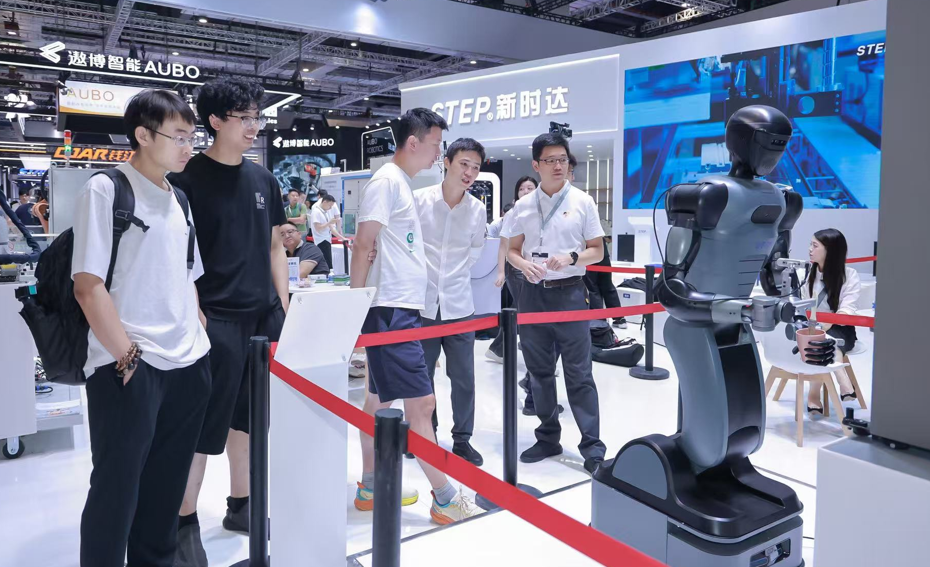
Core Viewpoint - The consensus is forming that bipedal humanoid robots are not suitable for factory environments due to high energy consumption and slower movement speed compared to wheeled robots [2][8]. Group 1: Industry Insights - Many robotics companies are pushing products into manufacturing, including both wheeled and bipedal robots, but the latter is facing challenges in factory settings [2][3]. - New Times has deployed a humanoid robot at Haier's Chongqing refrigerator factory, indicating a partnership aimed at upgrading robot control technology and data collection for training new robots [3]. - Puzhi Robotics has shipped 200 robots, with 60% being wheeled and 40% bipedal, primarily for exhibition purposes rather than industrial applications [4]. Group 2: Technical Challenges - Bipedal robots have significantly higher development costs and complexity compared to wheeled robots, which have more mature technology and lower costs [4][9]. - Current bipedal robots have a movement speed of approximately 1.3 meters per second, while wheeled robots can reach speeds of 2.5 meters per second, making them less suitable for high-paced industrial environments [8][9]. - Bipedal robots face battery life issues, with operational times of 2-3 hours compared to 4-5 hours for wheeled robots, further limiting their industrial applicability [9]. Group 3: Market Dynamics - The investment return rate is a key consideration for industrial enterprises, and the lower initial costs of wheeled robots make them more appealing [10]. - New Times is currently accumulating technology reserves for bipedal robots but does not plan to commercialize them in the short term, reinforcing the preference for wheeled robots in factories [11]. - Experts suggest that while wheeled robots are currently dominant, advancements in bipedal robot technology could eventually lead to their integration into industrial settings [12][13].


制造业,拒绝双足机器人 | 海斌访谈
Di Yi Cai Jing· 2025-09-27 13:01
Core Viewpoint - The consensus is forming that bipedal humanoid robots are not suitable for factory environments due to high energy consumption and slower movement speed compared to wheeled robots [1][10]. Group 1: Robot Types and Applications - Wheeled robots are currently more adaptable to factory settings, while bipedal robots are primarily used for exhibition purposes [2][4]. - New Times Da has deployed a humanoid robot at Haier's Chongqing refrigerator factory, focusing on upgrading robot control technology and data collection for training new generation robots [4][5]. - Puzhi Robotics has shipped 200 robots, with 60% being wheeled and 40% bipedal, indicating a preference for wheeled robots in industrial applications [4][5]. Group 2: Cost and Efficiency - The development cost of bipedal robots is significantly higher due to increased complexity and the need for more sensors, with prices ranging from 500,000 to 600,000 yuan, while wheeled robots cost between 400,000 and 450,000 yuan [5][8]. - Bipedal robots consume 40% of their energy for movement, leading to inefficiencies in factory settings where speed and energy efficiency are critical [10]. Group 3: Performance and Limitations - Bipedal robots have a movement speed of approximately 1.3 meters per second, while wheeled robots can reach 2.5 meters per second, making them less suitable for high-paced industrial environments [8][9]. - The operational endurance of bipedal robots is limited to 2-3 hours under full load, compared to 4-5 hours for wheeled robots, further impacting their utility in factories [9][10]. Group 4: Future Outlook - Experts express a mixed outlook on the future of bipedal robots in factories, with some believing that technological advancements could eventually allow them to replace wheeled robots [12][13]. - The development of humanoid robots is seen as a long-term goal, with significant challenges remaining in terms of safety, technical feasibility, and economic value [13].
鑫椤锂电一周观察 | 6F市场供应偏紧 价格继续上涨
鑫椤锂电· 2025-09-26 07:11
Industry Overview - In the first eight months of 2025, China's lithium-ion battery exports reached 30.03 billion units, a year-on-year increase of 18.66%, with an export value of $48.296 billion, up 25.79% year-on-year, indicating a stable growth trend [1] - In August 2025 alone, the export value was $7.153 billion, reflecting a year-on-year growth of 23.51% [1] Cobalt Supply and Regulations - The Democratic Republic of Congo announced an end to an eight-month export ban starting October 15, 2025, transitioning to a strict quota management system, with only 18,100 tons of cobalt available for export in the remainder of 2025 [2] - The annual export limits for 2026 and 2027 are set at 96,600 tons [2] Lithium Battery Material Production - Hunan Youneng has reported a production capacity of 858,000 tons for phosphate-based cathode materials as of June 2025, with ongoing projects in Spain and Malaysia [2] Market Dynamics for Lithium Materials - Domestic lithium carbonate prices have fluctuated between 73,000 to 74,000 yuan per ton, with strong market demand supporting price stability despite regulatory delays in Jiangxi [4] - The price of cobalt has increased due to the adjustment of export regulations in the Democratic Republic of Congo, impacting the prices of ternary materials and precursors [6] Pricing Trends for Key Materials - Ternary material prices range from 126,000 to 131,000 yuan per ton for single crystal types and 145,000 to 151,000 yuan per ton for 811 types [7] - Phosphate iron lithium prices are between 33,600 to 35,000 yuan per ton for power types and 32,600 to 33,200 yuan per ton for energy storage types [8] - The price of negative electrode materials shows a range from 50,000 to 65,000 yuan per ton for high-end natural graphite products [9] Electrolyte Market Developments - The domestic electrolyte market is experiencing strong supply and demand, with prices slightly increasing; a significant long-term supply agreement has been signed between Jiujiang Tianci and Ruipu Lanjun for a minimum of 800,000 tons of electrolyte products by December 31, 2030 [10][11] Battery and Electric Vehicle Market - The domestic lithium battery market remains stable, with a projected production increase of up to 5% in October 2025, driven by strong demand from new energy vehicles and energy storage [12] - In the last week, 508,000 passenger vehicles were sold, with new energy vehicles accounting for 298,000 units, reflecting a year-on-year increase of 28.25% [13] Energy Storage Innovations - The energy storage cell market is stable, with some leading companies planning to raise cell prices; BYD has launched a new generation energy storage system featuring a 2710Ah blade battery, marking a significant advancement in capacity [14]



广发证券:锂电公司中报盈利持续修复 关注电池环节和固态新技术
智通财经网· 2025-09-26 03:36
Core Viewpoint - The profit in the new energy vehicle (NEV) industry chain remains highly concentrated in the battery segment, with leading companies demonstrating strong anti-cyclical capabilities despite a slight decline in their market share by Q2 2025 [1] Profitability - The return on equity (ROE) differentiation continues in Q2 2025, with a notable improvement in the copper foil segment. The proportion of companies with a year-on-year decline in ROE decreased from 70% in 2024 to 57% in 2025. The overall ROE in the lithium battery industry chain has shown recovery, with mixed performance in the battery segment and significant improvement in the copper foil segment [2] Solvency - Leading companies are reducing their debt levels while others are increasing leverage to alleviate financial pressure. The operating cash flow continues to flow towards battery leaders, with total cash flow for the entire industry chain reaching 287.4 billion, 42 billion, and 69.2 billion in 2024, Q1 2025, and Q2 2025 respectively. The combined cash flow for leading battery companies, CATL and BYD, accounted for 81%, 99%, and 71% of these amounts [3] Operational Efficiency - The turnover rate has improved, with inventory and accounts receivable remaining stable. In H1 2025, 64% of companies experienced a year-on-year decline in fixed asset turnover, a significant reduction from 96% in 2024, indicating improved asset utilization. The overall inventory turnover rate remained stable, with 55% of companies experiencing a decline, while accounts receivable turnover also saw a 55% decline, indicating slightly increased collection pressure [4] Financial Framework - Profitability turning points are imminent for lithium iron phosphate, batteries, anodes, and copper foil. Leading companies have seen ROE improvements over the past eight quarters, including CATL, Fulimeng Technology, and Shantai Technology, with profitability in lithium iron phosphate, anodes, and copper foil showing quarter-on-quarter improvement. Capital expenditure has remained low since peaking in Q4 2022, with a tight supply-demand balance expected in 2024 and H1 2025 [5]

第四代高压实LFP供不应求,二三线企业窗口期何在?
高工锂电· 2025-09-25 10:20
Core Viewpoint - The demand for high-pressure lithium iron phosphate (LFP) is increasing due to the performance improvements in energy storage and power batteries, while the supply is constrained by the complexity of production processes and the limited number of companies capable of mass production [1][2][4]. Group 1: Market Demand and Supply Dynamics - High-pressure LFP is in high demand due to the scaling of large-capacity, high-energy, and fast-charging batteries [1]. - The production of high-pressure LFP requires strict raw material purity and particle size distribution, with only a few companies mastering mass production technology [1][2]. - The pricing mechanism for LFP has shifted to a model based on "raw material market price + processing fee," with high-pressure LFP commanding an additional processing fee of 2000-5000 yuan per ton compared to standard products [1]. Group 2: Competitive Landscape - The production capacity for fourth-generation high-pressure LFP (≥2.6g/cm³) is concentrated among leading companies such as Fulin Precision, Hunan Youneng, Longpan Technology, and Defang Nano, which limits the survival space for smaller firms [2]. - Despite the capacity of leading firms, actual production and future capacity ramp-up will take time, leading to a significant demand gap in the short term [2][4]. - The market for fourth-generation LFP is expected to see concentrated supply once leading companies complete their capacity expansions, potentially altering the competitive landscape [2]. Group 3: Industry Trends and Innovations - The performance of energy storage batteries is improving, with average capacity utilization rates for leading battery companies reaching 70%-80%, and some even exceeding 80% [5][6]. - The domestic energy storage market saw a cumulative installed capacity of 23.03 GW/56.12 GWh in the first half of 2025, a year-on-year increase of 68% [6]. - The mainstream density for LFP materials is currently between 2.5-2.55 g/cm³, with ongoing technological iterations pushing for larger capacities and longer cycle lives [6]. Group 4: Strategic Moves by Companies - Leading LFP companies are accelerating their fourth-generation product layouts, with Fulin Precision's subsidiary signing a prepayment agreement with CATL to enhance high-pressure LFP supply [10][11]. - Hunan Youneng has introduced its fourth-generation LFP products, achieving batch supply after important customer certifications [11]. - Smaller firms are also making moves, with companies like Pengbo New Materials and Wanhua Chemical planning to invest in high-pressure LFP production projects [13].