
沪农商行

Search documents
沪农商行2025年半年度权益分派:每股派现0.241元
Xin Lang Cai Jing· 2025-09-19 08:43
上海农村商业银行股份有限公司发布2025年半年度权益分派实施公告。本次利润分配以总股本 9,644,444,445股为基数,每股派发现金红利0.241元(含税),共计派发现金红利2,324,311,111.25元。股 权登记日为2025年9月25日,除权(息)日和现金红利发放日为9月26日。除部分自行发放对象外,委托 中国结算上海分公司派发红利。不同类型股东扣税方式有别,投资者可拨打021 - 61899333咨询。公告 日期为2025年9月20日。 ...
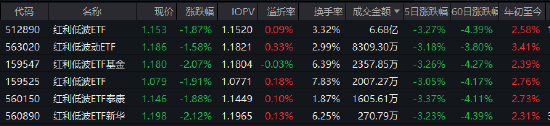
高盛坚定看好“股东回报”主题!红利低波ETF(512890)日成交额6.68亿霸榜 或成震荡市低吸利器
Xin Lang Ji Jin· 2025-09-18 09:32
Core Viewpoint - The recent market volatility has led to a collective decline of over 1% in the three major stock indices, with the Hongli Low Volatility ETF (512890) experiencing a drop of 1.87% but maintaining long-term net inflows, indicating investor confidence in the strategy [1][3][6]. Group 1: ETF Performance - The Hongli Low Volatility ETF (512890) closed at 1.153 yuan, with a trading volume of 6.68 billion yuan and a turnover rate of 3.32% [1][2]. - Over the past 60 trading days, the ETF has seen a net inflow of 1.79 billion yuan, reflecting a long-term positive sentiment among investors despite short-term fluctuations [1][3]. - The ETF has maintained strong liquidity, with a cumulative trading amount of 90.42 billion yuan over the last 20 trading days, averaging 4.52 billion yuan per day [2]. Group 2: Fund Flow Dynamics - Recent fund flow data indicates a mixed trend, with short-term outflows of 1.2 billion yuan over the last 5 trading days, while long-term inflows of 1.79 billion yuan over 60 trading days suggest strategic positioning by investors [3][6]. - As of September 16, the ETF's circulating scale was 20.293 billion yuan, ranking it among the top in its category, showcasing market recognition of the low volatility strategy [3]. Group 3: Holdings and Market Sentiment - The top ten holdings of the Hongli Low Volatility ETF include major banks and infrastructure companies, all of which have experienced varying degrees of adjustment recently [4][5]. - Goldman Sachs has maintained an overweight rating on A-shares and H-shares, advising investors to buy on dips, particularly favoring themes like shareholder returns and artificial intelligence, aligning with the ETF's focus [5][6].


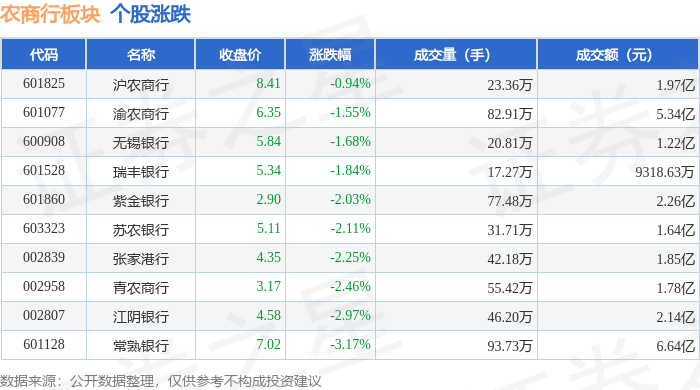
农商行板块9月18日跌1.73%,常熟银行领跌,主力资金净流出5822.84万元
Zheng Xing Xing Ye Ri Bao· 2025-09-18 08:52
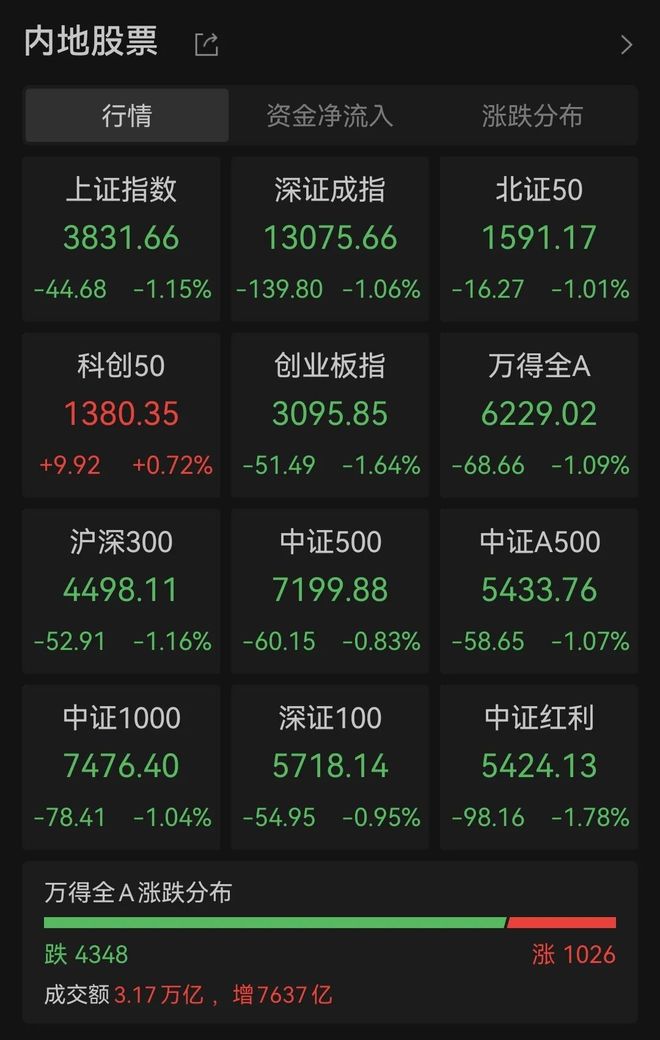
Market Overview - On September 18, the rural commercial bank sector declined by 1.73%, with Changshu Bank leading the drop [1] - The Shanghai Composite Index closed at 3831.66, down 1.15%, while the Shenzhen Component Index closed at 13075.66, down 1.06% [1] Individual Stock Performance - The closing prices and percentage changes for key rural commercial banks are as follows: - Hu Nong Commercial Bank: 8.41, -0.94% - Yu Nong Commercial Bank: 6.35, -1.55% - Wuxi Bank: 5.84, -1.68% - Ruifeng Bank: 5.34, -1.84% - Zijin Bank: 2.90, -2.03% - Su Nong Bank: 5.11, -2.11% - Zhangjiagang Bank: 4.35, -2.25% - Qing Nong Commercial Bank: 3.17, -2.46% - Jiangyin Bank: 4.58, -2.97% - Changshu Bank: 7.02, -3.17% [1] Capital Flow Analysis - The rural commercial bank sector experienced a net outflow of 58.22 million yuan from main funds, while retail investors saw a net inflow of 59.78 million yuan [1] - The capital flow for individual banks shows: - Yu Nong Commercial Bank: Main funds net inflow of 36.53 million yuan, retail net outflow of 9.74 million yuan - Wuxi Bank: Main funds net inflow of 21.54 million yuan, retail net outflow of 16.86 million yuan - Zhangjiagang Bank: Main funds net inflow of 4.67 million yuan, retail net outflow of 13.05 million yuan - Changshu Bank: Main funds net outflow of 62.08 million yuan, retail net inflow of 74.20 million yuan [2]
A50直线跳水,银行股全线下跌,A股成交额超3万亿
2 1 Shi Ji Jing Ji Bao Dao· 2025-09-18 08:00
Market Overview - On September 18, the major indices in the A-share market experienced a decline, with the ChiNext Index falling by 1.64%, the Shanghai Composite Index down by 1.15%, and the Shenzhen Component Index decreasing by 1.06% [1] - The total trading volume for the day was 3.17 trillion yuan, compared to 2.4 trillion yuan the previous day [1] Stock Performance - The FTSE China A50 Index futures saw a decline of 1.44%, with over 4,300 stocks in the market experiencing a drop [3] - The banking sector faced a significant downturn, with major banks like Agricultural Bank of China and China Construction Bank dropping over 2% and 1% respectively [5] - Conversely, the robotics sector showed strong performance, with stocks like Shoukai Co. hitting the daily limit for 12 consecutive days [3] Banking Sector Insights - The banking sector has seen a continuous decline, with the AH Index and the China Securities Banking Index both dropping over 13% since July 11 [6] - As of September 17, the dividend yield for the banking AH Index rose to 4.6%, indicating a potential opportunity for investors [8][16] - Several banks have reported shareholder increases, with notable actions from major shareholders like Everbright Group and Zijin Trust [10][11] Dividend Distribution - By September 17, 17 listed banks announced a total dividend of 237.54 billion yuan for the mid-year of 2025, with Industrial and Commercial Bank of China leading with a dividend of 50.396 billion yuan [14][15] - The trend of increasing dividends reflects confidence in the banks' future development and long-term investment value [11] Institutional Investment Trends - Insurance funds have increased their holdings in the banking sector, reaching a position of 28.24% as of the second quarter of 2025, while social security funds also raised their holdings to 51.71% [13] - The banking sector's low valuation and stable dividends continue to attract institutional investors, particularly those seeking steady returns [13][17]




A50直线跳水,银行股全线下跌,A股成交额超3万亿
21世纪经济报道· 2025-09-18 07:51
Market Overview - On September 18, the major indices in the A-share market experienced a decline, with the ChiNext Index falling by 1.64%, the Shanghai Composite Index down by 1.15%, and the Shenzhen Component Index decreasing by 1.06% [1][2] - The total trading volume for A-shares reached 3.17 trillion yuan, an increase from the previous day's 2.4 trillion yuan [1] Sector Performance - The FTSE China A50 Index futures saw a decline of 1.44%, with over 4,300 stocks in the market experiencing a drop [3] - The robotics sector continued its strong performance, with stocks like Shoukai Co. hitting the daily limit up for 12 consecutive days [3] - The semiconductor industry showed resilience, with SMIC reaching a historical high, while the metals sector faced significant declines [3] Banking Sector Analysis - The banking sector faced a broad decline, with major banks like Agricultural Bank of China dropping over 2% and others like China Merchants Bank and Bank of China falling more than 1% [5][6] - The AH Index for banks has seen a drop of over 13% since July 11, marking a significant decline [6] Shareholder Activity - Several listed banks have reported shareholder increases, with the AH Index dividend yield rising to 4.6% as of September 17 [9][17] - Notable increases include Everbright Bank's major shareholder increasing their stake by 1.397 million shares, and Nanjing Bank receiving support from its major shareholder, Zijin Trust, which increased its holdings by approximately 56.78 million shares [11][12] Dividend Distribution - As of September 17, 17 listed banks announced mid-year dividend plans totaling 237.54 billion yuan, with Industrial and Commercial Bank of China leading with a dividend of 50.396 billion yuan [15][16] - The trend indicates a strengthening of dividend policies among banks, reflecting confidence in future growth [12][13] Institutional Investment Trends - Insurance funds have increased their holdings in the banking sector, with a reported 28.24% allocation as of the second quarter of 2025, while social security funds also raised their positions [14] - The banking sector remains attractive for institutional investors due to its stable dividend yields and low valuations [14]

美联储降息“靴子落地”!指数跳水个股滞涨,还有哪些投资机会?
Sou Hu Cai Jing· 2025-09-18 07:15
Group 1: Dividend Trends - Since the introduction of the new "National Nine Articles" last year, many listed companies have adopted frequent dividend distributions as a means to enhance the stability, sustainability, and predictability of dividends [1] - In the Shanghai Stock Exchange, 406 listed companies have announced their semi-annual dividend plans, setting new records for both the number of companies and the total dividend amount [1] - Nearly 60% of these companies have consistently returned cash to investors through semi-annual dividends for two consecutive years, indicating a growing trend in mid-term dividends in the Shanghai market [1] Group 2: Coal Industry Performance - Despite improved cost control among coal enterprises, the net profit of sample companies in the first half of the year decreased by approximately 32% year-on-year, with a 15% quarter-on-quarter decline in the second quarter [3] - The mid-term dividend activity in the coal sector has increased, reflecting the leading companies' commitment to returning value to investors [3] - The supply-demand dynamics in the coal industry may improve in the second half of the year, potentially leading to a significant increase in coal prices compared to the second quarter [3] Group 3: Semiconductor Industry Growth - The semiconductor industry is experiencing growth driven by the explosive increase in artificial intelligence applications, with 66 out of 102 A-share companies in the digital chip design, analog chip design, integrated circuit manufacturing, and packaging sectors reporting profits in the first half of the year [3] - Among these, 38 companies achieved year-on-year net profit growth, while 7 companies turned losses into profits, indicating a positive trend across the semiconductor supply chain [3] Group 4: Fund Investment Trends - In the first half of 2025, Guotai Haitong emerged as the stock with the highest net buy amount by public funds, alongside significant purchases of stocks like Lanke Technology and Industrial Bank [5] - Public funds have shown a strong preference for financial stocks, with several banks demonstrating stable operations and improved asset quality, enhancing their risk resilience [5] - Public funds achieved a total investment income of 636.17 billion yuan in the first half of 2025, with equity and mixed funds contributing over 330 billion yuan to this figure [11]

银行2026年秋招面向哪些毕业生?AI人才仍“受宠”,交易岗需求增多
Xin Lang Cai Jing· 2025-09-18 00:53
Core Insights - The recruitment season for banks in 2026 has begun, with a focus on hiring talent skilled in technology and AI [1][3] - There is an increased demand for trading-related positions compared to the previous year [1][7] Group 1: Recruitment Focus - Major banks are prioritizing candidates with expertise in artificial intelligence, big data, and other technology-related fields [3][4] - The Industrial and Commercial Bank of China (ICBC) plans to recruit around 120 individuals, with 20 positions specifically for "AI+" roles [3][4] - Other banks, such as China Bank and China Construction Bank, are also emphasizing the need for technology professionals in various capacities [3][4][5] Group 2: Trading Positions - There is a notable increase in the demand for trading positions, with ICBC introducing a specialized recruitment for trading roles, aiming to hire about 10 individuals [7][8] - Agricultural Bank of China is also looking for talent in its financial market department, focusing on macro policy analysis and investment trading strategies [7][8] - Other banks, including China Merchants Bank and Shanghai Bank, are similarly seeking professionals for investment trading and market research roles [8][9] Group 3: Language and Skills Requirements - English proficiency, particularly passing the CET6 exam, has become a common requirement for many positions [10][12] - Banks are also looking for candidates with strong teamwork and communication skills, alongside technical expertise [12] - The recruitment of small language specialists is being highlighted as part of banks' globalization strategies, with specific language requirements outlined [11]


股债“跷跷板”效应又起 哪些产品表现亮眼?银行理财产品8月榜单揭晓
Zhong Guo Zheng Quan Bao· 2025-09-17 14:30
Group 1 - In August, the A-share market was active, with the Shanghai Composite Index reaching a nearly 10-year high. The bond market faced pressure, with the 10-year government bond yield rising by 13 basis points to 1.84% [1] - As of the end of August 2025, there were a total of 43,427 bank wealth management products in the market, an increase of 798 from July. Among these, bank wealth management subsidiaries accounted for 29,850 products, representing 68.74% of the total, up by 3.17 percentage points from July [1] Group 2 - The August ranking of bank wealth management products was compiled by the Golden Bull Asset Management Research Center, co-established by China Securities Journal and Shenzhen Data Economy Research Institute [2] - The ranking includes various categories of wealth management products, highlighting those that performed well in long-term evaluations [2] Group 3 - The overall risk level of the products on the list has slightly increased, with 50.47% of the products rated at level three (medium risk) or higher, and 6.67% rated at level four (medium-high risk) [14] - The structure of the listed products shows a notable phenomenon of "same category, different levels" in "fixed income+" and mixed products, indicating a more dispersed risk level distribution among the listed products [15] Group 4 - The retention rate of the products on the list was 37.14%, with 39 products from 22 institutions continuously appearing on the list, indicating a significant increase compared to July [11] - The competition in the market is intense, as evidenced by the relatively low retention rate of "fixed income+" products [11] Group 5 - The ranking utilized publicly available data from the bank wealth management market from January 1, 2024, to August 31, 2025, covering a total of 20 months [13] - The evaluation was based on multiple dimensions, including annualized weighted returns, return volatility, downside risk, and purchase costs, employing the Z-Score model for comprehensive assessment [13]

湘财证券晨会纪要-20250917
Xiangcai Securities· 2025-09-17 02:01
Banking Industry - The total loan growth has weakened, but the structure of corporate loans has improved. In August, the total social financing growth rate decreased by 0.2 percentage points to 8.8%, marking the first decline this year. Financial institution loan growth and medium to long-term loan growth both fell by 0.1 percentage points, with growth rates of 6.8% and 6.4% respectively [3][4] - Government bond financing has lessened its support for social financing. In August, new social financing amounted to 2.57 trillion yuan, a year-on-year decrease of 463 billion yuan, primarily due to government bond financing and loan drag. Government bond financing decreased by 251.9 billion yuan year-on-year [3][4] - The demand for resident loans is weak. In August, new RMB loans from financial institutions totaled 590 billion yuan, a year-on-year decrease of 310 billion yuan. Both long-term and short-term resident loans weakened [4][5] - Corporate loan growth has weakened, but the structure has improved. In August, new corporate loans totaled 590 billion yuan, a year-on-year decrease of 250 billion yuan, mainly due to a reduction in bill financing [5][6] - Investment suggestions indicate that with the implementation of fiscal interest subsidy policies and accelerated infrastructure investment, bank credit demand and structure are expected to improve. The report maintains an "overweight" rating for the banking sector, recommending specific banks for investment [6] Electronic Industry - Alibaba released Qwen3-Next, enhancing both performance and efficiency. The market performance of the AI industry index rose by 5.70% last week [8][9] - The valuation of the AI industry index shows a PE ratio of 56.60X and a PB ratio of 7.48X, indicating a significant increase compared to previous values [8][9] - The breakthrough of Qwen3-Next lies in achieving a balance between large parameter capacity, low activation overhead, and long context processing, which is expected to lower training and inference costs [10] - Investment suggestions highlight the ongoing recovery in consumer electronics and the high demand for AI infrastructure, recommending specific companies in the AI infrastructure and end-side SOC sectors [11] Medical Services Industry - The overall performance of the medical services industry has shown significant improvement, with a notable recovery in revenue and profit margins in the pharmaceutical manufacturing sector [13][14] - Private medical services are under short-term pressure, while CXO performance continues to improve, particularly in the eye care sector [15][16] - The IVD sector faces challenges due to medical insurance cost control and centralized procurement, but high-growth areas are still worth monitoring [18] Chemical Industry - Tian Nai Technology is a leading company in carbon nanotube production, with a focus on applications in lithium batteries and conductive materials [20][21] - The demand for carbon nanotubes is expected to grow significantly due to advancements in fast-charging and solid-state battery technologies, with a projected compound annual growth rate of 26.7% from 2024 to 2030 [24][26] - The company is expected to achieve net profits of 341 million yuan, 550 million yuan, and 762 million yuan from 2025 to 2027, respectively, and is rated as "overweight" [26][28]
银行秋季招聘加码争夺金融科技人才 既懂技术又懂业务的“双料选手”更受青睐
Zheng Quan Ri Bao· 2025-09-17 00:24
Core Viewpoint - The banking industry is increasingly focusing on recruiting fintech talent, emphasizing the need for professionals who possess both technical skills and business acumen to drive digital transformation and innovation [1][3]. Group 1: Recruitment Trends - Major commercial banks in China are ramping up their recruitment of fintech talent during the 2026 campus recruitment season, with a particular emphasis on professionals with backgrounds in big data, artificial intelligence, and data science [2][6]. - Banks are adopting specialized recruitment strategies, such as the "AI+" initiative by Industrial and Commercial Bank of China, which aims to hire around 20 individuals with expertise in artificial intelligence and big data [2][6]. - Agricultural Bank of China has introduced a "Fintech Special Program" under its "Jing Sui Trainee" positions, targeting candidates with interdisciplinary backgrounds in finance and technology [2][3]. Group 2: Evolving Talent Requirements - The demand for fintech talent is shifting from mere technical support to business empowerment, with banks seeking individuals who can understand financial logic and leverage technology for business innovation [3][4]. - Candidates are increasingly required to have a financial knowledge background, project management skills, and the ability to communicate across departments, aiming to bridge the gap between technology and business [3][4]. Group 3: Training and Development - Banks are transitioning to a composite training model for fintech talent, where employees gain experience in both technical departments and various business units to understand customer needs and risk logic [4][6]. - For instance, the "AI+" program at Industrial and Commercial Bank of China includes a one-year rotation in technology and business departments to enhance practical experience [4][6]. Group 4: Retention Strategies - To attract and retain fintech talent, banks are advised to implement market-oriented compensation systems, dynamic salary adjustments, and competitive rewards for high-end technical professionals [6][7]. - Creating a technology company-like organizational culture and providing clear career development paths are essential for retaining top talent in the banking sector [6][7].
