
航发动力

Search documents
航发动力:副总经理、总工程师叔伟辞职
Mei Ri Jing Ji Xin Wen· 2025-09-03 09:24
Core Points - The company announced the retirement of its Deputy General Manager and Chief Engineer, Mr. Su Wei, effective from the date the resignation report is delivered to the board [1] - Mr. Su Wei submitted his resignation report on September 3, 2025, and was originally scheduled to serve until April 28, 2027 [1] - The company expressed gratitude for Mr. Su Wei's contributions during his tenure and confirmed that he has fulfilled all public commitments and completed the necessary work handover [1]

国产航母概念下跌5.45% 8股主力资金净流出超亿元
Zheng Quan Shi Bao Wang· 2025-09-03 09:18
Group 1 - The domestic aircraft carrier concept sector experienced a decline of 5.45%, ranking among the top declines in concept sectors, with stocks like Sifang Electronics and Beifang Navigation hitting the daily limit down [1][2] - Major stocks within the domestic aircraft carrier concept that saw significant declines include AVIC Xi'an Aircraft Industry Group (-9.83%), Haige Communication (-7.48%), and Beifang Navigation (-9.99%) [2][3] - The sector faced a net outflow of 2.515 billion yuan in capital, with 32 stocks experiencing net outflows, and 8 stocks seeing outflows exceeding 100 million yuan, led by AVIC Xi'an Aircraft Industry Group with a net outflow of 347.43 million yuan [2][3] Group 2 - The top net inflow stocks in the market included CITIC Heavy Industries, Baotai Co., and China First Heavy Industries, with net inflows of 27.07 million yuan, 5.51 million yuan, and 2.53 million yuan respectively [2][3] - The overall market sentiment for the domestic aircraft carrier concept remains negative, as indicated by the significant capital outflows and stock price declines across multiple companies [2][3]


航发动力(600893) - 中国航发动力股份有限公司关于高级管理人员离任的公告
2025-09-03 09:15
证券代码:600893 证券简称:航发动力 公告编号:2025-026 中国航发动力股份有限公司 本公司董事会及全体董事保证本公告内容不存在任何虚假记载、误导性陈述 或者重大遗漏,并对其内容的真实性、准确性和完整性承担法律责任。 重要内容提示: 中国航发动力股份有限公司(以下简称公司)董事会于近日收到 副总经理、总工程师叔伟先生的书面辞职报告,因满龄退休,叔伟先 生向董事会提出辞去公司副总经理、总工程师职务。 一、提前离任的基本情况 关于高级管理人员离任的公告 根据《中华人民共和国公司法》以及《中国航发动力股份有限公 司章程》的相关规定,叔伟先生的辞职报告自送达公司董事会之日起 生效,辞职后,叔伟先生不再担任公司任何职务。叔伟先生不存在未 履行完毕的公开承诺,已按照公司相关规定完成交接工作。 叔伟先生担任副总经理、总工程师期间,恪尽职守、勤勉尽责, 公司及公司董事会对叔伟先生任职期间为公司发展做出的贡献表示 衷心感谢! 特此公告。 中国航发动力股份有限公司董事会 2025 年 9 月 4 日 | 是否存在 | 是否继续在上 | 原定任期 | 具体职务 | 未履行完 | | | | | | | | | | | ...
航发动力:叔伟辞任副总经理、总工程师
Xin Lang Cai Jing· 2025-09-03 09:11
Core Viewpoint - The company announced the resignation of its Deputy General Manager and Chief Engineer, Shu Wei, due to reaching retirement age, effective immediately upon submission of the resignation report [1] Group 1 - Shu Wei has submitted a written resignation report to the board of directors, which has been accepted [1] - Following his resignation, Shu Wei will no longer hold any position within the company [1] - The resignation does not involve any unfulfilled public commitments, and the handover process has been completed in accordance with company regulations [1]
中国航发动力副总经理、总工程师叔伟因满龄退休离任
Xin Lang Cai Jing· 2025-09-03 09:11
Core Viewpoint - China Aviation Engine Corporation announced the resignation of its Deputy General Manager and Chief Engineer, Shu Wei, due to retirement, effective September 3, 2025, ahead of the originally scheduled term ending on April 28, 2027 [1] Summary by Sections - Resignation Details - Shu Wei submitted a written resignation report to the board, which became effective upon delivery [1] - After resignation, Shu Wei will no longer hold any position within the company [1] - Transition and Commitments - There are no outstanding public commitments that remain unfulfilled by Shu Wei [1] - The handover of responsibilities has been completed [1]
航发动力跌2.04%,成交额3.83亿元,主力资金净流出1519.61万元
Xin Lang Cai Jing· 2025-09-03 02:41
Core Viewpoint - The stock of Aviation Power experienced a decline of 2.04% on September 3, with a trading price of 38.93 yuan per share and a total market capitalization of 103.77 billion yuan. The company has faced a year-to-date stock price drop of 5.86% and a significant decrease in revenue and net profit for the first half of 2025 compared to the previous year [1][2]. Company Overview - Aviation Power, established on December 23, 1993, and listed on April 8, 1996, is located in Xi'an, Shaanxi Province. The company specializes in the manufacturing of aircraft engines and related products, with 93.97% of its revenue coming from this core business [2]. - The company is classified under the defense and military industry, specifically in the aviation equipment sector, and is involved in various concept sectors including general aviation and commercial aerospace [2]. Financial Performance - For the first half of 2025, Aviation Power reported an operating income of 14.098 billion yuan, a year-on-year decrease of 23.99%. The net profit attributable to shareholders was 91.78 million yuan, down 84.57% from the previous year [2]. - The company has distributed a total of 4.057 billion yuan in dividends since its A-share listing, with 1.072 billion yuan distributed over the past three years [3]. Shareholder Structure - As of June 30, 2025, the number of shareholders increased to 149,900, with an average of 17,778 shares held per shareholder, a decrease of 6.03% from the previous period. The top ten circulating shareholders include significant institutional investors [3].
研判2025!中国汽轮机油行业产业链、产量、市场规模、竞争格局及发展前景展望:工业化进程持续推进,汽轮机油规模达39.61亿元[图]
Chan Ye Xin Xi Wang· 2025-09-03 01:21
Core Viewpoint - The turbine oil market in China is experiencing stable growth, driven by the expansion of power generation capacity, particularly in thermal and nuclear power sectors, as well as the demand for high-quality lubricants in the petrochemical industry and the transformation of shipbuilding and metallurgy sectors [1][12]. Industry Overview - Turbine oil, also known as turbine oil, is essential for the lubrication of key components in turbine units, including bearings and governors, playing an irreplaceable role in industrial modernization [1][12]. - The market size of China's turbine oil industry has grown from 1.694 billion yuan in 2015 to an estimated 3.961 billion yuan in 2024, with a compound annual growth rate (CAGR) of 9.9% [1][12]. Industry Development History - The turbine oil industry dates back to the early 20th century, gaining importance with the rise of electricity demand and the widespread use of turbines [6][7]. - The industry has evolved to focus on environmental performance and energy efficiency, leading to the development of ashless, biodegradable, and long-life turbine oils [7][12]. Industry Chain - The upstream of the turbine oil industry consists of base oils and various additives, with base oils being the primary component [9][10]. - The midstream involves the production and manufacturing of turbine oils, while the downstream includes applications in aviation, shipping, and power generation sectors [9][10]. Current Industry Status - The turbine oil industry is currently in a phase of steady development, with increasing demand driven by the expansion of thermal power capacity and the construction of nuclear power plants [12][13]. - The production of turbine oil in China is projected to rise from 116,300 tons in 2015 to 231,300 tons in 2024, with a CAGR of 7.94% [12][13]. Competitive Landscape - The Chinese turbine oil industry features a diverse competitive landscape, with international brands dominating the high-end market and domestic companies competing in the mid-range market [13][14]. - Leading domestic companies like Sinopec and PetroChina are narrowing the gap with international brands through continuous technological development [13][14]. Future Development Trends - The industry is expected to accelerate towards high-performance and long-life products, with a shift from traditional mineral-based oils to synthetic and semi-synthetic oils [17]. - There will be a diversification of application scenarios, extending beyond traditional power generation to include emerging fields like thermal energy and energy storage [18]. - Environmental sustainability will become a key focus, with the development of low-toxicity and low-volatility formulations, as well as the commercialization of "green" turbine oils [19].


飞天梦想照进现实 轻松解锁航空航天投资密码|2025招商证券“招财杯”ETF实盘大赛
Sou Hu Cai Jing· 2025-09-02 07:21
Core Viewpoint - The collaboration between招商证券 and major fund companies aims to enhance investor knowledge about ETFs and promote healthy development in the ETF market, with a focus on the aerospace industry as a high-potential investment area [1] Group 1: Aerospace Industry Insights - The aerospace sector exhibits characteristics of "high prosperity + strong certainty," driven by geopolitical demand and planned production [3][5] - The global military expenditure is projected to exceed $2.4 trillion in 2024, marking a historical high, which supports the growth of the aerospace industry [3] - The "14th Five-Year Plan" is expected to peak in 2025, leading to accelerated order fulfillment and production in the aerospace sector [4][6] Group 2: Investment Recommendations - Investors are advised to consider index-based investment strategies to mitigate risks associated with the aerospace sector's volatility [2][17] - Key areas for investment focus include "unmanned and intelligent systems," "military trade demand," and "new domains" [2][30] - The aerospace industry is anticipated to see significant growth in satellite communication and commercial space operations, which are viewed as core growth points for the global aerospace economy [11][12] Group 3: Future Growth Potential - The aerospace industry is expected to benefit from technological breakthroughs and domestic substitution, particularly in the aircraft engine sector [8][10] - The low-altitude economy is projected to grow rapidly, with market size expected to exceed 1 trillion yuan by 2026 [14][15] - The military modernization goals set for 2035 will drive long-term demand for advanced military equipment, ensuring sustained growth in the aerospace sector [28][29] Group 4: Financial Metrics for Evaluation - Investors should monitor contract liabilities and inventory turnover days as indicators of future revenue and operational efficiency [7][6] - The aerospace sector's performance is expected to improve significantly in 2025, with a notable increase in contract liabilities indicating strong order reserves [6][7] Group 5: Market Trends and Events - The upcoming military parade is anticipated to serve as a catalyst for the aerospace sector, with potential new weapon systems on display that could influence market sentiment [24][26] - Historical data suggests that military parades have previously led to significant gains in the aerospace sector, indicating a potential for similar outcomes in the current context [27]

天风证券:给予航发动力买入评级
Zheng Quan Zhi Xing· 2025-09-02 06:09
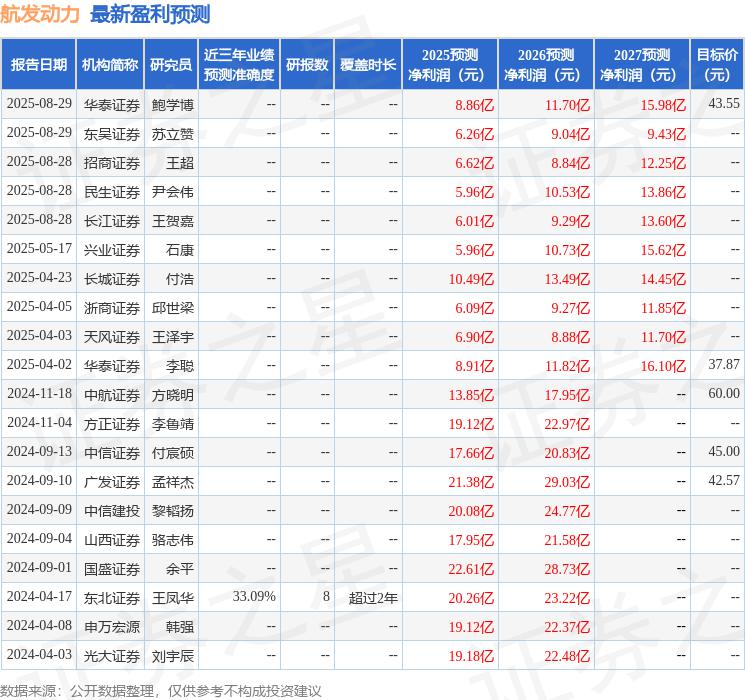
Core Viewpoint - The report indicates that changes in customer demand have impacted delivery, leading to a significant decline in revenue and net profit for the company in the first half of 2025, but a notable increase in contract liabilities suggests a gradual recovery in demand [2][4]. Financial Performance - In the first half of 2025, the company reported revenue of 141.0 billion yuan, a year-over-year decrease of 24.0%, and a net profit of 0.9 billion yuan, down 84.6% year-over-year [2]. - The second quarter of 2025 saw revenue of 79.3 billion yuan, a decline of 35.4% year-over-year, with a net profit of 0.8 billion yuan, down 80.8% year-over-year [2]. - The gross margin for the second quarter increased by 0.79 percentage points to 11.9%, while the net margin decreased by 2.40 percentage points to 1.5% [2]. - The company’s contract liabilities reached 62.5 billion yuan by the end of Q2 2025, reflecting a 39.4% increase from the beginning of the year, indicating potential future demand recovery [2][4]. Cost Structure - The company’s operating expense ratio for the first half of 2025 was 9.1%, an increase of 2.01 percentage points year-over-year [2]. - Breakdown of expenses includes: - Sales expense ratio at 0.9%, down 0.67 percentage points year-over-year - Management expense ratio at 4.9%, up 1.16 percentage points year-over-year - R&D expense ratio at 1.5%, up 0.51 percentage points year-over-year due to increased R&D tasks - Financial expense ratio at 1.8%, up 1.01 percentage points year-over-year, with financial expenses of 2.6 billion yuan, a 71.1% increase year-over-year [2]. Subsidiary Performance - The subsidiary LiYang Power showed positive development, with revenue from aviation engines and related products at 128.9 billion yuan, down 24.9% year-over-year [3]. - The South Company capitalized on opportunities in the general aviation engine market, obtaining production licenses for the AES100 engine and signing contracts for six units [3]. - The company is deeply involved in the development of domestic commercial engines, positioning itself to benefit from the growth of domestic large aircraft [3]. Profit Forecast and Rating - The company is the only domestic leader capable of developing a full range of aviation engines and maintains a positive overall development outlook [4]. - Adjusted net profit forecasts for 2025-2027 are 6.17 billion yuan, 9.02 billion yuan, and 12.25 billion yuan, respectively, with corresponding P/E ratios of 173.74, 118.90, and 87.52 [4].
军工 :重视低位核心资产价值重估
2025-09-02 00:42
Summary of Conference Call Records Industry Overview - The conference call focuses on the military industry, specifically companies involved in optical-electronic systems and aircraft engines, highlighting their growth potential and market positioning. Key Companies Discussed 1. **Zhuangguangdian (Optical-Electronic)** - Revenue and profit compound annual growth rates (CAGR) of 25%-26% over the past 20 years, with a market share close to 50% in the military sector [1][2] - Transitioned from a connector supplier to a system-level solution provider through vertical integration [4] - Significant growth in civilian sectors, particularly in new energy vehicles, with over 50% year-on-year revenue growth in the first half of 2025 [4] - Generated over 1.6 billion in revenue from liquid cooling technology last year, serving major clients like ByteDance, Alibaba, Baidu, China Mobile, and Huawei [4] 2. **Hangfa Power (Aero Engine Manufacturer)** - The only domestic engine manufacturer with independent negotiation capabilities in both domestic and international markets [5] - Engine products can be exported independently, benefiting from any aircraft model's export [5] - The lifecycle value of engines is approximately 0.8 to 1.2 times that of the aircraft, with significant growth potential due to the need for multiple engine replacements [7] 3. **AVIC Xifei (Aviation Industry Corporation of China)** - Unique positioning as the only manufacturer involved in transport aircraft, bombers, and domestic large aircraft projects [3][9] - Core products include the Y-20 transport aircraft, with potential future projects including a new bomber comparable to the U.S. B21 [9] - Young management team bringing fresh perspectives and potential for international business expansion [9] Core Insights and Arguments - **Investment Recommendations**: The call recommends investing in Zhuangguangdian, Hangfa Power, and AVIC Xifei as low-position core assets due to their stable growth, unique market positions, and broad business layouts [2][11] - **Cost Control and Efficiency**: Zhuangguangdian has implemented effective internal cost management by establishing multiple cost centers and conducting financial assessments, which has improved operational efficiency [6] - **Market Potential**: The aftermarket for engines is projected to exceed 400 billion in the next 20 years, indicating substantial growth opportunities for Hangfa Power [7][8] Additional Important Points - Zhuangguangdian's proactive approach to fundraising through IPOs and private placements has enabled it to expand production capacity significantly, ensuring it can meet future demand [6] - The military aviation sector is expected to see increased demand for maintenance and repair services, similar to trends observed in overseas markets [7] - The management's youthfulness at AVIC Xifei is seen as a positive factor for innovation and growth [9] This summary encapsulates the key points discussed in the conference call, providing insights into the military industry and the highlighted companies' strategic advantages and growth potential.