
AES100发动机

Search documents
航发控制20260303
2026-03-04 14:17
Summary of the Conference Call for航发控制 Company Overview - **Company Name**: 航发控制 (Aero Engine Control) - **Industry**: Aviation Engine Control Systems - **Core Business**: The company is the only core listed platform for domestic aviation engine control systems, with 89% of revenue coming from its main business. [2][6] Key Points and Arguments Market Position and Competitive Advantage - 航发控制 is a leading enterprise in the aviation engine control system sector, with comprehensive R&D and production capabilities for both military and civilian engine control systems. [3] - The company operates through four wholly-owned subsidiaries, forming a systematic capability covering R&D, manufacturing, and delivery. [3] Industry Role and Progress - 航发控制 is the sole supplier of mechanical hydraulic key actuators for the domestic large aircraft engine control system, actively participating in the development process. [4] - The company is developing the 长江 series engines to meet international fifth-generation civil aviation engine standards, which are part of the "十四五" key tasks. [4] Market Size and Future Projections - The estimated market size for commercial aviation engine control systems in China over the next 20 years is approximately 473.7 billion RMB, with an annualized average of about 23.7 billion RMB. [5] Business Structure and Revenue Composition - The core business of aviation engine and gas turbine control systems accounts for 89% of total revenue, with other minor contributions from international cooperation and technology derivatives. [6] Subsidiary Performance - 西控科技, established in 1955, is a key player with projected revenue of 2.383 billion RMB in 2024, accounting for 43.5% of the company. [7] - Other subsidiaries include 航发红林, 北京航科, and 长城控制, each contributing to the overall business performance with specific focuses on various control systems. [8] Technological Evolution - The evolution of aviation engine control systems is moving towards electronic and intelligent systems, with the third generation (FADEC) being the international standard. [9] - Domestic capabilities have reached the second generation, with ongoing efforts to develop the third generation systems. [9] Global Market Dynamics - The global aviation engine control system market is highly concentrated, with major suppliers like FADEC International and Collins dominating the supply side. [10] - The market is expected to grow from approximately 3.27 billion USD in 2024 to about 5 billion USD by 2035, driven by fleet expansion and defense investments. [11] Low-altitude Economy and General Aviation - 航发控制 is expanding into the low-altitude economy and general aviation sectors, with significant orders for the AES100 engine, which has received production and type certification. [12] - The company secured 1,500 orders worth over 10 billion RMB at the 2024 China Airshow, marking a record for engine orders. [12] Financial Performance and Forecast - In 2024, the company expects to achieve revenue of 5.48 billion RMB, a 3% increase, with a net profit of 750 million RMB, reflecting a 3.3% growth. [15] - For 2025, projected revenue is 5.175 billion RMB, a decline of 5.6%, with net profit expected to drop by 55% to 339 million RMB due to tax reforms and increased strategic investments. [15] - The company maintains a healthy financial structure with a debt-to-asset ratio of 19.28% and positive cash flow. [16] Profitability Forecast - The company anticipates gradual recovery in net profit from 340 million RMB in 2025 to 410 million RMB by 2027, with corresponding earnings per share increasing over the same period. [16][17] Additional Important Information - The controlling shareholder is 中国航发集团, holding 43.66% of the shares, with the actual controller being the State-owned Assets Supervision and Administration Commission. [14]

价值数千万国产发动机,重大高风险试验一次成功!这15秒,所有人都捏把汗
Xin Lang Cai Jing· 2026-01-26 12:47
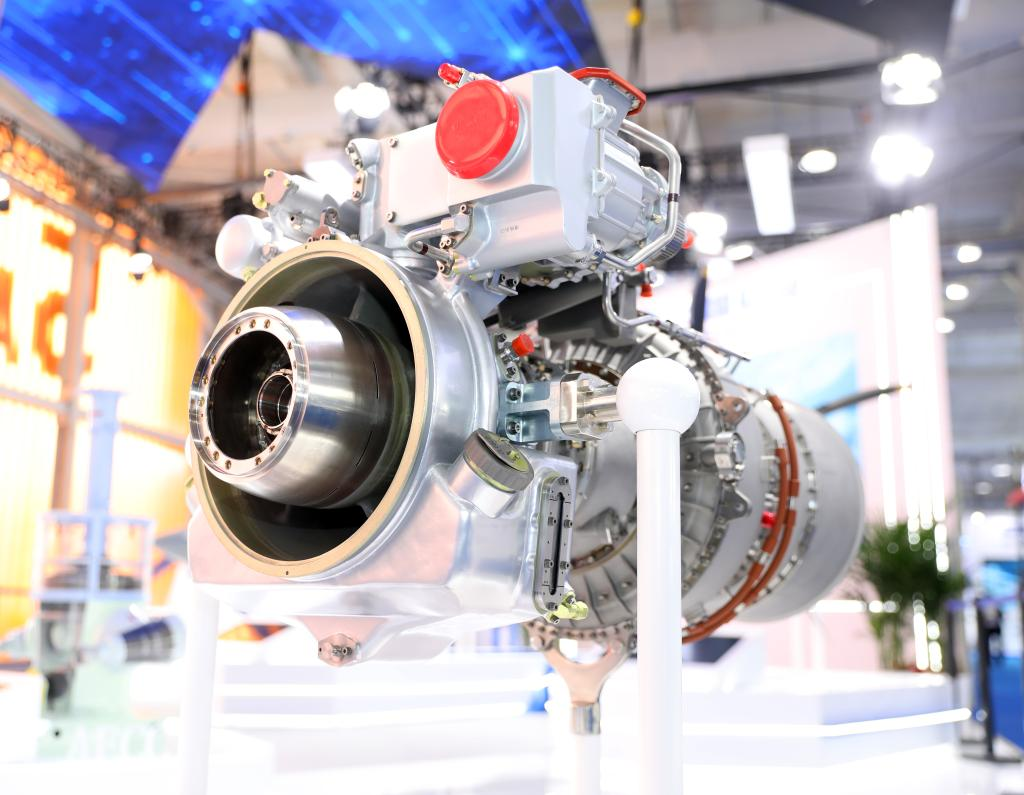
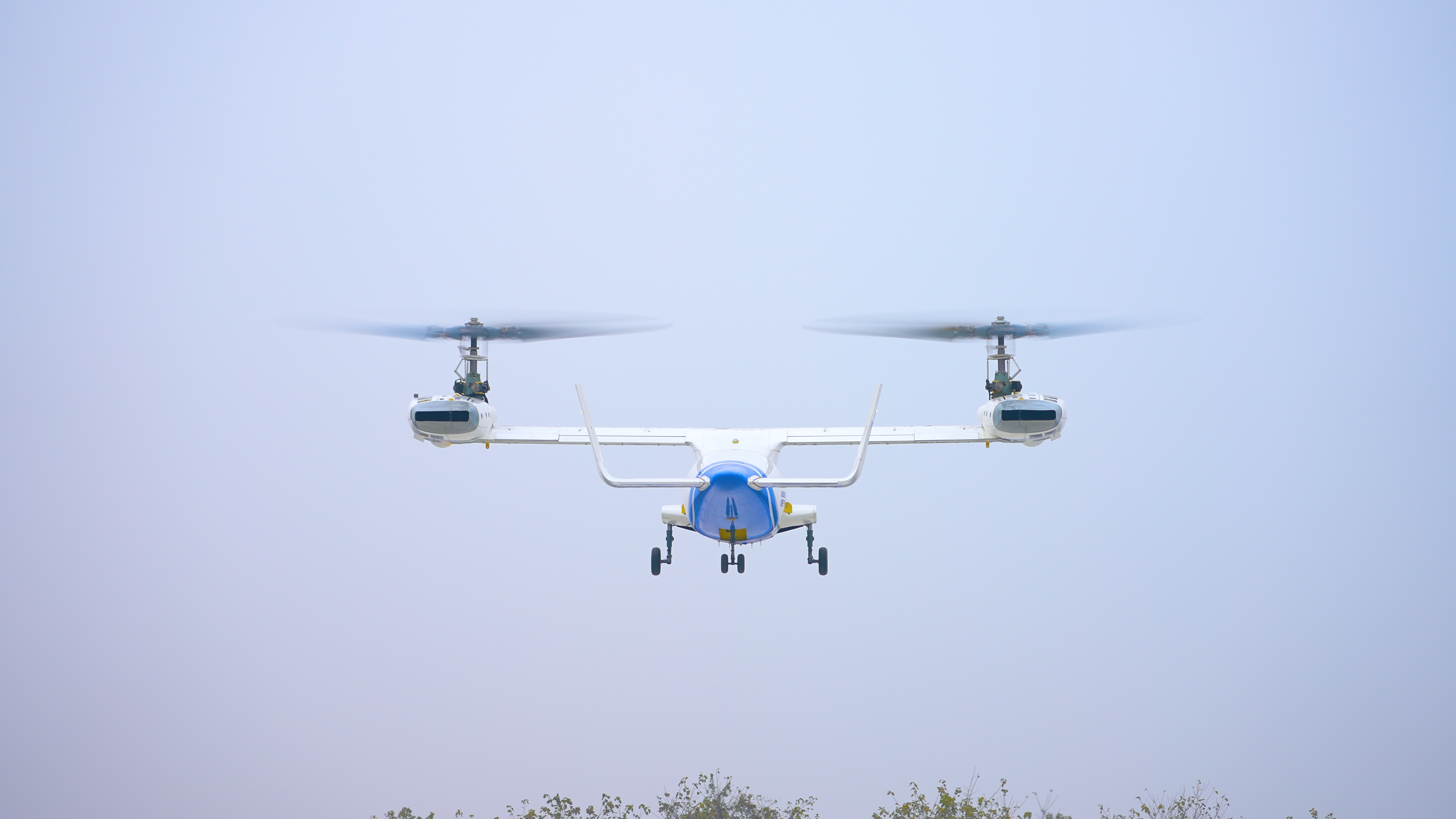
Core Insights - The AES100 engine, China's first fully independent and internationally competitive 1000 kW civil turboshaft engine, successfully powered the 6-ton tilt-rotor UAV, Lanying R6000, in its maiden flight in Sichuan [1][5] - The development of the AES100 engine was likened to a world-class challenge, with the research team overcoming significant hurdles over five years, including a critical 15-second test [1][3] Development Challenges - The most significant challenge during the development was the engine's overall compatibility test, a high-risk airworthiness test that had never been conducted for civil engines in China before [3] - The test involved a dangerous procedure where the power transmission shaft was intentionally severed at maximum engine speed, causing the turbine blades to experience approximately 5 tons of centrifugal force and potentially fly off [3] - The team meticulously planned the test from 2018, completing various stages of testing each year leading up to the successful trial in September 2023 [3][5] Test Success - On September 10, 2023, the team successfully executed the critical test, where the turbine blades detached as designed, and the engine safely shut down within the required 15 seconds without causing any catastrophic failures [5] - This achievement set a new record for high-risk civil turboshaft engine testing in China, eliminating the most significant obstacle in the airworthiness certification process for the AES100 engine [5] Future Prospects - The successful development of the AES100 engine fills a significant product gap and reduces reliance on imports, with plans for future development focusing on series production, platform integration, and industrialization [5]

科学与健康 | 中国“心”中国造 这颗“心脏”不一般!
Xin Hua She· 2025-12-31 09:01
Core Viewpoint - The AES100 engine, developed by China, represents a significant advancement in aviation technology, enabling versatile flight capabilities for tilt-rotor UAVs and breaking foreign monopolies in this sector [1][3]. Group 1: Engine Performance and Capabilities - The AES100 engine is China's first independently developed 1000 kW advanced civil turboshaft engine, featuring high efficiency, low fuel consumption, long lifespan, and high safety, with performance reaching international advanced levels [1]. - The engine has been tested under complex conditions such as icing, heavy rain, and strong electromagnetic environments, ensuring reliable power for 6 to 12-seat helicopters or tilt-rotor aircraft [2]. - The engine's design anticipates the urgent demand for high-performance power in the general aviation market, successfully applied in the Liangying R6000 aircraft [1][2]. Group 2: Future Developments and Applications - The AES100 engine has obtained type certification and production license from the Civil Aviation Administration of China, with potential for future variants including a 900 kW turboprop engine and a 1000 kg thrust turbofan engine [3]. - The engine can support various applications such as cross-regional efficient logistics transportation and point-to-point personnel transport between cities [3]. - Other advancements in Chinese aviation engines include a 3D-printed lightweight micro turbojet engine and a compact 1100 kW gas turbine engine, contributing to the development of low-altitude economy and new transportation models [4].
科学与健康|中国“心”中国造 这颗“心脏”不一般!
Xin Hua She· 2025-12-31 07:44
Core Viewpoint - The AES100 engine represents a significant advancement in China's aviation industry, showcasing the country's capability in developing high-performance aviation engines that meet diverse operational requirements [2][5]. Group 1: Engine Development and Features - The AES100 engine is China's first independently developed 1000 kW class advanced civil turboshaft engine, featuring high efficiency, low fuel consumption, long lifespan, and high safety, with performance reaching international advanced levels [2][3]. - The engine has been tested under complex conditions such as icing, heavy rain, and strong electromagnetic environments, ensuring reliable power for helicopters and tilt-rotor aircraft [3]. - The engine has received certification from the Civil Aviation Administration of China, allowing for further development into variants such as a 900 kW turboprop engine and a 1000 kg thrust turbofan engine [4]. Group 2: Market Applications and Future Prospects - The AES100 engine can support various missions including patrol, rescue, sightseeing, and official flights at altitudes below 6000 meters [3]. - Future applications of the engine include efficient logistics transportation across regions and point-to-point personnel transport between cities [4]. - The development of other domestic engines, such as a 3D-printed lightweight micro turbojet engine and a 1100 kW gas turbine engine for helicopters, indicates a broader trend of innovation in China's aviation sector [5].
重大突破!全球首款,成功首飞
Xin Lang Cai Jing· 2025-12-28 13:11
Core Insights - The successful maiden flight of the world's first 6-ton tilt-rotor aircraft, the Lan Ying R6000, marks a significant breakthrough in China's tilt-rotor technology, providing a large-scale application-level solution for global tilt-rotor technology industrialization [2][12] Group 1: Aircraft Specifications and Performance - The Lan Ying R6000 has a length of approximately 11.832m, a height of 5.326m, a width of 17.5m, and a rotor diameter of 7.5m, achieving a cruising speed of 550 km/h, which is double that of traditional helicopters [6] - It has a maximum payload of 2000 kg, significantly exceeding that of helicopters of the same weight class, and a maximum range of 4000 km, which is four times that of traditional helicopters [6] - The operational ceiling is 7620m, which is double that of conventional helicopters [6] Group 2: Technological Advancements - The aircraft utilizes the AES100 engine developed by China Aviation Engine Corporation, featuring a highly integrated electromechanical actuation system and advanced flight control system for seamless mode switching between vertical takeoff and high-speed flight [6][10] - The design incorporates an advanced tilt-rotor shaft and a non-fully rotating engine nacelle configuration, enhancing safety during takeoff and landing by mitigating high-temperature airflow from the engine [7] - The aircraft is equipped with an intelligent sensing and measurement system for real-time monitoring of onboard systems, improving reliability and safety [7] Group 3: Applications and Market Potential - The Lan Ying R6000 is expected to revolutionize high-end transportation, serving inter-provincial commuting, cross-sea routes, and mountainous transport, thereby significantly reducing travel time [9] - In emergency rescue scenarios, it will play a crucial role in medical emergencies, firefighting, police patrols, and large-scale disaster relief, enabling rapid and precise delivery of personnel and supplies [9] - The aircraft's versatility covers various needs, including air logistics, special operations, offshore platform commuting, and aerial surveying, while also opening new possibilities for high-end private travel and aerial tourism [9] Group 4: Future Developments - The successful flight signifies China's entry into the global forefront of tilt-rotor technology, breaking a long-standing technological monopoly [12] - From January 2026, the aircraft will advance to tilt-rotor mode test flights and subsequent full-process flight testing, accelerating the airworthiness certification process [12] - The development of an airworthy version and a manned configuration is already underway, with plans for practical applications in business travel, logistics, and emergency response [12]
中国AES100发动机配装全球首款6吨级倾转旋翼机成功首飞
Zhong Guo Xin Wen Wang· 2025-12-28 13:01
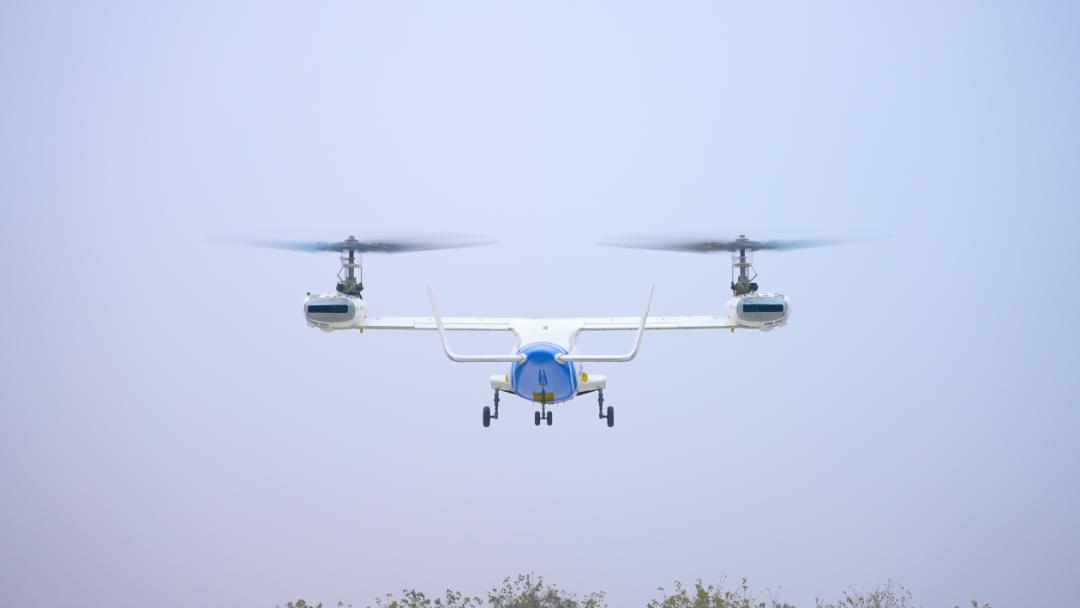
Core Viewpoint - The successful maiden flight of the AES100 engine equipped on the R6000 tilt-rotor aircraft marks a significant milestone in China's aviation industry, showcasing advancements in domestic engine technology and its application in general aviation [1][3][5]. Group 1: Engine and Aircraft Development - The AES100 engine is China's first independently developed 1000 kW class advanced civil turboshaft engine, which was successfully tested on the R6000 tilt-rotor aircraft [1][3]. - The successful flight demonstrates the effective collaboration between advanced power systems and aircraft design, highlighting a breakthrough in the domestic aviation power sector [3][4]. - The engine's design considers the complex operational requirements of tilt-rotor aircraft, balancing high power output during hover and efficient operation during cruise [3][4]. Group 2: Market and Future Prospects - The AES100 engine project targets the urgent demand for high-performance power in the general aviation market, with plans to obtain the Type Certificate (TC) by August 2024 and the Production Certificate (PC) by June 2025 [3][4]. - The successful maiden flight of the R6000 validates the compatibility of the AES100 engine with the tilt-rotor transmission and rotor systems, indicating a significant advancement in domestic aviation technology [4][5]. - The AES100 engine is expected to be equipped on multiple aircraft models, setting a record for three aircraft maiden flights within a year, showcasing its adaptability and technological maturity [7].

重大突破!全球首款,成功首飞
中国能源报· 2025-12-28 12:17
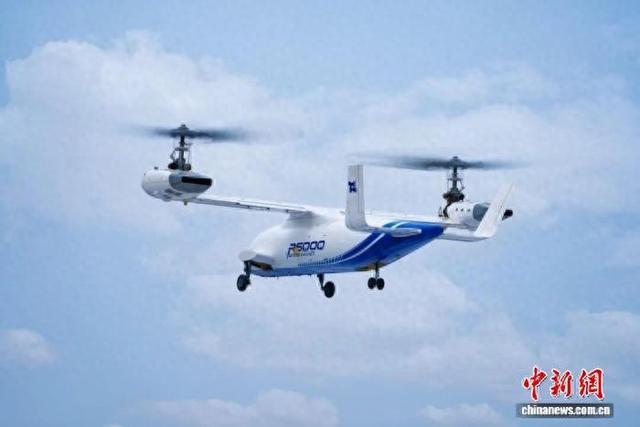
Core Viewpoint - The successful maiden flight of the world's first 6-ton tilt-rotor aircraft, the Lan Ying R6000, marks a significant breakthrough in China's tilt-rotor technology, providing a large-scale application-level solution for global tilt-rotor technology industrialization [1][11]. Group 1: Aircraft Specifications and Performance - The Lan Ying R6000 has a length of approximately 11.832m, a height of 5.326m, and a width of 17.5m, with a rotor diameter of 7.5m. Its cruising speed reaches 550 km/h, which is double that of traditional helicopters. The maximum payload is 2000 kg, significantly exceeding that of helicopters of the same weight class. The maximum range is 4000 km, four times that of traditional helicopters, and the service ceiling is 7620m, also double that of traditional helicopters [5][6]. - The aircraft utilizes the AES100 engine developed by China Aviation Engine Corporation, featuring a highly integrated electromechanical actuation system and advanced flight control system, enabling seamless and safe transitions between vertical takeoff and high-speed flight modes [5][9]. Group 2: Technological Innovations - The R6000 employs an advanced tilt-rotor axis design that avoids high-temperature airflow from the engine's exhaust during takeoff and landing, enhancing safety for personnel and surfaces on maritime platforms. It also features an intelligent sensing and health management system for real-time monitoring of onboard systems [6][9]. - The aircraft incorporates wing folding and rotor blade retraction technologies, significantly reducing the space required for parking and enhancing deployment flexibility in confined spaces [6][9]. Group 3: Market Applications and Future Prospects - The R6000 is expected to revolutionize high-end transportation, serving inter-provincial commuting, cross-sea routes, and mountainous transport, thereby reducing time and distance. It will play a crucial role in emergency rescue operations, including medical emergencies, firefighting, police patrols, and large-scale disaster relief [8][11]. - The successful flight of the R6000 signifies China's entry into the forefront of tilt-rotor technology, breaking long-standing technological monopolies. The aircraft is set to drive upgrades in the low-altitude economy industry chain and create new business scenarios, including urban air mobility [11].
全球首款6吨级倾转旋翼飞行器成功首飞
Huan Qiu Wang Zi Xun· 2025-12-28 08:40
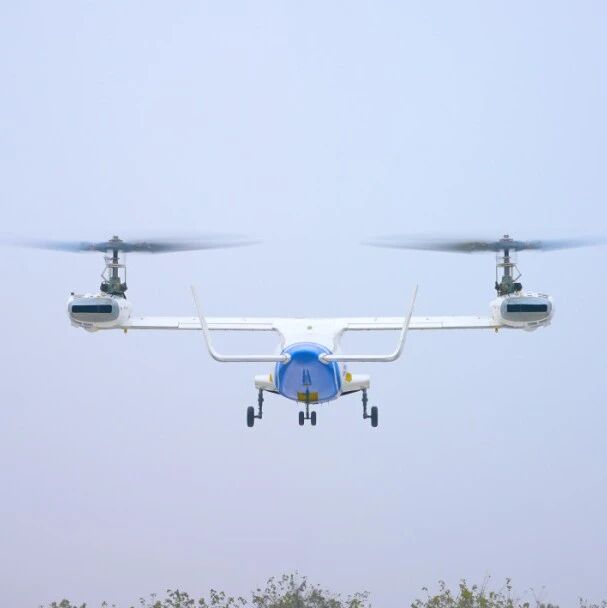
Core Viewpoint - The successful first flight of the LaYing R6000, the world's first 6-ton tilt-rotor aircraft developed by the United Aircraft Group, marks a significant breakthrough in tilt-rotor technology in China, paving the way for industrialization and large-scale application of this technology globally [1][9]. Group 1: Technical Specifications - The LaYing R6000 features a length of 11.832m, a height of 5.326m, a width of 17.5m, and a rotor diameter of 7.5m, achieving a cruising speed of 550 km/h, which is double that of traditional helicopters [4]. - It has a maximum payload of 2000 kg, significantly exceeding that of helicopters of the same weight class, and a maximum range of 4000 km, which is four times that of conventional helicopters [4]. - The operational ceiling is 7620m, which is twice that of traditional helicopters [4]. Group 2: Technological Innovations - The LaYing R6000 utilizes the AES100 engine developed by China Aviation Engine Corporation, featuring a highly integrated electromechanical actuation system and advanced flight control system for seamless mode switching between vertical takeoff and high-speed flight [4][7]. - The aircraft's design avoids high-temperature gas flow from the engine's tail nozzle during takeoff and landing, enhancing safety for personnel and preventing damage to surfaces without thermal protection [5]. - It incorporates intelligent sensing and health management systems for real-time monitoring of onboard systems, along with a light-weight composite material structure to improve operational efficiency [7]. Group 3: Market Applications - The LaYing R6000 is expected to revolutionize high-end transportation, providing efficient services for inter-provincial commuting, cross-sea routes, and mountainous transport, thereby significantly reducing travel time [6]. - In emergency rescue scenarios, it will play a crucial role in medical emergencies, firefighting, police patrols, and large-scale disaster relief, enabling rapid and precise delivery of personnel and supplies [6]. - The aircraft's versatility covers various needs, including air logistics, special operations, offshore platform commuting, and aerial surveying, while also opening new possibilities for high-end private travel and aerial tourism [6]. Group 4: Future Developments - The successful first flight signifies China's entry into the forefront of tilt-rotor technology, breaking the long-standing technological monopoly [9]. - Starting from January 2026, the LaYing R6000 will advance to tilt-rotor mode test flights and subsequent full-process flight testing, accelerating the airworthiness certification process [9]. - The project will also initiate the development of an airworthy version and a manned configuration, gradually implementing applications in business travel, logistics, and emergency response [9].
中国航发获超10亿元通航动力产品订单
Zhong Guo Min Hang Wang· 2025-11-28 02:13
Core Insights - On November 27, during the opening of the 2025 Asian General Aviation Expo, China Aviation Engine Corporation (CAEC) held a promotional event for its turboprop engines, signing cooperation agreements or intent purchase contracts with 17 clients, totaling over 1 billion yuan [1][2] - The event featured the launch of seven turboprop engines, including AEP20, AEP50E, AEP60E, AEP100, ATP120, turboprop-6, and AEP500, which are competitive products in the general aviation power sector [1] - The promotional event also highlighted various power products, including three types of electric power products, which were publicly introduced for the first time [1] Company Developments - CAEC's research institute signed a 700 million yuan intent order for the AEP20 engine, a 200 kW turboprop engine designed for 1-2 ton single-engine or 3-4 ton twin-engine general aircraft or drones, with the first engine expected to be delivered for test flight by the end of 2026 [2] - Additional agreements included a 160 million yuan cooperation and intent order for the AES100 engine with Southern and Zhejiang Kaibowei Aerospace Technology Co., Ltd., and over 100 million yuan in intent orders for various other engines and systems [2]
行业点评报告:静待国内及海外军贸订单落地
KAIYUAN SECURITIES· 2025-11-24 06:42
Investment Rating - The industry investment rating is "Positive" (maintained) [1] Core Views - The defense industry is expected to benefit from increasing geopolitical uncertainties, leading to a potential acceleration in military orders [4] - The current valuation of the military industry remains relatively high, with a PE-TTM of 67.34 times, which is at the 65.65% percentile since early 2015, down from 70.35 times two weeks ago [22][12] - The military sector has shown resilience, with a 3.84% decline in the military index over the past two weeks, outperforming the Shanghai and Shenzhen 300 index, which fell by 4.81% [12][11] Summary by Sections 1. Market Review - The military index decreased by 3.84% from November 10 to November 21, while the Shanghai and Shenzhen 300 index decreased by 4.81%, resulting in an excess return of 0.97 percentage points [12] - Among the sub-sectors, ground equipment performed relatively well, with a slight increase of 0.02%, while aerospace equipment saw a decline of 7.30% [13] 2. Industry News Dynamics - Internationally, significant developments include the establishment of a new unmanned systems force by the Russian armed forces and the successful launch of a reusable heavy-lift rocket by Blue Origin [25][26] - Domestically, notable advancements include the successful launch of low-orbit satellites and the delivery of China's first manned airship [29][30] 3. Beneficiary Targets - Key companies to watch include: - Aviation: Huayin Technology, Jiachih Technology, Aero Engine Corporation of China, Western Superconducting Technologies - Overseas gas turbine supply chain: Wanzhe Co., Yingliu Co., Aerospace Technology, Triangle Defense - Commercial aerospace: Zhenlei Technology, Alliance Electronics, Guobo Electronics, Shaanxi Huada, Haige Communication [7]