中国科学院

Search documents
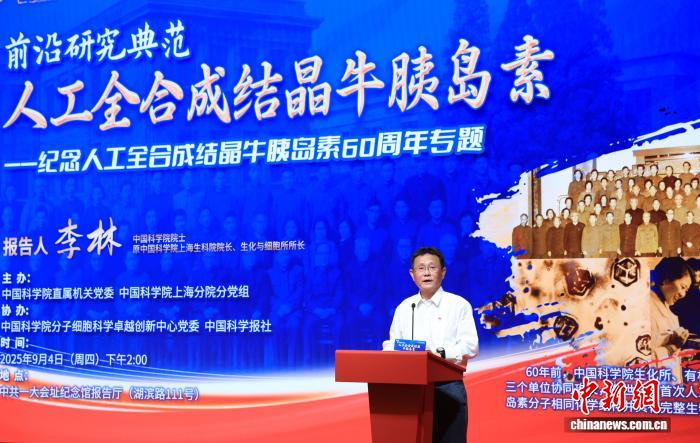
【中国新闻网】中国科学院举办纪念人工全合成结晶牛胰岛素60周年专场活动
Zhong Guo Xin Wen Wang· 2025-09-05 01:52
Core Viewpoint - The 60th anniversary of the artificial total synthesis of crystalline bovine insulin is celebrated as a significant milestone in life sciences, marking a leap in understanding the essence of life and showcasing the innovative spirit of Chinese scientists [2][3]. Group 1: Historical Significance - The artificial total synthesis of crystalline bovine insulin is recognized as a milestone following the first artificial synthesis of an organic molecule, urea, in 1828, highlighting its eternal significance in the history of life sciences [2]. - The project was officially initiated in December 1958, three years after the first determination of the primary structure of insulin, under a national secret research program code-named "601," indicating it as the primary task of the 1960s [2]. Group 2: Scientific Achievement - In September 1965, a collaborative effort among the Chinese Academy of Sciences' Biochemistry Research Institute, the Organic Chemistry Research Institute, and Peking University led to the world's first artificial synthesis of a protein with the same chemical structure and complete biological activity as the natural molecule—crystalline bovine insulin [2][3]. Group 3: Inspirational Messages - The process of synthesizing artificial crystalline bovine insulin reflects the innovative confidence and scientific ambition of Chinese scientists to challenge the frontiers of life sciences [3]. - The event emphasized the connection between scientific exploration and revolutionary exploration, showcasing the shared spirit of great achievements in both fields [3]. Group 4: Call to Action - Current scientists are encouraged to learn from the team behind the artificial total synthesis of crystalline bovine insulin, aiming to reach new heights in technology and contribute significantly to the nation [5].

【中国新闻网】打造科普工作“国家队” 中国科学院重点开展两项计划
Zhong Guo Xin Wen Wang· 2025-09-05 01:41
Core Points - The first National Science Popularization Month in China was launched on September 1, with a focus on enhancing public scientific literacy and education [2][4] - The Chinese Academy of Sciences (CAS) aims to be the "national team" for science popularization, emphasizing the importance of integrating high-end scientific resources into public education [2][5] Group 1: Organizational Efforts - CAS is focusing on five main areas: team formation, infrastructure development, science communication creation, organization of science activities, and building dissemination platforms [3][4] - The CAS has established 16 national research and science popularization bases, utilizing various facilities such as field stations and botanical gardens for educational purposes [3] Group 2: Science Communication and Activities - CAS supports the creation of quality science popularization works, with several publications receiving national awards, and has published various science journals [3] - Annual events like "Public Science Day" and "CAS Science Festival" engage the public, with the 21st "Public Science Day" featuring over 400 activities and attracting around 500,000 on-site visitors [3][4] Group 3: Educational Initiatives - The "Science and China" education plan integrates high-quality educational resources, providing training for over 3,000 frontline science teachers and creating numerous online science courses [4] - In 2023, CAS initiated the "Science and China - Thousand Academics, Thousand Science Popularization" campaign, organizing over 8,000 science reports to promote public engagement [4]
中国科学院在科研资源科普化工作中主要做好了五方面工作
Xin Hua She· 2025-09-04 11:19
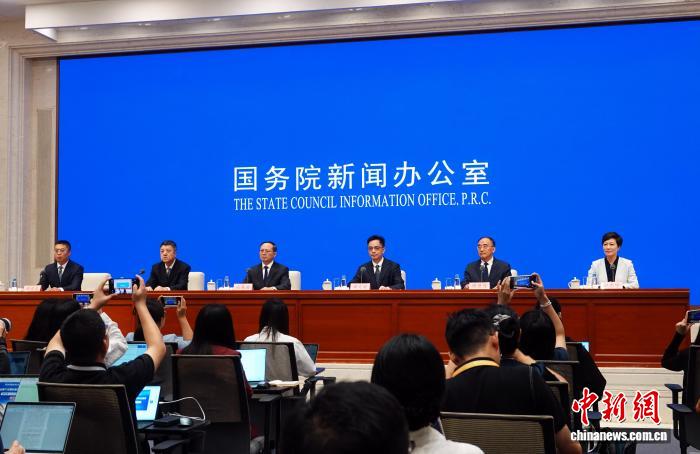
9月4日,国务院新闻办公室举行新闻发布会,介绍首个全国科普月活动有关情况,并答记者问。中国科 学院学部工作局负责人周德进表示,中国科学院在科研资源科普化工作中,主要做好了五方面工作,即 组建队伍、建设阵地、开展科普创作、组织科普活动和建设传播平台。 新华社音视频部制作 0:00 ...
2025年国自然项目(青A、青B)最新名单汇总
仪器信息网· 2025-08-11 04:00
近日,国家自然科学基金公布2025年度青年科学基金项目(A类,含延续资助项目)和青年科学基金项目(B类)项目资助结果,多个单位相 继发布获批情况。 据不完全统计,目前 长江大学、华北理工大学、燕山大学、哈尔滨医科大学、中山大学、中南大学、山东第一医科大学、南方医科大学、深圳 大学、湖北大学、扬州大学、安徽农业大学、中国农科院、浙江农科院、中国科学院 等20余所高校机构公开披露了获批情况,其中包括 长江 大学、华北理工 等高校实现都实现了 历史性突破 ,首次获批该项目。具体如下: 导读: 近日,国家自然科学基金公布2025年度青年科学基金项目(A类,含延续资助项目)和青年科学基金项目(B类)项目资助结果,多个单位相继发布获批情 况,最新汇总情况如下: 特别提示 微信机制调整,点击顶部"仪器信息网" → 右上方"…" → 设为 ★ 星标,否则很可能无法看到我们的推送。 | …… | | | | | --- | --- | --- | --- | | | | 青年科学基金项目 | B类资助 | | 序号 | 姓名 | 单位 | 项目名称 | | 1 | 马斌 | 扬州大学 | / | | 2 | 王周光 | 温州医 ...

中国科学院发布两款“坤元”大模型
Huan Qiu Wang Zi Xun· 2025-08-09 07:14
Core Insights - The article discusses the release of two self-developed large models by the Chinese Academy of Sciences, namely "KunYuan·GuanDongNan" and "KunYuan·NiQianHai," which focus on land and ocean monitoring and simulation technologies [1][2] Group 1: Model Overview - "KunYuan·GuanDongNan" model targets resource and environmental monitoring in Southeast Asia, achieving over 92% overall accuracy in land cover detection from 1990 to 2020 [1] - The model operates efficiently, completing land cover detection in Southeast Asia in just 3 to 4 hours using a consumer-grade NVIDIA 4090 graphics card [1] Group 2: Ocean Model Development - "KunYuan·NiQianHai" model addresses the lack of data and theoretical limitations in the ocean's kilometer layer, utilizing a spatiotemporal intelligent modeling framework [2] - This model incorporates over 1.3 million Argo trajectory data points, achieving a 25% accuracy improvement over traditional methods in modeling ocean currents [2] Group 3: Future Directions - The research team plans to enhance monitoring capabilities by integrating vast geographic data, aiming to support sustainable development in land and ocean regions [2] - Focus areas include improving detection and forecasting abilities for land cover evolution and marine disaster responses, thereby creating a robust technological platform for coastal research and applications [2]
中国科学院发表最新Nature论文,挑战极端环境生命极限模型
生物世界· 2025-07-31 10:30
Core Viewpoint - The research highlights the discovery of chemosynthetic communities at extreme ocean depths, challenging existing hypotheses about life potential in such environments and providing new insights into deep-sea carbon cycling [3][5][6]. Group 1: Research Findings - The study identified chemosynthetic life forms, including tube worms and mollusks, at a depth of 9,533 meters in the Northwest Pacific Ocean [3]. - These chemosynthetic ecosystems exist in areas where geological faults release hydrogen sulfide and methane, indicating a complex interaction with the deep-sea carbon cycle [6]. - The research team utilized China's independently developed manned submersible "Fendouzhe" to explore the Kuril-Kamchatka Trench and the western Aleutian Trench, discovering the deepest and most widespread chemosynthetic communities known, ranging from 5,800 meters to 9,533 meters deep, spanning over 2,500 kilometers [5][6]. Group 2: Implications - The presence of these communities suggests that the distribution of chemosynthetic life may be more extensive than previously anticipated, potentially reshaping current models of life limits in extreme environments [6]. - The findings challenge existing theories regarding deep-sea carbon cycling and the potential for life in extreme conditions, indicating a need for further exploration and understanding of these ecosystems [5][6].

【中国新闻网】开启科研无限可能 中国团队发布“磐石·科学基础大模型”
Zhong Guo Xin Wen Wang· 2025-07-28 03:04
Core Insights - The "Panshi Scientific Foundation Model" was officially launched on July 26, 2025, aiming to provide robust intelligent support for technological innovation across various fields, leveraging AI to reshape scientific research paradigms [4][11] - The model addresses challenges in the current "AI + Science" research landscape, such as data silos and insufficient reasoning capabilities, by promoting a platform-based and systematic transformation [5][11] Group 1: Model Capabilities - The "Panshi Scientific Foundation Model" is trained on specialized scientific knowledge and data, enabling deep understanding of various scientific modalities, including waves, spectra, and fields [4][7] - It features a heterogeneous mixed expert architecture, integrating proprietary models tailored for common scientific data modalities, and has achieved top performance in international datasets across mathematics, physics, chemistry, materials, and biology [7][9] Group 2: Applications and Efficiency - The model has been applied in multiple disciplines, significantly accelerating research processes, such as achieving over 10 times faster efficiency in drug target discovery in life sciences [9][10] - It supports the automation of particle physics research tasks and enhances the efficiency of high-speed train model calculations in fluid environments [9][10] Group 3: Tools and Ecosystem - The "Panshi Literature Compass" assists researchers in literature review and evaluation, processing 170 million scientific documents and reducing research time from days to minutes [8][11] - The "Panshi Tool Scheduling Platform" allows for the autonomous planning and invocation of over 300 scientific computing tools, improving research workflow efficiency [8][11] Group 4: Collaborative Initiatives - The Chinese Academy of Sciences has initiated the "Scientific Foundation Model Ecological Alliance" plan, collaborating with over 40 research institutions, universities, and enterprises to foster a new ecosystem for "AI + Science" [11]

【科技日报】磐石·科学基础大模型问世
Ke Ji Ri Bao· 2025-07-28 01:47
Core Insights - The integration of AI and science is emerging as a new trend, providing unprecedented opportunities to address significant technological challenges [1] - The Chinese Academy of Sciences has launched the "Panshi Scientific Foundation Model," a specialized intelligent platform designed for scientific research, capable of deep understanding of various scientific data and advanced literature analysis [1] Group 1 - The "AI + Science" research approach typically employs two methods: fine-tuning general models with specialized data or creating dedicated tools for specific fields, which has led to issues such as data interoperability, insufficient reasoning capabilities, and a closed research ecosystem [1] - To tackle these challenges, a research team from multiple institutes within the Chinese Academy of Sciences has developed the Panshi Scientific Foundation Model, which acts as a cross-disciplinary "intelligent operating system" to manage data and resources effectively [1] Group 2 - Based on the Panshi Scientific Foundation Model, the team has also developed two scientific intelligent agents: the Panshi Literature Compass and the Panshi Tool Scheduling Platform [2] - The Panshi Literature Compass has integrated 170 million scientific documents and real-time open-source scientific information, significantly reducing literature review time from 3-5 days to just 20 minutes [2] - The Panshi Tool Scheduling Platform can autonomously plan and call upon over 300 scientific computing tools, facilitating collaborative orchestration and easy access to these tools [2] - The Panshi Scientific Foundation Model has been applied in various disciplines, notably in high-energy physics, where it enhances the efficiency of particle simulation and reconstruction, aiding in the exploration of fundamental components of matter and universal laws [2]
海上智能实验室“同济”号交付,说说我国科考船上的仪器 | 别人家的实验室
仪器信息网· 2025-07-25 03:02
Core Viewpoint - The article discusses the advancements in China's marine research capabilities, highlighting the delivery of the "Tongji" intelligent research vessel and its significance as a state-of-the-art mobile laboratory for oceanic studies [1][2]. Group 1: "Tongji" Research Vessel - The "Tongji" vessel is a 2000-ton next-generation green, silent, and intelligent research ship, set to complete comprehensive sea trials by May 2025, making it a powerful tool for scientific exploration [2]. - It is the first research vessel in China to obtain four intelligent symbols from the China Classification Society's intelligent ship standard i-ship (R1, No, E, I), capable of conducting comprehensive scientific investigations in various marine disciplines [5]. - The vessel is equipped with multiple scientific instruments, including single-beam and multi-beam measurement systems, shallow seismic profiling systems, and underwater remote-operated vehicles (ROVs) [5]. Group 2: Modular Laboratory Design - The onboard modular laboratory utilizes shipping containers as a framework, housing instruments for marine chemistry, biological testing, water quality monitoring, meteorological observation, and rock analysis, allowing for easy loading, movement, and expansion [7]. - Key equipment includes automatic nutrient analyzers, total organic carbon analyzers, inverted phase contrast microscopes, and ultra-low temperature freezers, among others [7]. Group 3: Other Research Vessels - Other notable research vessels include Xiamen University's "Jia Geng" vessel, which is China's first marine research ship designed abroad and built domestically, featuring over 550 square meters of research space [8][10]. - The "Science" vessel from the Chinese Academy of Sciences is the first of its kind with independent intellectual property rights, equipped with various systems for water, atmosphere, and seabed exploration [17][18]. - The "Dream" drilling vessel, designed for ultra-deep water research, includes nine specialized laboratories and is capable of operating in severe weather conditions [31][34].

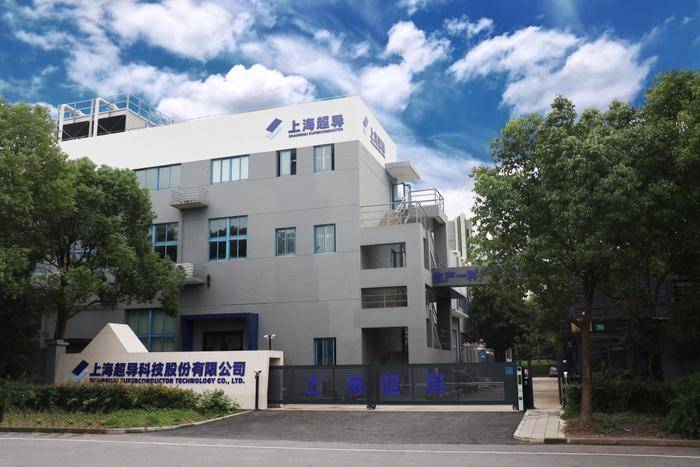
上海超导科技IPO:技术光环下的财务隐忧与领导人迷雾
Sou Hu Cai Jing· 2025-06-20 13:58
Core Viewpoint - Shanghai Superconductor Technology Co., Ltd. has initiated its IPO process on the Sci-Tech Innovation Board, aiming to raise 1.2 billion yuan, with China International Capital Corporation (CICC) as the sponsor [1][3]. Group 1: IPO Journey - The company was established on October 18, 2011, with a registered capital of 520 million yuan, focusing on high-temperature superconducting materials [3]. - Key milestones include the start of IPO counseling on November 28, 2024, and the acceptance of the IPO application on June 18, 2025 [3]. Group 2: Business and Governance Risks - The company faces high customer concentration, with the top five clients contributing over 70% of revenue. A 30% decline in the State Grid's procurement volume in 2024 has led to an increase in inventory turnover days to 287 days, compared to 180 days in 2022 [5][6]. - The commercial viability of its technology is questioned, as claims of entering fields like controlled nuclear fusion and medical devices remain unproven, with large-scale applications expected to take 5-10 years to develop [7]. - The chairman, Ma Tao, has limited public information available, and his past associations raise concerns about governance and transparency [8][10]. Group 3: Financial Data Analysis - The company reported revenues of 0.35 billion yuan in 2022, increasing to 0.83 billion yuan in 2023, and projected to reach 2.39 billion yuan in 2024. However, it also faced net losses of 0.28 billion yuan in 2022 and 0.04 billion yuan in 2023, with a projected profit of 0.72 billion yuan in 2024 [12]. - The high accounts receivable, which accounted for 52% of revenue, raises concerns about the quality of earnings, especially given that some major clients are relatively new companies [12]. - The company plans to expand its production capacity significantly, aiming for an annual output of 6,000 kilometers, while the global market for high-temperature superconducting materials is only about 50 kilometers in 2024, indicating a severe supply-demand mismatch [12]. Group 4: Regulatory Inquiry Anticipation - The company may face inquiries regarding its technology commercialization capabilities, governance structure without a controlling shareholder, and high accounts receivable potentially indicating bad debt risks [13]. - Investors are advised to monitor three critical signals: the ability to diversify the customer base, the potential for positive cash flow, and the feasibility of capacity utilization [13].