梦想号

Search documents
习近平:推动海洋经济高质量发展
国家能源局· 2026-03-15 09:29
Core Viewpoint - The article emphasizes the importance of high-quality development of the marine economy in China, highlighting the need for innovation, collaboration, and sustainable practices to strengthen the country's maritime capabilities and economic growth [3][5]. Summary by Sections Historical Context - China's maritime economic development has a long history, dating back to the pre-Qin period with salt production and flourishing during the Tang and Song dynasties through the Maritime Silk Road. The establishment of the People's Republic of China marked a systematic approach to marine resource utilization, with significant acceleration post-reform and opening up [3]. Current Economic Scale - By 2024, China's marine economy is projected to reach 10.5 trillion yuan, more than doubling since 2012, accounting for 7.8% of the national GDP. The country has made significant advancements in shipbuilding and marine industries, ranking globally in marine fisheries and offshore wind power [3]. Strategic Development Goals - The article outlines six key areas for enhancing marine economic development: 1. **Top-Level Design and Policy Support**: Formulating guidelines and plans to boost marine economic growth, with increased support for industries and technologies [6]. 2. **Enhancing Marine Technology Innovation**: Strengthening strategic marine technology capabilities and fostering leading marine tech enterprises [6]. 3. **Strengthening Marine Industries**: Conducting comprehensive marine surveys and promoting sustainable development in various marine sectors, including energy and biotechnology [8]. 4. **Integrated Planning of Coastal Areas**: Optimizing port operations and supporting green and digital transformations of key ports [8]. 5. **Marine Ecological Protection**: Implementing measures for marine environmental risk prevention and promoting sustainable coastal development [8]. 6. **Global Marine Governance Participation**: Engaging in international marine research and cooperation, particularly along the Belt and Road Initiative [9].


盘点|媒体人聊船舶
Xin Lang Cai Jing· 2026-01-30 22:49
Core Viewpoint - The China Shipbuilding Group Co., Ltd. is making significant strides in fulfilling its military responsibilities and achieving technological innovation, laying a solid foundation for high-quality sustainable development in the 14th Five-Year Plan period [1] Group 1: Company Developments - The Fujian aircraft carrier has officially been commissioned, and the Sichuan ship is undergoing sea trials, indicating advancements in naval capabilities [1] - The "Dream" ship has been selected as part of the second batch of achievements in the Central Enterprises Brand Leadership Action, showcasing the company's commitment to brand development [1] Group 2: Technological Innovation - The company has achieved new breakthroughs in technological innovation, which are essential for its strategic goals and operational efficiency [1] - The recent media interview utilized digital human technology, employing multiple AI models for real-time interaction, demonstrating the company's exploration of human-machine collaboration in program production [1]


“奋斗者”号、嫦娥六号、福建舰……这些重大项目都有央企参与
Jing Ji Guan Cha Wang· 2026-01-28 02:55
Core Viewpoint - The State-owned Assets Supervision and Administration Commission (SASAC) highlighted the achievements of central enterprises in driving high-quality development aligned with national strategies and major needs, showcasing significant technological advancements and innovations in key projects [1] Group 1: Technological Achievements - Central enterprises have led or participated in all 22 major national scientific and technological projects [1] - A total of 121 leading technologies have been successfully developed [1] - Notable innovations include the "Fendouzhe" submersible, Chang'e 6 lunar probe, and "Dream" spacecraft, among others [1] Group 2: Major Innovations - Significant achievements in major innovations include the Tianwen-2 Mars mission and the first electromagnetic catapult aircraft carrier [1]
韩媒:预计今年中国赴韩邮轮航次较去年激增21倍,韩国港口全力保障
Huan Qiu Shi Bao· 2026-01-19 22:46
Group 1 - The core viewpoint of the articles highlights a significant increase in the number of Chinese tourists visiting South Korea via cruise ships, driven by South Korea's temporary visa exemption policy for Chinese group tourists [1][2] - The number of planned cruise calls to Busan from China is projected to reach 173 this year, a dramatic increase from just 8 last year, indicating a 21-fold rise [1] - In addition to Busan, Incheon is also experiencing a surge in demand for Chinese cruise visits, with 44 out of 64 planned cruise calls in early January being from China, representing 68.8% of the total [2] Group 2 - The extended stay of Chinese cruise ships in South Korean ports, with some transitioning from short stops to overnight stays, is seen as a positive signal for local tourism and consumption [2] - The influx of Chinese tourists is expected to inject significant momentum into South Korea's inbound tourism market, with projections indicating that by November 2025, the number of Chinese visitors will reach 377,800, a year-on-year increase of 26.9% [2] - From January to November 2025, the cumulative number of Chinese tourists visiting South Korea is anticipated to be 5.0871 million, marking an 18.4% increase and accounting for 29.2% of all inbound foreign tourists during that period [2]
《自然》前瞻2026年科学大事件:科研AI、基因编辑、深空与深海的全面探索 | 红杉爱科学
红杉汇· 2026-01-14 00:03
Group 1 - The article predicts that AI will transition from being an assistant to an independent researcher, with the potential for AI to achieve its first significant scientific discovery by 2026 [2][3] - AI agents, which integrate multiple large language models, will be capable of executing complex scientific processes with minimal human intervention, including hypothesis generation, experiment design, data analysis, and paper writing [2] - Smaller, specialized AI models are emerging as efficient alternatives for specific scientific problems, requiring less data and focusing on mathematical representations rather than text generation [2] Group 2 - Two clinical trials for personalized gene therapies targeting rare genetic diseases in children are expected to start in 2026, building on the case of KJ Muldoon, who received CRISPR treatment [4] - A clinical trial in the UK is anticipated to reveal results for a single blood test that can detect approximately 50 types of cancer before symptoms appear, involving over 140,000 participants [5] Group 3 - 2026 is projected to be a busy year for lunar exploration, with NASA's Artemis II mission sending four astronauts on a ten-day mission to orbit the Moon, marking the first crewed lunar mission since the 1970s [6] - China's Chang'e 7 mission is planned for 2026, aiming to land near the Moon's south pole to search for water ice and study moonquakes [8] Group 4 - The European Space Agency plans to launch the Plato exoplanet survey satellite by the end of 2026, which will monitor over 200,000 stars to search for Earth-like planets [8] - The Chinese deep-sea drilling vessel "Dream" is set to conduct its first scientific mission in 2026, aiming to drill 11 kilometers deep in the Mariana Trench to collect upper mantle samples [11] Group 5 - The Large Hadron Collider at CERN will undergo a major upgrade in 2026, halting operations for three years to install a high-luminosity LHC, which will enhance data collection for rare process observations [11] - The Mu2e detector at Fermilab is expected to be completed in April 2026, focusing on the exploration of the mysterious subatomic particle, the muon [11]
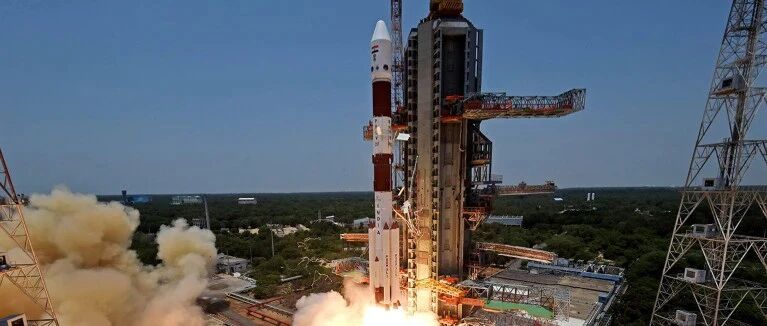
国之重器闪耀长沙力量
Chang Sha Wan Bao· 2026-01-03 01:12
Core Insights - The "Steel Backbone" tunneling machine developed by China Railway Construction Heavy Industry Co., Ltd. has been selected as one of the "Top Ten National Heavy Equipment of Central Enterprises for 2025" [1] - This marks the third time that the company has received this recognition, following the selection of the "Dream" tunneling machine and the "Jianghai" shield machine in previous years [2] Group 1 - The "Steel Backbone" is the world's first kilometer-level vertical hard rock full-face tunneling machine, which was launched on April 16, 2025 [1] - This machine fills an international gap in full-face tunneling equipment for depths exceeding 1,000 meters, representing a significant technological leap in ultra-deep vertical tunneling equipment [1] - The successful development of this equipment provides safer and more efficient foundational tools for deep mineral resource development and underground space utilization, positioning China at the forefront of this field internationally [1] Group 2 - The selection process for the "Top Ten National Heavy Equipment" involved a combination of media reports and public voting, attracting millions of participants [1] - In 2022, the "Dream" tunneling machine was recognized alongside other significant projects such as the C919 large passenger aircraft and the "Fujian" aircraft carrier [2] - In 2024, the "Jianghai" shield machine was selected along with the first deep-sea drilling vessel "Dream" and the largest quantum computing cluster "Tianyan" [2]

深海经济:引领海洋经济未来发展的新引擎,未来产业规模化与集群化发展加速
Da Gong Guo Ji· 2025-12-31 03:20
Investment Rating - The report indicates that the deep-sea economy is positioned as a strategic emerging industry and is expected to accelerate in scale and cluster development, driven by technological breakthroughs and policy support [2][19]. Core Insights - The deep-sea economy is transitioning from technological validation to commercialization, becoming a core area of strategic competition in emerging industries, with China gaining a local leading advantage in deep-sea equipment and resource exploration [2][6]. - The global deep-sea economy is characterized by a complex industrial chain that includes upstream resource exploration, midstream equipment manufacturing, and downstream application expansion, with a focus on balancing ecological protection and sustainable development [7][18]. - The report highlights the strategic importance of deep-sea resources, which are seen as a new battleground for global competition, with various countries enhancing their strategic frameworks and investments in deep-sea technologies [6][11]. Summary by Sections 1. Overview and Current Status of the Deep-Sea Economy - The deep-sea economy encompasses diverse industrial clusters formed through the development and utilization of deep-sea resources, which are rich in minerals, oil, gas, and biological resources [3][4]. - The deep-sea is defined as waters deeper than 200 meters, with varying definitions across different fields, and is characterized by extreme conditions that require advanced technology for resource extraction [3][5]. 2. Industrial Chain Analysis - The deep-sea economy's industrial chain is structured as "upstream support - midstream core equipment - downstream application expansion," with a focus on technological complexity and military-civil fusion [7][8]. - The report notes significant growth in the titanium alloy market, projected to reach $15.8 billion by 2024, with a year-on-year increase of 13.7% [8]. 3. Global and Chinese Market Competition Landscape - The report compares the strategic frameworks of various countries, noting that the U.S. emphasizes unilateralism and has developed a comprehensive technology system for deep-sea exploration and mining [11][12]. - China has established a policy framework that includes legal guarantees, strategic guidance, and financial support, positioning deep-sea technology as a key emerging industry [14][19]. 4. Development Prospects and Challenges of China's Deep-Sea Economy - The report emphasizes the strategic value of deep-sea resources for national security and the need for a robust policy framework to support industry growth [19][20]. - Emerging fields such as offshore wind power and marine pharmaceuticals are highlighted as areas for potential growth, with a focus on integrating advanced technologies like AI and big data into the deep-sea economy [20].
张玉卓:做强做优做大国有企业和国有资本|政策与监管
清华金融评论· 2025-12-25 10:22
Group 1: Core Views - The article emphasizes the importance of central enterprises as the main force in technological innovation, focusing on overcoming key technological challenges and enhancing the country's strategic capabilities in science and technology [3][4][5]. Group 2: Technological Innovation - Central enterprises have made significant investments in R&D, exceeding 1 trillion yuan annually for three consecutive years, targeting critical technologies such as industrial mother machines and software [3]. - The focus is on increasing high-quality technological supply and achieving breakthroughs in areas where other enterprises lack the capability or willingness to invest [4]. Group 3: Results Transformation - There is a strong emphasis on accelerating the transformation of technological achievements into practical applications, with initiatives to establish major pilot platforms and enhance procurement of first models and batches [5]. - The goal is to help more innovative results enter the market and create tangible productivity [5]. Group 4: Innovation Ecosystem - The article discusses the need to build a high-level innovation ecosystem by promoting deep integration of industry, academia, and research, and enhancing international cooperation [5]. Group 5: State-Owned Enterprise Reform - The article outlines the necessity for further reform of state-owned enterprises (SOEs) to enhance their core functions and competitiveness, focusing on strategic security and public service [7]. - It highlights the importance of clarifying the functional positioning of various SOEs and concentrating capital in key industries related to national security and public welfare [7]. Group 6: Economic Layout Optimization - Central enterprises are encouraged to focus on upgrading traditional industries and nurturing emerging sectors, with an average annual investment growth rate of over 20% in new industries during the "14th Five-Year Plan" period [10]. - The article stresses the need for a digital transformation of traditional industries and the integration of advanced technologies such as AI and big data [10]. Group 7: Future Industry Development - The article calls for targeted actions in key areas such as new energy, aerospace, and platform economy, while also planning for future technologies like quantum science and 6G [11]. Group 8: Investment and Financing System - There is a focus on building a professional and market-oriented investment and financing system to support the development of the real economy, utilizing various financial tools and establishing a comprehensive investment decision-making mechanism [12].
张玉卓:做强做优做大国有企业和国有资本
Ren Min Ri Bao· 2025-12-22 07:55
Core Viewpoint - The interview with Zhang Yuzhuo, Secretary of the Party Committee and Director of the State-owned Assets Supervision and Administration Commission (SASAC), emphasizes the importance of state-owned enterprises (SOEs) as a pillar of the party's governance and the need for deepening reforms to strengthen and optimize SOEs and state capital during the 14th Five-Year Plan period [2]. Group 1: Enhancing Innovation Capabilities - Central enterprises are identified as the national team for technological innovation, with R&D investments exceeding 1 trillion yuan for three consecutive years, focusing on key technologies such as industrial mother machines and software [3]. - The goal is to enhance mission awareness and focus on solving major technological issues that affect national development and security, aiming for high-level technological self-reliance [3]. - There is a commitment to increase high-quality technological supply and tackle "bottleneck" areas, ensuring more original achievements in critical technologies [4]. Group 2: Reforming State-Owned Enterprises - The 14th Five-Year Plan outlines clear requirements for deepening SOE reforms, with a focus on enhancing core functions and competitiveness [5]. - The strategy includes improving the service capabilities of SOEs in relation to national strategies, emphasizing the importance of aligning SOE functions with national security and public service needs [5]. - There is a push to enhance the modern enterprise system with a focus on governance, management, and talent cultivation to boost operational efficiency [5]. Group 3: Optimizing Industrial Layout - SOEs are working on upgrading traditional industries while simultaneously fostering emerging industries, with an average annual investment growth rate of over 20% in new industries during the 14th Five-Year Plan [7]. - The focus will be on transitioning the industrial system towards higher value-added and technology-intensive sectors, playing a leading role in building a modern industrial system [7]. - Efforts will be made to promote digital transformation in traditional industries and integrate advanced technologies such as AI and big data [8]. Group 4: Developing New and Future Industries - The strategy includes identifying and nurturing new industries with significant growth potential, such as renewable energy and aerospace, while also planning for future technologies like quantum science and 6G [8]. - A specialized and market-oriented investment and financing system will be established to support the development of these industries, utilizing various financial tools and funds [8].
人民日报访张玉卓
财联社· 2025-12-22 00:19
Core Viewpoint - The article emphasizes the importance of strengthening, optimizing, and expanding state-owned enterprises (SOEs) and state capital, highlighting the need for innovation and strategic focus in emerging industries and future sectors [2][3]. Group 1: Enhancing Innovation Capabilities - State-owned enterprises are positioned as the national team for technological innovation, with R&D investments exceeding 1 trillion yuan for three consecutive years, focusing on key technologies such as industrial mother machines and software [4]. - The goal is to enhance self-innovation and original innovation to support high-level technological independence and the construction of a strong technological nation [4]. - There is a commitment to increasing high-quality technological supply and tackling critical areas where other enterprises lack capability, particularly in foundational and common technologies [4]. Group 2: Reforming State-Owned Enterprises - The "14th Five-Year Plan" calls for deepening the reform of state-owned enterprises, with a focus on enhancing core functions and competitiveness [6][7]. - The reform will clarify the functional positioning of various state-owned enterprises, concentrating capital in sectors crucial for national security and public welfare [7]. - There is an emphasis on improving corporate governance and management efficiency, alongside innovative talent recruitment and retention strategies [7]. Group 3: Optimizing Industrial Layout - State-owned enterprises are actively upgrading traditional industries while fostering new industries, with an average annual investment growth rate exceeding 20% in emerging sectors during the "14th Five-Year Plan" [9]. - The focus will be on digital transformation and integrating advanced technologies like AI and big data into traditional industries to enhance productivity and sustainability [9][10]. - Future efforts will include nurturing new industries such as renewable energy, aerospace, and quantum technology, with a structured approach to investment and development [10]. Group 4: Building Investment and Financing Systems - The establishment of a professional and market-oriented investment and financing system is crucial, leveraging state capital investment and operational companies [10]. - The aim is to create a comprehensive investment framework covering all stages from seed to growth, ensuring effective decision-making in industrial investments [10].