
1X

Search documents
扩散架构 or「NoThinking」,AI 对话的「1Hz 壁垒」如何突破?
机器之心· 2025-08-03 01:30
Group 1 - The core concept of the article revolves around the "Intelligence Spectrum" proposed by Eric Jang, which addresses the current "1Hz barrier" faced by AI and the prerequisites for achieving "Ultra Instinct" capabilities in AI systems [5][6][9] - Jang categorizes different types of intelligent decision-making processes along a spectrum, from "extremely slow intelligence" (e.g., plant growth) to "extremely fast intelligence" (e.g., precise movements of a hummingbird) [6][7] - Current leading LLMs like ChatGPT and Llama operate at a frequency of 1-2Hz, which is significantly slower than the natural conversational pace of humans (approximately 10Hz), leading to a mismatch in interaction speed [7][8] Group 2 - The "1-2Hz intelligence" reflects the limitations of AI in real-time interactions, resulting in a turn-based scenario where human users must wait for AI responses, exacerbating issues like hallucinations and context understanding [8][9] - Jang emphasizes that overcoming the "1Hz barrier" is not merely about increasing speed but is essential for achieving a qualitative transformation in AI capabilities, covering the entire intelligence spectrum from 0.1Hz to 50Hz [8][9] - The article discusses the dual process theory by Daniel Kahneman, illustrating how different decision frequency requirements reflect the fundamental and sometimes conflicting speed demands of various AI applications [10]


人形机器人行业观点报告:1X机器人工业版筑基,家庭版持续迭代,关注1X机器人产业链-20250703
Shanghai Securities· 2025-07-03 09:52
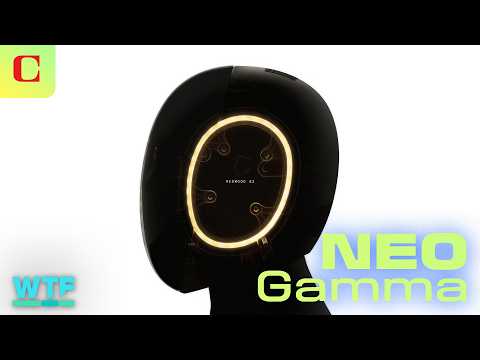
Investment Rating - The report maintains an "Accumulate" rating for the humanoid robot industry [1] Core Insights - 1X has been continuously expanding its presence in the robotics field since its inception in 2014, initially as Halodi Robotics in Norway [1] - The company has developed significant products such as the EVE robot for logistics and the NEO series for home use, showcasing advancements in both industrial and domestic applications [1][2] - 1X has secured substantial funding, including a $23.5 million Series A2 round led by OpenAI's startup fund [1] - The introduction of the NEO Beta and NEO Gamma robots highlights the company's focus on creating humanoid robots that can perform household tasks and interact with users [1][2] - Collaborations with tech giants like OpenAI and NVIDIA have strengthened 1X's technological capabilities and reduced training costs for their robots [6][7] Summary by Sections Company Development - 1X has launched several key products, including the EVE robot for logistics and the NEO series for home use, with the NEO Beta prototype released in August 2024 and the NEO Gamma in February 2024 [1][2] - The EVE robot features specifications such as a height of 1.86 meters, weight of 86 kg, speed of 14.4 km/h, and a load capacity of 15 kg, making it suitable for various tasks in logistics [2] Technological Advancements - The NEO robots utilize a bionic structure and elastic drive systems to mimic human muscle and tendon movements, enhancing safety and fluidity in motion [2][5] - 1X has focused on high-torque, low-speed motor technology to ensure the safety of household robots, making them suitable for home environments [8] Strategic Partnerships - 1X's partnership with OpenAI has integrated AI into their robotics, laying the groundwork for embodied learning [6] - Collaboration with NVIDIA has provided access to advanced simulation platforms and training resources, significantly improving the efficiency of robot training [7]
Neo Humanoid Robot At-Home Training Update
CNET· 2025-06-29 12:00
Robot Capabilities & AI Model - 1X's humanoid robot Neo features a new AI model, Redwood AI, enhancing its capabilities in unfamiliar settings [1][3] - Neo's new abilities include picking up unfamiliar objects, whole body control, improved coordination, running, multidirectional walking, and stair climbing [1] - Neo's stair mode uses onboard cameras to estimate floor height, avoiding the use of LiDAR sensors [1] - The robot can sit, kneel, stand, and perform tasks requiring low-to-the-ground positioning, such as handing tools and working under a car [2] - Neo can pivot, walk backwards, and side-step, useful for navigating tight spaces [3] AI Model Training & Simulation - Redwood AI runs completely on Neo's onboard GPU [3] - 1X's World model bridges the gap between training simulations and real-world action using video inputs, robot observations, and action trajectories [3][4] - The AI model learns from experience, improving its simulations of object interactions, such as opening an air fryer [5] - The 1X world model struggles with simulating unfamiliar objects and locomotion [6] Future Development - 1X focuses on task-specific training to achieve a general AI model for robots [6]
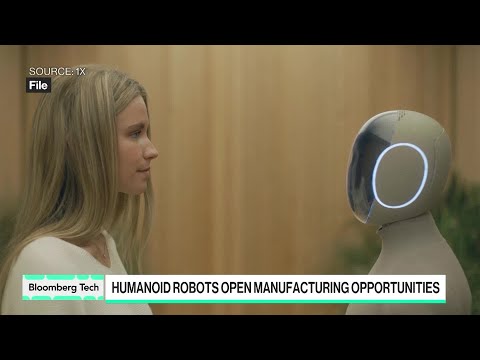
Robot Maker 1X Launches Model to Train Humanoids Faster
Bloomberg Technology· 2025-06-16 19:10
You would claim that this world model is the first of its kind and that you have the data from it that proves its effectiveness. But the main point is validation of that capability without collecting the real world data. Kaino Yes, you've got it mostly right.So what it really does is it gives us the ability to basically see the future with respect to what would happen if the robot actually takes these specific actions. And this allows us to really test at scale whether these new models that we're actually c ...
Tesla Optimus robotics vice president Milan Kovac is leaving the company
CNBC· 2025-06-06 23:24
Core Insights - Tesla's vice president of Optimus robotics, Milan Kovac, has announced his departure from the company after an eight-year tenure, expressing gratitude towards CEO Elon Musk and optimism for Tesla's future [1][2]. Company Developments - Tesla is developing the Optimus robot with plans to begin builds on its Fremont pilot production line in 2025, aiming for broader deployment of robots in factory settings [3]. - During the 2024 annual shareholder meeting, Musk projected that humanoid robots could significantly increase Tesla's market capitalization to $25 trillion at an unspecified future date [3]. Technological Advancements - Currently, Tesla is training its Optimus systems to perform basic tasks such as picking up objects, opening doors, and throwing balls, indicating progress in the development of the robot [4]. - Competitors in the robotics space include Boston Dynamics, Agility Robotics, Apptronik, 1X, and Figure, highlighting a competitive landscape for Tesla's Optimus initiative [4].


中坚科技(002779) - 2025年5月13日投资者关系活动记录表
2025-05-13 09:38
Group 1: Company Overview and Risks - The company is involved in the artificial intelligence robotics sector, facing uncertainties related to industry trends, potential partnerships, management expertise, and market conditions [2] - The AI robotics business is still in the investment phase and has not yet contributed to the company's performance [2] Group 2: Capacity and Expansion Plans - The company established a subsidiary in Thailand in 2024 to enhance its international supply chain and meet diverse customer needs [3] - The construction of the headquarters' smart manufacturing center is progressing steadily, aimed at improving operational efficiency and capacity [3] Group 3: Research and Development - In 2024, the company's R&D investment reached 7,267.80 thousand yuan, a 137.55% increase year-on-year, accounting for 7.49% of revenue [4] - The company is focusing on developing new products in the lithium battery sector and has successfully launched several new garden machinery products [4] Group 4: Financial Performance - In Q1 2025, the company achieved a revenue of 286 million yuan, a year-on-year increase of 4.96%, with a net profit of 42.21 million yuan, up 36.13% [6] - The company plans to distribute a cash dividend of 1.1 yuan per 10 shares and increase capital stock by 4 shares per 10 shares, resulting in a total cash dividend of 14.52 million yuan [5] Group 5: Competitive Analysis - The company acknowledges the strong performance of competitors in the same sector, with one competitor reporting a revenue of 1.5 billion yuan and a profit of 190 million yuan in Q1 [5] - The company attributes its growth to long-term market presence, improved sales share, and enhanced cost control [6] Group 6: Future Directions - The company has established a wholly-owned subsidiary to explore humanoid robotics, aiming to foster innovation and expand its product offerings [6]

外骨骼机器人消费场景应用可期,美的人形机器人进厂“打工”
AVIC Securities· 2025-05-12 15:00
Investment Rating - The industry investment rating is "Overweight" [3][30]. Core Viewpoints - The humanoid robot industry is expected to see significant growth, with a projected cumulative demand of approximately 2 million units by 2030, indicating a critical breakthrough phase from 0 to 1 [6][24]. - The report highlights key companies to watch in the humanoid robot supply chain, including Tier 1 suppliers and core component manufacturers [6][24]. - The report emphasizes the importance of technological advancements in various sectors, including photovoltaic equipment, energy storage, semiconductor equipment, automation, and hydrogen energy, suggesting a favorable outlook for leading companies in these areas [6][25][26]. Summary by Sections Humanoid Robots - Recent developments include the launch of the first domestic AI-powered exoskeleton robot by Zhiyuan, which features advanced technology for various applications [7]. - The first batch of 220 humanoid robots was delivered by Chery, showcasing their capabilities in customer service and sales guidance [17]. - The World Humanoid Robot Sports Competition is set to take place in August, highlighting the growing interest and innovation in the humanoid robotics field [23]. Photovoltaic Equipment - The penetration rate of N-type photovoltaic technology is accelerating, strengthening the competitive edge of leading companies [25]. - The report suggests focusing on companies that are innovating in cost-reduction technologies and expanding production capacity [25]. Energy Storage - Favorable policies are expected to drive growth in both generation-side and user-side energy storage [25]. - Companies like Xingyun Co. are positioned to benefit from strategic partnerships in the energy storage sector [25]. Semiconductor Equipment - The semiconductor equipment market is projected to reach $140 billion by 2030, with a focus on domestic alternatives due to low current localization rates [26]. - The report recommends monitoring companies that are well-positioned to capitalize on this trend [26]. Automation - The market for industrial tools is expected to grow from approximately 40 billion to 55.7 billion by 2026, with opportunities for leading companies to gain market share through increased concentration and import substitution [26]. Hydrogen Energy - The report highlights the potential of green hydrogen in achieving carbon neutrality, with a focus on companies that integrate the hydrogen supply chain [25].



人形机器人企业爆单!宇树机器人最新发声,机器人ETF基金(159213)再度飙涨超2%,全球资管巨头唱多人形机器人!
Xin Lang Cai Jing· 2025-05-12 03:17
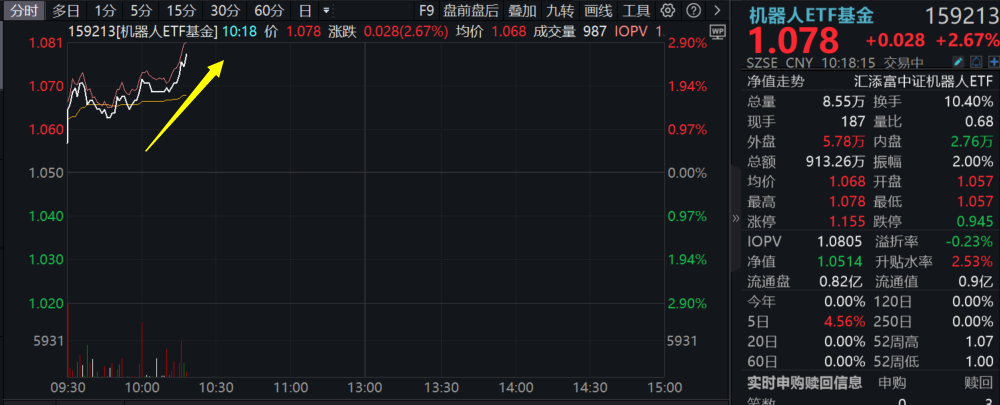
Core Viewpoint - The humanoid robot market is experiencing significant growth, driven by favorable government policies and increasing demand across various sectors, with projections indicating a potential market size of over 15 trillion yuan by 2025 [4][9]. Group 1: Market Performance - The A-share market showed an upward trend on May 12, with the robot sector rebounding, particularly the Robot ETF fund (159213), which opened high and rose by 2.67% [1]. - Major components of the Robot ETF fund saw substantial gains, with companies like Tuosida reaching a 20% limit up, and others like Koli'er and Xinjie Electric also experiencing significant increases [3]. Group 2: Industry Advantages - The humanoid robot industry in China benefits from strong policy support, with various national and local initiatives aimed at fostering development, including the inclusion of robots in key work reports and the establishment of industry funds [5][6]. - China's competitive edge in the humanoid robot market is highlighted by its leading position in patent applications, with 5,925 patents filed from 2020 to 2024, significantly outpacing other countries [4][5]. Group 3: Production and Supply Chain - The domestic robot industry is witnessing a rise in localization, with the domestic production rate of key components increasing from 17.5% in 2015 to 35.7% in 2022, indicating a trend towards cost reduction and efficiency [7]. - Major companies are preparing for mass production of humanoid robots, with 2025 expected to be a pivotal year for the industry, as several manufacturers are on the brink of entering small-scale production [7][8]. Group 4: Application Scenarios - The demand for robots is driven by manufacturing upgrades and demographic changes, with the global aging population creating a pressing need for robotic solutions to address labor shortages [9]. - The potential market for humanoid robots is projected to exceed 1 billion units, corresponding to a market space of over 15 trillion yuan, as the industry prepares for widespread adoption across industrial, commercial, and domestic applications [9].

全球首场人形机器人运动会也要来了!2025年世界机器人大会将于8月举行,力邀宇树、特斯拉等
2 1 Shi Ji Jing Ji Bao Dao· 2025-05-07 13:04
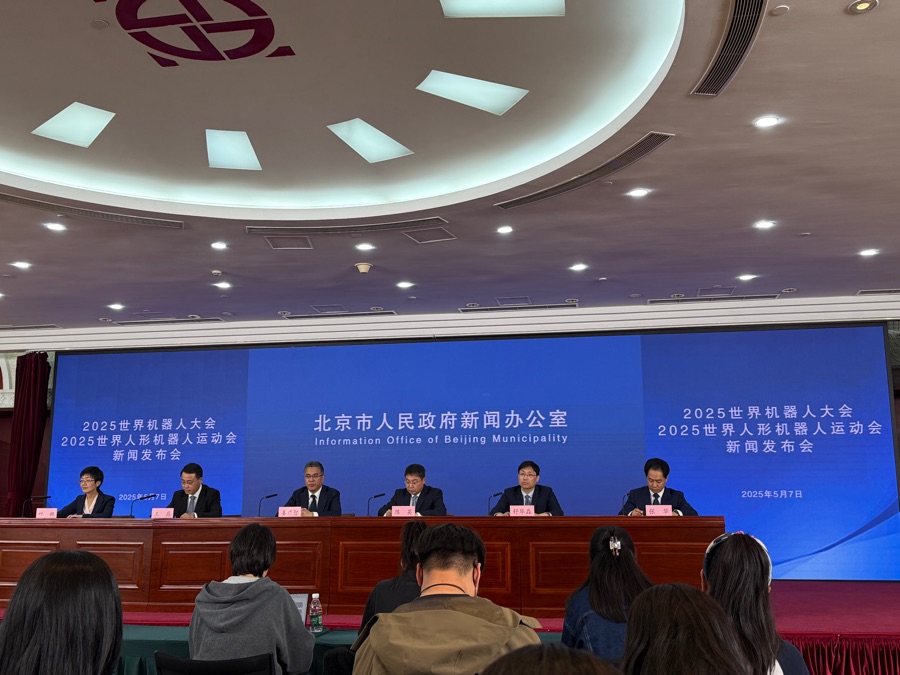
Group 1 - The "2025 World Robot Conference" will be held from August 8 to August 12 in Beijing, featuring over 20 countries and regions, nearly 500 guests, and more than 200 exhibiting companies [3][4] - The event aims to enhance global cooperation in the robotics industry, showcasing new products and applications, with a focus on consumer engagement through initiatives like the "World Robot Conference Consumption Season" [3][4] - The "2025 World Humanoid Robot Games" will take place from August 15 to August 17, featuring competitions that test the skills and capabilities of humanoid robots in various sports [4][5] Group 2 - The humanoid robot half-marathon, held on April 19, was the first long-duration competitive event for robots, highlighting their movement control and endurance capabilities [4][5] - The competition will include both main events focusing on skill and peripheral events emphasizing interaction, with a variety of sports such as athletics, soccer, and dance [4][5] - The event's design aims to challenge the limits of robotic performance in areas like mechanical structure, material application, and artificial intelligence [5][6]
人形机器人或将在2026年实现通用化,深市规模最大的机器人ETF(159770)涨超1.5%
2 1 Shi Ji Jing Ji Bao Dao· 2025-04-30 02:29
Group 1 - The core viewpoint highlights the active performance of the robotics sector in the A-share market, with significant inflows into the robotics ETF and strong gains among constituent stocks [1] - The robotics ETF (159770) has seen a net inflow of 490 million yuan over the past 10 trading days, with its latest circulation size reaching 5.439 billion yuan, marking a historical high [1] - The human-shaped robot innovation center predicts that human-shaped robots will enter the general product category by 2026, with production or sales reaching 100,000 units, indicating a broad application across various fields [1] Group 2 - Recent developments in the domestic and international industrial sectors have led to increased participation from major companies like Huawei, ByteDance, BYD, Xiaomi, and others in embodied intelligence [2] - The emergence of DeepSeek AI is seen as a catalyst for the development of general-purpose robotic models, pushing the human-shaped robot industry into a phase of diverse competition [2] - The trend of human-shaped robots entering industrial applications is recognized as a high-certainty trend both domestically and internationally, with expectations for commercial viability [2]