Unitree

Search documents
X @Bloomberg
Bloomberg· 2025-07-26 05:20
Robot Industry Development - Unitree, a Chinese robot maker, has unveiled an AI-powered humanoid robot, R1, at a starting price of approximately $6,000, which is considered a price barrier breakthrough [1] - The R1 humanoid robot features 26 joints and weighs 25 kg [1] AI & Technology - The R1 robot is capable of voice and image recognition [1]
人形机器人的前景:一场应用竞赛0Humanoids-Humanoid Horizons An Adoption Race
2025-07-25 07:15
Summary of Humanoid Industry Conference Call Industry Overview - The humanoid robotics industry is experiencing rapid development, particularly in China, which is heavily investing in humanoid technology through adoption, financing, and government support [2][7][46]. - Tesla's Optimus aims to ramp up production to 1 million units annually within five years, although scaled production may be delayed until next year [2][7]. Key Developments Adoption and Market Sentiment - China has made significant progress in humanoid orders, with notable contracts from Agibot (~US$11 million), Unitree (~US$6 million), and UBTech (~US$13 million), boosting market sentiment [7]. - The focus has shifted from expectations to actual adoption progress, with adoption expected to drive the market in the second half of 2025 [7]. Investment Trends - Major humanoid manufacturers in China have completed financing rounds recently, with Unitree starting its IPO process at a valuation of approximately US$1.7 billion [7]. - JD.com is actively investing in humanoid startups, indicating a trend of major tech firms entering the humanoid space [7]. Technological Advancements - Continuous updates in robot technology, including new features like autonomous battery swapping in UBTech's Walker S2, are expected to enhance capabilities [7][29]. - Tesla's Optimus Gen 3 is anticipated to achieve human-level agility, which could broaden task applications in both China and the US [7][29]. Performance Metrics - The Humanoid 100 index has increased by 11.1% since its inception, outperforming major indices like the S&P 500 and MSCI Europe, but underperforming MSCI China and Korea [7][58]. - Notable top performers in the Humanoid 100 include MP Materials (+149%) and JL Mag (+92%) [9][62]. Upcoming Events - Key events to watch include the World Robots Conference (August 8-12) and the World Humanoid Robot Games (August 15-17), which may drive positive sentiment in the humanoid market [8][12]. Government Support and Policy - The Chinese government is actively supporting the humanoid industry, with plans to deploy 10,000 to 20,000 humanoids by 2027 and various subsidies for R&D and adoption [46][49]. - Local governments are providing significant financial support, including dual-side subsidies for application providers and humanoid product providers [49]. Conclusion - The humanoid robotics industry is poised for growth driven by technological advancements, increased adoption, and substantial government support, particularly in China. The upcoming events and continued investment in the sector are expected to further enhance market dynamics and opportunities.


人形机器人 -2025 年下半年将由哪些因素驱动人形机器人行业发展?Humanoids-What Will Drive the Humanoid Sector in 2H25
2025-07-22 01:59
Summary of Humanoid Sector Conference Call Industry Overview - **Industry**: Humanoid Robotics Sector in Asia Pacific, particularly focusing on China - **Key Players**: Tesla, Figure, Unitree, Agibot, UBTECH, and various component suppliers Core Insights 1. **Market Dynamics Shift**: The humanoid sector experienced a strong stock rally from January to March 2025 (+37% in China's humanoid value chain) due to ambitious targets and government support, followed by a pullback (-6%) as integrators lowered their 2025 targets and no significant breakthroughs occurred [3][18][19] 2. **Adoption and Orders**: Initial adoption and orders are expected in 2H25, with integrators targeting hundreds to thousands of units. This is crucial for sector performance as robots are anticipated to expand their task applications in industrial and commercial services [4][22] 3. **Technological Innovations**: Continuous model launches and hardware/software innovations are expected to support sector performance. Key updates from integrators like Tesla and Figure could signal progress [5][8] 4. **Government Support**: The Chinese government is playing a critical role in promoting the humanoid sector, with policies aimed at deploying 10-20k units by 2027 and providing R&D subsidies [33][34][35] Important Developments 1. **Key Events to Watch**: Upcoming events include Tesla's 2Q earnings call (July 23), World AI Conference (July 26-28), and World Robots Conference (August 8-12) [8][14] 2. **New Integrator Models**: The humanoid value chain list has been updated to include 45 stocks, reflecting the latest progress in the industry. Six new companies have been added due to their cooperation with key humanoid firms or high-potential products [9][11] 3. **Commercial Orders**: Significant commercial orders have been announced, including a Rmb91 million order from UBTECH for automotive technology tasks and a Rmb124 million contract from China Mobile for Agibot and Unitree [27][28] Potential Risks 1. **Concerns Over Delays**: Delays in adoption could hamper stock performance, as the market has already priced in various catalysts. The humanoid value chain has underperformed compared to MSCI China [18][21] 2. **Data Bottlenecks**: Companies are still seeking innovations to improve the effectiveness of humanoid robots, as data remains a bottleneck for broader task applications [21][22] Future Outlook 1. **Focus on Adoption**: The focus in 2H25 will be on downstream adoption, with expectations for broader use cases in industrial and commercial services. The ability of integrators to meet market expectations will be closely monitored [22][23] 2. **Continuous Improvements**: The sector is expected to see continuous hardware breakthroughs and software innovations, which will be critical for enhancing humanoid capabilities [41][42] Conclusion The humanoid robotics sector is at a pivotal point, with significant potential for growth driven by technological advancements and government support. However, the realization of commercial value and successful adoption will be key to sustaining market momentum.
加利福尼亚大学!EgoVLA:从第一视角人类视频中学习VLA模型
具身智能之心· 2025-07-20 01:06
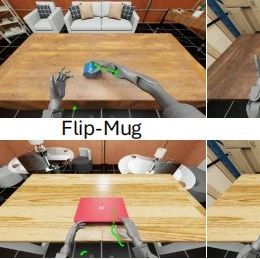
Core Insights - The article discusses a novel approach to robot learning that leverages egocentric human video data to enhance the training of Vision-Language-Action (VLA) models, overcoming limitations of traditional robot data collection methods [3][21]. Research Background and Core Ideas - Traditional robot learning relies heavily on large-scale real robot data, which is limited by hardware and operational costs. In contrast, human actions in various environments provide a vast amount of potential training data, as billions of people continuously engage in tasks where robots are expected to operate [3]. - The key breakthrough is the approximation of the action space difference between humans and robots through geometric transformations. This allows for training VLA models on human video data first, followed by fine-tuning with a small amount of robot demonstrations, facilitating skill transfer [3]. Model Architecture and Action Space Design - The framework is based on NVILA-2B, utilizing its visual-language understanding capabilities for efficient intent reasoning and fine-tuning. Inputs include current and historical first-person visual observations, language instructions, action query tokens, and human body sensations [5]. - The action space incorporates human wrist poses and the first 15 PCA components of the MANO hand model, balancing compactness and expressiveness for action transfer from humans to robots [8]. Training and Evaluation - A large-scale dataset of approximately 500,000 image-action pairs was created from four sources, covering various rigid objects and annotated with RGB observations, wrist poses, hand poses, and camera poses [12]. - The Ego Humanoid Manipulation Benchmark was established for unified evaluation of humanoid robot manipulation capabilities, consisting of 12 tasks and addressing data balance issues [14]. Experimental Results and Key Findings - Human pre-training significantly enhances core performance, with the EgoVLA model showing a success rate improvement of about 20% in fine manipulation tasks compared to models without pre-training [16][20]. - The model demonstrates robust performance across different visual configurations, with only a slight decrease in success rates for unseen visual backgrounds, indicating adaptability to new environments [20]. Impact of Data Scale and Diversity - Higher diversity in human data correlates with better model generalization, as evidenced by the combined model's superior performance in short-horizon tasks compared to those trained on single datasets [23]. - The performance of the EgoVLA model declines when relying solely on robot demonstration data, highlighting the necessity of combining human pre-training with a certain amount of robot data for optimal results [23].

摩根士丹利:人形机器人-订单已公布;预计 2025 年下半年将有更多订单
摩根· 2025-07-15 01:58
Investment Rating - The industry investment rating is "In-Line" [6] Core Insights - The humanoid robot market is experiencing strong demand, with companies like UBTECH, Agibot, and Unitree announcing significant orders and contracts [2][3][8] - There is an expectation for more adoption announcements in the second half of 2025, driven by advancements in technology and a push from both companies and government for humanoid adoption [8] Summary by Relevant Sections - **UBTECH's Tiangong Walker**: Received orders for approximately 100 units and expects to deliver over 300 units in 2025, with over 60% of orders for premium versions [2] - **Agibot and Unitree Contract**: Awarded a Rmb124 million humanoid robot contract from China Mobile, with Agibot receiving Rmb78 million for full-size robots and Unitree Rmb46 million for smaller robots and accessories [3] - **Market Trends**: The focus is shifting from new model announcements to tracking adoption progress, indicating a maturation of the market and a potential for a virtuous cycle in humanoid technology [8]
代码+视频!国内首个足式机器人算法与实战(双足/四足/人形等)
具身智能之心· 2025-07-07 09:20
Core Viewpoint - The article emphasizes the significance of gait control in embodied robots, which is crucial for their mobility in complex environments, making them essential for applications in rescue, space exploration, and extreme conditions [1][2][4]. Summary by Sections Gait Control and Its Importance - Gait control is a critical challenge for both bipedal and quadrupedal robots, enabling them to navigate complex terrains and perform tasks that wheeled or tracked robots cannot [1]. - The ability to adapt to various environments, such as rubble after earthquakes or uneven surfaces in polar research, highlights the necessity of footed robots [1]. Flexibility and Learning in Robotics - Human-like flexibility in movement is a significant goal, with research indicating that humans can perform nearly 10,000 different gait actions [2]. - The challenge lies in enabling robots to learn and autonomously evolve their movements, which has seen slow progress over decades but is accelerating with advancements in deep learning [2]. Market Potential and Industry Trends - Footed robots are viewed as a milestone in robotics, capable of handling complex terrains and diverse applications in inspection, security, rescue, and industrial automation [4]. - There is a growing demand for talent in this field, with companies willing to invest heavily in skilled professionals [4]. Educational Initiatives - The industry has launched the first comprehensive course on embodied footed algorithms, aimed at addressing the learning curve for newcomers and optimizing their progression in the field [4][5]. - The course covers a full technology stack from quadrupedal to bipedal robots, integrating real-world applications and simulation environments [5][6]. Course Content Overview - The curriculum includes foundational knowledge of quadrupedal robots, advanced bipedal techniques, and safety mechanisms for real-world applications [5][12]. - Practical training involves simulations to enhance robustness and adaptability in various scenarios, including obstacle navigation and dynamic control [6][12]. Target Audience - The course is designed for AI robotics practitioners, students in robotics or reinforcement learning, career changers from traditional fields, and enthusiasts interested in cutting-edge technology [27][28]. - Participants are expected to have a basic understanding of programming and mathematics, with recommendations for GPU resources for practical applications [27][28].
怎么在仿真里面让人形机器人、四足机械狗跑起来?
具身智能之心· 2025-07-06 11:54
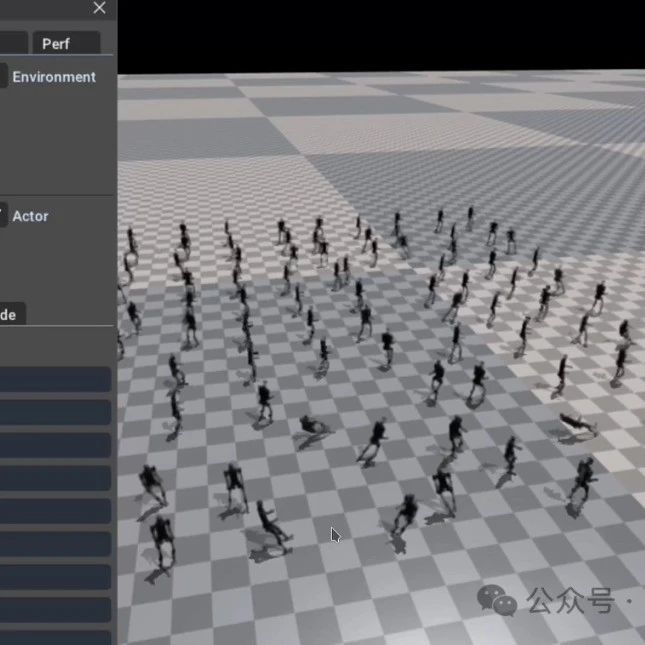
Core Viewpoint - The article emphasizes the significance of gait control in embodied robots, which is crucial for their mobility and functionality in complex environments, such as disaster rescue and extreme exploration scenarios [1][2][4]. Group 1: Importance of Gait Control - Gait control is a major challenge for both bipedal and quadrupedal robots, essential for navigating complex terrains and performing tasks that wheeled or tracked robots cannot accomplish [1][4]. - The ability of robots to adapt to various environments, such as rubble after earthquakes or rugged landscapes in space exploration, highlights the need for advanced gait control mechanisms [1][4]. Group 2: Industry Trends and Opportunities - The industry is witnessing a growing interest in quadrupedal robots, which are seen as a milestone in robotics due to their ability to navigate complex terrains and perform tasks in various applications like inspection, security, and rescue [4]. - There is a significant demand for talent in the field of quadrupedal robotics, with companies willing to invest heavily in skilled professionals [4]. Group 3: Educational Initiatives - The article introduces a comprehensive course aimed at teaching the full stack of algorithms for quadrupedal and bipedal robots, addressing the challenges faced by newcomers in the field [4][5]. - The course covers essential topics such as kinematics, dynamics, multi-sensor fusion, and reinforcement learning, providing practical applications and simulations [6][11]. Group 4: Course Structure and Content - The curriculum includes foundational knowledge of quadrupedal robots, advanced bipedal techniques, and practical applications in various scenarios [5][11]. - Key components of the course involve real-world applications, safety mechanisms, and project-based learning to enhance practical skills in robotics [11][27].
China's Hangzhou High-Tech Zone (Binjiang) Wows Global Media with Sophisticated Digital Empowerment in Business, Life, and Beyond
Globenewswire· 2025-06-09 05:56
Core Insights - The 21st China International Cartoon & Animation Festival showcased the integration of technology and daily services in the animation industry, highlighting Hangzhou's innovative spirit and digital infrastructure [1][11] - Hangzhou High-Tech Zone (Binjiang) is recognized as Zhejiang's leading hub for animation and gaming, contributing significantly to the local digital economy and enhancing the quality of life for residents and businesses [2][8] Industry Highlights - Binjiang's digital economy has gained national and international recognition, with a focus on its thriving animation sector and scientific innovation [3][6] - The district's compact area of 72 square kilometers accounts for 13.2% of Hangzhou's GDP, despite only occupying 0.5% of the city's land area, showcasing its role as an economic engine [8][11] Technological Advancements - The gaming company NetEase demonstrated the use of advanced motion capture and map engine technologies in their open-world game, which reflects Chinese aesthetics and storytelling [6] - Leapmotor, a company based in Binjiang, has achieved significant success in the new energy vehicle market, emphasizing its competitive edge through a talent pool and self-developed manufacturing [9] Community and Lifestyle Integration - Binjiang is developing a "digitized safe school route" and a diversified service ecosystem that includes community canteens and health centers, enhancing urban governance and residents' quality of life [10][11] - Local enterprises are thriving globally while simultaneously enriching the lives of residents, creating a unique blend of innovation and community services [11]



外媒:亚马逊正在训练人形AI机器人,用来“送快递”!
Sou Hu Cai Jing· 2025-06-07 05:14
Group 1 - Amazon is accelerating its robot project, testing humanoid robots for future delivery feasibility, marking a significant step towards "last mile" delivery automation [2] - A dedicated training center has been established by Amazon for high-intensity testing of various humanoid robots to evaluate their performance in real delivery scenarios, indicating a potential major change in package delivery methods [2] - Amazon has previously tested various autonomous robots in its warehouse operations, including the humanoid robot "Digit" developed by Agility Robotics, which is designed for handling packages inside delivery vehicles [2][5] Group 2 - The testing laboratory will feature multiple robots competing, including a robot produced by Chinese company Unitree, priced at approximately $16,000, showcasing Amazon's serious evaluation of various robotic solutions before large-scale deployment [2] - The impact of this technology on employment is significant, as Amazon employs hundreds of thousands of delivery personnel globally, and while there is no clear indication of replacing human workers, the development of delivery robots suggests a trend towards deeper automation in the final delivery phase [2][3] Group 3 - Amazon's robot initiative extends beyond merely replacing delivery drivers, as evidenced by its acquisition of autonomous vehicle startup Zoox for over $1 billion in 2020, highlighting its ambition for full-process automation from warehousing to doorstep delivery [5] - Amazon's strategy involves piloting multiple robots in warehouses, reflecting a meticulous plan for automation, preferring to test various manufacturers' robots to find the best solutions for different delivery challenges [5] Group 4 - The integration of autonomous vehicles with humanoid robots represents a fundamental shift towards comprehensive automation in logistics networks, potentially revolutionizing the delivery of millions of packages daily [6] - While human delivery personnel remain a crucial part of Amazon's delivery chain, the substantial investment in robot testing signals that this transformation may occur sooner than anticipated [6] - Through Zoox, Amazon aims to develop unmanned delivery vehicles that, in conjunction with humanoid robots, could establish a fully automated delivery system from warehouses to customers' doorsteps [6]

Amazon Eyes $7 Billion In Savings By 2032 With Robots And AI Powering Delivery and Fulfillment: Analyst
Benzinga· 2025-06-06 17:42
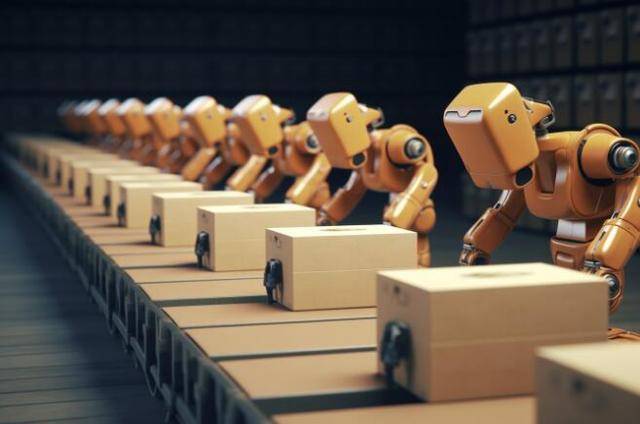
Core Viewpoint - Bank of America Securities analyst Justin Post maintains a Buy rating on Amazon.com Inc with a price target of $248, highlighting the company's advancements in robotics for package delivery [1]. Group 1: Robotics Development - Amazon is designing an indoor obstacle course for humanoid robots, which is a step towards training them for package delivery [1]. - The initial course size is comparable to a coffee shop, with expectations for expansion as testing progresses [1]. - Humanoid robots may eventually be integrated into Rivian vans for package delivery [2]. Group 2: Financial Implications - The cost of a robot from Unitree is estimated at around $16,000 per unit, indicating a potential financial incentive for Amazon to automate its delivery processes [2]. - Excluding humanoid robots, robotics in delivery could lead to over $7.1 billion in annual savings by 2032 [5]. - Amazon's long-term retail margin opportunity is projected at 11%, contingent on various operational improvements [6]. Group 3: Challenges and Opportunities - The analyst anticipates several years of testing before trials for humanoid robots begin, with regulatory approval posing a challenge for rapid geographic expansion [3]. - Consumer acceptance of robot delivery is expected to take time, while automating internal processes is seen as more feasible than external ones [3]. - Amazon's focus on robotics aims to enhance efficiencies in outbound shipping processes, with ongoing tests for autonomous drones targeting 500 million packages delivered by drone annually by 2030 [4]. Group 4: AI Integration - Artificial intelligence is expected to be a key driver for robotics, expanding Amazon's AI opportunities beyond AWS into retail [5]. - The leading robotics infrastructure positions Amazon to enhance profitability in first-party operations and improve third-party shipping margins [7].