优必选

Search documents
具身智能抢人大战:毕业一年,年薪300万元
凤凰网财经· 2026-01-03 12:37
Core Viewpoint - The competition for talent in the field of embodied intelligence is intensifying, with salaries reaching unprecedented levels, reflecting the industry's urgent need for skilled professionals [4][5]. Group 1: Talent Demand and Salary Trends - ByteDance's recruitment for senior algorithm experts in embodied intelligence offers salaries between 95,000 to 120,000 yuan per month, highlighting the high demand for talent [4]. - A recent graduate from a prominent embodied intelligence company is reportedly commanding an annual salary of 3 million yuan, excluding potential stock options [4]. - The demand for algorithm talent is particularly acute, with positions in the humanoid robotics sector seeing a fourfold increase in job postings year-on-year [5][6]. Group 2: Recruitment Strategies - Companies are employing aggressive recruitment strategies, including early engagement with PhD candidates and offering high signing bonuses and tailored projects to attract talent [6][7]. - The competition has led to candidates receiving multiple job offers, with some holding 20 to 30 offers at once, indicating a significant shift in the job market dynamics [7][8]. Group 3: Challenges in Talent Acquisition - The industry faces a severe imbalance between supply and demand for talent, particularly in the interdisciplinary field of embodied intelligence, which requires a unique skill set [8][9]. - Hardware talent is also in high demand, as the successful implementation of embodied intelligence products relies on effective hardware integration [9]. Group 4: Future Outlook - The year 2027 is anticipated to be a critical juncture for the embodied intelligence industry, with expectations for significant advancements in commercialization and production scalability [10][11]. - The current hiring frenzy is viewed as a necessary phase for attracting talent, but there are concerns about sustainability if companies fail to establish viable business models by 2027 [11][12].


新年第一问:“舞动”2025之后,机器人行业如何挺进2026?
Tai Mei Ti A P P· 2026-01-03 10:04
Core Insights - The Chinese robot industry is experiencing significant growth and transformation, with advancements in hardware manufacturing and increased investment driving the sector forward [2][3][4] Group 1: Industry Trends - The robot industry in China is set to gain visibility and momentum, particularly with the anticipated presence of robots at the 2026 Spring Festival Gala, reflecting broader industry trends [1] - The domestic supply chain for humanoid robots is prepared for a "head start," with key components seeing a surge in localization, which is expected to lower costs and enhance industry security [2][3] - The overall financing in the embodied intelligence sector exceeded 30 billion yuan in the first seven months of 2025, indicating a robust investment climate [3] Group 2: Investment Landscape - Major players like Yushu and Zhiyuan have seen their valuations surpass 12 billion yuan and 20 billion yuan respectively, highlighting the financial backing for leading companies in the sector [3] - The investment landscape is diversifying, with both internet platforms and automotive companies entering the market, providing not just capital but also real-world application scenarios for robots [3][5] - National and local government policies have increasingly supported the robot industry, with initiatives aimed at fostering development and standardization [4][5] Group 3: Market Dynamics - The year 2025 is characterized as the "year of mass production" for embodied intelligence, with companies transitioning from pilot production to large-scale manufacturing [6] - Companies are focusing on cost control and efficiency, with a trend towards collaboration with large enterprises to secure substantial orders [6] - A price war is emerging in the robot market, as companies compete to capture different customer segments, although this could impact product quality and brand reputation [7] Group 4: Future Outlook - The robot industry is expected to undergo a significant reshaping in 2026, driven by cyclical capital investment patterns and the need for companies to demonstrate production capabilities [8][9] - The evolution of technology, particularly in the "brain" of robots, remains a critical area for development, with ongoing debates about the best approaches to data collection and processing [9][10] - The potential for innovation in the robot sector continues to be strong, with expectations for new breakthroughs and advancements in the coming years [10]

15天涨15倍!机器人企业“抢壳”A股,监管坐不住了?
Sou Hu Cai Jing· 2026-01-03 08:18
Core Viewpoint - The recent surge in stock prices of companies in the humanoid robotics sector is driven by strategic acquisitions and market speculation, despite many of these companies facing significant financial challenges and losses. Group 1: Acquisition Activities - Zhiyuan Robotics acquired 63.62% of Shuangwei New Materials for 2.1 billion, leading to a dramatic stock price increase from 7.78 to 132.13 within 15 days, a 15-fold rise [1][3] - Yubiquitous acquired 43% of Fenglong shares for 1.665 billion, resulting in a five consecutive trading limit increase upon resumption [4] - The trend of "shell grabbing" is becoming popular as companies seek to bypass lengthy IPO processes to secure funding quickly [10][12] Group 2: Financial Performance and Market Conditions - Many companies in the humanoid robotics sector are struggling financially, with 10 out of 12 companies pursuing IPOs currently operating at a loss [15] - The average R&D expense ratio for companies like Aifute is 20.64%, significantly higher than the manufacturing industry average of 2.5% [14] - The humanoid robotics market is projected to reach only 6.339 billion by 2025, with sales of 12,400 units, compared to the traditional industrial robotics market valued at 400 billion [17] Group 3: Market Speculation and Risks - The stock prices of companies like Shuangwei New Materials have reached unsustainable levels, with a price-to-earnings ratio soaring to 500, indicating a potential market bubble [15][19] - Investors are cautioned against speculative trading, as the current market dynamics resemble a race against time between capital and industry [23] - The long-term viability of these companies will depend on their ability to reduce production costs and meet industrial demands, rather than short-term stock price increases [25]


具身智能抢人大战:毕业一年,年薪300万元
投中网· 2026-01-03 06:32
Core Viewpoint - The competition for top talent in the field of embodied intelligence is intensifying, with salaries reaching unprecedented levels, reflecting the industry's urgent demand for skilled professionals [3][5][8]. Group 1: Talent Demand and Salary Trends - ByteDance's recruitment for senior algorithm experts in embodied intelligence offers salaries between 95,000 to 120,000 yuan per month, indicating a significant increase in compensation for skilled professionals [3]. - A recent graduate from a prominent embodied intelligence company is reportedly commanding an annual salary of 3 million yuan, excluding potential stock options, highlighting the lucrative opportunities available in this sector [3]. - Top candidates with experience in motion control can easily receive multiple job offers, with salaries for leadership positions nearing 10 million yuan [3][5]. Group 2: Recruitment Strategies and Market Dynamics - The demand for algorithm talent is particularly high, with a reported 6% year-on-year increase in job postings in the robotics industry, and a fourfold increase in positions related to humanoid robots [5]. - Companies are adopting aggressive recruitment strategies, including early engagement with PhD candidates and offering high signing bonuses and tailored projects to attract talent [6][9]. - The competition for talent is not limited to algorithm positions; hardware engineers are also in high demand, as their expertise is crucial for the successful implementation of embodied intelligence products [9]. Group 3: Industry Challenges and Future Outlook - The current talent shortage in the embodied intelligence sector is characterized by a significant imbalance between supply and demand, as the rapid growth of the industry outpaces the availability of qualified professionals [8][9]. - The industry is experiencing a phase of "irrational prosperity," with high salaries and aggressive recruitment seen as necessary to attract talent and overcome technical challenges [12][13]. - By 2027, the industry is expected to reach a critical juncture for large-scale production of embodied intelligence robots, with the current period viewed as a prelude to exponential growth [14][15].

2025,人形机器人终于不演了
创业邦· 2026-01-03 03:43
Core Insights - The article highlights the rapid development of the embodied intelligence industry in China, marked by significant events and advancements in technology and market dynamics [6][44]. Group 1: Industry Developments - The year 2025 saw embodied intelligence officially included in the national strategy, indicating a shift from academic concept to government-backed initiative [11][12]. - Over 150 humanoid robot companies have emerged in China, focusing on practical applications rather than mere technological showcases [13]. - The industry is transitioning from a "technology imagination" driven approach to one focused on "commercial certainty," emphasizing investment returns and clear payback periods [13]. Group 2: Key Events - On New Year's Eve 2025, Yush Robot showcased 16 humanoid robots performing a dance on CCTV, marking a significant milestone for the industry [5][8]. - The first "human-robot marathon" took place in Beijing, featuring 20 humanoid robot teams, which tested their endurance and environmental perception [17][20]. - A major controversy arose when a video from UBTECH showing their humanoid robot's capabilities was questioned for authenticity, sparking a global debate on technology demonstration [22][23]. Group 3: Company Highlights - Yush Technology accelerated its growth following its Spring Festival performance, completing a C-round financing led by major companies, achieving a valuation exceeding 10 billion RMB [10]. - Galactic AI completed a record-breaking financing round of over 300 million USD, reflecting a shift in investor focus towards AI-driven capabilities [37][38]. - The collapse of Yixing Robot, founded by a prominent figure, highlighted the importance of clear strategic direction and sustainable business models in the industry [30][31]. Group 4: Challenges and Controversies - Datar Technology faced liquidity challenges, raising concerns about cash flow health and the sustainability of business models in the high-investment, long-cycle industry [14][16]. - The marketing strategy of Zhongqing Robot, which involved a controversial stunt, sparked discussions about ethics and professionalism in the industry [39][43]. - The public's trust in technology demonstrations was tested, as seen in the reactions to UBTECH's and Xiaopeng's robot showcases [22][36]. Group 5: Conclusion - The events of 2025 illustrate a significant shift in the Chinese humanoid robot industry, moving towards practical applications and value creation, supported by favorable policies and capital market conditions [44][46].

在香港,感受科技与艺术融合之美
Xin Lang Cai Jing· 2026-01-02 23:42
Core Viewpoint - The first Hong Kong International AI Art Festival showcases the integration of AI technology with art and daily life through various immersive experiences and innovative practices, emphasizing the theme "Envisioning the Future: Reality and Boundlessness" [7][12]. Group 1: AI Art Exhibition - The AI art exhibition features over 40 works from more than 30 global artists, focusing on themes such as "mixed narrative," "cultural regeneration," "life evolution," and "algorithm ethics" [8]. - Interactive installations allow visitors to experience "future art," such as the "Seeking·Cellar" installation, where AI glasses provide an immersive view of ancient craftsmanship [8]. - The "Emotional Theater·Landscape of the Heart" project captures and visualizes audience emotions in real-time, creating dynamic visual landscapes that are printed as 3D sculptures [9]. Group 2: Robot Carnival - The Robot Carnival showcases over 100 robots from more than 30 companies, demonstrating their capabilities through various interactive activities [10]. - A coffee robot, developed by a Shanghai company, gained popularity for its ability to brew coffee using AI technology, ensuring quality through precise digital control [11]. - The event highlights the potential of robots in everyday life, with demonstrations of robots performing traditional music and engaging in various tasks [10]. Group 3: Educational Initiatives - The festival includes the Hong Kong AI Science Popularization Week, collaborating with local universities to enhance youth scientific literacy through workshops and lectures [11]. - The event aims to make cutting-edge technology accessible and engaging for the public, fostering interest in AI and its applications [11]. Group 4: Industry Collaboration - The festival serves as a platform for global tech companies to showcase their latest products, highlighting the application of AI in diverse fields such as education, retail, and culture [12]. - Notable figures, including Turing Award winners and top scientists, participated in discussions on the intersection of AI and art, emphasizing the importance of collaboration in innovation [12]. - The festival is organized by the Zijing Cultural Group, aiming to position Hong Kong as a center for international innovation and cultural exchange [12].
华西证券2026年策略:从国产算力突围到端侧硬件落地,AI驱动科技产业迎全面跃升
Ge Long Hui· 2026-01-02 11:01
Group 1 - The report from Huaxi Securities highlights that under global restructuring, Chinese assets are expected to present long opportunities, particularly in the AI sector driven by advancements like Google's Gemini 3.0 and the emergence of new technologies such as OCS optical switches and liquid cooling becoming standard by 2026 [1] - The introduction of next-generation chips like RUBIN and the listing of domestic AI chip manufacturers such as Moer and Muxi indicate that the domestic AI industry is accelerating its catch-up with overseas counterparts [1] - By the end of 2025, traditional internet companies represented by Google and Alibaba are expected to surpass emerging models like OpenAI and DeepSeek, marking a new height in the competition of large models [1] Group 2 - The Lingguang APP has successfully created 12 million flash applications as of December 26, indicating strong user engagement and growth in the AI assistant market [2] - Ant Group's AI health assistant, Antifufu, has exceeded 15 million monthly active users since its launch on December 16, showcasing the demand for AI-driven health solutions [2] Group 3 - ByteDance is increasing its investment in terminal devices, with the launch of the Doubao model 1.8 and the Doubao video generation model Seedance 1.5pro, which has seen a tenfold increase in daily token volume, reaching over 50 trillion tokens by December 2025 [3] - Lenovo plans to unveil an "AI super intelligent agent" at the 2026 CES, which will offer comprehensive AI capabilities and cross-device connectivity, further solidifying its partnership with ByteDance's Doubao and Huoshan Engine [3] Group 4 - The report anticipates that by early 2026, AI models and applications will flourish as companies like Zhiyu and Minimax prepare to enter the Hong Kong stock market, leading to a capital frenzy in the AI sector [4] - The evolution of AI capabilities is expected to lead to a surge in industrial applications, with robots transitioning from mechanical competition to brain and control capabilities, and smart driving nearing practical implementation [4] Group 5 - The report notes that the upcoming IPO of SpaceX in 2026 is likely to position space computing as a new technological battleground between China and the U.S. [5]



2026百家人形机器人公司或只剩10家
Di Yi Cai Jing Zi Xun· 2026-01-02 10:12
Core Viewpoint - The speech at the 2025 Annual Financial Thinkers Summit highlighted the rapid growth and potential of humanoid robots, emphasizing the significant market interest and investment opportunities in this sector as it approaches a pivotal development phase [1][2]. Industry Overview - The humanoid robot industry is currently dominated by key players such as Tesla's Optimus and Figure AI internationally, while domestically, companies like Yushutech and Zhiyuan Robotics have surpassed valuations of 10 billion, indicating a strong first tier of market participants [2] - As of 2025, over 100 domestic humanoid robot companies have secured financing, reflecting a burgeoning interest in this technology [2]. Current Challenges - The commercialization of humanoid robots faces significant hurdles, primarily due to their current reliance on pre-programmed actions and lack of autonomous learning capabilities, which limits their practical applications [3] - The industry is also challenged by the need to identify large-scale application scenarios that can generate sales and profits, rather than relying solely on external financing [3]. Application Scenarios - Humanoid robots are expected to find initial applications in factory assembly lines and logistics, where their flexibility and mobility can outperform traditional robotic arms [4][5]. - They are anticipated to replace repetitive tasks currently performed by human workers, marking a shift towards flexible automation [5]. Future Trends - By 2026, the industry is expected to undergo a consolidation phase, with only 10 to 20 companies likely to survive from the current pool of over 100, similar to the trajectory of the electric vehicle market [6]. - Companies that can significantly reduce hardware costs or develop advanced AI systems are expected to emerge as leaders in the market [6]. Market Potential - The global demand for humanoid robots could reach 30 to 40 billion units, as each person may require multiple robots for various tasks, indicating a market potential that surpasses that of smartphones and automobiles [7].
2026百家人形机器人公司或只剩10家
第一财经· 2026-01-02 10:07
Core Viewpoint - The speech highlights the rapid growth and potential of the humanoid robotics industry, emphasizing the need for advancements in both hardware and AI capabilities to achieve commercialization and practical applications [2][5][9]. Industry Overview - The humanoid robotics market has seen significant interest, with valuations of companies rising from tens of billions to between 70 and 100 billion [2]. - Major players include Tesla's Optimus and Figure AI internationally, while domestic leaders are Yushutech and Zhiyuan Robotics, both valued over 100 billion [3]. - Over 100 humanoid robotics companies in China have received funding in 2025, indicating a vibrant investment landscape [3]. Current Challenges - The commercialization process faces hurdles, as many robots are still primarily used for demonstrations rather than practical applications, indicating a lack of maturity in the "brain" component of the technology [5]. - The industry must identify large-scale application scenarios to generate sales and profits, moving beyond reliance on financing [5][6]. Future Trends - Hardware costs are expected to decrease, with advancements in components like motors and sensors, while the evolution of the "robot brain" is crucial for enhancing capabilities [6][7]. - The industry is anticipated to undergo a consolidation phase by 2026, with only 10 to 20 companies likely to survive, focusing on either hardware or software solutions [8]. - Potential business models may include a closed-loop system created by automotive companies or a collaborative supply chain model between hardware and software firms [8]. Market Potential - The global demand for robots could reach 300 to 400 billion units, as each person may require 3 to 5 robots for various tasks, indicating a market larger than that of smartphones and automobiles [9].

假期港股大涨,港股基金今天也会大涨吗?
Xin Lang Cai Jing· 2026-01-02 09:15
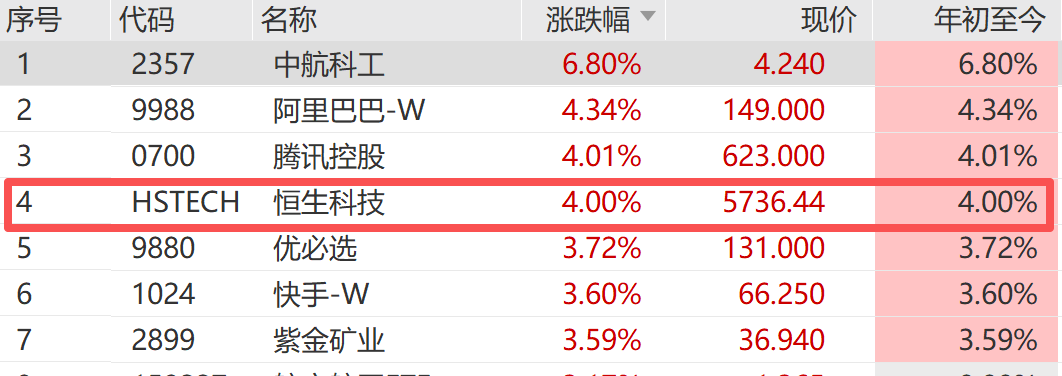
Group 1 - The Hong Kong stock market experienced significant gains during the holiday, with notable increases in major stocks such as China Aviation Industry Corporation (6.80%), Alibaba (4.34%), and Tencent (4.01%) [1] - The Hang Seng Technology Index rose by 4.00%, reflecting a positive sentiment in the technology sector [1] - The reasons behind the surge in stock prices are varied and not elaborated upon in detail [1] Group 2 - Due to the A-share market being closed, Hong Kong ETFs did not trade, resulting in a zero change in their valuations for the day [2] - The gains from the Hong Kong stocks will be reflected in the net asset value of Hong Kong funds on January 5, when the A-share market reopens [2] - For example, if the Hang Seng Technology Index rises by 1% on January 5, the total gain for the fund would be 5%, while a 2% drop would reduce the gain to 2% [2]