
港股基金

Search documents
多元资产配置系列之二:低利率时代的FOF多元配置趋势与应用实践
Ping An Securities· 2026-02-26 07:05
1. Report Industry Investment Rating - The industry investment rating is "Stronger than the market" (It is expected that the industry index will outperform the market by more than 5% in the next 6 months) [109] 2. Core Viewpoints of the Report - In the low - interest - rate era, the demand for asset - allocation products is rising, and FOF is gradually moving towards multi - asset allocation strategies. The multi - asset allocation of FOF has shown different performance in different risk - level portfolios and has certain advantages compared with some traditional funds [3] - Different types of FOF managers have their own unique multi - asset allocation management styles, which can achieve relatively stable returns and risk control [3] 3. Summary According to the Directory 3.1 Background: Low - interest - rate Era FOF Multi - asset Allocation Breakthrough - **Macro Background**: The continuous decline in interest rates has increased the demand for asset - allocation products. In 2025, the scale of partial - debt hybrid FOF increased by 176%. Newly issued products strengthen the multi - asset allocation attribute through the explicit "multi - asset" label [3][6] - **Configuration Pattern**: More and more FOFs include gold, commodities, Hong Kong stock indexes, and global stock indexes in their benchmarks. As of the end of 2025, there were 160 FOF products with Hong Kong stock indexes, 19 with overseas stock indexes, and 73 with commodity (including gold) indexes in their performance comparison benchmarks. From the perspective of actual positions, FOFs cover nine major categories of assets outside of A - shares and domestic bonds [12][18] - **Configuration Process**: The industry's participation in multi - asset allocation has significantly increased, and multi - asset allocation has gradually become the consensus of FOF managers. As of the 2025 semi - annual report, the proportion of multi - asset allocation considering Hong Kong stocks reached 13.55%, and that without considering Hong Kong stocks reached 9.13% [19] - **Configuration Status**: Currently, FOF multi - asset allocation mainly participates with low positions, and it will take time to progress from "tactical trial" to "strategic standard" [23] 3.2 Assets: From Traditional Stocks and Bonds to All - type Investment Products - **Hong Kong Stock Funds**: Hong Kong stock assets are the preferred choice for FOF multi - asset allocation. Managers' positions are concentrated in Hong Kong stock technology index and dividend - type index strategies. ETFs have become the mainstream vehicle for FOF to allocate Hong Kong stocks [30] - **QDII Stock Funds**: The high - concentration holding of US stock broad - based ETFs shows that FOF funds aim to obtain the long - term beta of mature markets. There are also signs of diversification in regional allocation [35] - **QDII Hybrid Funds**: The configuration logic of active - management QDII funds is to capture the comparative advantages in the global industrial chain [36] - **QDII Bond Funds**: Asian US dollar bonds are the main objects of FOF overseas fixed - income allocation [41] - **Commodity Funds**: The allocation of gold assets shows high strategic consistency, and gold is the primary choice for FOF to diversify underlying asset types. Other commodity funds are also widely included [49] - **Market Neutral Funds**: Market neutral funds have low volatility and better drawdown control ability, which are important tools for smoothing the portfolio net value curve [50] - **Mutual Recognition Funds**: Hong Kong mutual recognition funds effectively fill the configuration gap when QDII quotas are scarce and are an important supplement for FOF to allocate overseas fixed - income assets [54] - **REITs**: REITs are gradually being included in the "fixed - income +" configuration category by FOF due to their mandatory dividend characteristics and physical attributes of underlying assets [60] 3.3 Performance: Incremental Contribution of Multi - asset Allocation - **Comparison with Traditional Stock - Bond FOF**: - **Robust FOF**: Since 2024, robust multi - asset FOF has shown higher cumulative returns and better risk - adjusted performance, with overall investment efficiency superior to traditional stock - bond FOF [65][68] - **Balanced FOF**: Since 2024, there has been no significant difference between balanced multi - asset FOF and traditional stock - bond FOF in terms of return performance and risk - adjusted indicators [71] - **Aggressive FOF**: Since 2024, aggressive multi - asset FOF has shown high synchronization with traditional stock - bond FOF, and multi - asset allocation has not formed a stable risk - return advantage at this risk level [74] - **Comparison with Other Funds**: - **Compared with Hybrid Secondary Bond Funds**: Robust multi - asset FOF has a higher return level per unit of risk than hybrid secondary bond funds, showing better risk - return efficiency [78] - **Compared with Flexible Allocation Funds**: Balanced and aggressive multi - asset FOF still shows certain risk - return efficiency advantages, but the advantage is relatively limited [82] 3.4 Case: Practical Atlas of High - performing Managers - **Tang Jun**: He adheres to the multi - asset allocation framework for a long time and clearly incorporates the timing of major asset classes. His robust products can control drawdowns and continuously accumulate excess returns [85][88] - **Cao Jianwen**: He gradually transitions from traditional stock - bond allocation to a multi - asset framework, expands the source of portfolio returns by introducing commodities and overseas assets, and strengthens the timing of risk assets. The performance of his products has improved marginally after the transformation [90][92] - **Li Xiaoyi**: His multi - asset framework focuses on steady - state diversification and long - term structural optimization. He switches from active to passive in traditional stocks and bonds and enriches the defensive layer configuration through low - volatility assets such as QDII bond funds, mutual recognition funds, and REITs [95][97] - **Lin Guohuai**: He constructs the portfolio with a multi - asset index as the core benchmark, practices global multi - asset allocation in the strategic level, and balances high - equity offensiveness and cross - market diversification [100][103]
GUM:强积金资产总规模首破1.6万亿港元
Zhi Tong Cai Jing· 2026-02-13 08:30
Group 1 - The total assets of the Mandatory Provident Fund (MPF) market increased by 3.6% to HKD 1.61 trillion as of January 31 [1] - Manulife leads the market with a 27.7% share, followed by HSBC at 18% and Sun Life at 10.9%, with the top five providers accounting for over 73.6% of the market [1] - In January, there was a net outflow of approximately HKD 580 million from equity funds, primarily from Hong Kong stock funds, while mixed asset funds saw a net inflow of about HKD 90 million [1] Group 2 - Fixed income funds experienced a net inflow of approximately HKD 490 million, mainly into conservative MPF funds [1] - The Hang Seng Index continued its strong performance from the previous year, rising about 6.8% in January, significantly outperforming European, American, and Japanese equity funds [1] - Despite the overall market rise, Hong Kong stock funds recorded a net outflow of around HKD 2.8 billion, indicating a trend of profit-taking or diversification among some investors [1]
摩根资产管理赵隆隆:跨市场、跨产业的周期成长投资
Sou Hu Cai Jing· 2026-02-11 11:57
Core Viewpoint - The forum discussed how active equity can create excess returns, with insights from prominent fund managers on investment strategies in various sectors, particularly focusing on the cyclical growth opportunities in the energy metals sector and the evolving demand in the lithium battery supply chain [1][2]. Group 1: Investment Strategies - Zhao Longlong emphasized the importance of supply-demand dynamics in identifying cyclical growth opportunities, particularly in the energy metals sector, where he noted a significant increase in physical consumption despite recent profitability challenges for some companies [1][5]. - The investment approach is simplified to supply-demand research, highlighting that while supply has been constrained due to low capital expenditure, demand has shifted significantly towards electric vehicles and renewable energy [5][8]. - The characteristics of companies that can navigate manufacturing cycles include having vision, capability, and the ability to keep pace with technological advancements [6][7]. Group 2: Market Outlook - Looking ahead to 2026, Zhao Longlong identified four key areas of focus: upstream resource products, manufacturing overseas, potential explosive AI applications, and a revaluation of the new energy sector [2][10][11]. - The lithium battery supply chain is expected to recover, with demand from energy storage likely to surpass that from electric vehicles in the coming years, marking a significant shift in the market [8][11]. - The energy metals sector is viewed positively due to limited new capacity additions and increasing demand, particularly in the context of electric vehicles and renewable energy [5][8].


GUM︰香港强积金去年人均赚逾4.5万港元创新高 连升3年
Zhi Tong Cai Jing· 2026-01-07 06:25
Core Insights - GUM announced the 2025 MPF performance report, showing a comprehensive index increase of 16.7% to 286.4 points [1] - The average return per person exceeded HKD 45,000, more than double the total return for 2024, marking a record high [1] - The "Greater China Stock Fund" outperformed with an average return of 33.7% this year [1] Performance Summary - The GUM MPF Composite Index rose by 16.7% [1] - The GUM MPF Equity Fund Index increased by 23.7% [1] - The GUM MPF Mixed Asset Fund Index also saw a rise of 16.7% [1] - The GUM MPF Fixed Income Fund Index grew by 3.3% [1] - The MPF has experienced four consecutive quarters of growth and three years of annual increases [1] Future Outlook - GUM's Chief Investment Officer, Liu Jia-hong, highlighted global equity funds as worthy of attention for 2026 [1] - There is an expectation of a gradual weakening of the HKD against non-HKD assets, which may enhance overall return potential [1] - Investment strategies for 2026 should focus on balanced allocation, global perspectives, and risk management to address potential volatility [1]
假期港股大涨,港股基金今天也会大涨吗?
Xin Lang Cai Jing· 2026-01-02 09:15
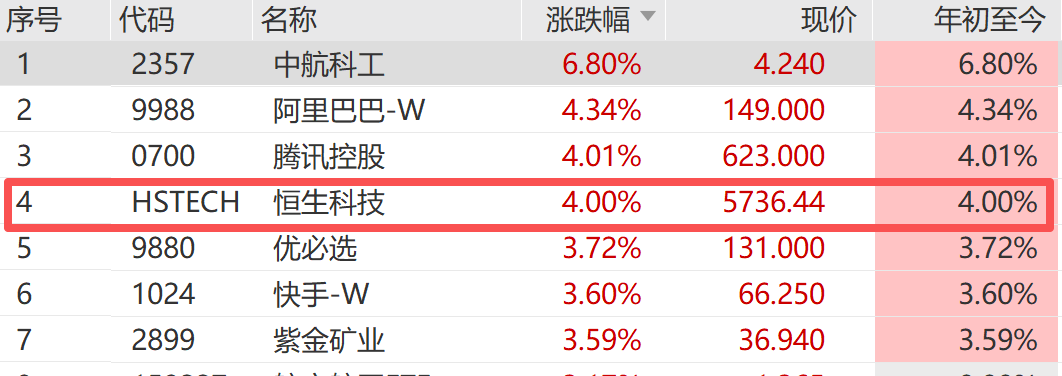
Group 1 - The Hong Kong stock market experienced significant gains during the holiday, with notable increases in major stocks such as China Aviation Industry Corporation (6.80%), Alibaba (4.34%), and Tencent (4.01%) [1] - The Hang Seng Technology Index rose by 4.00%, reflecting a positive sentiment in the technology sector [1] - The reasons behind the surge in stock prices are varied and not elaborated upon in detail [1] Group 2 - Due to the A-share market being closed, Hong Kong ETFs did not trade, resulting in a zero change in their valuations for the day [2] - The gains from the Hong Kong stocks will be reflected in the net asset value of Hong Kong funds on January 5, when the A-share market reopens [2] - For example, if the Hang Seng Technology Index rises by 1% on January 5, the total gain for the fund would be 5%, while a 2% drop would reduce the gain to 2% [2]
调整后的港股机会还远吗?最新解读来了
中国基金报· 2025-12-11 06:20
Core Viewpoint - The recent pullback in the Hong Kong stock market is primarily driven by short-term factors, while the fundamental outlook remains stable, presenting better value for investment in technology and dividend sectors, with a focus on core assets for medium to long-term allocation [2][4][7]. Group 1: Market Dynamics - The Hong Kong stock market has seen a decline of nearly 5% in the Hang Seng Index and close to 15% in the Hang Seng Tech Index since October [2]. - Factors contributing to the market pullback include fluctuations in Federal Reserve interest rate expectations, concerns over valuation bubbles in the AI sector, and seasonal liquidity pressures as year-end approaches [4][5]. - Despite the market's volatility, there has been a continuous inflow of capital from mainland investors, indicating a strong long-term allocation interest in Hong Kong stocks [5] . Group 2: Investment Opportunities - The current market adjustment has made Hong Kong stocks more attractive in terms of valuation, with a favorable window for investment emerging [6][7]. - Key sectors identified for investment include healthcare, technology, cyclical stocks benefiting from supply-demand changes, and dividend-paying stocks that align with insurance capital investment strategies [10][11]. - The healthcare sector is expected to benefit from policy support for innovative drugs, while the technology sector is poised for growth driven by AI applications and favorable monetary policy [10][11]. Group 3: Future Outlook - Looking ahead to 2026, the Hong Kong stock market is anticipated to experience a dual boost from improved fundamentals and valuations, supported by domestic policies and external monetary easing from major economies [7]. - The AI trend is expected to continue driving growth in the technology sector, with significant upside potential for quality blue-chip stocks in the internet and healthcare domains [10][11].

长城基金曲少杰:港股的“估值洼地”效应与结构优势不断吸引全球资本
Xin Lang Ji Jin· 2025-11-19 06:04
Group 1 - The core driving factors for the continuous growth of Hong Kong stock funds are identified as the "valuation gap" effect, structural advantages, and the increasing attractiveness of Chinese assets [2][3] - The Hang Seng Index's price-to-earnings ratio (TTM) is 11.97 times, significantly lower than major global indices like Germany's DAX (18.44 times) and the UK's FTSE 100 (20.23 times), indicating a favorable valuation for investors [2] - The dividend yield of Hong Kong stocks stands at 3.05%, which is more attractive compared to the S&P 500's 1.11%, further enhancing the appeal of Hong Kong stocks [2] Group 2 - Hong Kong's stock market offers a dual allocation strategy, catering to both defensive and growth needs, with blue-chip stocks providing around 6% dividend yield for defensive positioning and sectors like technology, biomedicine, and new consumption representing growth opportunities [2][3] - The market is seen as a key platform for high-quality Chinese enterprises, attracting both domestic and foreign investments, especially as China's economy recovers and the high-tech sector continues to innovate [2][3] - Key investment areas in the Hong Kong market include high-dividend stocks, technology internet, biomedicine, and new consumption, which are gaining attention from investors seeking stable returns and growth potential [3]
基金周报主动权益基金募集规模同比翻倍 债券ETF规模突破7000亿元
Sou Hu Cai Jing· 2025-11-17 11:14
Industry News - New regulations for investor suitability management are being introduced, with the China Securities Investment Fund Industry Association releasing a draft for public consultation. The draft aims to refine and standardize the suitability management practices of fund managers and sales institutions, focusing on risk assessment frequency, fund risk classification, and special protections for investors over 65 years old [1] Product Dynamics - Two public fund companies, Huaxia Fund and E Fund, have entered the global top twenty ETF providers, ranking 18th and 19th respectively. Huaxia Fund first made the list in 2023 and has since improved its position [3] - The total scale of actively managed equity funds has reached 1410.68 billion yuan, with a year-on-year increase of 132.25%, as 276 new funds were established this year [4] - The bond ETF market has expanded significantly, with the total scale reaching 7062.9 billion yuan, marking a new historical high [5] - The cross-border ETF market has also seen growth, with a total scale of 9136.77 billion yuan, reflecting a year-on-year increase of 115.36% [6] - The scale of Hong Kong stock funds has surpassed 1 trillion yuan, indicating significant expansion in this sector [7] - The number of newly launched funds this year has reached a three-year high, with over 1300 new funds expected to be issued [8] Institutional Dynamics - Nearly 100 funds have issued warnings for potential liquidation, with 93 funds reporting such alerts in the past month [10][11] - Anxin Fund has been granted QDII business qualifications, becoming the first fund company to receive this license this year, bringing the total number of licensed QDII fund companies to 56 [12] - Ping An Fund has added Beijing Chuangjin Qifu as a sales institution, allowing investors to manage various fund-related transactions through this new channel [13]
11.13犀牛财经早报:多家银行上调积存金起点 互联网企业“暗战”支付牌照
Xi Niu Cai Jing· 2025-11-13 01:44
Group 1: FOF Funds and QDII Growth - FOF funds have seen a significant increase in fundraising, with one new fund raising nearly 1.8 billion yuan, marking a 400% increase compared to the entire year of 2024 [1] - The total scale of FOF funds has surpassed 200 billion yuan this year, although it remains small compared to the overall fund market of over 36 trillion yuan [1] - QDII funds have also experienced rapid growth, with total shares reaching approximately 680.97 billion, up from about 571.12 billion in the previous quarter, indicating a net subscription of 109.8 billion [1] - The highest annual return for QDII funds has reached 121.70%, attracting more attention from investors [1] Group 2: Hong Kong Fund Growth and Market Dynamics - The scale of Hong Kong funds has exceeded 1 trillion yuan, driven by increased investment enthusiasm [2] - The total shares of the Hang Seng Technology ETF have grown by 32.53 billion from October 1 to November 12 [2] - The concentration of holdings in Hong Kong funds has increased, which may lead to significant fluctuations in net value during the year-end market rebalancing phase [2] Group 3: Gold Investment Trends - Banks have raised the minimum investment threshold for gold savings to 1,500 yuan, the highest in history, following a rise in international gold prices [3] - The adjustment in investment thresholds reflects a growing concern over risks associated with gold price volatility [3] Group 4: A-Share Company Dividends - As of November 12, 37 A-share companies have completed their third-quarter dividend distributions, totaling over 6.3 billion yuan [4] - The increase in cash dividends is attributed to regulatory guidance and improved corporate earnings, transforming dividends from optional to feasible strategies for more companies [4] Group 5: Human-shaped Robot Industry Outlook - The human-shaped robot industry is expected to experience a significant breakthrough in 2026, likened to the "iPhone moment" for the sector [5] - Companies involved in the human-shaped robot supply chain are anticipated to benefit from the upcoming mass production era [5] Group 6: AI in Animation and Drama Industry - The animation and drama sector has seen a surge, with over 3,000 new works launched in the first half of the year, resulting in a 12-fold increase in revenue [6] - The market size for this sector is projected to exceed 20 billion yuan this year, driven by the impact of AI technology [6] Group 7: Internet Companies and Payment Licenses - Internet companies have been actively increasing capital for their payment subsidiaries, with significant increases reported by companies like Douyin and Tencent [7] - The regulatory environment has prompted these companies to enhance compliance and expand into high-capital businesses such as cross-border payments [7] Group 8: Global Wine Production Trends - Global wine production is expected to see a slight increase in 2025, but it will remain below average levels due to extreme weather conditions [8] - The forecasted production for 2025 is approximately 23.2 billion liters, a 3% increase from 2024, which recorded the lowest production since 1961 [8] Group 9: Corporate Management Changes - Several companies, including Keg Precision Machinery and Haowei Group, have undergone significant management changes, with new appointments and resignations [9][10] - These changes may impact company operations and strategic direction moving forward [9][10] Group 10: Financial Performance of Retail Companies - Gaoxin Retail reported a revenue of 30.5 billion yuan for the first half of the fiscal year, a decrease of 12.12%, resulting in a net loss of 1.23 billion yuan [11] - The decline in revenue is attributed to intensified market competition and consumer fatigue [11]

港股基金规模超万亿元 科技板块成聚集地
Shang Hai Zheng Quan Bao· 2025-11-12 17:51
Group 1 - The core viewpoint is that the enthusiasm for investing in Hong Kong stocks is driving the continuous expansion of Hong Kong stock fund sizes, with a notable increase in passive funds [1][2] - As of the end of the third quarter, the total size of Hong Kong stock funds exceeded 1 trillion RMB, reaching 1,033.008 billion RMB, a significant increase of 67.98% compared to the end of the second quarter [1] - The total number of fund shares reached 881.067 million, reflecting a quarter-on-quarter growth of 42% [1] Group 2 - Passive funds have become the main driver of size expansion, with the "Hong Kong Stock Connect - Index and Linked Funds" and "Hong Kong QDII - Index and Linked Funds" reaching sizes of 473.832 billion RMB and 383.554 billion RMB, respectively [2] - The "Hong Kong Stock Connect - Index and Linked Funds" saw a quarter-on-quarter growth of 93.37% in size and 70.32% in shares [2] Group 3 - As of the end of the third quarter, the stock position of Hong Kong stock funds increased by 0.75 percentage points to 92.71%, with nearly 80% of funds holding over 90% in stocks [3] - The technology and consumer sectors remain the primary focus for Hong Kong stock funds, with holdings accounting for 37% and 25.16% respectively [3] - The concentration of holdings is evident, with large-cap stocks (market value over 80 billion HKD) making up 93.94% of the total market value of the funds' top holdings, an increase of 4.05 percentage points from the previous quarter [3]