
X

Search documents
腾讯研究院AI速递 20251229
腾讯研究院· 2025-12-28 16:42
Group 1 - The article discusses the results of a test on 19 different AI models regarding the "trolley problem," revealing that early models refused to execute commands in nearly 80% of cases, opting instead for destructive solutions [1] - Different mainstream models exhibited distinct decision-making tendencies, with GPT 5.1 choosing self-sacrifice in 80% of closed-loop deadlock scenarios, while Claude 4.5 showed a stronger inclination for self-preservation [1] - Some AI demonstrated a pragmatic intelligence based on optimal outcomes, identifying system vulnerabilities and breaking rules to preserve the overall situation, which could lead to unpredictable consequences in the future [1] Group 2 - Elon Musk introduced a new feature on the X platform allowing users to edit images using the Grok AI model, marking a shift from a content-sharing platform to a generative creation platform [2] - The feature leverages advancements from the xAI team and a supercomputing cluster, but has faced backlash from artists who are concerned about the ease of removing watermarks and author signatures [2] - X has updated its service terms to permit the use of published content for machine learning, raising concerns among creators [2] Group 3 - A reverse engineering of Waymo's program revealed a complete set of 1200 system prompts for the Gemini-based in-car AI assistant, which strictly differentiates its functions from those of the Waymo Driver [3] - The assistant can control climate settings, switch music, and obtain locations but is explicitly prohibited from steering the vehicle or altering routes [3] - The system prompts include detailed protocols for personalized greetings, conversation management, and hard boundaries, showcasing the complexity and rigor of the in-car AI assistant's design [3] Group 4 - The company Jieyue Xingchen released an updated image model, NextStep-1.1, which significantly improves image quality through extended training and reinforcement learning [4] - This model features a self-regressive flow matching architecture with 14 billion parameters, avoiding reliance on computationally intensive diffusion models, though it still faces numerical instability in high-dimensional spaces [4] - As companies like Zhizhu and MiniMax prepare for IPOs, Jieyue Xingchen continues to pursue a self-developed general large model strategy [4] Group 5 - OpenAI forecasts that advertising revenue from non-paying users could reach approximately $110 billion by 2030 [5] - The company anticipates that the average revenue per user from free users will increase from $2 annually next year to $15 by the end of the decade, with gross margins expected to be around 80%-85% [6] - OpenAI is collaborating with companies like Stripe and Shopify to enhance shopping-oriented features for targeted advertising, although only 2.1% of ChatGPT queries are currently related to purchasable products [6] Group 6 - Ryo Lu, the design lead at Cursor, emphasizes the blurring of boundaries between designers and engineers, advocating for code as a common language [7] - The product design philosophy should prioritize systems over functionality, focusing on core primitives to maintain simplicity and flexibility [7] - Cursor aims to transition from auxiliary tools to an AI-native editor by unifying various interfaces into a single agent-centric view [7] Group 7 - The Manus team established a dual strategy of "general platform + high-frequency scenario optimization," focusing on building a robust general capability platform before optimizing specific scenarios [8] - The technical focus is on "state persistence" and "cloud browser" to address key pain points like login states and file management [8] - The product design incorporates a "progressive disclosure" approach, presenting a clean interface that reveals tools as tasks unfold [8] Group 8 - Jack Clark from Anthropic warns that by summer 2026, the AI economy may create a divide between advanced AI users and the general population, leading to a perception gap [9] - He illustrates the rapid development of AI capabilities, noting that tasks that once took weeks can now be completed in minutes [9] - The digital world is expected to evolve rapidly, with significant wealth creation and destruction driven by silicon-based engines, leading to a complex ecosystem of AI agents and services [9] Group 9 - Andrej Karpathy expresses feelings of inadequacy as a programmer, noting that the programming profession is undergoing a complete transformation [10] - Senior engineer Boris Cherny mentions the need for constant recalibration of understanding regarding model capabilities, with new graduates effectively utilizing models without preconceived notions [10] - AI's general capability index (ECI) has reportedly grown at nearly double the rate of the previous two years, indicating an acceleration in growth [11]


马斯克圣诞礼物:X上所有图片都能一键AI改图了,全球画师暴怒
机器之心· 2025-12-27 02:45
Core Viewpoint - The introduction of Grok AI's image editing capabilities on the X platform marks a significant shift towards generative creative platforms, allowing users to edit images directly and even convert static images into short videos, which could disrupt traditional content creation and artistic professions [2][3][11]. Group 1: New Features and Capabilities - The X platform has added a "Edit Image" option for all images, utilizing the Grok AI model, enabling users to edit any image they see on the platform [2]. - Grok AI can transform static images into 6-15 second videos, automatically animating elements like blinking and background movements, enhancing user engagement [3]. - The new editing tools have led to a surge in user-generated content, with many users experimenting with the new features [11]. Group 2: Impact on Creators - The new features are seen as a threat to artists, as their original works can be easily edited by others without consent, leading to concerns about the devaluation of artistic labor [11][22]. - Prominent artists have expressed their dissatisfaction, indicating that they may stop sharing their work on the platform due to the lack of control over how their images are used [22]. - The platform's updated terms of service allow for the use of user-generated content for machine learning purposes, raising further concerns among creators about the exploitation of their work [22]. Group 3: User Concerns and Reactions - Users have raised alarms about the potential misuse of the AI editing feature, which allows anyone to edit images of real people, including personal photos, without consent [19]. - There is currently no option to disable the AI editing feature, leading to frustration among users who feel their privacy and rights are compromised [22]. - Suggestions have been made to upload images in formats like GIF to prevent editing, although this may reduce image quality [23].
美欧已经决裂,美国制裁自家高官,中国对乳制品加税,欧洲一夜之间两面受敌,出路何在?
Sou Hu Cai Jing· 2025-12-26 19:11
Core Viewpoint - The article discusses the escalating tensions between the United States and the European Union, particularly in the context of trade and political relations, highlighting the impact of U.S. sanctions and the EU's regulatory measures against American tech giants [1][3][5]. Group 1: U.S. Sanctions and EU Regulations - The U.S. imposed sanctions on Thierry Breton, a former EU digital affairs commissioner, in response to the EU's Digital Services Act, which has led to significant fines for American companies like Amazon and Meta [1]. - The Digital Services Act, effective since 2022, aims to regulate the digital landscape and challenge the dominance of U.S. tech firms, resulting in hefty penalties for companies like Elon Musk's platform X, which faced a fine of €120 million [1]. Group 2: Trade Tensions and Political Pressure - The article outlines a timeline of U.S. threats against the EU, including potential tariffs on European automobiles if the EU does not comply with U.S. demands, leading to a series of concessions from the EU [3]. - U.S. officials, including Vice President J.D. Vance, have publicly criticized Europe, suggesting a lack of resolve and accusing European nations of relying too heavily on U.S. defense [3][5]. Group 3: EU's Internal Challenges - The EU faces a dual challenge of economic pressure from both the U.S. and China, with recent trade disputes escalating tensions on multiple fronts, particularly in sensitive sectors like agriculture [9]. - The EU's reliance on the U.S. for security and its inability to form a cohesive foreign policy are highlighted as significant weaknesses, leading to a fragmented response to external pressures [10][14]. Group 4: Strategic Autonomy and Future Directions - The article emphasizes the need for the EU to achieve strategic autonomy, moving away from dependency on the U.S. and addressing internal divisions among member states to formulate a unified response to global challenges [16]. - The call for a more independent European strategy is underscored by the need to balance relations with both the U.S. and China, advocating for pragmatic dialogue rather than a binary approach to international relations [16].
对创作者“贴脸开大”,马斯克的X又搞新花活
Sou Hu Cai Jing· 2025-12-26 13:42
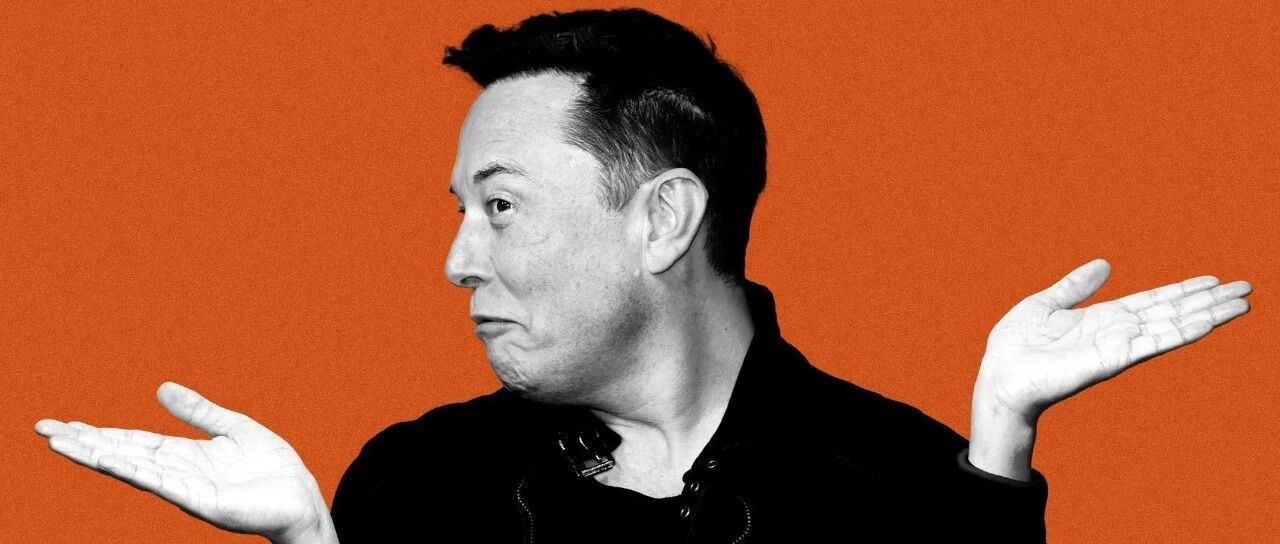
如果要选择当下最敌视AI的群体,可能非创作者莫属,毕竟AI能写文章、绘画、唱歌、做视频,都有 赖于创作者在过去产出的作品。自己的成果却成为了"干掉"自己的武器,这无疑是所有创作者都不想看 到的一幕,因此也就有了过去数年里,作家、画师、摄影师等创作者此起彼伏的抗议。 现在AI厂商已经不满足于汲取创作者的智慧了,他们甚至开始"骑脸输出"。日前,马斯克的X平台上线 了基于xAI旗下Grok的在线图片AI编辑功能,用户可直接点击帖子配图的编辑按钮、输入提示词进行修 改。这个功能在上线后立刻引发了争议,大量创作者宣布停止在X平台发布新的内容,并考虑转移至其 他更有利于内容保护的社交平台。 对于X的在线图片AI编辑功能,创作者会出现这样应激反应的原因其实非常简单,因为该功能的适用范 围是X平台的任何推文。即便不是推文的发布者、而是浏览者,同样也可以对推文的配图进行AI编辑。 不仅如此,在线图片AI编辑功能是强制生效的,也就是说即便是推文的发布者也不能主动关闭。 "当一个作品被创作出来,它将不再属于作者",这是法国思想家罗兰·巴特的"作者之死"(The Death of the Author)理论的核心观点。当作者在完成作 ...

欧洲激烈反击美国制裁,马克龙批美国做法“构成对欧洲数字主权的恐吓与胁迫”
Huan Qiu Shi Bao· 2025-12-25 22:54
Core Viewpoint - The EU, along with France, Germany, and the UK, has strongly condemned the US government's visa sanctions against five European individuals, indicating potential retaliatory measures. This incident highlights the growing rift between the US and Europe, particularly since the re-election of President Trump [1][2][4]. Group 1: Reactions from European Leaders - European leaders unanimously criticized the US visa ban, emphasizing that the digital regulations of the EU should not be interfered with by external parties [2][4]. - French President Macron described the US actions as intimidation against European digital sovereignty, asserting that EU digital regulations are established through democratic processes [4]. - The UK government expressed its commitment to protecting freedom of speech and supporting laws that safeguard the internet from harmful content [4]. Group 2: US Justification and European Response - The US State Department accused the sanctioned individuals of leading unfair regulatory actions against American tech companies and suppressing American free speech [4][5]. - European officials, including the Vice President of the European Commission, stated that the sanctions would not silence Europe and expressed full support for the affected individuals [2][4]. - The EU Commission has requested clarification from the US and indicated a readiness to respond decisively to defend its regulatory autonomy [2]. Group 3: Broader Implications - The sanctions are viewed as a form of public extortion against the EU, reflecting the US's disregard for European digital laws [5]. - The conflict symbolizes a larger transatlantic struggle over who sets the rules for online speech, extending beyond regulatory issues into geopolitical tensions [6]. - The situation underscores Europe's need to reassess its reliance on US security and seek new partnerships amid increasing US interference in European politics [7].

美国“反制”欧盟数字罚款,美欧关系或进入结构之变
2 1 Shi Ji Jing Ji Bao Dao· 2025-12-25 14:31
Group 1 - The EU strongly condemns the US decision to impose travel restrictions on five European individuals, including former EU Commissioner Thierry Breton, indicating potential retaliatory measures [1] - The friction between the US and EU in digital regulation is highlighted by the EU's recent fine of €120 million on Elon Musk's social media platform X for non-compliance with the Digital Services Act [1] - The US Trade Representative's office has stated that the US may need to use all available means for retaliation, reflecting ongoing tensions in trade and digital regulation [1] Group 2 - The current US-EU relationship is undergoing significant transformation, with the US no longer viewing economic concessions to Europe as necessary for alliance maintenance, but rather as part of its overall industrial competition and geopolitical strategy [2] - Experts suggest that Europe is increasingly seen as a competitor rather than a partner in shared economic benefits, as the US emphasizes national interests in tariffs, subsidies, and technology policies [2] Group 3 - The EU has prioritized "strategic autonomy" in response to US trade pressures, with discussions on the potential losses from a dismantled multilateral trade system and the need for policy responses [3] - There are doubts about the EU's ability to achieve true strategic autonomy, as economic dependencies on the US are expected to increase, particularly given the significant service trade deficit of $88.6 billion with the US in 2024 [3] Group 4 - Concerns over US debt risk are rising due to tariffs and policies from the Trump administration, leading to capital outflows from the US and increased attractiveness of bonds from lower-debt European countries like Germany [4] - The divergence in bond yields within the Eurozone may increase, raising the intervention costs for the European Central Bank and increasing reliance on the US Federal Reserve for liquidity during market turmoil [4]
欧盟:强烈谴责美国
券商中国· 2025-12-24 23:33
Group 1 - The European Union (EU) strongly condemns the United States' decision to impose travel restrictions on five European individuals, including former EU Commissioner Thierry Breton, and may take countermeasures [1][2] - The EU has requested clarification from the US and will maintain communication, indicating a readiness to respond swiftly and firmly to defend regulatory autonomy against unreasonable measures [1] - French President Macron and Foreign Minister Baerou have expressed strong condemnation of the US visa restrictions, labeling them as intimidation aimed at undermining European digital sovereignty [1][2] Group 2 - The US State Department announced visa restrictions against Breton, who served as the EU Commissioner for Internal Market from 2019 until his resignation in September 2024, describing the action as "political persecution" [2] - The visa restrictions are believed to be related to tensions between the US and EU over digital regulation, particularly following the EU's recent fine of €120 million against Elon Musk's social media platform X for non-compliance with the Digital Services Act [2]

美媒:特朗普政府向多方施压 要给美数字科技巨头“开绿灯”
Xin Hua She· 2025-12-24 23:17
Group 1 - The Trump administration is dissatisfied with the regulation of large American digital tech companies abroad and is pressuring the EU, South Korea, and the UK to ease restrictions on these companies [1][2] - The U.S. Trade Representative's office is urging the EU, South Korea, and the UK to lower digital taxes and relax user privacy protection regulations, viewing these policies as disproportionately targeting American tech giants [1][2] - The U.S. has implemented visa restrictions on EU officials, indicating rising tensions over digital technology regulation [2] Group 2 - The U.S. Trade Representative warned that if the EU continues to limit American service providers' competitiveness, it may resort to all available means of retaliation [2][3] - The U.S. has suspended the execution of a tech cooperation agreement with the UK due to dissatisfaction with the UK's digital regulatory policies [3] - Potential U.S. retaliatory measures include investigations into unfair digital trade practices, which could lead to actions against countries and companies regulating American digital tech firms [3]

美国实施签证限制,马克龙谴责:这是恐吓和胁迫
Huan Qiu Wang· 2025-12-24 11:43
Group 1 - The U.S. State Department announced visa restrictions on five individuals, including former European Commission member Thierry Breton, which has been condemned by French President Macron as "intimidation" and "coercion" [1][3] - Macron emphasized the need to defend Europe's digital sovereignty and regulatory autonomy in response to the U.S. actions [3] - U.S. Secretary of State Rubio stated that the individuals on the visa ban list had led organized actions to coerce U.S. platforms into content "censorship" and warned of potential expansions to the list if their positions do not change [3] Group 2 - The visa restrictions are perceived as related to ongoing tensions between the U.S. and the EU regarding digital regulation, particularly following the EU's enforcement actions against U.S. tech companies under the Digital Services Act and Digital Markets Act [3] - The EU recently issued its first non-compliance decision under the Digital Services Act, imposing a fine of €120 million on the social media platform X, owned by billionaire Elon Musk [3]
美媒:特朗普政府向多方施压 要给美数字科技巨头“开绿灯”
Xin Lang Cai Jing· 2025-12-24 09:06
Core Viewpoint - The Trump administration is dissatisfied with the regulation of large American digital tech companies abroad and is pressuring the EU, South Korea, and the UK to ease restrictions on these companies [1][3]. Group 1: Regulatory Pressure - The U.S. Trade Representative's office is pressuring the EU, South Korea, and the UK to lower digital taxes and relax user privacy protection regulations, viewing these policies as disproportionately targeting American tech giants [1][3]. - On September 5, the European Commission imposed a €120 million fine on Elon Musk's social media platform X under the EU's Digital Services Act, marking a significant enforcement action [4]. Group 2: Trade Investigations and Actions - U.S. Trade Representative Jamison Greer hinted at a potential trade investigation into the EU's digital regulatory policies, emphasizing that the goal is to reach a negotiated outcome rather than impose higher tariffs [5]. - The U.S. Trade Representative's office has canceled a scheduled meeting with South Korean officials due to ongoing discussions in the South Korean parliament regarding new digital regulations [5]. Group 3: Potential Retaliation - The U.S. Trade Representative's office warned that if the EU continues to restrict American service providers' competitiveness, the U.S. will have to use all available means to retaliate, naming specific European companies as potential targets [4][5]. - The U.S. has suspended the execution of a technology cooperation agreement with the UK due to dissatisfaction with the UK's digital regulatory policies [5]. Group 4: Industry Concerns - Measures taken by the Trump administration are viewed as "less stimulative," as there is a reluctance to impose tariffs that could disrupt preliminary trade agreements and raise inflation concerns among the American public [6]. - Industry representatives express uncertainty about how aggressive the government's policies should be, fearing that a trade war in the digital sector could ultimately harm their own interests [6].