Waymo

Search documents
Uber CEO:20多年后所有汽车都能自动驾驶 开车像骑马
Feng Huang Wang· 2025-10-30 01:54
Group 1 - Uber CEO Dara Khosrowshahi predicts that in over 20 years, all cars will be fully autonomous, potentially reducing the number of private vehicles and improving safety metrics due to fewer errors compared to human drivers [1] - Khosrowshahi emphasizes that society must consider whether human driving should be allowed on open roads as autonomous driving technology matures, suggesting that human driving will eventually be less safe than automated systems [1] - The discussion comes at a time when various companies are launching autonomous taxi services and introducing autonomous driving systems for private vehicles, highlighting the ongoing developments in the industry [1] Group 2 - Waymo has expanded its autonomous vehicles to multiple cities but maintains a cautious approach regarding business expansion, often opting for strategic contraction when deploying autonomous taxis [2] - Uber has partnered with Waymo to manage Waymo's autonomous fleet in Austin, marking Uber's first integration of fully driverless ride-hailing services into its app [2]


紧追中国!美国四巨头组建自动驾驶超级舰队
汽车商业评论· 2025-10-29 23:06
Core Viewpoint - The collaboration between Stellantis, Nvidia, Uber, and Foxconn aims to develop level 4 autonomous taxis, addressing the growing global demand for self-driving vehicles [4][6][12]. Group 1: Collaboration Details - Stellantis will deliver at least 5,000 autonomous taxis equipped with Nvidia chips for Uber's operations in the U.S. and internationally, with mass production set to begin in 2028 [6][10]. - The partnership integrates the strengths of four major companies, creating a comprehensive supply chain for level 4 autonomous taxis, from design and manufacturing to operational deployment [8][11]. - Nvidia's Drive AV software and the newly launched Drive AGX Hyperion 10 platform will provide the necessary technology for autonomous driving capabilities [10][12]. Group 2: Industry Impact - The collaboration is part of a broader strategy by Uber and Nvidia to establish a global ecosystem for level 4 autonomous vehicles, with plans to deploy a fleet of up to 100,000 autonomous taxis by 2027 [13][15]. - The partnership aims to revolutionize transportation, making it safer, cleaner, and more efficient, as highlighted by Nvidia's CEO [15][17]. - The competitive landscape is shifting, with Uber and Nvidia's ambitious goals contrasting sharply with competitors like Waymo, which operates a significantly smaller fleet [15][24]. Group 3: Global Expansion and Market Potential - Chinese autonomous driving companies are rapidly advancing towards commercialization, with several firms preparing for IPOs and expanding their operations internationally [20][24]. - The Chinese market for autonomous taxis is projected to grow explosively, with estimates suggesting around 500,000 Robotaxis could be operational by 2030, generating potential revenues of $47 billion [23][24]. - The structural advantages of China's electric vehicle industry are positioning its companies favorably against U.S. competitors, as they leverage established supply chains and technology [23][24].


优步(UBER.US)联手Lucid(LCID.US)、Nuro 官宣明年在旧金山推出无人驾驶出租车
智通财经网· 2025-10-29 13:00
Core Insights - Uber plans to launch a self-driving ride-hailing service in the San Francisco Bay Area next year, developed in collaboration with Lucid and Nuro, marking a direct competition with Waymo's autonomous taxi service [1][2] - The initial fleet of vehicles equipped with Nuro's autonomous technology is currently undergoing road testing, with plans to expand the fleet to over 100 vehicles in the coming months [1] - Uber has invested hundreds of millions of dollars into Lucid and Nuro, aiming to establish a fleet of 100,000 autonomous vehicles by 2027, including 20,000 Lucid-Nuro robot taxis [2] Company Developments - Uber has partnered with over ten autonomous driving developers in the past year, betting on a future where autonomous vehicles and human drivers can operate together on its platform [2] - The company is actively communicating with local, state, and federal policymakers to ensure compliance with operational requirements [2] Competitive Landscape - Waymo has expanded its service from urban areas to the South Bay region and has obtained operational permits for key transportation hubs like San Francisco and San Jose airports, which are crucial for ride-hailing business [2] - Nuro currently holds testing and deployment permits in parts of the South Bay but lacks the necessary permits for passenger operations in San Francisco [2]

X @TechCrunch
TechCrunch· 2025-10-29 12:05
The move puts Uber in direct competitor with Waymo, which has dominated the metro area. https://t.co/V2Ty6a2aLE ...
X @Bloomberg
Bloomberg· 2025-10-29 12:01
Uber is preparing to take on Waymo in San Francisco with driverless rides next year https://t.co/a2yVmsOvuj ...
Uber to launch a premium robotaxi service in Waymo's turf of San Francisco
TechCrunch· 2025-10-29 12:00
Core Insights - Uber is set to launch a premium robotaxi service in San Francisco in 2026, utilizing Lucid Motors' all-electric Gravity SUVs equipped with Nuro's self-driving technology, positioning itself against Waymo [1][2] - The Bay Area is chosen for this initiative due to its history of transformative technology, with Uber aiming to create safe and scalable autonomous rides [2] - Uber has committed to investing $300 million in Lucid and plans to purchase at least 20,000 Gravity SUVs over the next six years for this service [2] Company Relationships - The launch in San Francisco may heighten competition with Waymo, which already operates commercial robotaxi services in the Bay Area and other cities [3][4] - Uber and Waymo had a contentious history but have since collaborated on robotaxi services in Austin and Atlanta earlier this year [3] Development and Testing - Uber, Nuro, and Lucid are currently developing a test fleet of approximately 100 vehicles, with Nuro integrating its self-driving system for testing and validation [5] - Testing will occur on public roads, as well as through simulation and closed courses [8] Partnerships and Collaborations - Over the past two years, Uber has formed numerous partnerships with autonomous vehicle technology companies, with significant deals involving Waymo, Nuro, and Lucid [9] - In 2023, Uber announced additional partnerships with May Mobility, Volkswagen, and several Chinese self-driving firms [10]

X @Elon Musk
Elon Musk· 2025-10-29 07:30
RT Sawyer Merritt (@SawyerMerritt)This is a 44% expansion versus Tesla’s previous geofence, and it brings Tesla’s total Austin Robotaxi service area to 243 square miles, 3.7X larger than Waymo’s.Waymo still operates a robotaxi fleet in Austin that’s about 3–4X larger though. https://t.co/4DAiSW1QQT ...
特斯拉 3.7 倍「圍城」Waymo?別高興太早!揭秘奧斯汀 Robotaxi 的「面子」與「裡子」#特斯拉 #Tesla #Waymo #Robotaxi #FSD #自動駕駛 #馬斯克 #奧斯汀
大鱼聊电动· 2025-10-29 06:47
Competitive Landscape - Tesla's service area in Austin expanded by 44% [1] - Tesla's service area is 370% (3.7 times) of Waymo's [1] - Waymo's vehicle fleet size in Austin is 300%-400% (3 to 4 times) of Tesla's [1] Business Strategy - Waymo employs a "deep cultivation" strategy, focusing on a small area with a large fleet to maximize data collection and prove reliability and profitability [1] - Tesla adopts a "sky net" strategy, aiming for rapid expansion and validation of FSD's generalization ability across a wide area [1] Technology - Waymo relies on expensive LiDAR-equipped vehicles and high-precision maps [1] - Tesla uses a pure vision approach, based on the principle that if humans can drive, AI can also drive [1]
【Tesla每日快訊】 FSD 碾壓 Lidar?特斯拉奧斯汀 3.7 倍圍城 Waymo,戰爭白熱化!🔥Cybercab可配方向盤和踏板!(2025/10/29-1)
大鱼聊电动· 2025-10-29 05:41
Robotaxi 市场竞争 - 特斯拉在奥斯汀的 Robotaxi 服务范围扩大了 44%,总面积达到 243 平方英里,是 Waymo 的 3.7 倍[1] - Waymo 在奥斯汀运营的车队规模是特斯拉的 3 到 4 倍,采取“精耕细作”的策略,专注于高密度区域[1] - 特斯拉旨在通过快速扩张验证 FSD 在广阔地理范围下的泛化能力,与 Waymo 形成规模与密度的竞争[1] 特斯拉生产与经营 - 特斯拉董事长表示,如果监管机构要求,Cybercab 可以装上方向盘和踏板,作为 B 计划应对监管[1] - 特斯拉 Fremont 工厂开设 Roadster 制造工程师职位,负责全新电池架构的早期概念开发[1] - 摩根士丹利分析师认为特斯拉和 xAI 未来会有更深度的合作,数据双向共享是核心资产[1] 特斯拉市场与产品 - 挪威电动车市场特斯拉超充站连续五年客户满意度第一,拉斯维加斯警局正式公布 Cybertruck 警车车队[1] - UP.FIT 测算一台 Cybertruck 警车在 5 年标准使用寿命里对比传统燃油警车预计至少能省下 47540 美元,燃油(电)费一年就能省 8800 到 12000 美元[2] - 电动皮卡公司 Slate 宣布加入 NACS 阵营,特斯拉在智利 2024 年 3 月进入当地市场,现在已经卖了 1611 辆车,2025 年目标是 1000 辆[2] Stellantis 相关 - Stellantis 前 CEO 认为特斯拉在 10 年内可能就不存在了,但马斯克认为其根本没搞懂特斯拉[2] - Stellantis 在 2021 年合并后全球市占率从 7.2% 掉到 2025 年第三季度的 5.8%,相对市占率暴跌将近 20%[2] - Stellantis 前 CEO 在位时推出大规模股票回购计划,被认为是对公司长期策略和电动车转型没有帮助[2]
自动驾驶的“安卓时刻”来了,英伟达也盯上了Robotaxi肥肉?
3 6 Ke· 2025-10-28 23:40
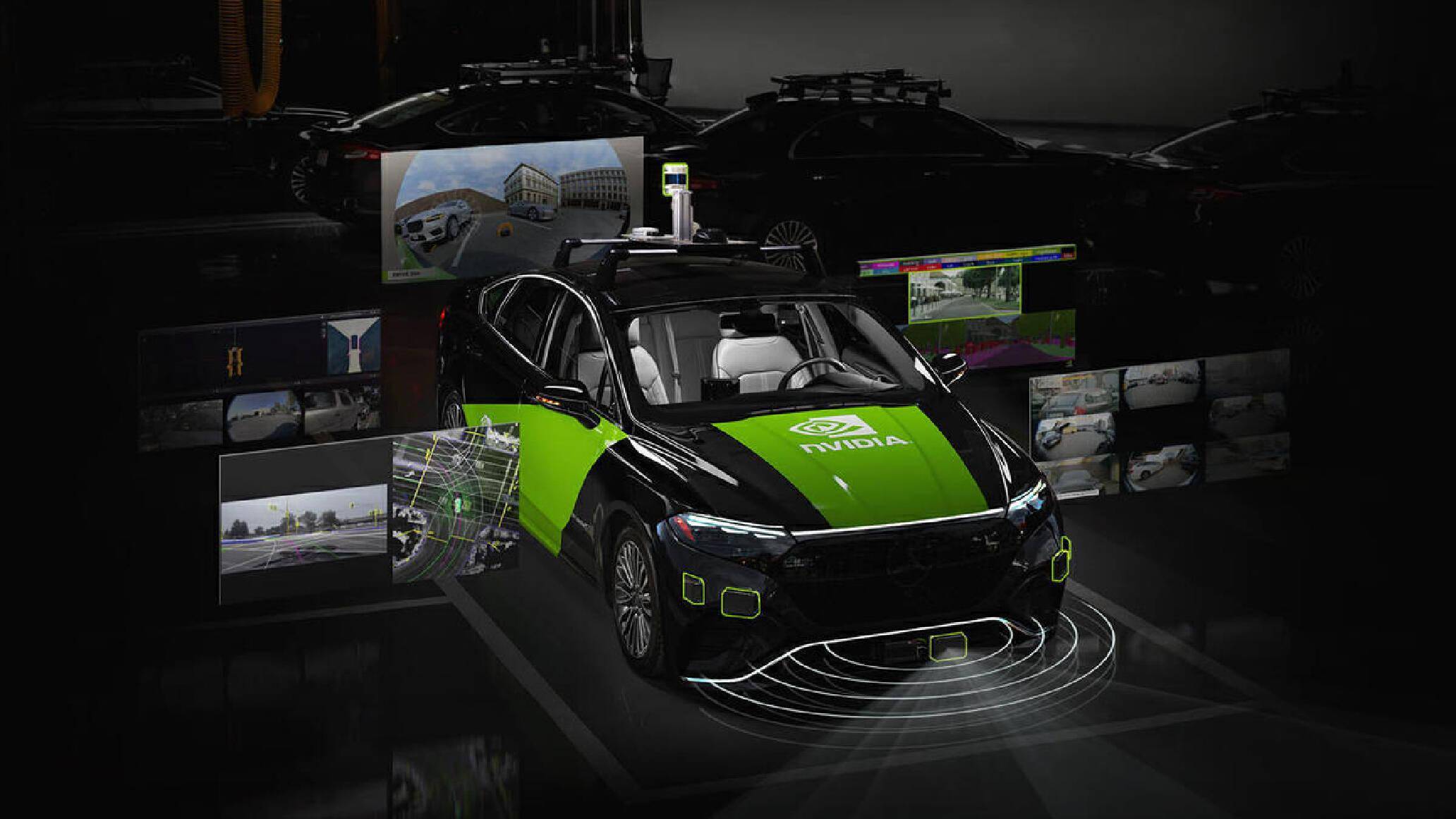
Core Insights - Nvidia is transitioning from being a supplier in the autonomous driving sector to becoming a competitor by developing a Robotaxi project aimed at creating an open ecosystem similar to the Android system [1][3][7] Group 1: Nvidia's Robotaxi Strategy - Nvidia's Robotaxi initiative seeks to replicate the success of the Android ecosystem by providing standardized technology that lowers entry barriers for other players in the market [4][6] - The project will consist of three layers: a unified hardware interface for chips and sensors, core algorithms for L4 autonomous driving, and an upper layer for operational applications like dispatch and billing [6][10] - Nvidia aims to create a collaborative environment where various stakeholders can utilize shared data and technology, enhancing the overall efficiency of the Robotaxi ecosystem [10][12] Group 2: Competitive Landscape - The current Robotaxi market is dominated by closed ecosystems, making it difficult for new entrants due to high R&D costs and operational complexities [3][8] - Nvidia's entry into the market is seen as a challenge to existing players like Waymo and Tesla, as it offers a differentiated approach that focuses on collaboration rather than direct competition [8][17] - The company’s strategy emphasizes the importance of chip and algorithm integration, which can significantly reduce costs for smaller automotive companies looking to develop autonomous driving capabilities [10][11] Group 3: Market Implications - Nvidia's open ecosystem could lead to a significant increase in the number of players in the Robotaxi market, particularly in underserved areas like third and fourth-tier cities [15][16] - The competition between open and closed models may result in a complementary market structure, where high-end services coexist with more affordable options, accelerating the commercialization of Robotaxi services [16][17] - The shift in focus from achieving L4 autonomous driving to making it accessible to a broader audience marks a pivotal change in the industry landscape [17]