南京银行

Search documents
长三角6家上市城商行的韧性增长:息差承压之下营收净利双增,对公业务成信贷投放“主引擎”
Mei Ri Jing Ji Xin Wen· 2025-11-25 06:00
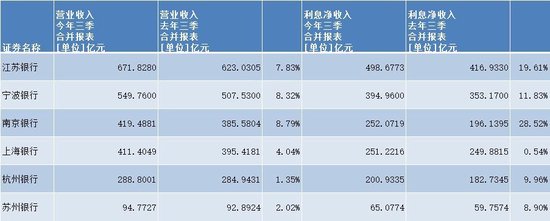
Core Viewpoint - The six A-share listed city commercial banks in the Yangtze River Delta region are demonstrating resilient growth, achieving increases in both revenue and net profit despite the pressure of narrowing interest margins [1][2]. Revenue and Profit Growth - All six city commercial banks reported year-on-year growth in both revenue and net profit for the first three quarters, with five banks achieving profits exceeding 10 billion yuan, except for Suzhou Bank, which is relatively smaller [2]. - Jiangsu Bank led with a revenue of 67.183 billion yuan and a net profit of 30.583 billion yuan, ranking first among A-share city commercial banks [2]. Interest Income Performance - Despite the overall pressure on interest margins, all six banks achieved year-on-year growth in net interest income, with Nanjing Bank and Jiangsu Bank showing significant increases of 28.52% and 19.61%, respectively [3]. - Nanjing Bank attributed its growth in net interest income to increased credit investment and optimized asset allocation strategies, alongside a reduction in deposit costs [3]. Asset Expansion - The six banks are steadily expanding their asset scales, with Jiangsu Bank holding the largest total assets of 4.93 trillion yuan, marking a 24.68% increase from the beginning of the year, the fastest growth among A-share listed banks [6]. - All banks exhibited strong growth in both deposits and loans, with Jiangsu Bank's total deposits reaching 2.54 trillion yuan, a 20.22% increase, and total loans growing by 17.87% to 2.47 trillion yuan [6]. Corporate Lending Growth - Corporate lending has become the main driver of credit expansion for these banks, with significant growth in loans for technology finance, inclusive finance, and green finance [9]. - For instance, Nanjing Bank's corporate loans increased by 14.63%, with notable growth in green finance (33.03%), technology finance (17.47%), and inclusive finance (16.16%) [9]. Asset Quality - The asset quality of the six banks remains stable, with non-performing loan (NPL) ratios either holding steady or declining. Jiangsu Bank's NPL ratio decreased by 0.05 percentage points to 0.84% [10]. - Nanjing Bank's NPL ratio remained stable at 0.83%, reflecting effective risk management and asset disposal strategies [10]. Capital Adequacy - Shanghai Bank reported a high core Tier 1 capital adequacy ratio of 10.52%, up 0.17 percentage points from the beginning of the year, supported by improved profitability and capital management [11]. - Both Hangzhou Bank and Nanjing Bank completed convertible bond conversions, with their core Tier 1 capital ratios rising to 9.64% and 9.54%, respectively [11]. Dividend Distribution - Several banks, including Shanghai Bank and Suzhou Bank, have completed mid-term dividend distributions, with Jiangsu Bank and Ningbo Bank also advancing their mid-term dividend plans [12]. - Hangzhou Bank has consistently increased its cash dividend ratio, with a projected mid-term dividend of 2.755 billion yuan for 2025, reflecting a commitment to enhancing shareholder returns [13].






“票据综合服务平台”正式上线:银行积极参与,票据中介行业或面临结构性冲击
Zhong Guo Jing Ying Bao· 2025-11-25 05:08
Core Insights - The Shanghai Bill Exchange has launched a comprehensive service platform aimed at creating a "one-stop" service system for bill transactions, enhancing efficiency and accessibility for enterprises seeking financing [1][2][3] Group 1: Platform Launch and Initial Impact - On the launch day, 21 financial institutions, including major banks, connected to the platform, facilitating immediate transactions [2] - The platform processed its first bill discounting transaction on the same day, demonstrating its potential to improve financing services for small and medium-sized enterprises [2] - By 4 PM on the launch day, the platform had registered 2,201 users, with 4,581 visits and 13 discount quotes initiated by financial institutions, totaling 211.10 billion yuan in transaction intent [2] Group 2: Features and Benefits of the Platform - The platform integrates key functions such as bill account inquiries, discount inquiries, transaction matching, and information disclosure, addressing traditional market inefficiencies [3][4] - It allows enterprises to view real-time discount rates and inquire with multiple financial institutions online, thus broadening financing channels and reducing transaction costs [3][4] - The platform also supports the development of innovative financial products by providing interfaces for new models, which could accelerate their adoption [4] Group 3: Implications for Banks and Intermediaries - Banks are required to upgrade their systems to integrate with the platform, enhancing their service offerings to include online discounting and automated risk control [5][6] - The platform's transparency may compress profit margins for banks in the bill discounting business, necessitating a reevaluation of pricing strategies [6] - For bill intermediaries, the platform poses a structural challenge as it diminishes their traditional advantage of information asymmetry, compelling them to offer value-added services to retain clients [5][6]




南京银行调整个人积存金业务交易时间,延长至交易日9:30—22:30
Bei Jing Shang Bao· 2025-11-25 02:45
Core Points - Nanjing Bank announced adjustments to its personal accumulation gold business, including extended trading hours, holiday trading arrangements, and updates to the business agreement [1][2] Group 1: Trading Hours - The daily trading hours for the personal accumulation gold business will be extended from December 1, 2025, changing from 9:30 AM - 3:00 PM to 9:30 AM - 10:30 PM [1] - The service hours for physical gold redemption will also be adjusted from 10:00 AM - 3:00 PM to 10:00 AM - 5:00 PM [1] Group 2: Holiday Trading Arrangements - The trading hours during holidays will be clarified, with specific hours set for December 25, 2025, and December 31, 2025, as well as January 5, 2026 [1] - On December 25, 2025, trading will occur from 9:30 AM - 3:00 PM, and on December 31, 2025, from 9:30 AM - 3:00 PM, with trading resuming on January 5, 2026, at 9:30 AM [1] Group 3: Business Agreement Updates - A new version of the personal accumulation gold business agreement will take effect on November 28, 2025, which includes updates on trading hours, risk management mechanisms, trading limits, and gold investment rules [1]
大金融政策和基本面展望
2025-11-25 01:19
Summary of Conference Call Records Industry Overview - The overall recovery of the real estate market is slow, with new home sales showing no significant improvement and low land auction premium rates indicating insufficient market confidence [1][2] - Local government short-term small loan interest subsidy policies have limited effects, and long-term sustainable policy support is crucial [1][2] - The brokerage industry is facing a trend of risk resolution and resource complementarity, but not all mergers will yield immediate results [1][4] Key Points and Arguments Real Estate Market - The targeted reduction of housing burdens aims to alleviate downward pressure on the real estate market, but overall trends remain negative, especially in major cities like Beijing and Shanghai, where home prices have dropped approximately 15% this year [2] - Current local government loan interest subsidy policies are mostly short-term and limited in scope, with examples including a 2% interest subsidy in Wuhan and 1% in other cities, which provide minimal overall impact [2][3] - Long-term, larger and more sustained interest rate reductions would significantly stimulate the market, but current measures are insufficient compared to past direct financial support [2] Brokerage Industry - CICC's merger with two AMCs has positioned it among the top five in net assets, enhancing its brokerage business competitiveness [1][4] - The integration of regional strong brokerages is expected to strengthen CICC's market position, but the short-term stock performance has been weak due to the time required for integration and profitability [4] - The brokerage sector's future direction is heavily influenced by policy, with a focus on stability in the current capital market [4][5] Banking Sector - The retail asset quality in the banking sector is under scrutiny due to fluctuations in housing prices, with rising concerns over mortgage loan asset quality and increasing non-performing loan ratios since 2024 [6] - Major banks, particularly state-owned ones, are experiencing more pronounced fluctuations in non-performing loan ratios due to their higher mortgage loan proportions [6] - A positive outlook for bank stock valuation recovery is anticipated in Q4, with recommendations for quality city commercial banks and state-owned banks based on high dividend logic [7][8] Additional Important Insights - The brokerage sector's configuration value will significantly increase if there is a rebound in valuations to high cost-performance ranges, with companies like CICC and Huatai Securities showing potential for profit recovery [5] - The market's reaction to recent mergers has been muted, indicating that thematic speculation may have reached a saturation point [4] - The core interest income of banks has accelerated growth, particularly among city commercial banks, which is expected to spread to more listed banks next year [8]
AI成核心方向 银行启动博士后招聘
Bei Jing Shang Bao· 2025-11-24 15:58
Core Insights - Multiple banks, including Agricultural Bank of China, Minsheng Bank, Bank of China, and others, have initiated recruitment for postdoctoral researchers for 2026, focusing on strategic research and innovation in the financial sector [1][3][4] - The recruitment emphasizes interdisciplinary backgrounds, particularly in artificial intelligence, big data, and financial technology, reflecting a trend towards integrating technology with traditional finance [5][6] Recruitment Conditions - The recruitment criteria are becoming stricter, with banks favoring candidates with interdisciplinary and practical financial experience, typically requiring a PhD obtained within the last three years or expected graduation by mid-2026 [3][4] - Specific banks, such as Nanjing Bank, have set age limits (under 35) and specified fields of study, including economics, finance, statistics, and computer science, with a preference for candidates with financial industry experience [3][4] Research Focus - The research topics reflect banks' strategic priorities, with a strong emphasis on AI, big models, and financial technology applications, particularly in risk management and customer service optimization [6][7] - Each bank has tailored its research topics to align with industry trends and operational needs, such as Nanjing Bank's focus on digital transformation and Agricultural Bank's exploration of AI-driven management models [6][7] Industry Trends - The recruitment surge is driven by the dual pressures of transformation in the banking sector and the opportunities presented by technological advancements, particularly in AI [7] - Experts suggest that the integration of AI in banking operations is crucial for enhancing efficiency and risk management, which are key demands in the current financial landscape [7] Practical Implications - The focus on practical research outcomes distinguishes banking postdoctoral programs from academic institutions, with banks prioritizing research that addresses real-world business challenges [7] - The emphasis on AI and regulatory compliance in research aims to create a balance between innovation speed and risk control, contributing to a safer and more regulated financial technology ecosystem [7]



地方上市银行高管,频频增持自家银行股份
Xin Lang Cai Jing· 2025-11-24 13:25
Core Viewpoint - Regional banks have seen significant increases in shareholding by executives and institutional investors throughout the year, indicating growing confidence in these financial institutions [1] Group 1: Executive Shareholding Increases - Several regional banks, including Nanjing Bank, Wuxi Bank, Suzhou Bank, Lanzhou Bank, Chengdu Bank, Chongqing Bank, Qingdao Bank, and Xiamen Bank, have reported increases in shareholding by executives and institutional shareholders [1] - Su Nong Bank's management team, including President Wang Liang and Vice Presidents Fei Haibin and Geng Zhi, plans to increase their A-share holdings by no less than 1.8 million yuan within six months starting from November 11, 2025 [1] - Qilu Bank has disclosed that its executives have collectively increased their holdings by approximately 3.15 million yuan, which accounts for 90% of the planned increase amount [1] Group 2: Institutional Shareholding Increases - Qingdao Bank has announced that its shareholder, Qingdao Guoxin Financial Holdings Group Co., Ltd., has recently increased its H-share holdings through the Hong Kong Stock Connect, raising its total shareholding to 15.42%, making it the largest shareholder of the bank [1]
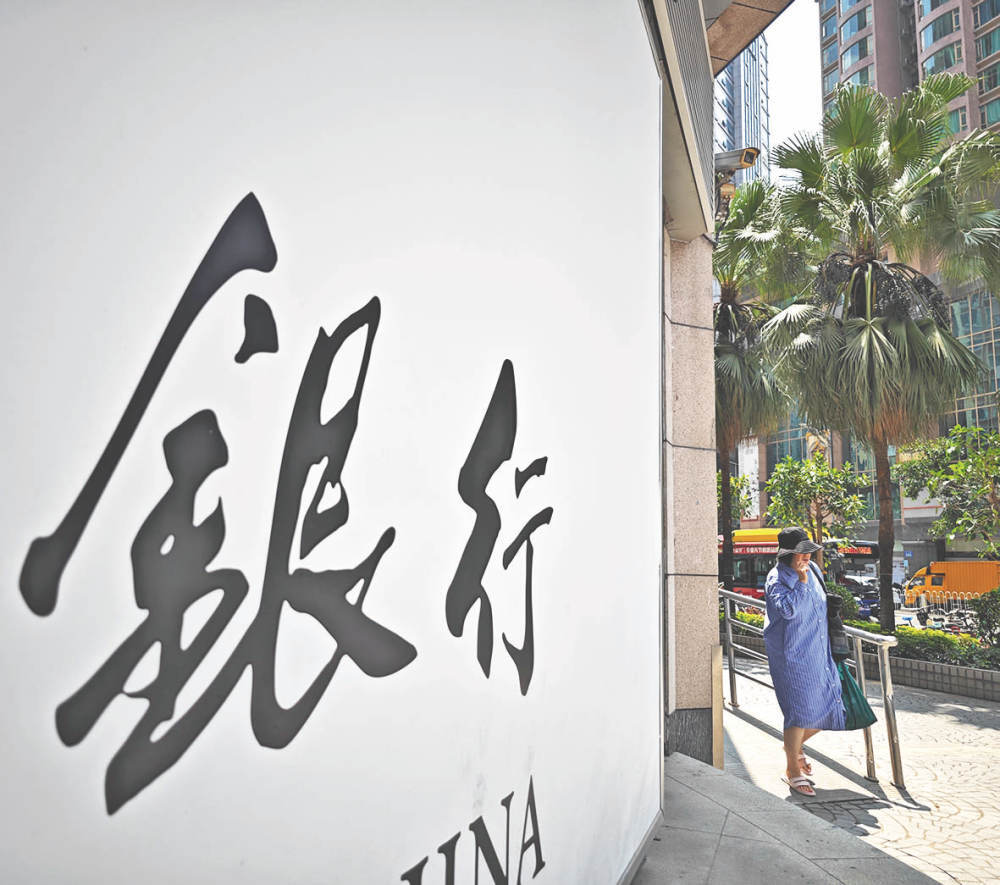
“顺风期”来了!11月6家银行被增持,机构看好配置时机
2 1 Shi Ji Jing Ji Bao Dao· 2025-11-24 13:11
Core Viewpoint - A new wave of shareholder buybacks has emerged among A-share listed banks since November 2025, indicating strong confidence in the banking sector's value and performance [1][3]. Group 1: Shareholder Actions - From November 1 to 24, six listed banks disclosed shareholder or executive buyback activities, with significant purchases from major shareholders in banks like Nanjing Bank and Chengdu Bank [3]. - Notably, Nanjing Bank's largest shareholder, BNP Paribas, increased its stake from 17.02% to 18.06% by acquiring approximately 128.23 million shares, marking its second large-scale buyback this year [6][7]. - Local state-owned enterprises are also actively investing in regional banks, as seen with Chengdu Bank's major shareholders increasing their holdings by 34.24 million shares at a cost of 611 million yuan [7]. Group 2: Market Performance - The banking sector has shown strong performance, with major banks like Bank of China and Industrial and Commercial Bank of China reaching historical highs in stock prices [3]. - Agricultural Bank of China has seen a year-to-date increase of nearly 60%, while several regional banks have also reported gains exceeding 20% [10]. - In November alone, the banking sector's cumulative increase was 2.78%, outperforming other industries, with some banks experiencing significant stock price increases [11]. Group 3: Financial Performance - The overall performance of listed banks has been resilient, with 35 out of 42 banks reporting year-on-year profit growth in the first three quarters of 2025 [9]. - The net interest margin for commercial banks stabilized at 1.42% in Q3 2025, with improvements noted particularly among joint-stock banks and city commercial banks [9]. - The financial stability and positive market actions have created a favorable environment for bank stocks, leading to a revaluation trend [9]. Group 4: Future Outlook - Multiple institutions believe that the banking sector is entering a favorable configuration window, with optimistic expectations for stock performance based on resilient fundamentals and valuation advantages [12]. - The demand for bank stocks is expected to rise due to their defensive attributes, attracting long-term capital from insurance funds and asset management companies [12][13]. - Analysts suggest that the investment logic for 2026 will focus on high dividend yields and defensive characteristics, while also considering the growth potential and long-term value of banks [13].
24家A股银行将现金分红超2600亿元
2 1 Shi Ji Jing Ji Bao Dao· 2025-11-24 12:56
Core Viewpoint - The recent surge in stock prices of major Chinese banks is driven by their mid-term dividend announcements, with a total cash dividend amounting to 2637.90 billion yuan for 2025, indicating significant investment potential in the banking sector [2][4]. Dividend Announcements - As of November 24, 2025, 24 A-share listed banks have disclosed their mid-term dividend plans, with a total cash dividend of 2638 billion yuan [4]. - Notably, seven banks, including Industrial Bank, Changsha Bank, and Ningbo Bank, are implementing mid-term dividends for the first time since their listings [2]. - The six major state-owned banks are expected to distribute over 2046 billion yuan in dividends [5]. Dividend Yield - The average dividend yield for listed banks as of November 24 is 4.48%, with 12 banks yielding over 5% and 26 banks exceeding 4% [6]. - Specific banks like Bank of Communications and China Construction Bank have dividend yields of 4.18% and 3.93%, respectively [6]. Shareholder and Executive Buybacks - There has been a notable increase in share buybacks by major shareholders and executives of listed banks, signaling positive market sentiment [8]. - For instance, Chengdu Bank's major shareholders have collectively bought approximately 34.25 million shares, investing 6.11 billion yuan from August 27 to November 21 [8]. - Nanjing Bank reported that foreign shareholder BNP Paribas increased its stake by over 128 million shares, raising its ownership to 18.06% [9]. Overall Market Sentiment - The banking sector has seen a net increase in holdings exceeding 9 billion yuan, with significant buybacks from shareholders and executives across multiple banks [10]. - The proactive buyback activities reflect confidence in the banks' future strategies and growth prospects, with the banking sector ranking second in shareholder buybacks this year, only behind the transportation sector [10].

24家A股银行将现金分红超2600亿元
21世纪经济报道· 2025-11-24 12:38
Core Viewpoint - The recent surge in stock prices of major banks in China is driven by their mid-term dividend announcements, with a total cash dividend amounting to 2638 billion yuan for 2025, indicating significant value potential in the banking sector [2][3][4]. Dividend Announcements - As of November 24, 2025, 24 A-share listed banks have disclosed their mid-term dividend plans, with a total cash dividend of 2638 billion yuan, including first-time mid-term dividends from seven banks [2][4]. - Notably, Wuxi Bank announced a cash dividend of 0.11 yuan per share, totaling 2.41 billion yuan, with the ex-dividend date on November 25, 2025 [4]. - Hangzhou Bank plans to distribute a cash dividend of 0.38 yuan per share, amounting to 27.55 billion yuan, reflecting a 24.10% increase from the previous year [4]. Dividend Yields - The average dividend yield for listed banks as of November 24 is 4.48%, with 12 banks yielding over 5% and 26 banks over 4% [5]. - Major banks like Bank of Communications and Agricultural Bank of China have lower yields, ranging from 3% to 4.18% [5]. Shareholder and Executive Buybacks - There has been a notable increase in share buybacks by major shareholders and executives, signaling positive market sentiment [7][8]. - For instance, Chengdu Bank's major shareholders increased their holdings by approximately 34.24 million shares, investing 611 million yuan [7]. - The banking sector has seen a total of 126.30 billion yuan in buybacks this year, ranking second among industry sectors [8]. Market Performance and Outlook - The banking sector has experienced a net increase in holdings exceeding 90 billion yuan, with significant support for stock prices from shareholder buybacks [6][9]. - Analysts suggest that the upcoming long-term capital allocation period at year-end will further enhance the market performance of bank stocks [9].




多家银行启动2026年博士后研究人员招聘,AI、金融科技成核心方向
Bei Jing Shang Bao· 2025-11-24 11:10
Core Insights - Several banks, including Agricultural Bank of China, Minsheng Bank, Bank of China, and others, have initiated recruitment for postdoctoral researchers for 2026, focusing on strategic research and innovation in the financial sector [1][3][4] - The recruitment emphasizes interdisciplinary backgrounds, particularly in artificial intelligence, big models, and financial technology, reflecting a trend towards integrating technology with traditional finance [5][6] Recruitment Conditions - The recruitment criteria have become stricter, with banks favoring candidates with interdisciplinary and practical financial experience [3][4] - Specific requirements include a PhD obtained within the last three years or expected graduation by July 2026, with an age limit of 35 years [3][4] - Preferred fields of study include economics, finance, statistics, applied mathematics, computer science, big data, and artificial intelligence, with a strong emphasis on research capability and dedication [3][4] Research Focus - The research topics set by banks highlight their strategic priorities, with a strong focus on AI, big models, and financial technology applications [6][7] - Examples of research topics include "AI Empowering Digital Transformation of Commercial Banks" and "Application of AI and Big Model Technology in Risk Management," indicating a direct response to industry needs [6][7] Industry Trends - The recruitment surge is driven by the dual pressures of transformation in the banking sector and technological opportunities, with banks seeking to enhance core competitiveness through technology [7][8] - AI technologies are seen as crucial for improving operational efficiency and risk management, which are key demands in the current banking landscape [7][8] - The focus on practical research outcomes distinguishes bank postdoctoral programs from academic institutions, emphasizing the need for research that addresses real business challenges [7][8]