
罗氏

Search documents
Halozyme(HALO) - 2025 Q2 - Earnings Call Transcript
2025-08-05 21:30
Financial Data and Key Metrics Changes - Total revenue for Q2 2025 was $326 million, representing a 41% increase year-over-year [5][35] - Royalty revenue grew 65% year-over-year to $206 million, driven by strong performance from established therapies [6][37] - Adjusted EBITDA increased 65% to $226 million compared to $137 million in the prior year [6][39] - Full-year revenue guidance for 2025 was raised to $1.275 billion to $1.355 billion, reflecting 26% to 33% growth over 2024 [6][41] Business Line Data and Key Metrics Changes - The three established blockbuster therapies driving growth are Darzalex subcutaneous, FSGO, and Vyvgart Hytrulo [5][10] - Darzalex revenue increased almost 22% to $3.5 billion in Q2 2025, with a 96% conversion rate to subcutaneous delivery in the U.S. [12][13] - FSGO revenue for the first half of 2025 was approximately $1.5 billion, reflecting a 55% year-over-year growth [16] - Vyvgart Hytrulo sales increased 97% year-over-year to $949 million in Q2 2025 [18] Market Data and Key Metrics Changes - The U.S. market for Darzalex subcutaneous is projected to continue strong growth due to increased penetration in frontline settings [12][13] - The total addressable market for generalized myasthenia gravis in the U.S. is now estimated at 60,000 patients, significantly higher than initial estimates [19] - Analysts project total brand sales for Ocrevus to reach $10 billion by 2028, with Halozyme earning royalties on the subcutaneous formulation [24] Company Strategy and Development Direction - The company is focusing on identifying new drug delivery platforms that can generate long-term revenue streams through royalties [7] - There is an emphasis on expanding the use of subcutaneous delivery systems to improve patient access and convenience [10][19] - The company is actively pursuing M&A opportunities while maintaining a disciplined approach to leverage [7][36] Management's Comments on Operating Environment and Future Outlook - Management expressed confidence in the durability of revenue streams and the potential for continued growth driven by multiple catalysts [43] - The company is optimistic about the regulatory environment and believes it will prevail in ongoing litigation with Merck [52] - Management highlighted the importance of the IRA and ongoing discussions with CMS regarding the impact on their products [55] Other Important Information - The company completed a $250 million share repurchase in Q2 2025 and initiated a third tranche under a $750 million plan [7][36] - The company maintains a strong balance sheet with cash and marketable securities of $548.2 million as of June 30, 2025 [40] Q&A Session Summary Question: Status of IP litigation with Merck - The company is suing Merck for infringing 15 of its patents and expects to receive a scheduling order from the court in the coming months [46][48] Question: Confidence in regulatory front - Management is confident that there will be no impactful changes from CMS regarding the IRA and has submitted arguments to support this [55][56] Question: Guidance setting process - The company uses trends and inputs from partners to set guidance, with a focus on the latest data points [58][59] Question: Interest in high-volume auto injectors - There is strong interest from multiple companies in the high-volume auto injectors, with ongoing discussions at various stages [69][70] Question: Long-term guidance updates - The company updates long-term guidance annually, with more information expected at the start of the next year [66]

39%关税逼急了,瑞士总统“不请自来”紧急飞美国,专家建议"送块金表"
Hua Er Jie Jian Wen· 2025-08-05 20:57
Core Points - Swiss President Karin Keller-Sutter urgently traveled to Washington to negotiate with the Trump administration to reduce the recently announced 39% tariff on Swiss goods [1] - The U.S. President Trump emphasized the significant trade deficit between the U.S. and Switzerland, particularly highlighting the wealth generated by the Swiss pharmaceutical industry [1] - The Swiss government is under pressure to respond to the tariffs, with potential negotiation focuses including gold, agriculture, aircraft, pharmaceuticals, and energy [2] Trade Negotiation Challenges - Keller-Sutter and Economic Minister Guy Parmelin face political risks in making concessions, which may not effectively address Trump's criticisms regarding the trade deficit [3] - Agriculture is the only sector where Switzerland retains tariffs, and any concessions in this area could provoke backlash from farmers [3] - The trade deficit in gold is significant, with two-thirds of the deficit in the first quarter attributed to gold bar transportation [3] Strategic Recommendations - Former Swiss diplomat Thomas Borer suggested purchasing oil, weapons, and liquefied natural gas, and making concessions in agriculture while pressuring Swiss pharmaceutical companies to lower prices [4] - Switzerland is currently negotiating the purchase of 36 F-35 fighter jets from Lockheed Martin, but there are disagreements over the contract price [4] - Trade policy researcher Stefan Legge proposed creative approaches, such as symbolic gifts to Trump, to improve diplomatic relations [5]
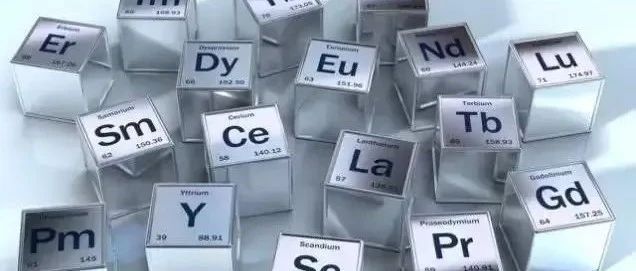
作为磁性材料“大国”,为何存在磁性材料“卡脖子”问题?
材料汇· 2025-08-05 16:05
Group 1: Permanent Magnetic Materials - The production of permanent magnetic materials in China reached approximately 130 million tons in 2021, including 800,000 tons of ferrite permanent magnets and 213,300 tons of rare earth permanent magnets [36][2] - Ferrite permanent magnets dominate the market due to their low cost and corrosion resistance, accounting for over 60% of global production [6][39] - Rare earth permanent magnets, particularly neodymium-iron-boron (Nd-Fe-B), are critical for high-performance applications in electric vehicles and renewable energy sectors, with demand expected to increase fivefold by 2025 compared to 2020 levels [66][65] Group 2: Market Dynamics and Trends - The demand for ferrite permanent magnets in the automotive sector is projected to reach 614,000 tons by 2025, driven by the growth of electric vehicles [45] - In the home appliance sector, the demand for ferrite permanent magnets is expected to reach 201,000 tons by 2025, with variable frequency air conditioners leading the demand [45] - The global market for soft magnetic materials is anticipated to grow from $13.2 billion in 2020 to $18.1 billion by 2025, reflecting a compound annual growth rate (CAGR) of 8% [14][32] Group 3: Technological Barriers and Challenges - High-end technologies for rare earth permanent magnets, such as grain boundary diffusion and thermal pressing, are currently monopolized by companies in the US and Japan, posing a challenge for domestic manufacturers [28][32] - The production of high-performance ferrite magnets in China is still in the developmental stage, with a significant reliance on imports for advanced products [41][46] - The industry faces challenges related to resource security, particularly concerning the price volatility of heavy rare earth elements like neodymium and dysprosium [28][32] Group 4: Future Development Directions - The focus for ferrite permanent magnets will be on developing rare earth-doped and cobalt-free technologies, aiming for thinner and higher precision products [8][46] - For rare earth permanent magnets, the goal is to achieve a domestic production rate of 70% for high-end products by 2025 and 80% by 2030 [12][71] - The industry is expected to see significant advancements in the development of high-performance magnetic materials for applications in robotics, aerospace, and electric vehicles [72][74]





Recursion(RXRX) - 2025 Q2 - Earnings Call Transcript
2025-08-05 13:02
Financial Data and Key Metrics Changes - The company ended the quarter with a strong cash balance of $533 million, reflecting effective expense management and cash inflows from partnerships and tax credits [43][44]. - The expected cash burn for 2026 is projected to be 35% less than previous estimates, demonstrating a commitment to operational efficiency [44]. Business Line Data and Key Metrics Changes - The company is advancing a pipeline of internal programs in oncology and rare diseases, alongside collaborations with partners like Roche, Sanofi, Bayer, and Merck KGA [8][12]. - The ClinTech platform is being deployed across all programs, enhancing patient stratification and trial execution, with potential for 50% faster enrollment at high-quality sites [6][7]. Market Data and Key Metrics Changes - The company is leveraging proprietary datasets and AI to enhance drug discovery and clinical trial design, which is expected to improve the quality and speed of bringing medicines to market [9][12]. - The partnership with Sanofi has achieved multiple milestones, indicating strong collaboration in challenging therapeutic areas [40][68]. Company Strategy and Development Direction - The company is focused on building a comprehensive drug discovery platform, integrating various data layers to enhance the probability of success in drug development [47][81]. - The Recursion OS 2.0 platform aims to bring unique biological insights and new targets to the clinic, emphasizing high-quality programs that address unmet medical needs [47][48]. Management's Comments on Operating Environment and Future Outlook - Management expressed optimism about the future, highlighting a catalyst-packed calendar with multiple readouts expected in the coming quarters [48]. - The company is committed to maintaining high standards of quality while advancing its innovative platforms and partnerships [46][47]. Other Important Information - The company has made significant advancements in AI-driven drug design and patient connectivity, which are expected to enhance the efficiency of clinical trials [17][19]. - The integration of the ClinTech platform is anticipated to streamline operations and improve patient outcomes in clinical trials [6][7]. Q&A Session Summary Question: Is Bolts 2 the initiative with a major partner on foundational protein structure modeling? - Yes, Bolts 2 is the partnership mentioned earlier, aimed at enhancing protein structure modeling [49]. Question: Why open source versus keeping it internal? - The company believes in commoditizing certain technologies to foster collaboration while retaining proprietary tools that provide a competitive advantage [50]. Question: What standard of care is allowed in the CDK7 combo expansion cohort in ovarian cancer? - The standard of care will include single-agent chemotherapy plus Bevacizumab, with median progression-free survival (PFS) around 6.7 months [53]. Question: Will multiomic profiling dictate patient enrollment in future studies for RBM 39? - Yes, the multiomic approach will help identify relevant patient populations for enrollment based on biological insights [56][58]. Question: What is the differentiation of RBM 39 compared to other CDK targeting assets? - RBM 39 is not a kinase and offers selectivity advantages over similar targets like CDK 12 and CDK 13, which have challenges in selectivity [62][63]. Question: What is the threshold for success in the upcoming FAP data readout? - The company is looking for meaningful improvement in polyp burden reduction compared to existing off-label therapies [65]. Question: Can you provide details on the $7 million milestone achieved under the Sanofi collaboration? - The milestone was achieved for a challenging target in the immunology space, reflecting progress in the partnership [68].

Recursion(RXRX) - 2025 Q2 - Earnings Call Transcript
2025-08-05 13:00
Financial Data and Key Metrics Changes - The company ended the quarter with a strong cash balance of $533 million, reflecting effective expense management and cash inflows from partnerships and tax credits [42][43] - Expected cash burn in 2026 is projected to be 35% less than the previous year, demonstrating a commitment to operational efficiency [43] Business Line Data and Key Metrics Changes - The company is advancing a pipeline of internal programs in oncology and rare diseases, alongside collaborations with partners like Roche, Sanofi, Bayer, and Merck KGA [7][39] - The ClinTech platform is being deployed across all programs, enhancing patient stratification and trial execution, with projections for 50% faster enrollment at high-quality sites [6][7] Market Data and Key Metrics Changes - The company is leveraging proprietary datasets and AI to enhance drug discovery and development, with significant advancements in partnerships and internal programs [11][39] - The partnership with Sanofi achieved its fourth milestone, indicating progress in challenging targets within immunology and oncology [39] Company Strategy and Development Direction - The focus is on building a comprehensive drug discovery platform, Recursion OS 2.0, integrating various data sources and technologies to improve the efficiency and success rate of drug development [46][47] - The company aims to bring unique biological insights and new targets to the clinic faster and at lower costs, emphasizing the importance of high-quality programs [8][47] Management's Comments on Operating Environment and Future Outlook - Management expressed optimism about the future, highlighting a catalyst-packed calendar with multiple readouts expected in the coming quarters [48] - The company is committed to maintaining a high bar for quality while exploring innovative approaches to drug discovery and development [46][47] Other Important Information - The company is actively working on a virtual cell model to predict cellular responses to various interventions, which could significantly enhance drug discovery efforts [78][80] - The integration of AI and multiomic data is central to the company's strategy, allowing for more precise patient targeting and drug design [16][57] Q&A Session Summary Question: Is Bolts two the initiative with a major partner on foundational protein structure modeling? - Yes, Bolts two is the partnership mentioned earlier, aimed at enhancing protein structure modeling [49] Question: Why open source versus keeping it internal? - The company believes in commoditizing certain technologies while retaining proprietary tools that provide a competitive advantage [50] Question: For the CDK7 combo expansion cohort in ovarian cancer, what standard of care are you allowing in the trial? - The standard of care will include single-agent chemotherapy plus Bevacizumab, with a median PFS of about 6.7 months [52][53] Question: Do you expect the data from multiomic profiling for RBM 39 to dictate future patient enrollment? - Yes, the data will help select patients for future studies, focusing on those with specific biomarkers [55][57] Question: What is the differentiation of RBM 39 compared to other CDK targeting assets? - RBM 39 is not a kinase and offers selectivity advantages over similar targets like CDK 12 and CDK 13 [61] Question: What visibility do you have on the potential $100 million in milestones by 2026? - The guidance is based on existing partnerships and programs, with probability-weighted estimates for milestone achievements [70][71] Question: How does the company plan to achieve its cash runway guidance through Q4 2027? - The company is focused on cash flows, managing expenses efficiently, and executing existing partnerships to ensure a sustainable cash runway [72][75] Question: What ambitious initiatives are being planned to reflect the next level of thinking? - The company is investing in large-scale compute initiatives and developing a virtual cell model to enhance drug discovery capabilities [78][80]
300亿元生物类似药市场迎变
21世纪经济报道· 2025-08-05 12:41
Core Viewpoint - The article discusses the extension of centralized procurement to biosimilars in China, highlighting the implications for market dynamics and pricing strategies in the pharmaceutical industry [4][6]. Group 1: Centralized Procurement of Biosimilars - The Anhui Provincial Medical Procurement Platform has initiated information reporting for eight monoclonal antibody products, marking the beginning of centralized procurement for biosimilars [4]. - Biosimilars are large molecule biological products that are similar in quality, safety, and efficacy to already approved reference drugs, and their development is typically more costly and time-consuming than small molecule drugs [4][8]. - The centralized procurement process for biosimilars is expected to take longer than previous chemical drug procurements due to the need for comprehensive data collection and rule formulation [6]. Group 2: Market Impact and Dynamics - The total sales of the eight involved biosimilar products are projected to approach 30 billion yuan in 2024, with specific products like Bevacizumab exceeding 10 billion yuan in sales [9]. - The article emphasizes that the centralized procurement of biosimilars will not drastically disrupt existing market structures but will lead to adjustments within the current competitive landscape [9][10]. - The involvement of multiple companies in the production of these biosimilars indicates a competitive environment, with several products having three or more approved manufacturers [8][9]. Group 3: Characteristics of Biosimilar Procurement - Compared to chemical drug procurement, biosimilar procurement is characterized by smaller price reductions, comprehensive reporting requirements, and a focus on high-quality products [13][14]. - The procurement process aims to clarify market demand and supply, allowing companies to better predict future business conditions and adjust their product pipelines accordingly [6][10]. - The article suggests that the pricing adjustments in biosimilar procurement will be more moderate than those seen in previous chemical drug procurements, reflecting the unique nature of biological products [14][15].

生物类似药集采即将开启,300亿元市场迎变
2 1 Shi Ji Jing Ji Bao Dao· 2025-08-05 11:10
Core Viewpoint - The introduction of centralized procurement for biosimilars in China marks a significant shift in the pharmaceutical industry, aiming to enhance drug accessibility and affordability while maintaining quality standards [1][3][6]. Group 1: Centralized Procurement Overview - The centralized procurement initiative has officially extended to biosimilars, with the Anhui Provincial Medical Procurement Platform issuing a notification for companies to report pricing, sales volume, and production capacity for specific monoclonal antibody products [1][3]. - This marks the first instance of centralized procurement for biosimilars in mainland China, with expectations for a longer timeline for information organization and rule formulation compared to previous chemical drug procurements [1][2]. Group 2: Market Impact and Dynamics - The market for the eight involved biosimilar products is projected to reach nearly 30 billion yuan, with specific products like Bevacizumab exceeding 10 billion yuan in sales [4][6]. - The competitive landscape is expected to be influenced but not drastically altered, as the procurement process aims to provide a clearer understanding of market volumes and guide companies in their operational strategies [2][4]. Group 3: Characteristics of Biosimilar Procurement - Compared to chemical drug procurement, biosimilar procurement is characterized by smaller price reductions, comprehensive reporting requirements, and a focus on high-quality products [7][8]. - The procurement process emphasizes a data-driven approach, requiring companies to report detailed sales figures and product specifications to ensure a thorough understanding of the market [7][9]. Group 4: Future Expectations - The impact of the biosimilar procurement is anticipated to manifest in the performance of related companies and product sales starting from 2026, with ongoing adjustments to market dynamics expected [1][2]. - The overall goal of the procurement initiative is to optimize resource allocation in the pharmaceutical market while ensuring that patient interests remain a priority [5][9].
股价腰斩,跌落神坛的诺和诺德错在哪一步?
Hu Xiu· 2025-08-05 05:52
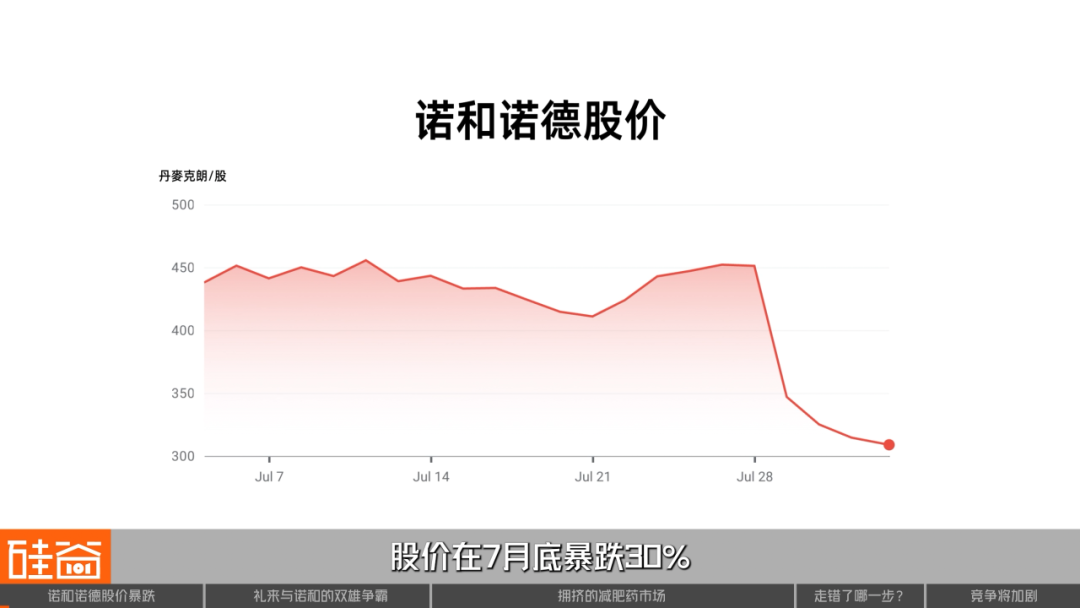
Core Viewpoint - Novo Nordisk, once a leader in the weight loss drug market, is facing significant challenges due to increased competition and has drastically lowered its sales and profit forecasts, nearly halving its expectations [5][9][60]. Group 1: Market Dynamics - The weight loss drug market, estimated to be worth hundreds of billions, is becoming increasingly competitive, with new players entering and existing competitors like Eli Lilly gaining market share [4][12]. - Novo Nordisk has reduced its sales growth forecast from 13%-21% to 8%-14% and its operating profit growth from 16%-24% to 10%-16%, indicating a severe downturn [5][60]. - The emergence of compounding pharmacies has allowed for the sale of cheaper alternatives to Novo Nordisk's products, capturing a significant market share estimated between 5% to 20% [45][48]. Group 2: Competitive Landscape - Eli Lilly's dual-target drug, tirzepatide, has shown superior clinical results compared to Novo Nordisk's semaglutide, leading to a shift in physician preference towards Lilly's products [8][30]. - The prescription volume for Lilly's Mounjaro has surpassed that of Novo Nordisk's Ozempic, indicating a loss of market share for Novo Nordisk [25][30]. - Analysts note that Novo Nordisk is losing market share to Eli Lilly, with some physicians completely switching to prescribing Mounjaro instead of Wegovy [30]. Group 3: Strategic Missteps - Novo Nordisk underestimated market demand for Wegovy, leading to supply shortages and a subsequent inability to meet the growing demand, which allowed competitors to capitalize on the situation [54][57]. - The company faced a public fallout with Hims & Hers, a telehealth company, which resulted in a failed partnership aimed at promoting Wegovy, further complicating its market position [52][60]. - The appointment of a new CEO, who lacks direct experience in the competitive U.S. market, raises questions about Novo Nordisk's ability to navigate its current challenges [68].


亚盛医药20250730
2025-08-05 03:20
Summary of Ascentage Pharma's Conference Call Company Overview - **Company**: Ascentage Pharma - **Key Products**: Lisatoclax (2,575) and Olverembatinib (Aurebatinib) Industry Insights - **Market Focus**: Hematological malignancies, specifically targeting CLL (Chronic Lymphocytic Leukemia), MDS (Myelodysplastic Syndromes), and MM (Multiple Myeloma) [2][6] - **Competitive Landscape**: The market for BCL-2 inhibitors is competitive, with Lisatoclax being the second BCL-2 inhibitor globally approved, following Venetoclax [19] Core Points and Arguments - **Lisatoclax Development**: - Submitted for CLL indication in China and plans to expand into MDS and MM, which have less competition [2][6] - Expected to leverage safety advantages to capture market share [2] - Clinical trial data presented at ASCO 2025 showed an ORR of 83.3% in AML patients and 43% in difficult-to-treat AML patients [23] - **Olverembatinib Performance**: - Achieved sales of 241 million RMB in 2024, with expectations to double in 2025 [3] - Positioned as a third-generation TKI targeting T315I resistant patients, showing significant safety advantages over competitors [11][15] - **Collaboration with Takeda**: - A $1.3 billion licensing agreement was reached, with Takeda expected to exercise options post-2026 [5] - This partnership indicates recognition of Chinese-developed drugs by international firms [5] - **Research and Development Focus**: - Future R&D investments will prioritize overseas registration and domestic indication expansions for Lisatoclax [4] - Cash flow is projected to support these initiatives [4] Additional Important Insights - **Market Potential**: - Lisatoclax's peak sales potential is estimated between $3 billion to $4 billion globally [19] - Olverembatinib's peak sales in overseas markets could reach $2 billion to $3 billion, with domestic sales expected to approach 2 billion RMB [18] - **Competitive Advantages**: - Lisatoclax offers better safety and faster dose escalation compared to Venetoclax, enhancing patient compliance [19] - The strategic approach of entering the market with a cautious clinical trial design allows for quicker market capture [22] - **Management and Shareholder Structure**: - Led by Dr. Yang Dajun, with a strong management team experienced in drug development [7] - Takeda is a significant shareholder, reflecting confidence in Ascentage's capabilities [8] - **Future Outlook**: - Plans to expand into ALL (Acute Lymphoblastic Leukemia) with Philadelphia chromosome-positive patients, which could significantly boost sales [14] - The company is also exploring new product pipelines targeting solid tumors and hematological malignancies [9] This summary encapsulates the key insights from Ascentage Pharma's conference call, highlighting the company's strategic direction, product performance, and market opportunities.
开源证券:早期数据具备优异竞争力 Amylin分子布局正当时
智通财经网· 2025-08-05 02:28
Core Insights - The report from Open Source Securities highlights the significant investments by leading companies in the amylin molecule space, indicating a competitive landscape with promising early data on safety and weight loss efficacy [1][2] Group 1: Industry Developments - Major pharmaceutical companies like AbbVie and Roche are making substantial investments in amylin molecules, with AbbVie paying an upfront fee of $350 million and potential milestone payments of up to $1.875 billion for Gubra's amylin molecule [1] - Roche has entered a collaboration with Zealand Pharmaceuticals for the development of petrelintide, committing an upfront payment of $1.65 billion and milestone payments of up to $3.6 billion, sharing profits in the US and Europe [1] - Eli Lilly is also expanding its amylin-related molecule portfolio, including a new dual agonist DACRA molecule with a potential payment structure similar to its previous deals [1] Group 2: Product Performance - Early data for amylin single-agent therapies show excellent safety profiles and significant weight loss, with Eli Lilly's Eloralintide demonstrating a maximum weight loss of 11.3% at 12 weeks [2] - The gastrointestinal safety profile of Eloralintide is impressive, with adverse events like diarrhea, nausea, and vomiting occurring in less than 10% of patients [2] - Several amylin molecules in development have half-lives ranging from 10 to 19 days, supporting the potential for monthly dosing regimens [2] Group 3: Future Catalysts - The next 6-12 months are expected to be rich in data readouts for amylin pipelines, with major companies like Roche, Eli Lilly, and AstraZeneca set to release phase 2 trial data [3] - Novo Nordisk is anticipated to present phase 1 data for two new amylin molecules, while other companies like AbbVie/Gubra and Metsera are expected to provide 12-week data [3] - Companies such as Viking, Structure, and Jiuyuan Gene are recommended for monitoring due to their clinical trial progress in the amylin space [3]

