Canva

Search documents
海外消费行业年度投资策略:2025扩品类、卡位全球,2026深度经营、品质、心智决胜
KAIYUAN SECURITIES· 2025-11-07 01:42
Group 1: Market Overview - The consumer service, retail, and media sectors in Hong Kong have shown significant performance, with the consumer service sector down by 17.34%, retail up by 94.61%, and media up by 50.98% as of October 24, 2025 [13][10][12] - The strong valuation recovery in Hong Kong stocks is attributed to a combination of global interest rate cuts, inflows of foreign and southbound capital, and the revaluation of core internet assets like Tencent and Alibaba [13][10] - The new consumption leaders in IP toys, tea drinks, and beauty sectors are showing positive fundamentals, leading to structural market trends [13][10] Group 2: IP Economy - The global licensed consumer goods market is projected to reach $307.9 billion in 2024, with a year-on-year growth of 10% [28] - Fashion apparel is identified as the category with the highest growth potential at 70%, followed by toys at 54% and food and beverages at 52% [31] - Disney, Pokémon, and Sanrio are leading in licensed retail sales, with Disney achieving $62 billion in 2024 [29][31] Group 3: Health and Wellness - The ready-to-drink beverage segment is expected to see significant penetration growth globally, with companies like Mixue Group and Guming benefiting from a positive operational cycle [4] - The return of home-cooked meals and increased health awareness are driving demand for traditional and healthy food options [4] Group 4: Beauty Sector - The cosmetics sector in China is experiencing slower growth compared to overall retail, with Douyin (TikTok) emerging as a key player in marketing and sales [4] - New ingredients and concepts are gaining traction, with a rise in oral beauty and health products [4] Group 5: Globalization Trends - The demand for spiritual entertainment in the Middle East is surging, with companies like Red Child City Technology seeing over 60% of their revenue from this region [4] - The cross-border e-commerce landscape is expanding, with companies like J&T Express capitalizing on the growth in Southeast Asia, where parcel volumes increased by 79% year-on-year [4] Group 6: Consumer Behavior Changes - The shift in consumer behavior towards more personalized and experiential consumption is evident, with a focus on self-fulfillment and value realization [4] - The education sector is adapting to changing perceptions, with new products targeting high school and college graduates to address employment challenges [4] Group 7: Entertainment and Leisure - The live music and sports sectors are expected to outperform the broader service consumption market, with companies like Ctrip and Damai Entertainment positioned to benefit [4] - The domestic concert market is maintaining high growth, with ticket sales and attendance showing significant year-on-year increases [73]




OpenAI 官宣全球企业客户突破100万
Huan Qiu Wang Zi Xun· 2025-11-06 05:41
Core Insights - OpenAI has surpassed 1 million enterprise customers, making it the fastest-growing enterprise platform in history [1] - The rapid growth of enterprise customers is attributed to the widespread acceptance of the consumer market, with over 800 million weekly active users of ChatGPT [3] Group 1: Customer Growth - The number of ChatGPT for Work seats has increased by 40% in just two months, exceeding 7 million [3] - ChatGPT Enterprise seats have seen an annual growth rate of 9 times [3] Group 2: New Tools and Features - OpenAI has launched several new tools and integration features to support enterprise customers transitioning from trial to full deployment [4] - The company knowledge feature, based on the optimized GPT-5 version, allows for collaborative reasoning across tools like Slack, SharePoint, and Google Drive [4] - The Codex model for code generation has seen a tenfold increase in usage since August, with companies like Cisco reducing code review time by 50% [4] Group 3: AgentKit and Multi-Modal Models - The AgentKit tool has lowered the barriers for building and deploying enterprise agents, reducing the time to turn ideas into applications from months to days [4] - The multi-modal model upgrade has expanded business process applications, enabling teams to handle text, image, video, and audio data within the same system [4] Group 4: Business Integration - Companies such as Canva, Figma, Zillow, and Spotify have integrated applications directly with ChatGPT [5] - Retailers like Shopify, Etsy, Walmart, and PayPal are leveraging ChatGPT's agent-based commerce protocol to create new shopping experiences [5]

Stack Capital Group Inc. Reports Q3-2025 Financial Results
Globenewswire· 2025-11-05 12:45
Core Insights - Stack Capital Group Inc. reported its financial results for Q3 2025, highlighting a strong capital position and ongoing investments in high-growth technology companies [1][2]. Financial Summary - Book Value per Share ("BVpS") was $14.26 as of September 30, 2025, down from $14.34 at June 30, 2025 [4]. - Total Book Value reached $188.7 million [4]. - The company raised $35 million through a private placement during the quarter [4]. Portfolio Company Highlights - Stack Capital made significant investments in technology companies, including: - OpenAI: Invested US$8.0 million, focusing on generative AI and enterprise AI deployment [3]. - Databricks: Invested US$2.1 million in a unified cloud-based platform for data and AI workloads [9]. - PsiQuantum: Invested US$0.5 million in developing a silicon photonic quantum computer [9]. - Valuation of SpaceX increased from US$350 billion to US$400 billion during the quarter [4]. - Canva's valuation rose from US$32 billion to US$42 billion [4]. Management Commentary - The CEO of Stack Capital noted a robust IPO environment and strong momentum in private markets, particularly in AI, defense, and robotics, indicating attractive investment opportunities [5]. Breakdown of Book Value per Share - The detailed breakdown of Book Value per Share as of September 30, 2025, includes: - CoreWeave, Inc. (AI hyper-scaler): $2.37 - SpaceX: $2.28 - Canva, Inc.: $1.30 - Other notable investments include Locus Robotics, Omio, Hopper, and OpenAI, contributing to the overall Book Value per Share of $14.26 [5][6].

SuRo Capital(SSSS) - 2025 Q3 - Earnings Call Transcript
2025-11-04 23:00
Financial Data and Key Metrics Changes - As of September 30, 2025, the net asset value (NAV) was $9.23 per share, an increase from $9.18 per share on June 30, and $8.93 on a dividend-adjusted basis, compared to $6.73 per share at the end of Q3 2024 [5][27][28] - The increase in NAV per share was primarily driven by a $0.23 increase from net unrealized appreciation, a $0.21 increase from net realized gains, and a $0.03 increase from stock-based compensation, offset by a $0.25 decrease due to cash dividends and other factors [28][29] Business Line Data and Key Metrics Changes - CoreWeave has emerged as a leading infrastructure provider, with significant demand for GPU and long-term contracts totaling approximately $22 billion with OpenAI [13] - Whoop continues to perform well, with a fair value approaching $30 million, reflecting strong financial performance and active trading in secondary markets [37] - Canva reported approximately $3.3 billion in annual recurring revenue and over 240 million monthly active subscribers, indicating strong growth potential [17] Market Data and Key Metrics Changes - The AI infrastructure market is experiencing rapid growth, with projections indicating that AI workload growth will outpace traditional cloud capacity [13] - Hyperliquid, a decentralized exchange, has gained traction, particularly after its token listing on Robinhood, indicating growing institutional interest [15][16] Company Strategy and Development Direction - The company has focused on AI infrastructure, making cornerstone investments in companies like CoreWeave, OpenAI, and Vast Data, which are seen as enablers of the AI economy [6][9] - The strategy includes early investments in foundational technologies and maintaining a conviction-driven approach to capitalize on transformative growth opportunities [20] Management's Comments on Operating Environment and Future Outlook - Management expressed confidence in the ongoing AI revolution, describing it as still in its early stages, with significant opportunities ahead [20] - The company anticipates continued investor interest in its portfolio as a differentiated way to gain exposure to AI infrastructure [11] Other Important Information - The board declared a $0.25 per share cash dividend, reflecting confidence in the portfolio's strength and liquidity position [19][32] - The company has extended its share repurchase program, allowing for opportunistic buybacks to enhance shareholder value [31] Q&A Session Summary Question: What is the remaining fair value on CoreWeave and the timeline for monetizing the rest? - The fair value of the investment in CoreWeave as of September 30 is about $37 million, with monetization tracked through Form 4 filings [37][38] Question: What is driving Whoop's strong outperformance and potential IPO? - Whoop's strong performance is attributed to active trading and improved financial metrics, but the timeline for an IPO is uncertain [37][38] Question: How will the portfolio be managed as CoreWeave is sold down? - The company plans to maintain significant AI exposure and continue investing in AI infrastructure and cybersecurity [39][40]

海通国际证券电子日报-20251103
Haitong Securities International· 2025-11-03 11:04
Investment Rating - The report does not explicitly state an investment rating for the industry or specific companies Core Insights - NVIDIA has announced the launch of NVQLink, a new architecture that connects quantum systems with classical computing systems, marking the beginning of the "quantum GPU computing era" [1][15] - The competition between NVIDIA and AMD has extended into the quantum computing domain, with NVIDIA collaborating with around 17 companies to develop NVQLink, while AMD has partnered with IBM to demonstrate quantum error correction on FPGA chips [2][16] - Nokia has re-emerged as a key player in the AI race due to NVIDIA's strategic investment, highlighting the importance of networking alongside computing power in building next-generation AI infrastructure [3][17][18] - Apple reported that iPhone 17 sales exceeded expectations, with strong momentum expected to continue into the next fiscal quarter, particularly in the Chinese market [4][19][20] - Chinese automakers, including BYD and XPeng, are rapidly deploying AI robots in manufacturing, focusing on enhancing production speed and efficiency to gain market share [7][21][22] - Hesai Technology has launched a low-cost LiDAR priced at $200, challenging the notion that reliance on LiDAR is doomed, and aims to make it a standard feature in vehicles [8][23][24] Summary by Sections Quantum Computing - NVIDIA's NVQLink architecture aims to interconnect quantum and classical computing systems, representing a significant advancement in quantum GPU computing [1][15] - AMD's collaboration with IBM has successfully demonstrated quantum error correction on FPGA chips, showcasing competitive advancements in the quantum domain [2][16] AI and Networking - NVIDIA's investment in Nokia signifies a strategic move to integrate computing and networking resources, emphasizing the growing importance of networking in AI infrastructure [3][17][18] Consumer Electronics - Apple's iPhone 17 has shown strong sales performance, with expectations of continued demand in the Chinese market, potentially impacting local smartphone brands [4][19][20] Automotive Industry - Chinese automakers are leading the deployment of AI robots in manufacturing, focusing on speed and efficiency to enhance production capabilities and market competitiveness [7][21][22] - Hesai Technology's introduction of a $200 LiDAR aims to challenge existing perceptions in the autonomous vehicle market and promote wider adoption [8][23][24]





腾讯研究院AI速递 20251103
腾讯研究院· 2025-11-02 16:06
Group 1: AI Security Solutions - OpenAI has launched the "white hat" Agent Aardvark powered by GPT-5, capable of automatically identifying and fixing security vulnerabilities in codebases, having recognized 92% of known and artificially injected vulnerabilities [1] - Aardvark's workflow includes threat modeling, submission scanning, sandbox validation, and Codex repair, utilizing LLM reasoning capabilities to operate like human security researchers [1] - Major tech companies such as Google, Anthropic, and Microsoft have also released similar white hat agents in October to address the increasing number of vulnerabilities and the sophistication of attack methods in the AI era [1] Group 2: AI Programming Models - The AI programming application Cursor and Windsurf's newly released models, Composer-1 and SWE-1.5, are suspected to be based on Chinese models, with Cursor showing a tendency to respond in Chinese [2] - Users discovered that Cursor Composer-1 employs the same tokenizer as DeepSeek, while Windsurf's claims of being self-developed were contradicted by its ties to the GLM model developed by Zhiyu [2] - Chinese open-source models dominate performance rankings, filling the top 5 and even top 10, making them a rational choice for startups due to their cost-effectiveness [2] Group 3: Attention Mechanisms in AI Models - Linear attention mechanisms are making a comeback, with domestic models like MiniMax-M1, Qwen3-Next, and DeepSeek V3.2 adopting linear or sub-quadratic attention variants [3] - The new MiniMax model M2 has reverted to traditional attention, citing accuracy issues with linear attention in reasoning and multi-turn dialogue tasks [3] - Kimi Linear proposes a hybrid attention strategy, combining three linear attention blocks with one full attention block, achieving a 75% reduction in KV cache and up to a 6x increase in decoding throughput [3] Group 4: Canva's AI Innovations - Canva, valued at $42 billion, has introduced a self-training foundational model capable of producing complete design files with editable layers and has made the acquired Affinity tool permanently free [4] - The core feature, Ask @Canva, is deeply integrated into the design interface, allowing users to modify elements using natural language, with AI also providing suggestions for design improvements [4] - Canva's annual revenue is approximately $3 billion, with over 240 million monthly active users, and it is expected to go public in 2026, directly competing with Adobe for a 70% market share [4] Group 5: Neuralink's Ambitions - Elon Musk announced that the first Neuralink recipient, Noland Arbaugh, may be the first to receive upgrades or dual chip implants, predicting that Neuralink users could eventually outperform others in gaming [5] - Neuralink has had 12 users with a cumulative usage of over 2,000 days and a total active time exceeding 15,000 hours, with research results from the first three trial participants submitted to the New England Journal of Medicine [5] - The company has initiated a new clinical trial called "thought-to-text," aiming to implant 20,000 individuals annually by 2031, targeting annual revenue exceeding $1 billion and applications for healthy individuals starting in 2030 [5] Group 6: AI in Speech Therapy - A research team from Stanford University tested 15 mainstream models for speech disorder recognition, with the best-performing model achieving only 55% accuracy, below the FDA's clinical standard of 80-85% [6] - The study revealed biases in the models, with better performance on male voices compared to female, and English speakers outperforming those using other languages, as well as older children over younger ones [6] - Fine-tuning techniques have shown promise, with performance accuracy improving by 10% after utilizing a small dataset of children's speech for fine-tuning, indicating the potential of multimodal language models in speech pathology applications [6] Group 7: AI Workflow Transformation - Brex, valued at $12.3 billion, is transforming its internal AI platform into a product, built on Retool and reusing external AI capabilities, maintained by a 25-person systems engineering team [7] - The COO is restructuring the operational workflow, delegating L1 tasks to AI, shifting L2 roles from managers to managing agents, and evolving L3 responsibilities from problem-solving to system design, predicting a 5 to 10 times increase in operational efficiency [7] - Recruitment strategies are shifting from favoring specialists to generalists, with interviews focusing on AI usage habits, requiring AI case studies, and assessing AI application capabilities through real business challenges [7] Group 8: OpenAI's Restructuring - OpenAI has completed a restructuring, with a non-profit foundation holding shares valued at $130 billion, becoming one of the largest charitable foundations globally, with an initial investment of $25 billion for healthcare and AI safety [8] - A new agreement stipulates that OpenAI's current and future AGI model APIs will be exclusively deployed on Azure for seven years, with Microsoft holding approximately 32.5% of OpenAI's shares valued at around $135 billion [8] - Both parties have signed a $250 billion pre-purchase contract for Azure, with Microsoft's capital expenditure reaching $34.9 billion last quarter, a 40% increase from the previous quarter, primarily directed towards new data centers and AI chip procurement [8] Group 9: Legal Issues Surrounding OpenAI - Ilya Sutskever testified for nearly 10 hours in the lawsuit filed by Elon Musk against OpenAI [9] - Ilya submitted a 52-page memorandum detailing allegations against Altman, including accusations of deceiving the board, sowing discord, creating chaos, and enabling the growth of Anthropic [9] - Following Altman's dismissal, the board seriously considered the possibility of merging with Anthropic and appointing Dario Amodei as CEO, but this plan fell through due to operational challenges and a revolt from 700 employees [10]

Figma Stock Has Plummeted 54%. Is Now a Buying Opportunity?
The Motley Fool· 2025-11-02 10:47
Core Viewpoint - Figma is a well-regarded design platform facing challenges due to high market expectations and a significant drop in stock value, raising questions about its valuation and potential as a buying opportunity [1][2]. Financial Performance - Figma's shares have decreased approximately 54% over the past year, indicating investor concerns about its valuation compared to financial performance [2]. - The company's market capitalization is around $27 billion, with projected full-year revenue between $1.021 billion and $1.025 billion, reflecting a 37% increase from 2024 [3]. - Despite a positive shift from a loss of $4.53 per share in the first half of 2024 to a profit of $0.10 per share in 2025, the valuation remains high at over 25 times sales projections [5][8]. Competitive Landscape - Figma operates in a competitive market dominated by major players like Adobe and emerging companies such as Canva, which poses challenges for sustaining high growth rates [4]. Strategic Developments - The integration of Figma with ChatGPT, as highlighted by OpenAI's CEO, could enhance user engagement and expand its market reach [6][7]. - The collaboration with Google is also in progress, indicating potential for further growth and innovation [6]. Market Sentiment - Investors are cautious as Figma's stock reflects significant optimism about future performance, which may not align with actual earnings [10][11]. - Long-term investors may find the recent stock pullback an attractive entry point, but patience is advised until financial performance aligns with the high valuation [11].


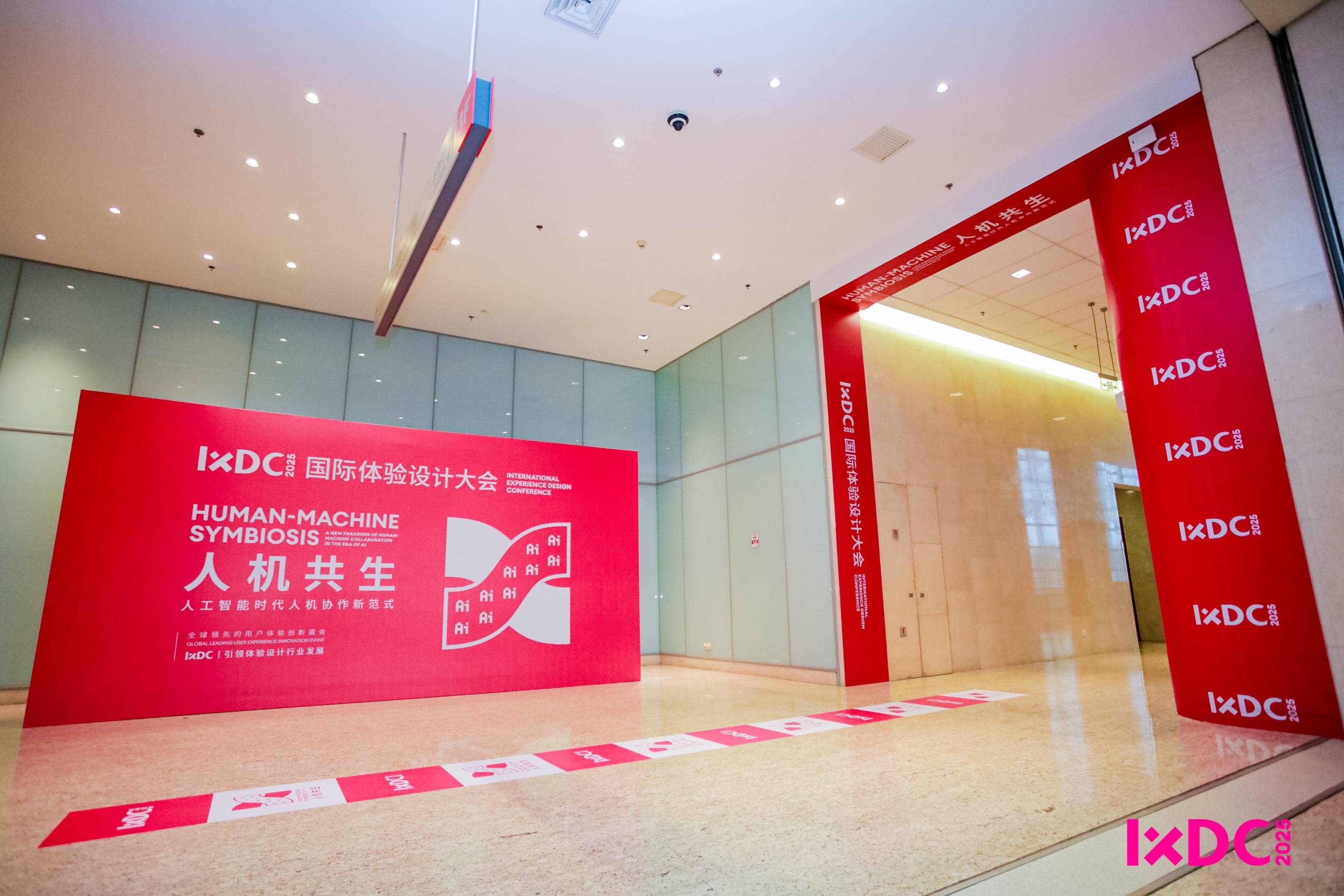
IXDC2025大会|10场主旨演讲引爆思想盛宴,共话人工智能时代下人机协作新范式
Sou Hu Cai Jing· 2025-11-02 09:56
Core Insights - The IXDC2025 International Experience Design Conference was held in Beijing, focusing on how AI drives design innovation and the future of "human-machine symbiosis" [1][26] Group 1: AI in Design - AI has evolved from a novelty to a core component in content creation, information dissemination, and connectivity, as highlighted by Microsoft’s John Maeda [6] - AI design must be grounded in real-world applications rather than idealized laboratory settings, as emphasized by Alibaba Cloud's Li Jianye [8] - The consensus among speakers is that AI is now a central driving force in design evolution, reshaping every aspect from product definition to design ethics [26] Group 2: Design Philosophy and User Experience - Huawei's Yang Zhiyan discussed the design philosophy of HarmonyOS, focusing on user-centered aesthetics and intelligent interaction [10] - Xiaopeng Motors' Wang Tan illustrated the integration of technology and art in automotive design, showcasing the synergy between design and technology [12] - Tang Mu from Yingzhi Technology shared insights on consumer robots, emphasizing the importance of user experience design in making robots integral to daily life [15] Group 3: Methodologies and Future Directions - Canva's Jason Demetillo presented a methodology for user research that leads to successful product design, based on his experiences at Grab and Canva [17] - The design landscape is evolving, with a call for designers to transition from solving isolated problems to understanding complex socio-technical systems, as proposed by XXY Innovation's Xin Xiangyang [25] - The conference highlighted the need for a humanistic spirit and critical thinking in design amidst rapid technological advancements [26]
复盘“四元契合”:AI是怎么摧毁旧的产品、渠道和市场的
3 6 Ke· 2025-11-02 00:04
Core Insights - The article discusses the urgent need to update the "Four Fit" theory in light of the transformative impact of artificial intelligence (AI) on business growth models and market dynamics [2][3][8] Group 1: Four Fits Overview - The "Four Fits" framework consists of Product-Market Fit, Product-Channel Fit, Channel-Model Fit, and Model-Market Fit, which are essential for achieving rapid revenue growth [3][10] - Companies that achieve these fits can experience significant growth even with suboptimal practices, while those that fail to align struggle despite best efforts [3][10] Group 2: Changes in Product-Market Fit - AI has accelerated the pace at which companies can find or lose Product-Market Fit, leading to sudden shifts in market dynamics [21][27] - The case of Chegg illustrates how a company can see its valuation drop from $1.2 billion to $150 million in just nine months due to the emergence of AI solutions like ChatGPT [32][33] Group 3: Changes in Product-Channel Fit - The emergence of AI is reshaping how products fit into distribution channels, with traditional channels like SEO experiencing declines [14][44] - Companies must adapt to new channels created by AI, as user behavior shifts towards platforms like ChatGPT for product discovery [47][48] Group 4: Changes in Channel-Model Fit - The profitability of a business model is increasingly dependent on how well it aligns with the channels used for customer acquisition [53][56] - Companies must monitor their Channel-Model Fit closely, as AI can disrupt existing balances and necessitate rapid adjustments to pricing and distribution strategies [57][58] Group 5: Changes in Model-Market Fit - AI is expanding some markets while contracting others, fundamentally altering the dynamics of customer acquisition and revenue generation [68][69] - The traditional metrics for assessing market potential, such as customer count multiplied by average revenue per user (ARPU), are being challenged by AI's ability to automate and commoditize services [75]

Canva CPO: We’re in an imagination era with AI
Bloomberg Television· 2025-10-31 20:33
In the last couple of years, we've seen a real shift in technology as AI has come to the four and it's offering a more fundamental shift in what we need to do as people. And we believe we're now entering what we call the imagination era. It's moving beyond just providing answers through information.And it's about vision. It's about goals. It's about what we can create with our imagination and how technologies like AI can enable that.Uh, and the creative operating system that we're launching this week here a ...