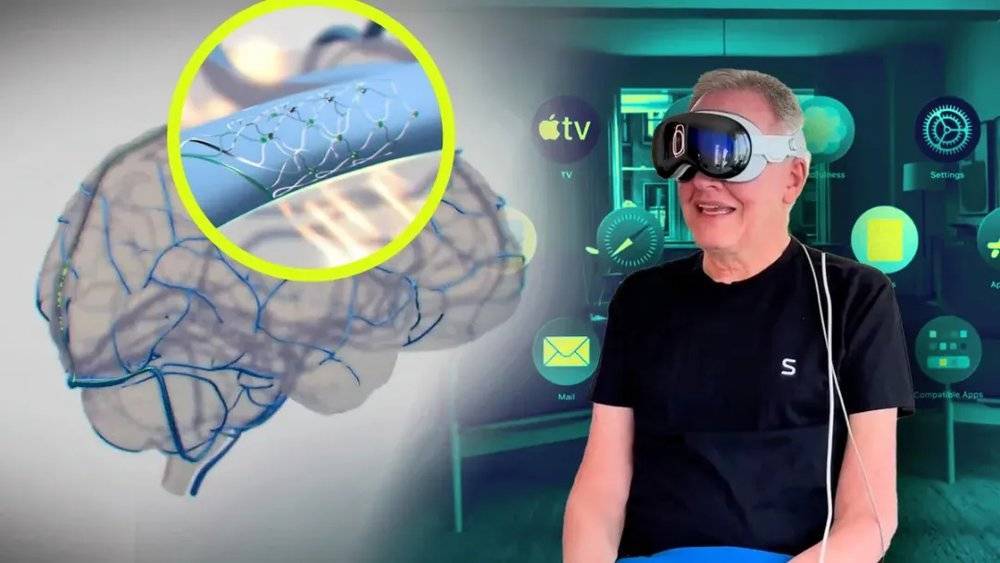
Synchron

Search documents
脑机接口一百年
3 6 Ke· 2025-07-07 10:56
Core Insights - The article discusses the advancements in brain-computer interface (BCI) technology, highlighting Neuralink's recent breakthroughs and the historical context of BCI development [1][17][21]. Historical Development - The exploration of brain-machine interfaces began in the early 20th century, with Hans Berger capturing brain waves in 1924, which laid the groundwork for future research [4][6]. - The term "brain-computer interface" was first introduced in 1973 by Jacques Vidal, marking a significant milestone in the field [7][14]. - The first successful application of BCI technology occurred in 1988 with the development of the P300 speller, allowing paralyzed patients to communicate using brain waves [10][14]. Technological Advancements - Neuralink has developed a system that utilizes flexible electrodes implanted in the brain, significantly reducing damage compared to traditional rigid electrodes [19][21]. - As of June 2025, Neuralink has successfully implanted its N1 chip in seven patients, enabling them to control devices using their thoughts [21][28]. - The article outlines three main types of BCIs: invasive, semi-invasive, and non-invasive, each with its own advantages and challenges [24][26]. Current Applications and Future Prospects - BCI technology is transitioning from clinical applications for severe physical disabilities to commercial uses, such as brain-controlled games and health monitoring [28]. - The article emphasizes the potential for BCI technology to enhance human capabilities, but also raises concerns about accessibility and ethical implications [32][30]. Challenges Ahead - Despite advancements, BCI technology faces challenges such as immune responses to implants, the complexity of decoding brain signals, and the need for efficient data transmission [30][32]. - Ethical concerns regarding privacy and the potential for socioeconomic disparities in access to BCI technology are highlighted as significant issues for the future [32][30].

中科院院士郑海荣:马斯克的脑机接口方案“太落后了”
经济观察报· 2025-07-01 11:30
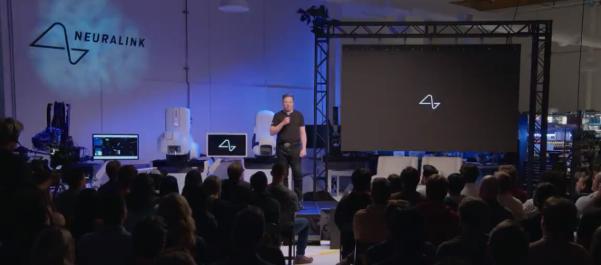
Core Viewpoint - The article emphasizes the need to explore non-invasive brain-computer interface (BCI) technologies rather than invasive methods, as proposed by Chinese Academy of Sciences academician Zheng Hairong [2][3][9]. Industry Overview - The global BCI market is projected to grow from $2.35 billion in 2023 to $10.89 billion by 2033, indicating significant investment and interest in this sector [5]. - Major players in the BCI field include Neuralink, which focuses on invasive methods, and Synchron, which has developed a less invasive approach with support from tech giants like Apple and NVIDIA [2][7]. Technological Developments - Neuralink has reported advancements in its invasive BCI technology, with patients able to control complex devices using their thoughts, showcasing a leap from simple cursor control to intricate robotic manipulation [5][6]. - Synchron has achieved key safety milestones with its BCI devices, including FDA approval for temporary implants and successful long-term trials without severe adverse events [8]. Critique of Current Approaches - Zheng Hairong criticizes the invasive methods as "brute force engineering," arguing that they fail to understand the complexity of the human brain and its evolutionary history [3][9]. - He highlights the challenges of biological compatibility in invasive BCIs, noting that many electrodes fail due to the brain's natural resistance [6]. Alternative Approaches - Zheng advocates for a non-invasive approach that utilizes external technologies like ultrasound and fMRI to read and potentially write brain signals without penetrating the skull [9][10]. - This method aims to decode brain activity by observing the relationship between blood flow and neural activity, likening it to a soldier and their supplies [10]. Future of AI and BCI - Zheng outlines a three-stage evolution of AI, with the final stage being "biological intelligence" achieved through effective BCI integration [12][13]. - He envisions a future where hospitals transform into AI-driven data centers, moving away from traditional medical practices [14]. Ethical Considerations - The article raises concerns about the ethical implications of BCI technology, emphasizing the need for strong regulations to prevent misuse and ensure human control over technology [14][15]. - Global legislative efforts are underway to protect brain data, indicating a growing recognition of the ethical challenges posed by BCI advancements [15]. Timeline for Adoption - Zheng estimates that it may take 20 to 30 years for BCI technology to become a part of everyday life for the general public [17].
中科院院士郑海荣:马斯克的脑机接口方案“太落后了”
Jing Ji Guan Cha Wang· 2025-07-01 09:38
Core Viewpoint - The global brain-computer interface (BCI) sector is experiencing significant advancements, with companies like Neuralink and Synchron leading the way in different technological approaches [2][4][6] Group 1: Company Developments - Neuralink has increased its number of human trial participants to 7 and demonstrated the ability to control a robotic arm using thoughts [2] - Synchron has achieved native integration with Apple devices through a new protocol, enhancing its market presence [2] - Precision Neuroscience received FDA approval for a temporary implantable device, marking a step towards commercialization [6] Group 2: Market Growth - The global BCI market is projected to grow from $2.35 billion in 2023 to $10.89 billion by 2033, indicating a substantial increase in investment and interest [4] Group 3: Technological Approaches - Two main technological paths are identified: invasive methods like those used by Neuralink, which require surgical implantation, and less invasive methods like those of Synchron, which utilize blood vessels for sensor delivery [2][6] - The invasive approach has shown promising results, allowing patients to perform complex tasks, but faces challenges related to biological compatibility [5][6] Group 4: Alternative Perspectives - Chinese Academy of Sciences academician Zheng Hairong advocates for non-invasive BCI technologies, arguing that current invasive methods are outdated and lack imagination [3][8] - Zheng proposes using external physical methods like ultrasound and fMRI to read and potentially write brain information without surgical intervention [8][9] Group 5: Future Implications - Zheng predicts that the future of AI will involve a three-stage evolution, culminating in "biological intelligence" achieved through effective brain-computer integration [10][11] - He envisions a healthcare system transformed by AI, moving away from traditional methods to a data-centric model that predicts and manages diseases [12] Group 6: Ethical Considerations - The ethical implications of BCI technology are becoming a global concern, with countries like Chile and Colorado taking legislative steps to protect brain data [13] - Zheng emphasizes the need for strong regulations to ensure that brain-computer interfaces remain under human control, highlighting the potential risks of losing that control [12][13] Group 7: Timeline for Adoption - Zheng estimates that it may take 20 to 30 years for BCI technology to become a part of everyday life for the general public [14]
“看多”“看涨”中国是共识
Jing Ji Ri Bao· 2025-06-25 21:55
Group 1 - The "Investment China 2025 Tianjin Summer Davos Multinational Enterprise Leaders Exchange Conference" facilitated discussions among over 300 business leaders, fostering a consensus on future development directions and laying the groundwork for practical cooperation [1] - Global business leaders are optimistic about China's economic prospects, with a shared belief in the country's growth potential, particularly in the green development and "dual carbon" goals, which have positioned China's new energy market to account for over 40% of the global market [1] - Flender Group has invested over 1 billion yuan in Tianjin over the past four years, establishing a significant presence with a 26.4 MW wind turbine drive chain test bench, making it the largest gearbox manufacturing base and R&D center for Flender outside of Germany, with a localization rate exceeding 95% [1] Group 2 - China is accelerating its transition towards high-quality economic development, with a focus on green, digital, and intelligent transformations, creating vast opportunities for foreign enterprises [2] - DHL Global Forwarding is exploring the establishment of an electric vehicle excellence center in Shanghai, aiming to create a complete ecosystem for the electric vehicle industry, leveraging China's robust manufacturing capabilities and infrastructure [2] - SEW-Eurodrive is transitioning from a single factory to a production cluster with two manufacturing bases and ten assembly centers, investing 500 million USD in a new manufacturing base in the Guangdong-Hong Kong-Macao Greater Bay Area, which is expected to serve as an export base for the company [2] - The competitive market landscape necessitates innovation and the transformation of technology into core competitive advantages, with Synchron's founder highlighting China's advancements in brain-computer interface technology and the potential for future collaborations [2]
估值达90亿美元,马斯克的脑机接口公司再融资6.5亿美元
Sou Hu Cai Jing· 2025-06-03 08:13
图片来源:视觉中国 尽管Neuralink发展迅速,但其面临来自Precision Neuroscience等公司的竞争。Precision由Neuralink联合 创始人本·拉波波尔(Ben Rapoport)创立,近期完成了9300万美元的融资,估值达到5亿美元。该公司 开发的"第7层皮层接口"设备采用非侵入性技术,旨在减少对脑组织的损伤。 由微软创始人比尔·盖茨和亚马逊创始人杰夫·贝索斯投资的脑机接口公司Synchron,已将其设备植入10 人脑中。总部位于奥斯汀的Paradromics则于近日宣布首次成功将脑机接口植入人体。 值得注意的是,苹果公司也在深入研究脑机接口技术,其与初创公司Synchron合作,探索通过脑信号控 制iPhone、iPad和Vision Pro等设备的可能性。 在中国,今年也是脑机接口技术正式步入临床的关键一年。据第一财经报道,复旦大学附属华山医院院 长毛颖教授在近日的一场活动上透露,由上海华山医院和北京宣武医院牵头的脑机接口临床队列研究已 智通财经记者 | 宋佳楠 当地时间6月2日,埃隆·马斯克(Elon Musk)旗下的脑机接口公司Neuralink宣布完成6.5亿美元的 ...
用意念操控设备,苹果也盯上了脑机接口技术
3 6 Ke· 2025-05-23 11:15
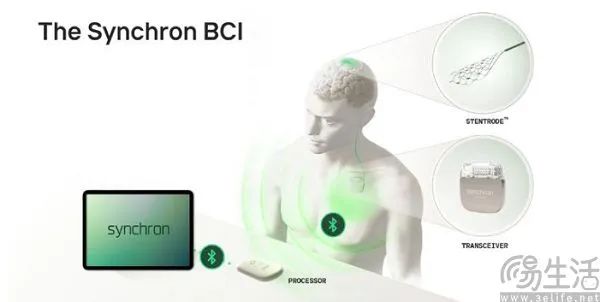
Core Viewpoint - The emergence of brain-computer interface (BCI) technology is transforming the concept of controlling devices through thought into reality, with Synchron becoming the first company to integrate Apple's BCI Human Interface Device (HID) protocol for controlling Apple devices like iPhone, iPad, and Vision Pro through neural signals [1][3]. Group 1: BCI Technology and Integration - Apple plans to announce a new development standard later this year, allowing third-party developers to integrate BCI technology into iOS, iPadOS, and visionOS applications [3]. - Synchron will utilize a device called Stentrode, which reads brain activity signals, to connect with Apple's Switch Control feature, enabling thought-based control of Apple devices [3][5]. - Early volunteer Mark Jackson, an ALS patient, has experienced the capability of Stentrode, allowing him to engage with virtual environments despite physical limitations [3]. Group 2: Comparison with Competitors - Stentrode employs a non-invasive BCI approach using a vascular stent, which does not penetrate brain tissue, resulting in lower sensitivity and functionality compared to Neuralink's invasive method that uses 1024 electrodes directly inserted into the brain [5]. - Neuralink's approach offers better signal quality and transmission speed, but Synchron's method is safer, which may explain Apple's choice of Synchron as its first BCI HID protocol partner [5]. Group 3: Accessibility and User Benefits - The introduction of BCI technology aims to provide a new mode of interaction for individuals with paralysis and other physical disabilities, enhancing their independence and quality of life [6][8]. - BCI will enable users to control computers and smartphones through thought, facilitating activities like typing, web browsing, and gaming [8]. - Apple has a history of developing accessibility features for disabled users, and BCI represents a significant advancement in providing inclusive technology [8][10]. Group 4: Security and Privacy Considerations - Current accessibility services can pose security risks, as they may allow unauthorized access to sensitive information [12][14]. - BCI technology could enhance security by ensuring that all interactions with devices are based on the user's intent, potentially reducing the risk of unauthorized actions [14].

五例成功植入!康复型脑机接口最新突破
思宇MedTech· 2025-05-23 08:03
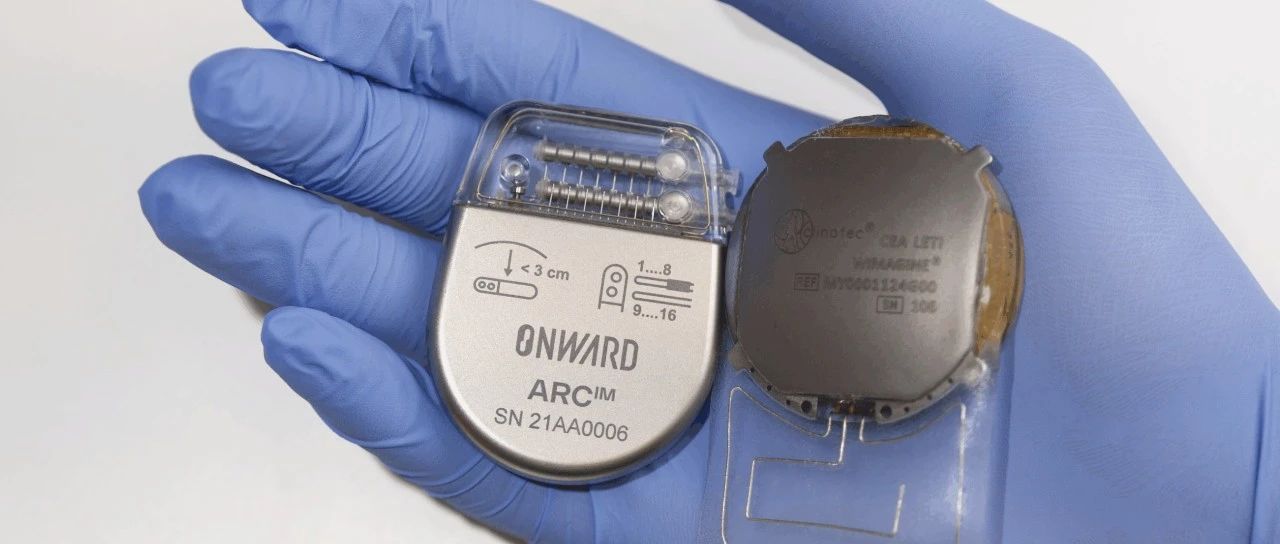
| 思宇年度活动回顾: | 首届全球眼科大会 首届全球骨科大会 首届全球心血管大会 | | | --- | --- | --- | | 即将召开: | | | | 2025年6月12日,首届全球医美科技大会 | | | | 2025年7月17日,第二届全球医疗科技大会 | | | | 2025年9月4-5日,第三届全球手术机器人大会 | | | | 2025年5月21日,专注于脊髓损伤(SCI)创新疗法的医疗技术公司ONWARD Medical宣布,其 | | ARC-BCI系统已完成第四例与第五例人体植入手术 ,植入对象分别 | 为一名2024年受伤的48岁男性与一名2011年受伤的37岁女性。两例手术均在瑞士洛桑大学附属医院(CHUV)完成,由神经外科主任Jocelyne Bloch博士主刀。 这标志着ONWARD在脑机接口结合脊髓刺激的闭环神经系统重建路径上,已完成五位患者的连续验证。 目前,ONWARD是全球范围内唯一实现多例临床闭环植入 并进入系统验证阶段的团队。 两例受试者分别代表"急性阶段"与"慢性阶段"的典型病程,性别、病史、年龄均具差异化,体现出ONWARD对该技术在不同人群、不同恢复窗口期 ...
从实验室走向现实,脑机接口驶入发展“快车道”
2 1 Shi Ji Jing Ji Bao Dao· 2025-05-22 05:57
Core Insights - The brain-computer interface (BCI) sector is experiencing significant advancements, with various developments in policy, clinical applications, and technology integration [1][4][6] Policy Developments - Sichuan province has launched a comprehensive action plan for brain-computer interface and human-computer interaction industries from 2025 to 2030, aiming to develop multiple BCI products and enhance clinical applications [4][5] - National policies are being introduced to support the development of BCI technology, including quality requirements for medical devices using BCI technology and guidelines for pricing new neuro-related medical services [4][5] Market Potential - The global BCI market is projected to reach $3.3 billion by 2027, with a compound annual growth rate (CAGR) of approximately 13.5% since 2019 [2] - In China, the BCI market is expected to grow to 3.2 billion yuan in 2024, with an annual growth rate of 18.8%, and is forecasted to exceed 5.5 billion yuan by 2027 [3] Clinical Applications - BCI technology is being applied in various medical fields, particularly in treating cognitive and motor disorders, with significant clinical trials underway [6][8] - The first clinical ward for BCI technology has been established at Beijing Tiantan Hospital, focusing on research and clinical trials [6] Technological Integration - Synchron has partnered with Apple to integrate its BCI device with Apple products, allowing users to control devices using only their thoughts [7] - Neuralink's BCI device has received "breakthrough medical device" designation from the FDA, targeting patients with severe neurological conditions [7][8] Future Outlook - The BCI industry is expected to continue evolving, with increasing clinical applications and technological advancements, although challenges related to safety, ethics, and privacy remain [8]
苹果进军脑机接口领域,为瘫痪人士重新定义输入法
Di Yi Cai Jing· 2025-05-14 08:49
Group 1 - Apple announced that its Vision Pro's visionOS will support brain-computer interface (BCI) input devices later this year, utilizing a new BCI HID protocol for bidirectional communication with Apple devices [1] - The BCI HID protocol aims to enhance user experience by optimizing decoding accuracy through the exchange of contextual information between the BCI devices and Apple products [1] - Synchron's Stentrode device will be the first to support Apple's new BCI HID protocol, which is a permanent brain implant that does not require open-brain surgery [1] Group 2 - Synchron demonstrated how Stentrode can replace pinch gestures on the Vision Pro, allowing an ALS patient to select interface elements using eye-tracking and complete clicks through thought [2] - The collaboration between Synchron and NVIDIA showcased Stentrode's ability to control smart home devices, marking a significant advancement in human-computer interaction [2] - The CEO of Synchron emphasized that BCI technology is evolving into a new native input method for Apple devices, providing new possibilities for individuals with severe physical disabilities [2] Group 3 - A neurosurgeon involved in BCI clinical trials noted that while there have been recent breakthroughs in the field, significant advancements will require years of effort [3] - The introduction of Apple's BCI HID protocol is seen as a step towards establishing data transmission standards for BCI technology across various products [3] - Competing companies, such as Neuralink, are also making strides in the BCI space, with their device receiving FDA breakthrough device designation, demonstrating the growing interest and investment in this technology [3]
意念操控iPhone,大脑将成为你的输入法?
Hu Xiu· 2025-05-14 06:17
Group 1 - Apple is collaborating with brain-computer interface company Synchron to develop technology that allows patients with spinal cord injuries or ALS to control iPhones using their thoughts [2][10][32] - The technology involves a device called Stentrode, which is implanted in the brain and reads neural signals to translate them into actions on devices [6][8][10] - Stentrode connects with Apple's existing accessibility feature, Switch Control, enabling brain signals to be recognized as valid input for controlling devices [7][8] Group 2 - The Stentrode device is currently in testing and has shown promising results, allowing some patients to operate Apple devices for the first time [10][11] - The technology is less invasive compared to other brain-computer interfaces, as it does not require opening the skull, thus reducing surgical risks [24][34] - Synchron's approach contrasts with Neuralink's invasive methods, focusing on safety and accessibility for patients who cannot undergo traditional surgeries [32][34] Group 3 - Synchron has integrated AI technology, such as GPT-4o, to enhance the functionality of its brain-computer interface, allowing for more intuitive user interactions [40][44] - The AI integration enables multi-modal input, providing users with options based on predicted thoughts, thus improving communication for those with severe disabilities [43][44] - The ultimate goal of Synchron's technology is to create a more natural interaction between users and devices, allowing individuals with disabilities to regain a sense of independence [55][66] Group 4 - As of now, Synchron has implanted Stentrode in 10 patients, with a significant potential user base estimated at 150,000 in the U.S. alone due to severe upper limb disabilities [60][61] - The global prevalence of spinal cord injuries is approximately 15.4 million, indicating a substantial market for brain-computer interface technologies [61] - Apple's plans to release a new software interface for third-party developers will further promote the integration of brain-controlled technology within its ecosystem [59]