银河通用

Search documents
2.5万元起售,英伟达新款芯片收获中国客户,公司股价上涨!北杭深多家公司官宣:已率先采用
Mei Ri Jing Ji Xin Wen· 2025-08-26 08:18
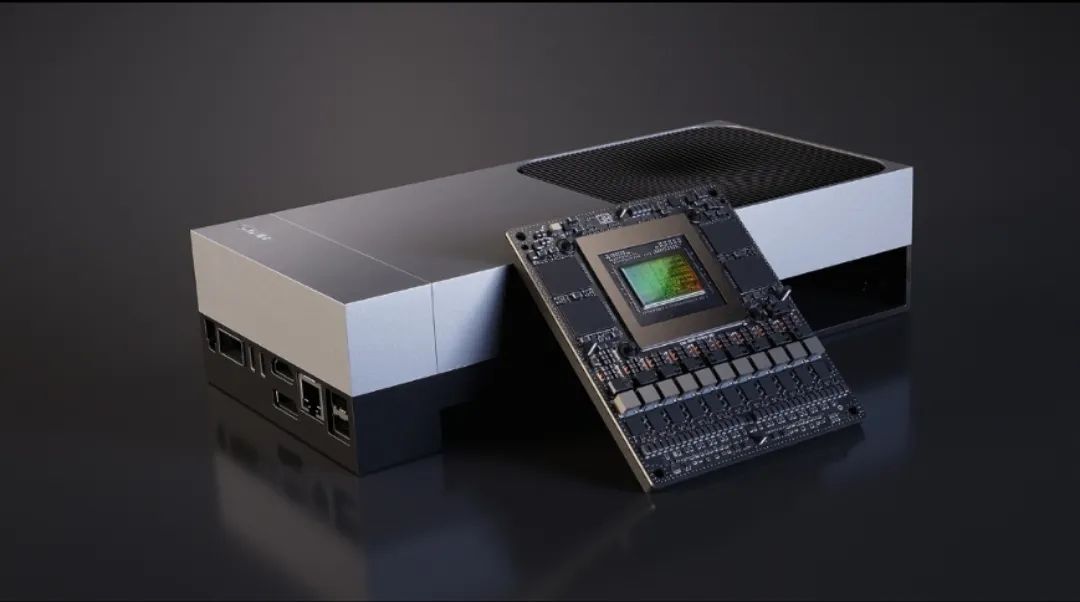
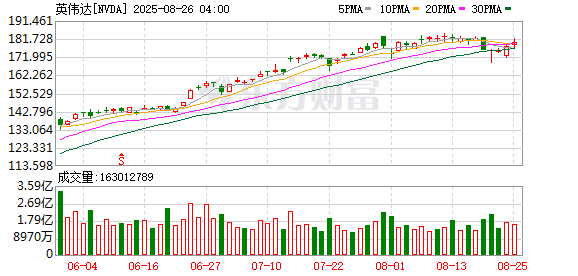
Core Viewpoint - NVIDIA has officially launched its new generation of AI chips, the Jetson AGX Thor, which has been adopted by several Chinese robotics companies, enhancing their capabilities in various industries such as manufacturing, logistics, transportation, healthcare, agriculture, and retail [1][3]. Group 1: Product Features and Capabilities - The Jetson AGX Thor is based on NVIDIA's Blackwell chip, offering an AI computing power increase of 7.5 times and energy efficiency improvement of 3.5 times compared to the previous generation, Jetson AGX Orin [3]. - It supports all mainstream AI frameworks and generative AI models, allowing for real-time inference and interaction between robots and the physical world [3]. - The starting price for the new Jetson AGX Thor developer kit is $3,499 (approximately 25,028 RMB), with global sales commencing immediately [3]. Group 2: Market Response and Financial Performance - NVIDIA's automotive and robotics business combined reported revenue of $567 million for the first quarter of the 2026 fiscal year, marking a 72% year-over-year increase [8]. - Following the announcement, NVIDIA's stock price rose by 2.14% at its peak, closing with a 1.02% increase at $179.81 [8][9]. Group 3: Industry Adoption and Impact - Companies such as Yujin Robot, Galaxy General, and Ubiquiti have begun utilizing Jetson Thor, indicating a significant leap in computational capabilities for robotics, enhancing agility, decision-making speed, and autonomy [10][11]. - Ubiquiti announced its early adoption of Jetson Thor for its Walker S2 humanoid robot, which is the world's first humanoid robot with autonomous battery swapping capabilities, showcasing advanced humanoid movement and operational abilities [11][13].


更适合“中国体质”的AI芯片、小米和宇树都冲了!英伟达Jetson Thor现已发售,2万块批发价但半年交货
AI前线· 2025-08-26 05:20
Core Viewpoint - Nvidia has launched its latest robot chip module, Jetson AGX Thor, priced at $3499, which significantly enhances performance compared to its predecessor, aimed at supporting developers in creating advanced robotic systems [2][6][12]. Product Details - The first batch of Jetson AGX Thor developer kits will ship next month, including the Jetson T5000 module, a reference board with multiple interfaces, an active cooling fan, and a power adapter [4]. - The Jetson Thor chip boasts a performance increase of 7.5 times over the previous generation, with a 3.5 times improvement in energy efficiency, 3.1 times better CPU performance, and double the memory capacity [6][8]. - The chip is designed to run generative AI models and visual models that interpret the surrounding environment, crucial for humanoid robots [6][8]. Market Position and Applications - Nvidia's Jetson Thor is being utilized by various robotics companies, including Agility Robotics, Amazon, and Boston Dynamics, enhancing their robots' capabilities [9][10]. - The chip is also applicable in various robotic fields, such as surgical assistance, delivery robots, and industrial robotic arms, providing real-time inference capabilities for complex AI models [10]. Business Growth Potential - Nvidia's robotics business currently contributes about 1% of total revenue but is experiencing rapid growth, with a 72% year-over-year increase in quarterly sales [12]. - The company views the robotics sector as a significant growth opportunity beyond its traditional AI business, with plans to invest heavily in this area [13].

英伟达专为机器人设计的计算平台上市
2 1 Shi Ji Jing Ji Bao Dao· 2025-08-26 05:01
Core Insights - NVIDIA has launched the Jetson AGX Thor developer kit and production-grade module designed for physical AI and robotics, providing computational support for various industries including manufacturing, logistics, transportation, healthcare, agriculture, and retail [2] Group 1: Product Launch - The Jetson AGX Thor is specifically tailored for developers to create robotic systems that can interact with and even alter the physical world [2] - The product enables multiple generative AI models to run simultaneously on edge devices [2] Group 2: Market Adoption - Over 2 million developers are currently utilizing NVIDIA's robotics technology stack [2] - Companies such as United Imaging Healthcare, Wanji Technology, UBTECH, Galaxy Universal, Yushu Technology, Zhongqing Robotics, and Zhiyuan Robotics are early adopters of Jetson Thor [2] Group 3: Leadership Statement - NVIDIA's founder and CEO Jensen Huang emphasized the importance of Jetson Thor in empowering developers to build advanced robotic systems [2]

英伟达机器人“新大脑”售价2.5万元,算力提升7.5倍
Nan Fang Du Shi Bao· 2025-08-26 01:19
Core Insights - Nvidia has officially launched the Thor chip, referred to as the "new brain" for robots, priced at $3,499, aimed at enabling real-time intelligent interaction between embodied intelligent robots and the physical world [1] - The Thor chip significantly enhances computational power, offering up to 2070 TFLOPS, a 7.5 times increase over the previous Orin chip, addressing the computational limitations faced by robots [1][3] - The chip's performance improvements allow robots to process large amounts of sensor data and operate AI models at the edge, reducing reliance on cloud computing [3] Group 1: Product Launch and Features - The Thor chip is designed to support embodied intelligent robots with real-time processing capabilities, essential for autonomous operation in various environments [1] - It features a CPU performance increase of 3.1 times, 128GB of memory (a 2 times increase), and a 3.5 times improvement in energy efficiency [1][3] Group 2: Industry Adoption and Ecosystem - Notable companies such as Boston Dynamics and Figure AI, along with domestic firms like UBTECH and Galaxy Universal, have already begun deploying the Thor chip [3] - Nvidia has built a robust developer ecosystem in the robotics field, with over 2 million developers engaged across various industries since 2014 [4] Group 3: Financial Performance - Despite the advancements in robotics, the segment currently contributes a minimal portion to Nvidia's overall revenue, accounting for approximately 1.29% with a total income of $567 million, although it has seen a significant year-on-year growth of 72% [5]
人形机器人规模化应用需闯关
Bei Jing Ri Bao Ke Hu Duan· 2025-08-26 00:56
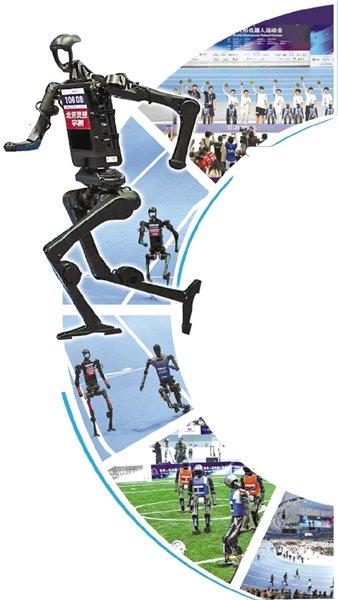
Group 1 - The World Robot Conference and Humanoid Robot Games held in Beijing have garnered significant public attention, showcasing the capabilities of humanoid robots in sports and performance [1] - The "Galaxy Space Capsule," a robot-operated convenience store, has achieved full autonomous service, with plans for expansion into popular commercial areas [2] - Companies like Songyan Power and Zhiyuan Robotics are ramping up production capabilities, with Songyan aiming for 200 units of delivery capacity by August [2] Group 2 - The humanoid robot industry is accelerating towards commercialization, with many companies transitioning from prototype demonstrations to small-scale deliveries [2] - The future of robotics may not be limited to humanoid forms, as various shapes and designs could emerge to better serve different functions [3][5] - Current humanoid robots are primarily designed for data collection and AI training, but the definition of "robot" is expanding to include non-humanoid forms that are more efficient in specific applications [5] Group 3 - Despite some companies receiving large-scale orders, the adoption of humanoid robots in everyday life remains slow, with over 70% of disclosed orders coming from educational and research institutions [6] - Key challenges facing the mass adoption of humanoid robots include operational capabilities, generalization abilities, and cost control [6] - The industry faces a significant data issue, as limited data and simulation capabilities hinder the development of versatile robots for various applications [6] Group 4 - Predictions suggest that within three years, household humanoid robots could perform simple tasks like conversation and dog walking, while more complex tasks may take 5 to 10 years to achieve [7]
北京机器人为何更聪明自主?
Bei Jing Qing Nian Bao· 2025-08-25 18:23
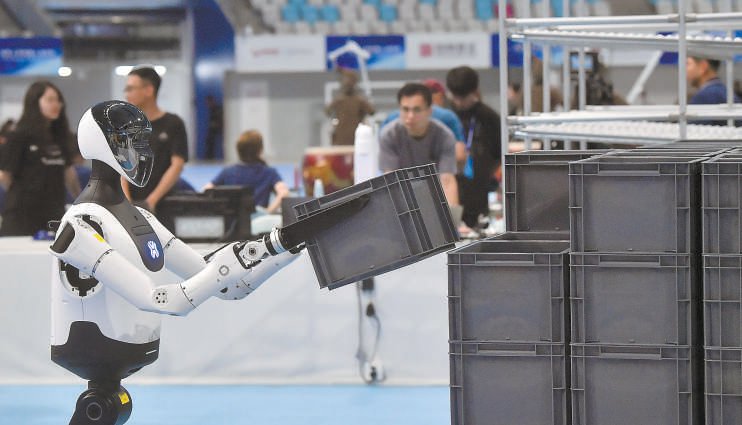
Core Insights - The first World Humanoid Robot Games showcased significant advancements in embodied intelligence technology, demonstrating robots' ability to perform autonomously in dynamic environments, moving beyond simple programmed actions and remote control [2][3] - Beijing's humanoid robot industry is leading nationally, accounting for approximately one-third of the country's market, with a nearly 40% revenue growth in the first half of the year [3][4] - The event highlighted the potential of humanoid robots to transition from being perceived as toys to valuable productivity tools, with several teams achieving success in various competitions without human intervention [3][4] Industry Developments - The competition featured 26 events, with Beijing teams winning 11 gold medals, including in sprinting, high jump, long jump, gymnastics, and soccer, showcasing the city's prowess in robot development [2][3] - The embodied Tian Gong Ultra robot completed the 100-meter sprint autonomously, marking a significant achievement in robot performance, while the T1 robot was designated as the official machine for soccer competitions [3][4] - The event also included practical applications such as sorting tasks, demonstrating the robots' capabilities in real-world scenarios [2][3] Technological Advancements - The robots' performance is driven by advanced AI models that enable them to perceive their environment, make decisions, and execute actions, akin to human cognitive functions [4] - The integration of AI and robotics is a key focus area, with Beijing being recognized as a hub for AI innovation, housing a significant number of AI companies and top-tier talent [4] - The upcoming year 2025 is anticipated to be a pivotal moment for humanoid robot mass production, with many core technologies reaching commercial viability [4] Market Trends - There is a growing demand for humanoid robots in various sectors, driven by the need for alternative labor and smart upgrades, supported by favorable policies for the robotics industry [4] - Investment in the humanoid robot sector is increasing, with significant funding directed towards core components and embodied intelligence applications [4] - The successful demonstration of autonomous robots in competitive settings is expected to accelerate their adoption in industrial, public service, and educational contexts [4]
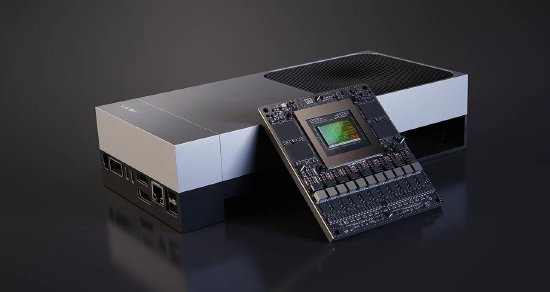
英伟达专为机器人设计的计算平台上市 公司:宇树科技、智元机器人等国内厂商都在用
Mei Ri Jing Ji Xin Wen· 2025-08-25 16:51
Core Insights - NVIDIA has launched the Jetson AGX Thor developer kit and production-grade module designed for physical AI and robotics, providing computational support for various industries including manufacturing, logistics, transportation, healthcare, agriculture, and retail [1] - The new Jetson Thor, based on NVIDIA's Blackwell chip, offers a 7.5x increase in AI computing power and a 3.5x improvement in energy efficiency compared to its predecessor, Jetson AGX Orin [1] - Over 2 million developers are currently utilizing NVIDIA's robotics technology stack, with several companies already adopting Jetson Thor for their products [1] Industry Impact - The Jetson Thor enables robots to achieve greater agility, faster decision-making, and higher autonomy, which are crucial for navigation and interaction in the real world [2] - Companies like Galaxy Universal have reported significant improvements in product performance, such as enhanced movement speed and action fluidity after adopting Jetson Thor [2]
英伟达宣布Jetson Thor已发售,宇树科技、银河通用已接入
Xin Lang Ke Ji· 2025-08-25 15:39
Core Insights - NVIDIA has launched the Jetson AGX Thor developer kit and production-grade module, designed to provide computational power for millions of robots across various industries including manufacturing, logistics, transportation, healthcare, agriculture, and retail [2] - The Jetson Thor is already being utilized by several industry leaders such as United Imaging Healthcare, Wanji Technology, UBTECH, Galaxy General, Yushu Technology, Zhongqing Robotics, and Zhiyuan Robotics [2] - NVIDIA's CEO Jensen Huang emphasized that Jetson Thor is built for millions of developers globally, enabling them to create robotic systems that can interact with and even change the physical world [2] Performance and Specifications - Jetson Thor is based on NVIDIA's Blackwell GPU and features 128GB of memory, offering up to 2,070 FP4 TFLOPS of AI computing power while operating within a power range of 130 watts [2] - Compared to its predecessor, the Jetson AGX Orin, the AI computing performance of Jetson Thor has increased by 7.5 times, and its energy efficiency has improved by 3.5 times [3] - Jetson Thor can run various generative AI models, including NVIDIA Isaac GR00T N1.5 and mainstream large language and vision-language models [3]
均胜电子上半年毛利率持续提升,汽车智能化与机器人业务多点突破
Quan Jing Wang· 2025-08-25 11:20
Core Insights - Company achieved a revenue of approximately 30.347 billion yuan in the first half of 2025, representing a year-on-year growth of 12.07% [1][2] - The overall gross margin increased by 2.9 percentage points to about 18.4% in Q2 2025, marking the highest level in recent years [1][2] - The company is focusing on breakthroughs in key products and technologies in the automotive and robotics sectors, with significant progress reported [1][4] Financial Performance - Revenue for the first half of 2025 was approximately 30.347 billion yuan, up from 27.079 billion yuan in the same period last year, reflecting a growth of about 12.07% [2] - The total operating profit was around 1.247 billion yuan, with net profit attributable to shareholders increasing by 11.13% to 708 million yuan [1] - The overall gross margin for the first half of 2025 improved by approximately 2.6 percentage points to about 18.2% [2] Business Segments - The automotive safety business achieved a gross margin of approximately 15.9%, up by about 2.0 percentage points year-on-year, while the automotive electronics business saw a gross margin increase of about 2.2 percentage points to approximately 21.5% [2] - The company has made significant advancements in smart driving, including a partnership with Momenta, resulting in a high-level intelligent driving domain control project with an order value exceeding 1 billion yuan [1][5] - In the robotics sector, the company is providing integrated hardware and software solutions, having established partnerships with leading robotics companies [8] R&D and Innovation - The company invested approximately 2.488 billion yuan in R&D in the first half of 2025, ensuring continued leadership in key technology areas [4] - New orders for the first half of 2025 amounted to approximately 31.2 billion yuan, with over 20.6 billion yuan related to new energy vehicles, accounting for over 66% of the total [5] - The company is actively developing innovative safety solutions, including a new series of gas generators and advanced safety belt systems [6] Global Strategy - The company is enhancing its global operations by integrating Chinese suppliers and optimizing procurement prices, leading to a significant increase in overseas gross margins [3] - The company is strategically extending its reach into the robotics industry, establishing a wholly-owned subsidiary to focus on humanoid robotics [8] - The company is also pursuing international expansion, with plans to list on the Hong Kong main board to create a global capital platform [9][10]

浅谈,「京东」在具身智能赛道布局
Robot猎场备忘录· 2025-08-25 07:27
Core Viewpoint - The article discusses the rapid development and investment in the field of embodied intelligence, highlighting key players in both global and domestic markets, and emphasizing the strategies of major companies like JD.com, Huawei, and Tesla in this emerging sector [2][3][4]. Investment Landscape - Major global companies such as Nvidia and Tesla, along with domestic leaders like Huawei and Xpeng Motors, are entering the embodied intelligence sector, with Huawei aiming to create a foundational development ecosystem similar to Nvidia's approach [2] - Since 2025, various tech giants have adopted a dual approach of "self-research + investment" to enter the embodied intelligence market, with Tencent, Huawei, JD.com, and Didi making significant investments in robotics startups [3] - JD.com has been particularly active, leading multiple rounds of financing for various robotics companies, including a nearly 6 billion yuan investment in Qianxun Intelligent and a 10 billion yuan investment in Zhongqing Robotics [4][3] JD.com's Strategy - JD.com is employing a comprehensive strategy involving investment, self-research, and ecosystem development to penetrate the embodied intelligence market [4] - The company has established a dedicated team for embodied intelligence research and launched the "JoyInside" platform to integrate its large model capabilities into robotics and other hardware [4][9] - JD.com announced plans to invest over 10 billion yuan in the intelligent robotics sector over the next three years, aiming to help 100 robotics brands achieve sales exceeding 1 billion yuan [11] Market Trends - The article notes a growing trend of collaboration between tech giants and robotics manufacturers, with JD.com providing both model and channel support to various robotics firms [5] - The WAIC2025 event showcased JD.com's advancements in large models and embodied intelligence, indicating a strong commitment to this field [7][9] - The article also highlights the launch of the "E-Town Robot Consumption Festival" by JD.com, aimed at promoting various types of robots to consumers [13] Future Outlook - The article suggests that the competition in the embodied intelligence sector will intensify as more companies, including traditional automotive manufacturers and tech giants, continue to invest and innovate [16] - It emphasizes the importance of understanding the current landscape of embodied intelligence, including the roles of major players and emerging startups [16][17]