
言犀大模型

Search documents
独家丨京东云变阵:PaaS业务一号位刘辰离职
雷峰网· 2026-03-31 13:54
Core Insights - JD Cloud is facing increasing revenue pressure in 2026, with a target of approximately 60% year-on-year growth, which has led to a lack of confidence internally [4]. Group 1: Leadership Changes - Liu Chen, head of JD Cloud's PaaS division, has recently left the company, resulting in the PaaS team being integrated into the IaaS division led by Gong Yicheng [2]. - Liu Chen was a key figure in JD Cloud, having held various leadership roles and contributed significantly to the development of core technologies [2]. Group 2: Market Position and Challenges - JD Cloud entered the cloud computing market later than competitors like Alibaba Cloud and Tencent Cloud, officially establishing itself in 2016, which has resulted in inherent disadvantages in market share and technological accumulation [2]. - Despite recent structural adjustments and the establishment of a new cloud division, JD Cloud's efforts to compete effectively in the AI cloud sector are still seen as insufficient [3][4]. Group 3: Future Outlook - The competitive landscape in AI cloud services is intensifying, and JD Cloud's ability to overcome its current challenges and achieve its ambitious revenue goals remains uncertain [5].



2026LOG中国供应链物流创新科技报告
Sou Hu Cai Jing· 2026-03-19 15:36
Core Insights - The report focuses on the transformation of the supply chain logistics industry driven by AI, emphasizing smart, digital, and automated solutions [1][4] - Key global trends include generative AI, supply chain cybersecurity, ESG, and sustainable development, with a focus on eight technological trends for 2024 [1][7] - The report outlines a development framework for China that integrates AI technology, digitalization, and automation, highlighting the deployment of large models and intelligent decision-making products by companies like JD.com and SF Express [1][4] Global Supply Chain Trends - The supply chain logistics industry is undergoing unprecedented changes due to the dual forces of global supply chain restructuring and digital technology revolution [4] - AI is reshaping value creation in supply chains through intelligent decision-making, digital connectivity, and automated execution [4][11] - The 2024 supply chain technology trends emphasize the importance of AI-driven technologies, cybersecurity, and sustainability [7][11] AI Technology Integration - The report aims to provide a comprehensive view of AI technology implementation in the supply chain logistics sector, offering strategic insights for decision-makers and innovators [5] - AI technologies are expected to enhance efficiency and create value through applications in demand forecasting, inventory optimization, and risk management [4][5] - The integration of AI agents and multi-agent collaboration is anticipated to improve task execution and resource allocation in complex environments [31][33] Industry Developments - Major companies are actively exploring AI applications, with significant advancements in autonomous vehicles, drones, and warehouse automation [1][36] - The establishment of industry alliances focused on large model applications indicates a collaborative approach to innovation in logistics [36][38] - The report highlights the emergence of multi-modal large language models (MLLMs) and embodied intelligence as key trends in AI development for logistics [26][33]

京东Q4电话会全文&详解:外卖投入将低于去年,言犀大模型调用量激增百倍
美股IPO· 2026-03-05 23:43
Core Viewpoint - JD Group's revenue for 2025 is projected to grow by 13% year-on-year to RMB 1.3 trillion, with core retail operating profit margin improving by 62 basis points to 4.6% [1][3][27]. Revenue Growth and Business Performance - The overall revenue growth is supported by strong performance in daily necessities and platform marketing services, effectively countering the cyclical pressure from electronic products [5][8]. - Daily necessities category saw a growth rate of 15% for the year, becoming a key driver for retail growth, while electronic and home appliance categories faced a growth slowdown [7][21]. - The company reported a 10% increase in product revenue for the year, despite a 3% decline in the fourth quarter due to high base effects [27]. Profitability and Margin Improvement - JD's retail segment achieved a 25% year-on-year increase in adjusted net profit, with an operating profit margin of 4.6%, up from 2.7% in 2019 [8][29]. - The improvement in retail profit margins is attributed to the rapid growth of high-margin advertising and marketing services, structural improvements in categories like supermarkets, and ongoing operational efficiency enhancements [8][29]. New Business Developments - JD's food delivery service has seen a continuous reduction in losses for four consecutive quarters, with a nearly 20% reduction in total investment in the fourth quarter [9][30]. - The AI technology implementation has significantly increased, with the self-developed model "Yansai" supporting over 1,000 business applications and a nearly 100-fold increase in token usage [11][24]. Capital Return and Financial Health - The company announced a cash dividend of approximately USD 1.4 billion for 2025 and a share buyback program totaling USD 3 billion, representing about 6.3% of total shares [5][27]. - JD's free cash flow for the year was RMB 6 billion, with total cash and short-term investments reaching RMB 225 billion, indicating a strong financial position [31][32]. Future Outlook and Strategic Focus - Management remains confident in achieving sustainable profit growth by continuing to invest in supply chain capabilities, AI technology, and new business layouts [6][25]. - The company plans to expand its advertising services and daily necessities categories as part of its multi-engine growth strategy for 2026 [3][6].

浅谈,「京东」在具身智能赛道布局
Robot猎场备忘录· 2025-08-25 07:27
Core Viewpoint - The article discusses the rapid development and investment in the field of embodied intelligence, highlighting key players in both global and domestic markets, and emphasizing the strategies of major companies like JD.com, Huawei, and Tesla in this emerging sector [2][3][4]. Investment Landscape - Major global companies such as Nvidia and Tesla, along with domestic leaders like Huawei and Xpeng Motors, are entering the embodied intelligence sector, with Huawei aiming to create a foundational development ecosystem similar to Nvidia's approach [2] - Since 2025, various tech giants have adopted a dual approach of "self-research + investment" to enter the embodied intelligence market, with Tencent, Huawei, JD.com, and Didi making significant investments in robotics startups [3] - JD.com has been particularly active, leading multiple rounds of financing for various robotics companies, including a nearly 6 billion yuan investment in Qianxun Intelligent and a 10 billion yuan investment in Zhongqing Robotics [4][3] JD.com's Strategy - JD.com is employing a comprehensive strategy involving investment, self-research, and ecosystem development to penetrate the embodied intelligence market [4] - The company has established a dedicated team for embodied intelligence research and launched the "JoyInside" platform to integrate its large model capabilities into robotics and other hardware [4][9] - JD.com announced plans to invest over 10 billion yuan in the intelligent robotics sector over the next three years, aiming to help 100 robotics brands achieve sales exceeding 1 billion yuan [11] Market Trends - The article notes a growing trend of collaboration between tech giants and robotics manufacturers, with JD.com providing both model and channel support to various robotics firms [5] - The WAIC2025 event showcased JD.com's advancements in large models and embodied intelligence, indicating a strong commitment to this field [7][9] - The article also highlights the launch of the "E-Town Robot Consumption Festival" by JD.com, aimed at promoting various types of robots to consumers [13] Future Outlook - The article suggests that the competition in the embodied intelligence sector will intensify as more companies, including traditional automotive manufacturers and tech giants, continue to invest and innovate [16] - It emphasizes the importance of understanding the current landscape of embodied intelligence, including the roles of major players and emerging startups [16][17]

投资超百亿,京东要inside具身?
Sou Hu Cai Jing· 2025-08-11 10:24
Group 1 - JD has made significant investments in the embodied intelligence sector, completing its sixth investment in three months, with a strategic lead from JD itself [2] - The company has invested in several prominent teams in the field, including Zhiyuan Robotics, Zhujidongli, Qianxun Intelligent, and others [2] - JD's presence at major tech events, such as WAIC 2025, highlights its commitment to showcasing its advancements in large models and embodied intelligence [2][4] Group 2 - JD's entry into large models is not late, as it launched its Yansai model just a few months after competitors like Baidu and Alibaba [4] - The company has been developing its supercomputing cluster for training large models since 2021, achieving a hundred billion parameter model by 2022 [4] - The investment in large models is substantial, with JD reportedly investing over 170 billion yuan in technology research and development since 2017 [23] Group 3 - JD's new embodied intelligence platform, renamed Joyinside, aims to explore applications across various platforms [11][12] - The company is focusing on integrating humanoid robots into its logistics and warehousing systems, which could enhance operational efficiency [30] - JD's strategy includes a three-year plan to invest over 10 billion yuan in the intelligent robotics sector [28] Group 4 - The company has recognized the need for new model paradigms to address challenges in humanoid robotics, such as perception limitations and decision-making gaps [16] - JD's investments in humanoid robotics are part of a broader trend among major tech firms, including Alibaba and Tencent, to capitalize on the growing demand for embodied intelligence [28] - The Joyinside platform is expected to provide additional capabilities for JD's cloud and AI business, potentially enhancing its competitive edge in the market [30]
京东官宣:大模型品牌升级!
中国基金报· 2025-07-27 09:53
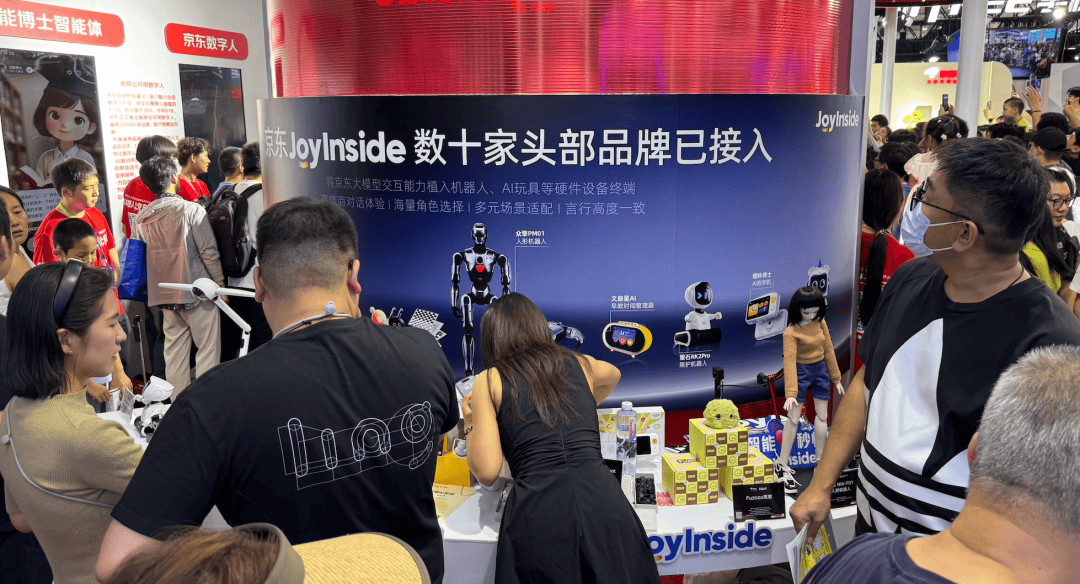
Core Viewpoint - JD.com has launched the industry's first 100% open-source enterprise-level intelligent agent, JoyAgent, during the WAIC 2025, showcasing its advancements in AI applications across various industries [2][8][20]. Group 1: JoyAI Model Upgrade - The JoyAI model has been upgraded to include sizes ranging from 3 billion to 750 billion parameters, catering to diverse industrial needs across multiple modalities such as language, voice, image, and video [5][7]. - JoyAI's innovative technologies, including dynamic layered distillation and cross-domain data governance, have improved inference efficiency by an average of 30% and reduced training costs by 70% [5][7]. Group 2: JoyAgent Intelligent Agent - JoyAgent is the first fully open-source enterprise-level intelligent agent, featuring a product-level open-source structure that includes front-end, back-end, framework, engine, and core sub-agents [8][10]. - JoyAgent boasts three core features: 100% open-source capabilities, high availability with pre-configured sub-agents, and strong performance validated by over 20,000 internal use cases, achieving an accuracy rate exceeding 75% on the GAIA leaderboard [10][11]. Group 3: JoyInside Smart Interaction - JoyInside integrates role-based large models into smart hardware, enhancing product interaction experiences with high emotional intelligence and a vast knowledge base [13][15]. - The integration of JoyInside in educational tools has significantly increased user engagement, with average dialogue rounds rising by 148% and conversation duration improving by 50% [15]. Group 4: Digital Human Applications - JD.com has introduced high-commercial-use digital humans that outperform 80% of real hosts in emotional expression and scene adaptability, serving over 20,000 brands [18][19]. - The application of digital humans has expanded beyond live streaming to include brand representation and emotional interaction, significantly enhancing brand value and user experience [19][20]. Group 5: Industry Impact and Future Outlook - The deep application of large models is reshaping AI productivity, with JD.com demonstrating that effective AI is not just developed but also applied in real-world scenarios [20]. - The industry consensus is shifting towards application-level breakthroughs, indicating that the future of AI competition will focus on practical implementations rather than just foundational model development [20].
《AI浪潮下的中国品牌》发展趋势报告
Sou Hu Cai Jing· 2025-06-10 10:32
Core Insights - The report "Development Trends of Chinese Brands under the AI Wave" highlights that AI technology is profoundly reshaping the consumer market, presenting both opportunities and challenges for Chinese brands [1][2][6]. Consumer Familiarity and Demand - By 2025, following the release of the DeepSeek-R1 model, over half of the surveyed users reported familiarity with AI technology, with 80% believing AI can solve some daily problems [1][11]. - There is a strong demand for AI-integrated products, with 47% of consumers insisting that future purchases must incorporate AI technology, and 73% preferring Chinese brands that offer AI features [1][12]. Key Consumer Segments - Three primary consumer groups have been identified: seasoned professionals who favor tech products and are willing to pay a premium for AI features; family decision-makers who seek localized AI applications; and single young adults who are eager to try new tools, with differing interests in entertainment and beauty-related AI services [1][13]. Brand Performance and Consumer Perception - Chinese brands like Huawei, Xiaomi, and Haier are leveraging AI to enhance their technological and innovative image, although there is still room for improvement in solving complex AI-related issues [2][23]. - Consumers recognize that brands integrating AI technology can convey a sense of technological leadership, innovation, and relevance, which is crucial for brand perception [11][24]. Information Channels and Consumer Engagement - Key channels for consumers to access AI information include WeChat ecosystems, short video platforms, and e-commerce sites, where technical education and product launches can effectively stimulate interest [2][25][28]. - The report indicates that consumers are increasingly engaging with AI products, with significant interest in smart wearables, home appliances, smartphones, and vehicles, as well as services like health management and education [12][34]. Market Trends and Future Expectations - The report anticipates that the integration of AI into consumer products will continue to grow, with a notable shift from novelty to necessity in AI capabilities [12][22]. - There is a strong expectation for Chinese brands to deepen the integration of AI into their offerings, enhancing both the intelligence of products and the overall consumer experience [2][21].

稚晖君的机器人公司,京东投了 | 36氪独家
36氪· 2025-05-24 09:22
Core Insights - The article discusses the ongoing investment trend in embodied intelligence, highlighting the upcoming financing round for ZhiYuan Robotics, which includes participation from JD.com and the Shanghai Embodied Intelligence Fund [4][6]. Group 1: Investment Landscape - ZhiYuan Robotics is set to complete a new financing round, with investors including JD.com and the Shanghai Embodied Intelligence Fund, which was established in April 2025 [4]. - The previous financing round for ZhiYuan Robotics occurred on March 24, 2025, led by Tencent, with participation from various industry players and existing shareholders [4]. - The domestic humanoid robot sector has seen a surge in financing, with 37 financing events involving 33 companies and a total amount of approximately 3.5 billion yuan in the first quarter of 2025 [6]. Group 2: Company Overview - ZhiYuan Robotics was founded in 2023 and has quickly become a leading player in the embodied intelligence sector, alongside YuShu Technology and Galaxy General [4]. - The company has launched its first humanoid robot, the Expedition A1, and plans to release the second generation, A2, in August 2024 [6]. - ZhiYuan Robotics has established three product lines: Expedition, Elf, and Lingxi, covering various applications such as education, factory automation, and hospitality [6]. Group 3: Strategic Moves by JD.com - JD.com has a vested interest in the embodied intelligence sector due to its e-commerce and logistics operations, having previously invested in service robot developer Xianglu Technology [7]. - The company has been actively developing AI hardware and software, launching the Yanxi large model in 2023 and creating various AI applications for industry use [7][8]. - In 2025, JD.com is accelerating its embodied intelligence strategy by establishing a dedicated business unit focused on smart product development for home use [8].

京东2025年一季度营收双位数增长 京东云构建数智生态激活产业效能
Zhong Jin Zai Xian· 2025-05-14 02:14
Core Insights - JD Group's Q1 2025 financial report highlights strong growth momentum in core business, driven by founder's involvement and significant R&D investment totaling 145.6 billion yuan since 2017, showcasing robust development and innovation vitality [1] Group 1: Technological Innovation and Application - JD Cloud launched the DeepSeek product and a one-stop platform for "development training + scenario application," facilitating the deployment of large models and enhancing enterprise smart transformation [2] - Over 14,000 intelligent agents are currently operational within JD, significantly improving business value across various scenarios, such as JoyCoder for coding assistance, which has a code adoption rate exceeding 40% and reduces development cycles by 30% [2] - In marketing, AIGC technology has increased efficiency by 90% in generating high-quality marketing content, contributing to over 14 billion yuan in GMV growth from services to more than 9,000 brand merchants [2] Group 2: Large Model Deployment and Infrastructure Upgrade - JD Cloud is upgrading its AI development computing platform to simplify model development processes, supporting over 20 open-source models and providing more than 100 algorithms and toolchains for customized model development [4] - The cloud infrastructure includes a super-intelligent computing cluster with a scheduling capacity of 2,000 cards per cluster and over 100,000 cards globally, achieving a model utilization rate of 75% [4] - JD Cloud's AI storage supports AI models with hundreds of billions of parameters, achieving 10 million IOPS for 4K random writes and a 30% cost reduction through storage-computing separation technology [5]